
Political changes are mere symptoms of deeper structural changes happening in societies, of which demographic change is an important component. Dr @ShamikaRavi, Abraham Jose & Apurv Mishra write in this latest EAC-PM Working Paper. 1/8 eacpm.gov.in
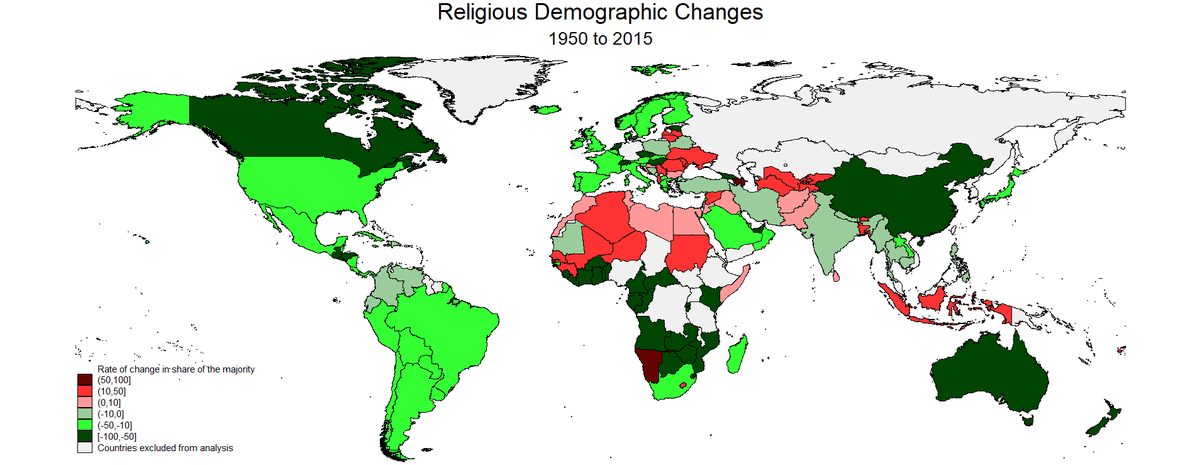
This paper provides a detailed cross-country analysis of the share of religious minorities in 167 countries from 1950 to 2015. The graph below illustrates the rate of change in the majority's share, providing insights into shifts in minority population proportions. 2/8
The paper abstracts away from the causes of this change & instead focuses on the share of the religious minority population as a cumulative outcome measure of their well-being. 3/8
The change in the proportion of minorities as a share of the total population serves as a reliable proxy for the status of minorities in a country, which is fostered through policies including defining "minorities”, which itself is a rare practice globally. 4/8
The share of the majority religious denomination for 167 countries has, on average, reduced by 22% from 1950-2015. The change varies from a 99% decrease in Liberia to an 80% increase in Namibia. 123 countries experienced a decrease in the share of the majority denomination. 5/8
21 out of the 40 countries that experienced extreme changes belong to Africa. Furthermore, 35 high-income OECD countries witnessed an average 29% decline in the share of the majority religion, which is significantly higher than the global average. 6/8
India has seen the second most significant decline in the majority population (7.82%), only next to Myanmar (10%) within the immediate South Asian neighbourhood. Minority populations have shrunk substantially in Bangladesh, Pakistan, Sri Lanka, Bhutan and Afghanistan. 7/8
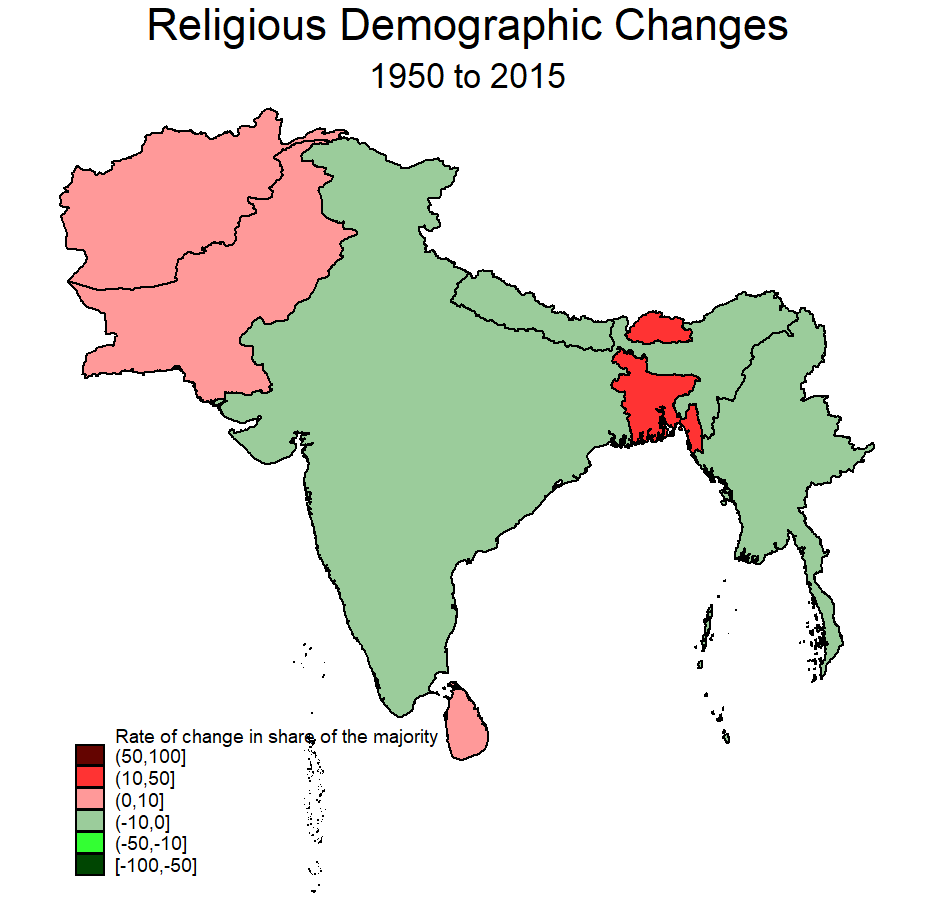
India has witnessed an increase in the share of Minority groups – Muslim, Christian, Buddhist and Sikh; and a decline in the share of Jain and Parsis. This is particularly noteworthy, given the South Asian neighbourhood as depicted in the map in the previous tweet. 8/8
Loading suggestions...