

Today, AlphaFold 3 came to life.
A monumental leap toward the world of biomolecules.
Predicting structures across proteins, nucleic acids, and small molecules. The world just changed - let me try to break it down the best I can.
🧵OPEN THE THREAD🧵
A monumental leap toward the world of biomolecules.
Predicting structures across proteins, nucleic acids, and small molecules. The world just changed - let me try to break it down the best I can.
🧵OPEN THE THREAD🧵

Proteins undertake a vast array of functions from catalyzing metabolic reactions, copying DNA, responding to environmental stimuli, to forming the structural framework of the cell itself.
Each protein's function is intricately linked to its three-dimensional structure.
Each protein's function is intricately linked to its three-dimensional structure.

Determining the structure of proteins has been a labor-intensive process...until AlphaFold(s) revolutionized this field by predicting protein structures computationally.
Specifically, AF2 marked a significant leap forward with an avg. accuracy comparable to experimental methods
Specifically, AF2 marked a significant leap forward with an avg. accuracy comparable to experimental methods

Proteins rarely act alone; they interact with proteins, DNA/RNA, molecules, ions etc, with a same protein participating in many complexes. Understanding these interactions is vital for drug discovery; drugs often work on these complex interactions (not proteins in isolation).
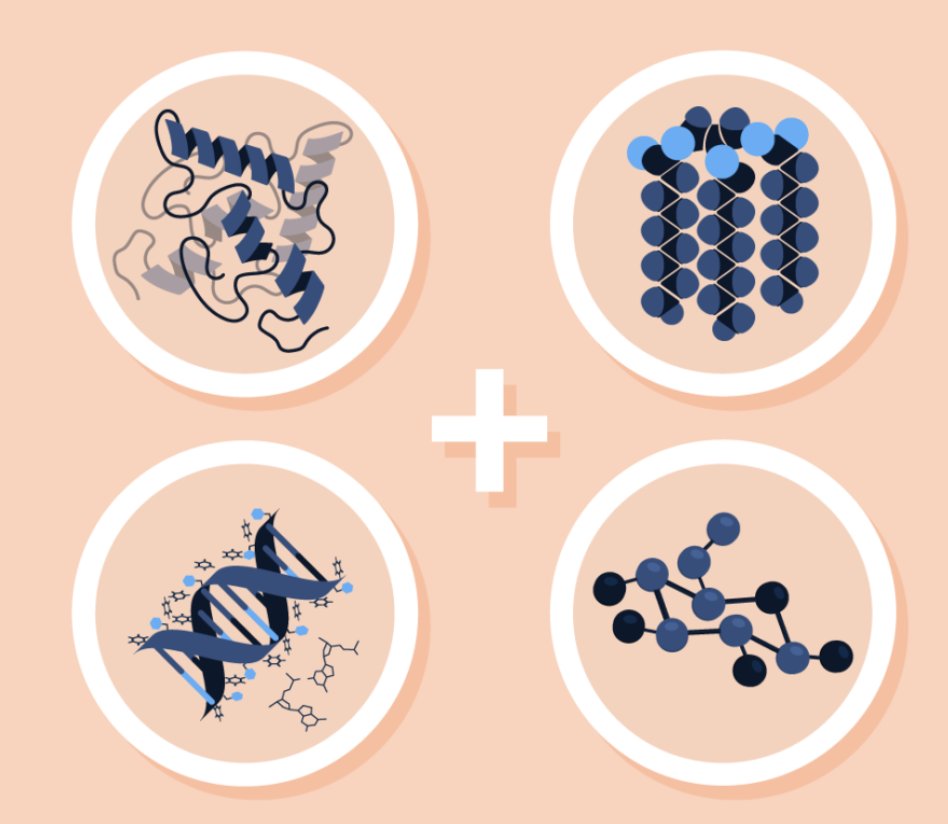
Proteins interact with molecules at various levels. For instance, nucleic acid and protein interactions are the basis of structural biology.

Unlike AF2, which focused on individual proteins, AF3 embraces complexity of biomolecular interactions. It models diverse entities within a unified framework, highlighting interactions that are crucial for understanding cellular functions, moving toward realistic simulations.
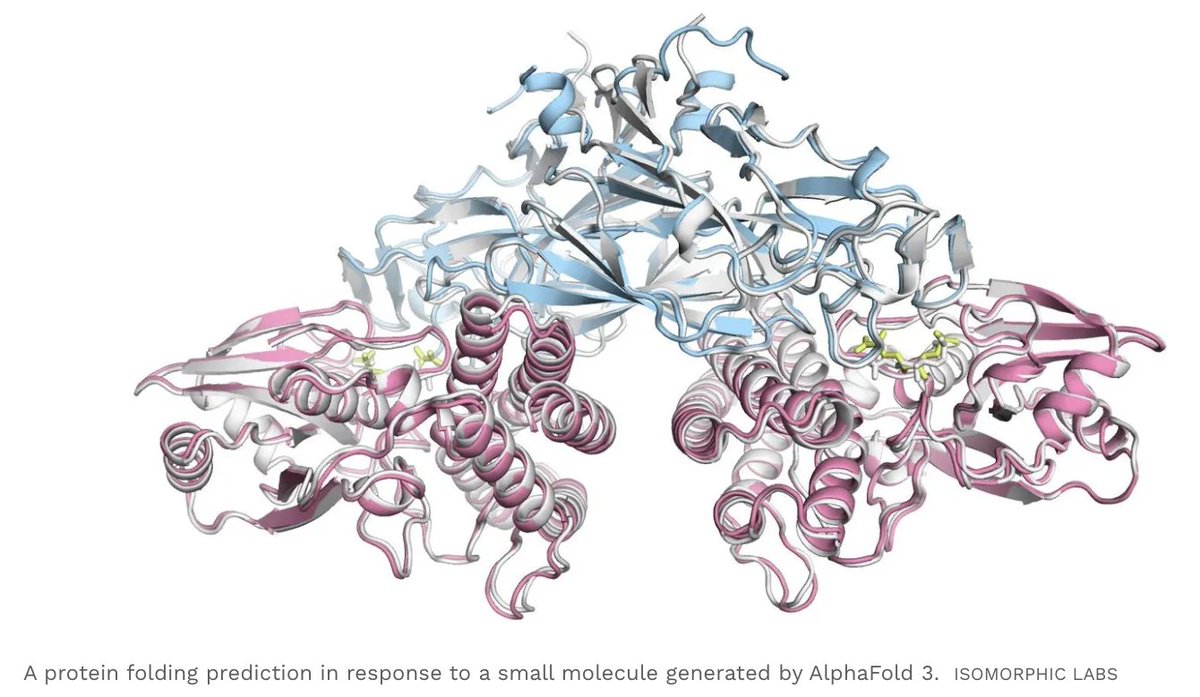
AF3's diffusion-based architecture allows it to accommodate arbitrary chemical components without special casing. ergo, more accurate predictions across various molecular types, from ions to modified residues. AF3 also predicts raw atom coordinates directly, unlike AF2.
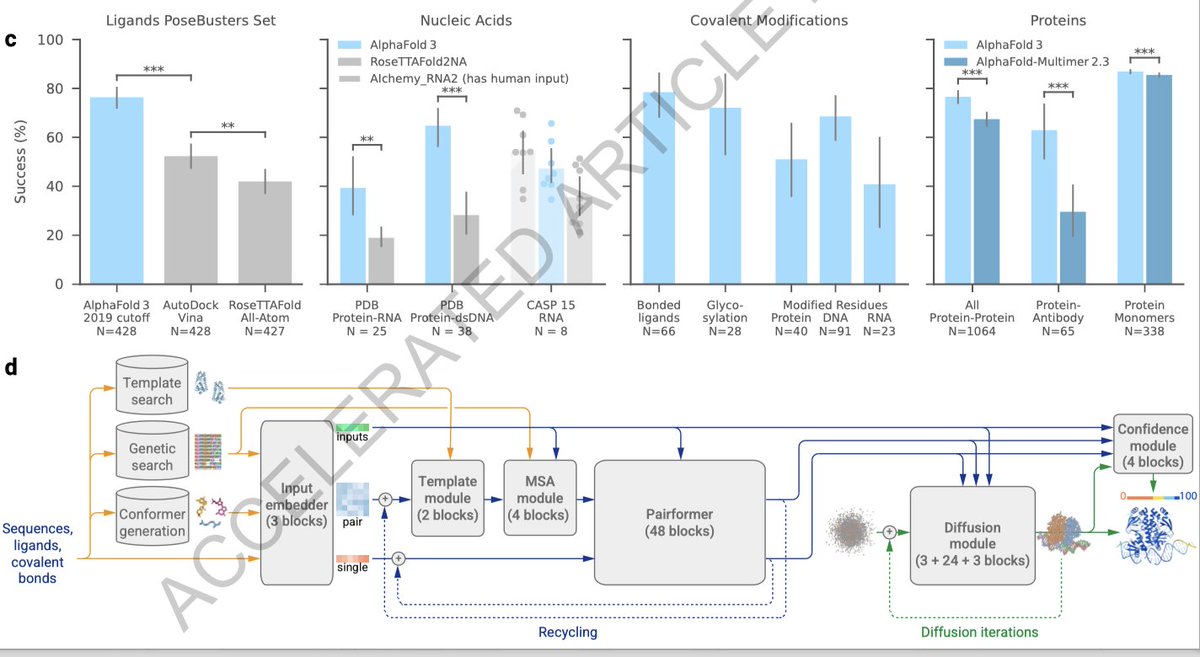
Several techniques have been tried at a narrower capacity. e.g. transformer-based RoseTTAFoldNA, which focuses specifically on RNA / protein-RNA complexes, for RNA structures < 1000 residues.
AlphaFold3 used this technology to benchmark its performance and passed internal checks
AlphaFold3 used this technology to benchmark its performance and passed internal checks
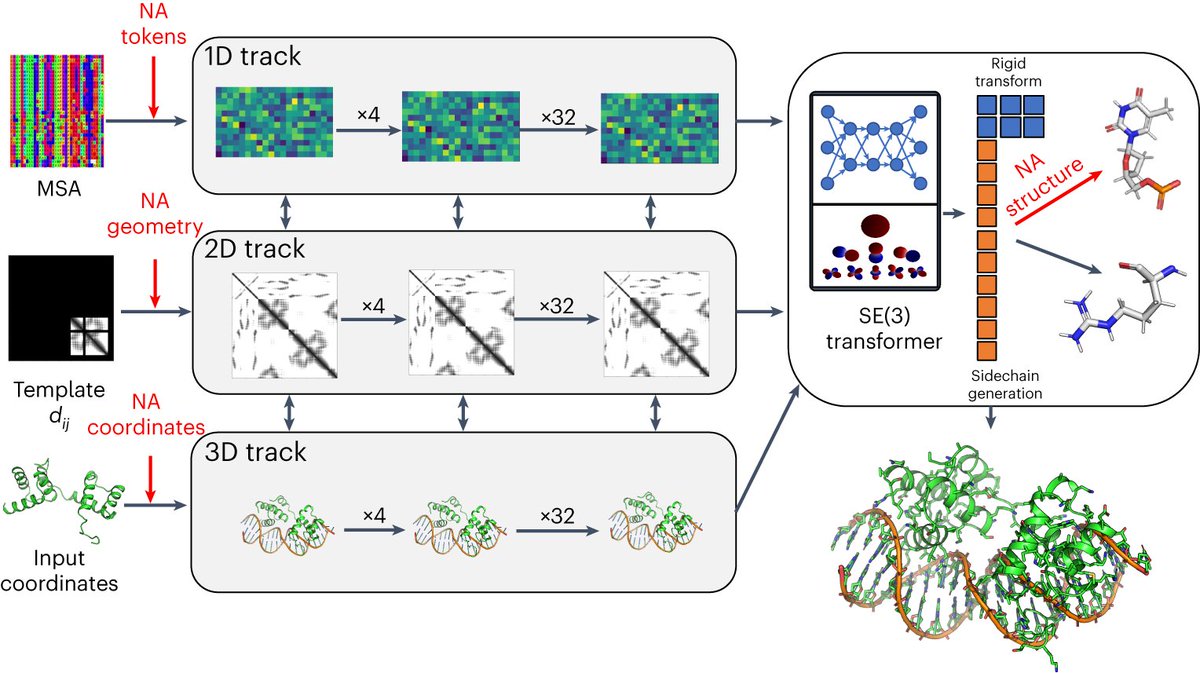
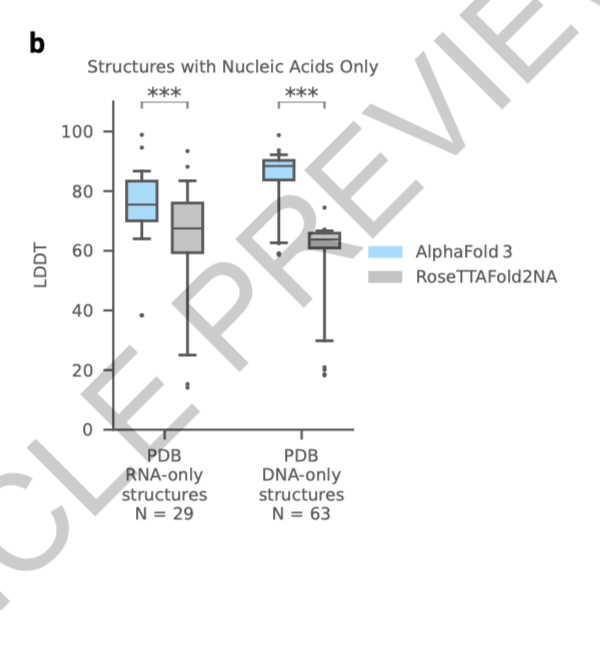
The generality of diffusion enables more accurate predictions across various molecular types, from ions to modified residues. Despite facing implicit constraints, AF3 was able to reduce hallucinations in disordered regions using cross-distillation and confidence metrics.
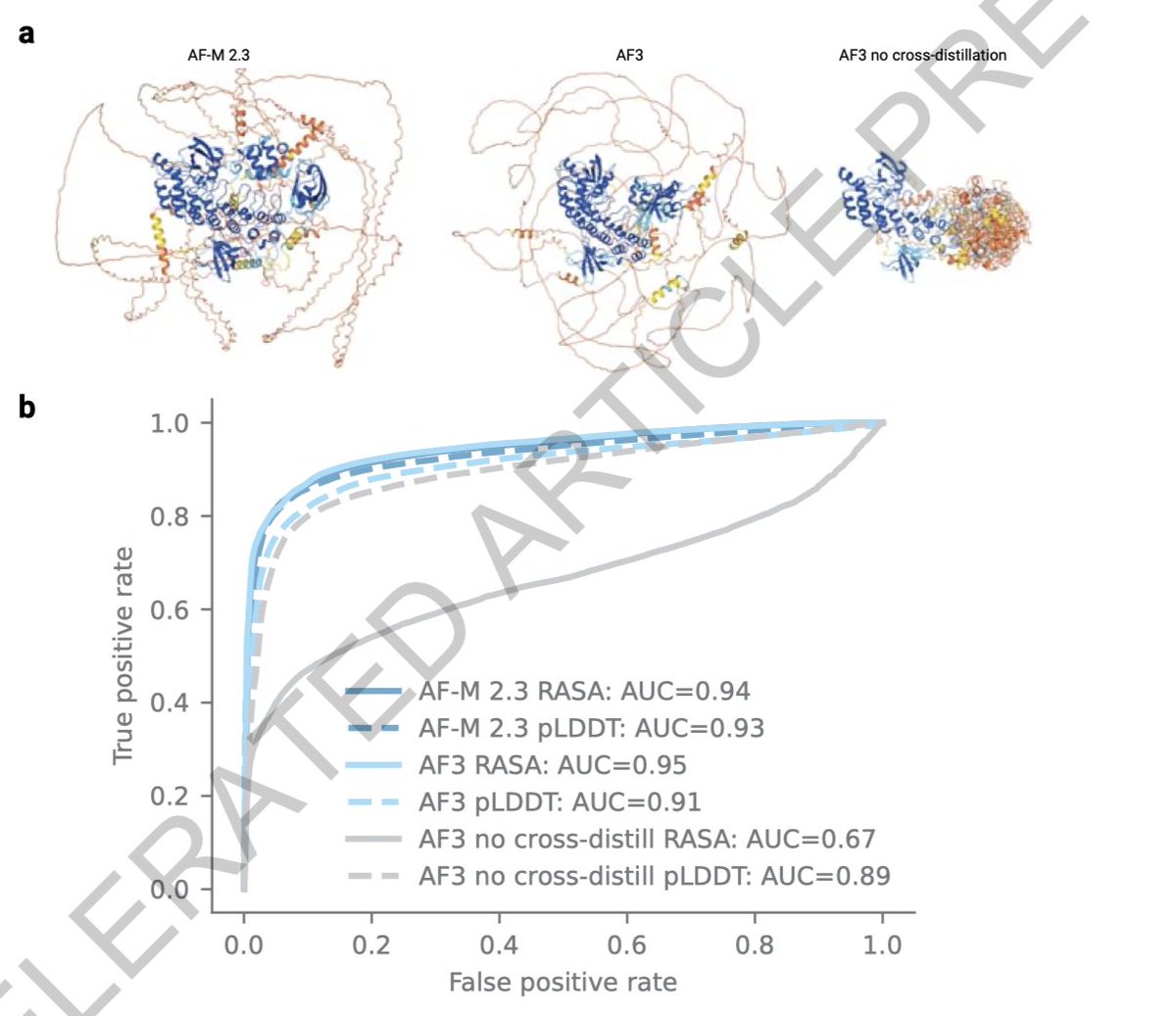
Despite its advancements, AF3 still faces challenges like predicting dynamic behaviors and managing stereochemical violations.
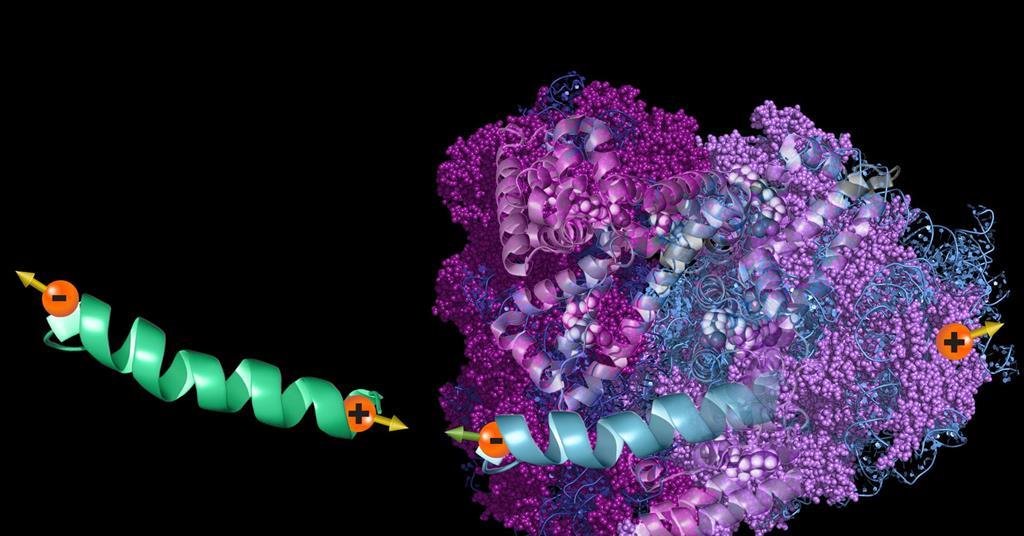
AF3 predicts static structures, not capturing a full range of conformations in various environments.
While it predicts smaller interactions, its ability to model the full dynamism of nuclear processes, including the dance of DNA and histones within the nucleus, remains limited.
While it predicts smaller interactions, its ability to model the full dynamism of nuclear processes, including the dance of DNA and histones within the nucleus, remains limited.

For a comprehensive understanding, especially for epigenetic mechanisms and nuclear interactions, integrating dynamic simulations is essential.
The video above showed DNA being wrapped into chromosomes (proteins involved here).
Here's a protein simulation, showing a 'wiggle':
The video above showed DNA being wrapped into chromosomes (proteins involved here).
Here's a protein simulation, showing a 'wiggle':

Another area of concern: cells' compartmentalization. Interactions with membranes, organelles, and varying conditions influence protein behavior.
Future advancements must integrate these factors to model the full spectrum of protein dynamics accurately.
Future advancements must integrate these factors to model the full spectrum of protein dynamics accurately.
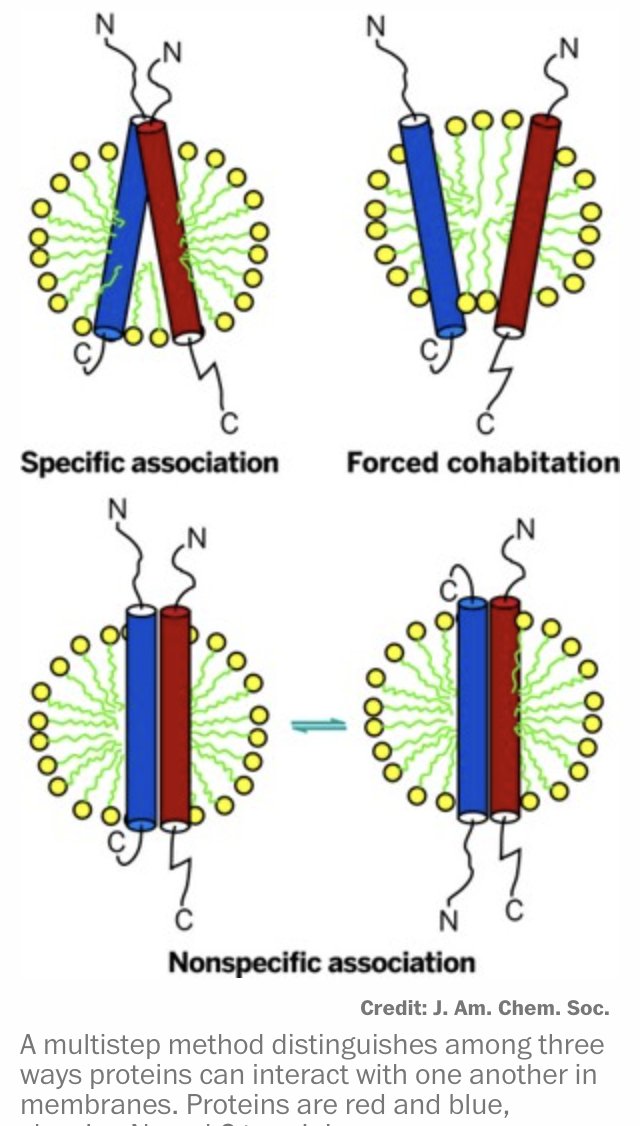
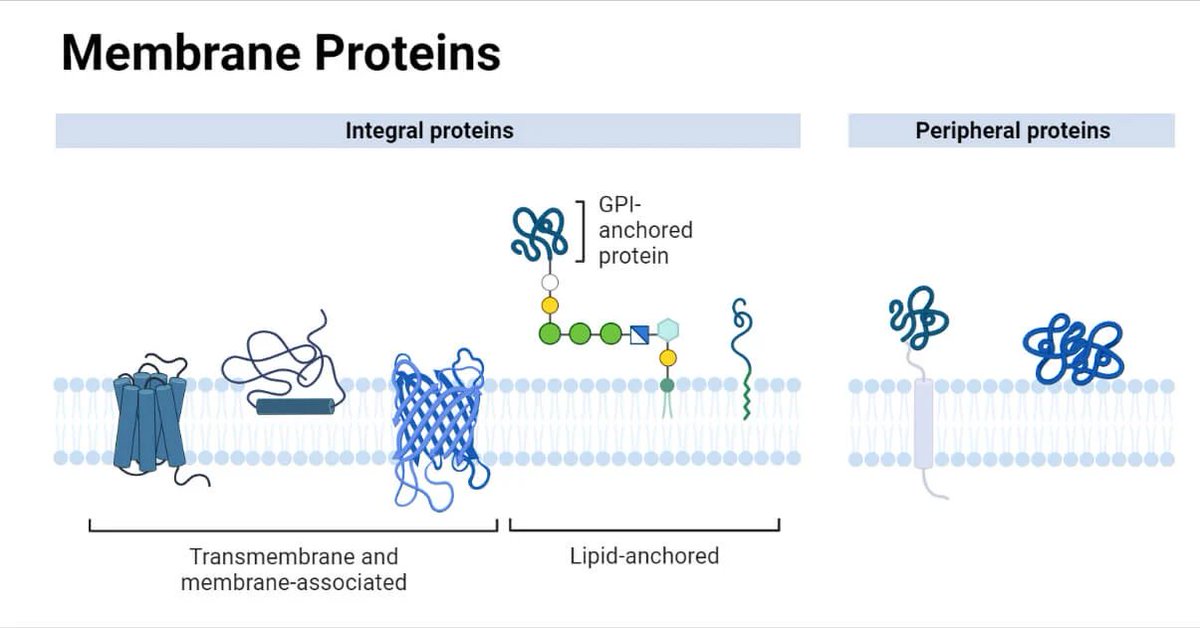
finally, computational challenges: the server limits exploration with a token ceiling of 5,000, affecting large systems like epigenetic complexes and full nuclear structures. Future advances must expand computational capacity to fully unravel these complex biological systems.
The introduction of AF3 is not just a step forward in predicting static structures but a bridge towards understanding complex biological systems. We may be early, but here is a tool that brings us closer to the reality of cellular mechanisms.
intracellular trafficking- protein:
intracellular trafficking- protein:
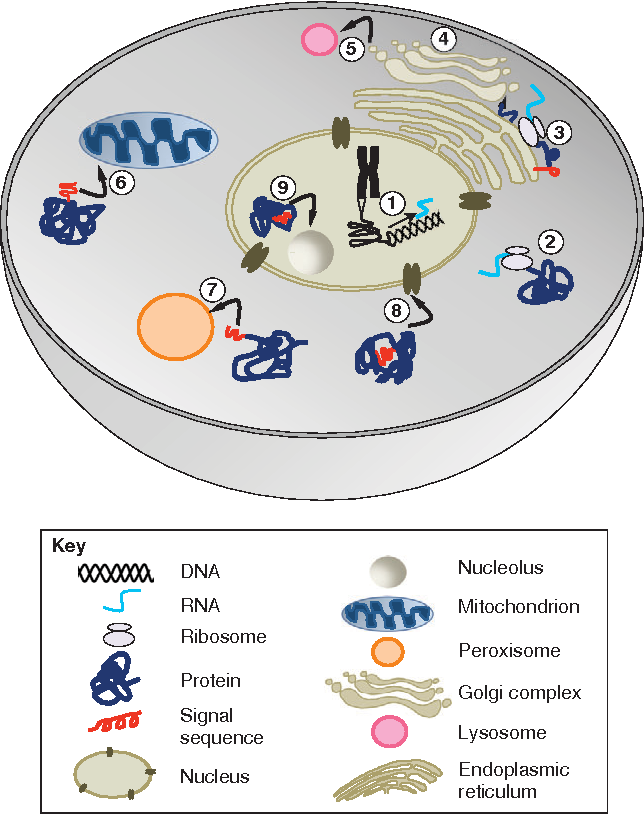
DeepMind's progress from AlphaFold 2 to AF3 illustrates the rapid evolution in using AI for biological insights. As we continue to refine these models, the potential for breakthroughs in understanding diseases and developing new therapies grows exponentially.
Loading suggestions...