

In 1971, one of the most controversial psychology experiments occurred.
For 14 days, 12 guards and 12 prisoners turned Stanford into a real life prison.
The goal? To understand how any good person can suddenly become evil.
This is the Stanford Prison Experiment:
For 14 days, 12 guards and 12 prisoners turned Stanford into a real life prison.
The goal? To understand how any good person can suddenly become evil.
This is the Stanford Prison Experiment:

Zimbardo was a young psychology professor at Stanford in the early 1970s.
He had a hypothesis: people's behavior is shaped more by their surroundings than morality.
He believed in the right circumstances, any every day, well-educated, good person could become evil.
He had a hypothesis: people's behavior is shaped more by their surroundings than morality.
He believed in the right circumstances, any every day, well-educated, good person could become evil.

By 1971, Zimbardo was an esteemed social psychologist known for his work on shyness and cognitive dissonance.
He had published extensively in top journals and taught wildly popular classes at Stanford, NYU, and Columbia.
And this experiment was his chance to make a major scientific breakthrough.
He had published extensively in top journals and taught wildly popular classes at Stanford, NYU, and Columbia.
And this experiment was his chance to make a major scientific breakthrough.

Zimbardo’s motivation was quite personal.
In 1954, at age 21, he had spent time in a New York prison.
Although he was only a researcher, not an inmate, the experience affected him deeply.
He saw firsthand how the prison environment could turn out the worst in anyone.
In 1954, at age 21, he had spent time in a New York prison.
Although he was only a researcher, not an inmate, the experience affected him deeply.
He saw firsthand how the prison environment could turn out the worst in anyone.

To test this, Zimbardo set up a mock prison in the basement of the Stanford psych building.
He recruited 24 college students, carefully screened to be psychologically stable.
Half were guards, the others prisoners.
The 14-day experiment began on August 14, 1971.
Remember that date, it’s important.
He recruited 24 college students, carefully screened to be psychologically stable.
Half were guards, the others prisoners.
The 14-day experiment began on August 14, 1971.
Remember that date, it’s important.

Zimbardo's goal was to see how these normal young men would adapt to their new roles.
Would the guards become aggressive and domineering?
Would the prisoners passively accept their fate?
From the beginning, unexpected patterns started to appear…
Would the guards become aggressive and domineering?
Would the prisoners passively accept their fate?
From the beginning, unexpected patterns started to appear…

From the start, Zimbardo may have been too emotionally invested.
He was later criticized for encouraging guards to be hostile and cruel to prisoners.
And some participants later claimed they were only giving the researchers what they wanted.
Zimbardo has always denied these allegations.
He was later criticized for encouraging guards to be hostile and cruel to prisoners.
And some participants later claimed they were only giving the researchers what they wanted.
Zimbardo has always denied these allegations.

As you can tell the treatment of the prisoners quickly became brutal.
But Zimbardo was so caught up in the drama that he took on the role of prison superintendent to see everything clearly.
But Zimbardo was so caught up in the drama that he took on the role of prison superintendent to see everything clearly.

Guards stripped prisoners naked, restricted their food, and forced them to sleep on concrete floors.
Some prisoners were put in "solitary confinement" in dark closets.
Why? Because they can.
Some prisoners were put in "solitary confinement" in dark closets.
Why? Because they can.

Others were made to clean toilets with their bare hands.
By day 5, prisoner 8612, Douglas Korpi, went on a hunger strike and was force-fed by guards.
Verbal abuse and humiliation were the norm.
Any resentment is faced with extra punishment.
By day 5, prisoner 8612, Douglas Korpi, went on a hunger strike and was force-fed by guards.
Verbal abuse and humiliation were the norm.
Any resentment is faced with extra punishment.

Another prisoner, 819, Richard Yacco, broke down in hysteria and had to be released early.
The most rebellious prisoners were hooded and chained.
The cruelty, it seemed, had become all too real.
The most rebellious prisoners were hooded and chained.
The cruelty, it seemed, had become all too real.

August 20, 1971. Only 6 in the 14-day experiment.
This cruelty ended as Zimbardo's girlfriend, psychologist Christina Maslach, confronted him.
She couldn’t recognize her boyfriend anymore.
Zimbardo changed.
This cruelty ended as Zimbardo's girlfriend, psychologist Christina Maslach, confronted him.
She couldn’t recognize her boyfriend anymore.
Zimbardo changed.

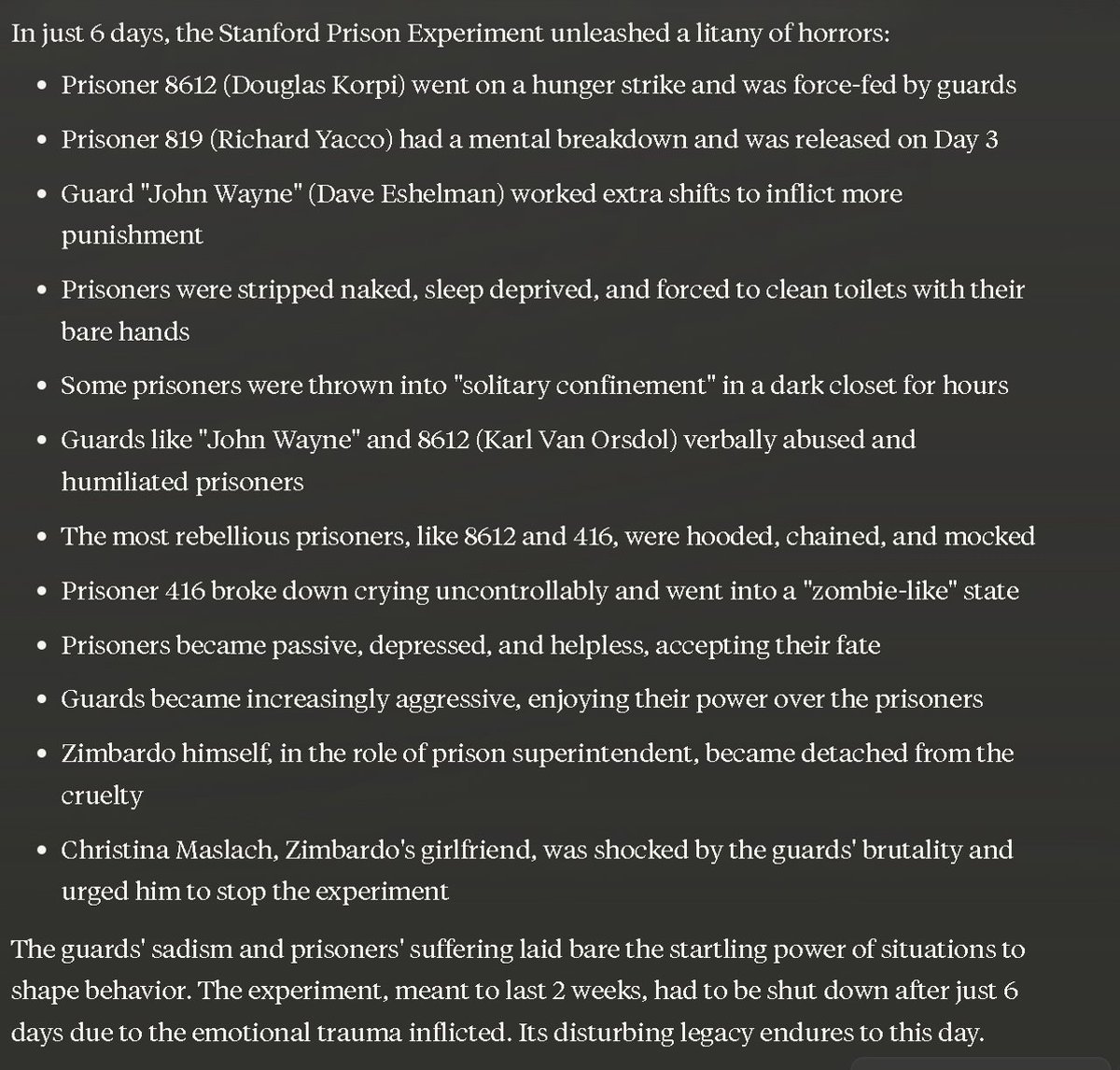
In those short 6 days here’s a small list of what happened (generated by Claude ai):
After all, the Stanford Prison Experiment became a defining moment in psychology.
Zimbardo became a celebrity intellectual and gave lectures and interviews around the world.
But there was a bigger question yet to be answered…
Zimbardo became a celebrity intellectual and gave lectures and interviews around the world.
But there was a bigger question yet to be answered…
Were the guards truly reacting naturally to the situation?
Or were they influenced by Zimbardo's expectations and their own preconceptions of how to act?
Here’s what one of the guards said:
Or were they influenced by Zimbardo's expectations and their own preconceptions of how to act?
Here’s what one of the guards said:

Recent revelations suggest the guards were coached to be aggressive.
Some prisoners suspected it wasn't a real prison and knowingly played along.
Regardless both prisoners and guards lost their identities.
Here’s what 416 recalled:
Some prisoners suspected it wasn't a real prison and knowingly played along.
Regardless both prisoners and guards lost their identities.
Here’s what 416 recalled:

The truth is likely more nuanced than Zimbardo claimed.
One of the notable researchers on the topic spoke about it here:
One of the notable researchers on the topic spoke about it here:

The Stanford Prison Experiment is a cautionary tale about the importance of questioning authority.
Most of all, it's a reminder that both good and evil can co-exist within any of us.
Most of all, it's a reminder that both good and evil can co-exist within any of us.

Today, at age 89, Zimbardo is an elder statesman of psychology.
He has become an influential voice on issues like heroism, evil, and the psychology of time.
While his legacy extends far beyond it, the Stanford Prison Experiment remains his most famous.
Here’s what he had to say about it:
He has become an influential voice on issues like heroism, evil, and the psychology of time.
While his legacy extends far beyond it, the Stanford Prison Experiment remains his most famous.
Here’s what he had to say about it:

These lessons resonate more than ever in a world still struggling with violence, oppression, and injustice.
In his words:
“To be a hero you have to learn to be a deviant — because you're always going against the conformity of the group.”
In his words:
“To be a hero you have to learn to be a deviant — because you're always going against the conformity of the group.”
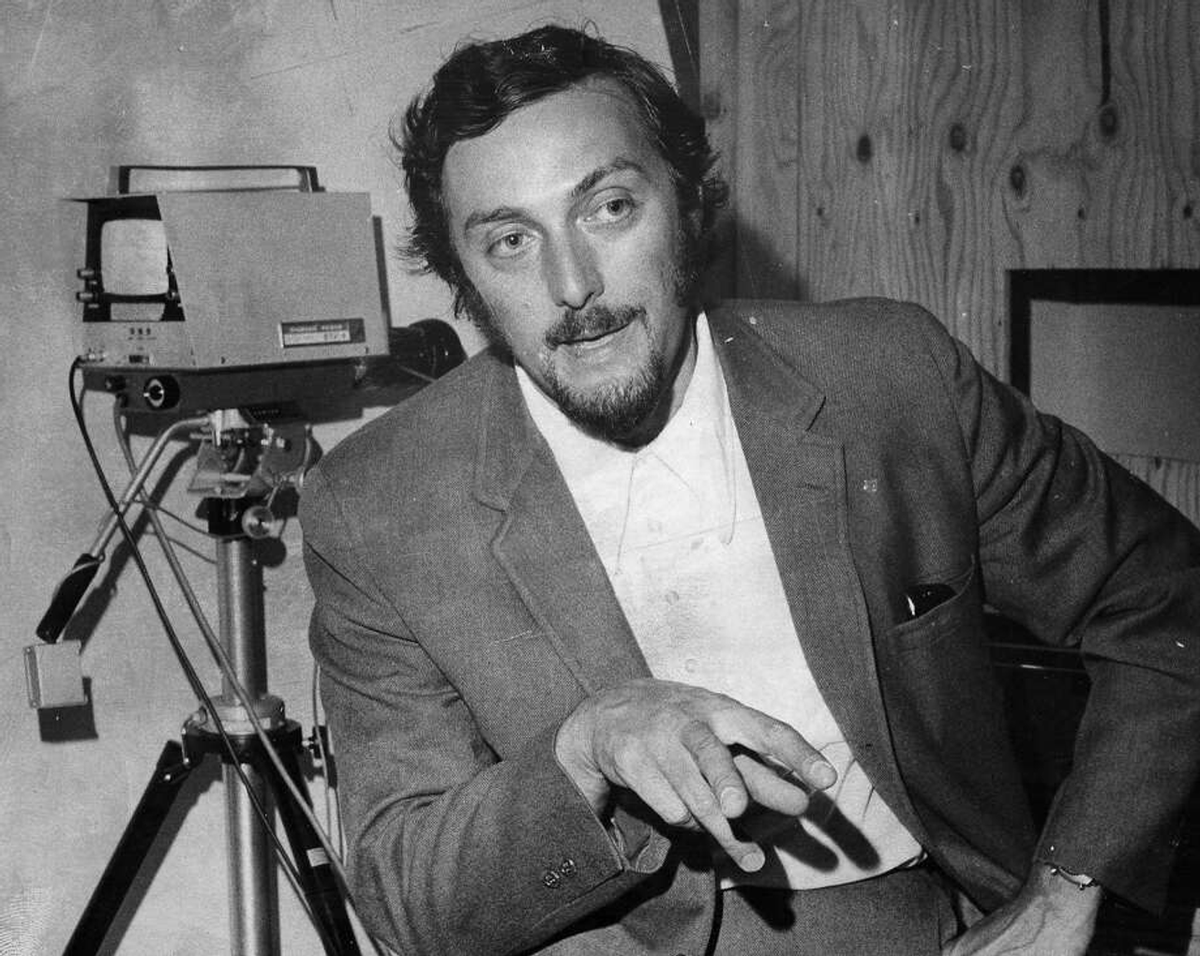
I first watched the documentary at 14 in preparation for an English competition.
And something I can’t stop thinking about is how simple cruelty can take over.
Like in the book 1984, what is the value of mankind if we blindly obey authority?
And something I can’t stop thinking about is how simple cruelty can take over.
Like in the book 1984, what is the value of mankind if we blindly obey authority?
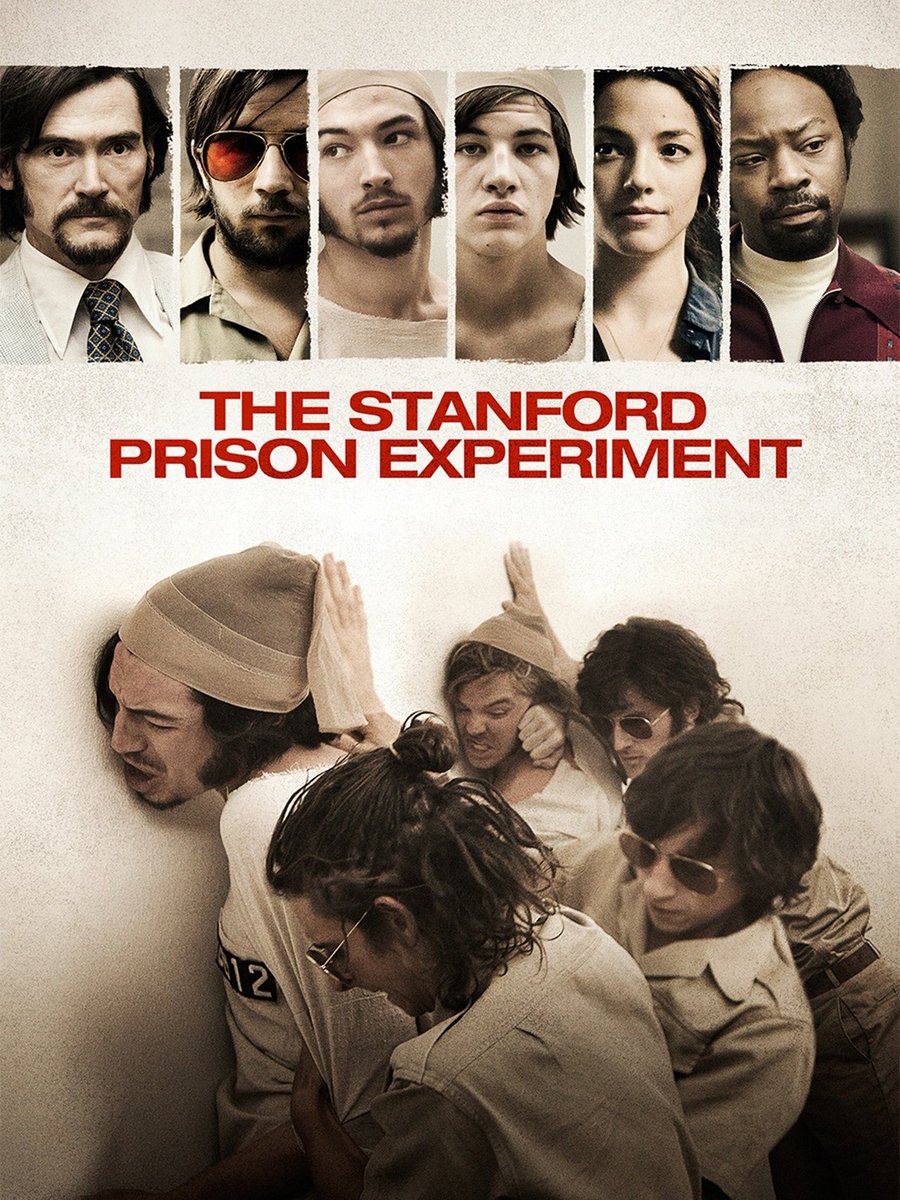
In 20 years’ time, how would the lessons change?
Or would we live in a world where everything is censored due to “appropriateness”?
Only time can tell.
Or would we live in a world where everything is censored due to “appropriateness”?
Only time can tell.
If you enjoyed this breakdown, follow me @learningtoan.
I am 19, this account is my public journal to the world.
I write about learning science, education, movies, psychology, and so much more.
I am 19, this account is my public journal to the world.
I write about learning science, education, movies, psychology, and so much more.
If you want more content from me, here’s my newsletter:
Learning how to learn. Psychology. Mental models and everything in between.
Join 2700 readers:
learninglab.beehiiv.com
Learning how to learn. Psychology. Mental models and everything in between.
Join 2700 readers:
learninglab.beehiiv.com

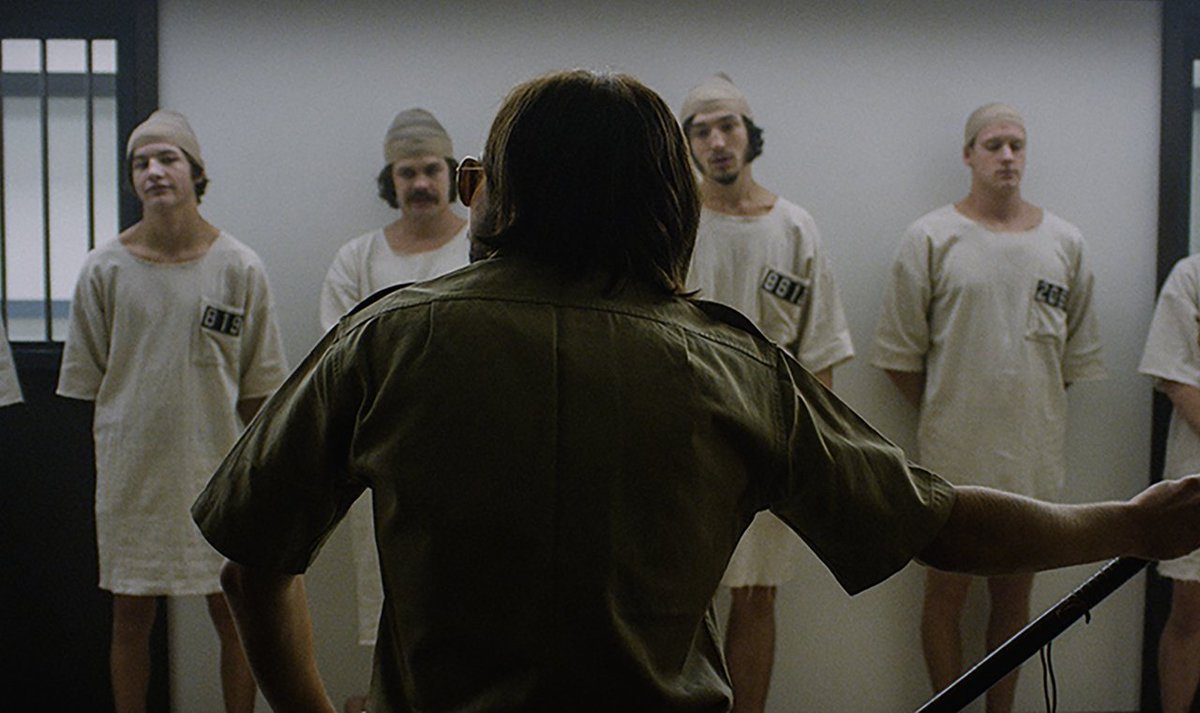
Please watch the full documentary to really understand what happened behind those bars.
Once again, thank you to everyone, for reading it to the end!
amazon.com
----
Primary research sources:
youtube.com
youtube.com
youtube.com
Once again, thank you to everyone, for reading it to the end!
amazon.com
----
Primary research sources:
youtube.com
youtube.com
youtube.com
Loading suggestions...