

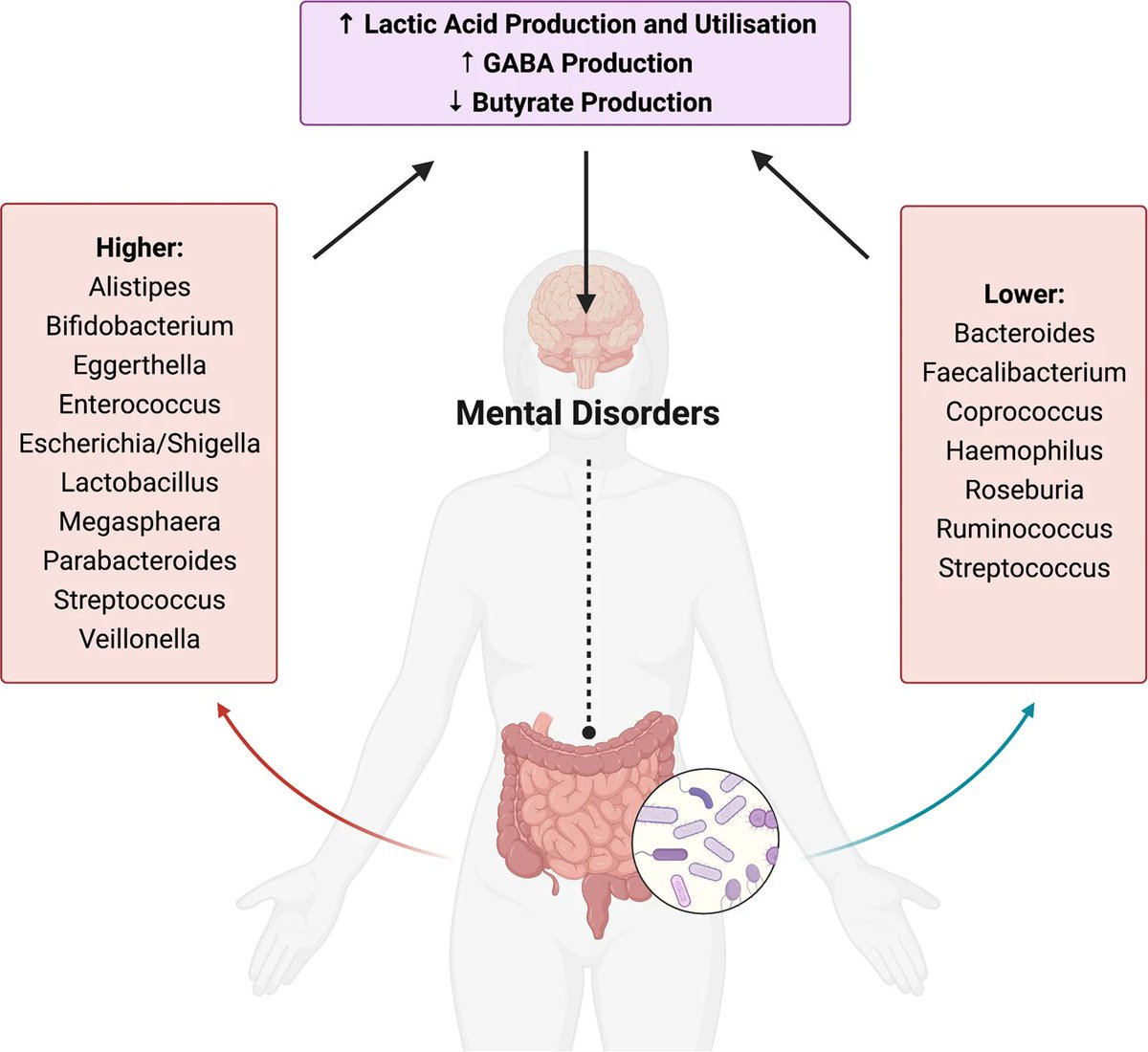
Gut microbiota act as the ‘metabolic machinery’ of mental disorders.
🧵1/10
🧵1/10
These findings are from a systematic review in @molpsychiatry which aimed to understand the emerging role of gut microbiota in the field of psychiatry. nature.com 2/10

Gut microbiota influence many aspects of physiology via neural, hormonal and immunological pathways so much so that some describe the gut microbiome as a ‘virtual organ’. joe.bioscientifica.com 3/10
Although gut bacteria assist with the maintenance of health, they can also disrupt homeostatic regulation and may influence the aetiology and pathophysiology of many diseases, including mental disorders. journals.physiology.org 4/10
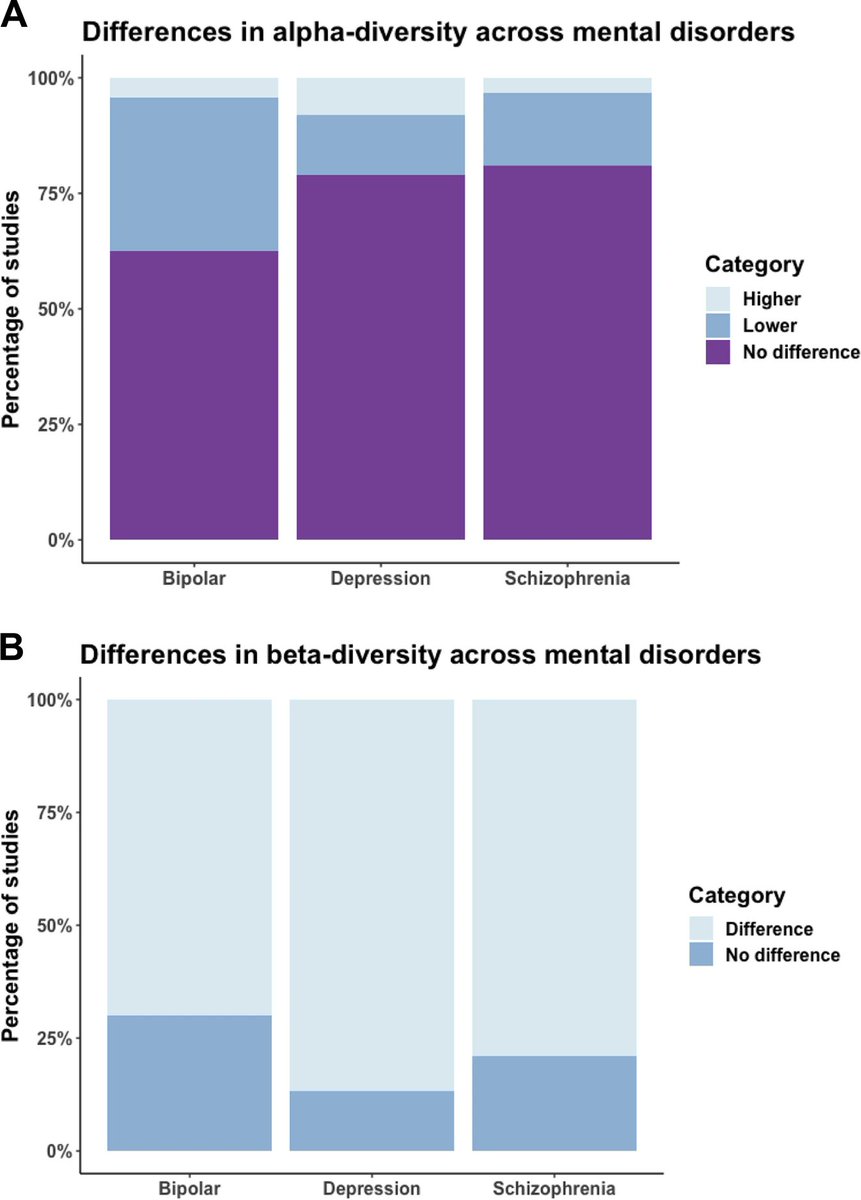
There were differences in overall composition of the gut microbiota (β-diversity), however not the number or distribution of gut bacteria (α-diversity) between cases and controls within each mental disorder category. 5/10
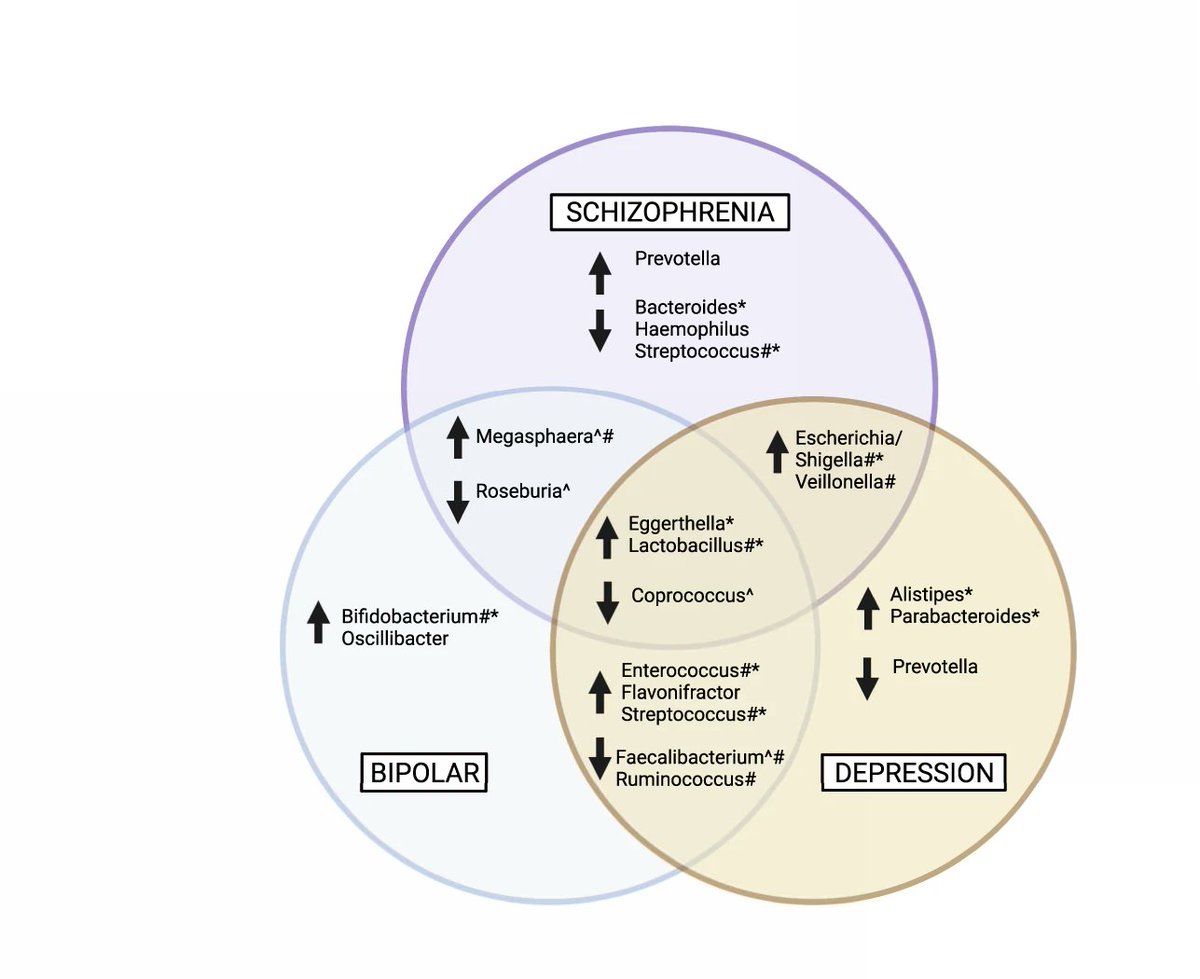
Specific bacterial taxa were commonly associated with mental disorders, including lower levels of bacterial genera that produce butyrate, higher levels of lactic acid-producing bacteria, and higher levels of bacteria associated with glutamate and GABA metabolism. 6/10
Reduced butyrate production may contribute to the impaired gut barrier permeability and subsequent bacterial translocation into the systemic circulation, alongside systemic inflammation, observed in mental disorders. sciencedirect.com 7/10

Accumulation of lactate in the gut is potentially deleterious and many psychiatric disorders are associated with dysregulated mitochondrial energy generation, indexed by increased lactate and decreased pH (i.e. increased acidity) in the brain. nature.com 8/10

It is possible that these gut bacteria observed in higher abundances across mental disorders may facilitate greater utilisation of glutamate (i.e. depletion) and increased synthesis of GABA through the glutamate decarboxylase (GAD) enzyme. 9/10
These findings may support novel treatment strategies, such as dietary interventions that target the gut microbiome, however there is an urgent need for the harmonisation of reporting and methodologies in the field of human microbiome research. 10/10
Loading suggestions...