

Ready for an intense educational bite on Amyloid neuropathies?
Credit @MarcusVPinto
Credit @MarcusVPinto
Amyloidosis refers to an etiologically heterogeneous group of protein misfolding diseases, pathologically
characterized by extracellular deposits of amyloid fibrils in organs and tissues that may lead to severe
organ dysfunction and mortality
characterized by extracellular deposits of amyloid fibrils in organs and tissues that may lead to severe
organ dysfunction and mortality
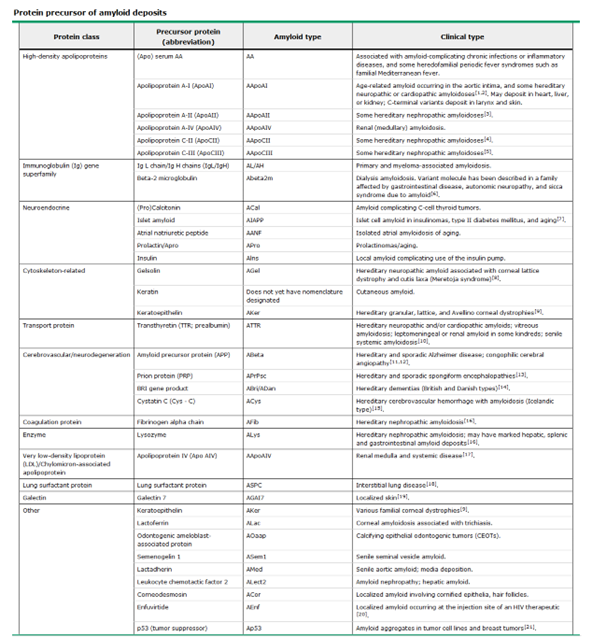
There are around 36 human amyloid proteins. For the peripheral nervous system, the important
systemic amyloidoses are;
- Immunoglobulin light chain (AL) amyloidosis
- Transthyretin (ATTR) amyloidosis
- Gelsolin amyloidosis
systemic amyloidoses are;
- Immunoglobulin light chain (AL) amyloidosis
- Transthyretin (ATTR) amyloidosis
- Gelsolin amyloidosis
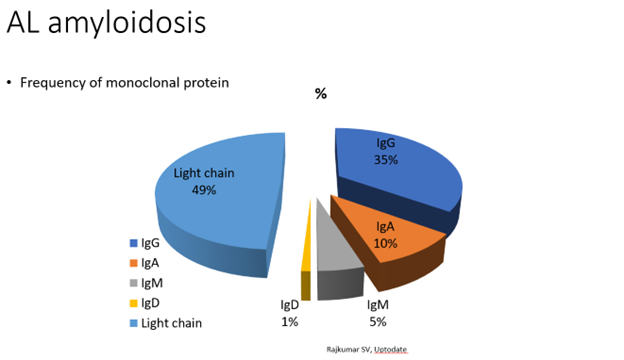
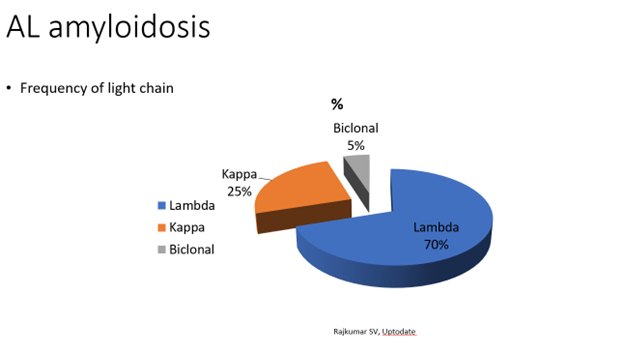
AL amyloidosis is a plasma cell dyscrasia with an incidence of around 6 to 10 per million person/year. Median age of onset 64 y/o; <5% under 40 y/o. It’s a male-predominant (65-70%) disorder and can occur associated with other hematological disorders.
It’s diagnosed by the presence of serum or urine monoclonal protein and bone marrow biopsy. A good rule of thumb is that Kappa/lambda light chain ratio is almost always abnormal in AL amyloidosis and the clonal light chain is markedly elevated.
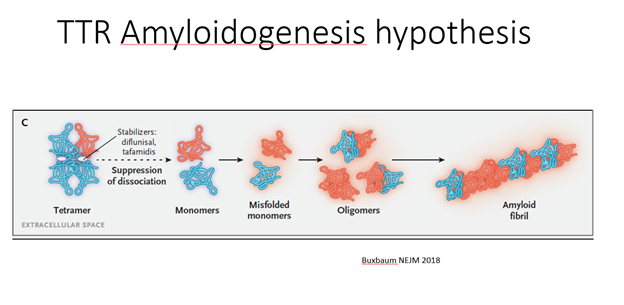
Transthyretin amyloidosis is a Systemic amyloidosis caused by transthyretin misfolding and deposition on tissues as amyloid.
Classification:
1. Hereditary: > 120 pathogenic variants described in TTR gene
2. Wild-type: normal TTR gene sequencing, non-mutated TTR deposition
Classification:
1. Hereditary: > 120 pathogenic variants described in TTR gene
2. Wild-type: normal TTR gene sequencing, non-mutated TTR deposition
Hereditary TTR amyloidosis (ATTRv) incidence varies across the globe, with an estimated incidence of 8.7 patients per million persons per year in Portugal and of 0.3 cases per million in the United States. The phenotypes are classified as neurological, cardiac, or mixed.
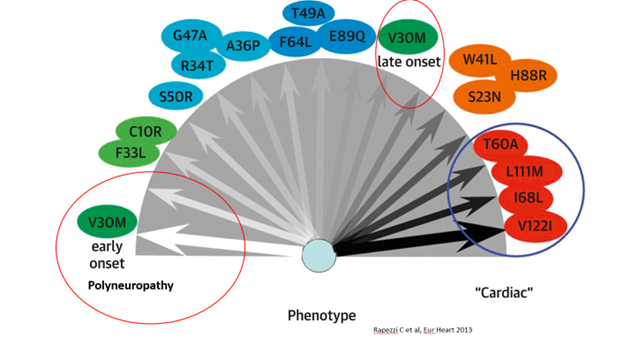
Wild-type ATTR amyloidosis is caused by non-mutated TTR deposition on tissues mostly the heart, carpal tunnel, and spine ligaments. Still uncertain if ATTRwt can cause PN, but probably yes, like Val122Ile ATTRv. It’s male predominant (9:1) with median age at diagnosis of 75 years
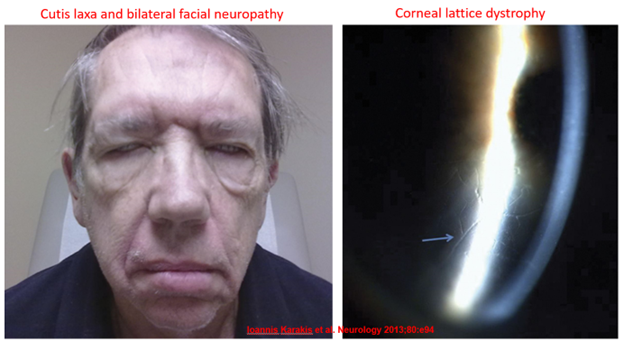
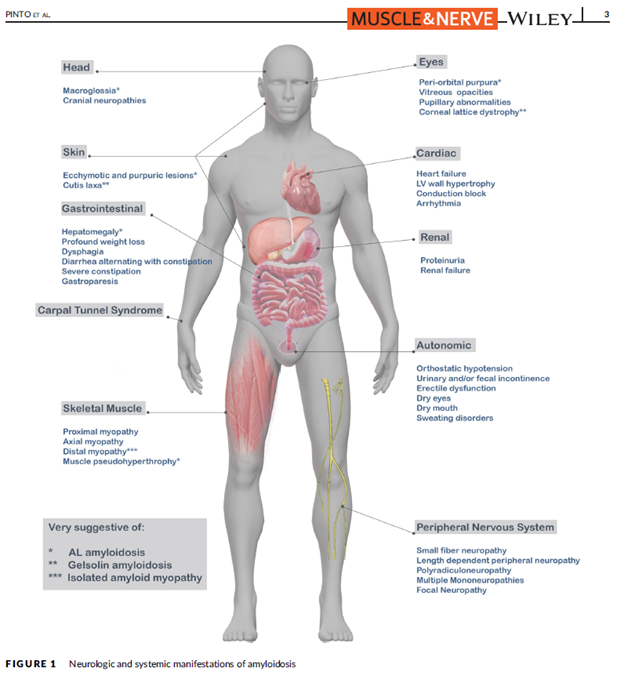
Gelsolin amyloidosis is a very rare autosomal dominant systemic amyloidosis caused by missense mutations in the gelsolin gene. Most prevalent in Finland and classically presents with bilateral facial neuropathy and mild sensorimotor PN. Other key features in the figure below
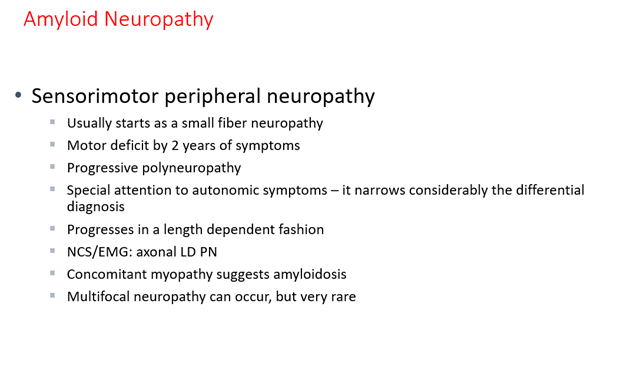
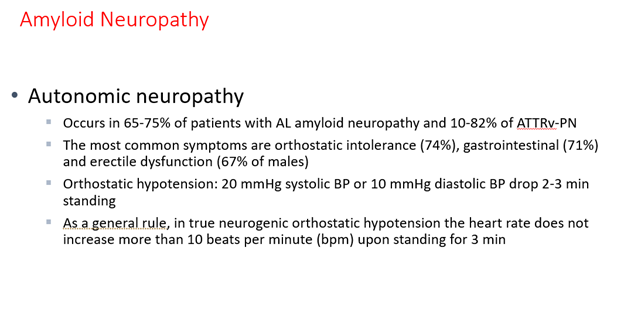
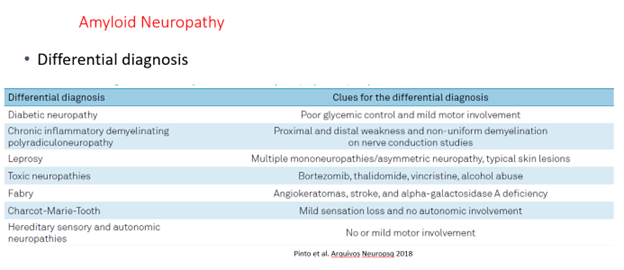
The most important features of sensorimotor amyloid neuropathy, autonomic amyloid neuropathy, and differential diagnosis of amyloid neuropathy are available in the slides below. Neurologic and systemic manifestations of amyloidosis are available in the fourth panel.
Diagnosis of Amyloid Neuropathy
- Biopsy-proven amyloid deposit, ideally with amyloid typing
- Blood work up: CBC, vit B12, TSH, A1c, fasting glucose, free T4, liver enzymes, renal function, serum SPEP with immunofixation + free light chain assay
- TTR gene sequencing
- Biopsy-proven amyloid deposit, ideally with amyloid typing
- Blood work up: CBC, vit B12, TSH, A1c, fasting glucose, free T4, liver enzymes, renal function, serum SPEP with immunofixation + free light chain assay
- TTR gene sequencing

Treatment of Amyloid Neuropathy
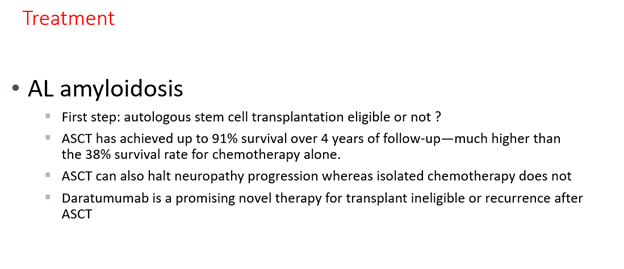
AL amyloidosis: Stem cell transplantation and/or chemotherapy
ATTR amyloidosis: liver transplantation, gene silencers, and TTR stabilizers
AL amyloidosis: Stem cell transplantation and/or chemotherapy
ATTR amyloidosis: liver transplantation, gene silencers, and TTR stabilizers

Loading suggestions...