

Two years ago I made a thread discussing these "Talmud quote compilation" memes. The nice thing is that the entire Talmud is available online for anyone to read for free at Sefaria, so we can actually follow up on these citations. Let's take a look at a couple more.
Let's start with one of the ones that looks more weird and tyrannical than heinous and barbaric: The image claims that Eruvin 21b says "Whosoever disobeys the rabbis deserves death and will be punished by being boiled in hot excrement in hell." What does Eruvin 21b actually say?
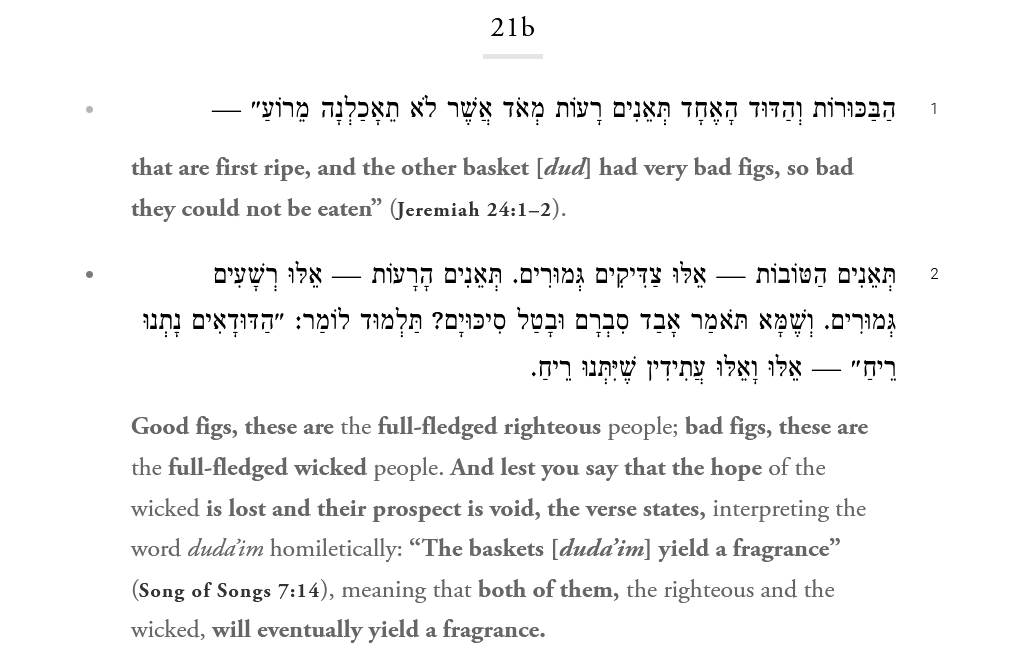
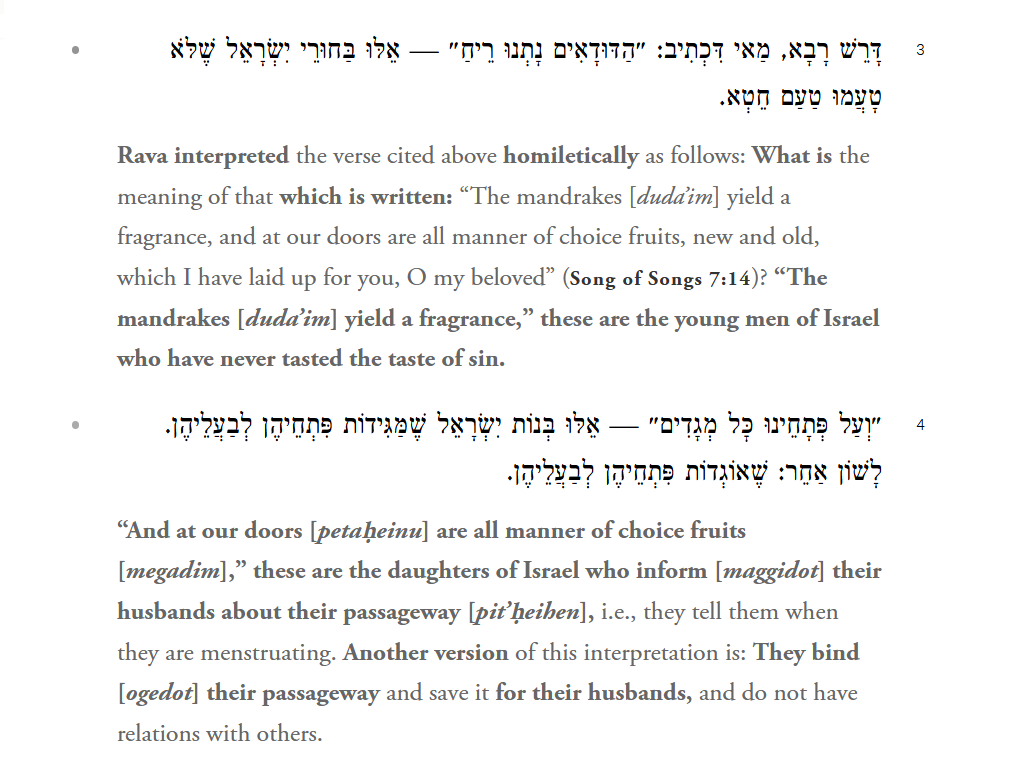
Eruvin 21b opens in the middle of a discussion, continued from the previous section, in which verses from Jeremiah and the Song of Songs are explained as comparing the righteous and wicked to fragrant figs, and pure men and women to mandrakes and choice fruits. Okay.
A few passages later, the meaning of Ecclesiastes 12:12 is discussed: "Of making many books there is no end; and much study is a weariness of the flesh." This is where the offending assertion about boiling excrement appears.

So, firstly, there is nothing here about "deserving death" here, although arguably it is implicit in the claim that the person will be sentenced to boiling excrement (an afterlife punishment). It also doesn't say "disobey", but rather "mock".
Secondly, this is not a legalistic discourse, or even really a moral one, but an open-ended discussion of the metaphorical meaning of different Bible passages. In fact, in the very next passage, a different sage provides a completely different explanation for Ecclesiastes 12:12.
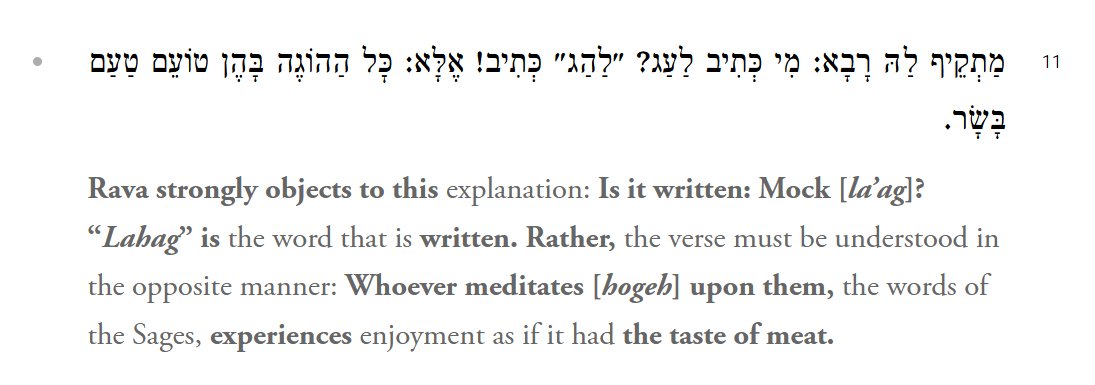
Rava (Abba ben Joseph bar Ḥama) strongly objects to the "boiling excrement" interpretation, saying the passage actually has the exact opposite meaning: People who meditate upon the words of the rabbis will experience enjoyment like that of eating meat.
So, the assertion in the "Talmud quote compilation":
1. Somewhat inaccurately summarizes the relevant part of the passage
2. Misleadingly implies that it is some kind of legal judgement
3. Misleadingly presents it as an authoritative opinion, rather than one side of a debate
1. Somewhat inaccurately summarizes the relevant part of the passage
2. Misleadingly implies that it is some kind of legal judgement
3. Misleadingly presents it as an authoritative opinion, rather than one side of a debate
The creators and readers of these "Talmud quote compilations" seem to think that the Talmud is a list of commandments or doctrines, like Deuteronomy or the Catechism of the Catholic Church—When it is a complex and multivocal compilation of opinions, rulings, and discourses.
Even in cases where the "Talmud quote compilation" mostly accurately refers to a real passage, it always leaves out the fact that the opinions in a passage are usually not final and authoritative, and are often followed by opposing opinions and interpretations.
Okay, let's do another. The image claims that Sanhedrin 58b says: "If a heathen (gentile) hits a Jew, the gentile must be killed."
Sanhedrin, by the way, is the tractate that deals with criminal proceedings and punishments, so it contains a lot of gruesome and salacious stuff.
Sanhedrin, by the way, is the tractate that deals with criminal proceedings and punishments, so it contains a lot of gruesome and salacious stuff.
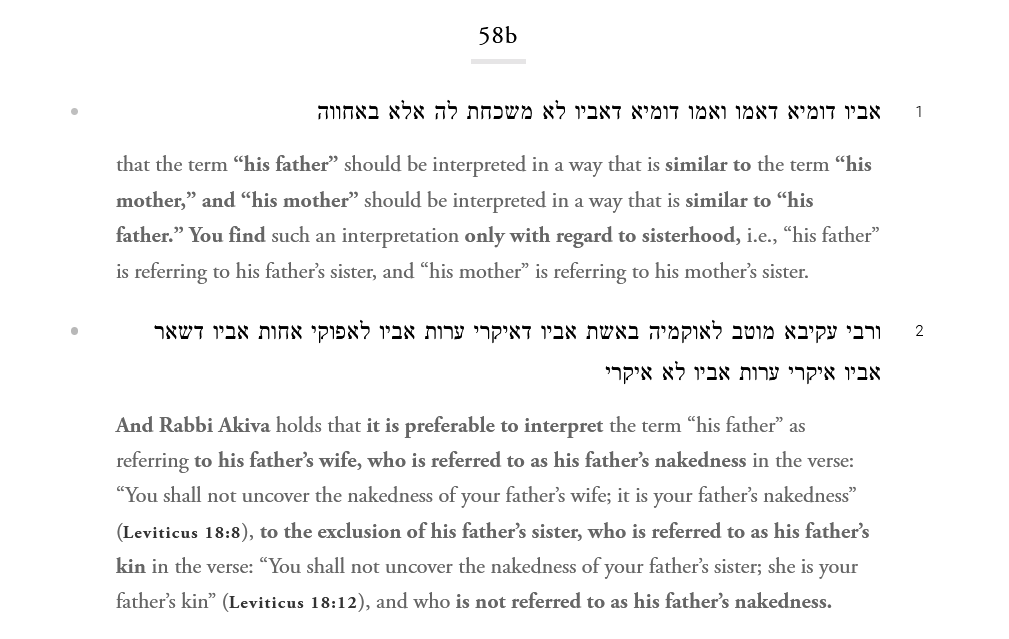
Sanhedrin 58b starts out in the middle of an exhaustive (and exhausting) discussion of the exact meaning of the words "his father" and "his mother" in Genesis 2:24 ("That is why a man leaves his father and mother and is united to his wife, and they become one flesh.")
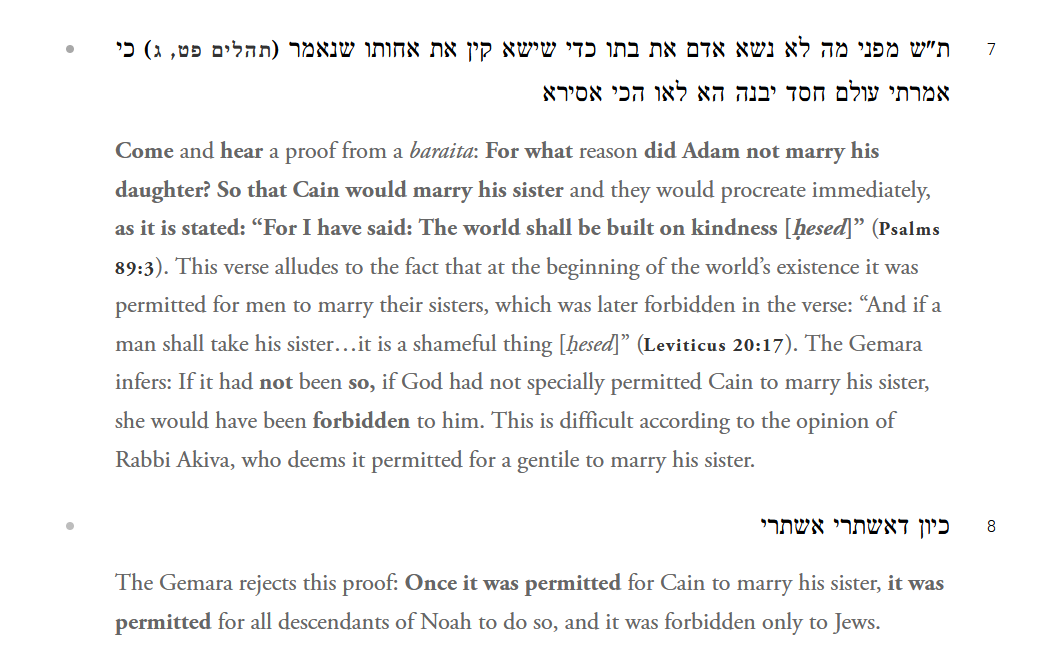
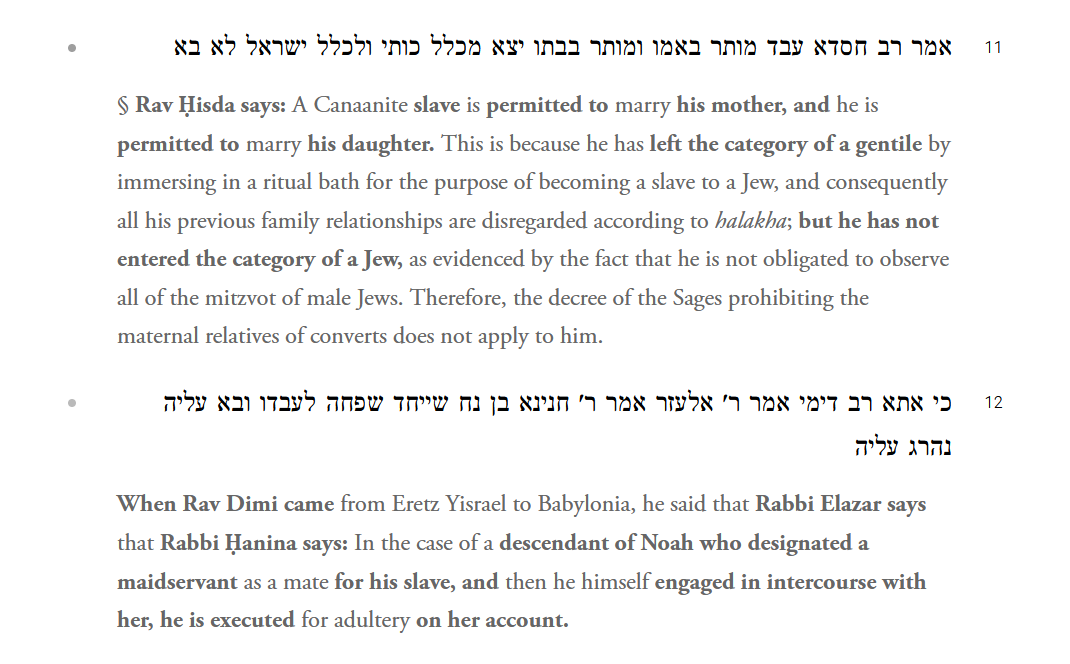
Okay, to continue. This section eventually does get to the part about a gentile hitting a Jew, via a discussion of early Biblical figures marrying relatives, what marriages are forbidden to Jews and non-Jews, and then other differences in the legal treatment of Jews and non-Jews.
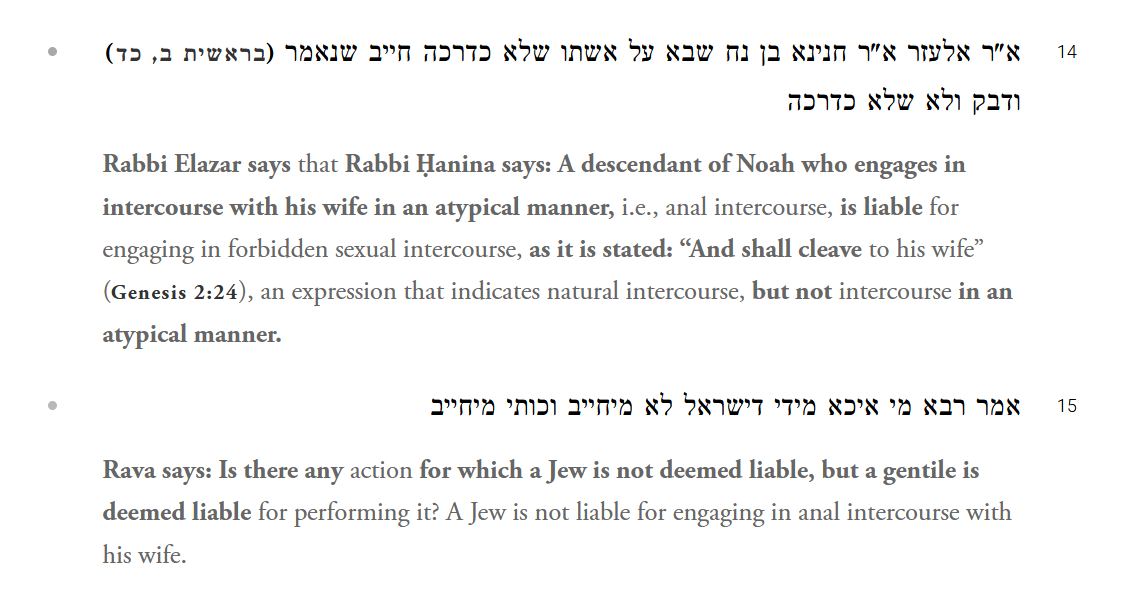
The immediately preceding context is whether Jews and non-Jews are liable for having anal sex with their wives. The question is asked, "Is there any action for which a Jew is deemed not liable, but a gentile is deemed liable?"

Loading suggestions...