

The concept of Arab supremacy was introduced into Islam by contradictory Sahih Hadith.
Some do not distinguish between Arabs and non-Arabs “except by piety”, while others assign perpetual authority to the Quraysh tribe, warning God will punish those who don’t submit.
Some do not distinguish between Arabs and non-Arabs “except by piety”, while others assign perpetual authority to the Quraysh tribe, warning God will punish those who don’t submit.
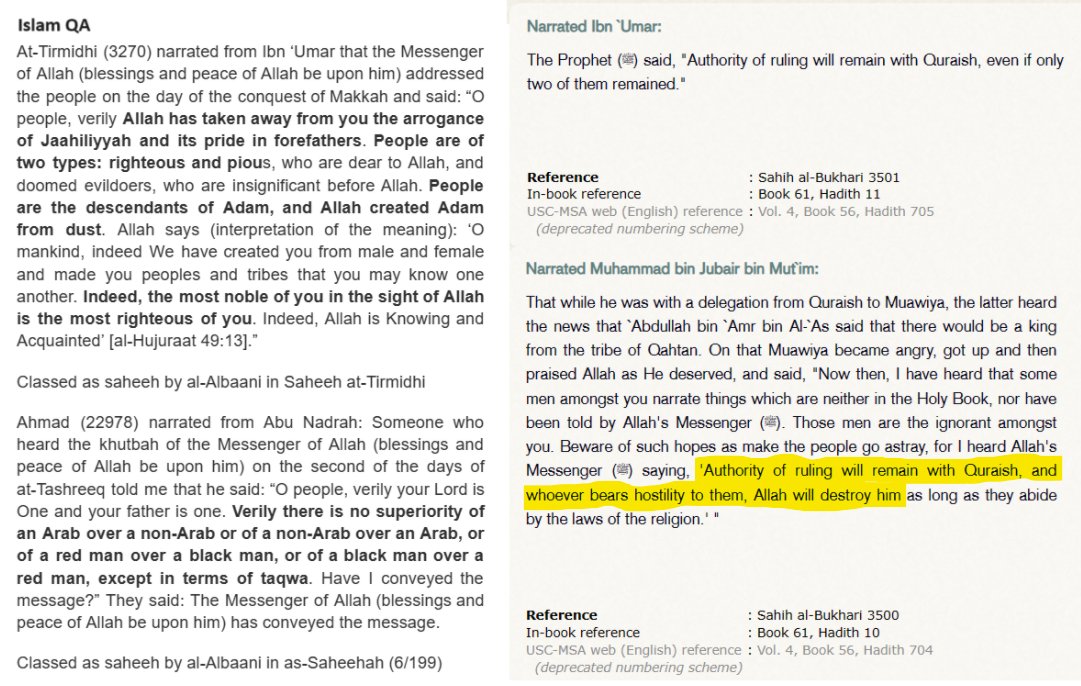
Such sentiments were the product of sectarian disputes in the Umayyad period rather than Prophetic decree, yet credulous traditionalists like Ibn Taymiyyah allowed Arab supremacy to work its way into their scholarship.

Ibn Hanbal, founder of one of the four major schools of Sunni Islam, also affirmed the superiority of Arabs, while condemning the Shu'ubiyya, non-Arab Muslims who resisted Arab hegemony over the Caliphate and Islam.

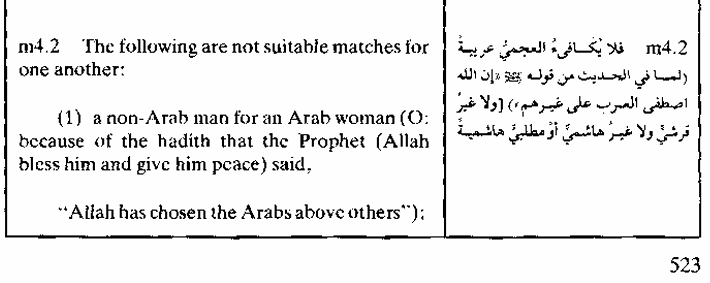
14th century scholar al-Misri also affirms Arab superiority in the famous Shafi legal manual, Reliance of the Traveller, where non-Arab men are prohibited from marrying Arab women, as “Arabs are above others”.
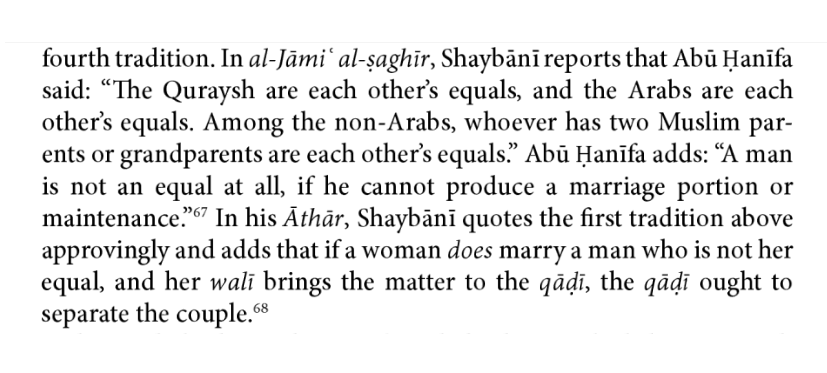
Abu Hanifa, founder of the largest school of Sunni Islam, also appears to endorse Arab supremacy, affirming the familiar hierarchy of the Quraysh at the top, followed by other Arabs, and then non-Arab Muslims (with more recent converts held in lowest esteem).
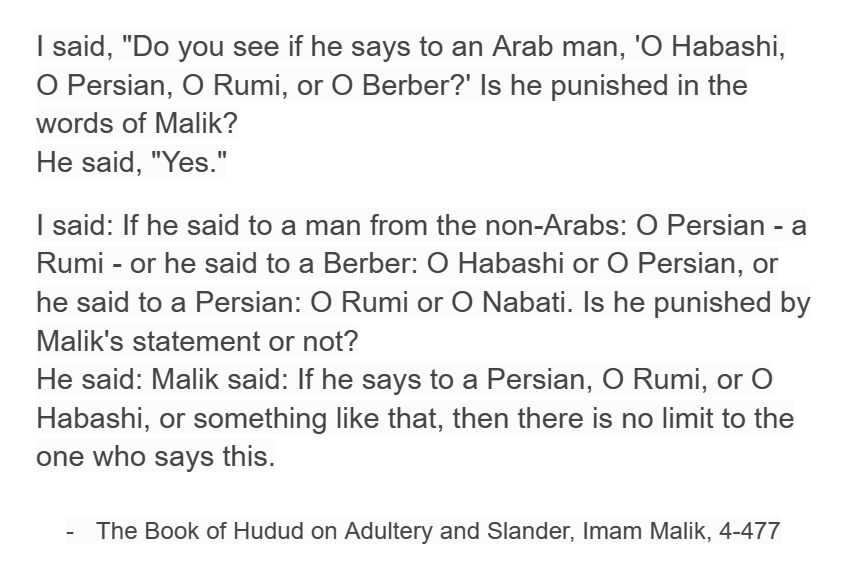
Imam Malik, founder of the fourth major Sunni school, reportedly prescribed legal punishment for those who slandered Arabs by incorrectly labeling them non-Arab, but called for no such punishment if a non-Arab was incorrectly labeled.
If classical scholars made such basic errors by canonizing contradictory Hadith and then using them to encode Arab supremacy into Islamic law, why should modern Muslims feel beholden to their rulings or legal tradition?
Loading suggestions...