
A brief history of animals in art, from prehistoric cave paintings to 21st century films:
Animal art is pretty much the oldest genre of all.
Cave paintings were humanity's first main form of representational art, and all around the world they inevitably depict animals.
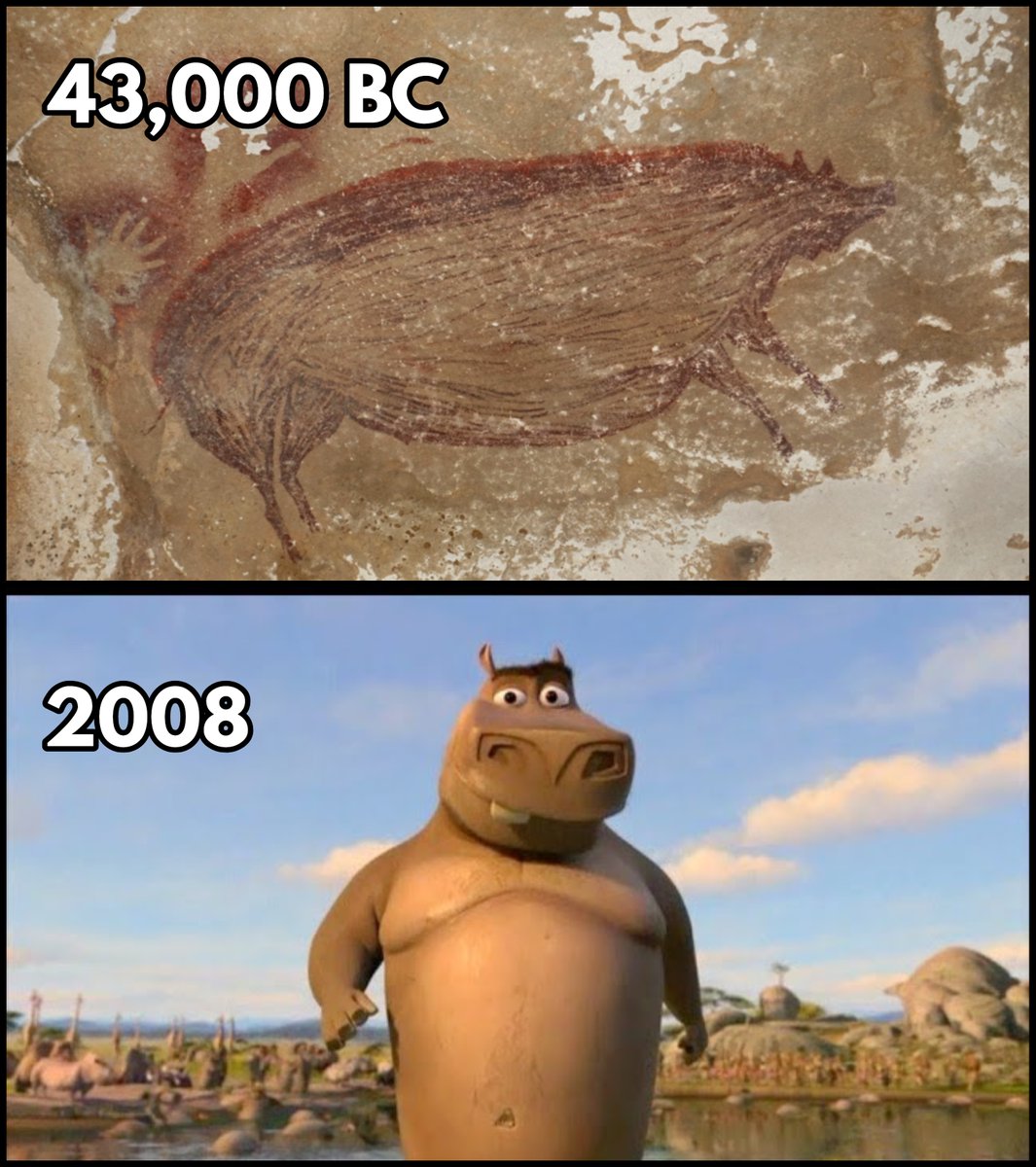
This painting of a Sulawesi pig, in Indonesia, is believed to be 45,500 years old:
Cave paintings were humanity's first main form of representational art, and all around the world they inevitably depict animals.
This painting of a Sulawesi pig, in Indonesia, is believed to be 45,500 years old:

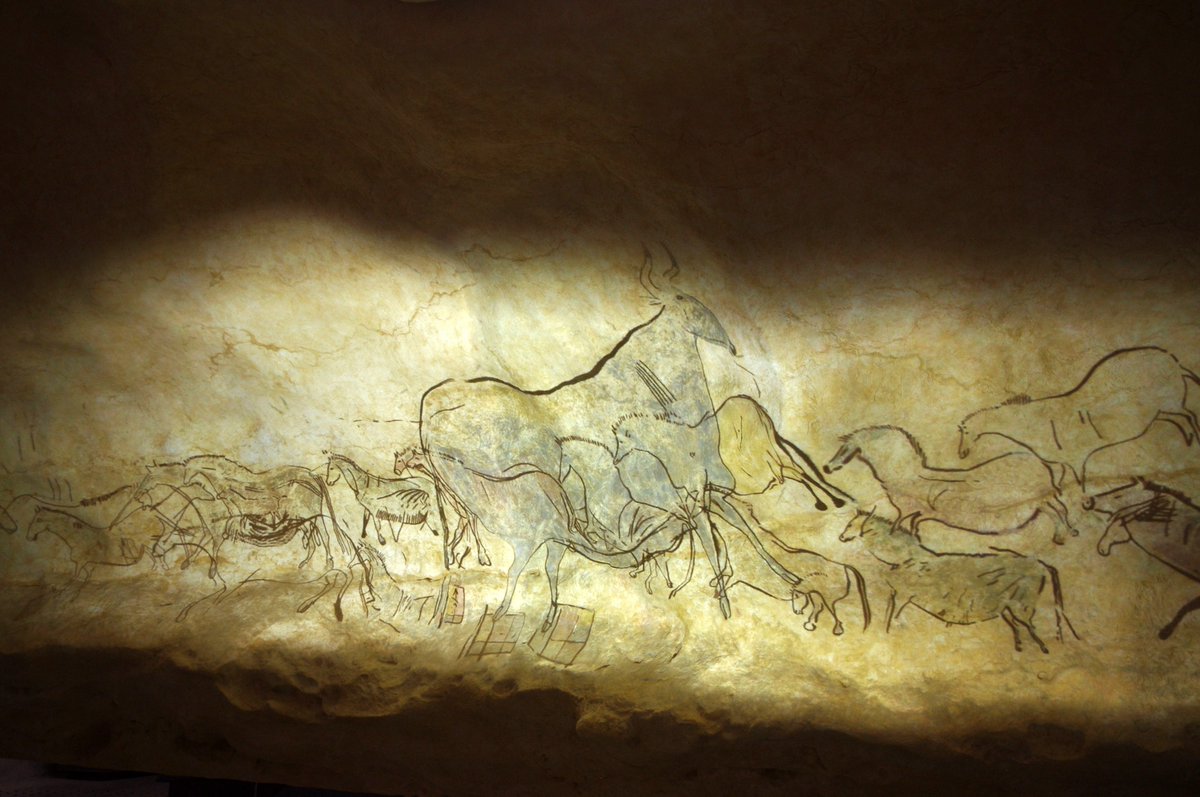
There are also the Lascaux Cave Paintings in France, made 20,000 years ago, and hundreds more places like it.
Why exactly did our ancestors depict animals in their caves?
We will never know for sure, but we can speculate — and partly by asking ourselves why *we* might do that.
Why exactly did our ancestors depict animals in their caves?
We will never know for sure, but we can speculate — and partly by asking ourselves why *we* might do that.
For most of history the depiction of animals hasn't been about simply portraying them as they "really" look.
Rather, it's been about their deeper meaning, about what they symbolise.
Hence many portrayals of animals are not strictly "realistic", because they weren't meant to be.
Rather, it's been about their deeper meaning, about what they symbolise.
Hence many portrayals of animals are not strictly "realistic", because they weren't meant to be.
Just think of the Ancient Egyptians and their part-human, part-animal gods.
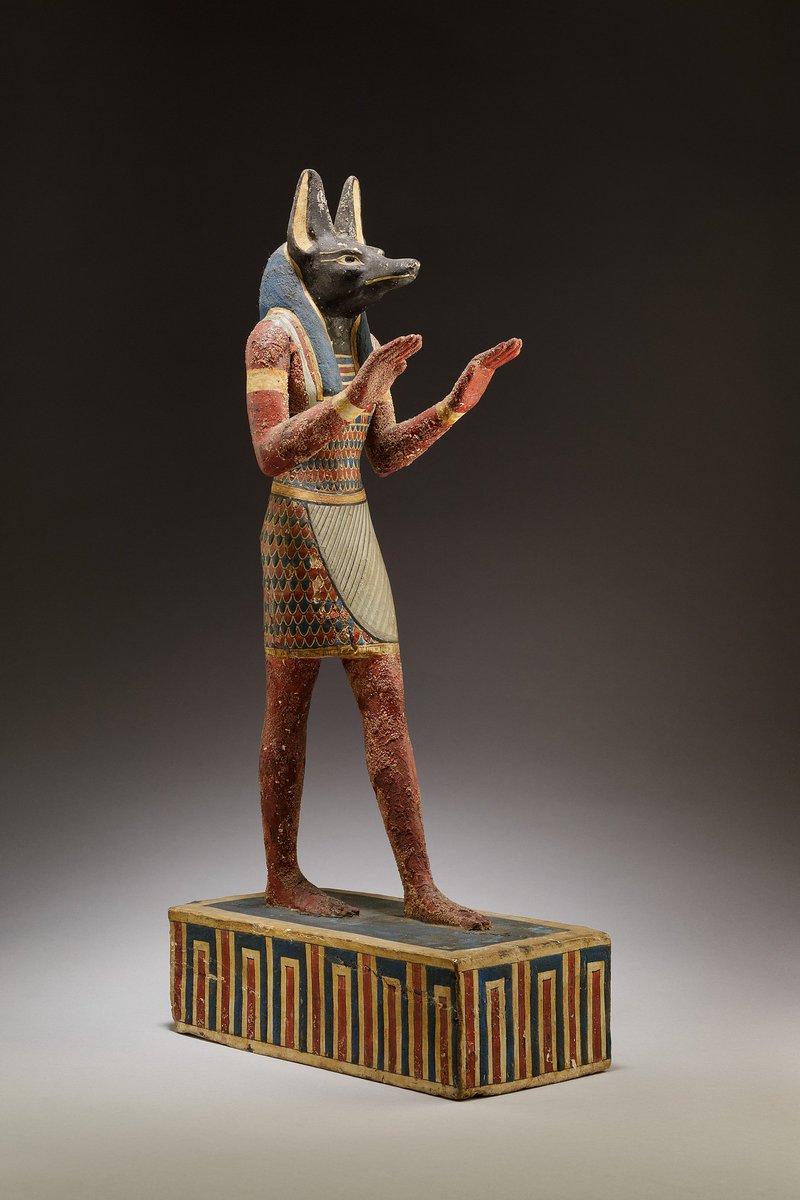
Like the ibis-headed Thoth or the jackal-headed Anubis:
Like the ibis-headed Thoth or the jackal-headed Anubis:
Or even the Sphinx itself!
Clearly humans have always believed that different animals embody certain qualities or ideas, and that these qualities or ideas can also be applied to humans.
Courage, wit, cowardice, stupidity, majesty, mystery, and so on.
Clearly humans have always believed that different animals embody certain qualities or ideas, and that these qualities or ideas can also be applied to humans.
Courage, wit, cowardice, stupidity, majesty, mystery, and so on.

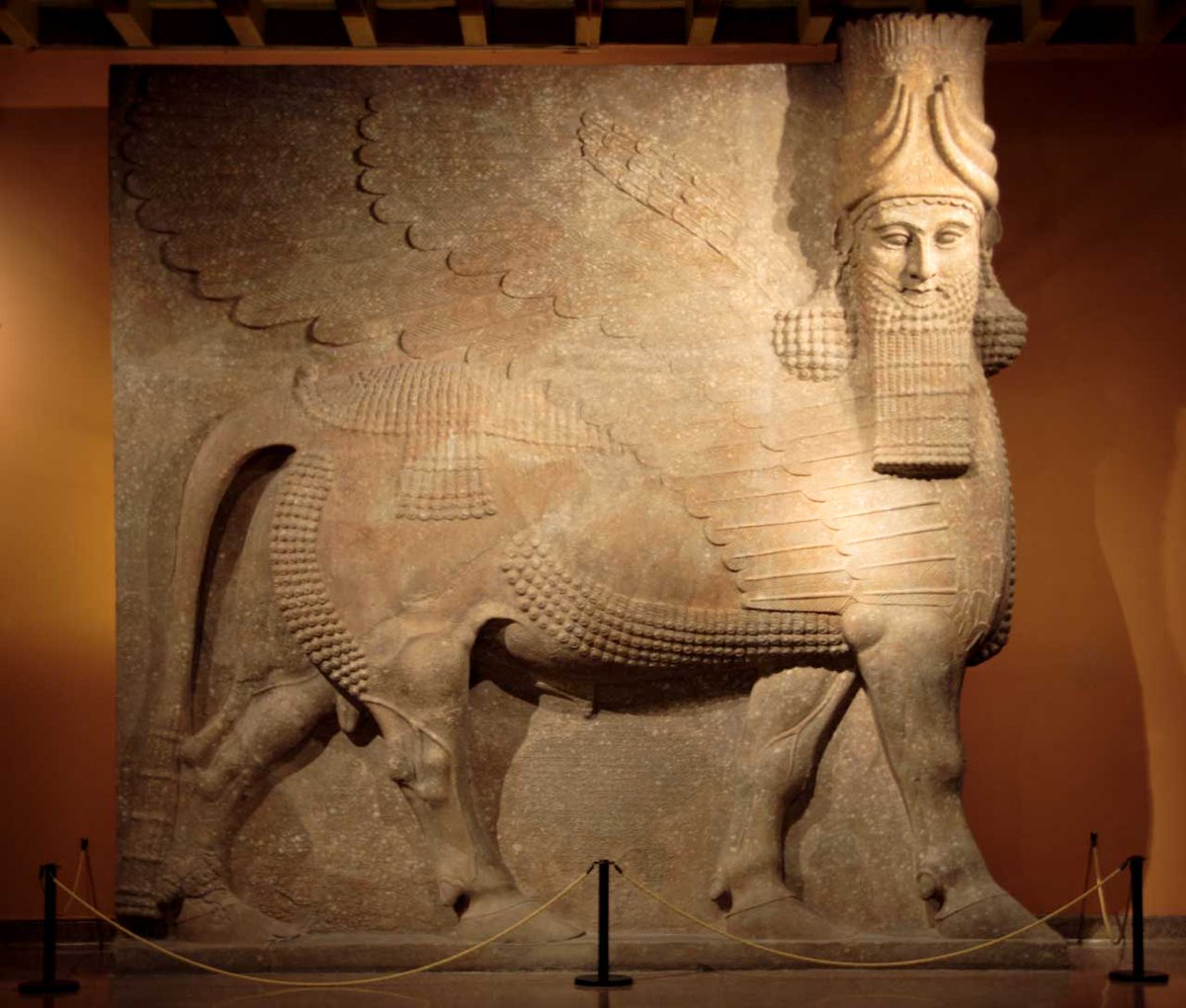
And this is something that goes all the way back to the ancient Mesopotamians, whether their lion-shaped weights or their "lamassu" guardian statues:
And all of this makes sense.
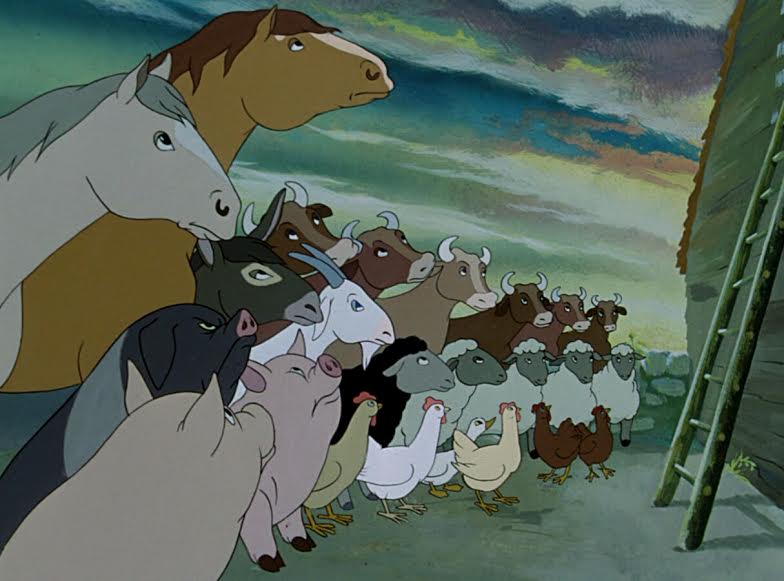
The same reason that George Orwell wrote Animal Farm is the same reason Aesop's Fables were about animals.
Animals help us to tell and understand stories... and still do in the 21st century.
The same reason that George Orwell wrote Animal Farm is the same reason Aesop's Fables were about animals.
Animals help us to tell and understand stories... and still do in the 21st century.
So the symbolical meaning of animals has been a ubiquitous feature of art, all around the world, for centuries.
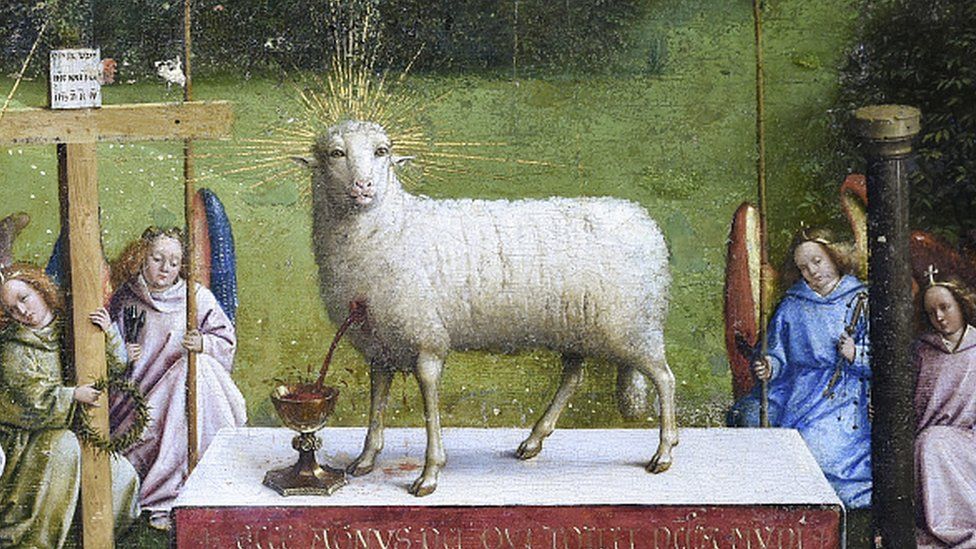
Just think of how Christ is symbolised as a lamb, perhaps most famously in Jan van Eyck's Ghent Altarpiece, from the 15th century:
Just think of how Christ is symbolised as a lamb, perhaps most famously in Jan van Eyck's Ghent Altarpiece, from the 15th century:
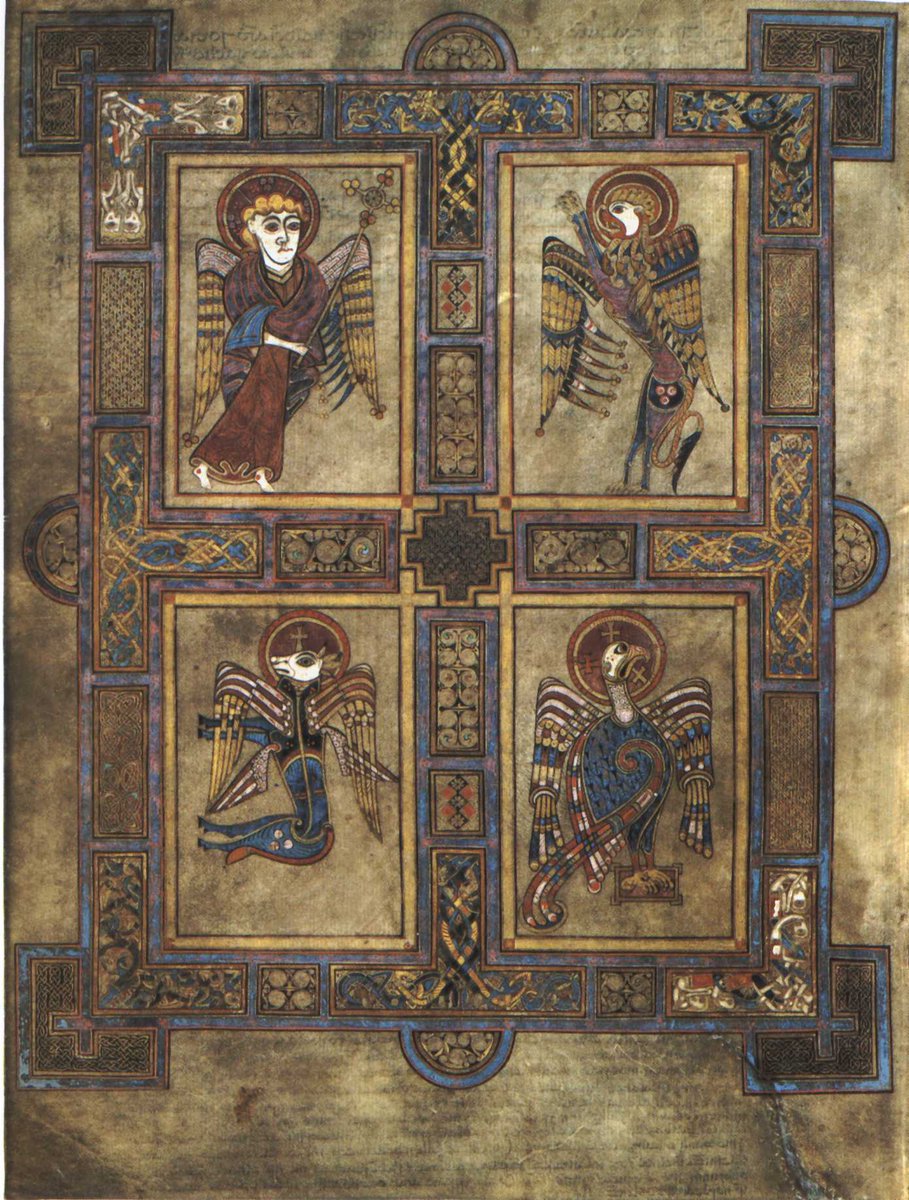
And consider how three of the Four Evangelists — Mark, Luke, and Luke — were depicted as a winged lion, a winged bull, and an eagle.
In this case from the Book of Kells:
In this case from the Book of Kells:
It's also worth noting how often certain animals have ended up with the same symbolic meanings in different parts of the world.
Just think of the importance of the eagle, whether in the iconography of Ancient Rome, the totem poles of the Northwest Coast, or in Medieval heraldry.
Just think of the importance of the eagle, whether in the iconography of Ancient Rome, the totem poles of the Northwest Coast, or in Medieval heraldry.

But not all depictions of animals in art have been about their symbolical meaning.
Sometimes, it seems, curiosity was the driving force, whether philosophical or imaginative.
Consider those famous Medieval bestiaries and their animal studies... of varying accuracy.
Sometimes, it seems, curiosity was the driving force, whether philosophical or imaginative.
Consider those famous Medieval bestiaries and their animal studies... of varying accuracy.
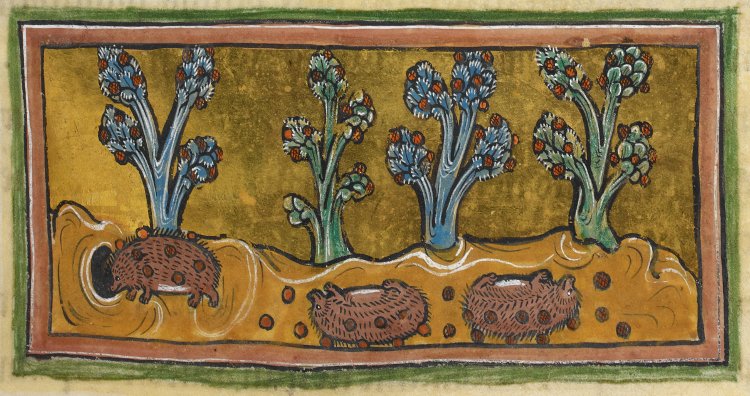
The shift to a more scientific depiction of animals — also representing how we actually view them — is signified by Albrecht Dürer, the 16th century German artist.
His hare is perfectly lifelike... but it somehow has less life than those older, less "realistic" depictions.
His hare is perfectly lifelike... but it somehow has less life than those older, less "realistic" depictions.
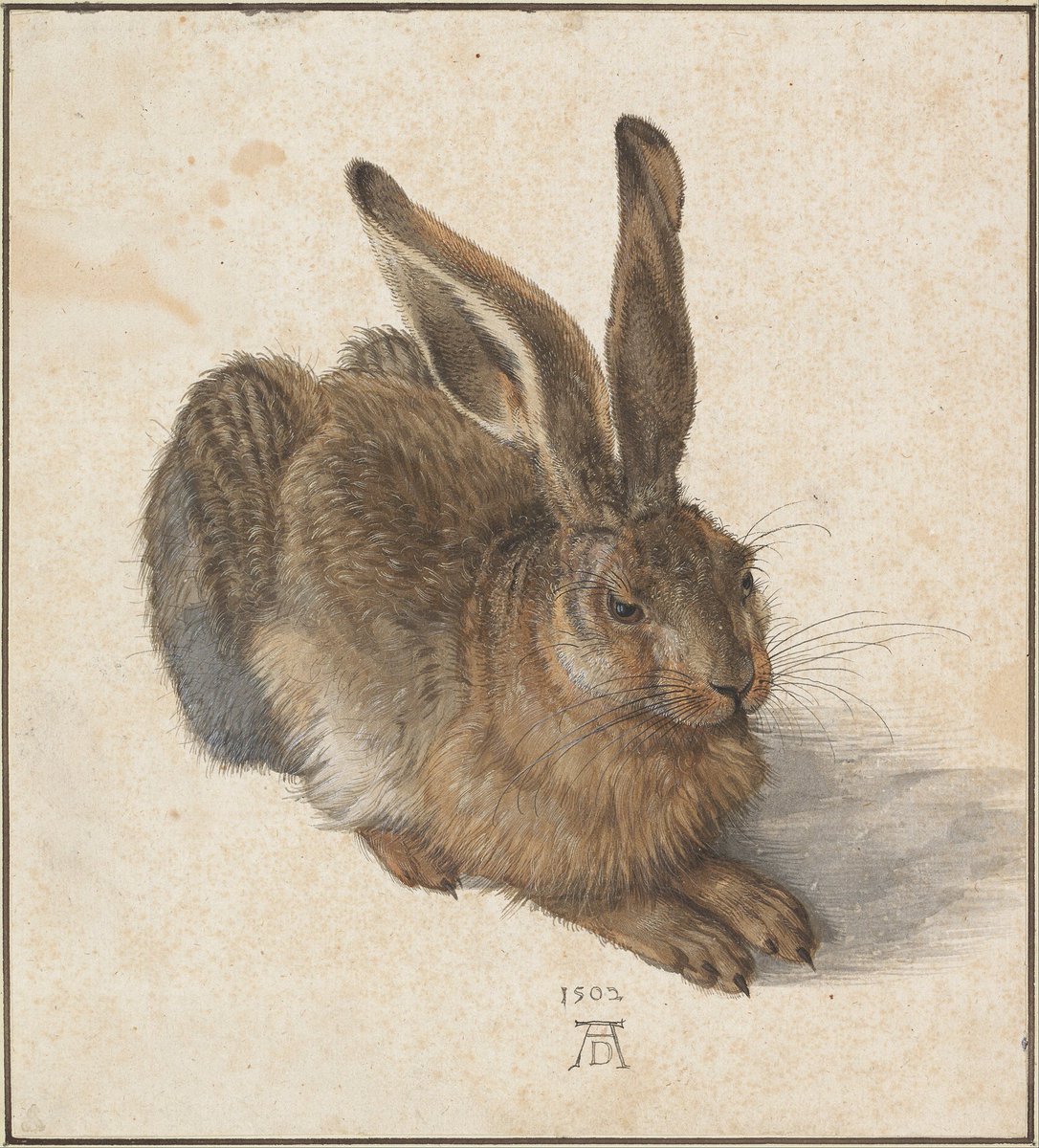
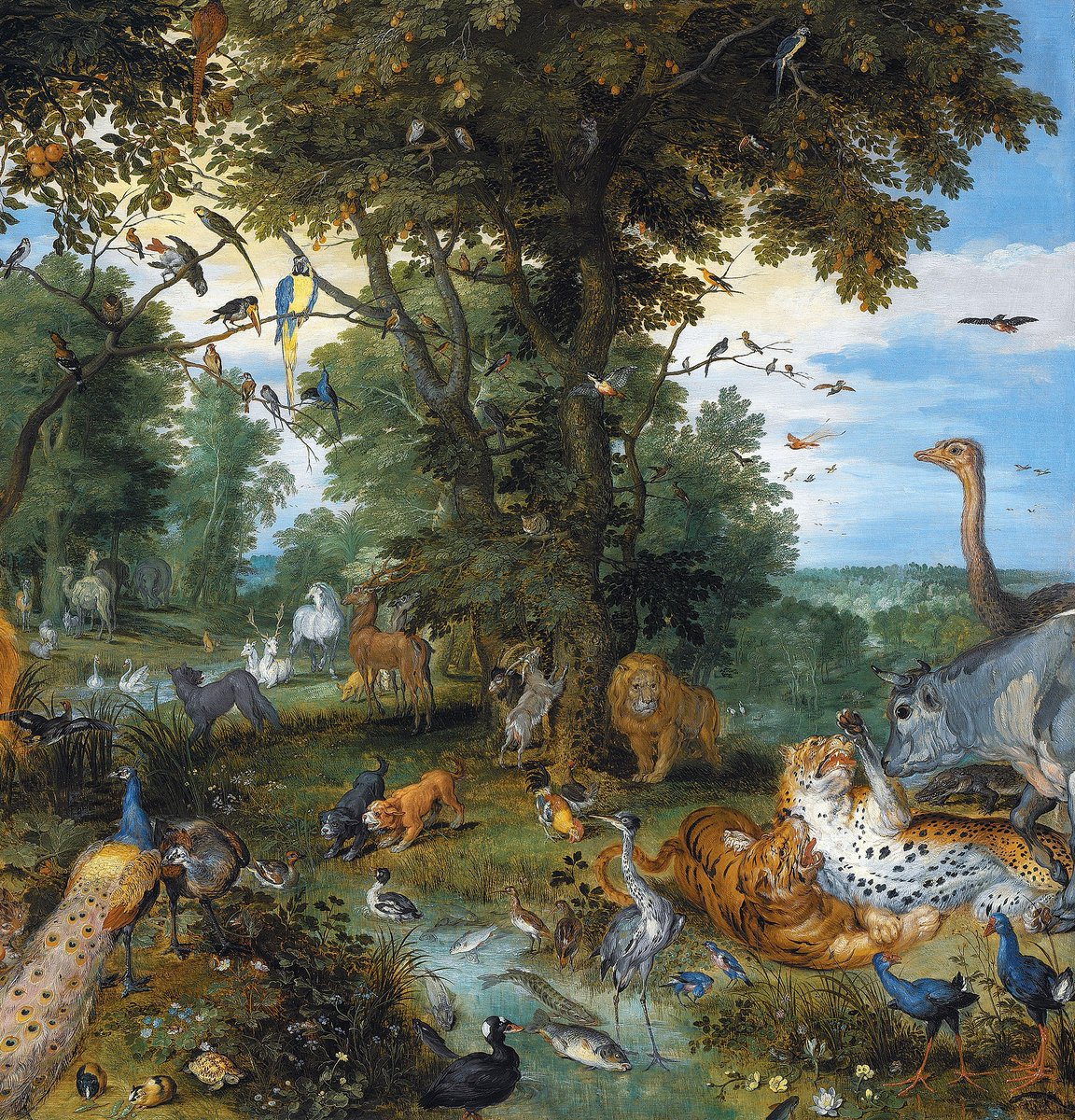
At some point people started depicting animals as they are in themselves, without regard to their symbolic meaning — sometimes even with sympathy for the animals as living creatures.
The fact that this change happened after the Renaissance is not a coincidence.
The fact that this change happened after the Renaissance is not a coincidence.
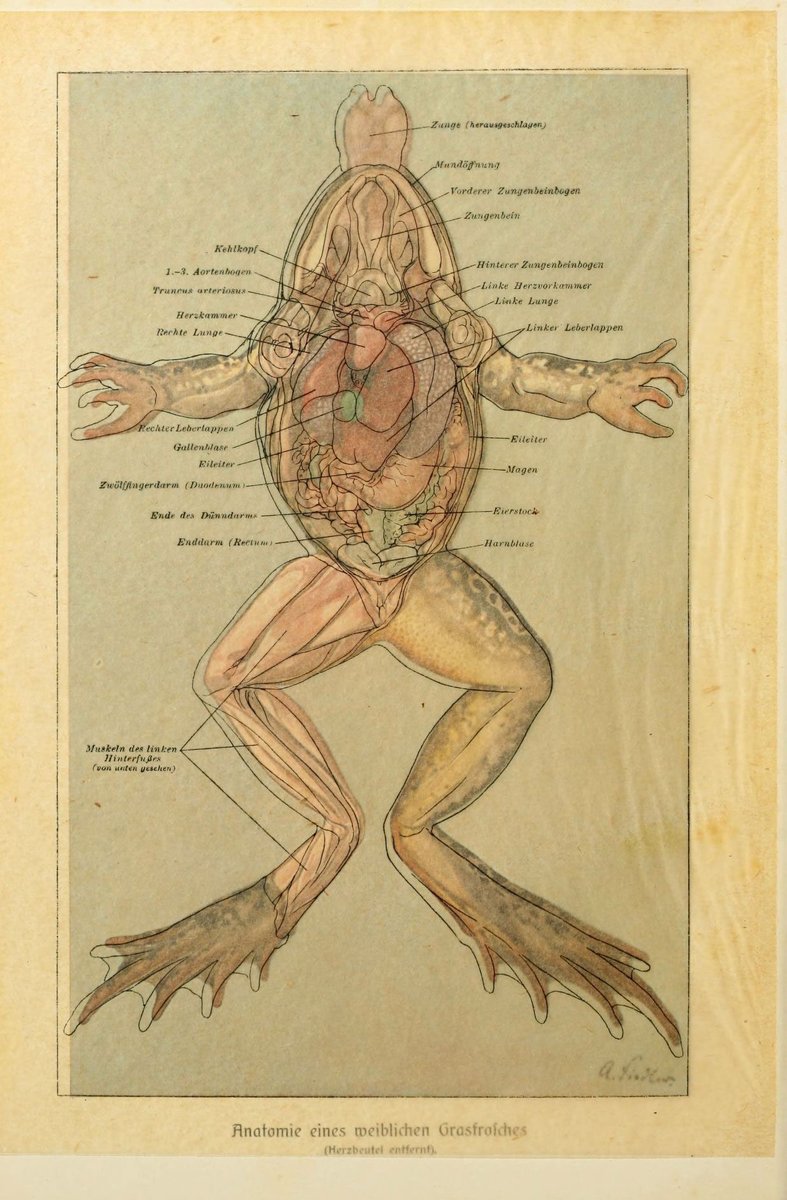
This scientific view of animals led to their depiction not as art but as objects of study.
Learning more about animals can only be a good thing, but sometimes it goes too far — something is lost when we view animals as mere objects and cast aside their symbolic meaning.
Learning more about animals can only be a good thing, but sometimes it goes too far — something is lost when we view animals as mere objects and cast aside their symbolic meaning.
Still, this little journey has largely focussed on European art, and in other parts of the world animal art has often been different.
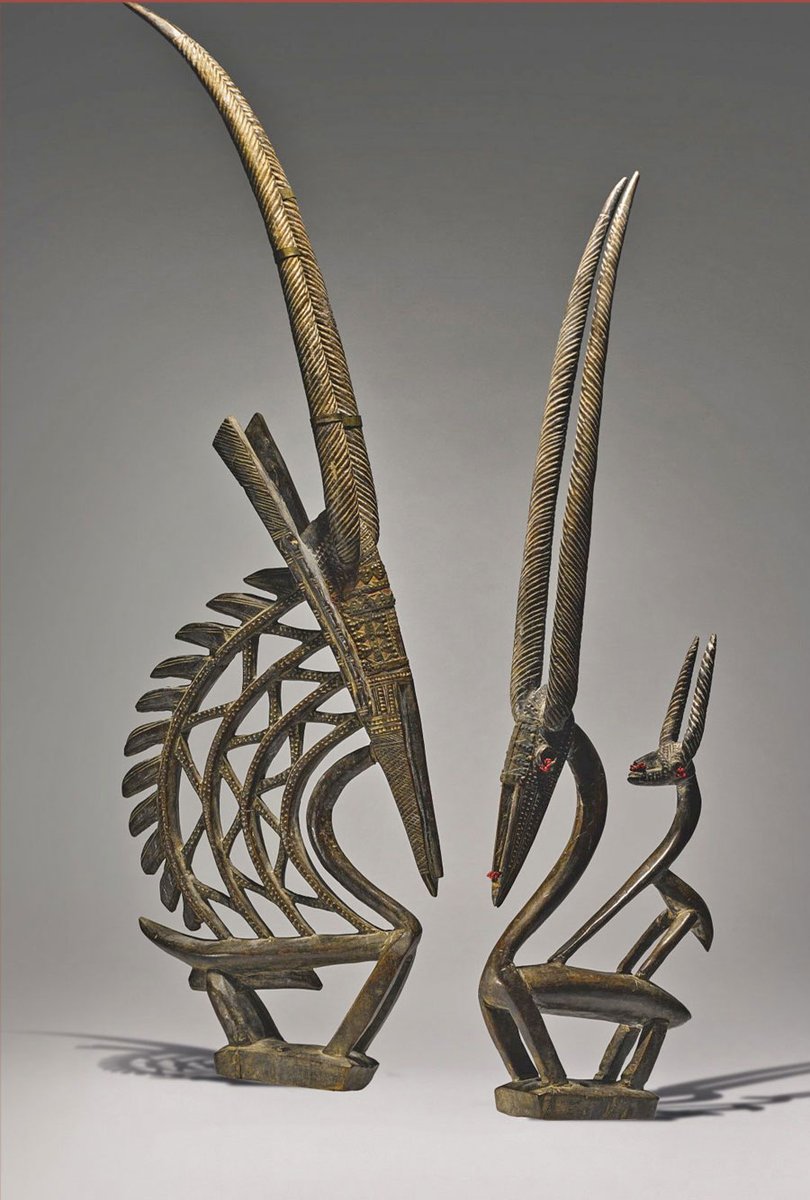
Consider these "Chiwara" made by the Bambara people of West Africa — wonderfully stylised depictions of antelope:
Consider these "Chiwara" made by the Bambara people of West Africa — wonderfully stylised depictions of antelope:
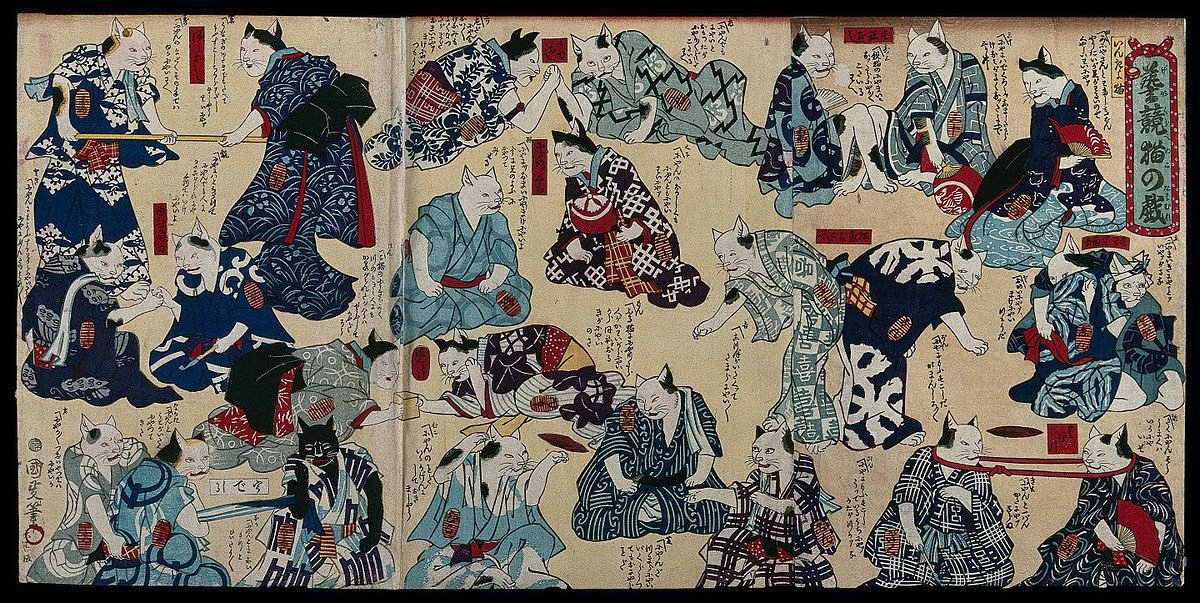
Or, for something more comical, consider the portrayal of cats in Japanese ukiyo-e.
This is one is by Utagawa Kunimasa IV, made in the 1870s:
This is one is by Utagawa Kunimasa IV, made in the 1870s:
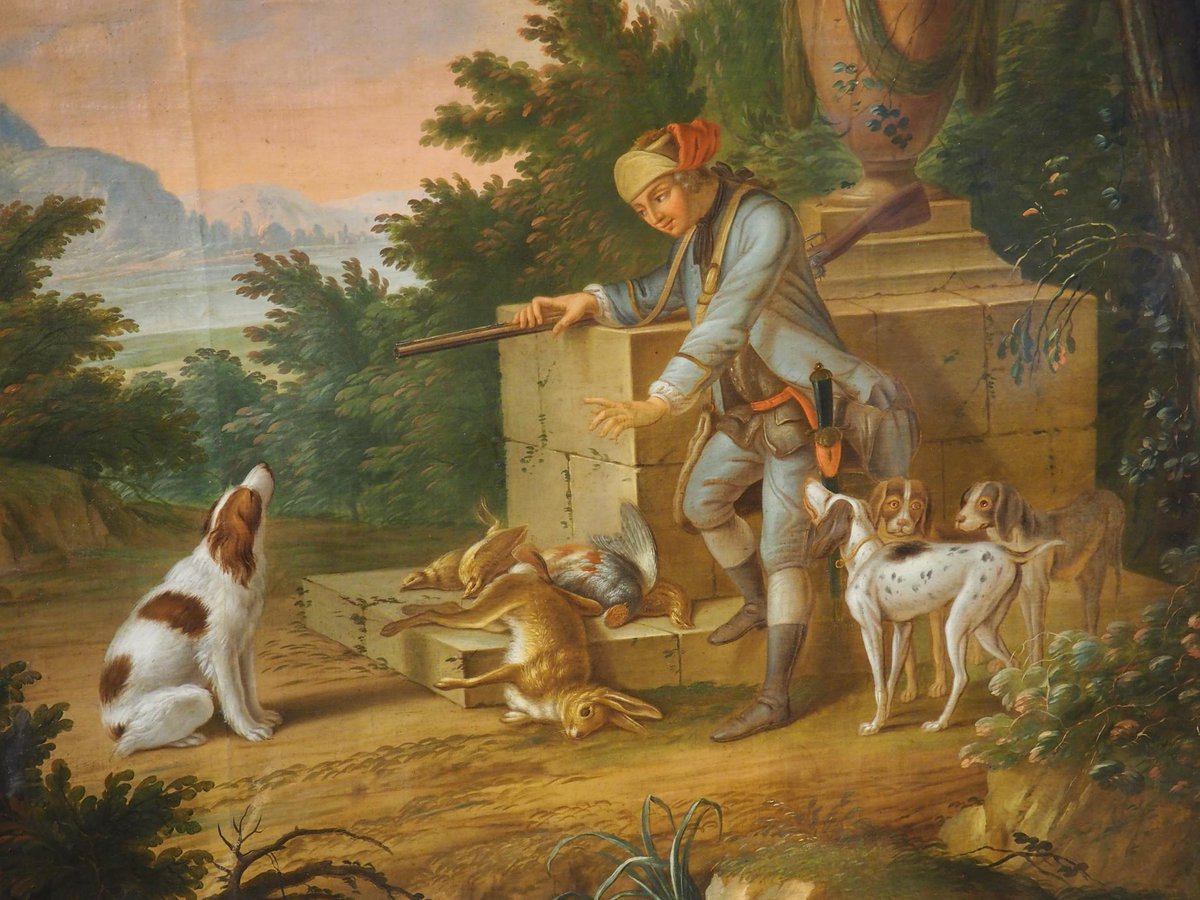
Art inevitably reflects the ideas of the people who made it.
There is a big difference between the hunting scenes of 18th century high society and those of prehistoric cave paintings.
One was about chasing animals to survive, the other as a form of sport, and you can tell.
There is a big difference between the hunting scenes of 18th century high society and those of prehistoric cave paintings.
One was about chasing animals to survive, the other as a form of sport, and you can tell.
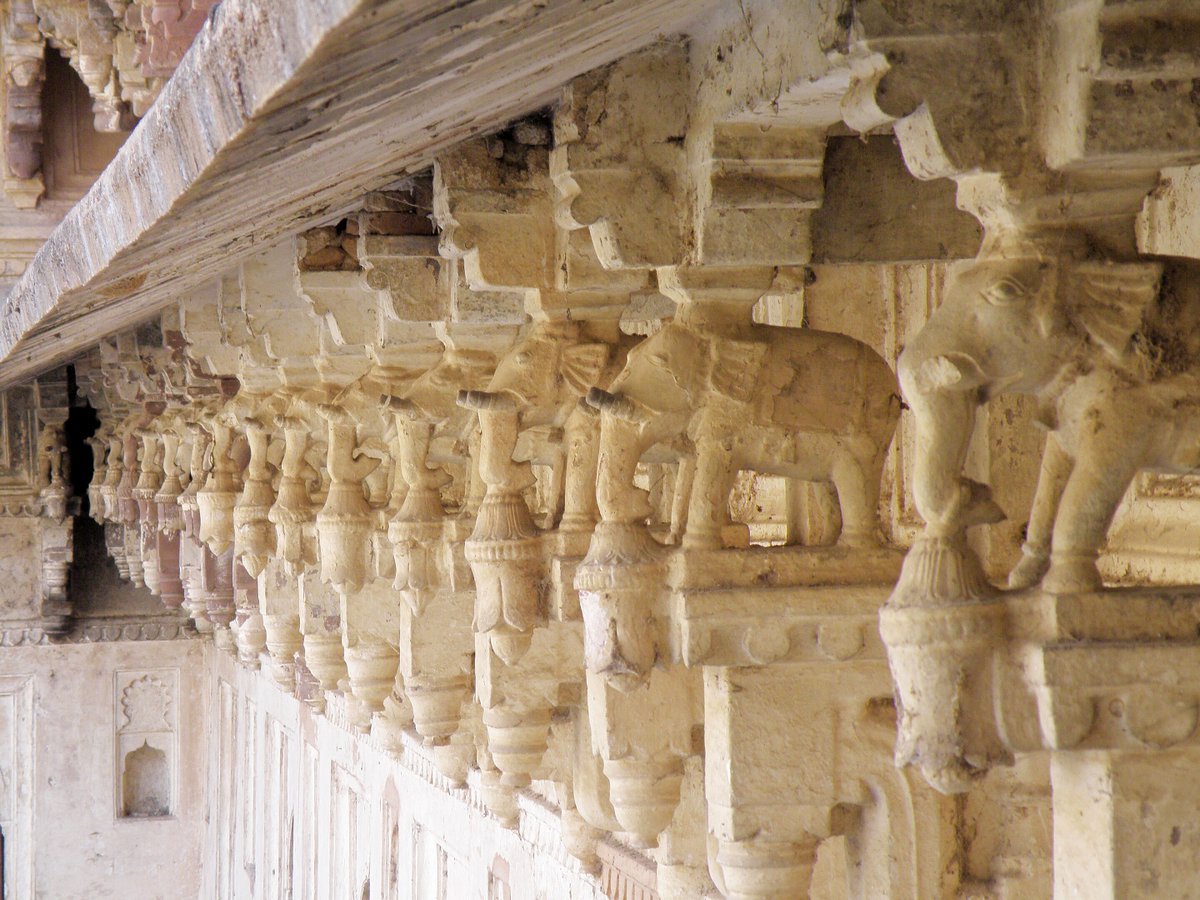
In India, for example, elephants have been elevated in art for centuries.
Their use in architectural decoration, whether as corbels, capitals, or serving as the plinth for temples, says a lot about how they were and are seen.
Their use in architectural decoration, whether as corbels, capitals, or serving as the plinth for temples, says a lot about how they were and are seen.
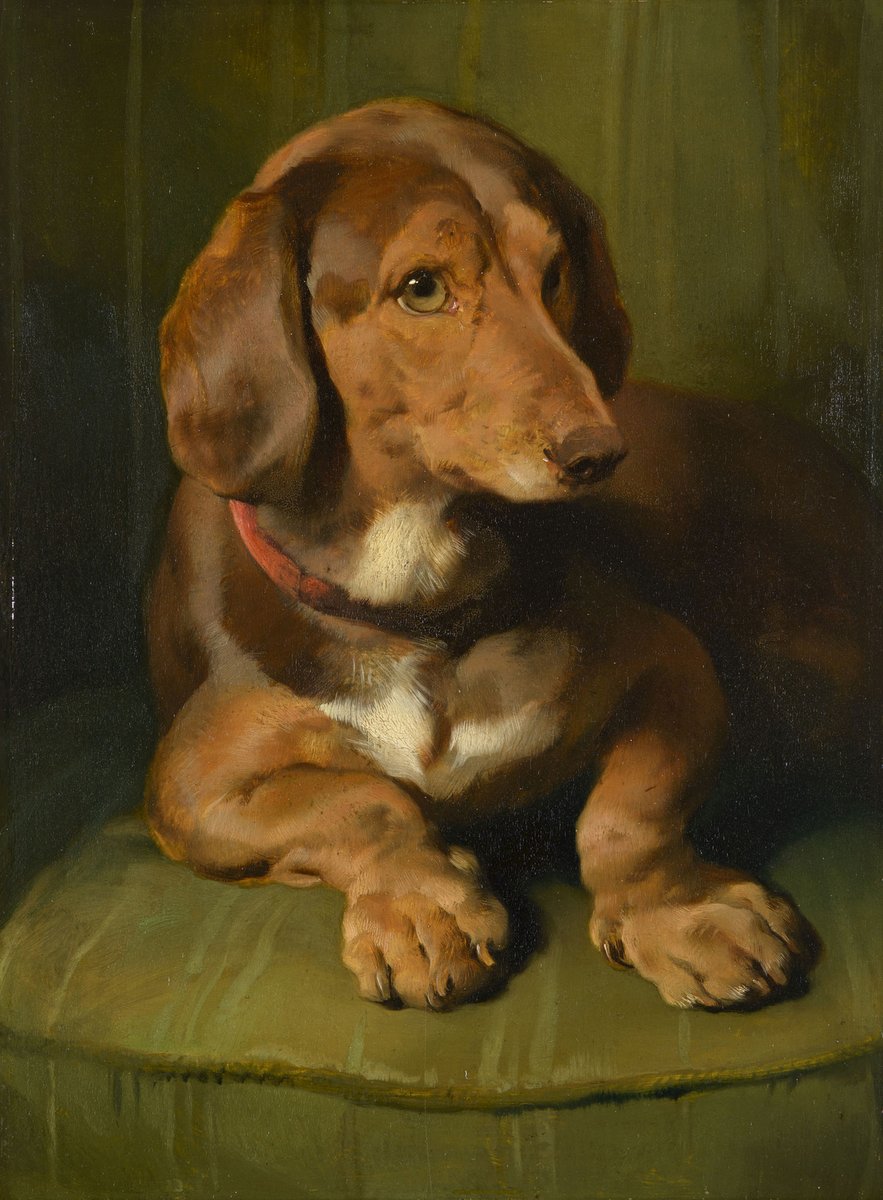
Although animals have been part of human life for millennia, and pets have been around for centuries, our modern notion of "having a pet" only started in the 19th century.
Edwin Landseer, the most famous animal painter in Victorian Britain, captures this changed perspective:
Edwin Landseer, the most famous animal painter in Victorian Britain, captures this changed perspective:
So there has always been a fascination with animals, plus demand for their depiction in art.
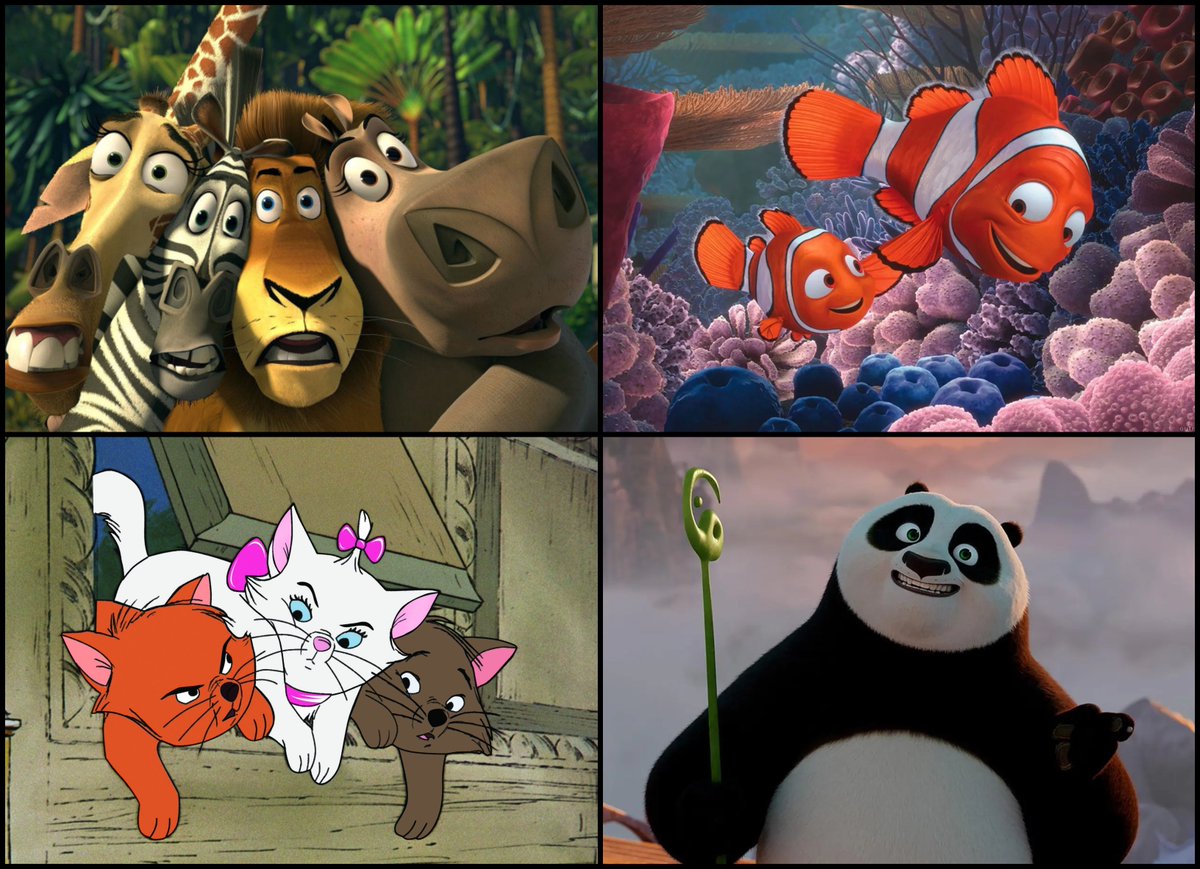
Our modern phenomenon of animated films about animals, and our animal videos — cute cats, loyal dogs, or peculiar creatures — is nothing new.
The mediums have changed; we have not.
Our modern phenomenon of animated films about animals, and our animal videos — cute cats, loyal dogs, or peculiar creatures — is nothing new.
The mediums have changed; we have not.
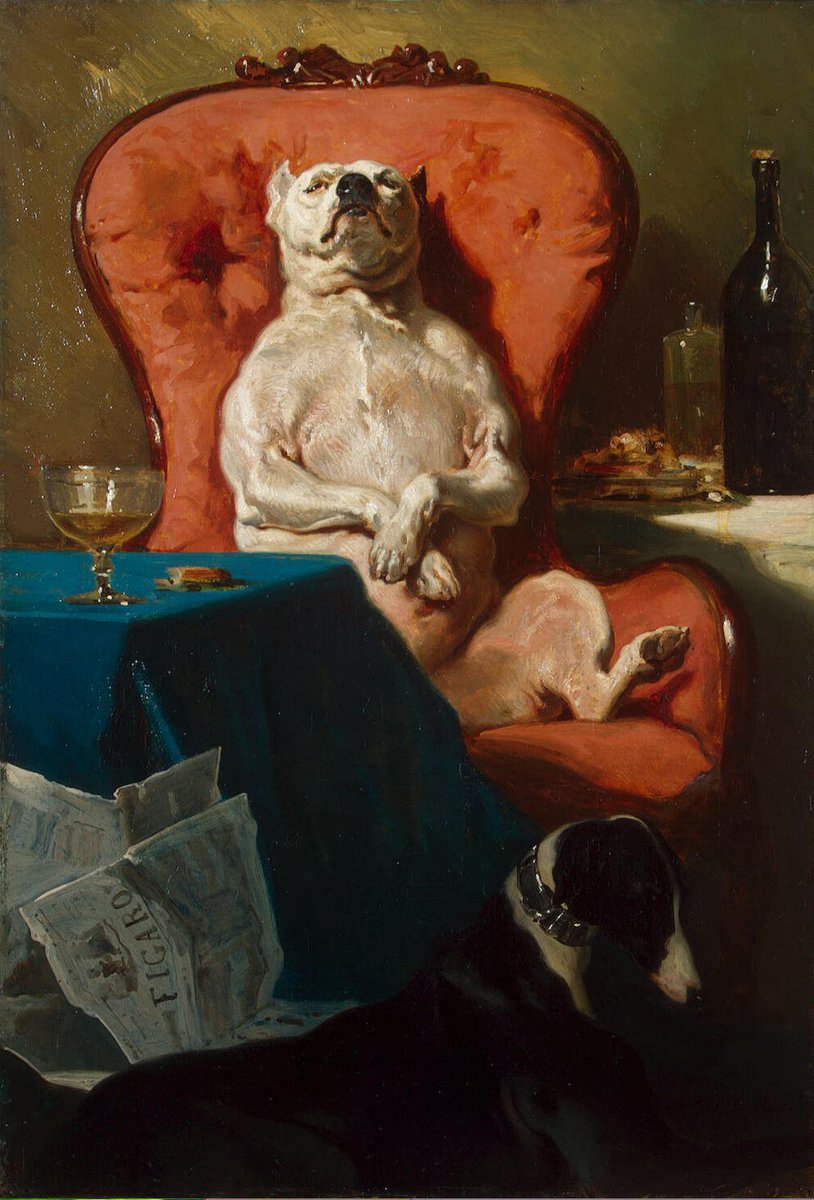
People in the past also found animals funny, as we do — especially when doing human things.
Think of those famous Medieval marginalia, or the ukiyo-e of Kuniyoshi and others like him, or just look at Alfred de Dreux's Pug in an Armchair, from 1857:
Think of those famous Medieval marginalia, or the ukiyo-e of Kuniyoshi and others like him, or just look at Alfred de Dreux's Pug in an Armchair, from 1857:
We might think that films with talking animals would seem strange to our ancestors, but this is surely one of the things they would understand best about modernity.
We have been using animals to tell our stories since the dawn of civilisation, and show no sign of stopping.
We have been using animals to tell our stories since the dawn of civilisation, and show no sign of stopping.
Loading suggestions...