

THREAD 🧵
Legitimacy of Organized Armed Palestinian Resistance and the illegitimacy of the Zionist occupation,under International Law
1- First, United Nations Resolution 1514 of December 14, 1960, affirms the right of all peoples to self-determination.
ohchr.org
Legitimacy of Organized Armed Palestinian Resistance and the illegitimacy of the Zionist occupation,under International Law
1- First, United Nations Resolution 1514 of December 14, 1960, affirms the right of all peoples to self-determination.
ohchr.org
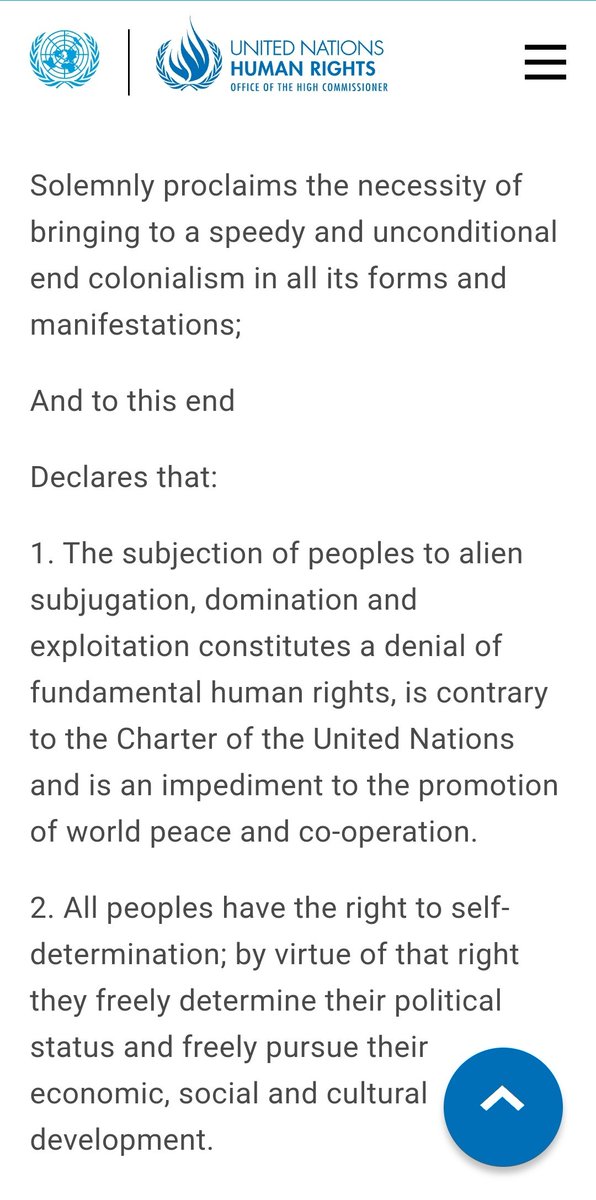
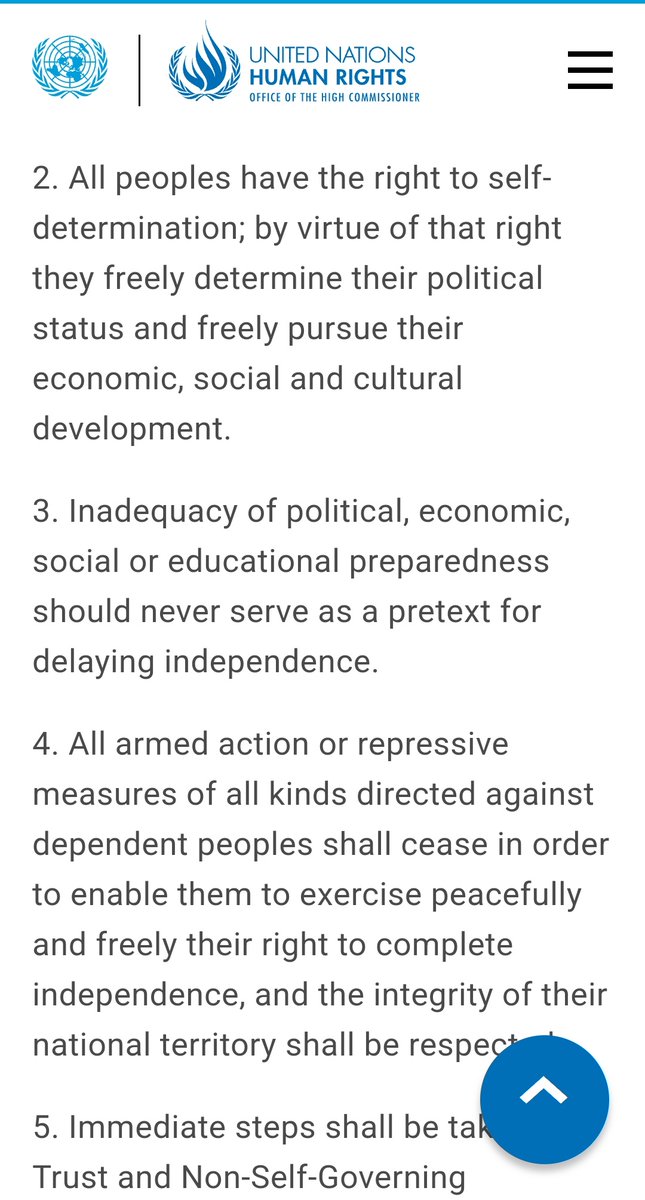
2- Second, Resolution 4649 of 1970 recognizes the legitimacy of struggles against colonialism.
un.org
un.org
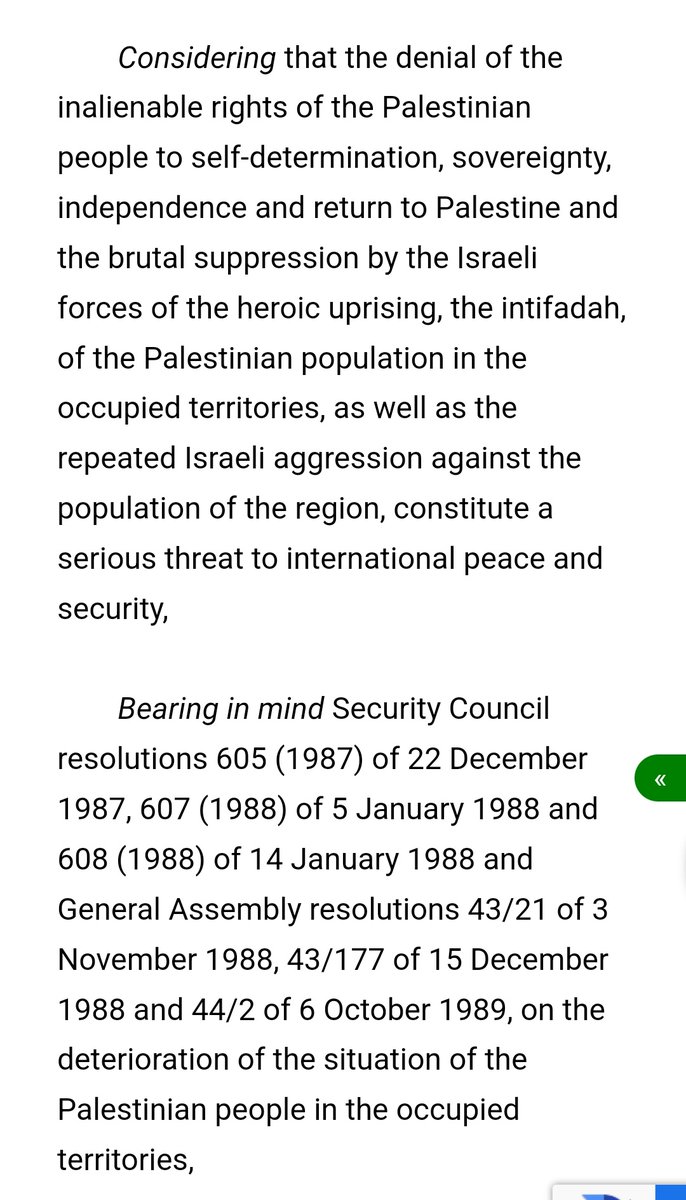
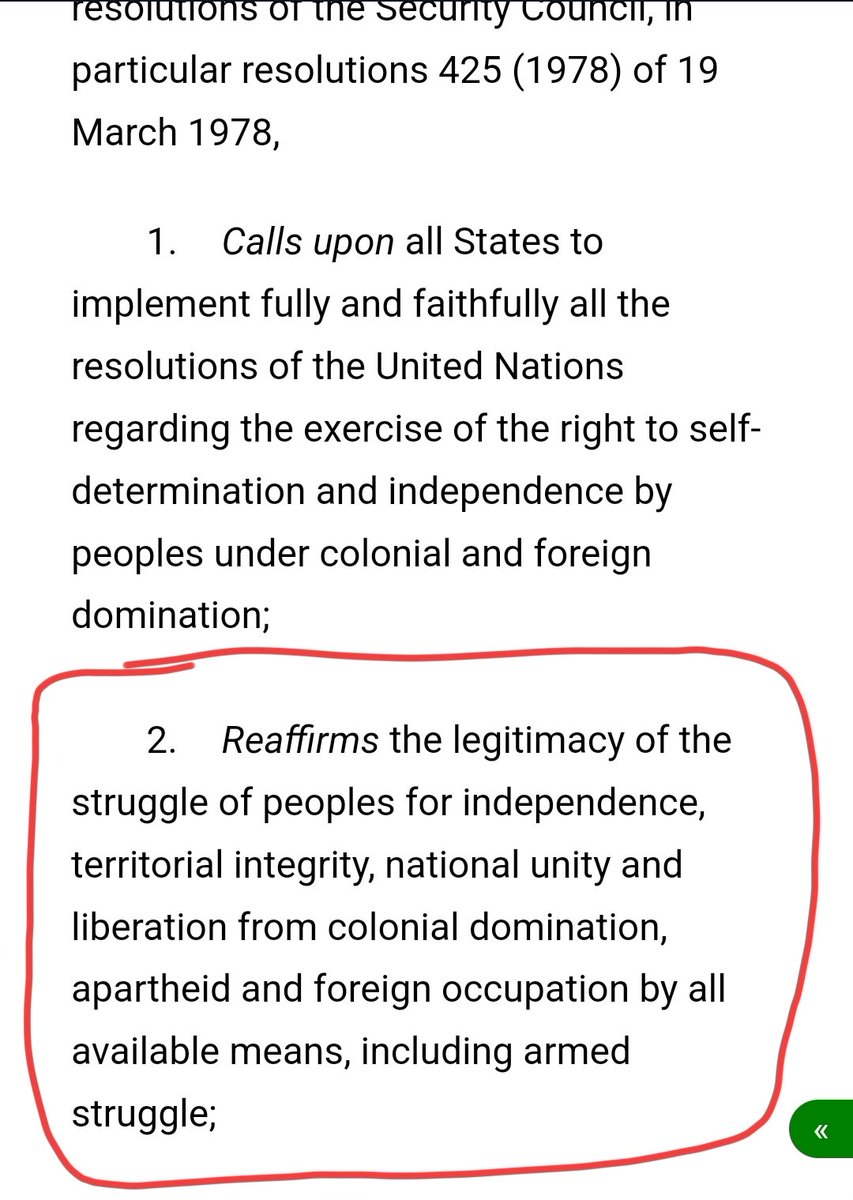

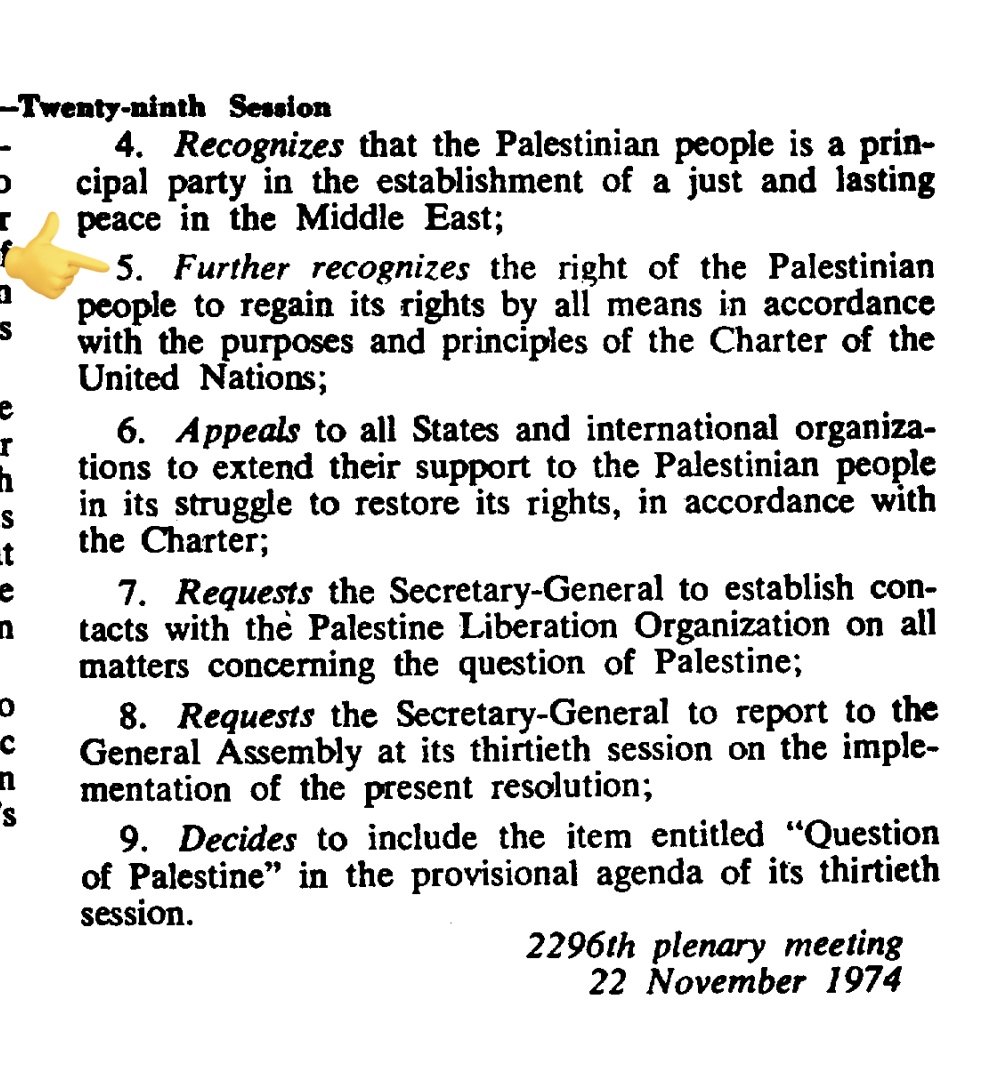
3- Third, Resolution 3236 of 1974 acknowledges the Palestinian people's right to regain their rights by all means in accordance with the Charter.
securitycouncilreport.org
securitycouncilreport.org
4- Fourth, the Third Geneva Convention and Hague Convention legitimize armed resistance against occupation under certain conditions, including a public armed presence, leadership, insignia, and adherence to principles of war.
refworld.org
refworld.org
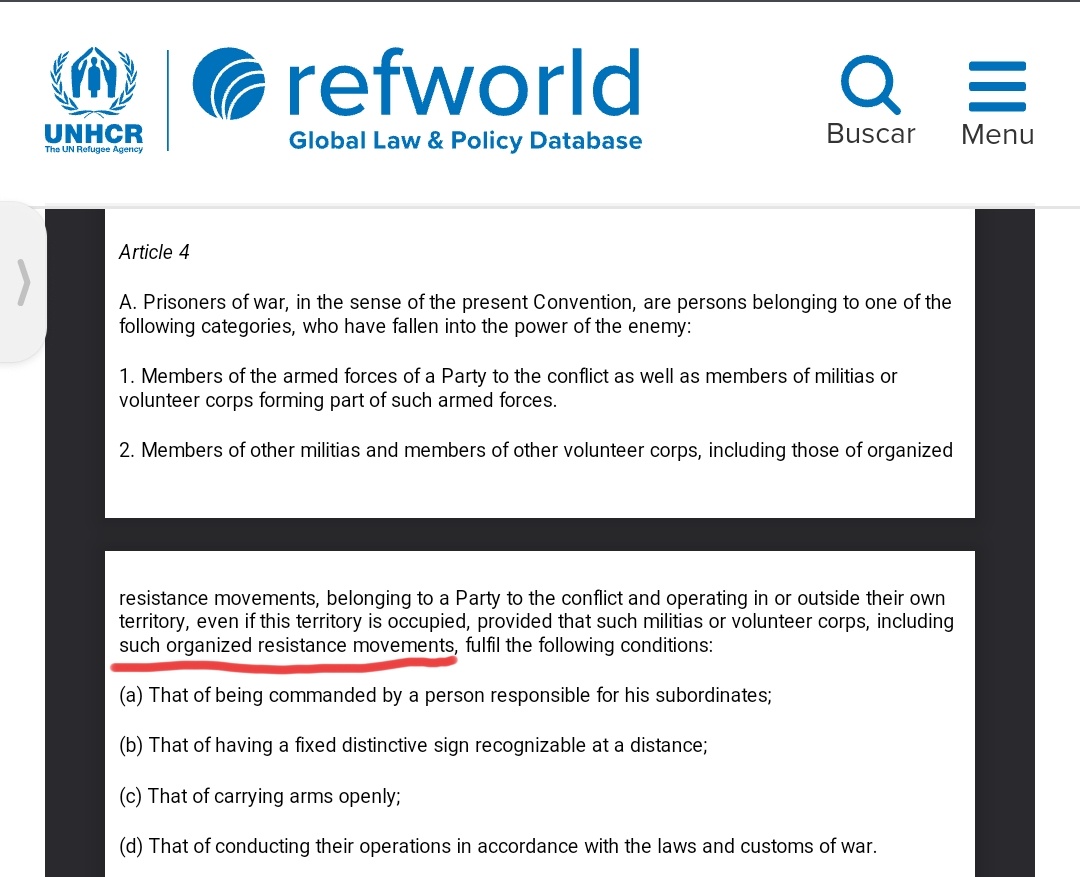
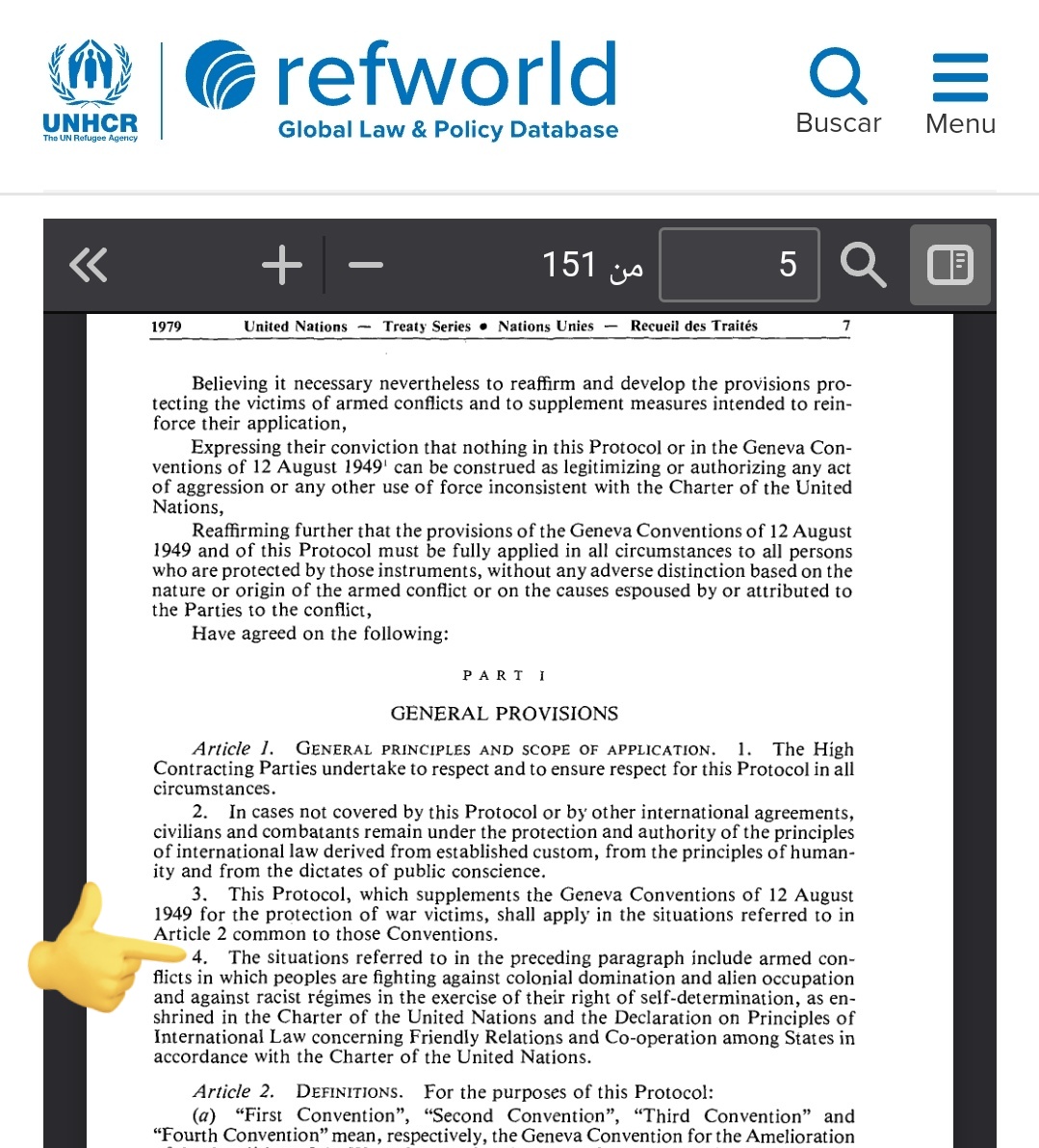
5- All these conditions align with the Palestinian resistance, as stipulated in the Hague Convention. The First Additional Protocol to the Geneva Conventions also recognizes armed force for liberation struggles against colonial rule.
refworld.org
refworld.org

6- The illegitimacy began the moment Israel was established by force, as the Balfour Declaration itself was an unlawful act with no legal consequences. This promise was merely a personal letter from a foreign minister to an ordinary person
7- and at best amounted to nothing more than a political statement with no legal commitment. Moreover, Britain had no right to grant the Jews – the Zionists – this promise because Palestine was under the jurisdiction of Damascus and Beirut,
8- this making it Arab territory from a human perspective and Ottoman from a political entity standpoint. Therefore, this promise was tainted with incapacity to contract, as it gave to those who did not own to those who did not deserve.
9- The promise is also considered null and void under the Covenant of the League of Nations. The Covenant, which Britain signed and adhered to as founding member of the League, stipulated "the recognition by the members of the League of Nations of the invalidity of all treaties..
10- and agreements, or covenants previously concluded by members which conflicted with the principles of the Covenant of the League or its provisions."
11- The declaration indeed violated the Anglo-Arab Treaty, in which Britain recognized the establishment of Arab states in the Hijaz and under its authority over all Arab territories, including Palestine.
bolognalawreview.unibo.it
bolognalawreview.unibo.it
12- Britain pledged not to conclude any peace or agreement unless its basic conditions included the freedom and independence of Arab peoples.
Indeed, the declaration contradicted the Anglo-Arab Treaty and international human rights laws,
un.org
Indeed, the declaration contradicted the Anglo-Arab Treaty and international human rights laws,
un.org

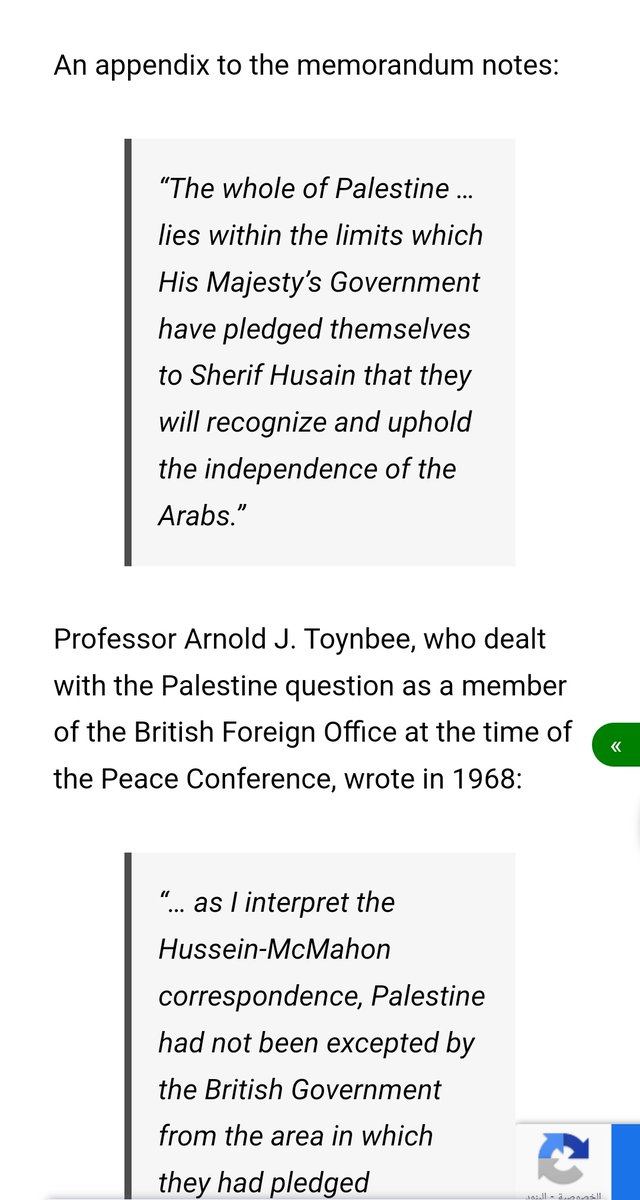

13- When there is a conflict or contradiction between two international agreements, the newer agreement cannot adversely affect the older one. Therefore, the Balfour Declaration is considered invalid.
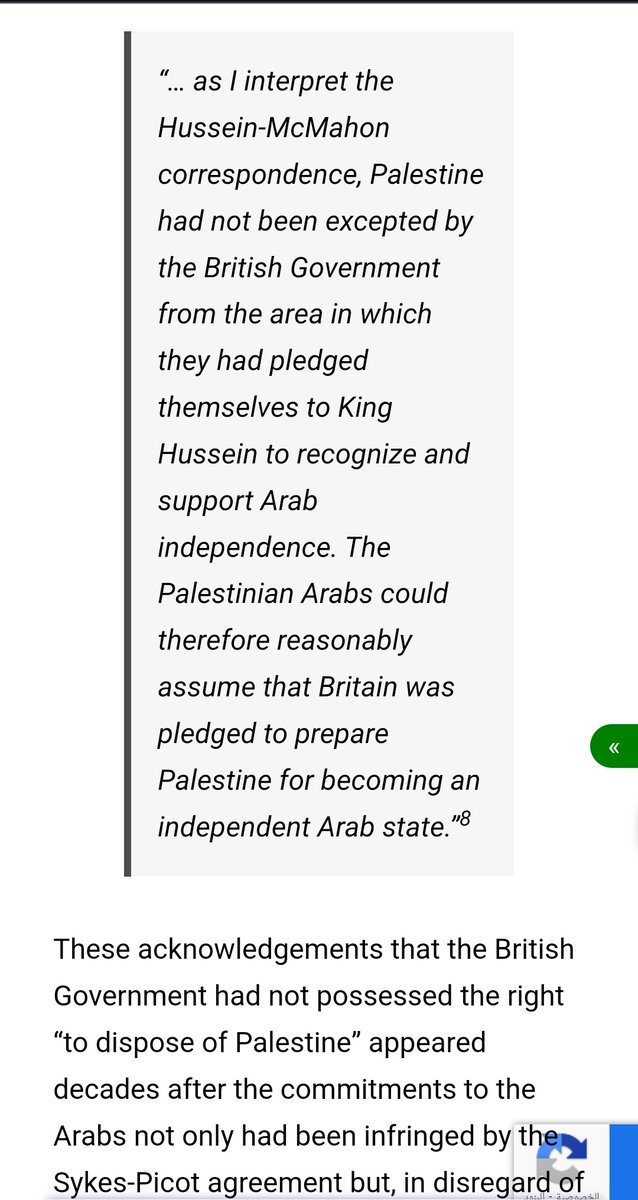
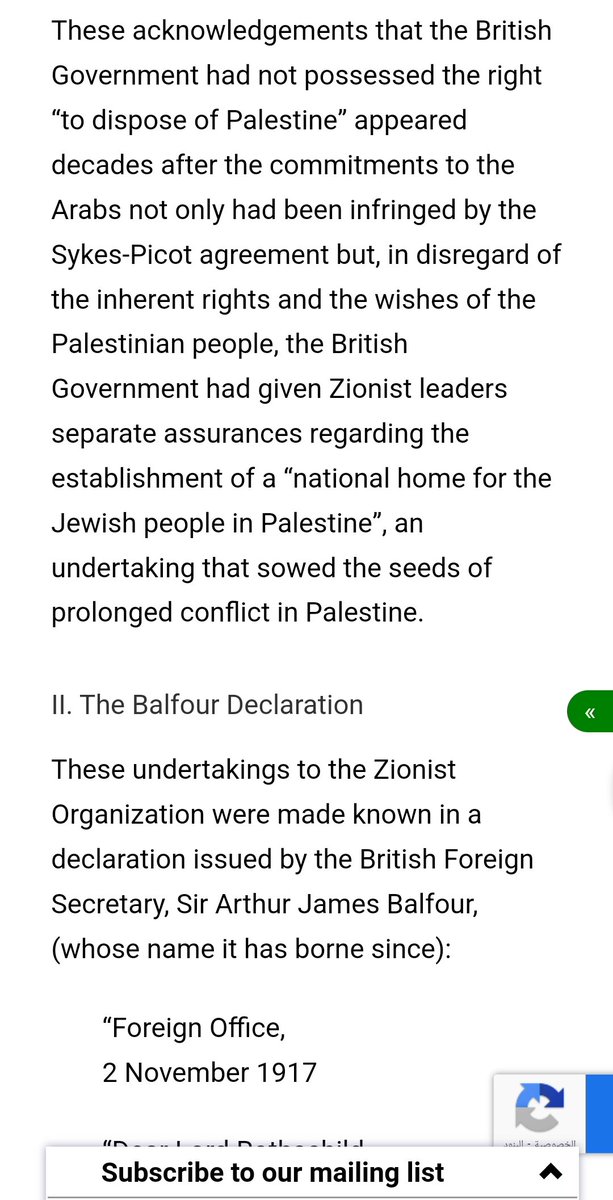
14- Furthermore, the principle of "self-determination" means "that all peoples have the right to reject injustice and oppression, to achieve their freedom and independence, and to choose the political, economic, and social system they desire."
un.org
un.org


15- This principle was claimed by the Allied powers as their cause in World War I, which contradicts and opposes what was stated in the Balfour Declaration and the Zionist invasion of Arab Palestine.
16- After the establishment of the United Nations following World War II, the right to self-determination gained significant importance. It was implemented in other Arab regions except Palestine, due to the intention to facilitate the creation of a national homeland for the Jews
17- Under pressure from the United States and its colonial allies, the General Assembly issued a resolution in its second session in 1947 to partition Palestine. One of its immediate consequences was the deprivation of the Palestinian people of their rights,
18- In addition to the division of their land, and the creation of the refugee problem, which was addressed by the General Assembly in its third session in 1948 by considering the Palestinian issue solely as a refugee problem.
19- However, since 1969,the General Assembly has issued a significant number of resolutions reaffirming the right of the Palestinian people to self-determination and the establishment of their independent state.
20- On December 10,1969, the General Assembly issued a resolution stating:
"The General Assembly once again reaffirms the inalienable rights of the Palestinian people."
un.org
"The General Assembly once again reaffirms the inalienable rights of the Palestinian people."
un.org
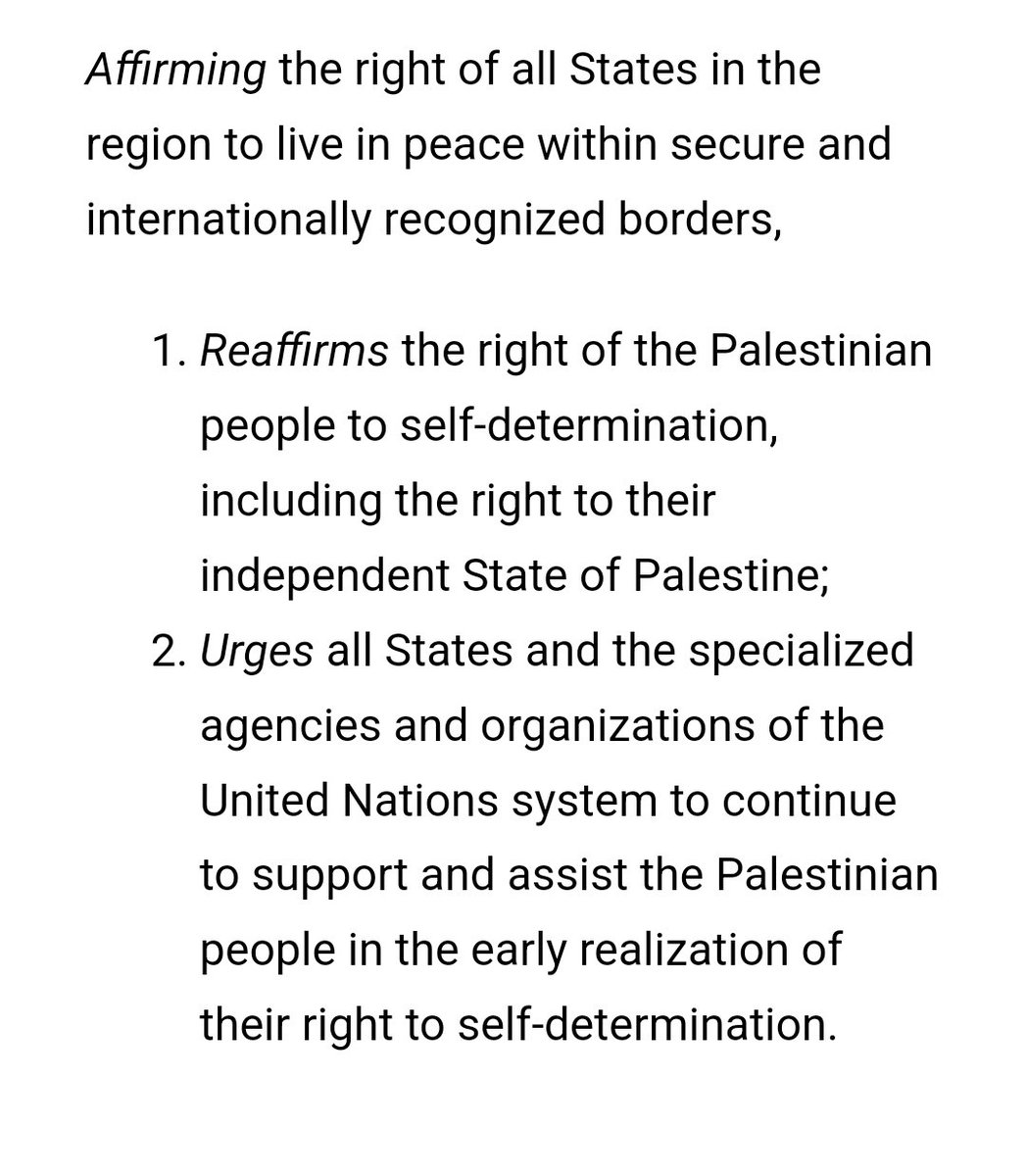

21- In a progressive step, the General Assembly, in a resolution in 1970, recognized the Palestinian people's equal rights and their right to self-determination in accordance with the UN Charter
icj-cij.org
icj-cij.org
22- The General Assembly thus established a new customary principle, acknowledging the right of peoples under colonial or foreign occupation or under racist regimes to struggle for their right to self-determination through armed struggle.
23- For peoples to exercise their right to self-determination, they must be empowered to defend themselves, which is one of the most crucial rights derived from the right to self-determination.
24- This is considered a natural right inherent to all humans, as affirmed by the United Nations Charter.The Charter states that nothing in it shall impair or diminish the inherent right of individual or collective self-defense if an armed attack occurs against a member of the UN
25- Based on the aforementioned reasons for the invalidity of the Balfour Declaration in both form and substance, and given that what is built on falsehood is itself false, it can be said that all actions taken based on it are void
26- Furthermore, the international protection of the right to self-determination and its associated rights, including the right to self-defense and the liberation of land, as codified in international conventions, is fully aligned with Palestinian Arab resistance movements.
27-This alignment is in accordance with the Geneva and Hague Conventions,as each movement has a known leader responsible for its followers, its own distinctive uniform and visible insignia,a published national program,political and military organizations and periodic publications
28- These movements have leaders recognized publicly, militarily, and officially by the entire Palestinian people and various segments of the Arab nation.
29- They have consistently demonstrated their bearing of arms openly in their visible bases and daily battles with Israeli occupation forces.
30- Additionally, in all their operations, including those acknowledged by Israeli statements, they have shown a strict adherence to the laws and customs of international warfare.
31- However, despite the international legitimacy enjoyed by the Palestinian resistance movements, as previously stated, they still face international condemnation and are listed as terrorist organizations without a sound legal basis for this designation
32- The European Court of Justice, on July 26, 2017, ruled to keep the Islamic Resistance Movement "Hamas" on the European Union's list of terrorist organizations.
33-This was despite the fact that the General Court had issued a decision on December 17, 2014, to annul the listing of the movement. The court clarified in its ruling that the European Union did not provide sufficient legal grounds to justify keeping"Hamas" on the terrorism list
34- The court clarified in its ruling that the European Union did not provide sufficient legal grounds to justify keeping "Hamas" on the terrorism list. The Court of Justice's decision was a response to pressure from the Israeli occupation and the United States,
35- according to Yahya Moussa, a member of the Legislative Council for the movement, who stated that "Hamas has not harmed any European Union citizen, particularly since its operations are confined to the occupied Palestinian territories and to resisting the occupation,
36- which is sanctioned by all international laws and charters, especially the United Nations."
The designation as terrorist organizations has remained an American weapon against Palestinian resistance for 22 years.
The designation as terrorist organizations has remained an American weapon against Palestinian resistance for 22 years.
37- The United States employs the classification of "foreign terrorism" against anyone who poses a significant threat of committing terrorist acts that endanger the security of American citizens, its national security, foreign policy, or economy.
38- In summary, Israel and its imperialist allies, led by the United States,employ all forms of false propaganda and fabricated legal measures to mislead global public opinion about these established facts,labeling resistance movements and their fighters as terrorists, saboteurs,
39- and aggressors. Meanwhile, the truth, which the international community often neglects or addresses in a token manner without legal substance, is that the Zionist project was founded on a terrorist basis,
40- as articulated by Theodor Herzl in his famous saying, "Palestine is a land without a people for a people without a land." Following the success of the Zionist movement and the Balfour Declaration, there have been crimes of aggression, genocide, and crimes against humanity.
Loading suggestions...