
🧵 𝐀𝐛ū 𝐈𝐬𝐦āʾī𝐥 𝐚𝐥-𝐇𝐚𝐫𝐚𝐰ī (𝟑𝟗𝟔-𝟒𝟖𝟏𝐇)
[1] An Introduction
[2] His Trials
[3] His Tafsīr
[4] The Testimony of His Contemporaries
[5] Ibn Taymīyyah’s Praise
[6] Al-Dhahabī’s Praise
[7] Ibn ʿAbd al-Hādī’s Praise
[8] Al-Ṣafadī’s Praise
[9] Ibn al-Mibrad’s Praise
[10] Al-Suyūṭī’s Praise For His Book Dhamm al-Kalām
[11] Claims of Ittiḥād and Waḥdat al-Wujūd: Refuted by Ibn Taymīyyah, al-Dhahabī, Ibn al-Qayyim and Ibn Rajab al-Ḥanbalī
[1] An Introduction
[2] His Trials
[3] His Tafsīr
[4] The Testimony of His Contemporaries
[5] Ibn Taymīyyah’s Praise
[6] Al-Dhahabī’s Praise
[7] Ibn ʿAbd al-Hādī’s Praise
[8] Al-Ṣafadī’s Praise
[9] Ibn al-Mibrad’s Praise
[10] Al-Suyūṭī’s Praise For His Book Dhamm al-Kalām
[11] Claims of Ittiḥād and Waḥdat al-Wujūd: Refuted by Ibn Taymīyyah, al-Dhahabī, Ibn al-Qayyim and Ibn Rajab al-Ḥanbalī
![🧵 𝐀𝐛ū 𝐈𝐬𝐦āʾī𝐥 𝐚𝐥-𝐇𝐚𝐫𝐚𝐰ī (𝟑𝟗𝟔-𝟒𝟖𝟏𝐇)
[1] An Introduction
[2] His Trials
[3] His Tafsīr
[4] The Testim...](https://pbs.twimg.com/media/GPwcZ73XYAEtvp5.jpg)
𝟭) 𝗔𝗻 𝗜𝗻𝘁𝗿𝗼𝗱𝘂𝗰𝘁𝗶𝗼𝗻
• Ibn Rajab al-Ḥanbalī said:
❝ʿAbdullāh Ibn Muḥammad Ibn ʿAlī Ibn Muḥammad Ibn Aḥmad Ibn ʿAlī Ibn Jaʾfar Ibn Manṣūr Ibn Matta al-Anṣārī al-Harawī, the Faqīh, the Mufassir, the Ḥāfiẓ [of ḥadīth], the Ṣūfī, the Orator, Shaykh al-Islām Abū Ismāʾīl.
He studied in Ṭūs and Bisṭām from a large number of people whose mention would be exhaustive. He stayed in the company of many Shaykhs and learnt discipline from them. He gathered anecdotes and commentaries [on ḥadīth] for himself and others from the narrators of ḥadīth. He narrated ḥadīth for many years. He authored many books, including Dhamm al-Kalām, al-Fārūq, Manāqib al-Imām Aḥmad, Manāzil al-Sāʾirīn, ʿIlal al-Maqāmāt, a comprehensive book called Tafsīr al-Qurʾān in Persian, an excellent book called Majālis al-Tadhkīr, which is also in Persian, and others.
He was a great leader and an Imām who was a scholar, an ʿārif, a worshipper and an ascetic (zāhid). He was a man of many spiritual states, spiritual stations (maqāmāt), miracles and sacrifice. He would remain abundantly awake at night, and was steadfast in aiding and defending the Sunnah and refuting those who opposed it. He was afflicted by many difficulties on account of this. He would greatly defend and exalt the madhhab of Imām Aḥmad.❞
📚 (Al-Dhayl ʿAlā Ṭabaqāt al-Ḥanābilah 1/113-118)
• Ibn Rajab al-Ḥanbalī said:
❝ʿAbdullāh Ibn Muḥammad Ibn ʿAlī Ibn Muḥammad Ibn Aḥmad Ibn ʿAlī Ibn Jaʾfar Ibn Manṣūr Ibn Matta al-Anṣārī al-Harawī, the Faqīh, the Mufassir, the Ḥāfiẓ [of ḥadīth], the Ṣūfī, the Orator, Shaykh al-Islām Abū Ismāʾīl.
He studied in Ṭūs and Bisṭām from a large number of people whose mention would be exhaustive. He stayed in the company of many Shaykhs and learnt discipline from them. He gathered anecdotes and commentaries [on ḥadīth] for himself and others from the narrators of ḥadīth. He narrated ḥadīth for many years. He authored many books, including Dhamm al-Kalām, al-Fārūq, Manāqib al-Imām Aḥmad, Manāzil al-Sāʾirīn, ʿIlal al-Maqāmāt, a comprehensive book called Tafsīr al-Qurʾān in Persian, an excellent book called Majālis al-Tadhkīr, which is also in Persian, and others.
He was a great leader and an Imām who was a scholar, an ʿārif, a worshipper and an ascetic (zāhid). He was a man of many spiritual states, spiritual stations (maqāmāt), miracles and sacrifice. He would remain abundantly awake at night, and was steadfast in aiding and defending the Sunnah and refuting those who opposed it. He was afflicted by many difficulties on account of this. He would greatly defend and exalt the madhhab of Imām Aḥmad.❞
📚 (Al-Dhayl ʿAlā Ṭabaqāt al-Ḥanābilah 1/113-118)


𝟮) 𝗛𝗶𝘀 𝗧𝗿𝗶𝗮𝗹𝘀
• Ibn Rajab al-Ḥanbalī said:
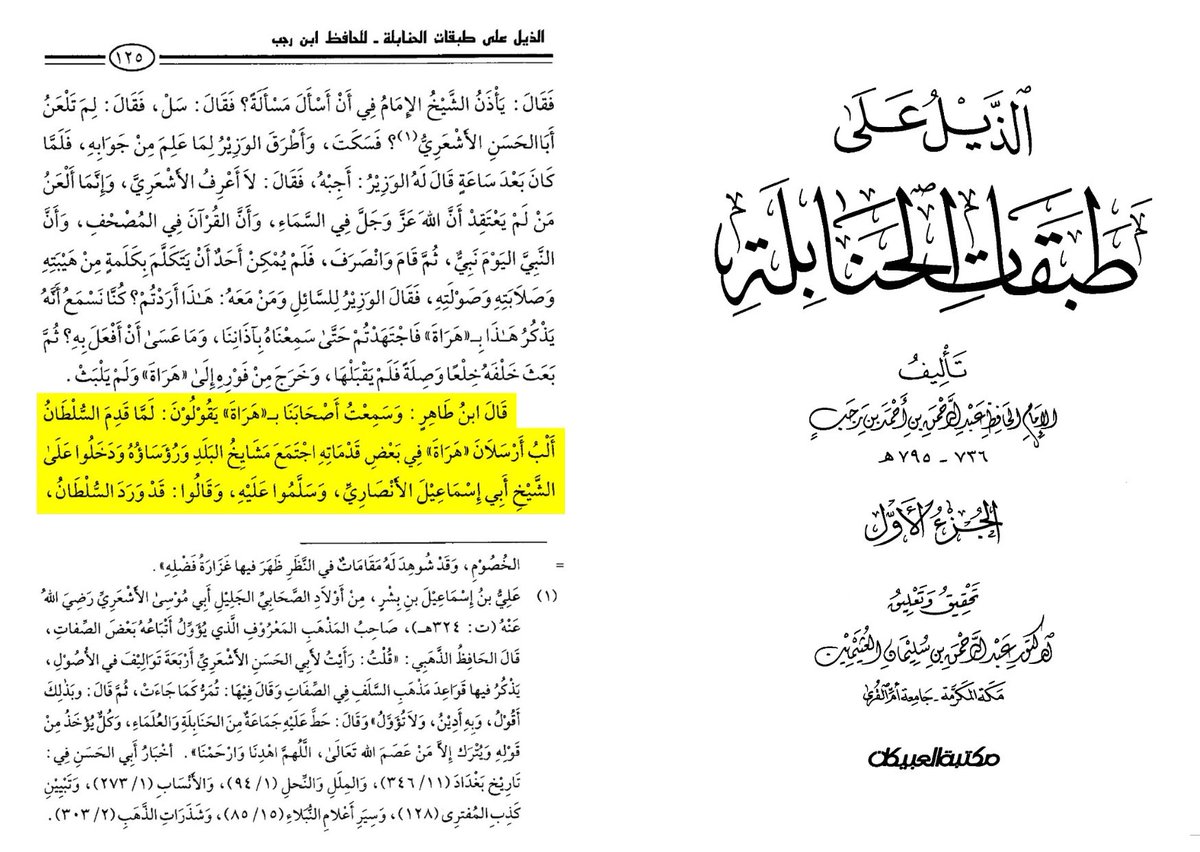
❝Ibn Ṭāhir said: I heard Imām Abū Ismāʾīl al-Anṣārī in Hirāt say: “I was threatened with the sword five times. It was not said to me: ‘Abandon your doctrine’, but rather: ‘Be silent about those who oppose you.’ And I said: ‘I will not be silent.’” He continued: “Our companions told us that when Sulṭān Alb Arslān came to Hirāt, his minister Abū ʿAlī al-Ḥasan Ibn ʿAlī Ibn Isḥāq was with him. The leaders of both groups, the followers of Shāfiʾī and the followers of Abū Ḥanīfah, gathered to complain about al-Anṣārī and demanded a debate with him. So, the minister summoned him.”
When he arrived, he was told: “These people have gathered to debate with you. If you are in the right, they will return to your doctrine. If they are in the right, you must either return to their way or remain silent about them.” Al-Anṣārī stood up and said: “I will debate based on what is in my sleeves.” He was asked: “What is in your sleeves?” He replied: “The Book of Allāh”, pointing to his right sleeve: “and the Sunnah of the Messenger of Allāh ﷺ”, pointing to his left sleeve, which contained the two Ṣaḥīḥs (Bukhārī and Muslim). He then looked at the group as if seeking their response, but there was none among them who could debate with him in this manner.
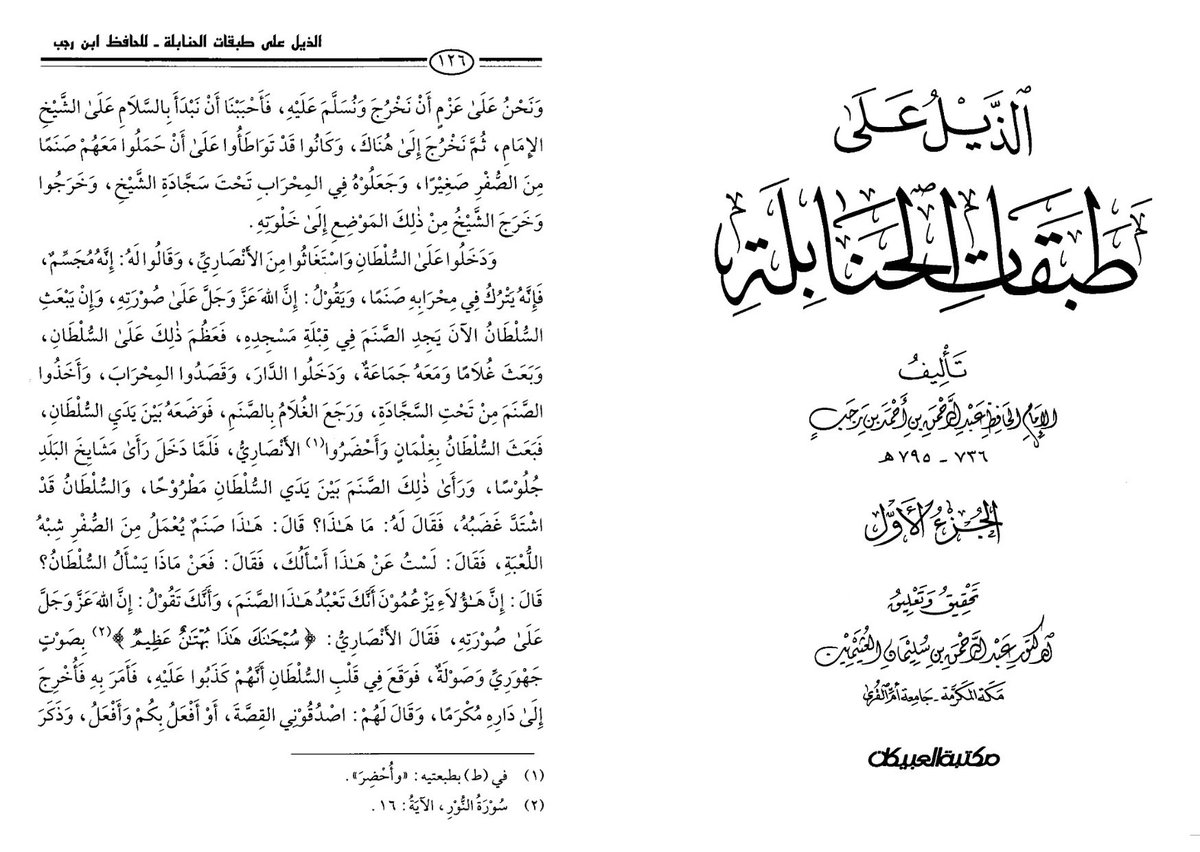
Ibn Ṭāhir said: “I heard our companions in Hirāt saying: When Sulṭān Alb Arslān arrived in Hirāt on one of his visits, the city’s elders and leaders gathered and went to see Shaykh Abū Ismāʾīl al-Anṣārī. They greeted him and said: ‘The Sulṭān has arrived, and we intend to go out and greet him. We wanted to start by greeting the Shaykh Imām before we go there.’ They had conspired to carry a small brass idol with them, placing it in the prayer niche under the Shaykh’s prayer mat. After they greeted the Shaykh, he left that spot for his private retreat.
And they went to the Sulṭān and complained about al-Anṣārī, saying to him: ‘He is an anthropomorphist, as he leaves an idol in his prayer niche and says that Allāh is in its image. If the Sulṭān sends someone now, he will find the idol in the direction of his mosque.’ This greatly angered the Sulṭān, who sent a servant with a group, and they entered the house, headed for the prayer niche, took the idol from under the mat, and the servant returned with the idol, placing it before the Sulṭān. The Sulṭān then sent servants to bring al-Anṣārī. When he entered, he saw the city’s elders sitting and the idol lying before the Sulṭān, who was very angry. The Sulṭān asked him: ‘What is this?’ He replied: ‘This is an idol made of brass, similar to a toy.’ The Sulṭān said: ‘I am not asking you about this.’
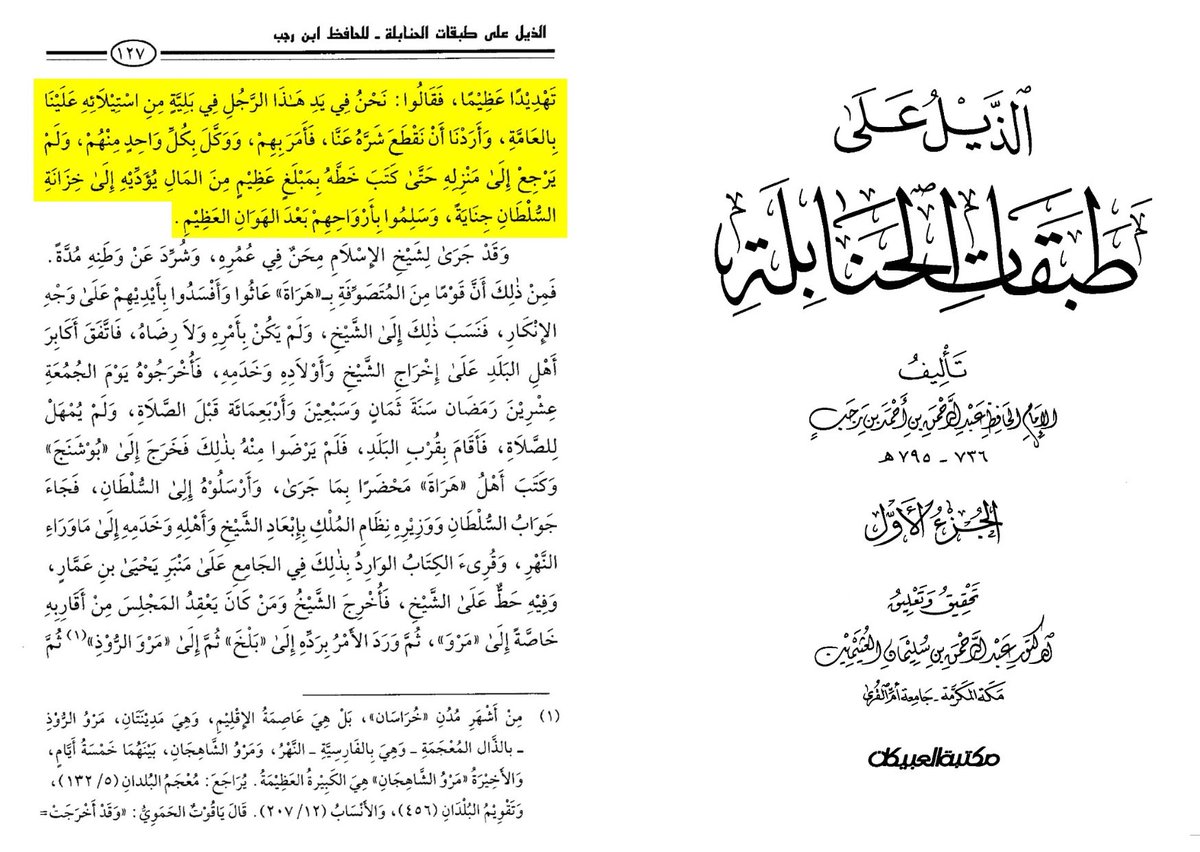
He said: ‘So, what is the Sulṭān asking about?’ They said: “They claim that you worship this idol and say that Allāh is in its image.’ Then al-Anṣārī exclaimed loudly and firmly: ‘Glory be to You! This is a great slander!’ This struck fear into the heart of the Sulṭān, making him believe that they had lied to him. So, he ordered al-Anṣārī to be honoured and escorted back to his home. He said to them: ‘Believe me, the story, or I will deal with you severely’, mentioning a great threat. They replied: ‘We are in the hands of this man, trapped by his authority over us with the general public. We wanted to rid ourselves of his harm.’ He ordered them to be dealt with and assigned a penalty for each of them, ensuring that none returned home until they paid a large sum of money to the Sulṭān’s treasury as a fine, thus sparing their lives after immense humiliation.”
• Ibn Rajab al-Ḥanbalī said:
❝Ibn Ṭāhir said: I heard Imām Abū Ismāʾīl al-Anṣārī in Hirāt say: “I was threatened with the sword five times. It was not said to me: ‘Abandon your doctrine’, but rather: ‘Be silent about those who oppose you.’ And I said: ‘I will not be silent.’” He continued: “Our companions told us that when Sulṭān Alb Arslān came to Hirāt, his minister Abū ʿAlī al-Ḥasan Ibn ʿAlī Ibn Isḥāq was with him. The leaders of both groups, the followers of Shāfiʾī and the followers of Abū Ḥanīfah, gathered to complain about al-Anṣārī and demanded a debate with him. So, the minister summoned him.”
When he arrived, he was told: “These people have gathered to debate with you. If you are in the right, they will return to your doctrine. If they are in the right, you must either return to their way or remain silent about them.” Al-Anṣārī stood up and said: “I will debate based on what is in my sleeves.” He was asked: “What is in your sleeves?” He replied: “The Book of Allāh”, pointing to his right sleeve: “and the Sunnah of the Messenger of Allāh ﷺ”, pointing to his left sleeve, which contained the two Ṣaḥīḥs (Bukhārī and Muslim). He then looked at the group as if seeking their response, but there was none among them who could debate with him in this manner.
Ibn Ṭāhir said: “I heard our companions in Hirāt saying: When Sulṭān Alb Arslān arrived in Hirāt on one of his visits, the city’s elders and leaders gathered and went to see Shaykh Abū Ismāʾīl al-Anṣārī. They greeted him and said: ‘The Sulṭān has arrived, and we intend to go out and greet him. We wanted to start by greeting the Shaykh Imām before we go there.’ They had conspired to carry a small brass idol with them, placing it in the prayer niche under the Shaykh’s prayer mat. After they greeted the Shaykh, he left that spot for his private retreat.
And they went to the Sulṭān and complained about al-Anṣārī, saying to him: ‘He is an anthropomorphist, as he leaves an idol in his prayer niche and says that Allāh is in its image. If the Sulṭān sends someone now, he will find the idol in the direction of his mosque.’ This greatly angered the Sulṭān, who sent a servant with a group, and they entered the house, headed for the prayer niche, took the idol from under the mat, and the servant returned with the idol, placing it before the Sulṭān. The Sulṭān then sent servants to bring al-Anṣārī. When he entered, he saw the city’s elders sitting and the idol lying before the Sulṭān, who was very angry. The Sulṭān asked him: ‘What is this?’ He replied: ‘This is an idol made of brass, similar to a toy.’ The Sulṭān said: ‘I am not asking you about this.’
He said: ‘So, what is the Sulṭān asking about?’ They said: “They claim that you worship this idol and say that Allāh is in its image.’ Then al-Anṣārī exclaimed loudly and firmly: ‘Glory be to You! This is a great slander!’ This struck fear into the heart of the Sulṭān, making him believe that they had lied to him. So, he ordered al-Anṣārī to be honoured and escorted back to his home. He said to them: ‘Believe me, the story, or I will deal with you severely’, mentioning a great threat. They replied: ‘We are in the hands of this man, trapped by his authority over us with the general public. We wanted to rid ourselves of his harm.’ He ordered them to be dealt with and assigned a penalty for each of them, ensuring that none returned home until they paid a large sum of money to the Sulṭān’s treasury as a fine, thus sparing their lives after immense humiliation.”
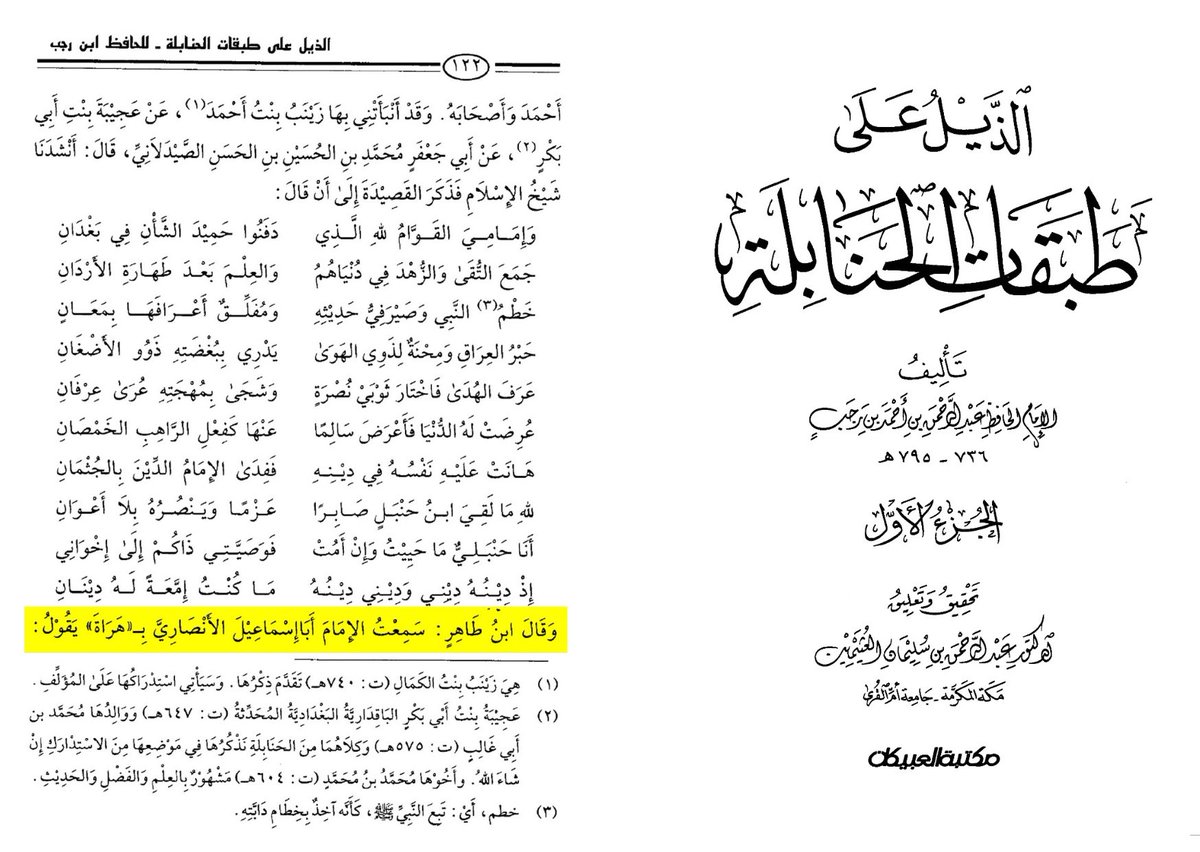
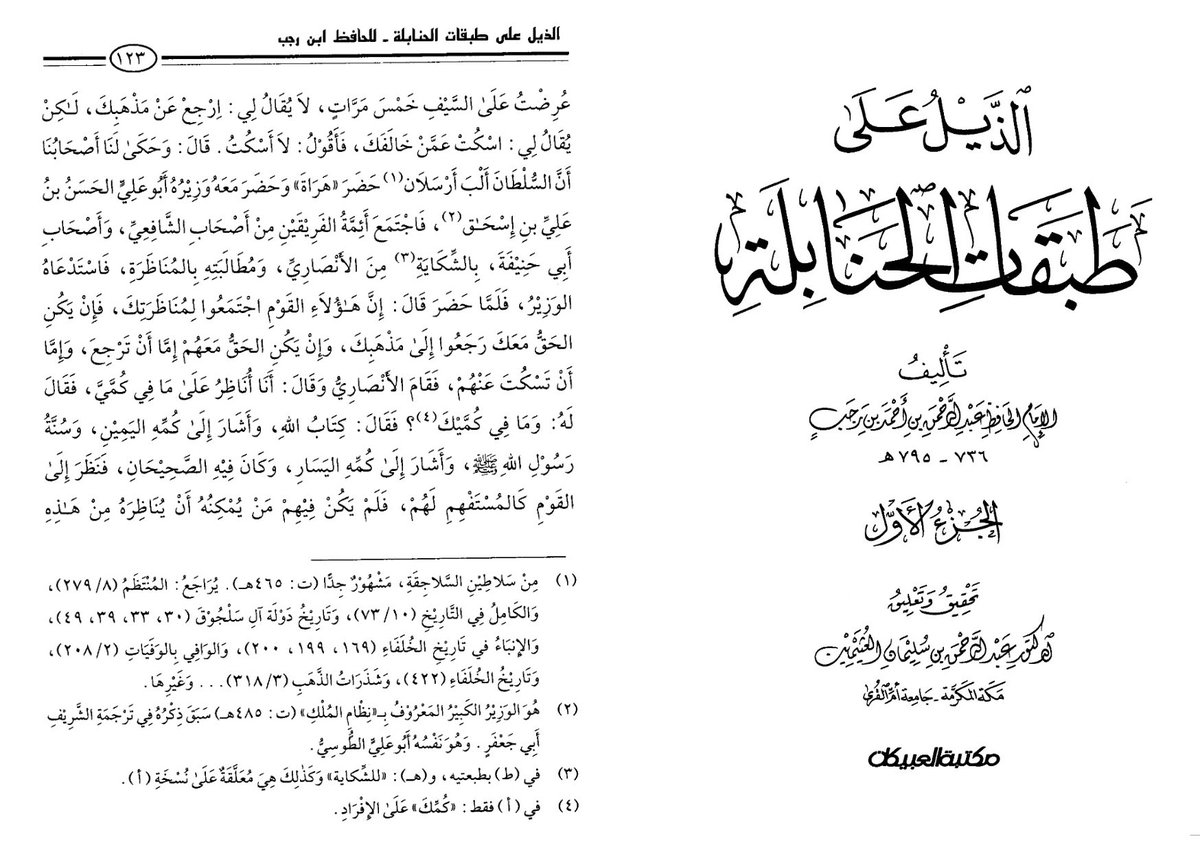
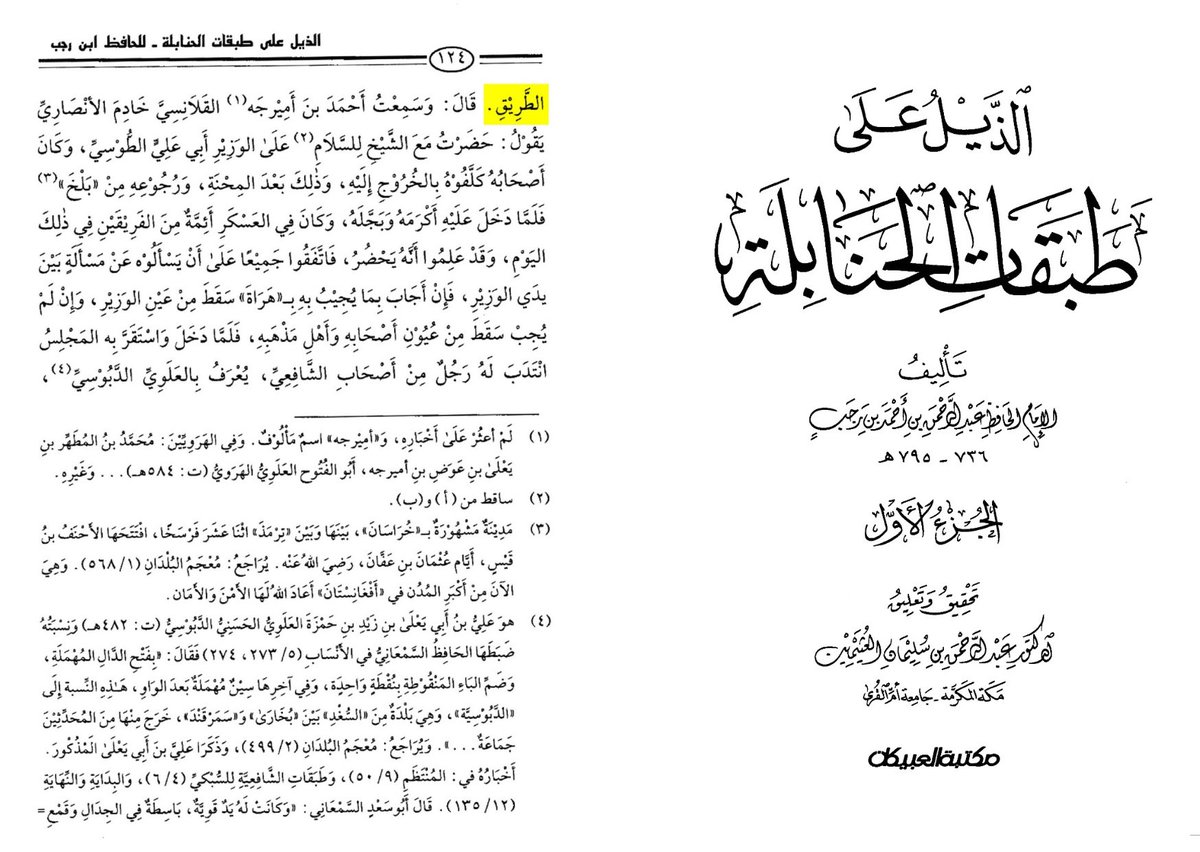
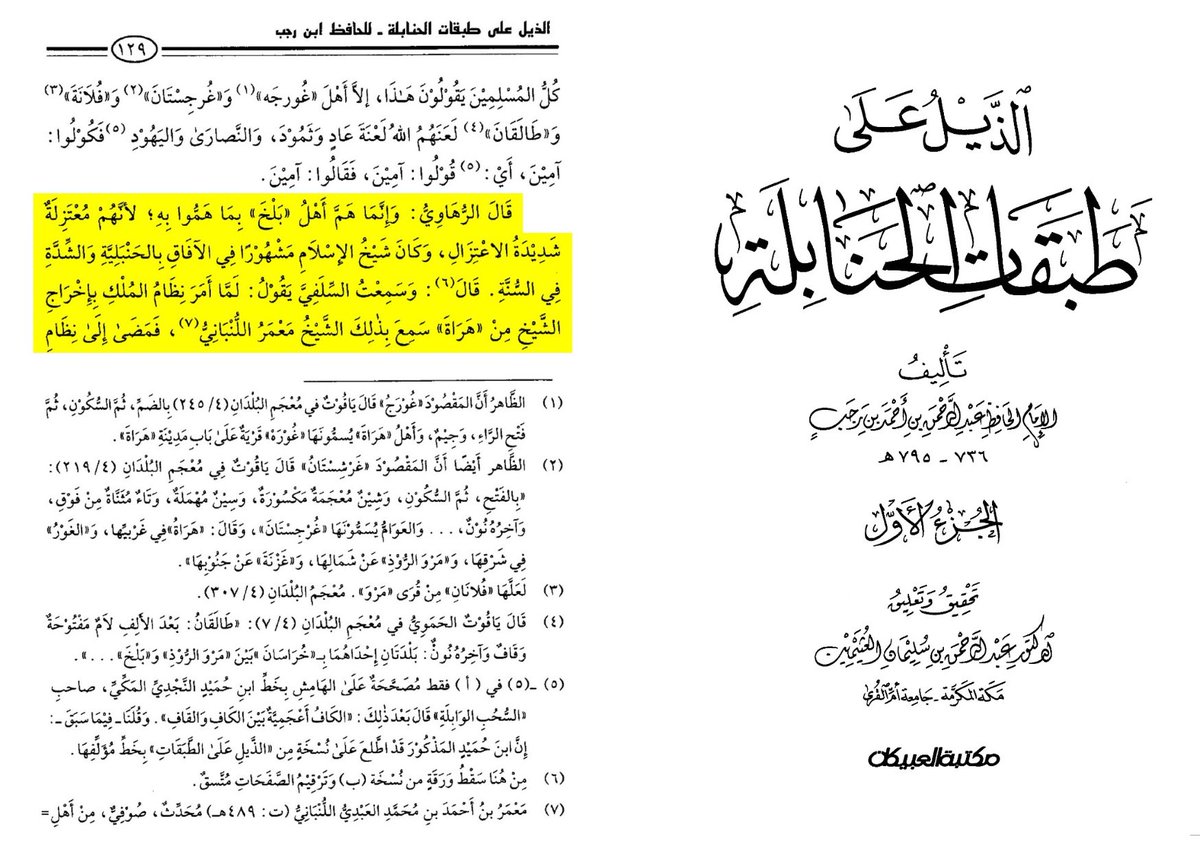
Al-Rahāwī said: “The people of Balkh were only concerned with what they were concerned about because they are extreme isolationists. Shaykh al-Islām was renowned far and wide for his adherence to the Ḥanbalī school and his strict adherence to the Sunnah.” He said: “I heard al-Salafī saying: When the ruler ordered the expulsion of the Shaykh from Hirāt, Maʾmar al-Lunbānī heard about it. He went to the ruler to intercede on his behalf. The ruler said to him: ‘This Shaykh has shown me great favour, as it was through him that you gained access to me.’ Then he immediately wrote to send him back to his homeland.”❞
📚 (Al-Dhayl ʿAlā Ṭabaqāt al-Ḥanābilah 1/122-130)
📚 (Al-Dhayl ʿAlā Ṭabaqāt al-Ḥanābilah 1/122-130)
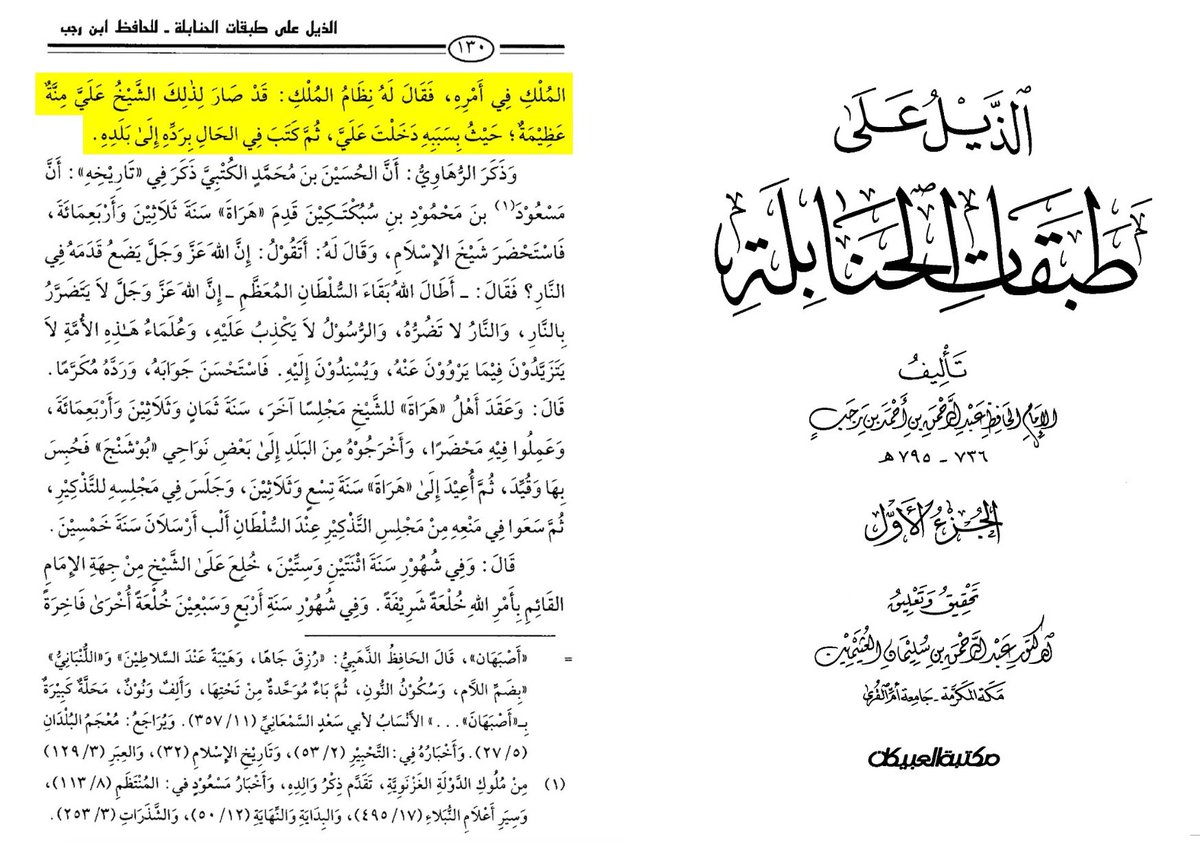
𝟯) 𝗛𝗶𝘀 𝗧𝗮𝗳𝘀ī𝗿
• Ibn Rajab al-Ḥanbalī said:
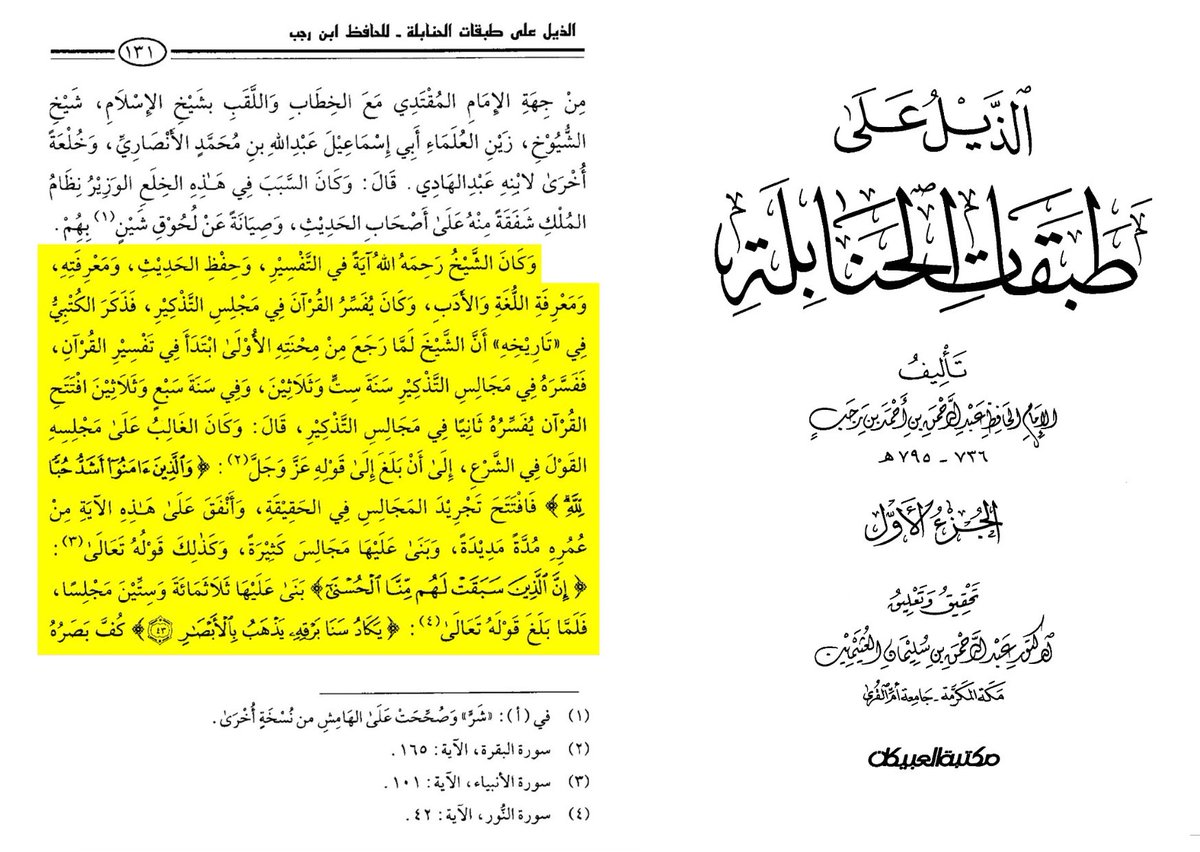
❝The Shaykh was a prominent figure in exegesis, ḥadīth memorization, linguistic and literary knowledge. He used to interpret the Qurʾān in the gatherings of remembrance. Al-Kutbī mentioned in his “Tārīkh” that when the Shaykh returned from his first ordeal, he began interpreting the Qurʾān in the gatherings of remembrance for 63 years. Then, in the year 437H, he started interpreting the Qurʾān again in the gatherings of remembrance. It was predominant in his gatherings to discuss matters related to Islāmic law until he reached the verse: {But those who believe are stronger in love for Allāh} [2:165] at which point he began to focus on extracting deeper meanings from the verses. He spent a considerable portion of his life elaborating on this verse, establishing numerous sessions based on it. Likewise, when he reached the verse: {Those who were already settled in the Home} [2:261] he established 360 gatherings based on it.
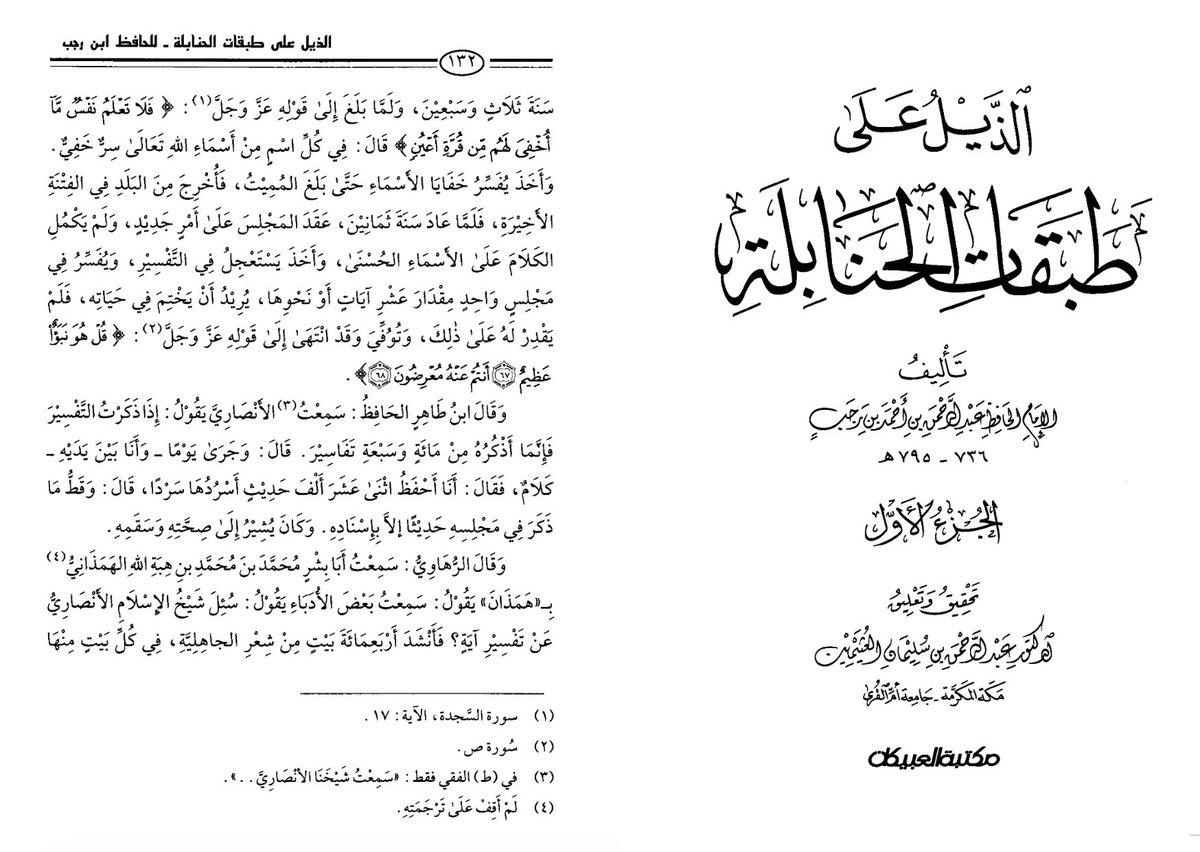
When he reached the verse: {His lightning almost snatches away the sight} [Qurʾān 24:43] he lost his sight in the year 473H. And when he reached the verse: {No soul knows what has been hidden for them of comfort for eyes}. [32:17] He said: “In every name of Allāh, there is a hidden secret.” He began to interpret the hidden meanings of the names until he reached the Name “al-Mumīt” (the Bringer of Death). He was then expelled from the city during the last turmoil. When he returned at the age of 80, he initiated a new discourse, but he couldn’t complete discussing the Beautiful Names. He rushed in his interpretations, aiming to conclude them in his lifetime, but he couldn’t achieve that. He passed away having reached the verse: {Say, it is a great news and you are turning away from it}. [38:67]”
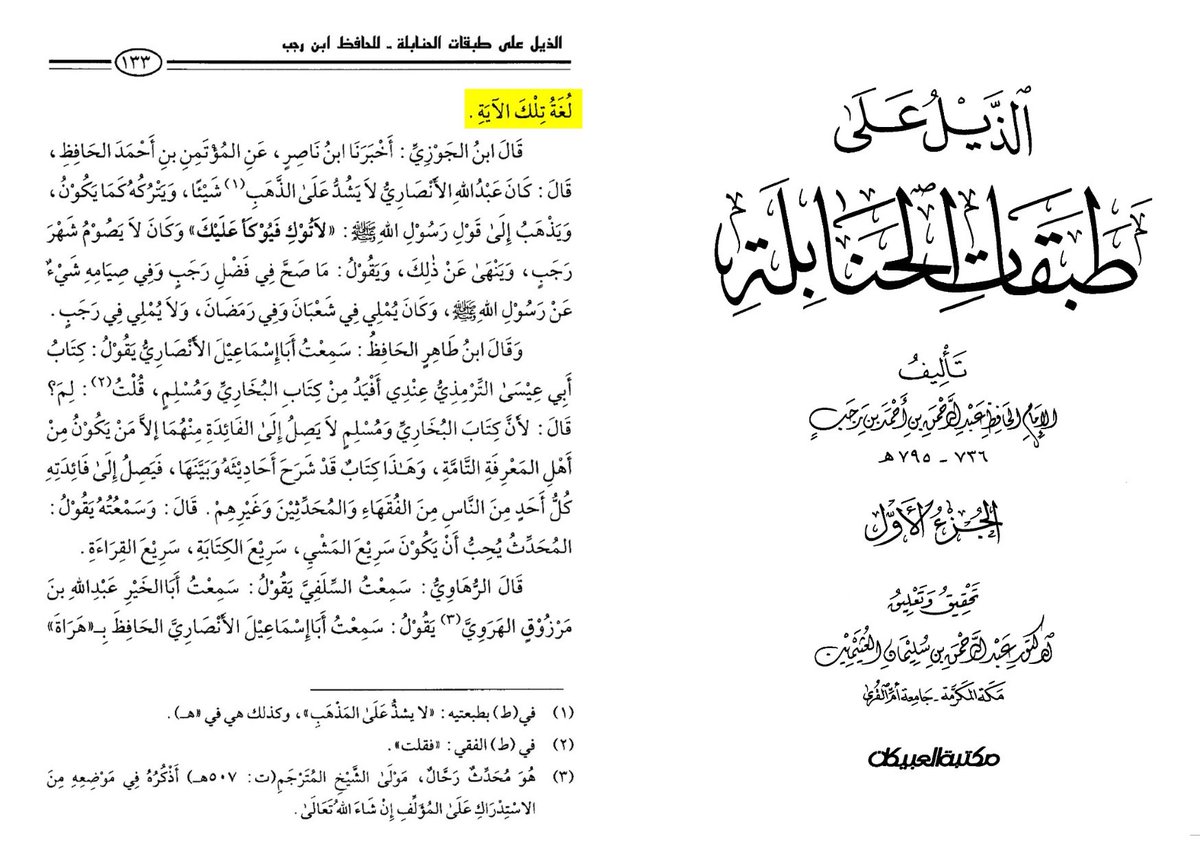
And al-Rahāwī said: “I heard from Abū Bishr Muḥammad Ibn Muḥammad Ibn Hibatullāh al-Hamadhānī from Hamadhān saying: I heard some of the literary figures saying: ‘Shaykh al-Islām al-Anṣārī was asked about the interpretation of a verse.’ So he recited 400 verses of pre-Islāmic poetry, with each verse of them containing the language of that verse.”❞
📚 (Al-Dhayl ʿAlā Ṭabaqāt al-Ḥanābilah 1/131-133)
• Ibn Rajab al-Ḥanbalī said:
❝The Shaykh was a prominent figure in exegesis, ḥadīth memorization, linguistic and literary knowledge. He used to interpret the Qurʾān in the gatherings of remembrance. Al-Kutbī mentioned in his “Tārīkh” that when the Shaykh returned from his first ordeal, he began interpreting the Qurʾān in the gatherings of remembrance for 63 years. Then, in the year 437H, he started interpreting the Qurʾān again in the gatherings of remembrance. It was predominant in his gatherings to discuss matters related to Islāmic law until he reached the verse: {But those who believe are stronger in love for Allāh} [2:165] at which point he began to focus on extracting deeper meanings from the verses. He spent a considerable portion of his life elaborating on this verse, establishing numerous sessions based on it. Likewise, when he reached the verse: {Those who were already settled in the Home} [2:261] he established 360 gatherings based on it.
When he reached the verse: {His lightning almost snatches away the sight} [Qurʾān 24:43] he lost his sight in the year 473H. And when he reached the verse: {No soul knows what has been hidden for them of comfort for eyes}. [32:17] He said: “In every name of Allāh, there is a hidden secret.” He began to interpret the hidden meanings of the names until he reached the Name “al-Mumīt” (the Bringer of Death). He was then expelled from the city during the last turmoil. When he returned at the age of 80, he initiated a new discourse, but he couldn’t complete discussing the Beautiful Names. He rushed in his interpretations, aiming to conclude them in his lifetime, but he couldn’t achieve that. He passed away having reached the verse: {Say, it is a great news and you are turning away from it}. [38:67]”
And al-Rahāwī said: “I heard from Abū Bishr Muḥammad Ibn Muḥammad Ibn Hibatullāh al-Hamadhānī from Hamadhān saying: I heard some of the literary figures saying: ‘Shaykh al-Islām al-Anṣārī was asked about the interpretation of a verse.’ So he recited 400 verses of pre-Islāmic poetry, with each verse of them containing the language of that verse.”❞
📚 (Al-Dhayl ʿAlā Ṭabaqāt al-Ḥanābilah 1/131-133)
𝟰) 𝗧𝗵𝗲 𝗧𝗲𝘀𝘁𝗶𝗺𝗼𝗻𝘆 𝗼𝗳 𝗛𝗶𝘀 𝗖𝗼𝗻𝘁𝗲𝗺𝗽𝗼𝗿𝗮𝗿𝗶𝗲𝘀
• Ibn Rajab al-Ḥanbalī said:
❝Al-Shaykh, al-Imām, Abū Ismāʾīl’s teachers, contemporaries, and other jurists, ḥadīth scholars, Ṣūfīs and writers praised him. The saying of Saʿd al-Zanjānī concerning him has been mentioned in the biography of ʿAbd al-Raḥman Ibn Mandah: “Indeed, Allāh has protected Islām through him and through Ibn Mandah.”
Al-Rahāwī said: “I heard in Hirāt that when Shaykh al-Islām was exiled from Hirāt and reached Marw, and was granted permission to return to Hirāt, he returned and had reached Marw al-Rūdh when Imām Abū Muḥammad al-Ḥusayn Ibn Masʾūd al-Baghawī al-Farrāʾ, the author of many books, headed for him. When he reached him, he said to the Shaykh al-Islām: “Verily Allāh has gathered for you many virtues, there was yet one virtue left, which he intended to complete for you and that is expulsion from one’s homeland in the way of the Prophet of Allāh ﷺ.”
Al-Rahāwī said: “And I heard from Abū ʿAbdillāh Sufyān Ibn Abī al-Faḍl al-Khiraqī al-Sufyānī, who was among the people of ḥadīth, virtue, and religion. He, following the Sufyanite school of thought, said: ‘I heard the memorizer Abū Masʾūd Kutah saying: ‘I heard Abū al-Waqt ʿAbd al-Awwal Ibn ʿĪsā saying: ‘I visited al-Juwaynī – meaning Abū Muḥammad ʿAbdullāh Ibn Yūsuf al-Faqīh – and he asked me about the Shaykh al-Islām?’ So I said: ‘I am his servant.’ He then said: ‘May Allāh be pleased with him.’”
Al-Rahāwī said: “Al-Ḥusayn Ibn Muḥammad al-Kutbī al-Harawī mentioned in his “Tārīkh” that Shaykh al-Islām al-Anṣārī travelled to Naysābūr in the year 417H seeking ḥadīth knowledge, jurisprudence, meeting scholars, benefiting from them, and seeking blessings from their company. He returned in that same year.
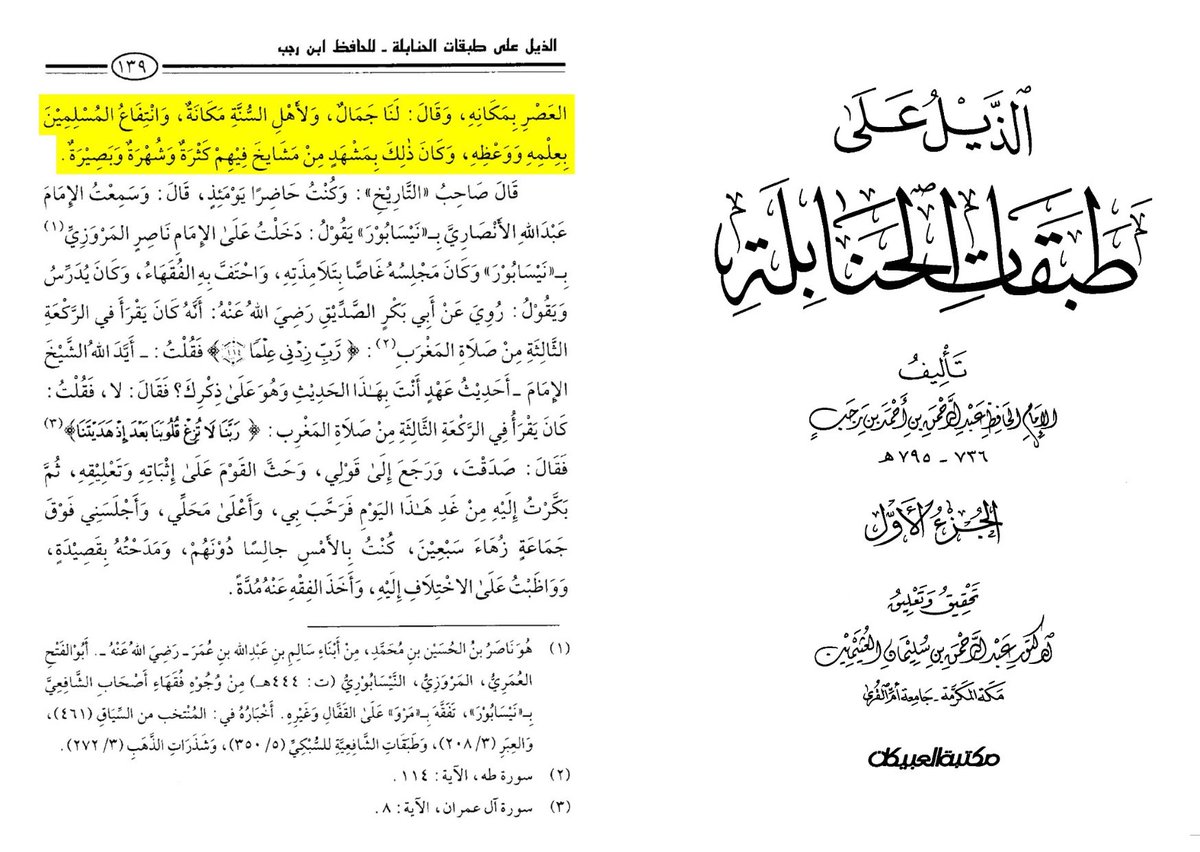
Then he travelled again for Ḥajj with the jurist and Imām Abū al-Faḍl Ibn Abī Saʾd al-Zāhid al-Wāʾiẓ, accompanied by a large group, for the duration of 23 years. When they arrived in Naysābūr, Imām Abū ʿUthmān al-Ṣābūnī arranged a gathering for his nephew, Imām Abū al-Faḍl Ibn Abī Saʾd al-Zāhid, to dictate to him in Naysābūr. Al-Anṣārī examined it and pointed out a flaw in the narrators of the ḥadīth collection. Al-Ṣābūnī accepted his criticism, returned to what he had said, praised him, showed delight, congratulated the people of the era on his status, and said: “We have beauty, and the people of the Sunnah have a high status. Muslims benefit from his knowledge and preaching.” This took place with the presence of numerous well-known and insightful scholars.
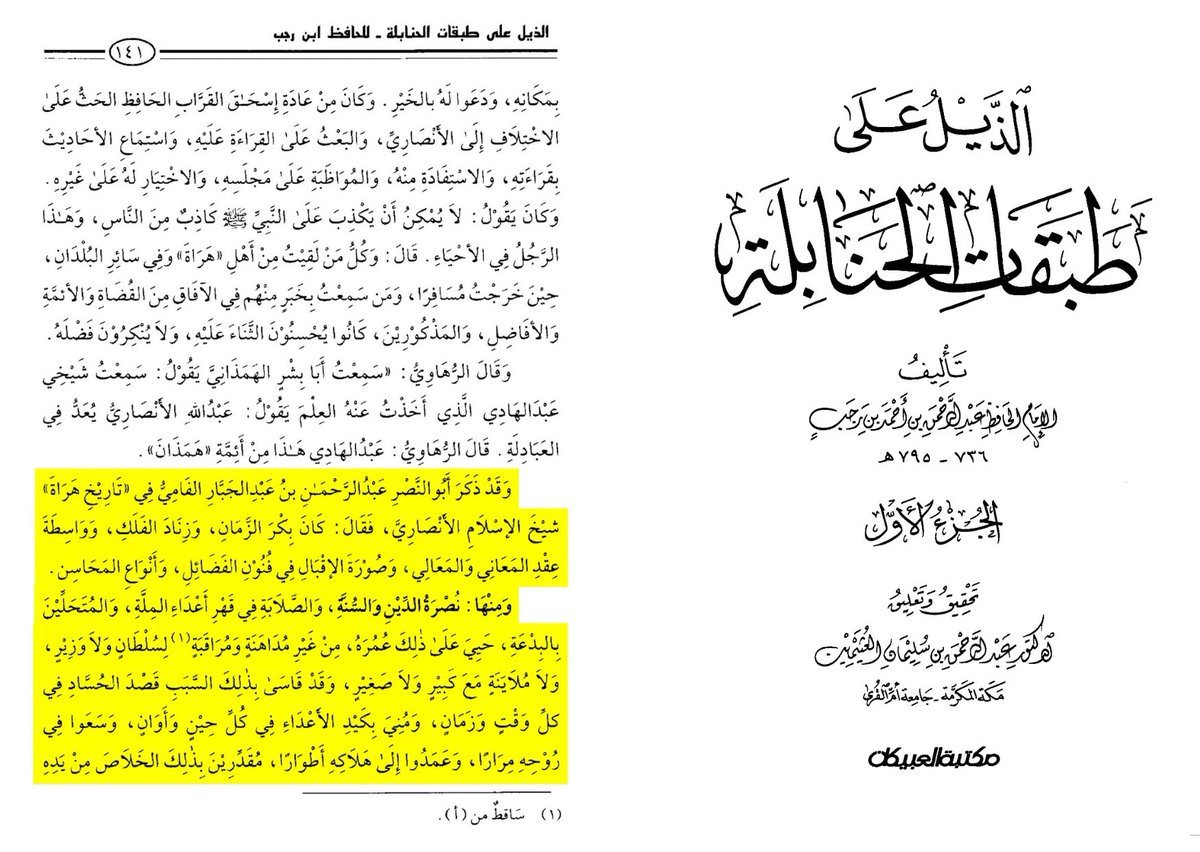
Abū al-Naṣr ʿAbd al-Raḥman Ibn ʿAbd al-Jabbār al-Fāmī mentioned in “The History of Hirāt” about Shaykh al-Islām al-Anṣārī, saying: “He was the foremost of his time, the pillar of the universe, the mediator of meanings and virtues, and the embodiment of excellence in the arts of virtues, and various beauties.
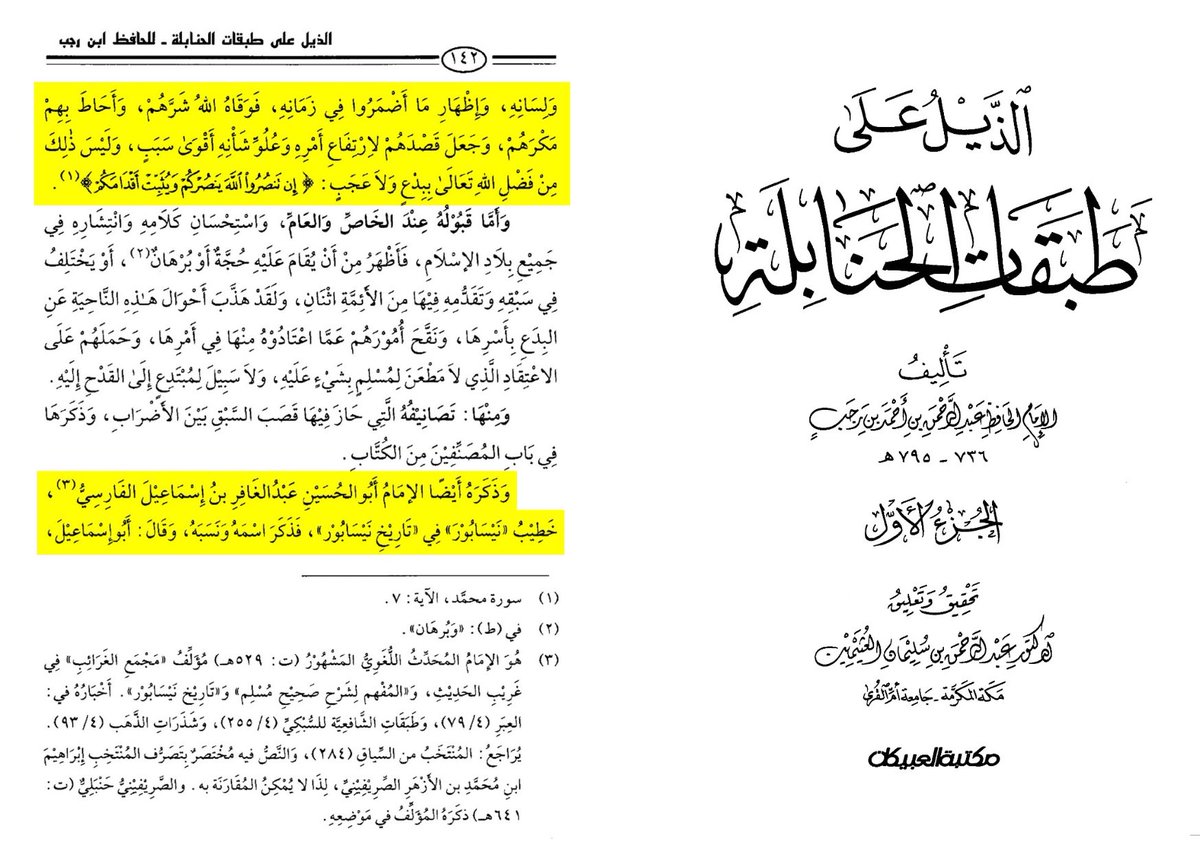
Among them: supporting religion and the Sunnah, steadfastness in conquering the enemies of the faith, and confronting those adorned with innovation. He lived with honour in all these endeavours, without flattery or monitoring by a ruler, minister, elder, or youth. He endured the envy of enemies at all times and in all circumstances, facing their malicious intentions repeatedly, and they sought his destruction in various ways, aiming for his demise by his hands or tongue, revealing what they concealed during his time. But Allāh protected him from their evil, surrounded him with His protection, and made their plots the means for his rise and elevation of his status. This was not due to any innovation or wonder, but rather by the grace of Allāh: {If you support Allāh, He will support you and plant firmly your feet}. [47:7]”
• Ibn Rajab al-Ḥanbalī said:
❝Al-Shaykh, al-Imām, Abū Ismāʾīl’s teachers, contemporaries, and other jurists, ḥadīth scholars, Ṣūfīs and writers praised him. The saying of Saʿd al-Zanjānī concerning him has been mentioned in the biography of ʿAbd al-Raḥman Ibn Mandah: “Indeed, Allāh has protected Islām through him and through Ibn Mandah.”
Al-Rahāwī said: “I heard in Hirāt that when Shaykh al-Islām was exiled from Hirāt and reached Marw, and was granted permission to return to Hirāt, he returned and had reached Marw al-Rūdh when Imām Abū Muḥammad al-Ḥusayn Ibn Masʾūd al-Baghawī al-Farrāʾ, the author of many books, headed for him. When he reached him, he said to the Shaykh al-Islām: “Verily Allāh has gathered for you many virtues, there was yet one virtue left, which he intended to complete for you and that is expulsion from one’s homeland in the way of the Prophet of Allāh ﷺ.”
Al-Rahāwī said: “And I heard from Abū ʿAbdillāh Sufyān Ibn Abī al-Faḍl al-Khiraqī al-Sufyānī, who was among the people of ḥadīth, virtue, and religion. He, following the Sufyanite school of thought, said: ‘I heard the memorizer Abū Masʾūd Kutah saying: ‘I heard Abū al-Waqt ʿAbd al-Awwal Ibn ʿĪsā saying: ‘I visited al-Juwaynī – meaning Abū Muḥammad ʿAbdullāh Ibn Yūsuf al-Faqīh – and he asked me about the Shaykh al-Islām?’ So I said: ‘I am his servant.’ He then said: ‘May Allāh be pleased with him.’”
Al-Rahāwī said: “Al-Ḥusayn Ibn Muḥammad al-Kutbī al-Harawī mentioned in his “Tārīkh” that Shaykh al-Islām al-Anṣārī travelled to Naysābūr in the year 417H seeking ḥadīth knowledge, jurisprudence, meeting scholars, benefiting from them, and seeking blessings from their company. He returned in that same year.
Then he travelled again for Ḥajj with the jurist and Imām Abū al-Faḍl Ibn Abī Saʾd al-Zāhid al-Wāʾiẓ, accompanied by a large group, for the duration of 23 years. When they arrived in Naysābūr, Imām Abū ʿUthmān al-Ṣābūnī arranged a gathering for his nephew, Imām Abū al-Faḍl Ibn Abī Saʾd al-Zāhid, to dictate to him in Naysābūr. Al-Anṣārī examined it and pointed out a flaw in the narrators of the ḥadīth collection. Al-Ṣābūnī accepted his criticism, returned to what he had said, praised him, showed delight, congratulated the people of the era on his status, and said: “We have beauty, and the people of the Sunnah have a high status. Muslims benefit from his knowledge and preaching.” This took place with the presence of numerous well-known and insightful scholars.
Abū al-Naṣr ʿAbd al-Raḥman Ibn ʿAbd al-Jabbār al-Fāmī mentioned in “The History of Hirāt” about Shaykh al-Islām al-Anṣārī, saying: “He was the foremost of his time, the pillar of the universe, the mediator of meanings and virtues, and the embodiment of excellence in the arts of virtues, and various beauties.
Among them: supporting religion and the Sunnah, steadfastness in conquering the enemies of the faith, and confronting those adorned with innovation. He lived with honour in all these endeavours, without flattery or monitoring by a ruler, minister, elder, or youth. He endured the envy of enemies at all times and in all circumstances, facing their malicious intentions repeatedly, and they sought his destruction in various ways, aiming for his demise by his hands or tongue, revealing what they concealed during his time. But Allāh protected him from their evil, surrounded him with His protection, and made their plots the means for his rise and elevation of his status. This was not due to any innovation or wonder, but rather by the grace of Allāh: {If you support Allāh, He will support you and plant firmly your feet}. [47:7]”
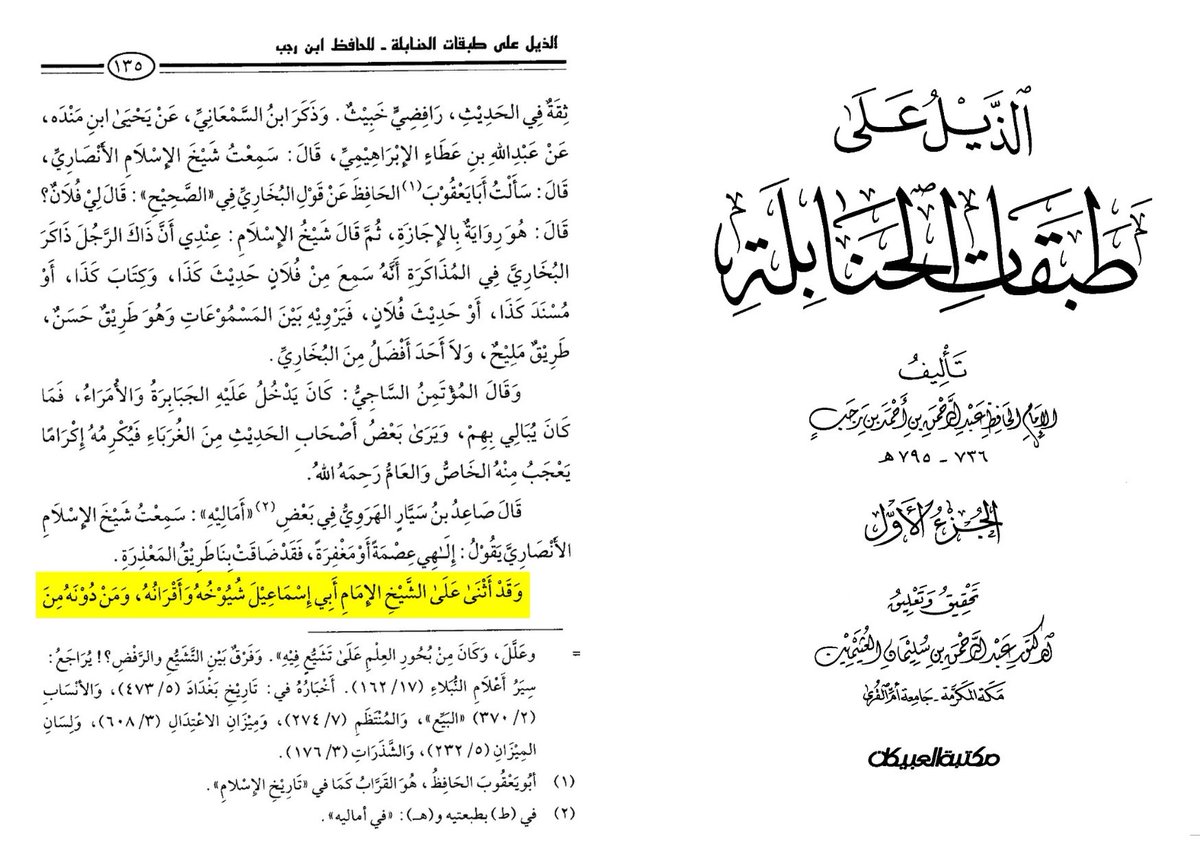
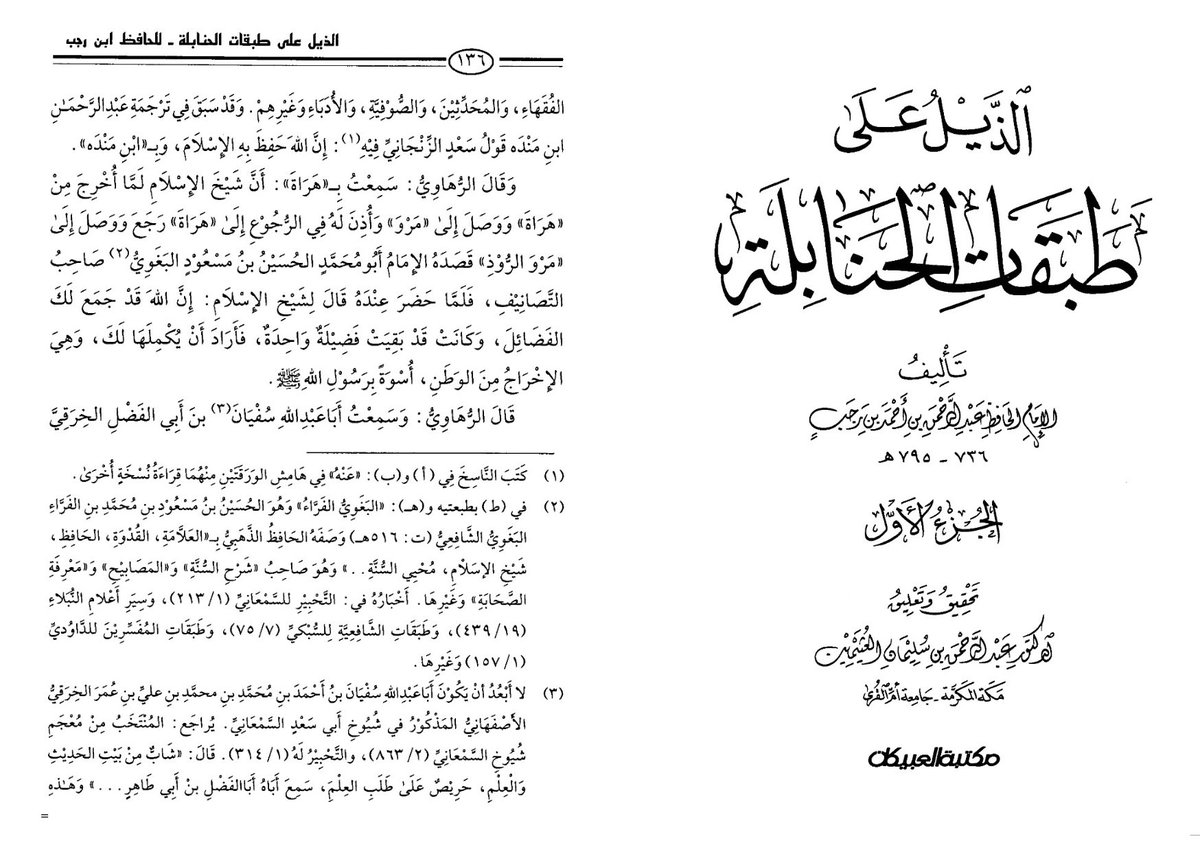
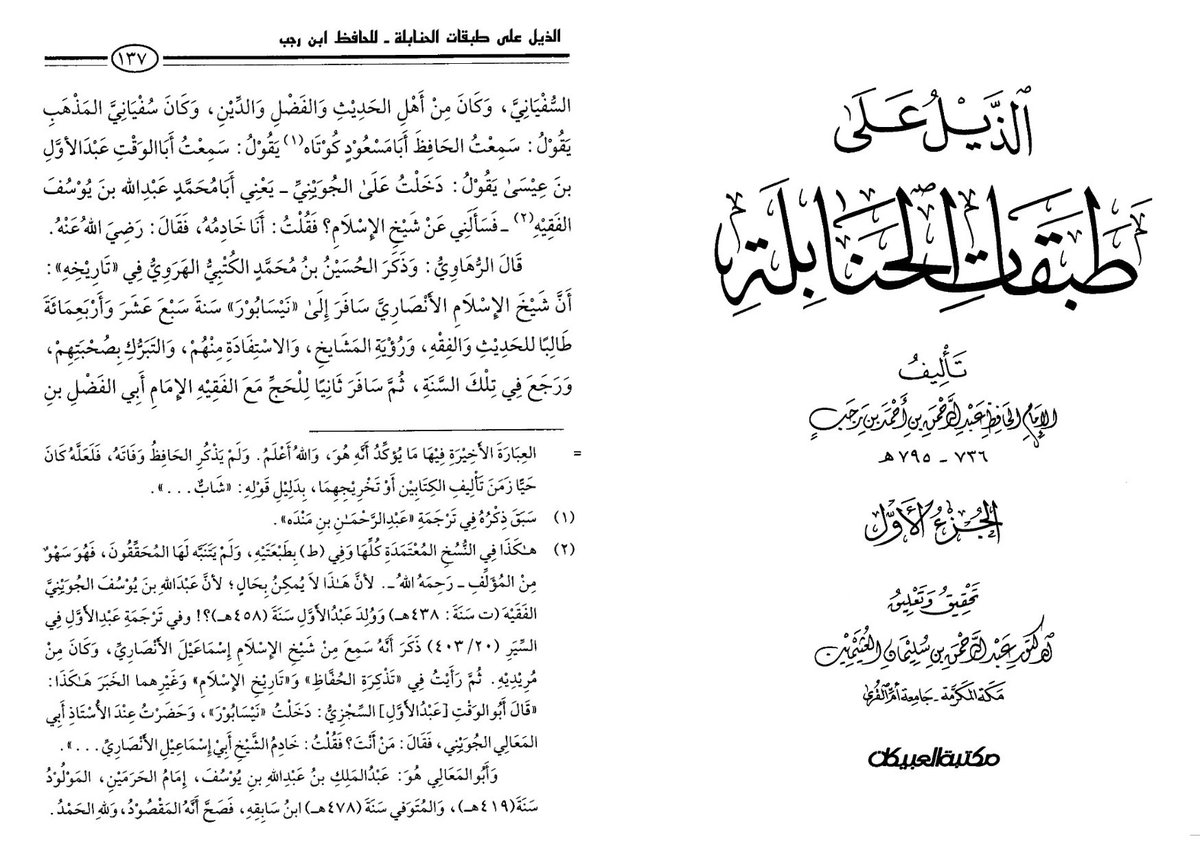
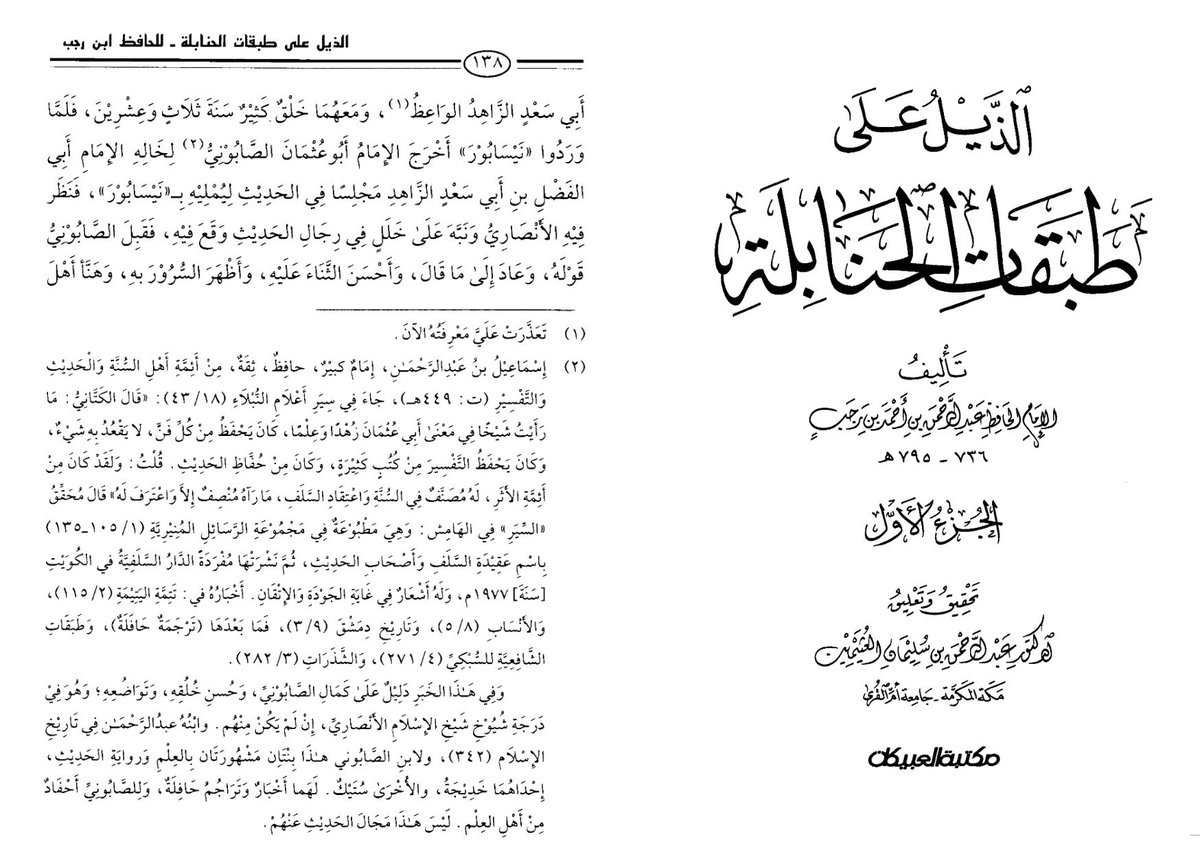
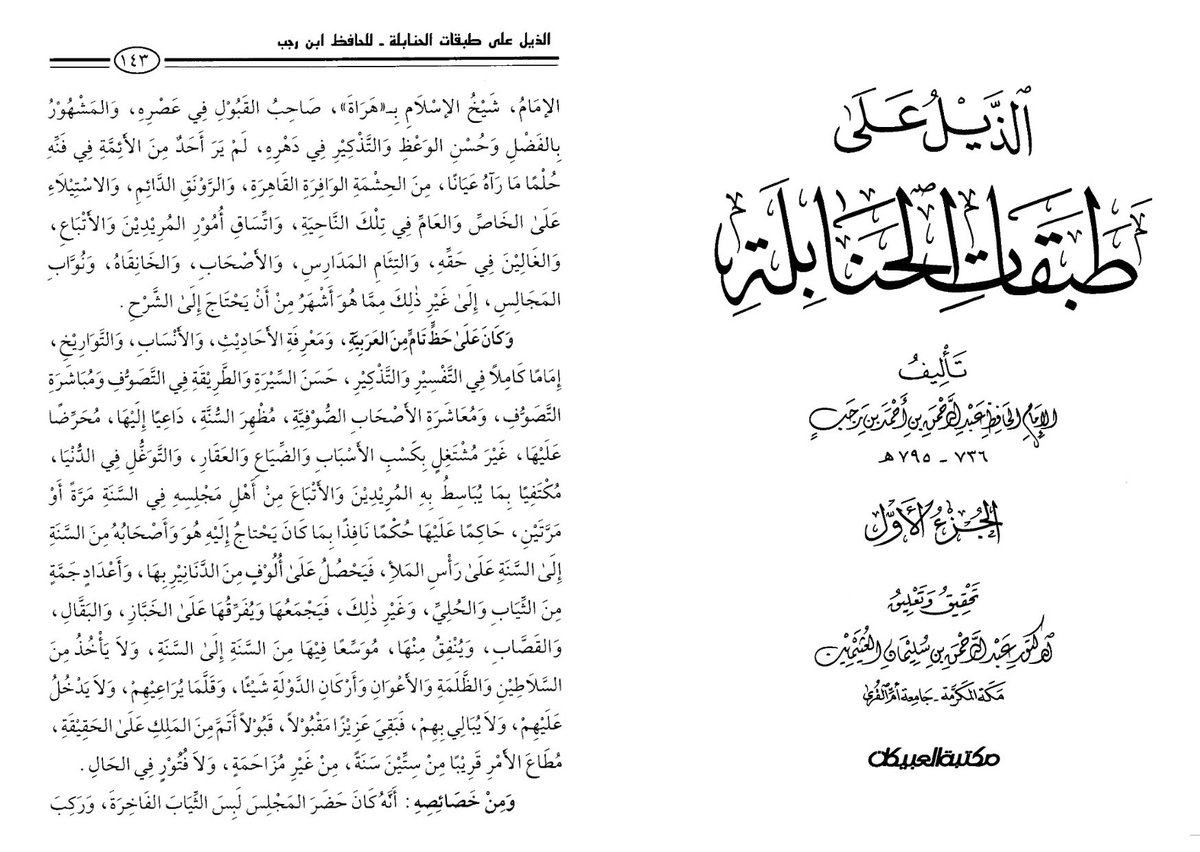
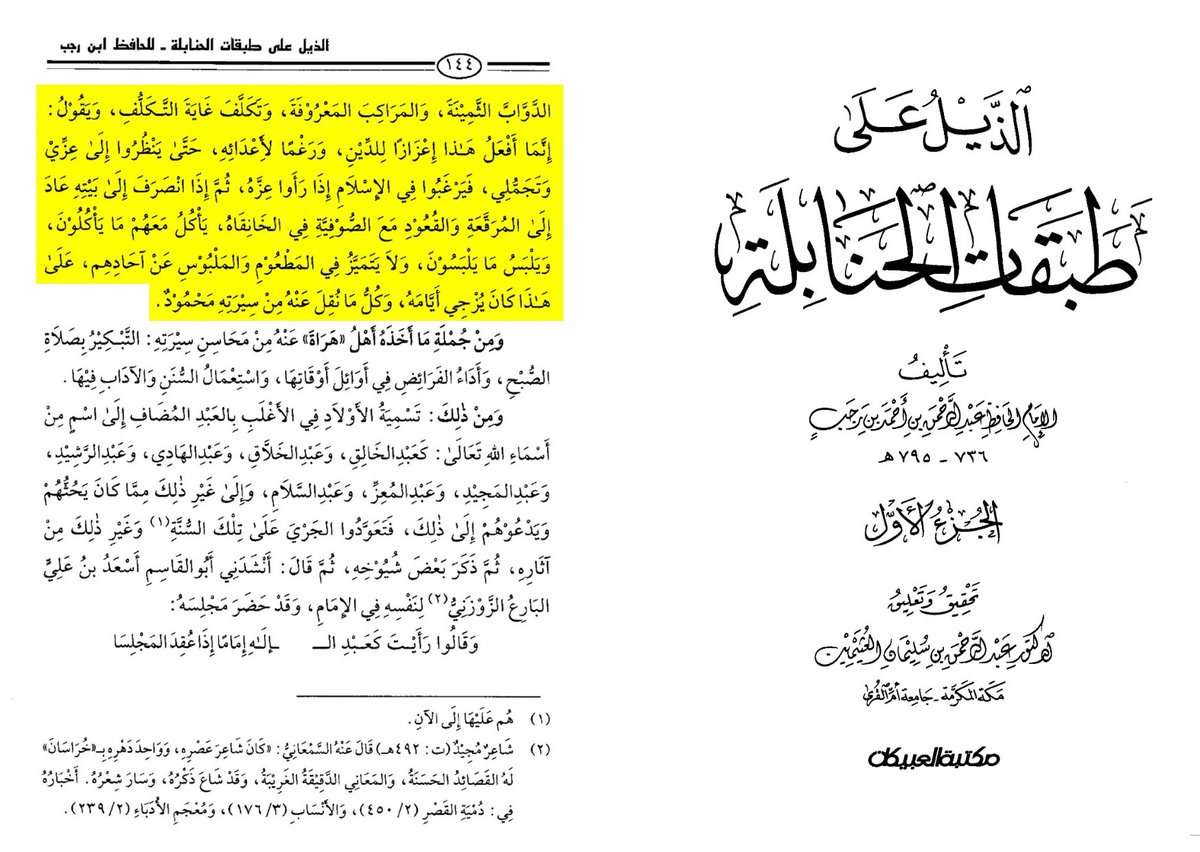
Imām Abū al-Ḥusayn ʿAbd al-Ghāfir Ibn Ismāʾīl al-Fārsī, the orator (khaṭīb) of Naysābūr, has also mentioned him in Tārīkh Naysābūr. He has mentioned his name and lineage. He writes: “Abū Ismāʾīl, the Imām and Shaykh al-Islām of Hirāt, was a man who was accepted in his age, and known in his time for virtue and [an ability to deliver] excellent speeches and orations. Not one of the Imāms of his respected field was seen even in a dream possessing that which was evidently seen in him in terms of abundant and overpowering bashfulness, unceasing beauty, ability to captivate the elite and common people in that region, ability to coordinate the affairs of [his] murids, followers and those who are devoted to him, ability to unite the madrasahs, friends, khanqahs and the people of government, and many other qualities that are more well known and not in need of explanation.
He was proficient in Arabic and the knowledge of ḥadīth, lineage and history; he was a perfect Imām in tafsīr and in delivering orations. He was of excellent conduct and mode in taṣawwuf. He was a practitioner of taṣawwuf and would remain in the company of the Ṣūfīs. He was a bearer of the Sunnah, he would call towards it and encourage it. He would not preoccupy himself with earning means, estates, properties and being absorbed in the world. He would remain content with that amount that would please the murīds and followers from his gathering once or twice a year. He would, at the head of a gathering, decide what he and his companions would need from one year to another.
Among his characteristics: he used to attend gatherings wearing luxurious clothes and riding valuable mounts and well-known ships. He would indulge in extravagance to the utmost degree and would say: ‘I only do this to honour the religion and despite its enemies, so that they may look upon my nobility and elegance and become inclined towards Islām when they see its glory.’ Then, when he returned home, he would go back to patched garments and sitting with Ṣūfīs in the monastery, eating what they ate and wearing what they wore, without distinguishing himself in food or clothing from any of them. This was how he spent his days, and everything reported about his conduct is praiseworthy.”
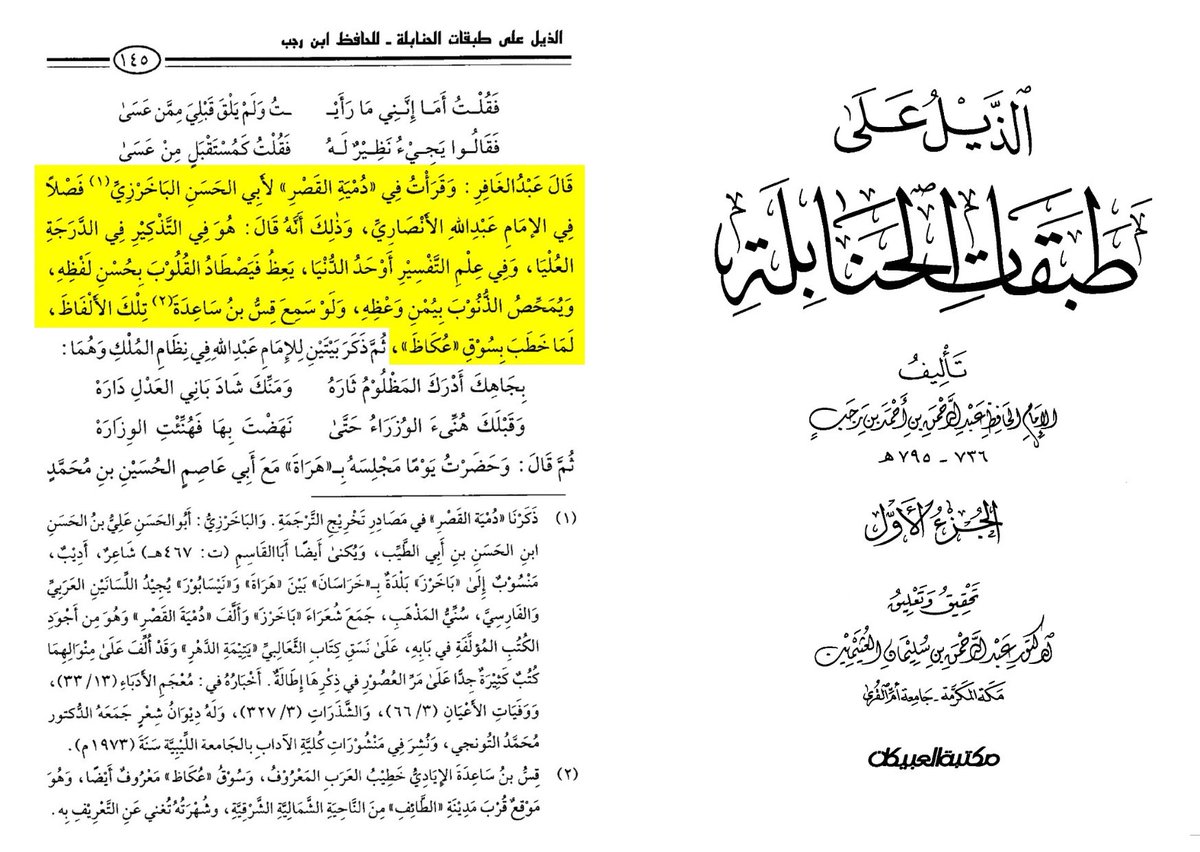
ʿAbd al-Ghāfir said: “I read in ‘Dumyat al-Qaṣr’ by Abū al-Ḥasan al-Bakharzī a chapter about Imām ʿAbdullāh al-Anṣārī, wherein he stated: ‘He is in the highest rank of preaching, and in the knowledge of tafsīr, he is unparalleled in the world. He preaches and captures hearts with the beauty of his words, and purifies sins with the blessings of his admonition. If Qiss Ibn Saʾīd heard those words, he would not have preached in the market of ʿUkaẓ.’”❞
📚 (Al-Dhayl ʿAlā Ṭabaqāt al-Ḥanābilah 1/135-145)
He was proficient in Arabic and the knowledge of ḥadīth, lineage and history; he was a perfect Imām in tafsīr and in delivering orations. He was of excellent conduct and mode in taṣawwuf. He was a practitioner of taṣawwuf and would remain in the company of the Ṣūfīs. He was a bearer of the Sunnah, he would call towards it and encourage it. He would not preoccupy himself with earning means, estates, properties and being absorbed in the world. He would remain content with that amount that would please the murīds and followers from his gathering once or twice a year. He would, at the head of a gathering, decide what he and his companions would need from one year to another.
Among his characteristics: he used to attend gatherings wearing luxurious clothes and riding valuable mounts and well-known ships. He would indulge in extravagance to the utmost degree and would say: ‘I only do this to honour the religion and despite its enemies, so that they may look upon my nobility and elegance and become inclined towards Islām when they see its glory.’ Then, when he returned home, he would go back to patched garments and sitting with Ṣūfīs in the monastery, eating what they ate and wearing what they wore, without distinguishing himself in food or clothing from any of them. This was how he spent his days, and everything reported about his conduct is praiseworthy.”
ʿAbd al-Ghāfir said: “I read in ‘Dumyat al-Qaṣr’ by Abū al-Ḥasan al-Bakharzī a chapter about Imām ʿAbdullāh al-Anṣārī, wherein he stated: ‘He is in the highest rank of preaching, and in the knowledge of tafsīr, he is unparalleled in the world. He preaches and captures hearts with the beauty of his words, and purifies sins with the blessings of his admonition. If Qiss Ibn Saʾīd heard those words, he would not have preached in the market of ʿUkaẓ.’”❞
📚 (Al-Dhayl ʿAlā Ṭabaqāt al-Ḥanābilah 1/135-145)
(Remaining screenshots for the translated text above)
𝟱) 𝗜𝗯𝗻 𝗧𝗮𝘆𝗺ī𝘆𝘆𝗮𝗵’𝘀 𝗣𝗿𝗮𝗶𝘀𝗲
• Ibn Rajab al-Ḥanbalī said:
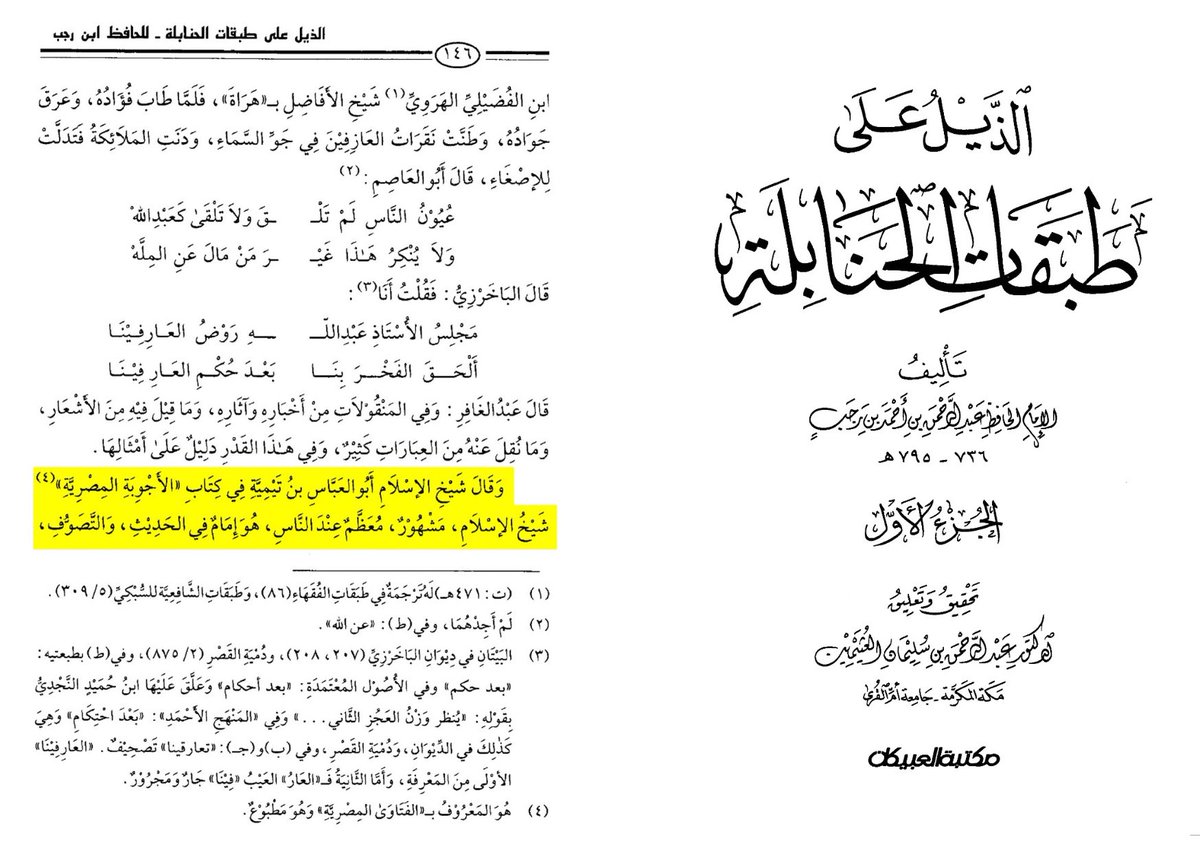
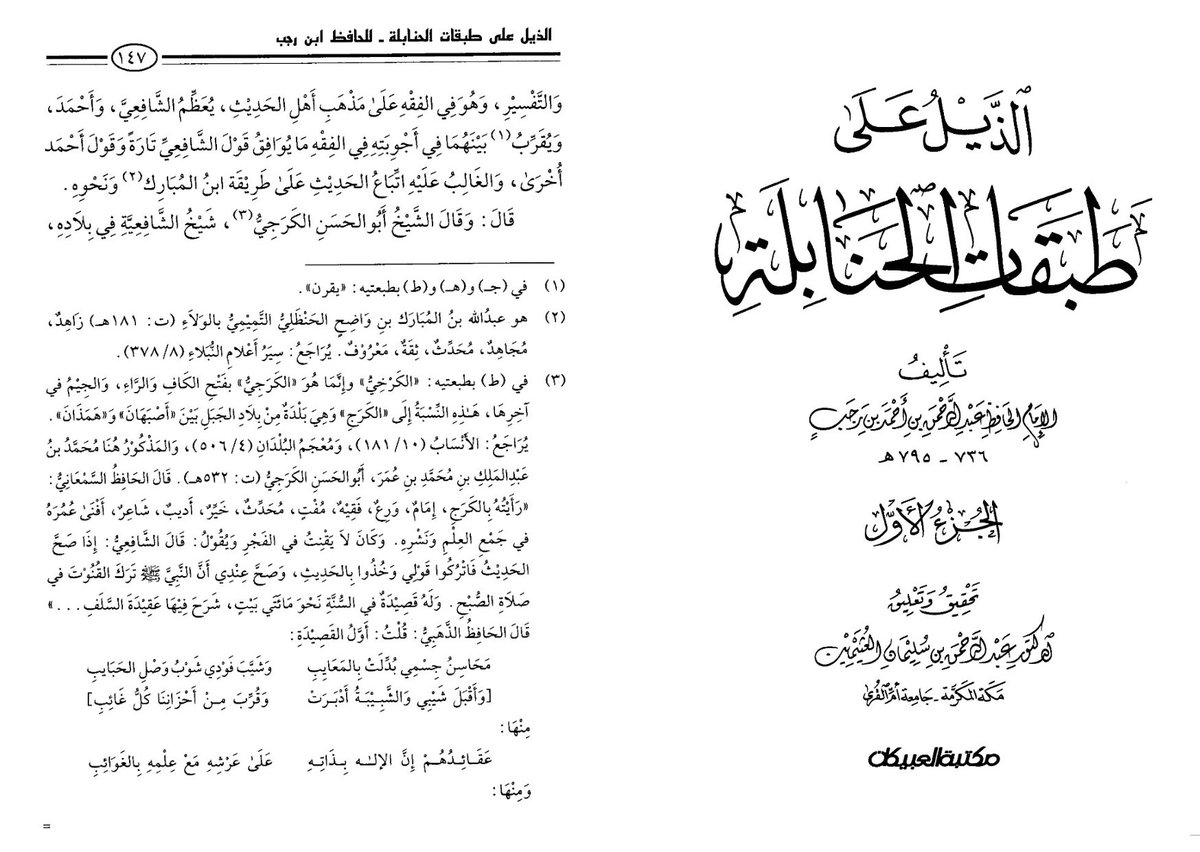
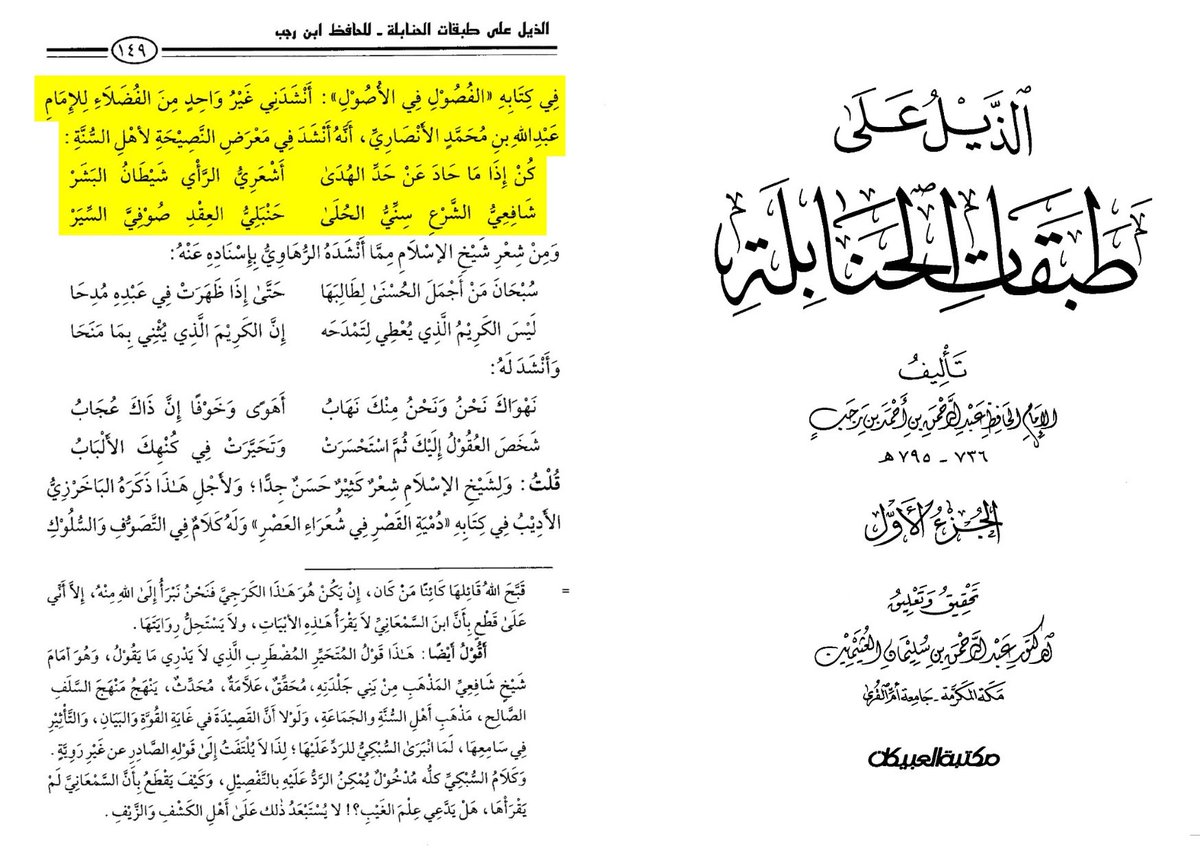
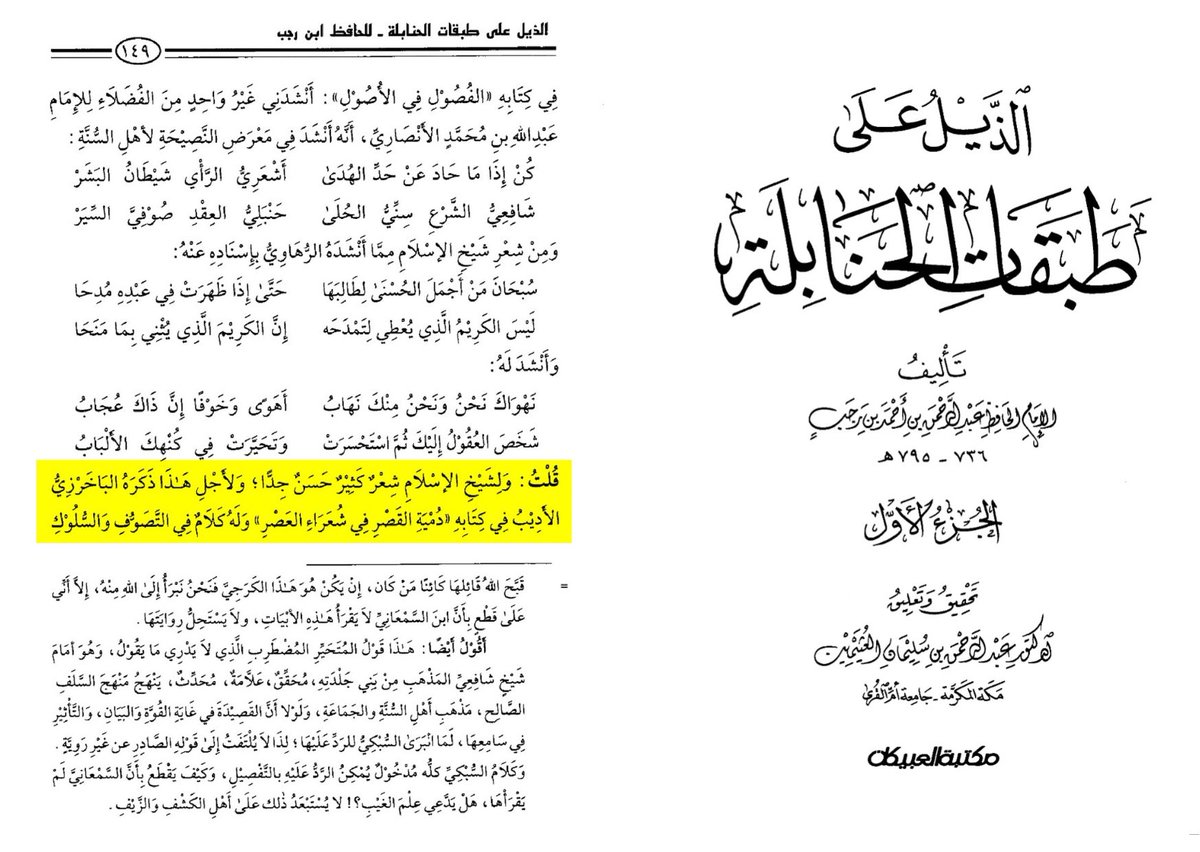
❝Shaykh al-Islām Abū al-ʿAbbās Ibn Taymīyyah writes in his book, al-Ajwibah al-Miṣrīyyah: “Shaykh al-Islām is well-known and revered by the people. He was an Imām in ḥadīth, taṣawwuf and tafsīr. In fiqh, he followed the school of the ḥadīth scholars (Ahl al-Ḥadīth), he would exalt al-Shāfiʾī and Aḥmad, and would combine between them in his answers in fiqh with that which agrees with the view of al-Shāfiʾī at times and that which agrees with the view of Aḥmad at times. The following of ḥadīth according to the way of Ibn al-Mubārak and his like was predominant over him.”
He (Ibn Taymīyyah) added: “In his book, al-Fuṣūl Fī al-Uṣūl, Shaykh Abū al-Ḥasan al-Karjī – the Shaykh of the Shāfiʾīyyah in his country – wrote: More than one of the students of Imām ʿAbdullāh Ibn Muḥammad al-Anṣārī told me that he recited to them this poem as a form of advice for the Ahl al-Sunnah:
‘When the one who is Ashʾarī in ʿaqīdah and a human Satan diverges from the boundary of guidance, then let him be Shāfiʾī in jurisprudence, Sunnī in adornment, Ḥanbalī in ʿaqīdah and Ṣūfī in conduct.’”❞
📚 (Al-Dhayl ʿAlā Ṭabaqāt al-Ḥanābilah 1/146-149)
• Ibn Rajab al-Ḥanbalī said:
❝Shaykh al-Islām Abū al-ʿAbbās Ibn Taymīyyah writes in his book, al-Ajwibah al-Miṣrīyyah: “Shaykh al-Islām is well-known and revered by the people. He was an Imām in ḥadīth, taṣawwuf and tafsīr. In fiqh, he followed the school of the ḥadīth scholars (Ahl al-Ḥadīth), he would exalt al-Shāfiʾī and Aḥmad, and would combine between them in his answers in fiqh with that which agrees with the view of al-Shāfiʾī at times and that which agrees with the view of Aḥmad at times. The following of ḥadīth according to the way of Ibn al-Mubārak and his like was predominant over him.”
He (Ibn Taymīyyah) added: “In his book, al-Fuṣūl Fī al-Uṣūl, Shaykh Abū al-Ḥasan al-Karjī – the Shaykh of the Shāfiʾīyyah in his country – wrote: More than one of the students of Imām ʿAbdullāh Ibn Muḥammad al-Anṣārī told me that he recited to them this poem as a form of advice for the Ahl al-Sunnah:
‘When the one who is Ashʾarī in ʿaqīdah and a human Satan diverges from the boundary of guidance, then let him be Shāfiʾī in jurisprudence, Sunnī in adornment, Ḥanbalī in ʿaqīdah and Ṣūfī in conduct.’”❞
📚 (Al-Dhayl ʿAlā Ṭabaqāt al-Ḥanābilah 1/146-149)
𝟲) 𝗜𝗯𝗻 ʿ𝗔𝗯𝗱 𝗮𝗹-𝗛ā𝗱ī’𝘀 𝗣𝗿𝗮𝗶𝘀𝗲
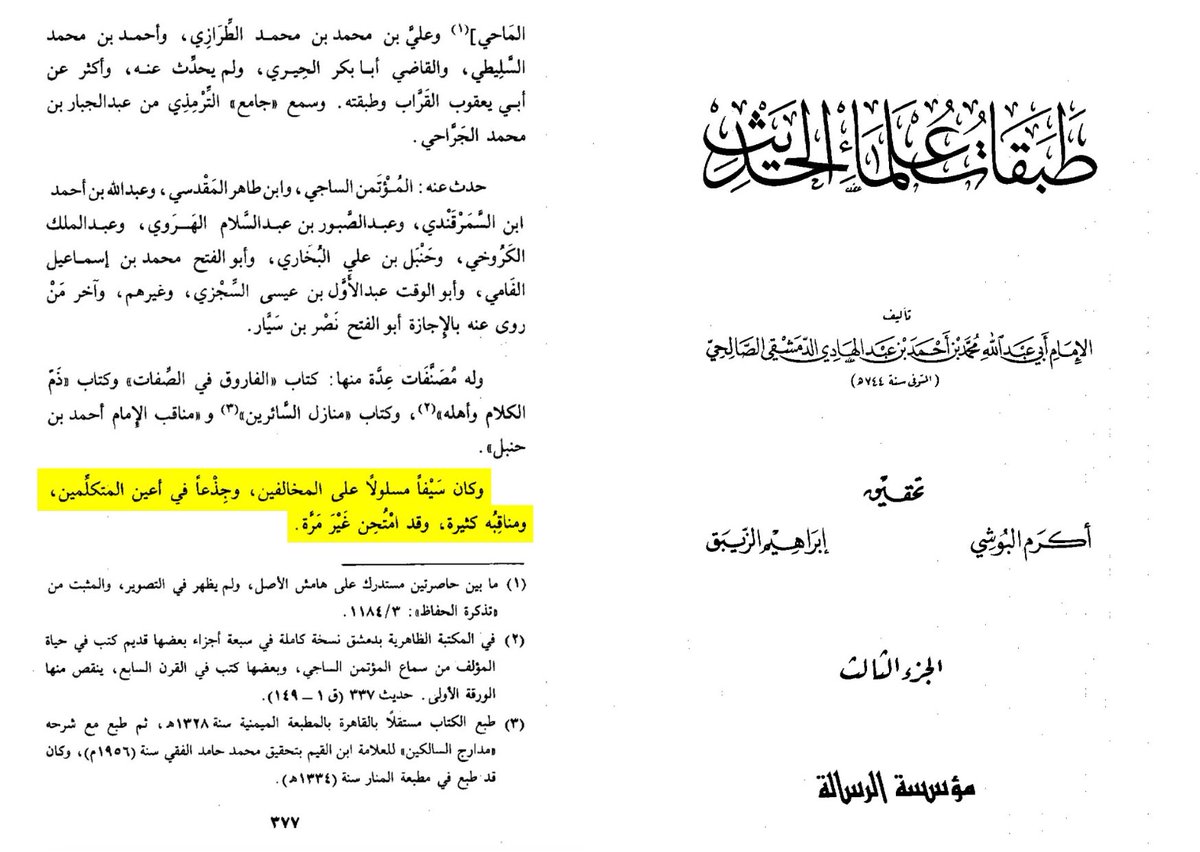
• Ibn ʿAbd al-Hādī said:
❝He was an unsheathed sword against the opposers, a thorn in the eyes of the Mutakallimīn, and his virtues were numerous. He was tested many times.❞
📚 (Ṭabaqāt al-Ḥuffāẓ 3/377)
• Ibn ʿAbd al-Hādī said:
❝He was an unsheathed sword against the opposers, a thorn in the eyes of the Mutakallimīn, and his virtues were numerous. He was tested many times.❞
📚 (Ṭabaqāt al-Ḥuffāẓ 3/377)
• Al-Dhahabī said:
❝Abū Ismāʾīl al-Anṣārī, Shaykh al-Islām, ʿAbdullāh Ibn Muḥammad Ibn ʿAlī Ibn Mat al-Harawī, the Ṣūfī, the role model, the Ḥāfiẓ, one of the eminent figures, died in the month of Dhī al-Ḥijjah, when he was 80 years old and some months. He heard from ʿAbd al-Jabbār al-Jarrāḥī, Abū Manṣūr Muḥammad Ibn Muḥammad Ibn al-Azdī, and many others. And in Naysābūr from Abū Saʾīd al-Ṣayrafī, and Aḥmad al-Sulayṭī. He was a thorn in the eyes of the innovators, and a sword against the Jahmīyyah. He was tested several times and compiled several books. The Shaykh of Khurasān in his time without disputation.❞
📚 (Al-ʿIbar Fī Khabr Min Ghabr 2/343)
❝Abū Ismāʾīl al-Anṣārī, Shaykh al-Islām, ʿAbdullāh Ibn Muḥammad Ibn ʿAlī Ibn Mat al-Harawī, the Ṣūfī, the role model, the Ḥāfiẓ, one of the eminent figures, died in the month of Dhī al-Ḥijjah, when he was 80 years old and some months. He heard from ʿAbd al-Jabbār al-Jarrāḥī, Abū Manṣūr Muḥammad Ibn Muḥammad Ibn al-Azdī, and many others. And in Naysābūr from Abū Saʾīd al-Ṣayrafī, and Aḥmad al-Sulayṭī. He was a thorn in the eyes of the innovators, and a sword against the Jahmīyyah. He was tested several times and compiled several books. The Shaykh of Khurasān in his time without disputation.❞
📚 (Al-ʿIbar Fī Khabr Min Ghabr 2/343)

𝟴) 𝗔𝗹-Ṣ𝗮𝗳𝗮𝗱ī’𝘀 𝗣𝗿𝗮𝗶𝘀𝗲
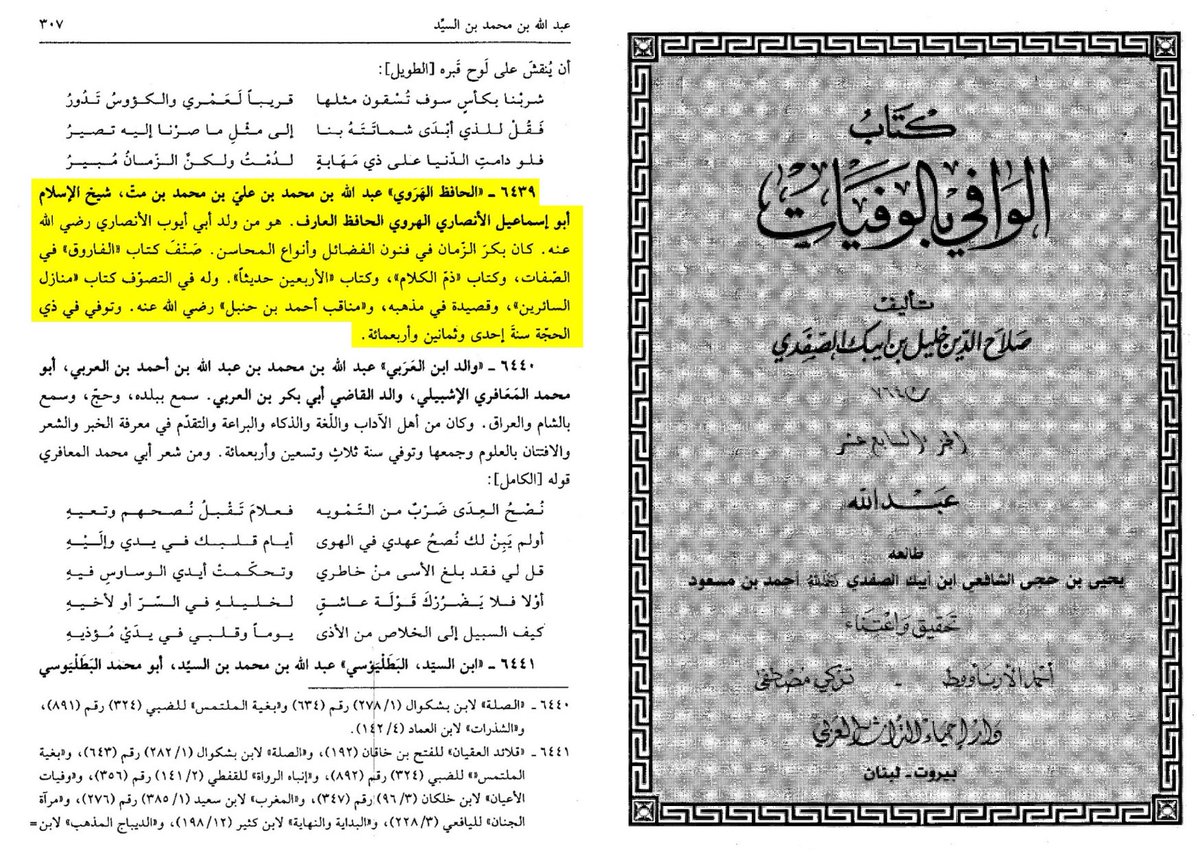
• Al-Ṣafadī said:
❝ʿAbdullāh Ibn Muḥammad Ibn ʿAlī Ibn Muḥammad Ibn Mat, Shaykh al-Islām Abū Ismāʾīl al-Anṣārī al-Harawī, the Ḥāfiẓ, the devoted worshipper, he was a descendant of Abū Ayyūb al-Anṣārī, may Allāh be pleased with him. He was the foremost in his time in virtuousness and excellence. He authored the book “al-Fārūq Fī al-Ṣifāt” and “Dhamm al-Kalām” and the book “al-Arbaʾīn Ḥadīthan” and a book in Taṣawwuf called “Manāzil al-Sāʾirīn” and a poem in his Madhhab and “Manāqib Aḥmad Ibn Ḥanbal” may Allāh be pleased with him. He passed away in Dhī al-Ḥijjah in the year 481H.❞
📚 (Al-Wāfī bil-Wāfīyāt 17/307)
• Al-Ṣafadī said:
❝ʿAbdullāh Ibn Muḥammad Ibn ʿAlī Ibn Muḥammad Ibn Mat, Shaykh al-Islām Abū Ismāʾīl al-Anṣārī al-Harawī, the Ḥāfiẓ, the devoted worshipper, he was a descendant of Abū Ayyūb al-Anṣārī, may Allāh be pleased with him. He was the foremost in his time in virtuousness and excellence. He authored the book “al-Fārūq Fī al-Ṣifāt” and “Dhamm al-Kalām” and the book “al-Arbaʾīn Ḥadīthan” and a book in Taṣawwuf called “Manāzil al-Sāʾirīn” and a poem in his Madhhab and “Manāqib Aḥmad Ibn Ḥanbal” may Allāh be pleased with him. He passed away in Dhī al-Ḥijjah in the year 481H.❞
📚 (Al-Wāfī bil-Wāfīyāt 17/307)
𝟵) 𝗜𝗯𝗻 𝗮𝗹-𝗠𝗶𝗯𝗿𝗮𝗱’𝘀 𝗣𝗿𝗮𝗶𝘀𝗲
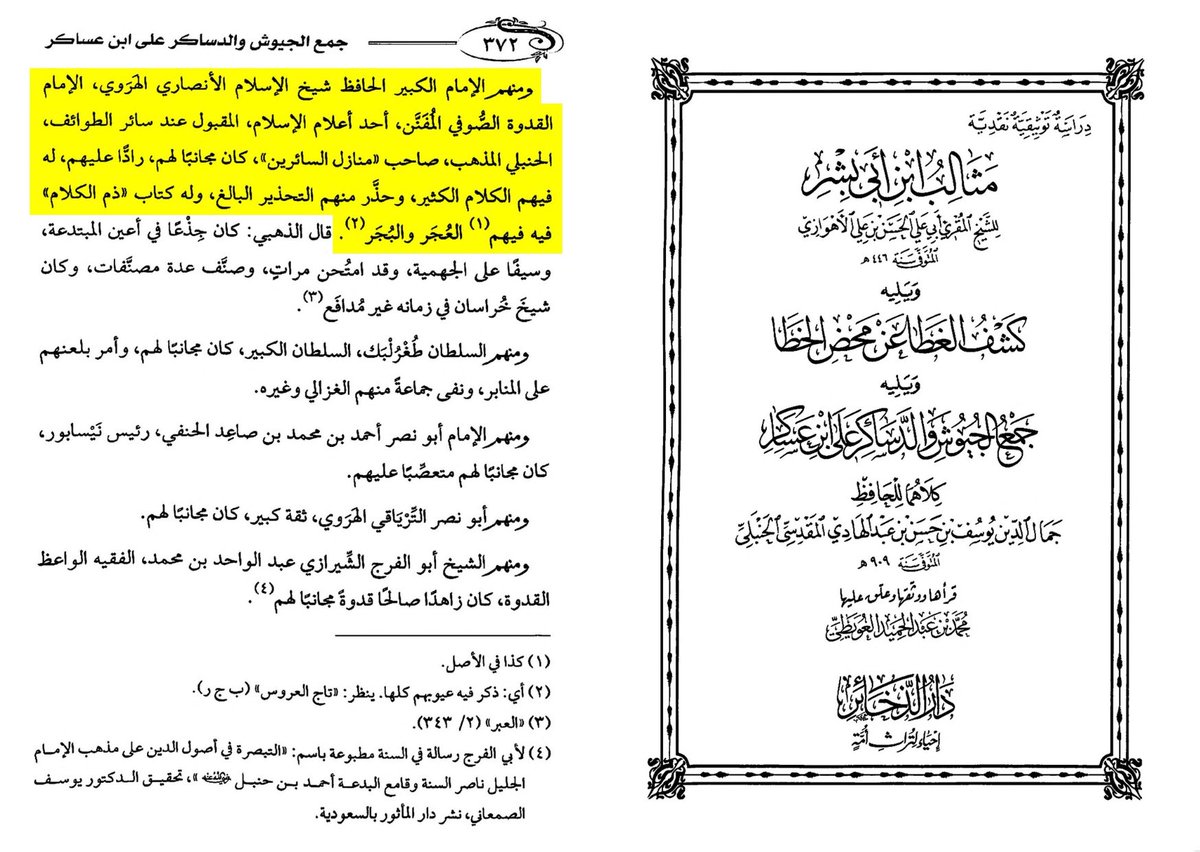
• Ibn al-Mibrad said when mentioning 400 scholars who censured the Ashāʾirah:
❝And from them is the grand Imām, the Ḥāfiẓ, Shaykh al-Islām al-Anṣārī al-Harawī, the Imām, the knowledgeable Ṣūfī leader, one of the greats of Islām and is accepted by all the sects, Ḥanbalī in Madhhab, the author of “Manāzil al-Sāʾirīn”. He was opposed to the Ashāʾirah, refuted them, has a lot of words about them, warned against them excessively, and wrote a book called “Dhamm al-Kalām”, in which there is wonder and amazement.❞
📚 (Jamʾ al-Juyūsh wal-Dasākir ʿAlā Ibn ʿAsākir p. 372)
• Ibn al-Mibrad said when mentioning 400 scholars who censured the Ashāʾirah:
❝And from them is the grand Imām, the Ḥāfiẓ, Shaykh al-Islām al-Anṣārī al-Harawī, the Imām, the knowledgeable Ṣūfī leader, one of the greats of Islām and is accepted by all the sects, Ḥanbalī in Madhhab, the author of “Manāzil al-Sāʾirīn”. He was opposed to the Ashāʾirah, refuted them, has a lot of words about them, warned against them excessively, and wrote a book called “Dhamm al-Kalām”, in which there is wonder and amazement.❞
📚 (Jamʾ al-Juyūsh wal-Dasākir ʿAlā Ibn ʿAsākir p. 372)
𝟭𝟬) 𝗔𝗹-𝗦𝘂𝘆ūṭī’𝘀 𝗣𝗿𝗮𝗶𝘀𝗲 𝗙𝗼𝗿 𝗛𝗶𝘀 𝗕𝗼𝗼𝗸 𝗗𝗵𝗮𝗺𝗺 𝗮𝗹-𝗞𝗮𝗹ā𝗺
• Jalāl al-Dīn al-Suyūṭī said:
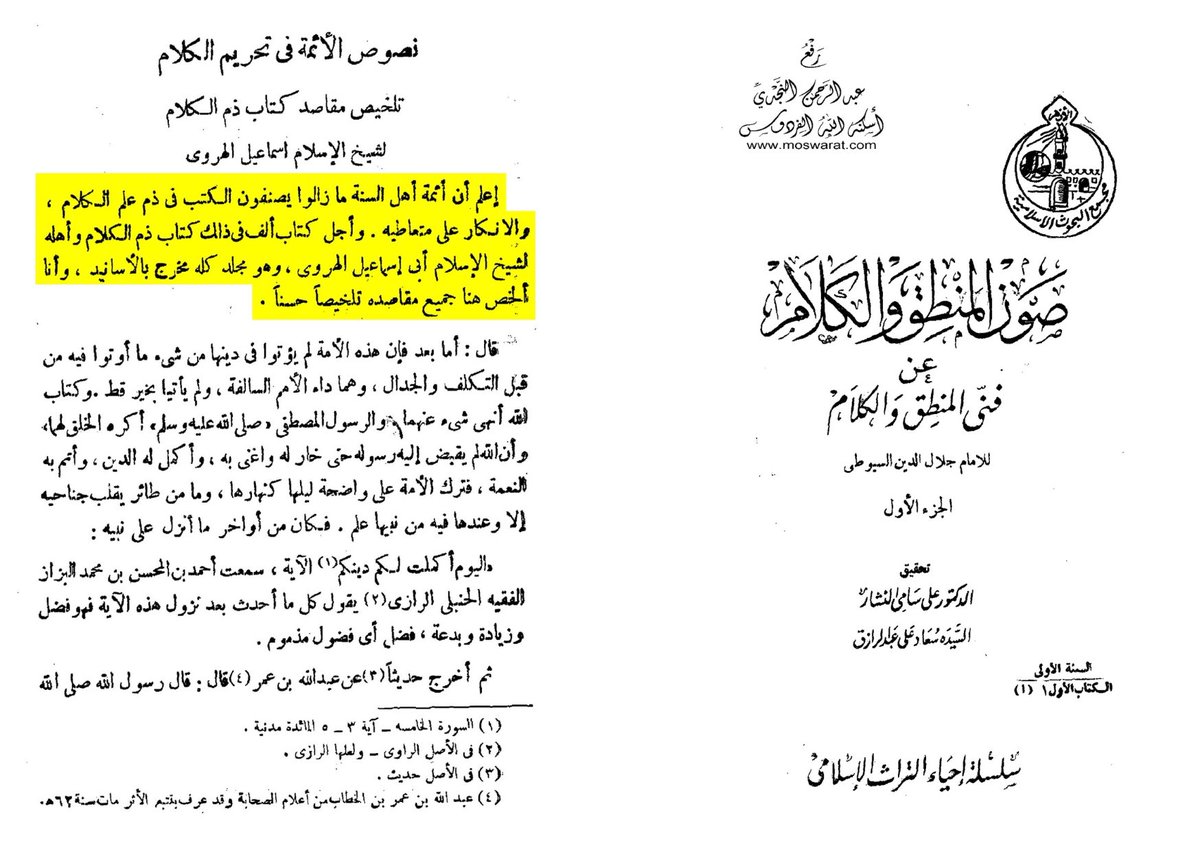
❝Know that the Imāms of Ahl al-Sunnah have consistently categorised books critiquing the science of kalām and denounced those who engage with it. One of the most significant books on this subject is “Dhamm al-Kalām wa-Ahlihi” authored by Shaykh al-Islām Abū Ismāʾīl al-Harawī. This book is a voluminous work, entirely supported by chains of narrators (isnād). Here, I will summarise all of its key points concisely.❞
📚 (Ṣawn al-Manṭiq p. 68)
• Jalāl al-Dīn al-Suyūṭī said:
❝Know that the Imāms of Ahl al-Sunnah have consistently categorised books critiquing the science of kalām and denounced those who engage with it. One of the most significant books on this subject is “Dhamm al-Kalām wa-Ahlihi” authored by Shaykh al-Islām Abū Ismāʾīl al-Harawī. This book is a voluminous work, entirely supported by chains of narrators (isnād). Here, I will summarise all of its key points concisely.❞
📚 (Ṣawn al-Manṭiq p. 68)
𝟭𝟭) 𝗖𝗹𝗮𝗶𝗺𝘀 𝗼𝗳 𝗜𝘁𝘁𝗶ḥā𝗱 𝗮𝗻𝗱 𝗪𝗮ḥ𝗱𝗮𝘁 𝗮𝗹-𝗪𝘂𝗷ū𝗱: 𝗥𝗲𝗳𝘂𝘁𝗲𝗱 𝗯𝘆 𝗜𝗯𝗻 𝗧𝗮𝘆𝗺ī𝘆𝘆𝗮𝗵, 𝗮𝗹-𝗗𝗵𝗮𝗵𝗮𝗯ī, 𝗜𝗯𝗻 𝗮𝗹-𝗤𝗮𝘆𝘆𝗶𝗺 𝗮𝗻𝗱 𝗜𝗯𝗻 𝗥𝗮𝗷𝗮𝗯 𝗮𝗹-Ḥ𝗮𝗻𝗯𝗮𝗹ī
• Shaykh al-Islām Ibn Taymīyyah said:
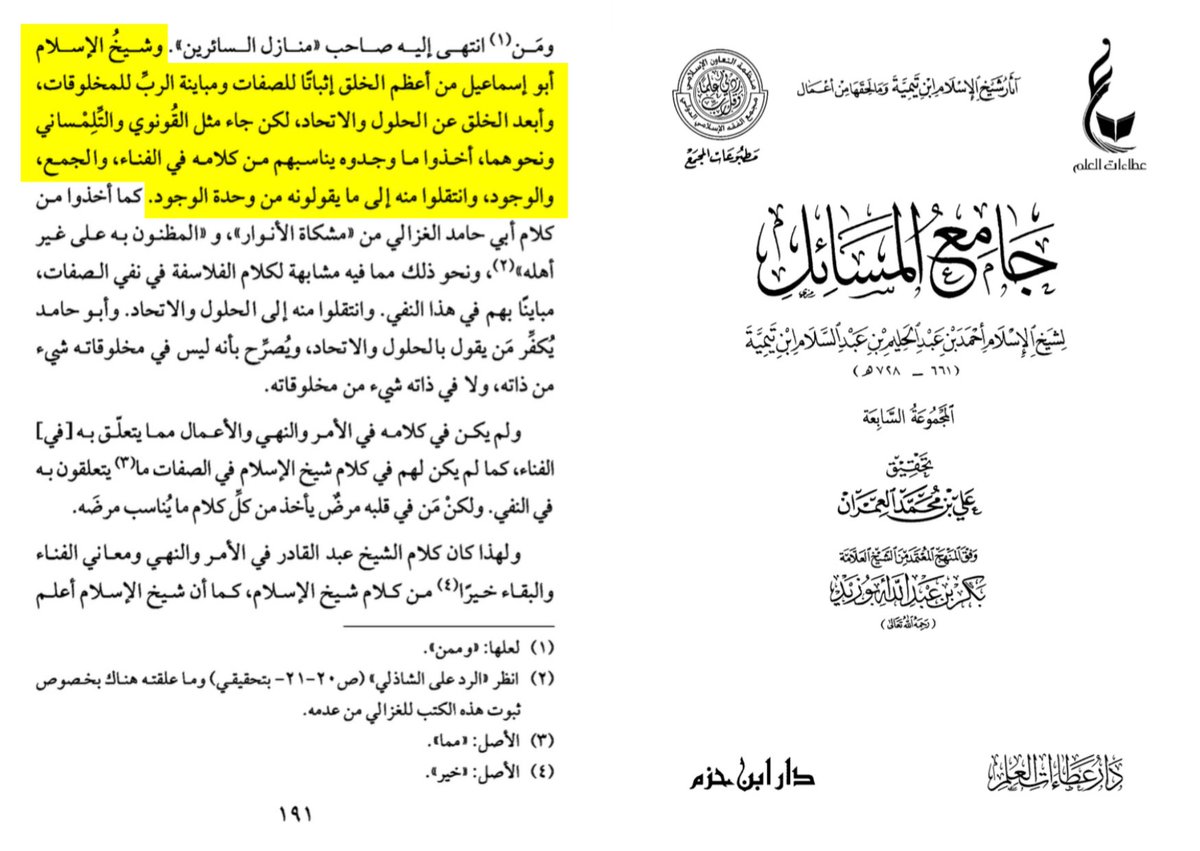
❝Shaykh al-Islām Abū Ismāʾīl al-Harawī was from the greatest of people in affirming the attributes and separating Allāh from the creation, and the furthest of people from Ḥulūl and Ittiḥād. But the likes of al-Qūnawī, al-Tilmisānī and others came forth, selectively taking from his words what suited their views regarding annihilation, unity, and existence, and they distorted it to espouse their own beliefs about Waḥdat al-Wujūd.❞
📚 (Jāmiʾ al-Masāʾil 7/191)
• Shaykh al-Islām Ibn Taymīyyah said:
❝Shaykh al-Islām Abū Ismāʾīl al-Harawī was from the greatest of people in affirming the attributes and separating Allāh from the creation, and the furthest of people from Ḥulūl and Ittiḥād. But the likes of al-Qūnawī, al-Tilmisānī and others came forth, selectively taking from his words what suited their views regarding annihilation, unity, and existence, and they distorted it to espouse their own beliefs about Waḥdat al-Wujūd.❞
📚 (Jāmiʾ al-Masāʾil 7/191)
• Al-Dhahabī said:
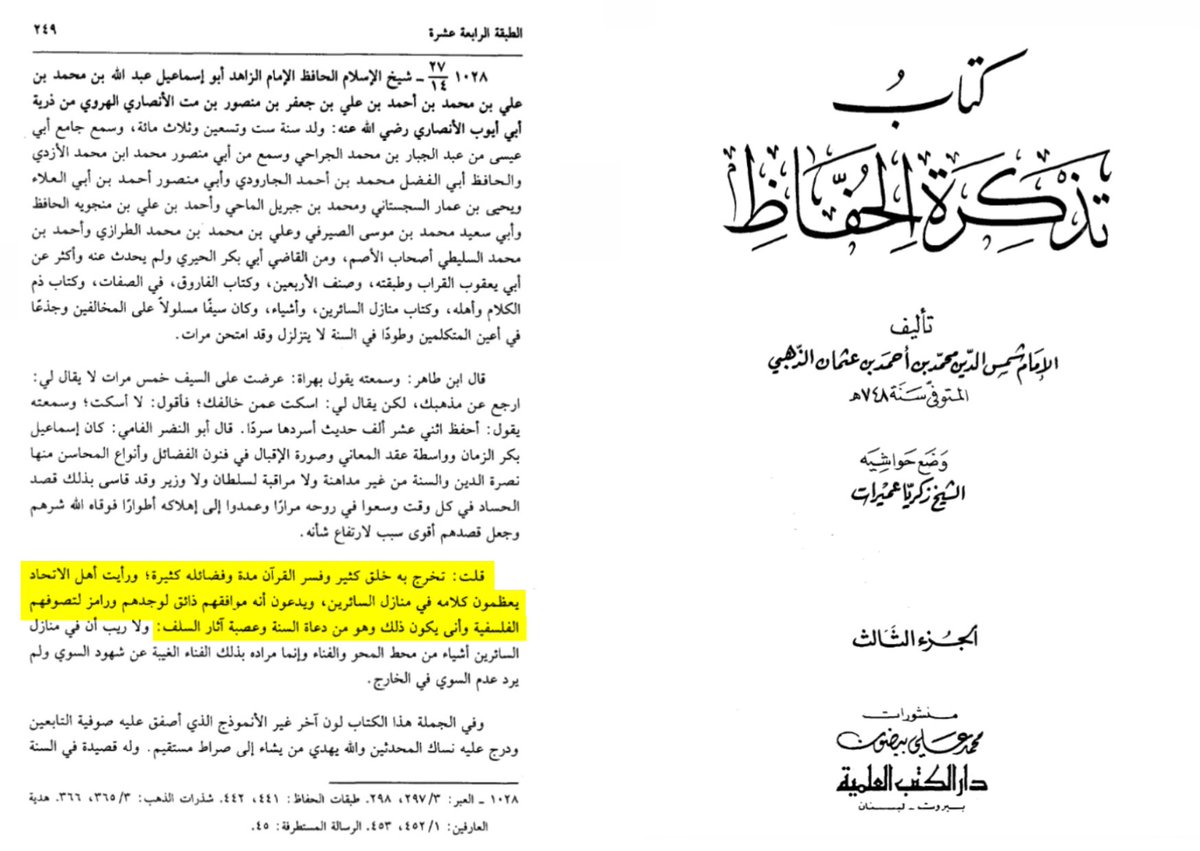
❝He produced many works and interpreted the Qurʾān extensively, and he had numerous virtues. I have observed that the people of ittiḥād hold his words in high esteem and propagate that his teachings are in line with their own experiences and serve as a symbol of their philosophical taṣawwuf. How could this be, given that he was one of the advocates of the Sunnah and a follower of the narrations of the Salaf?!❞
📚 (Tadhkirat al-Ḥuffāẓ 3/249)
❝He produced many works and interpreted the Qurʾān extensively, and he had numerous virtues. I have observed that the people of ittiḥād hold his words in high esteem and propagate that his teachings are in line with their own experiences and serve as a symbol of their philosophical taṣawwuf. How could this be, given that he was one of the advocates of the Sunnah and a follower of the narrations of the Salaf?!❞
📚 (Tadhkirat al-Ḥuffāẓ 3/249)
• Al-Dhahabī said:
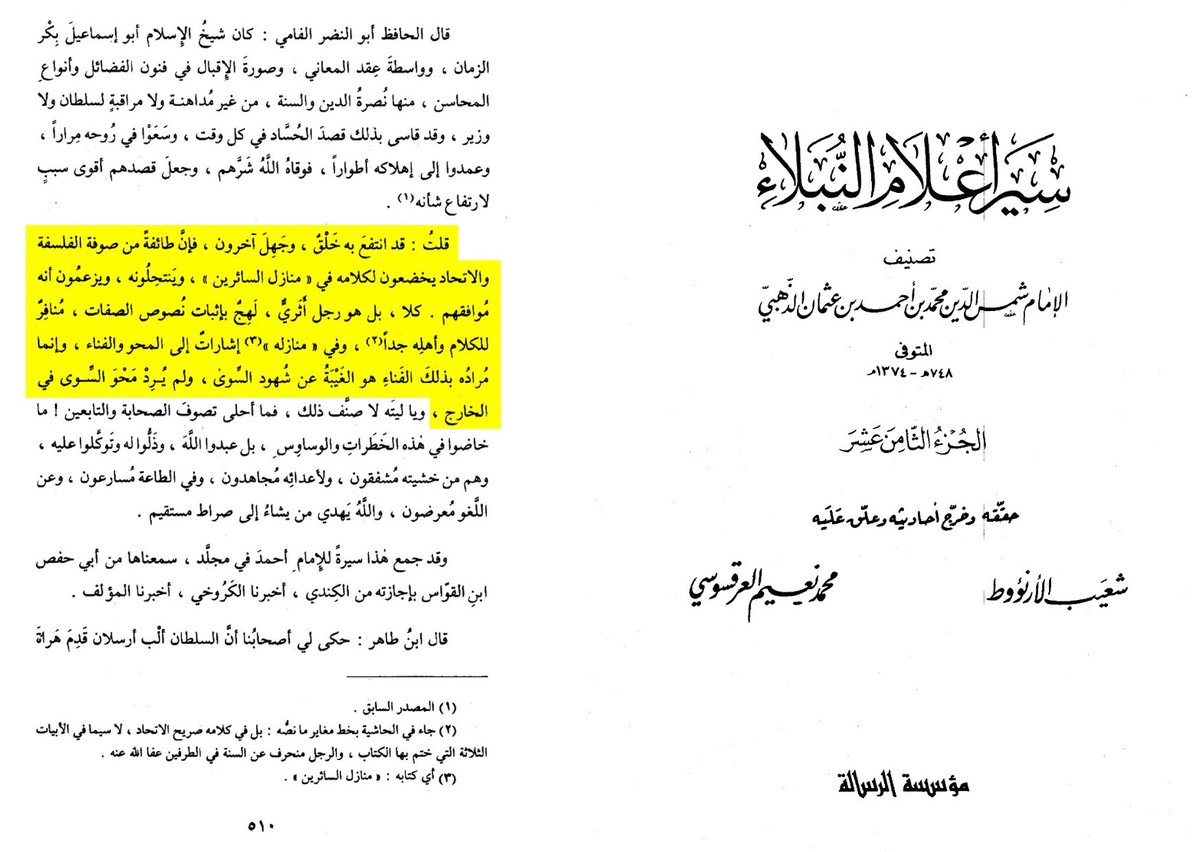
❝Some people have benefited from him, while others have remained ignorant. A group of Ṣūfī Philosophers and unionists submit to his words in “Manāzil al-Sāʾirīn” and claim that he agrees with them. No, rather he is an atharī who speaks passionately about affirming the texts of [Allāh’s] attributes, and he vehemently opposes the advocates of kalām and their doctrines. In his “Manāzil”, there are indications of effacement and annihilation, but what he means by that is the annihilation of the witnesses other than Allāh, not the actual obliteration of other entities in reality.❞
📚 (Siyar Aʾlām al-Nubalāʾ 18/510)
❝Some people have benefited from him, while others have remained ignorant. A group of Ṣūfī Philosophers and unionists submit to his words in “Manāzil al-Sāʾirīn” and claim that he agrees with them. No, rather he is an atharī who speaks passionately about affirming the texts of [Allāh’s] attributes, and he vehemently opposes the advocates of kalām and their doctrines. In his “Manāzil”, there are indications of effacement and annihilation, but what he means by that is the annihilation of the witnesses other than Allāh, not the actual obliteration of other entities in reality.❞
📚 (Siyar Aʾlām al-Nubalāʾ 18/510)
• Ibn Rajab al-Ḥanbalī said:
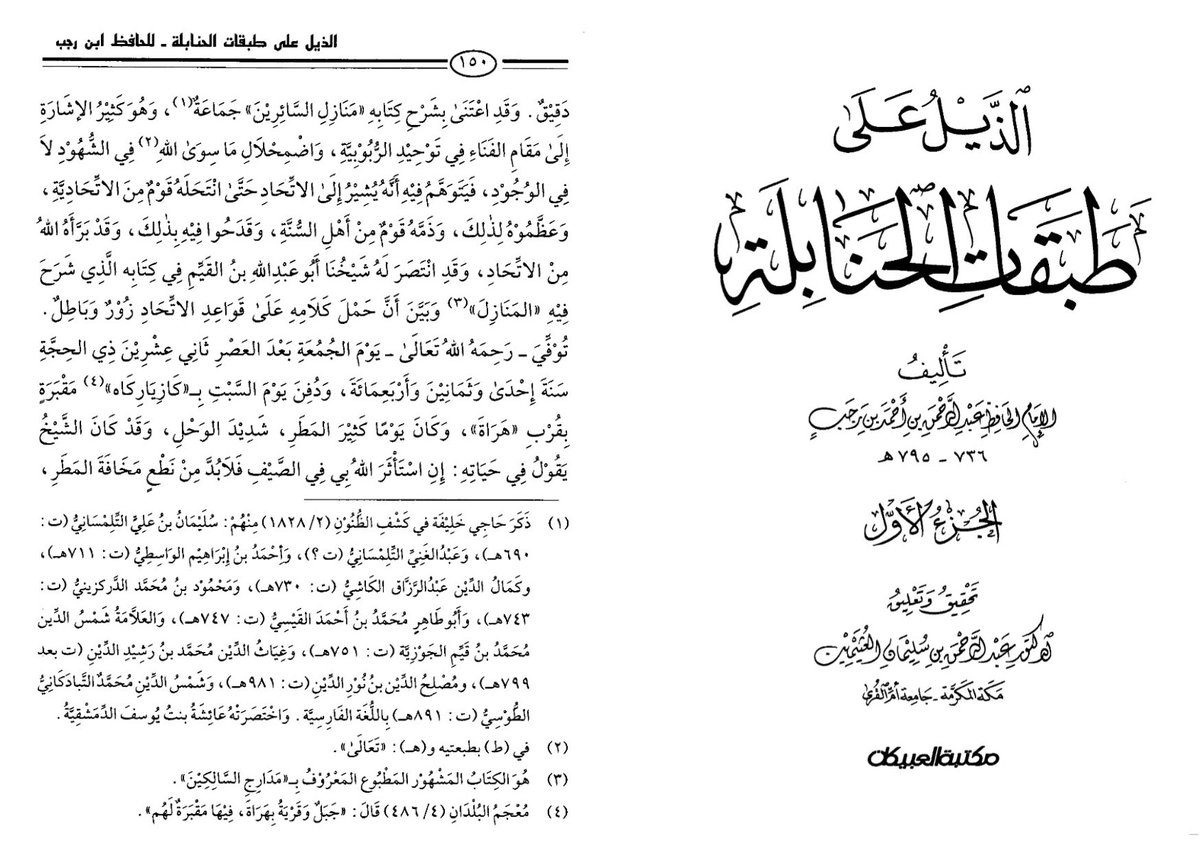
❝I say: Shaykh al-Islām had a great deal of very good poetry. For this reason, al-Bākharzī, the literary scholar, mentioned him in his book “Dumyat al-Qaṣr Fī Shuʾarāʾ al-ʿAṣr.” He also had refined discussions on Sufism and spiritual conduct. A group took care to explain his book “Manāzil al-Sāʾirīn”. He frequently refers to the station of annihilation in the oneness of lordship, and the disappearance of everything except Allāh in witnesses, not in existence. Some people think that he is indicating ittiḥād until some of the unity sects claimed him and praised him for that. Some of the people of the Sunnah criticised him and disparaged him for it, and Allāh cleared him of ittiḥād. Our Shaykh Abū ʿAbdillāh Ibn al-Qayyim defended him in his book in which he explained “al-Manāzil” and showed that attributing his words to the rules of ittiḥād is false and invalid.
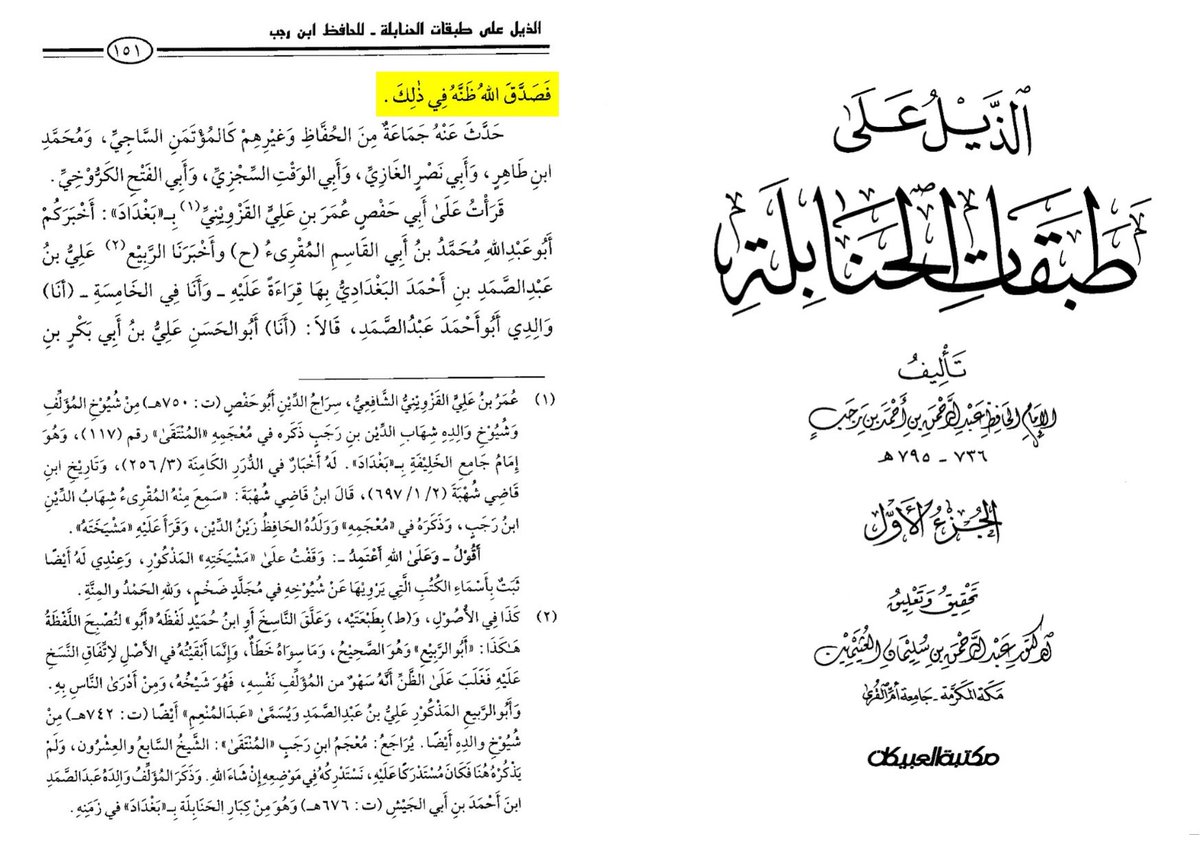
He passed away—may Allāh have mercy on him—on Friday afternoon, the 22nd of Dhū al-Ḥijjah in the year 481H, and was buried on Saturday in Kāziyārikāh cemetery near Hirāt. It was a very rainy day, with heavy mud, and the Shaykh used to say during his lifetime: “If Allāh takes me during the summer, a mat will be necessary to avoid the rain.” Allāh confirmed his expectation in this matter.❞
📚 (Al-Dhayl ʿAlā Ṭabaqāt al-Ḥanābilah 1/149-151)
❝I say: Shaykh al-Islām had a great deal of very good poetry. For this reason, al-Bākharzī, the literary scholar, mentioned him in his book “Dumyat al-Qaṣr Fī Shuʾarāʾ al-ʿAṣr.” He also had refined discussions on Sufism and spiritual conduct. A group took care to explain his book “Manāzil al-Sāʾirīn”. He frequently refers to the station of annihilation in the oneness of lordship, and the disappearance of everything except Allāh in witnesses, not in existence. Some people think that he is indicating ittiḥād until some of the unity sects claimed him and praised him for that. Some of the people of the Sunnah criticised him and disparaged him for it, and Allāh cleared him of ittiḥād. Our Shaykh Abū ʿAbdillāh Ibn al-Qayyim defended him in his book in which he explained “al-Manāzil” and showed that attributing his words to the rules of ittiḥād is false and invalid.
He passed away—may Allāh have mercy on him—on Friday afternoon, the 22nd of Dhū al-Ḥijjah in the year 481H, and was buried on Saturday in Kāziyārikāh cemetery near Hirāt. It was a very rainy day, with heavy mud, and the Shaykh used to say during his lifetime: “If Allāh takes me during the summer, a mat will be necessary to avoid the rain.” Allāh confirmed his expectation in this matter.❞
📚 (Al-Dhayl ʿAlā Ṭabaqāt al-Ḥanābilah 1/149-151)
Loading suggestions...