

Energy Storage System #ESS/ Battery Energy Storage System #BESS
(1/n)
The talk of the town currently in #Energy Sector
A thread to uncover the uncharted territory of Energy Storage 🧵
P.S - Although many prestigious handles (@ankitbahuguna84 @MunkThePunk @kush5211 @iKaustubhx ) already covered the overview very smoothly. I am trying to validate my understanding. Rationales are welcome.
Please use reader mode as this is long post.
#LithiumBatteries #RE #researcharticles #InvestInYourFuture #StockMarketUpdate
(1/n)
The talk of the town currently in #Energy Sector
A thread to uncover the uncharted territory of Energy Storage 🧵
P.S - Although many prestigious handles (@ankitbahuguna84 @MunkThePunk @kush5211 @iKaustubhx ) already covered the overview very smoothly. I am trying to validate my understanding. Rationales are welcome.
Please use reader mode as this is long post.
#LithiumBatteries #RE #researcharticles #InvestInYourFuture #StockMarketUpdate
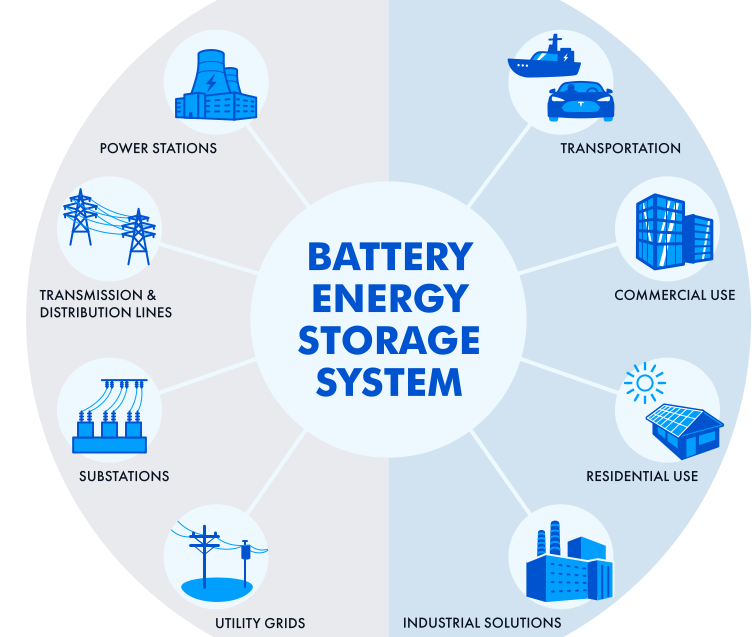
#Panchamrit of India’s climate action
(2/n)
► 500 GW of non-fossil energy capacity by 2030
► 50% of energy requirement from renewable sources by 2030
► One billion tons of projected carbon emissions reduction by 2030
► 45% reduction in carbon intensity of the economy by 2030
► Net zero emissions by 2070
(2/n)
► 500 GW of non-fossil energy capacity by 2030
► 50% of energy requirement from renewable sources by 2030
► One billion tons of projected carbon emissions reduction by 2030
► 45% reduction in carbon intensity of the economy by 2030
► Net zero emissions by 2070
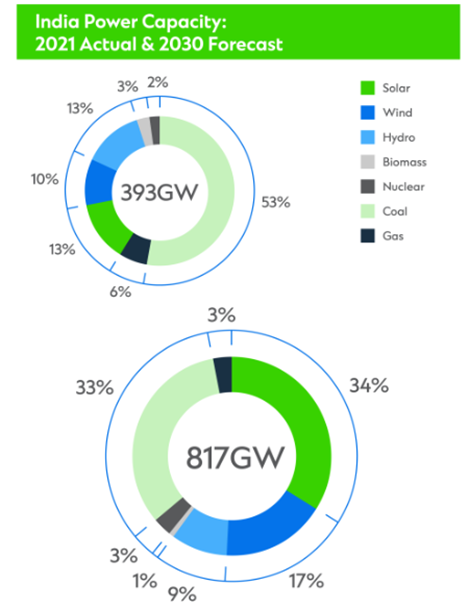
Why ESS/BESS?
(3/n)
►Integration of massive amounts of RE which are intermittent and distributed in the power system pose serious challenges to grid operations. Energy storage is going to play critical role in grid integration and management of RE as the share of RE in the grid increases.
►Most renewable energy supplies are climate-dependent, demanding complex design, planning, and control optimization approaches. ESS has risen in relevance, since these devices may absorb electricity generated by renewables during off-peak demand hours and feed it back into the grid during peak demand hours.
►Using renewable energy and storing it for future use instead of expanding fossil fuel power can assist in reducing greenhouse gas emissions. There is a desire to maximize the societal benefit through the implementation of an energy storage system (ESS)
(3/n)
►Integration of massive amounts of RE which are intermittent and distributed in the power system pose serious challenges to grid operations. Energy storage is going to play critical role in grid integration and management of RE as the share of RE in the grid increases.
►Most renewable energy supplies are climate-dependent, demanding complex design, planning, and control optimization approaches. ESS has risen in relevance, since these devices may absorb electricity generated by renewables during off-peak demand hours and feed it back into the grid during peak demand hours.
►Using renewable energy and storing it for future use instead of expanding fossil fuel power can assist in reducing greenhouse gas emissions. There is a desire to maximize the societal benefit through the implementation of an energy storage system (ESS)
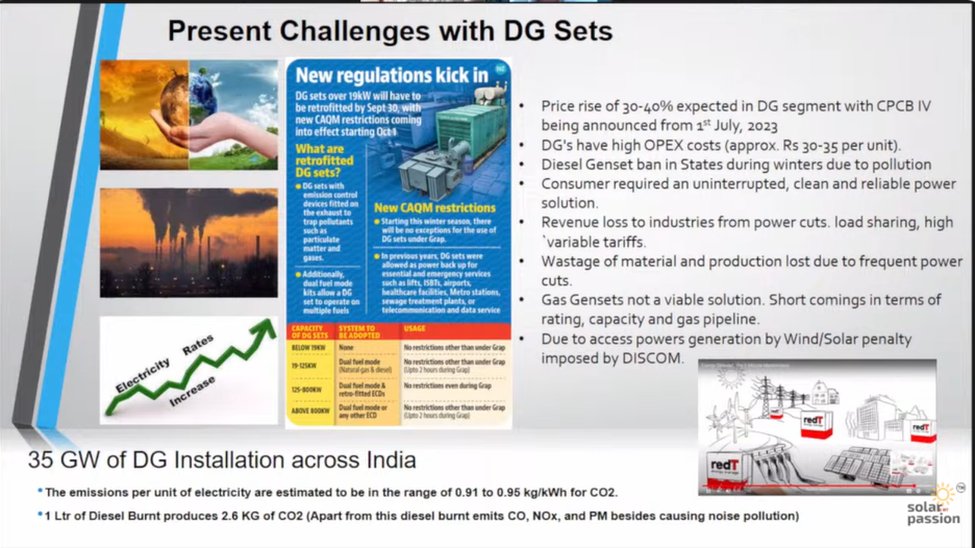
Role of ESS/BESS
(4/n)
📌Optimization: High Generation Cost during Peak Hours -
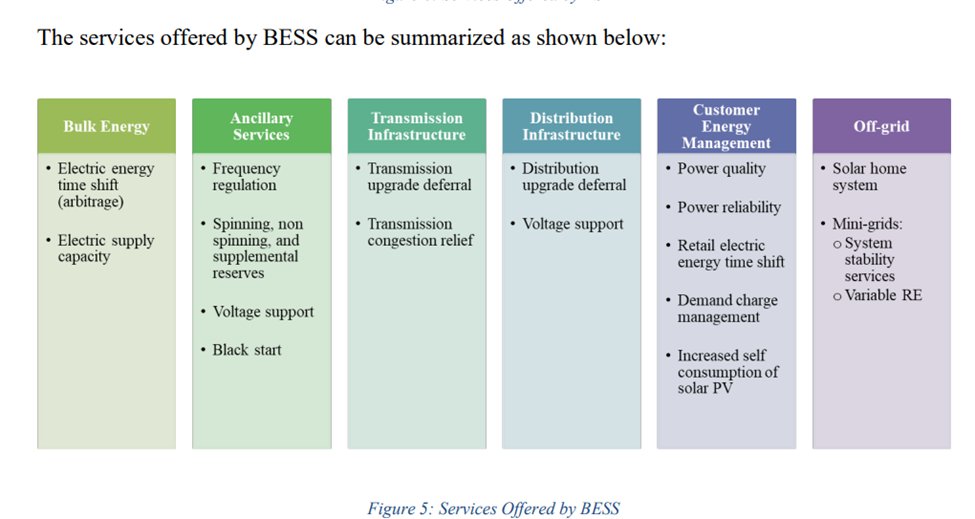
EES can reduce energy cost for customers because it can store energy purchased at cheap off-peak prices and use it during prime times in place of costly power. During off-peak time, users can recharge batteries and may also sell to utilities or to other users during peak time
📌Continuous and Flexible Supply: Need of the Hour
To take care of the fluctuating power consumption, adequate amounts of energy should be generated and be available, based on an accurate estimate of demand fluctuations. Such issues are intended to be addressed by EES.
📌Power Grid Congestion: A Point of Concern
EES, when installed at appropriate places such as substations at the extremities of heavily loaded lines, can help to reduce congestion. This method also helps utilities delay or cease power network reinforcement.
📌Transmission by Cable: Point of Difficulty
It may be difficult to charge an EV in remote places without access to a power grid, but EES can aid in the creation of a green transportation system that does not rely on traditional IC engines.
(4/n)
📌Optimization: High Generation Cost during Peak Hours -
EES can reduce energy cost for customers because it can store energy purchased at cheap off-peak prices and use it during prime times in place of costly power. During off-peak time, users can recharge batteries and may also sell to utilities or to other users during peak time
📌Continuous and Flexible Supply: Need of the Hour
To take care of the fluctuating power consumption, adequate amounts of energy should be generated and be available, based on an accurate estimate of demand fluctuations. Such issues are intended to be addressed by EES.
📌Power Grid Congestion: A Point of Concern
EES, when installed at appropriate places such as substations at the extremities of heavily loaded lines, can help to reduce congestion. This method also helps utilities delay or cease power network reinforcement.
📌Transmission by Cable: Point of Difficulty
It may be difficult to charge an EV in remote places without access to a power grid, but EES can aid in the creation of a green transportation system that does not rely on traditional IC engines.
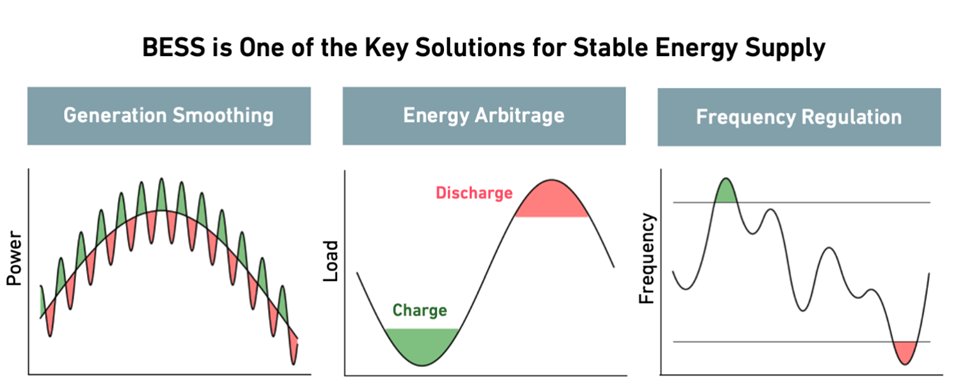
ESS - PSH vs BESS
(5/n)
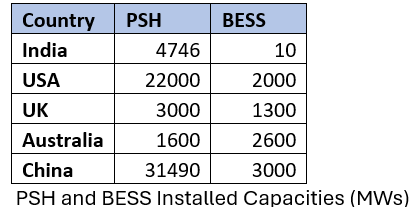
Among deployed ESS technologies, pumped storage hydro (PSH) and battery ESS (BESS) are found to have significant presence. PSH particularly constitutes over 90% of global deployment of ESS . However, recently electrochemical storage technologies are among fastest growing ESS technologies due to significant reduction in the battery cost complimented with technological improvement.
PSH - provides grid stability by offering necessary rotational inertia to the grid to improve the transient stability
BESS is fast gaining importance due to shorter gestation periods and in the expectation of declining capital cost. Lithium-ion is the most prominent battery technology seen in India and internationally.
(5/n)
Among deployed ESS technologies, pumped storage hydro (PSH) and battery ESS (BESS) are found to have significant presence. PSH particularly constitutes over 90% of global deployment of ESS . However, recently electrochemical storage technologies are among fastest growing ESS technologies due to significant reduction in the battery cost complimented with technological improvement.
PSH - provides grid stability by offering necessary rotational inertia to the grid to improve the transient stability
BESS is fast gaining importance due to shorter gestation periods and in the expectation of declining capital cost. Lithium-ion is the most prominent battery technology seen in India and internationally.
BESS Demand in India
(6/n)
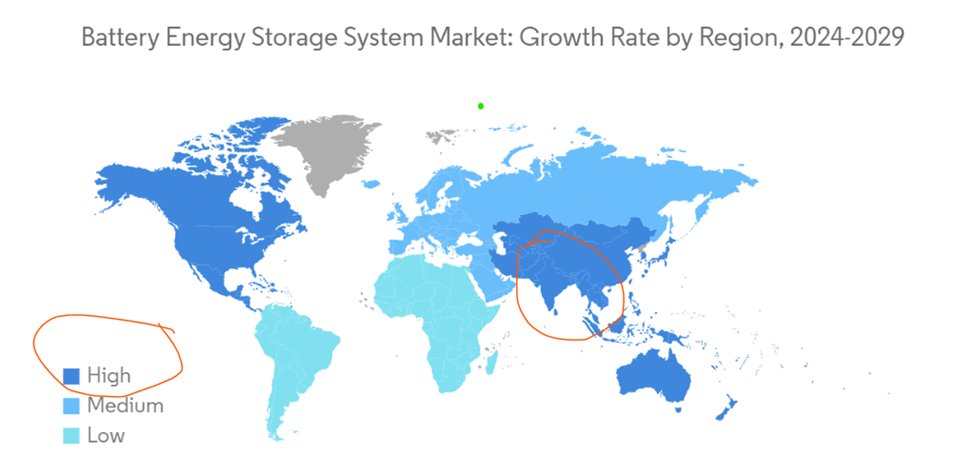
According to the government, the energy storage requirement is expected to soar to 73.93 GW (26.69 GW PSP and 47.24 GW BESS) with a significant storage capacity of 411.4 GWh by 2031-32. To develop the energy storage capacity from 2022 to 2032, an estimated fund requirement of over USD 6.7 billion for BESS is anticipated.
CEA has also set its sights on the long-term, projecting that by 2047, the country's energy storage demand will likely reach about 320 GW (90 GW PSP and 230 GW BESS) with a total energy storage capacity of 2,380 GWh, aligning with the country's aim to achieve the net zero emissions by 2070 and the rapid renewable energy growth.
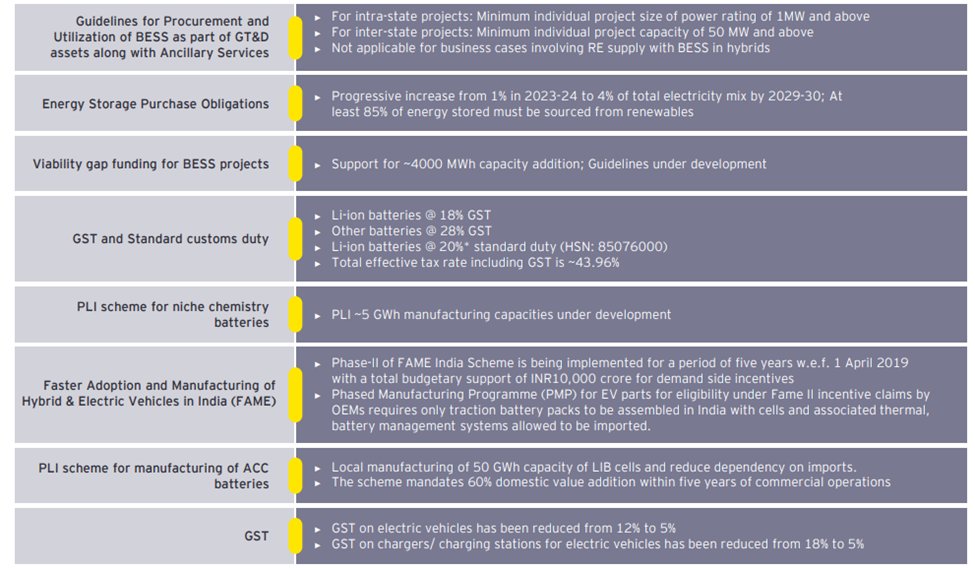
In September 2023, the Union Cabinet of India approved the viability gap funding scheme (VGF) to create a total of 4,000 megawatt hours (MWh) of (BESS) projects by FY31 under the scheme. An initial outlay of USD 1,128.18 million, including budgetary support of USD 451.27 million, has been provided under the scheme.
(6/n)
According to the government, the energy storage requirement is expected to soar to 73.93 GW (26.69 GW PSP and 47.24 GW BESS) with a significant storage capacity of 411.4 GWh by 2031-32. To develop the energy storage capacity from 2022 to 2032, an estimated fund requirement of over USD 6.7 billion for BESS is anticipated.
CEA has also set its sights on the long-term, projecting that by 2047, the country's energy storage demand will likely reach about 320 GW (90 GW PSP and 230 GW BESS) with a total energy storage capacity of 2,380 GWh, aligning with the country's aim to achieve the net zero emissions by 2070 and the rapid renewable energy growth.
In September 2023, the Union Cabinet of India approved the viability gap funding scheme (VGF) to create a total of 4,000 megawatt hours (MWh) of (BESS) projects by FY31 under the scheme. An initial outlay of USD 1,128.18 million, including budgetary support of USD 451.27 million, has been provided under the scheme.
Stationary BESS Market
(7/n)
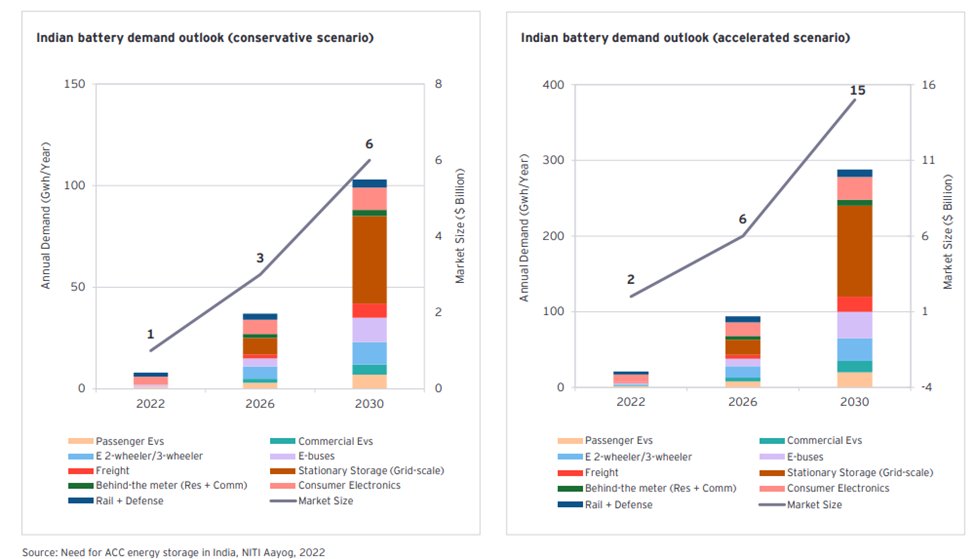
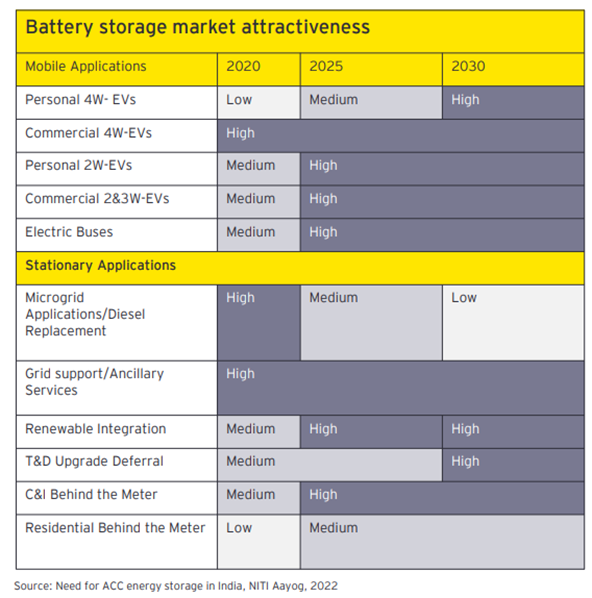
📌Stationary BESS market alone is ~208 GWh by 2030,— a massive opportunity for the domestic manufacturing industry
📌According to the Central Electricity Authority's Optimal Energy Mix report for 2030, the region-wise estimated battery energy storage system (BESS) during 2029-30 is 30.5 GW/152.5 GWh for Northern region and 11.1 GW/55.5 GWh for Southern region.
📌The energy storage capacity required for 2029-30 is likely to be 60.63 GW (18.98 GW PSP and 41.65 GW BESS) with storage of 336.4 GWh (128.15 GWh from PSP and 208.25 GWh from BESS).
(7/n)
📌Stationary BESS market alone is ~208 GWh by 2030,— a massive opportunity for the domestic manufacturing industry
📌According to the Central Electricity Authority's Optimal Energy Mix report for 2030, the region-wise estimated battery energy storage system (BESS) during 2029-30 is 30.5 GW/152.5 GWh for Northern region and 11.1 GW/55.5 GWh for Southern region.
📌The energy storage capacity required for 2029-30 is likely to be 60.63 GW (18.98 GW PSP and 41.65 GW BESS) with storage of 336.4 GWh (128.15 GWh from PSP and 208.25 GWh from BESS).
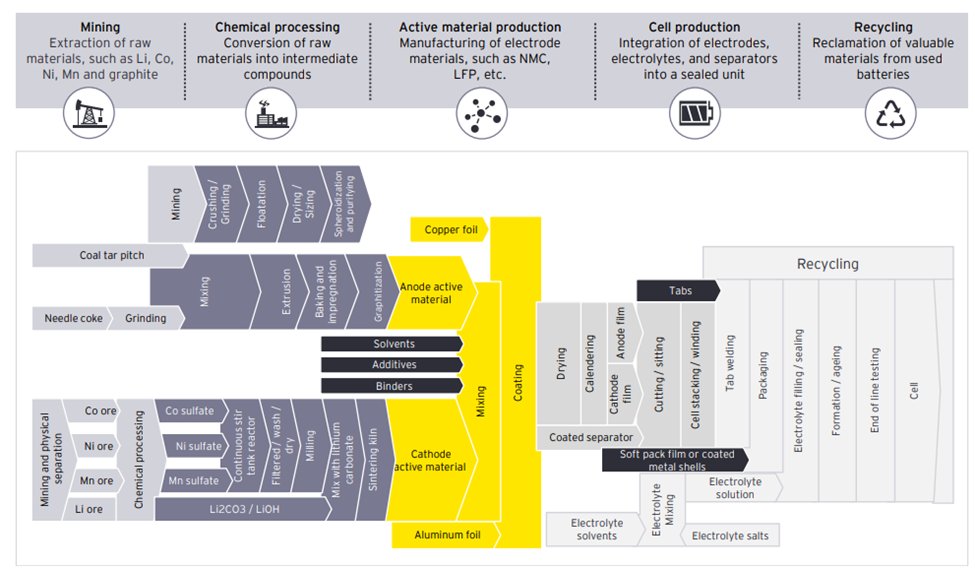
Value Chain for Energy Storage System :
(8/n)
✔️Mining - Extraction of Raw Materials
✔️Chemical Processing - Conversion on raw materials into compounds
✔️Material Production - Manufacturing of Electrode - NMC, LFP etc.
✔️Cell Production - Integration of electrolyzes, electrodes etc.
✔️Recycling - Reclaim valuable material from used battery
✔️EPC - Setting up of the BESS at an offshore location
(8/n)
✔️Mining - Extraction of Raw Materials
✔️Chemical Processing - Conversion on raw materials into compounds
✔️Material Production - Manufacturing of Electrode - NMC, LFP etc.
✔️Cell Production - Integration of electrolyzes, electrodes etc.
✔️Recycling - Reclaim valuable material from used battery
✔️EPC - Setting up of the BESS at an offshore location
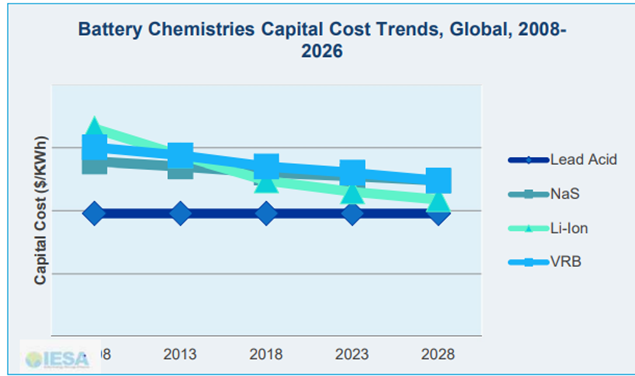
Cost Parameter :
(9/n)
📌The system prices vary greatly, especially in terms of initial capital costs. Overall, the cost of energy storage is rapidly declining with scaling up of manufacturing and learnings from the early deployments.
📌The cost of energy storage technologies has significantly decreased in recent years, driven by the growth of the battery manufacturing for consumer electronics, stationary applications and electric vehicles.
📌As battery costs contribute approximately 60-75% of an energy storage project, capital cost reductions can drive energy storage project development.
In today's scenario
BESS Price –> INR 18000 / 100-megawatt hour – (215$ - 2016$)
Robust RnD is going on by various companies to reduce the cost further.
There will be no stopping once technology advancement would fix this.
Recent example is cost optimization in Solar space
(9/n)
📌The system prices vary greatly, especially in terms of initial capital costs. Overall, the cost of energy storage is rapidly declining with scaling up of manufacturing and learnings from the early deployments.
📌The cost of energy storage technologies has significantly decreased in recent years, driven by the growth of the battery manufacturing for consumer electronics, stationary applications and electric vehicles.
📌As battery costs contribute approximately 60-75% of an energy storage project, capital cost reductions can drive energy storage project development.
In today's scenario
BESS Price –> INR 18000 / 100-megawatt hour – (215$ - 2016$)
Robust RnD is going on by various companies to reduce the cost further.
There will be no stopping once technology advancement would fix this.
Recent example is cost optimization in Solar space
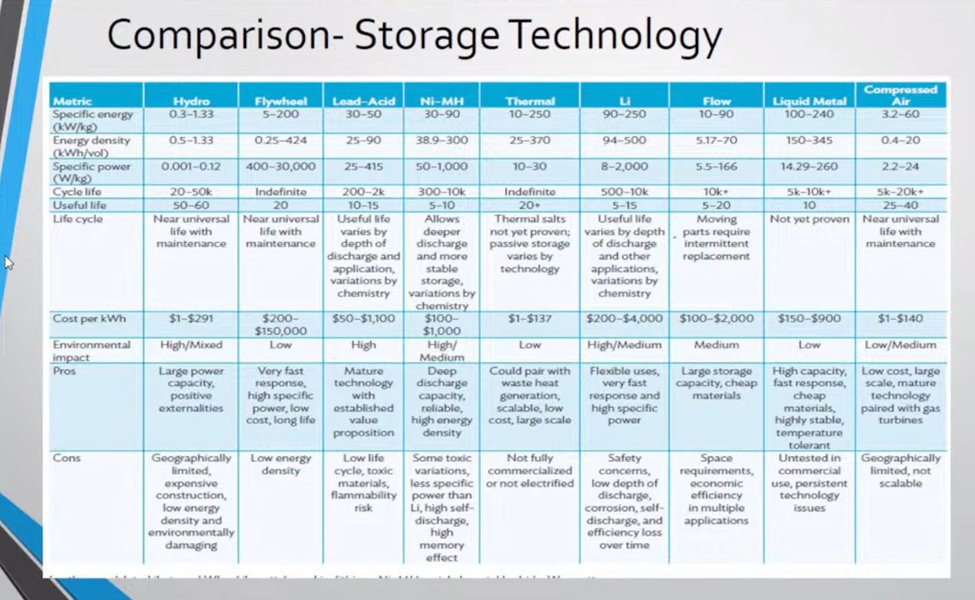
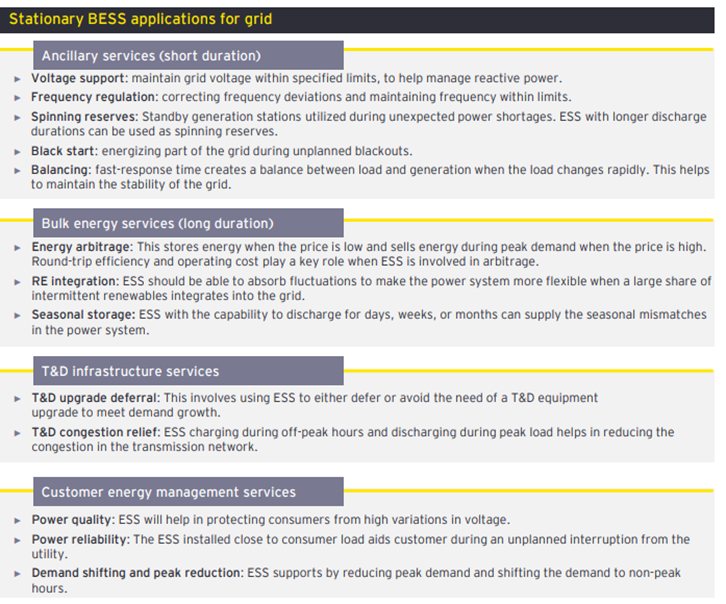
Battery applications and policy initiatives for domestic value addition
(10/n)
📌The GOI’s (PLI) Scheme will help in the local manufacturing of 50 GWh capacity of LIB cells and reduce dependency on imports. The scheme mandates 60% domestic value addition within five years of commercial operations. Additionally, approx. 95 GWh of battery manufacturing capacity announced by private players is under various stages of development
📌G2G dialogues are advancing with friendly countries (e.g., Australia, Chile, Argentina, Bolivia, etc.) for joint exploration and mining. Government of India has set up KABIL to ensure a consistent supply of critical and strategic minerals through G2G negotiations and acquiring mining assets abroad.
📌India has recently become the newest partner in the US led (MSP) to bolster critical mineral supply chains. In the case of lithium, a handful of countries (viz. Australia, Chile and China) make up more than 90% of mine production of lithium bearing ores in the current scenario.
📌In 2022- 23, India imported INR 2262 crores of lithium-ion as per trade statistics from the department of commerce. More research is needed to determine which minerals can be extracted economically from the recently discovered lithium resources (G3) in India.
(10/n)
📌The GOI’s (PLI) Scheme will help in the local manufacturing of 50 GWh capacity of LIB cells and reduce dependency on imports. The scheme mandates 60% domestic value addition within five years of commercial operations. Additionally, approx. 95 GWh of battery manufacturing capacity announced by private players is under various stages of development
📌G2G dialogues are advancing with friendly countries (e.g., Australia, Chile, Argentina, Bolivia, etc.) for joint exploration and mining. Government of India has set up KABIL to ensure a consistent supply of critical and strategic minerals through G2G negotiations and acquiring mining assets abroad.
📌India has recently become the newest partner in the US led (MSP) to bolster critical mineral supply chains. In the case of lithium, a handful of countries (viz. Australia, Chile and China) make up more than 90% of mine production of lithium bearing ores in the current scenario.
📌In 2022- 23, India imported INR 2262 crores of lithium-ion as per trade statistics from the department of commerce. More research is needed to determine which minerals can be extracted economically from the recently discovered lithium resources (G3) in India.
Kindly like and repost if you happen to find this informative. Often bookmarks are more than likes😇
@smesmartmoney
#GratitudeJourney #WaareeTech #Gensol #LithiumBatteries #Jupiterwagon #JSWEnergy #KabraExtrusions #Oriana
@smesmartmoney
#GratitudeJourney #WaareeTech #Gensol #LithiumBatteries #Jupiterwagon #JSWEnergy #KabraExtrusions #Oriana
Loading suggestions...