

(1/4) Why are modern Muslims reluctant to reject the "9-year-old Aisha" hadith that causes so much controversy? A thread 🧵
In India, the BJP's Nupur Sharma kicked off a firestorm with her comments on prime-time TV—
- Fatwas were declared.
- Governments (Qatar, etc) howled in protest.
- Cosmopolitan Muslims raised loud objections; the atmosphere of polarization led to violence, and Nupur Sharma was kicked out of the BJP.
Many non-Muslims were baffled.
It was a fact that Nupur had quoted an Islamic hadith on the "marriage consummation" of 9-year-old Aisha.
But so what? Just as all families have their bad apples, so do all major religions contain occasional controversial text—the faithful usually just shrug and focus on the good parts, right?
Why couldn't Muslims do the same here?
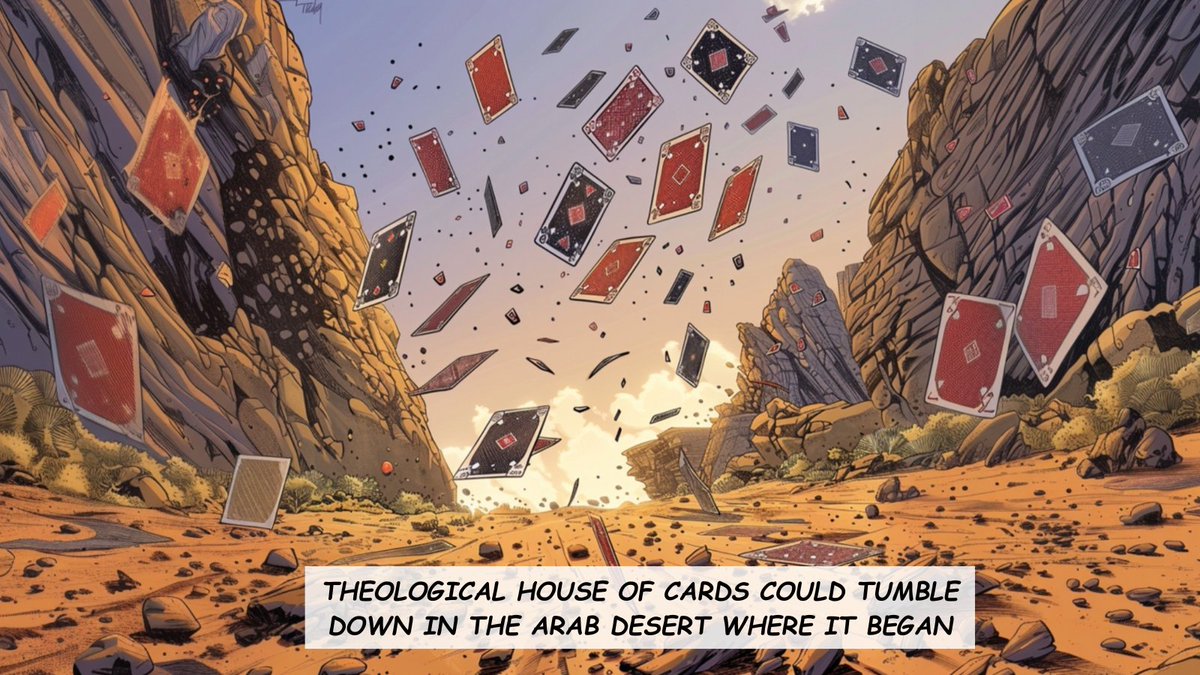
The answer is that doing so could collapse the theological house of cards carefully built over centuries.
Let's take a look.
In India, the BJP's Nupur Sharma kicked off a firestorm with her comments on prime-time TV—
- Fatwas were declared.
- Governments (Qatar, etc) howled in protest.
- Cosmopolitan Muslims raised loud objections; the atmosphere of polarization led to violence, and Nupur Sharma was kicked out of the BJP.
Many non-Muslims were baffled.
It was a fact that Nupur had quoted an Islamic hadith on the "marriage consummation" of 9-year-old Aisha.
But so what? Just as all families have their bad apples, so do all major religions contain occasional controversial text—the faithful usually just shrug and focus on the good parts, right?
Why couldn't Muslims do the same here?
The answer is that doing so could collapse the theological house of cards carefully built over centuries.
Let's take a look.
(2/4) The Holy Quran is reliably dated to the 7th century AD.
The Hindu "Yoga Vasistha" is dated to around the same time, the 6th-7th century AD.
Imagine suddenly becoming fluent in Sanskrit and reading the Yoga Vasistha in its original form. You’d grasp the essence: Sage Vasistha teaches Rama through deeply philosophical stories. Lacking an Advaita background, you might miss some philosophical nuances, but the basic facts—people, places, events—would be crystal clear.
Not so with the Quran.
It is well known among Muslims that the Quran is really hard to understand even if you're fluent in Arabic. You have no choice but to rely upon the "Ulema" (Muslim scholars) to interpret it for you, with their commentaries and the hadiths. And we're talking basic things—simple facts about people, places, and events.
For instance, from the Quran alone, you cannot decisively answer —
- Could the Prophet (PBUH) read & write?
- 1 line talks about this, and it uses the word ummi (اْمّی), taken as "illterate" but also meaning "non-Jew." Important since the Ulema cite the Prophet's supposed illiteracy as proof of divine inspiration (he couldn't have read Jewish or Christian works with similar ideas).
- Is the Kaaba actually at Mecca?
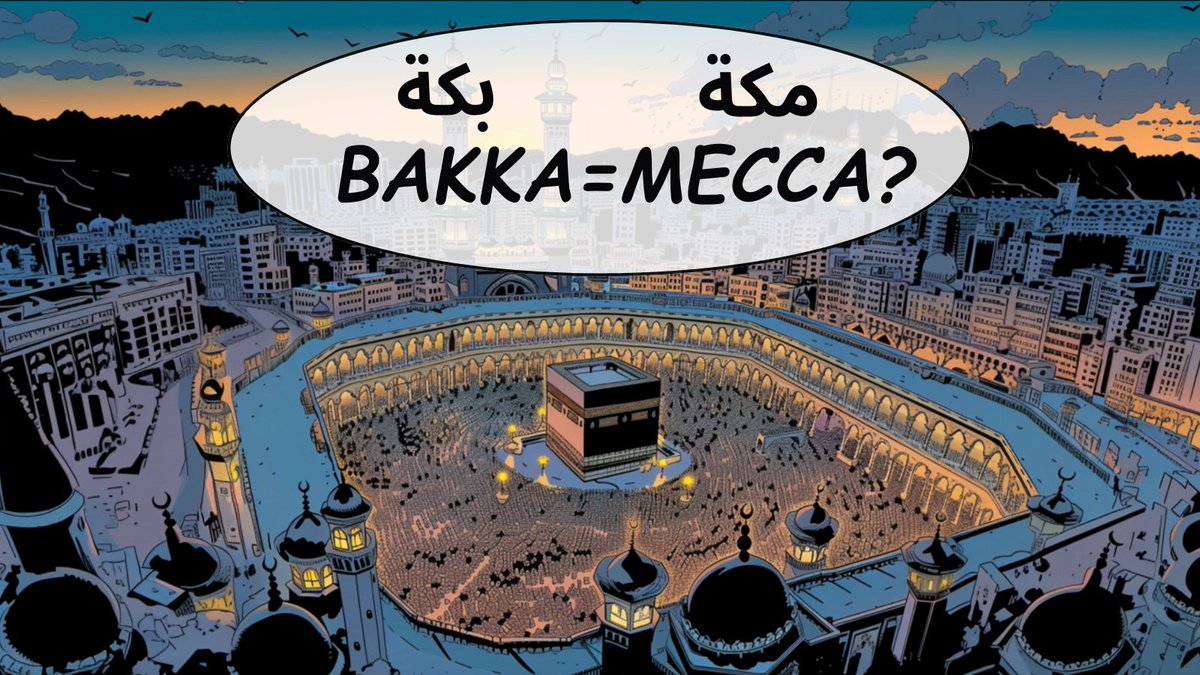
- The Quran mentions a House (بيت), assumed to be the Kaaba, at Bakka (بكة), and a valley of Mecca (مكة) separately, never stating Bakka=Mecca. This link is derived from the Ulema tradition.
- Were there angels at the Battle of Badr?
- While the Quran mentions angels and Badr separately, it’s Ulema tradition that asserts angels assisted at Badr. This isn’t explicitly stated in the Quran.
And more.
The Hindu "Yoga Vasistha" is dated to around the same time, the 6th-7th century AD.
Imagine suddenly becoming fluent in Sanskrit and reading the Yoga Vasistha in its original form. You’d grasp the essence: Sage Vasistha teaches Rama through deeply philosophical stories. Lacking an Advaita background, you might miss some philosophical nuances, but the basic facts—people, places, events—would be crystal clear.
Not so with the Quran.
It is well known among Muslims that the Quran is really hard to understand even if you're fluent in Arabic. You have no choice but to rely upon the "Ulema" (Muslim scholars) to interpret it for you, with their commentaries and the hadiths. And we're talking basic things—simple facts about people, places, and events.
For instance, from the Quran alone, you cannot decisively answer —
- Could the Prophet (PBUH) read & write?
- 1 line talks about this, and it uses the word ummi (اْمّی), taken as "illterate" but also meaning "non-Jew." Important since the Ulema cite the Prophet's supposed illiteracy as proof of divine inspiration (he couldn't have read Jewish or Christian works with similar ideas).
- Is the Kaaba actually at Mecca?
- The Quran mentions a House (بيت), assumed to be the Kaaba, at Bakka (بكة), and a valley of Mecca (مكة) separately, never stating Bakka=Mecca. This link is derived from the Ulema tradition.
- Were there angels at the Battle of Badr?
- While the Quran mentions angels and Badr separately, it’s Ulema tradition that asserts angels assisted at Badr. This isn’t explicitly stated in the Quran.
And more.
(3/4) If you're Muslim and still reading, at this point, you might be gearing to "counter" with WHATABOUTs from Hindu or Christian texts.
But there's a difference.
Sanatana Dharma is concerned with principles. Texts like the Gita, Yoga Vasistha, or Ramayana, and figures like Ram, Krishna, or Sankara all reiterate the same "eternal" (सनातन) ideas. The principle is always greater than any single book, individual, or avatar, so nitpicking faults doesn't work.
But in Islam, the Prophet is the ultimate, divinely sanctioned role model. The Quran, by itself, is divine.
Perfect as it may be, the literal "word of God," the Quran does not detail every nanosecond of the Prophet's life. This becomes an issue if you're a serious Muslim. Your life's purpose is to emulate the Prophet—how do you approach a new situation if the Quran doesn't mention how the Prophet behaved in a similar one?
Over the centuries, the solution has come in the form of hadiths, little biographical sketches about the Prophet, each supported by lists of references—isnads—stretching back toward the 7th century when the Prophet and his followers lived.
By the 9th century, so many hadiths had emerged, that Islamic scholars were very uneasy. A prodigious scholar was dispatched—Imam Al-Bukhari—who attempted to tame the vast numbers of circulating hadiths. He adopted an approach modern academics would recognize: he examined the citations (isnads) closely and skeptically.
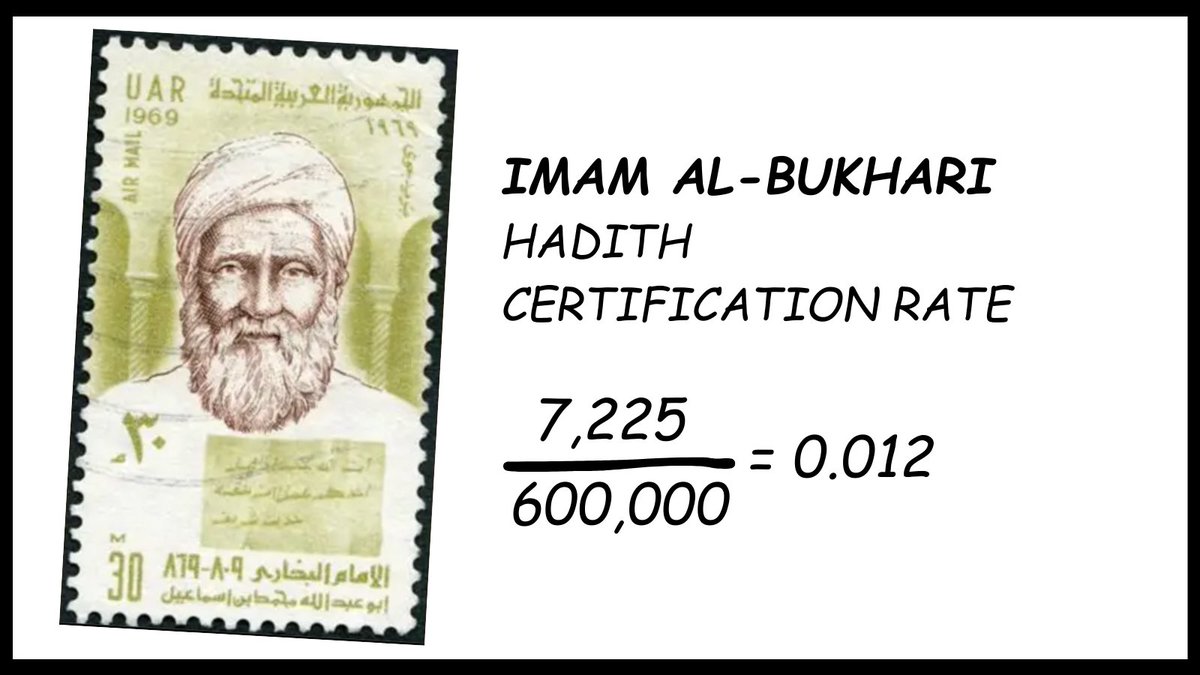
He collected over 600,000 hadiths. He certified only 7,225 (1.2%), dismissing the rest.
Among the rare ones he certified was the "9-year-old Aisha" one.
But there's a difference.
Sanatana Dharma is concerned with principles. Texts like the Gita, Yoga Vasistha, or Ramayana, and figures like Ram, Krishna, or Sankara all reiterate the same "eternal" (सनातन) ideas. The principle is always greater than any single book, individual, or avatar, so nitpicking faults doesn't work.
But in Islam, the Prophet is the ultimate, divinely sanctioned role model. The Quran, by itself, is divine.
Perfect as it may be, the literal "word of God," the Quran does not detail every nanosecond of the Prophet's life. This becomes an issue if you're a serious Muslim. Your life's purpose is to emulate the Prophet—how do you approach a new situation if the Quran doesn't mention how the Prophet behaved in a similar one?
Over the centuries, the solution has come in the form of hadiths, little biographical sketches about the Prophet, each supported by lists of references—isnads—stretching back toward the 7th century when the Prophet and his followers lived.
By the 9th century, so many hadiths had emerged, that Islamic scholars were very uneasy. A prodigious scholar was dispatched—Imam Al-Bukhari—who attempted to tame the vast numbers of circulating hadiths. He adopted an approach modern academics would recognize: he examined the citations (isnads) closely and skeptically.
He collected over 600,000 hadiths. He certified only 7,225 (1.2%), dismissing the rest.
Among the rare ones he certified was the "9-year-old Aisha" one.
(4/4) Behind the outrage is a strange code of intellectual consistency.
- The "9-year-old Aisha" hadith is certified by Al-Bukhari and is widely viewed as the gold standard for hadiths.
- If you reject this hadith, you are rejecting Al-Bukhari's methodology. Then, all other certified hadiths come under suspicion.
- Once you start rejecting "certified" hadiths, you are on a slippery slope. Basic, settled "facts" about Islam come into question: Was the Prophet illiterate? Is the Kaaba in Mecca? Were there angels at Badr?
The house of cards begins to wobble.
In the words of noted Pakistani scholar Fazlur Rahman: "If all Hadith is given up, what remains but a yawning chasm of 14 centuries between us and the Prophet?"
As a modern Muslim, you have 1 of 3 options—
- Accept the "9-year-old Aisha" hadith and accept that it describes divinely sanctioned behavior to imitate.
- Reject the "9-year-old Aisha" hadith, thus questioning Al-Bukhari and similar authorities. Brave the resulting chaos, the "yawning chasm," and attempt to rebuild the basic facts of Islam from first principles.
- Do neither. Pretend the issue does not exist. Intimidate anyone who speaks up. Use violence where it helps.
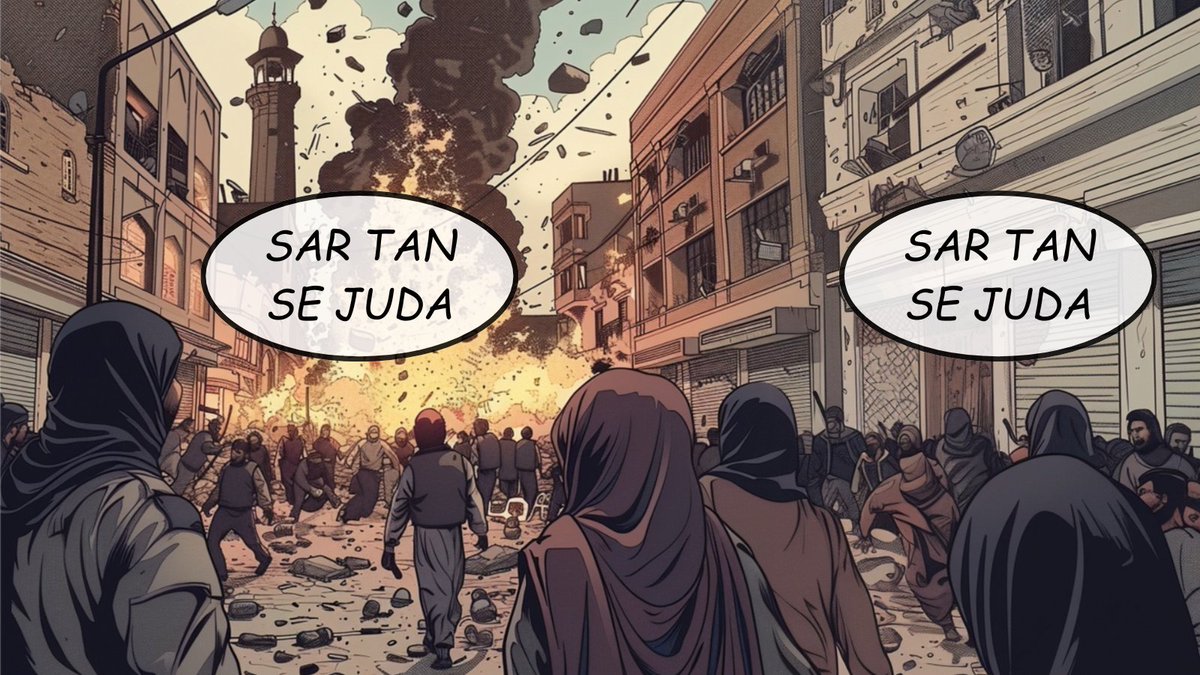
As we've seen with Nupur Sharma and with so many others, far too often, it's Option 3, "lock kiya jaye."
That concludes this thread. Follow me and click the Bell Icon for more.
- The "9-year-old Aisha" hadith is certified by Al-Bukhari and is widely viewed as the gold standard for hadiths.
- If you reject this hadith, you are rejecting Al-Bukhari's methodology. Then, all other certified hadiths come under suspicion.
- Once you start rejecting "certified" hadiths, you are on a slippery slope. Basic, settled "facts" about Islam come into question: Was the Prophet illiterate? Is the Kaaba in Mecca? Were there angels at Badr?
The house of cards begins to wobble.
In the words of noted Pakistani scholar Fazlur Rahman: "If all Hadith is given up, what remains but a yawning chasm of 14 centuries between us and the Prophet?"
As a modern Muslim, you have 1 of 3 options—
- Accept the "9-year-old Aisha" hadith and accept that it describes divinely sanctioned behavior to imitate.
- Reject the "9-year-old Aisha" hadith, thus questioning Al-Bukhari and similar authorities. Brave the resulting chaos, the "yawning chasm," and attempt to rebuild the basic facts of Islam from first principles.
- Do neither. Pretend the issue does not exist. Intimidate anyone who speaks up. Use violence where it helps.
As we've seen with Nupur Sharma and with so many others, far too often, it's Option 3, "lock kiya jaye."
That concludes this thread. Follow me and click the Bell Icon for more.
If you liked that thread, you might also like this one on the hypocrisy of so-called monotheists regarding "idolatry."
x.com
x.com
Loading suggestions...