
1/ Many of us think of Bengal in early modern age of India starting with the Battle of Plassey in 1757 & the machinations of East India Company in the times just preceding it. This story is very interesting & has high impact on the future of India. It has been told by many.

2/ Let us look at the decades preceding 1757 when Bengal was a focus of many interested parties; a period was just right for the power seekers to stake their claims. Which they did. This thread tells their story in brief.
3/ Murshid Quli Khan was Diwan (Revenue chief) of Bengal appointed to the post by Aurangzeb in 1700. The emperor was impressed with his expertise in revenue matters. Murshid, born Surya Narayan Mishra, was sold when 10 yrs old to a Persian nobleman who converted him to Islam.
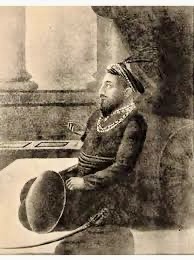
4/ The Governor of Bengal, Azim-us-Shan was Aurangzeb’s grandson. He saw the new Diwan as an obstacle in his plans to appropriate the revenue to fund his ambition of succeeding his grandfather as the Emperor of India. He plotted to assassinate Murshid.
5/ Murshid got the wind of this and while pretending to be ignorant of the plot to the Governor, complained about it to Aurangzeb who promptly warned his grandson of dire consequences should he as much as touch Murshid.
6/ Murshid, however, felt unsafe enough to move his office from Dhaka, the capital, to Mukshadbad, about 340 km to the west. Murshid managed to get Aurangzeb’s permission to name the city of himself and now it was called Murshidabad.

7/ Aurangzeb died in 1707, causing a lot of turmoil in Bengal & the rest of India. In the ensuing power games Murshid came out on tops. Farrukhsiyar, the fourth emperor on the throne after Aurangzeb (1713-19) appointed Murshid the Subahdar (Governor) and the Diwan of Bengal.
8/ Thus emboldened, Murshid proceeded to appoint himself the first ever Nawab of Bengal; the year 2017. He was powerful and controlled the bulk of the revenues of the Empire, but he proved to be loyal to the Emperor in Delhi as far as revenue sharing was concerned.
9/ Murshid made it a point to extract all the “rightful” dues from the local zamindars to the Mughal throne. If this meant torturing them, so be it. The revenue in the form of gold bullion needed to be moved Delhi a few hundred km to the West.
10/ With the Delhi administration in disarray with quick succession of kings, the law and order in the Gangetic plains had broken down with local strongmen with their own militia in pockets of Bihar and UP controlling the highways. How to move this money? Enter the Jagat Seths.
11/ A Marwari family of financiers were anointed Jagat Seths by the Mughal Emperor. They were very powerful Murshidabad based bankers. (We will meet them multiple times in this story) They used their extensive credit network to move money across the country.
12/ Murshid Quli Khan died in 1727. His chosen heir, his grandson Sarfaraz was challenged by his own father Shuja Khan who was Murshid’s son-in-law having married Murshid’s daughter. He knew Murshid from their days together in Burhanpur, MP. The throne is his, he was sure.
13/ He got the Mughal Emperor, Mohammad Shah (also known as Rangeela) on his side. And more importantly, the brothers Alivardi Khan (the Nazim of Azimabad- Patna) and Haji Mahammad and occupied the throne as his son Sarfaraz abdicated. Shuja became the 2nd nawab of Bengal.
14/ By all counts, his reign was a happy one for his subjects. Murshid had left the state coffers full which Shuja spent on the welfare of people. Shuja also ensured large conversion of Hindus during his tenure.
15/ Shuja died in 1739 & Sarfaraz became the 3rd nawab. Court intrigue did in the young Nawab more involved with his religious prayers rather than administration. Nadir Shah’s invasion of Delhi in 1739 coincided with his reign. Though far away in Delhi, it kept him distracted.
16/ Alivardi Khan decided to do away with Sarfaraz Khan. Which he did with a lot of subterfuge and with some help from the Jagat Seths who were kept aware of his intents. Sarfaraz was killed in the Battle of Giria in 1740. Alivardi Khan was now the 4th Nawab of Bengal.

17/ Next thread: What was happening among the Marathas (relevant to the Bengal story) in the corresponding period? Short answer: Much was. Stay tuned.
Loading suggestions...