

The real "laboratory of democracy" has never been the very stable and centralized United States.
It has always been Latin America, where new experiments run every few years until the military or some dictator step in to reset the experiment, rinse, and repeat, again and again.
It has always been Latin America, where new experiments run every few years until the military or some dictator step in to reset the experiment, rinse, and repeat, again and again.
It is a common misconception that all Latin American countries are alike because they are all politically and economically dysfunctional.
Sure, they are all dysfunctional. But they are dysfunctional in completely different and unique ways!
Sure, they are all dysfunctional. But they are dysfunctional in completely different and unique ways!
Mexico? The experiment is "narco-state."
Argentina? Literally negative fiscal discipline—but now the complete opposite!
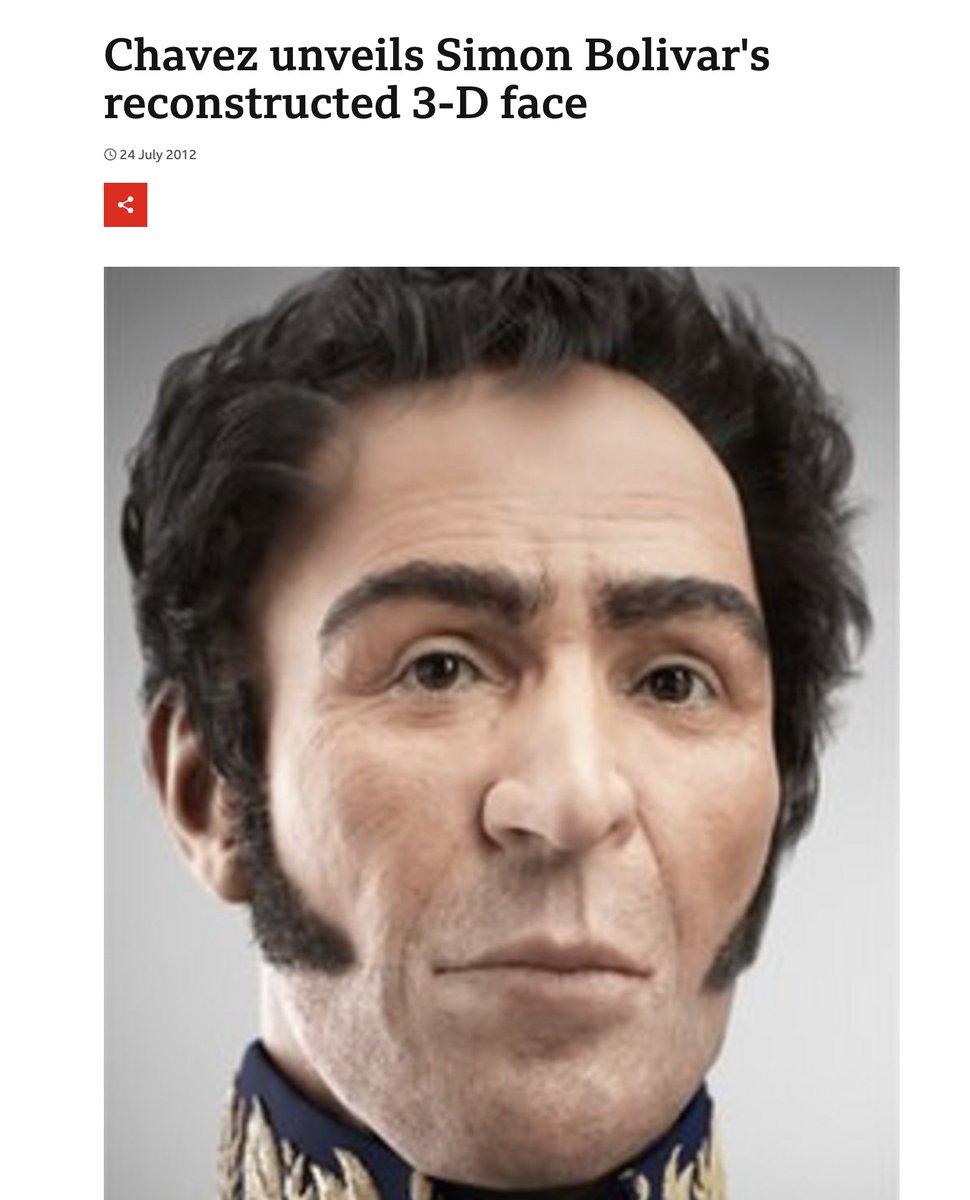
Venezuela? Government by speaking to the spirit contained in Simon Bolivar's corpse.
Brazil? A permanent war of all institutions against all institutions.
Argentina? Literally negative fiscal discipline—but now the complete opposite!
Venezuela? Government by speaking to the spirit contained in Simon Bolivar's corpse.
Brazil? A permanent war of all institutions against all institutions.
Cuba, Haiti, Panama, Chile, Bolivia—all weird experiments, democracy with a unique twist.
El Salvador shows that sometimes the experiment can result in useful information and improved quality of life; the exception that proves the rule.
El Salvador shows that sometimes the experiment can result in useful information and improved quality of life; the exception that proves the rule.
In all my research, I don't think I've come across any place like Latin America where both elites and masses so strongly believe in the literal meaning of democracy, rule of the people.
Only in Latin America will dictators willingly give up power because of election results.
Only in Latin America will dictators willingly give up power because of election results.
In Europe or Asia or North America, elections are functionally irrelevant to real outcomes.
But in Latin America, Milei wins an election and starts firing the whole government. Or Chavez wins and starts spending the whole government budget on whatever.
x.com
But in Latin America, Milei wins an election and starts firing the whole government. Or Chavez wins and starts spending the whole government budget on whatever.
x.com
In a way, Latin Americans have been far more faithful to the principles of the 18th century Enlightenment than the U.S. or Europe, which are 20th century bureaucracies.
Latin America doesn't have strong bureaucracies, just congresses, elections, the military, and El Presidente.
Latin America doesn't have strong bureaucracies, just congresses, elections, the military, and El Presidente.
Venezuela wasn't ruined because of socialism, it was ruined because Hugo Chavez had no time to learn how oil exports work because he was too busy forensically investigating whether traitors and conspirators murdered their equivalent of George Washington/Napoleon 200 years ago.

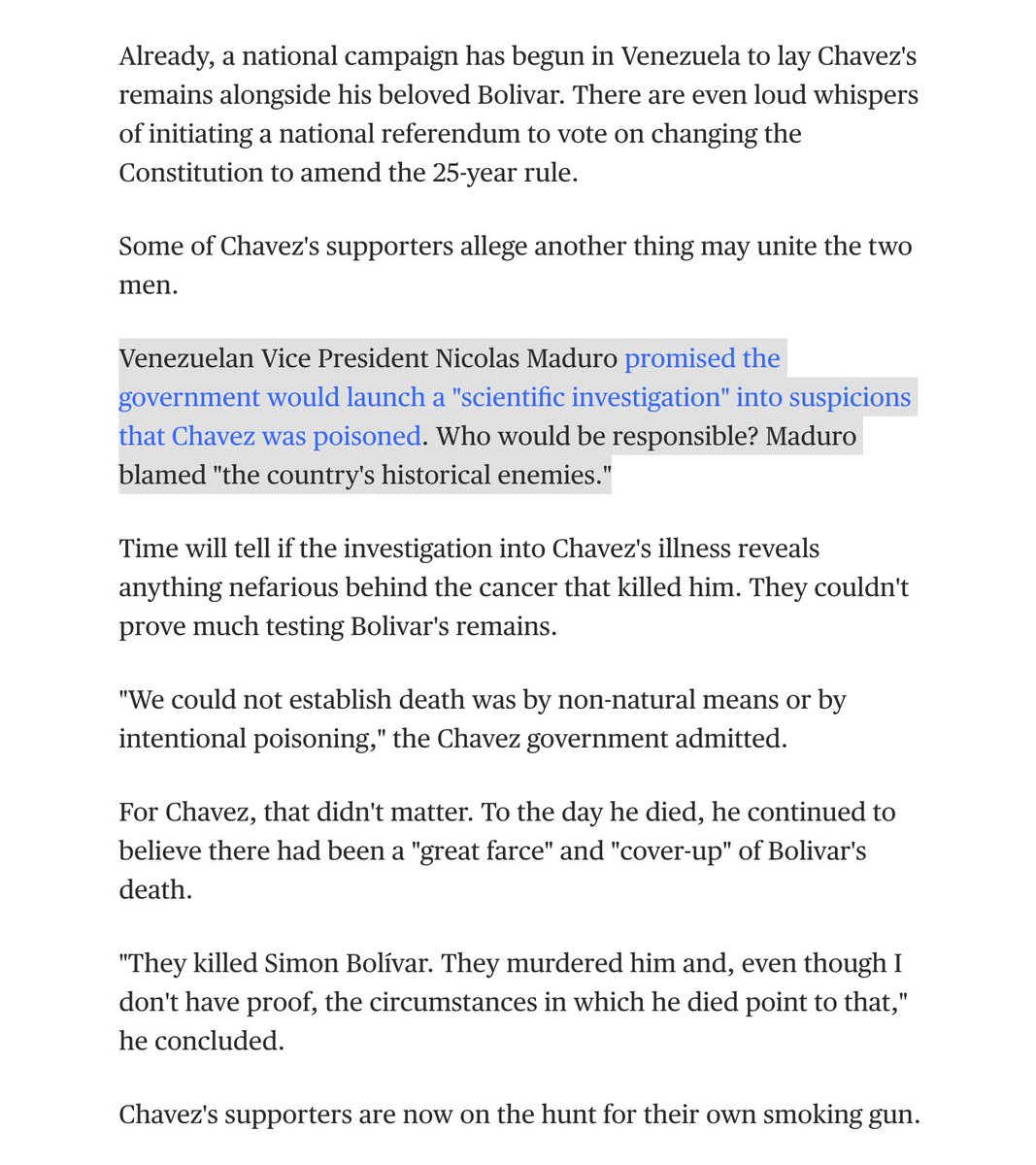
No, seriously, socialism didn't ruin Venezuela. I'm not joking.
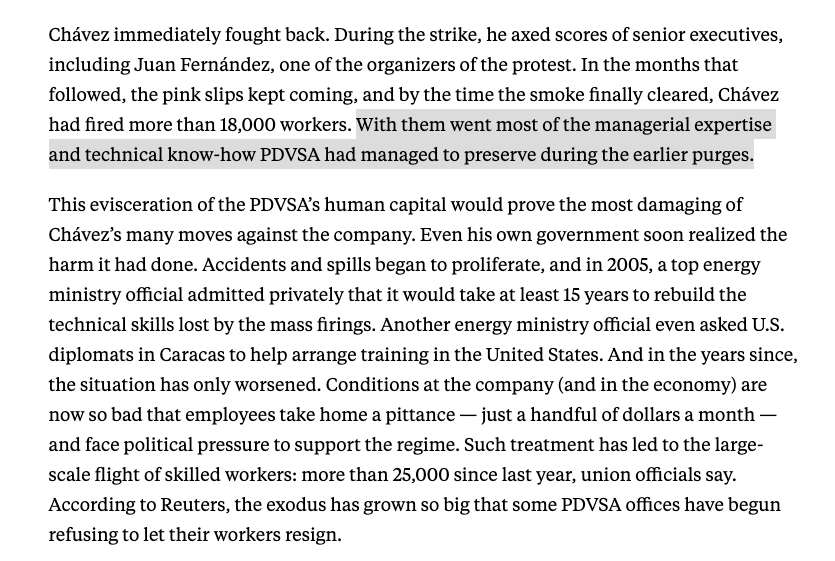
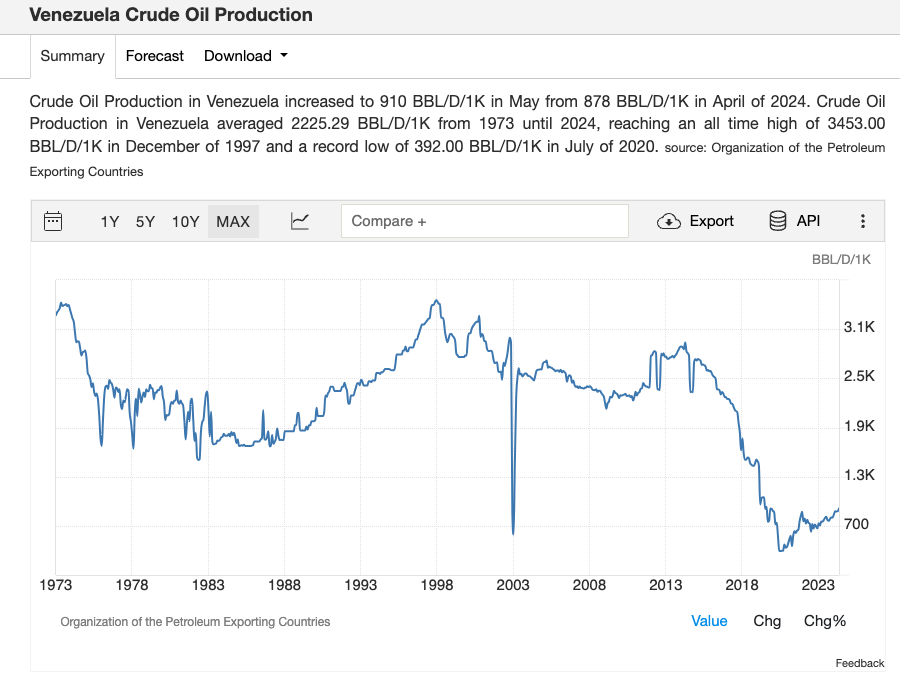
Chavez accidentally crippled the state oil company that was responsible for 96% of the entire national economy because the workers went on strike and he fired all of them in response...
Chavez accidentally crippled the state oil company that was responsible for 96% of the entire national economy because the workers went on strike and he fired all of them in response...
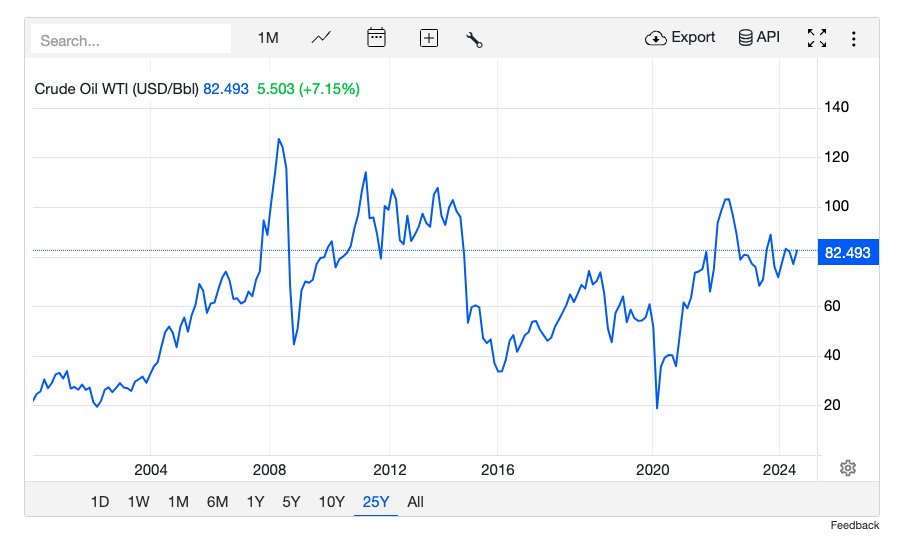
..and then, like a true cracked day-trading stonk picker in the arena, he aped the entire economy into even higher oil prices and was left holding the bag when America invented fracking in 2014 and made Venezuela's extra-heavy oil nearly unprofitable to extract at all overnight.
Socialism ruins your economy by making entrepreneurship and innovation impossible and corruption and inefficiency mandatory.
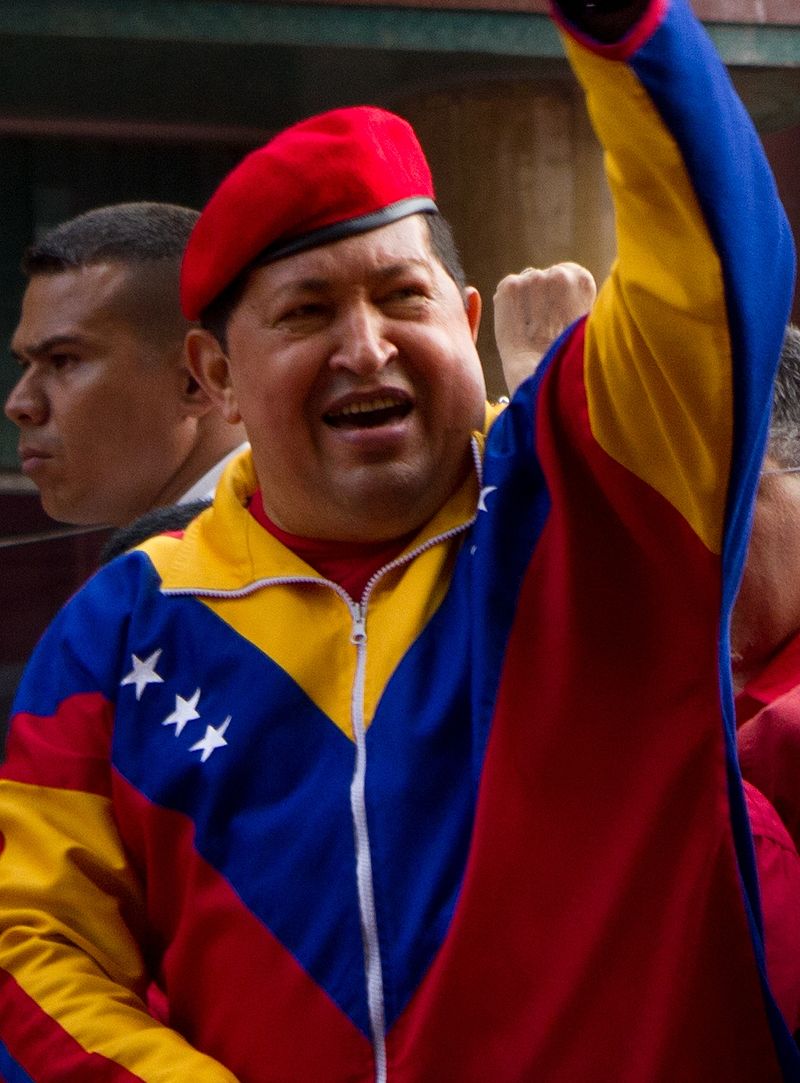
That's not what blew up Venezuela. What blew it up was this fat fashion criminal betting the national economy on price action, then getting rugpulled.
That's not what blew up Venezuela. What blew it up was this fat fashion criminal betting the national economy on price action, then getting rugpulled.
If that -70% drop in the price of oil from 2014-2016 hadn't happened, we would likely be hearing today about how Venezuela's two decades of high social spending from oil prosperity proves that socialism works. Which would also be wrong.
The reason we constantly and in alternating fashion blame "socialism" or "neoliberalism" for Latin America's dysfunction is that admitting that it's rather caused by the "democracy" that picks caricatures of these things as national policy is way too uncomfortable to admit.
"Government by communing with the spirit of Simon Bolivar" is not a joke.
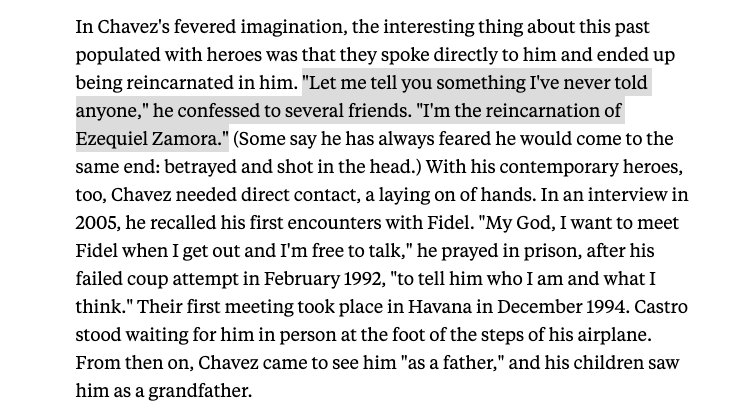
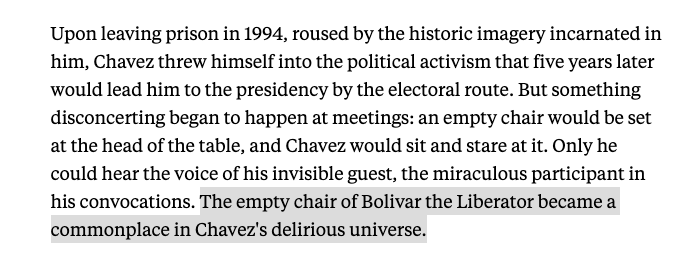
Chavez believed he was the reincarnation of a 19th century Venezuelan civil war leader and left an empty chair in meetings so that Simon Bolivar's spirit could participate in the discussions.
Chavez believed he was the reincarnation of a 19th century Venezuelan civil war leader and left an empty chair in meetings so that Simon Bolivar's spirit could participate in the discussions.
Loading suggestions...