

India is the 2nd largest consumer of tobacco on earth
In fact, it’ll become a ₹6L crore market by 2032 inspite of deaths
The crazy part? North East men are the highest consumers of tobacco beating UP & Bihar
THREAD: why tobacco is growing & why isn’t the govt. banning it🧵
In fact, it’ll become a ₹6L crore market by 2032 inspite of deaths
The crazy part? North East men are the highest consumers of tobacco beating UP & Bihar
THREAD: why tobacco is growing & why isn’t the govt. banning it🧵

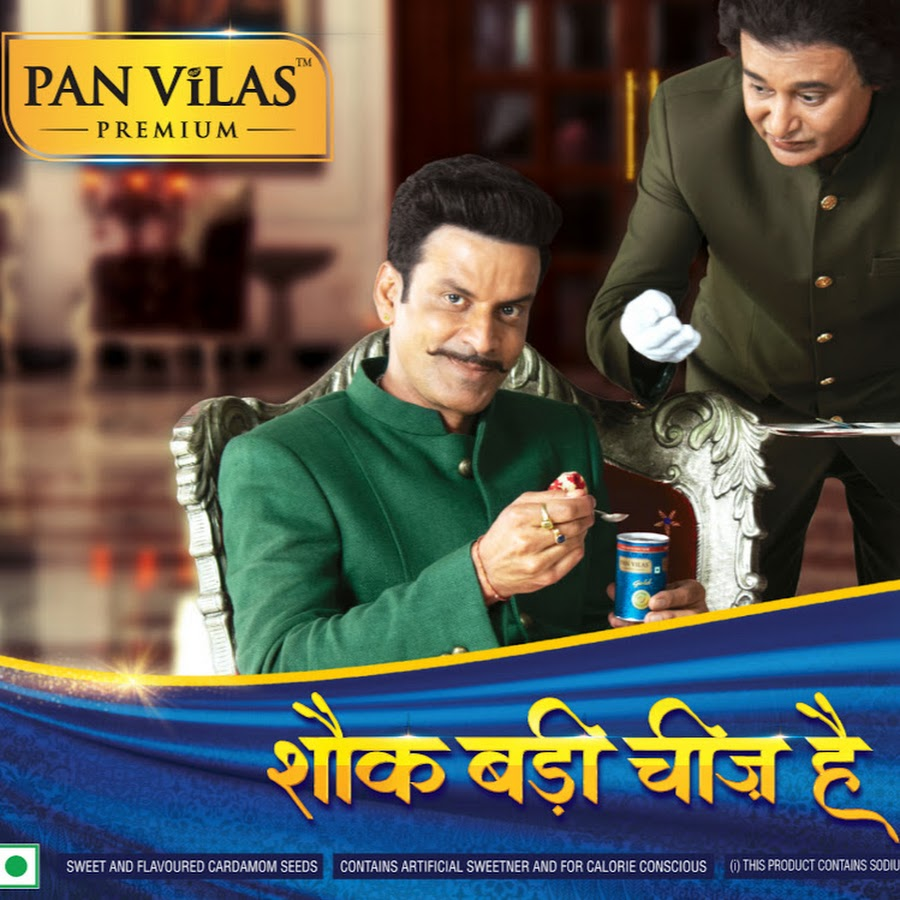
“Shauq Badi Cheez Hai”? Is that why pan masala is being promoted as a mark of sophistication & style?
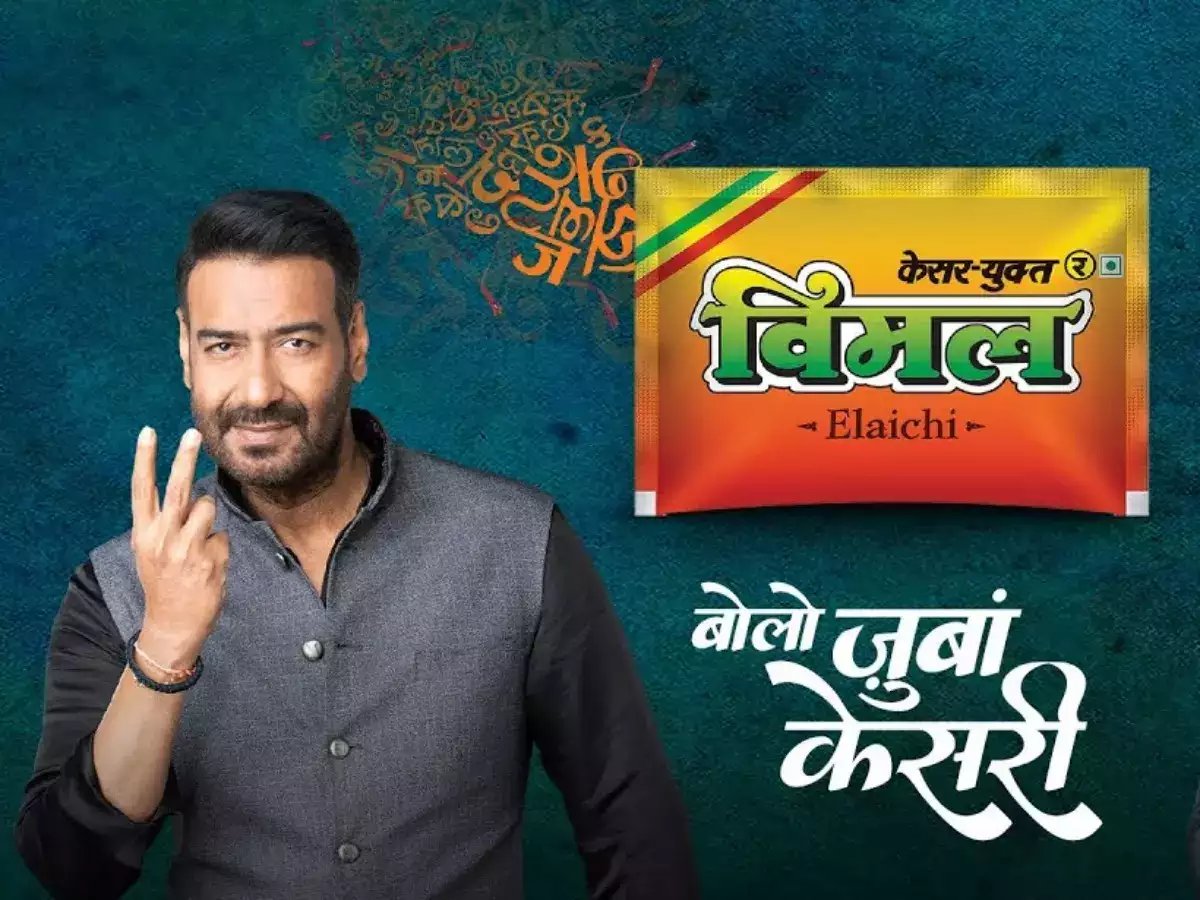
And yeah “Bolo Zuban Kesari”! Because ofcourse stained mouth is really a badge of honor for us!
Well, maybe this is the downside of being an aspirational population after all.
And yeah “Bolo Zuban Kesari”! Because ofcourse stained mouth is really a badge of honor for us!
Well, maybe this is the downside of being an aspirational population after all.
Big co.s easily sell their dangerous products by successfully convincing us that
— a mouthful of toxic chemicals & carcinogens is a key to a better life.
But how exactly are these products harmful? Even when we started working on this thread, we had no idea about:
— a mouthful of toxic chemicals & carcinogens is a key to a better life.
But how exactly are these products harmful? Even when we started working on this thread, we had no idea about:
a) The difference in products,
b) What makes them damaging,
c) Why, despite all the warnings on the packaging, people continue to consume them,
d) And why the govt still hasn’t banned them?
Well, let’s start understanding them one by one.
b) What makes them damaging,
c) Why, despite all the warnings on the packaging, people continue to consume them,
d) And why the govt still hasn’t banned them?
Well, let’s start understanding them one by one.
See, the origins of Pan Masala can be traced back to the ancient Ayurvedic texts.
In India, Betel leaves or Paan ka Patta were chewed with Areca Nuts (Supari), Gulkand & various other aromatic spices for their refreshing & digestive properties.
In India, Betel leaves or Paan ka Patta were chewed with Areca Nuts (Supari), Gulkand & various other aromatic spices for their refreshing & digestive properties.
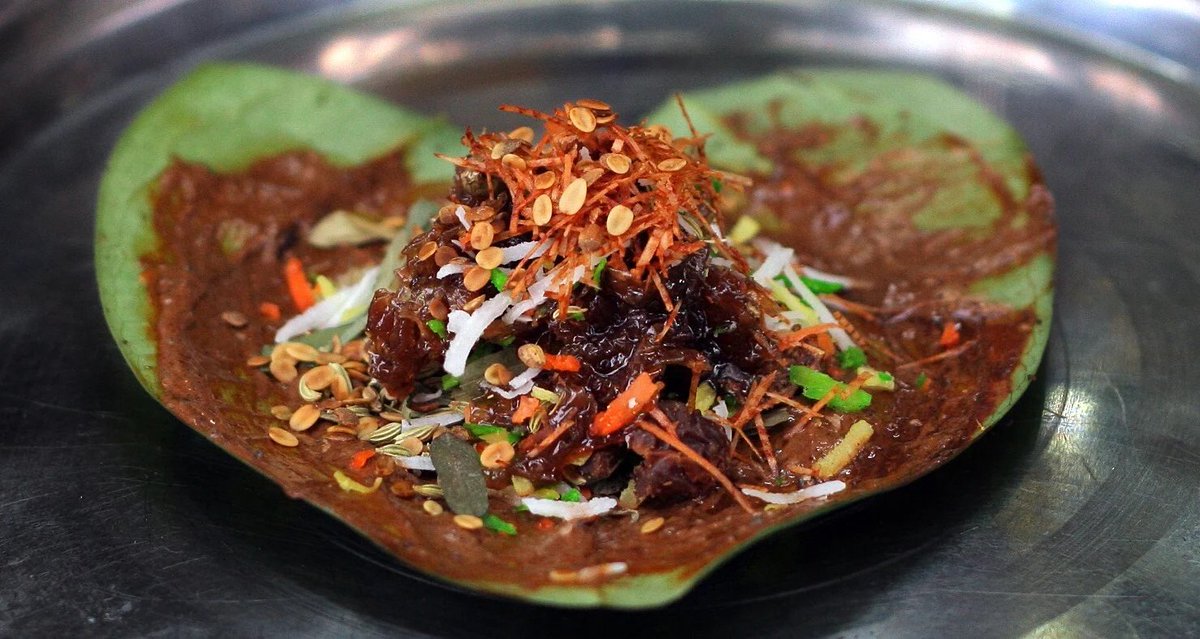
Over time, it became associated with hospitality & began to be commonly offered to guests during social gatherings.
As innovation took place & commercialization of commodities happened, the traditional Paan was converted into a more convenient packaged form known as Pan Masala.
As innovation took place & commercialization of commodities happened, the traditional Paan was converted into a more convenient packaged form known as Pan Masala.

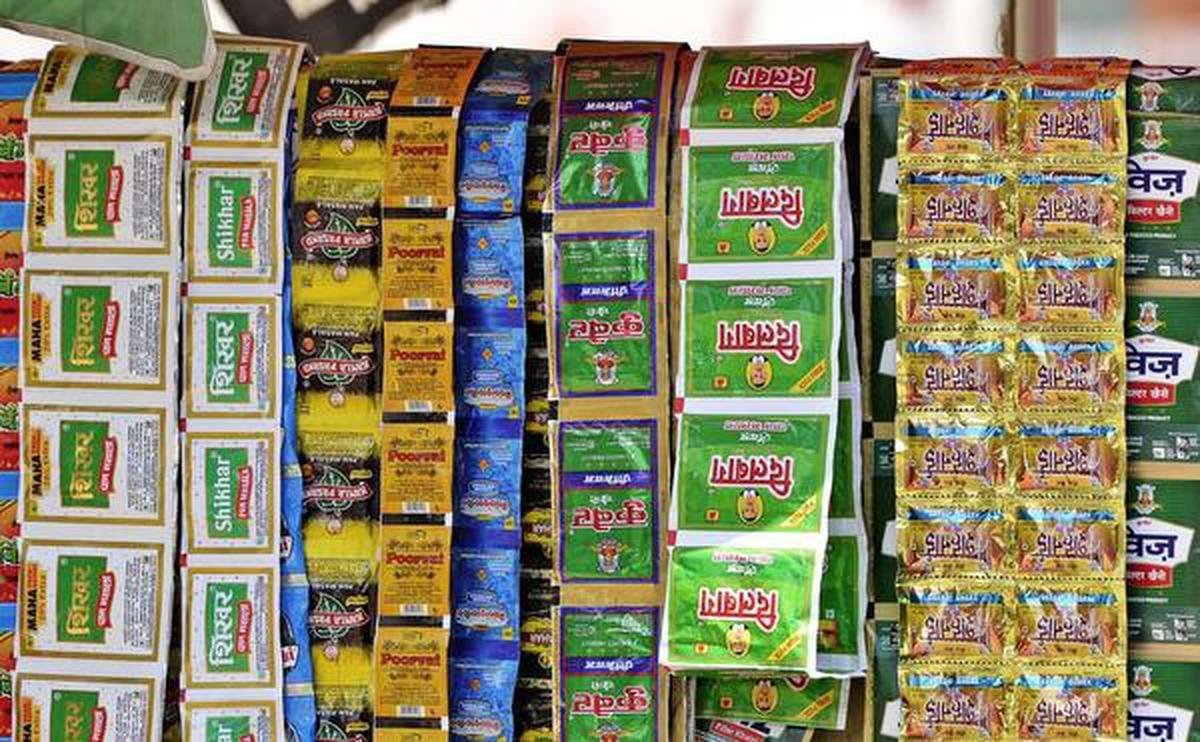
Now to increase its shelf life & make it more addictive, co.s added processed Tobacco as well as certain chemicals like Magnesium Carbonate in it and started calling it Gutkha.
And as per the NFHS survey, Pan Masala & Gutkha are India’s most common forms of tobacco consumption.
And as per the NFHS survey, Pan Masala & Gutkha are India’s most common forms of tobacco consumption.
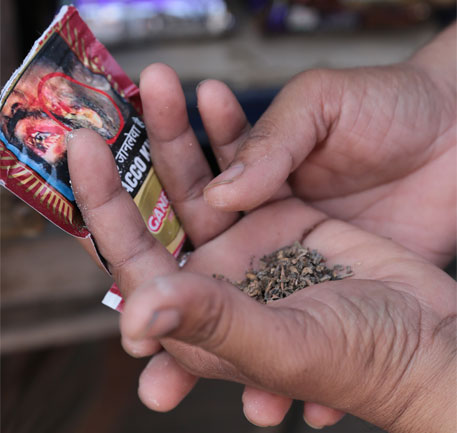
According to several studies, 2 main conclusions were drawn:
1. Gutkha contains over 40 substances, including areca nuts & tobacco, which are responsible for cancer.
2. It is more dangerous than cigarettes because it directly enters the mouth & reaches the stomach.
1. Gutkha contains over 40 substances, including areca nuts & tobacco, which are responsible for cancer.
2. It is more dangerous than cigarettes because it directly enters the mouth & reaches the stomach.

According to a WHO report, Tobacco is causing 13.5 Lakh deaths in India every year.
A very interesting study took place a few years back, which found that
- individuals from lower socioeconomic backgrounds or with no formal schooling have a higher risk of consuming Gutkha,
A very interesting study took place a few years back, which found that
- individuals from lower socioeconomic backgrounds or with no formal schooling have a higher risk of consuming Gutkha,
- whereas those from higher wealth quintiles or with formal schooling are more likely to use Pan masala (without tobacco).
But exactly why many of the most affected by tobacco are the poor?
But exactly why many of the most affected by tobacco are the poor?
Well men & women whose jobs are more physically demanding, with shifts lasting more than 12 hours, consume Gutkha
- to suppress hunger pain and
- to get temporary relief & mental diversion.
- to suppress hunger pain and
- to get temporary relief & mental diversion.
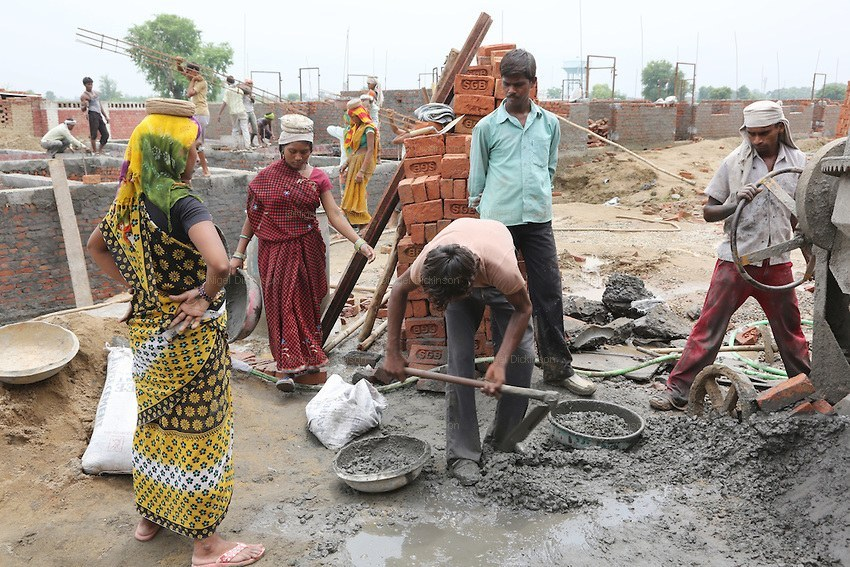
Moreover, it can be consumed passively for Rs.3-Rs.5 simply by putting it in our mouths and chewing it making it a more practical choice.
The rest of the increase in pan masala consumption is driven by celebrities who endorse it.
The rest of the increase in pan masala consumption is driven by celebrities who endorse it.
All the super stars of Bollywood, from Shahrukh Khan to Ajay Devgan are featuring in the surrogate advertisements of Pan Masala Brands.
But have you ever wondered why are they doing this? They certainly don't need the Rs.5-10 Cr deals as they’re already very rich.
But have you ever wondered why are they doing this? They certainly don't need the Rs.5-10 Cr deals as they’re already very rich.
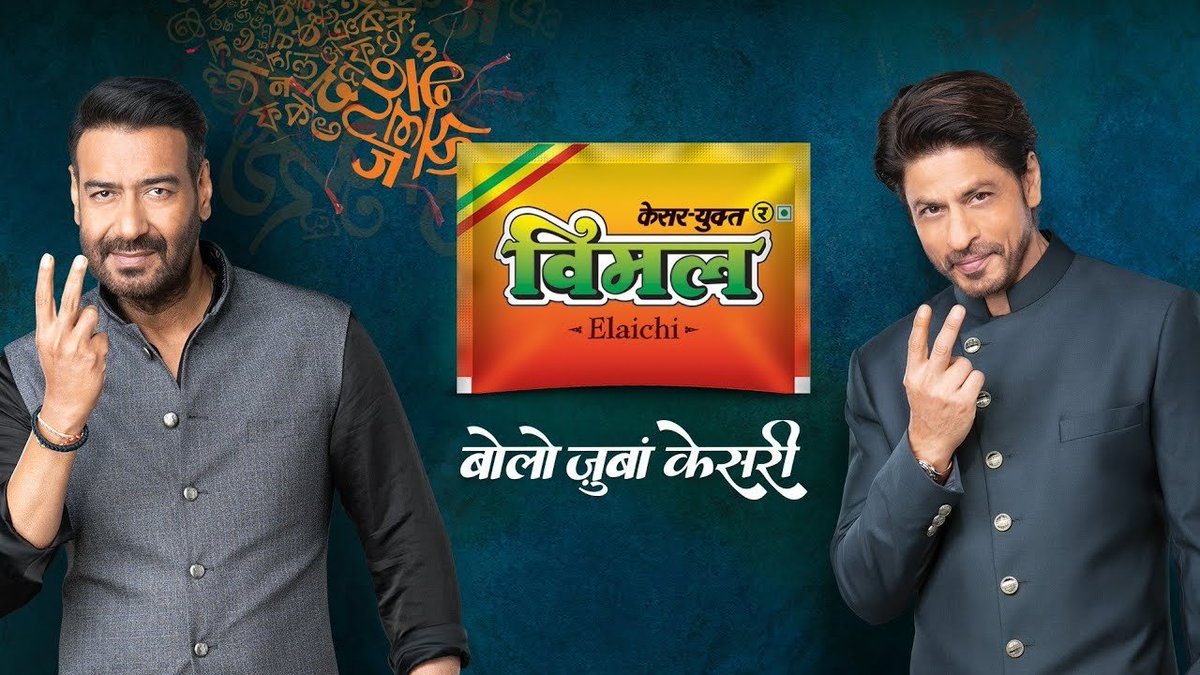
Well they’re doing this to maintain their relevance among the tier 3 cities and rural audience through
— television ads, banners, hoarding, magazines & newspapers.
— television ads, banners, hoarding, magazines & newspapers.
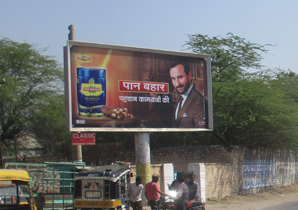
This appeals to the young audience as they want to be more like their superstar idols.
This resulted in increase in sell of Gutkha and prompted govt to issue
This resulted in increase in sell of Gutkha and prompted govt to issue
Food Safety and Standards Regulations in 2011, under the Food Safety and Standards Act, 2006 that
— NO FOOD ITEM WOULD CONTAIN TOBACCO IN IT.
In a way, it was a ban on the production of Gutkha, because now the co. couldn’t add Tobacco in Pan Masala
— NO FOOD ITEM WOULD CONTAIN TOBACCO IN IT.
In a way, it was a ban on the production of Gutkha, because now the co. couldn’t add Tobacco in Pan Masala
— as Pan Masala was already registered as a ‘food item’ under FSSAI.
But again, the noteworthy point here is that the govt didn't impose a ban on the production and sell of tobacco itself;
rather, the ban was specifically on mixing it with food items.
But again, the noteworthy point here is that the govt didn't impose a ban on the production and sell of tobacco itself;
rather, the ban was specifically on mixing it with food items.
And taking advantage of it, all these large, greedy corp. found a loophole
— they started selling Pan Masala & processed Tobacco separately.
For example, earlier there was Shikhar Gutkha. But the co. split its product into 2 and now it’s Shikhar Pan Masala and Shikhar Tobacco.
— they started selling Pan Masala & processed Tobacco separately.
For example, earlier there was Shikhar Gutkha. But the co. split its product into 2 and now it’s Shikhar Pan Masala and Shikhar Tobacco.
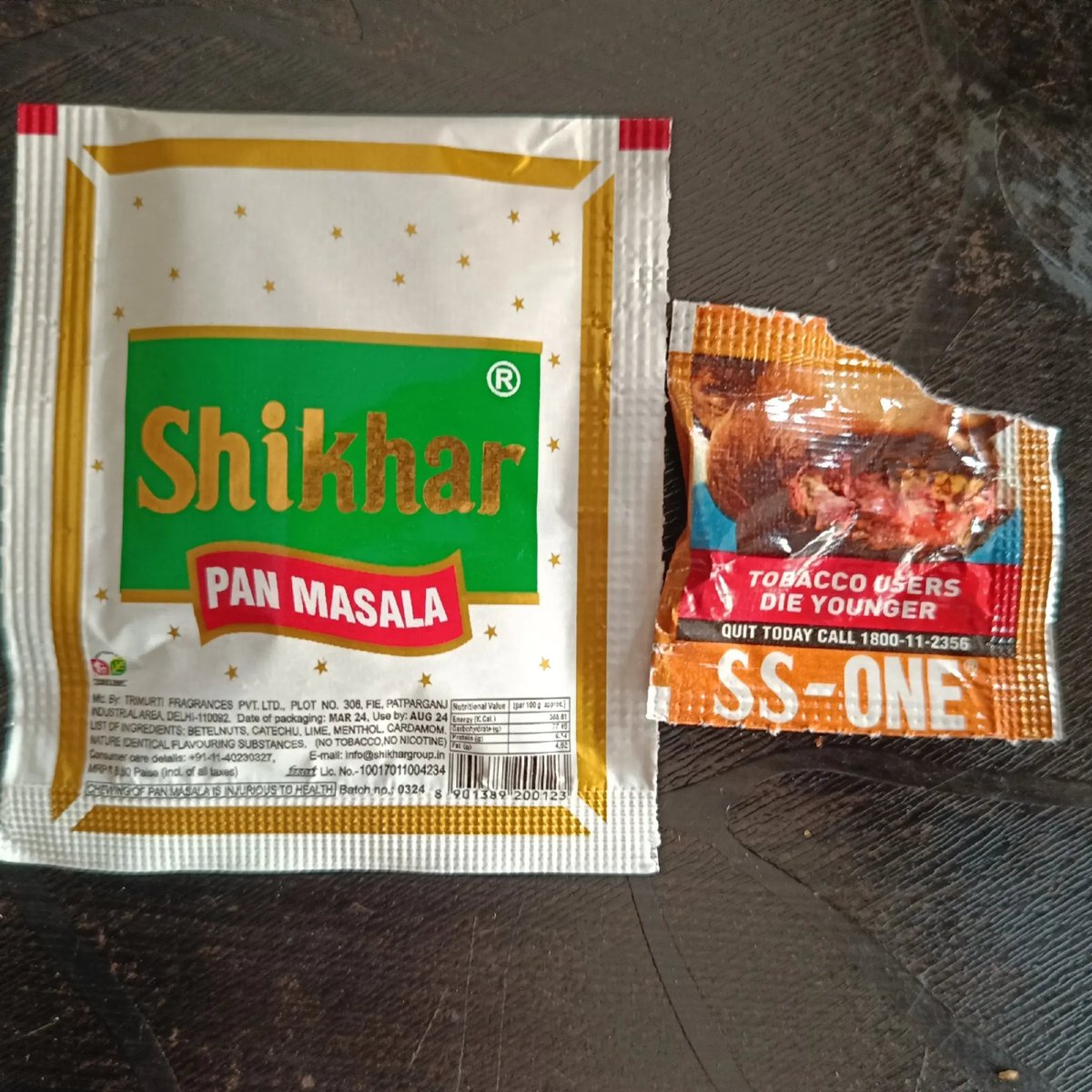
Now a question arises that when everybody knows how damaging Tobacco is, then why Indian govt. never imposed a ban on Tobacco production?
1⃣ Economic Factor- Tobacco cultivation & production contribute significantly:
1⃣ Economic Factor- Tobacco cultivation & production contribute significantly:
a) To the agricultural economy- Tobacco crop is grown in an area of 0.45M hectares which is around 0.27% of the net cultivated area in India.
While this percentage is relatively small, the overall impact on local economies in tobacco-growing regions are substantial.
While this percentage is relatively small, the overall impact on local economies in tobacco-growing regions are substantial.
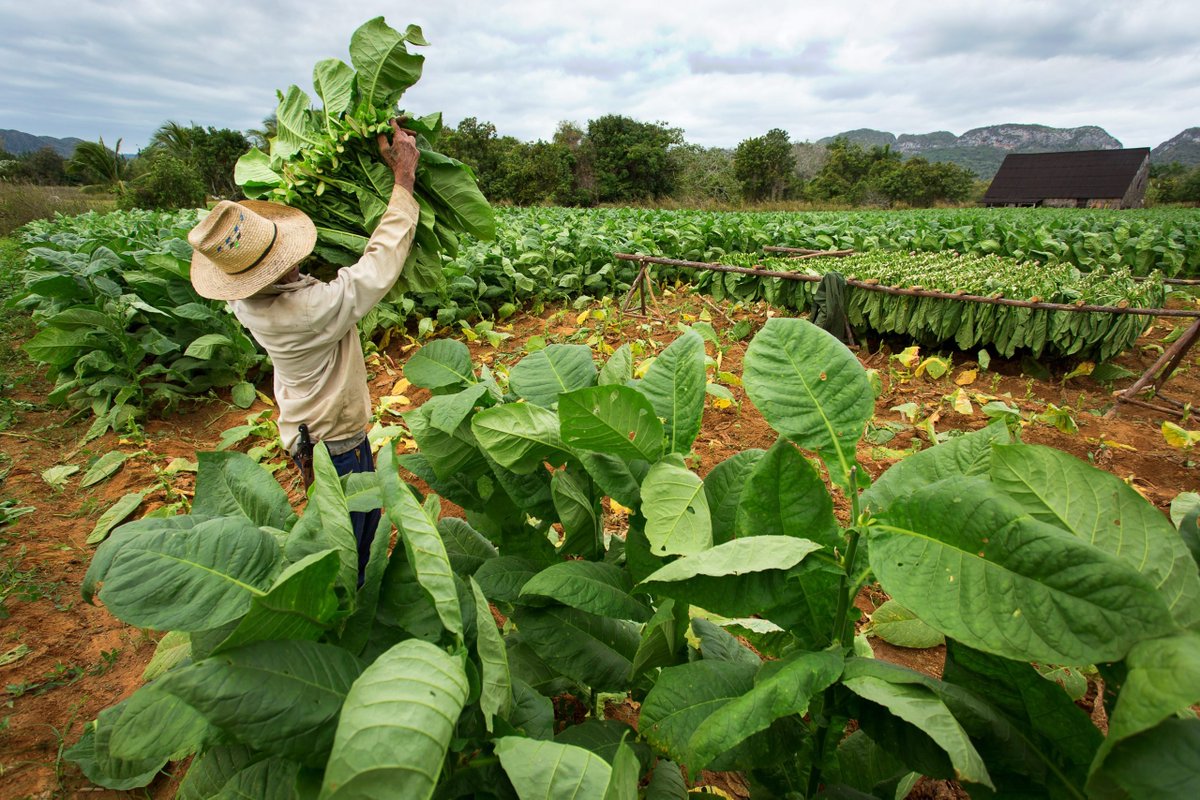
b) To livelihoods of a large no. people- Tobacco cultivation and related industries secure livelihoods for about 36M people in India, including 6 million farmers and 10M in processing, manufacturing, & exports.
Moreover, the govt imposes 4 taxes on Tobacco and Tobacco products
Moreover, the govt imposes 4 taxes on Tobacco and Tobacco products
— 28% GST, Compensation Cess, Basic Excise Duty, and National Calamity Contingent Duty (NCCD).
In FY22, Indian govt collected Rs.19,329 Cr Central GST from the suppliers of Tobacco products.
But it allocated Rs.83,000 Cr to the Department of Health and Family Welfare
In FY22, Indian govt collected Rs.19,329 Cr Central GST from the suppliers of Tobacco products.
But it allocated Rs.83,000 Cr to the Department of Health and Family Welfare
to combat the health crisis caused by tobacco consumption.
2⃣ International Trade Consideration- Tobacco is a legally traded commodity, and imposing a ban on its production would have implications for international trade agreements.
2⃣ International Trade Consideration- Tobacco is a legally traded commodity, and imposing a ban on its production would have implications for international trade agreements.
India ranks as the world's 2nd largest exporter of tobacco after Brazil.
In the FY 2022-23, India exported tobacco & its products valued at ₹9,740 Cr.
Now some people call it Tobacco Epidemic because of the substantial cost incurred by public health & economic crisis in India
In the FY 2022-23, India exported tobacco & its products valued at ₹9,740 Cr.
Now some people call it Tobacco Epidemic because of the substantial cost incurred by public health & economic crisis in India

Socially, tobacco use perpetuates cycles of poverty and inequality, as it disproportionately affects low-income populations who are targeted by aggressive marketing from tobacco companies.
If you liked this read, do RePost🔄 the 1st post and follow us @FinFloww for such reads every Monday, Wednesday and Friday!
Join 25202 people who read such stories daily on our WhatsApp Newsletter: whatsapp.com

Subscribe to WHAT THE FLOWW?, our weekly email newsletter where we dive deeper into such concepts: soshals.app

Loading suggestions...