


@Barker_J Teaching has the potential to be the Best Job in the World (BJW).
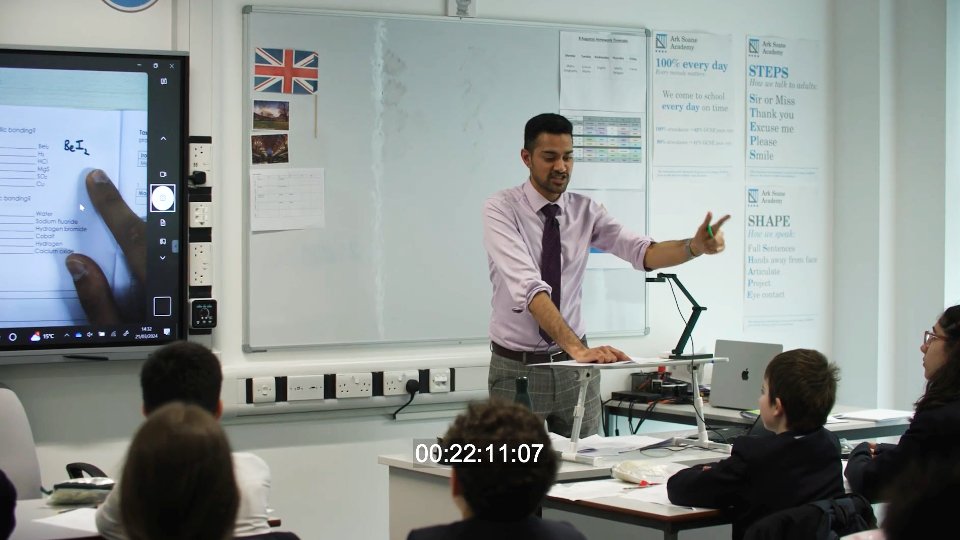
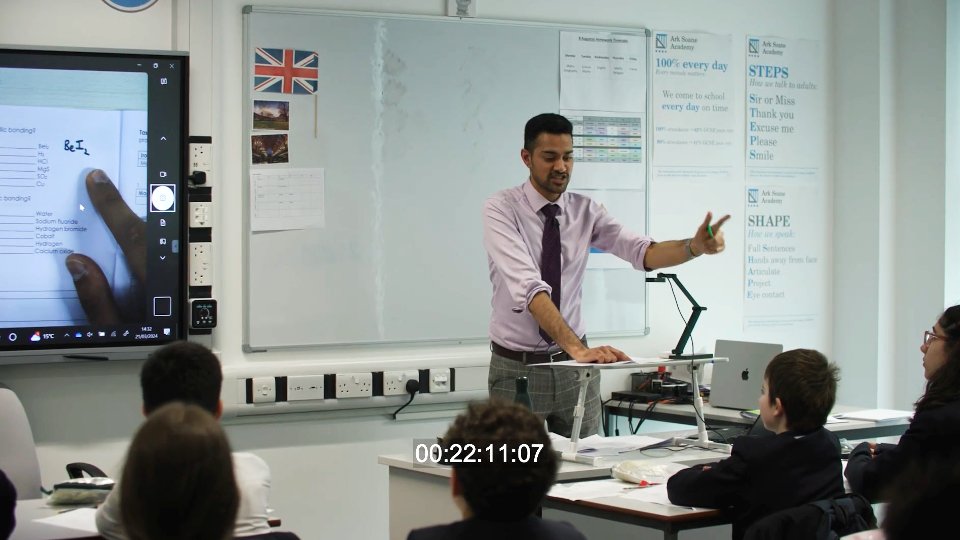
EXHIBIT A → Superhunk @Mr_Raichura in full flow, loving his job, living his best life.
EXHIBIT A → Superhunk @Mr_Raichura in full flow, loving his job, living his best life.
@Barker_J @Mr_Raichura BUT, we're not there yet for all teachers.
And we may not even be headed in the right *direction*.
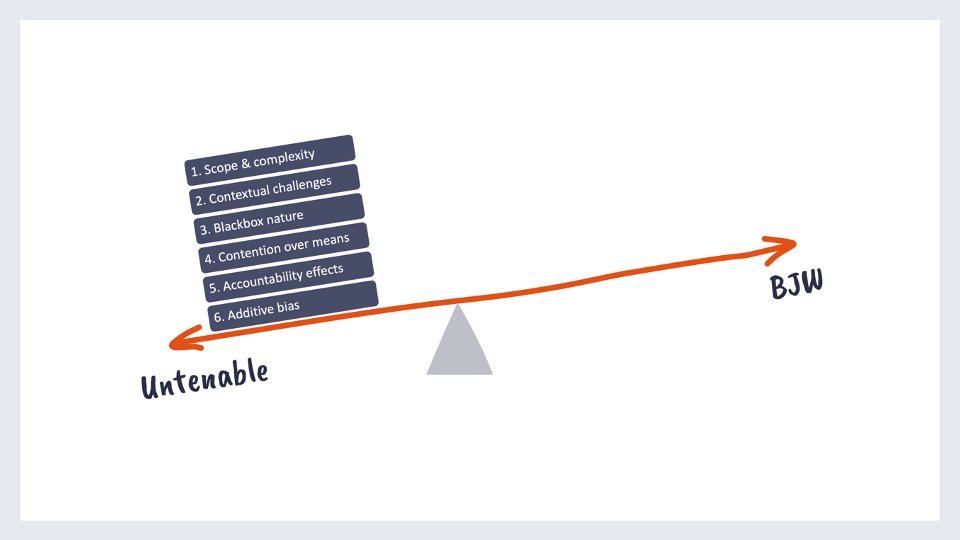
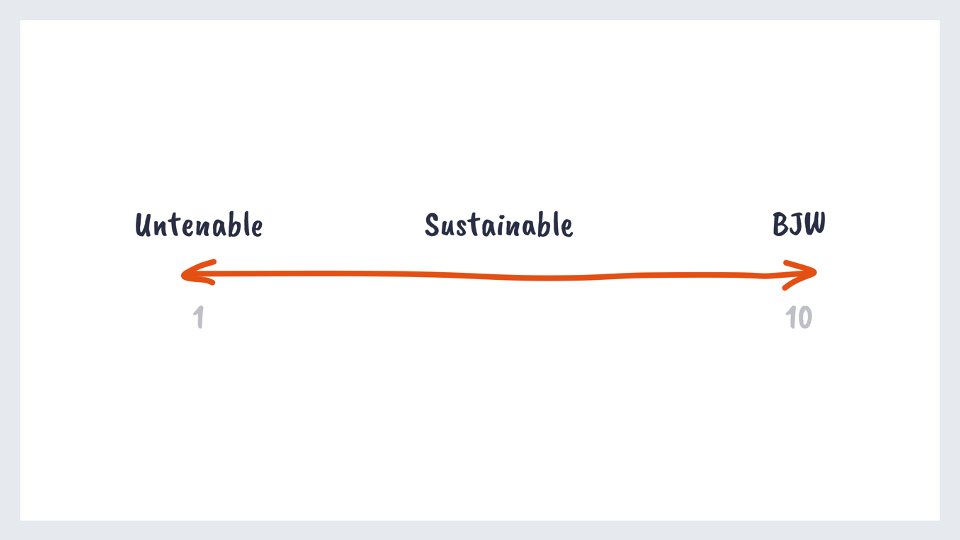
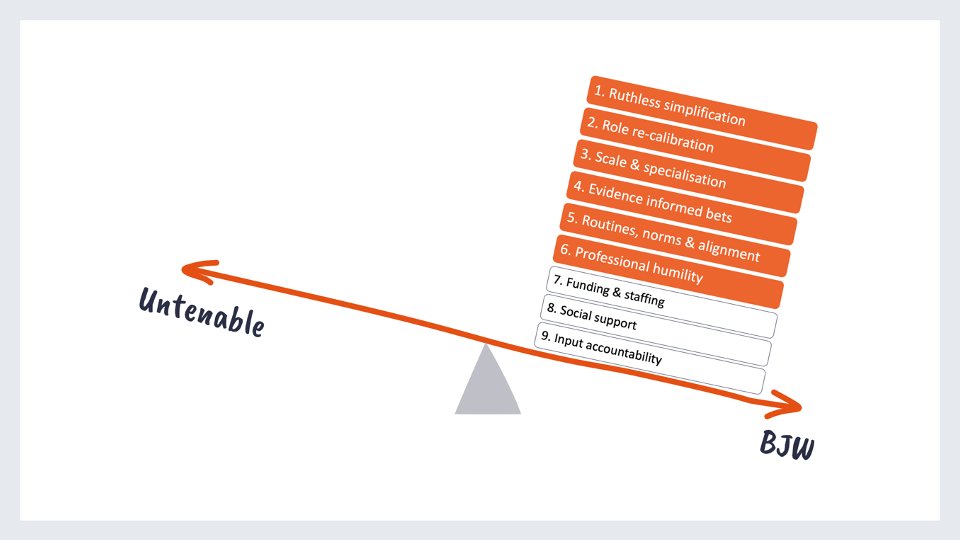
Q: Where would YOU put teaching on this scale?
And we may not even be headed in the right *direction*.
Q: Where would YOU put teaching on this scale?
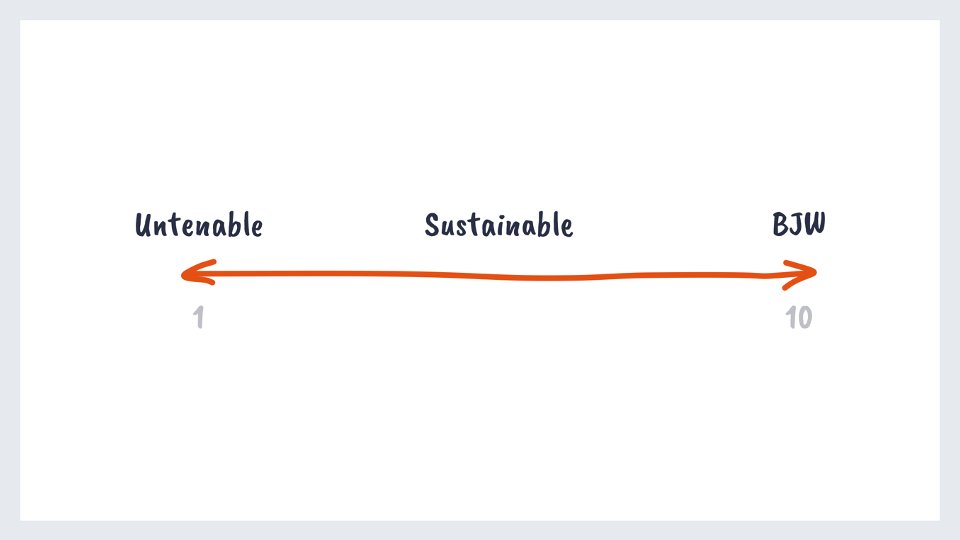
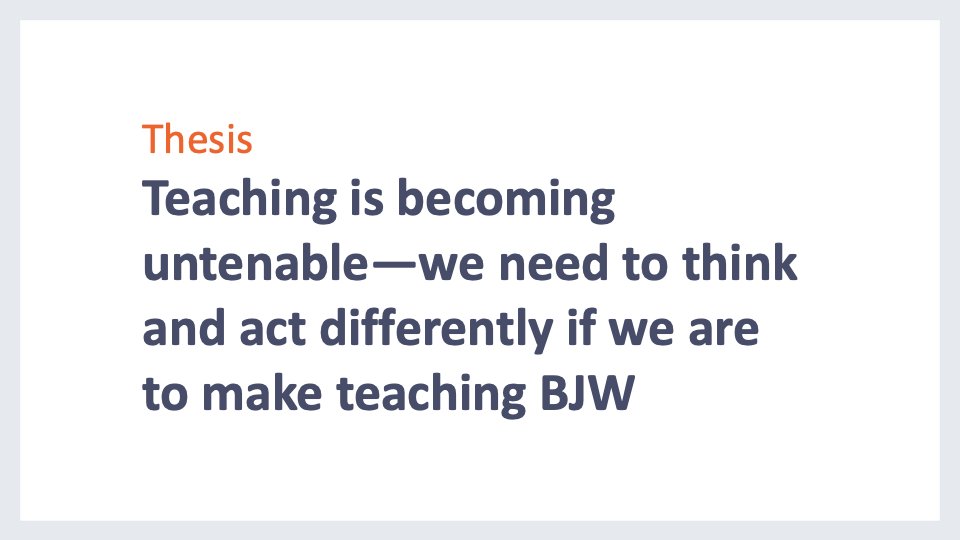
@Barker_J @Mr_Raichura Our thesis is that—in general, and despite the incredible work of schools—teaching may be becoming an increasingly untenable job.
If this is true, and we want to make it more sustainable, and eventually the BJW, we need to start thinking and acting differently.
If this is true, and we want to make it more sustainable, and eventually the BJW, we need to start thinking and acting differently.
@Barker_J @Mr_Raichura This starts by working to better understand THE PROBLEM.
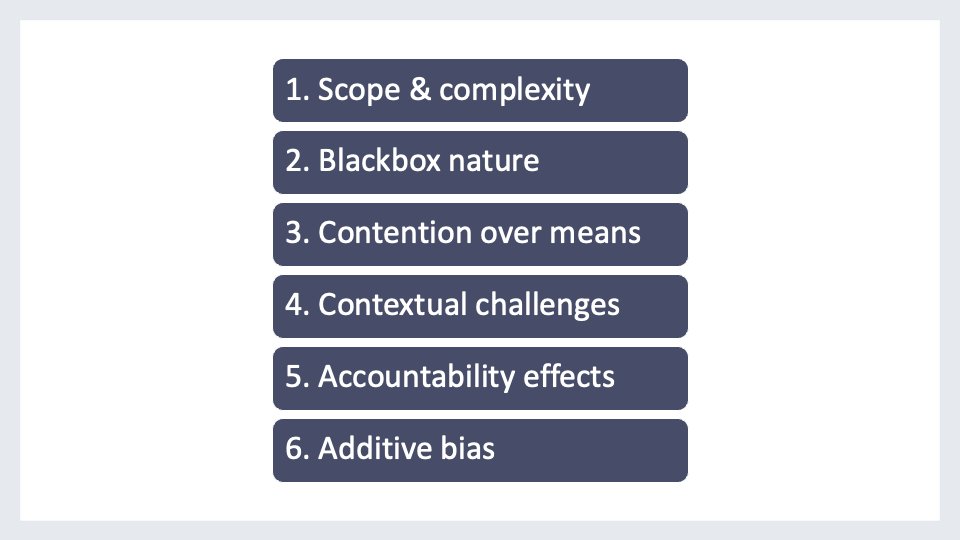
There are at least 6 potential parts to this. Let's look at each in turn...
(heads up: this section is a bit depressing, but to improve things, it's vital that we get a clear picture of the reality of our situation)
There are at least 6 potential parts to this. Let's look at each in turn...
(heads up: this section is a bit depressing, but to improve things, it's vital that we get a clear picture of the reality of our situation)
@Barker_J @Mr_Raichura 1/ SCOPE & COMPLEXITY
Teaching is super complex (way more complex than brain surgery).
However, because (A) we've all been students for 1000s of hours and (B) the better a teacher is the easier they make it look...
We're not always aware of the full extent of this complexity.
Teaching is super complex (way more complex than brain surgery).
However, because (A) we've all been students for 1000s of hours and (B) the better a teacher is the easier they make it look...
We're not always aware of the full extent of this complexity.

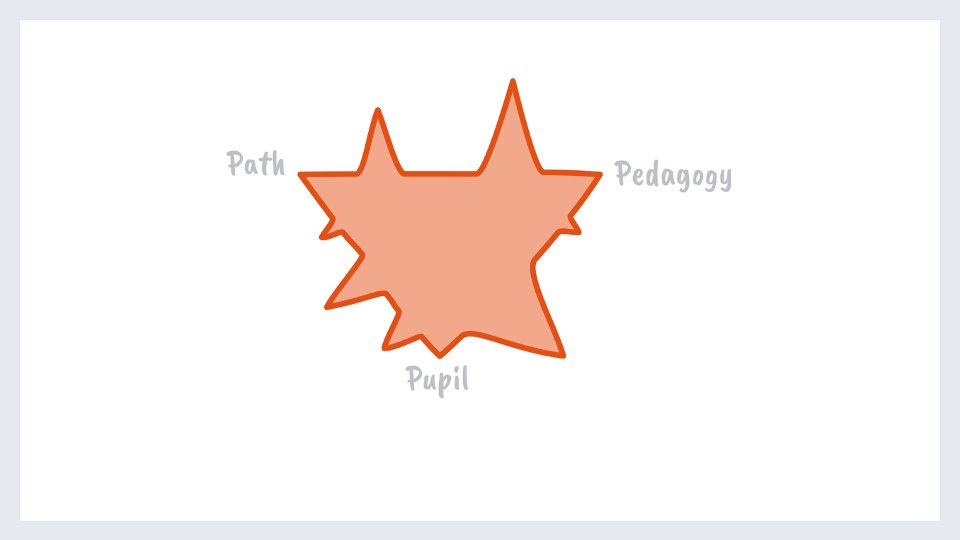
@Barker_J @Mr_Raichura At its core, teaching is about bringing together and applying knowledge of the path (curriculum), pedagogy (evidence), and pupils (via formative assessment).
The amount that teachers are expected to know about each of these areas is insane.
The amount that teachers are expected to know about each of these areas is insane.

@Barker_J @Mr_Raichura However, despite this challenging basic expectation...
In several contexts, teachers and schools are increasingly expected to do MORE and MORE and MORE
(without any additional time or resources)
In several contexts, teachers and schools are increasingly expected to do MORE and MORE and MORE
(without any additional time or resources)
@Barker_J @Mr_Raichura FOR EXAMPLE
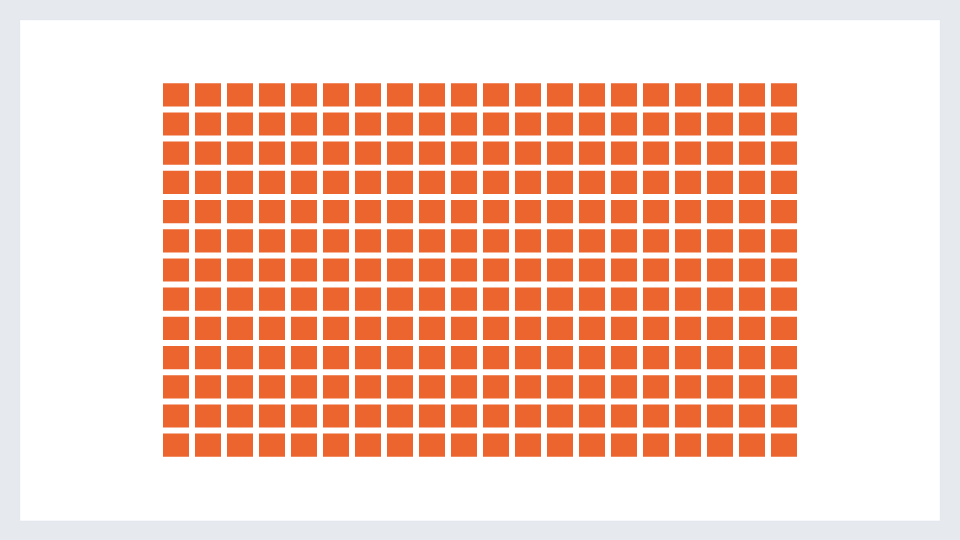
As a proxy, some prominent national policy & PD providers now suggest that schools should have 260 policies in place.
😱
As a proxy, some prominent national policy & PD providers now suggest that schools should have 260 policies in place.
😱
@Barker_J @Mr_Raichura 2/ BLACKBOX NATURE
This complexity is compounded further by the fuzzy relationship between teaching and learning.
Which makes it SUPER hard for teachers to learn—and develop certainty in approach—via experience alone.
(It's like playing darts blind)
This complexity is compounded further by the fuzzy relationship between teaching and learning.
Which makes it SUPER hard for teachers to learn—and develop certainty in approach—via experience alone.
(It's like playing darts blind)

@Barker_J @Mr_Raichura Which is why, during the noughties, practices like brain gym and learning styles found a grip on classrooms (including my own).
The fuzzy feedback loop makes it near impossible to determine—just through experience—that such approaches are bunk.
The fuzzy feedback loop makes it near impossible to determine—just through experience—that such approaches are bunk.
@Barker_J @Mr_Raichura 3/ CONTENTION OVER MEANS
This uncertainty is exacerbated by our tendency to conflate the desired ends of education (creating people great at problem solving, creativity & critical thinking) with the best means of helping people get there (the above ways may not be the best).
This uncertainty is exacerbated by our tendency to conflate the desired ends of education (creating people great at problem solving, creativity & critical thinking) with the best means of helping people get there (the above ways may not be the best).


@Barker_J @Mr_Raichura @lucy_crehan 4/ CONTEXUAL CHALLENGES
All this is further compounded by the increasingly challenging context in which teaching and schooling occurs...
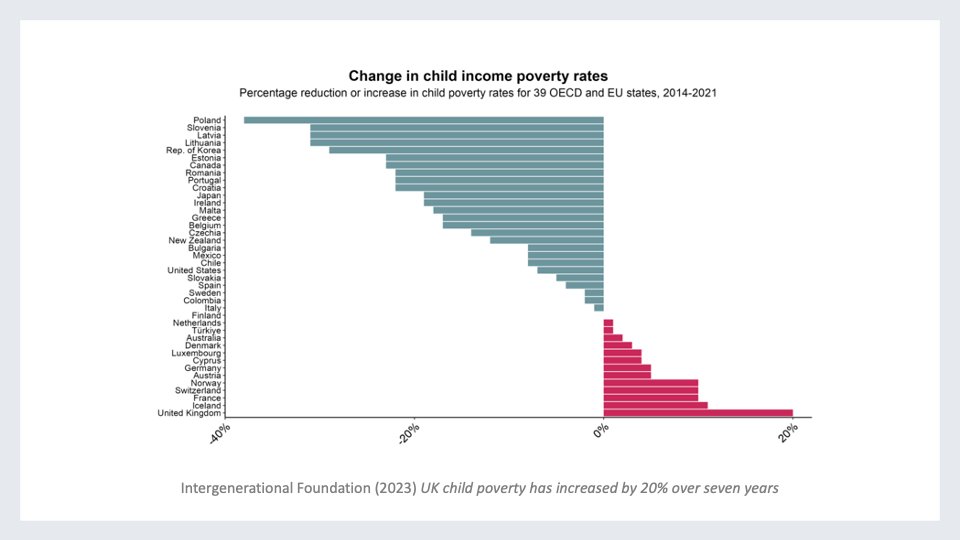
→ Child poverty increased by over 20% between 2014-2021.
→ The number of children experiencing destitution since 2017 has almost tripled.
All this is further compounded by the increasingly challenging context in which teaching and schooling occurs...
→ Child poverty increased by over 20% between 2014-2021.
→ The number of children experiencing destitution since 2017 has almost tripled.
@Barker_J @Mr_Raichura @lucy_crehan → The number of young people in contact with mental health services has increased by 500% since 2016.
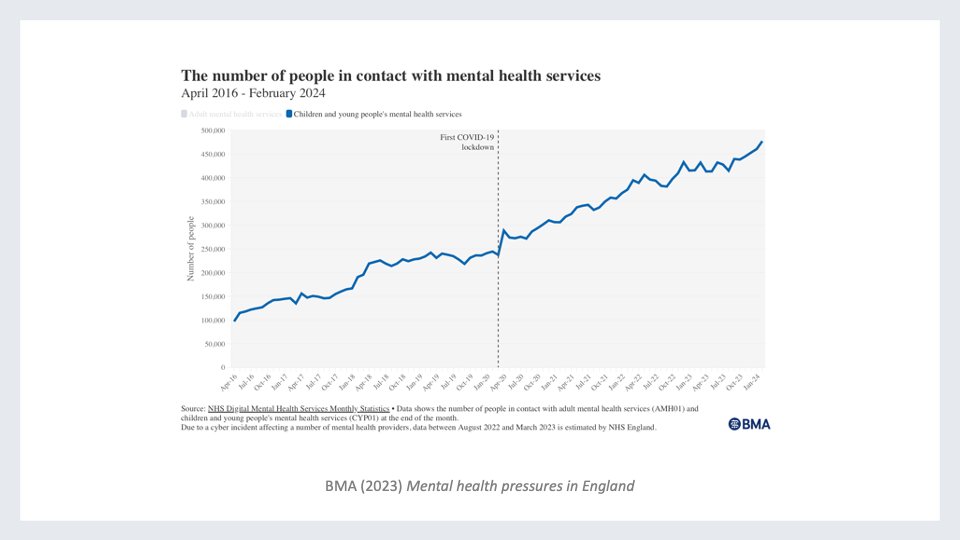
@Barker_J @Mr_Raichura @lucy_crehan These external factors are having knock on effects on classrooms and schools in multiple ways.
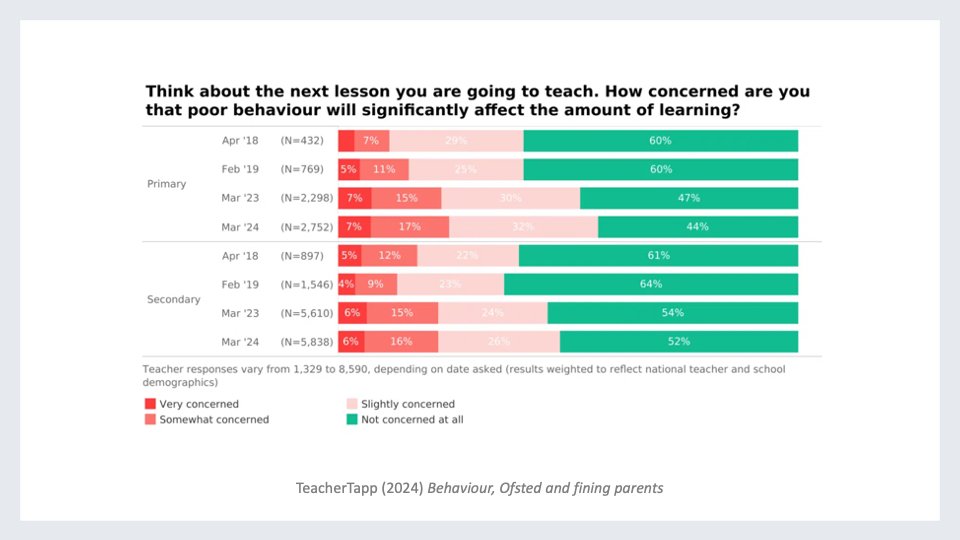
Such as norms around student behaviour...
→ Teacher concerns around student behaviour have been steadily rising over the last decade.
Such as norms around student behaviour...
→ Teacher concerns around student behaviour have been steadily rising over the last decade.
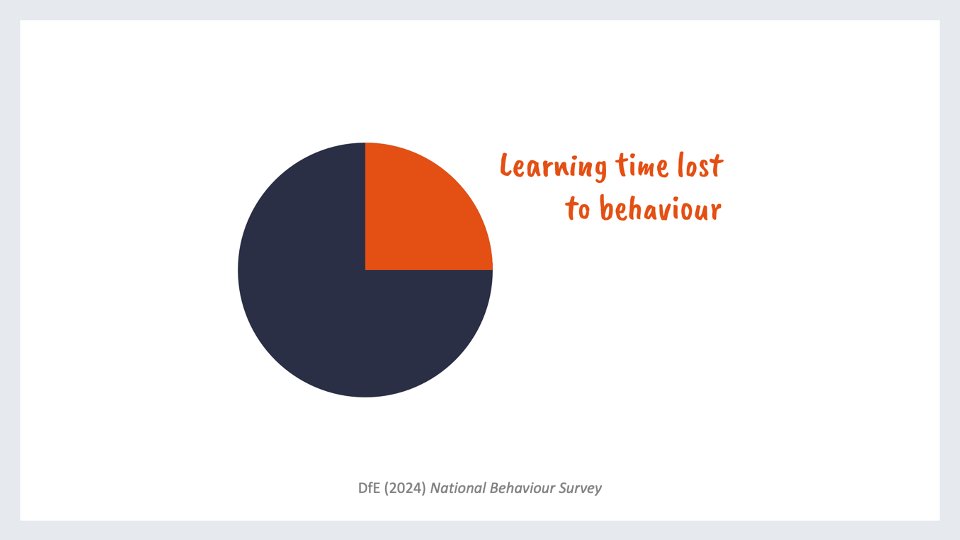
@Barker_J @Mr_Raichura @lucy_crehan → An analysis by the DfE earlier this year found that—on average—a quarter of lesson time is lost to disruptive behaviour.
@Barker_J @Mr_Raichura @lucy_crehan These effects are FURTHER compounded by wider trends around declining trust in institutions by the public.
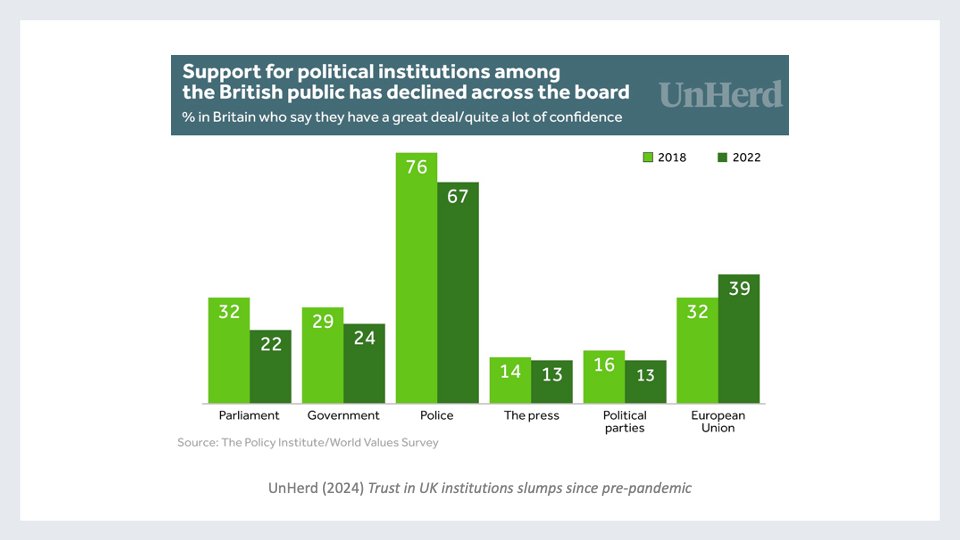
@Barker_J @Mr_Raichura @lucy_crehan Which is not only exacerbating behaviour but is also leading to schools being less supported by parents.
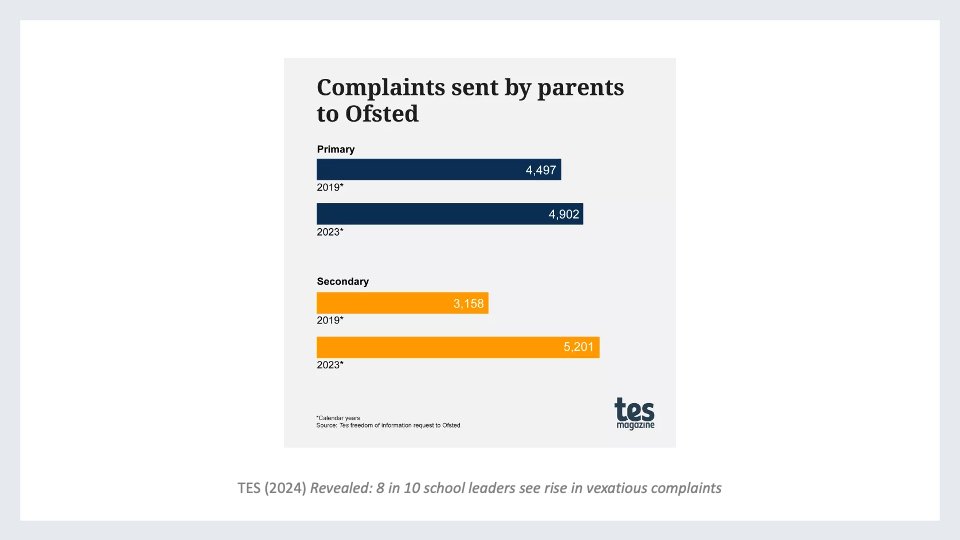
We can see this reflected by the significant increase in parental complaints about schools to Ofsted over the last 5 years.
We can see this reflected by the significant increase in parental complaints about schools to Ofsted over the last 5 years.
@Barker_J @Mr_Raichura @lucy_crehan 5. ACCOUNTABILITY EFFECTS
All of this is exacerbated by high stakes accountability.
The more we feel pressure to perform in an environment of complexity and uncertainty, the more that we end up JUST DOING THINGS.
(even when we don’t fully understand why we're doing them)
All of this is exacerbated by high stakes accountability.
The more we feel pressure to perform in an environment of complexity and uncertainty, the more that we end up JUST DOING THINGS.
(even when we don’t fully understand why we're doing them)

@Barker_J @Mr_Raichura @lucy_crehan 6. ADDITIVE BIAS
And finally—phew—all this is even further exacerbated by our tendency as humans to tackle problems by adding things.
Rather than simplifying or subtracting things.
And finally—phew—all this is even further exacerbated by our tendency as humans to tackle problems by adding things.
Rather than simplifying or subtracting things.
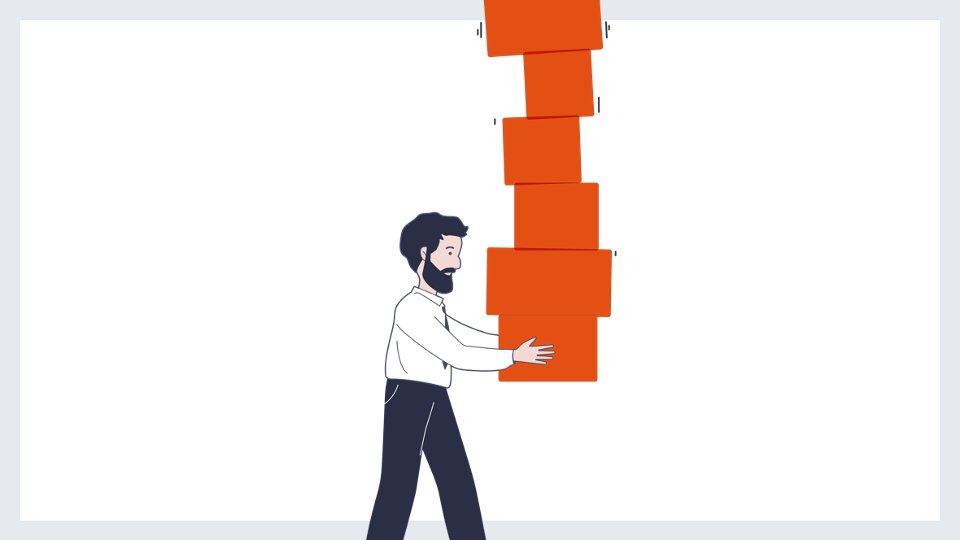
@Barker_J @Mr_Raichura @lucy_crehan These 6 problems have the potential to create an environment in which it is increasingly hard for teachers to flourish.
As they lead to an ever-increasing and eventually untenable remit.
Which has—unsurprisingly—significant consequences...
As they lead to an ever-increasing and eventually untenable remit.
Which has—unsurprisingly—significant consequences...
@Barker_J @Mr_Raichura @lucy_crehan → Professional regret is on the rise… the number of teachers who say they would NOT choose to become a teacher should they have the chance again is steadily increasing.

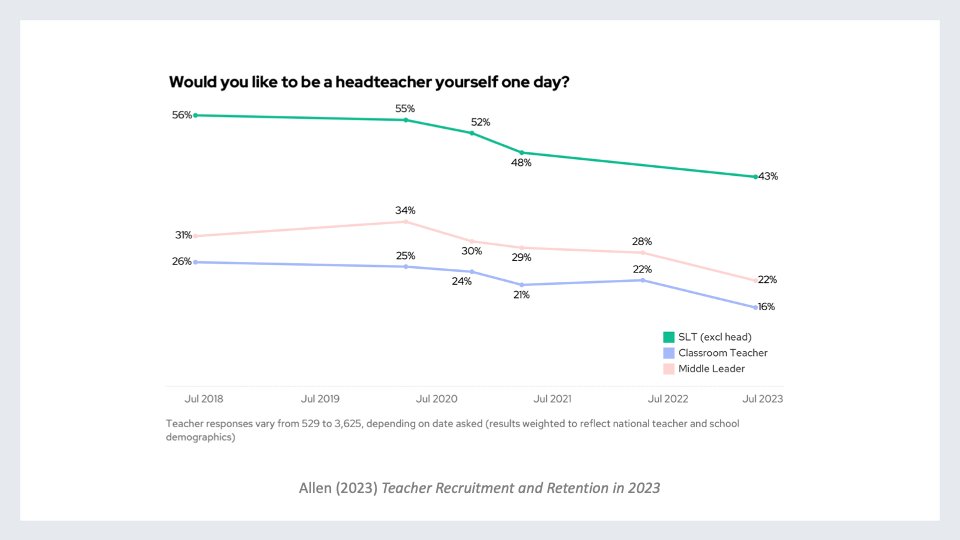
@Barker_J @Mr_Raichura @lucy_crehan → The number of teachers who aspire to be a headteacher is steadily declining.
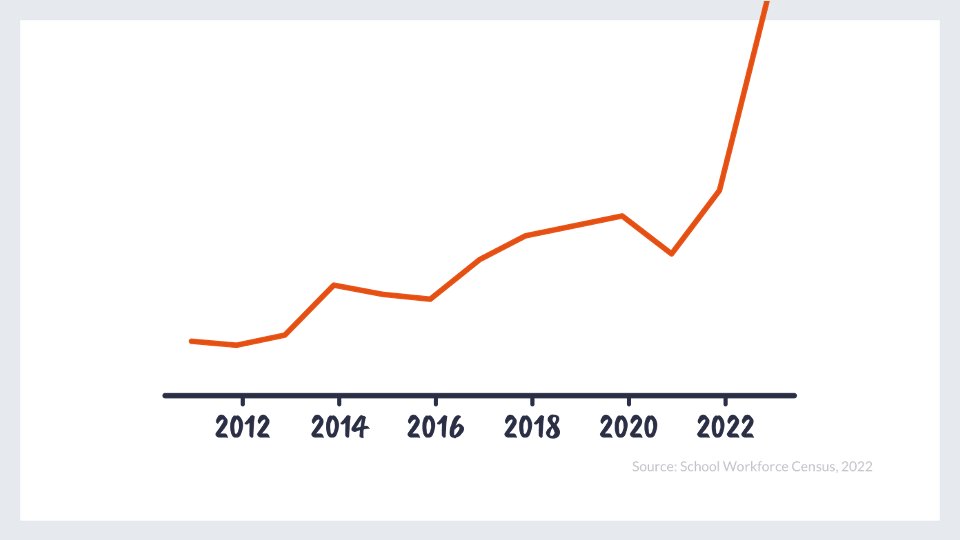
@Barker_J @Mr_Raichura @lucy_crehan → And the number of vacancies for teaching posts is rising sharply.
(this graph is for secondary)
(this graph is for secondary)
@Barker_J @Mr_Raichura @lucy_crehan And... this situation is AUTO-CATALYTIC 💥
The worse things get, the fewer resources we have (specialist staff, per-pupil funding), the worse things get etc.
We could be in the midst of a vicious spiral of declining sustainability.
Left unchecked, this is likely to continue.
The worse things get, the fewer resources we have (specialist staff, per-pupil funding), the worse things get etc.
We could be in the midst of a vicious spiral of declining sustainability.
Left unchecked, this is likely to continue.

@Barker_J @Mr_Raichura @lucy_crehan Okay, that's the depressing bit over. We now have a good sense of the realities of our situation.
So might can we do about it?
If this really is our situation, how might we turn around this death spiral, begin to make teaching more sustainable, and eventually, the BJW?
So might can we do about it?
If this really is our situation, how might we turn around this death spiral, begin to make teaching more sustainable, and eventually, the BJW?
@Barker_J @Mr_Raichura @lucy_crehan Well, the answer is unlikely to be a simple or easy one.
And it will take the collective minds of many folks much smarter than us to crack.
BUT, we've got to start somewhere.
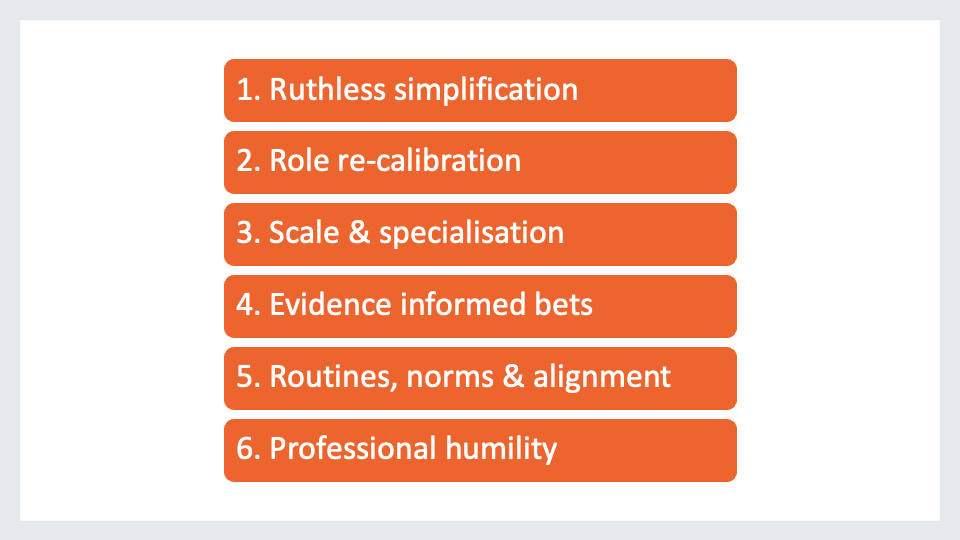
And so here's our starter for 10 (aka our 6 suggested solutions to the sustainability crisis)...
And it will take the collective minds of many folks much smarter than us to crack.
BUT, we've got to start somewhere.
And so here's our starter for 10 (aka our 6 suggested solutions to the sustainability crisis)...
@Barker_J @Mr_Raichura @lucy_crehan 1/ RUTHLESS SIMPLIFICATION
We could probably get better at recognising 'the cost of complexity'.
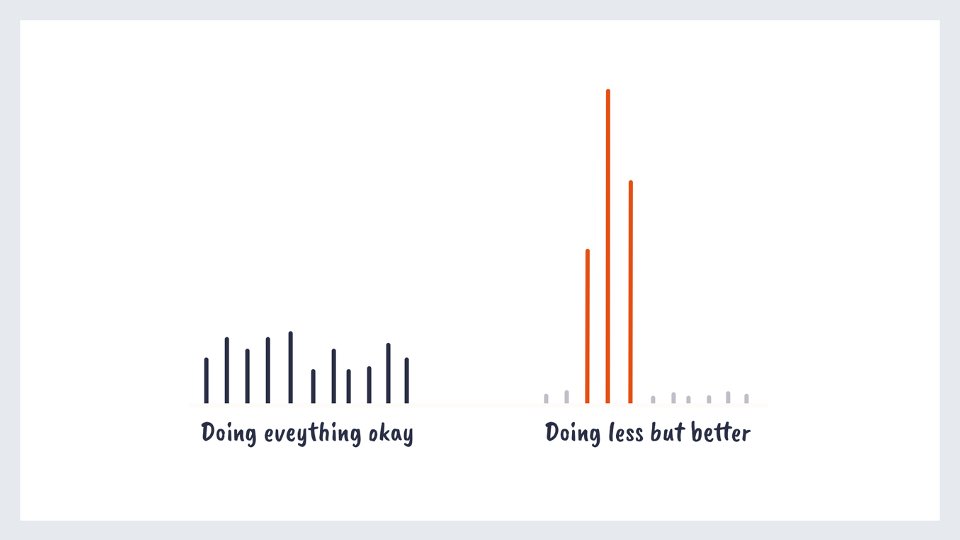
At pushing ourselves to avoid overcomplicating things, and doing less where we can.
Fewer thangs but better.
We could probably get better at recognising 'the cost of complexity'.
At pushing ourselves to avoid overcomplicating things, and doing less where we can.
Fewer thangs but better.
@Barker_J @Mr_Raichura @lucy_crehan Of course, this is NOT easy, because there is pretty much always an argument for the things we are currently doing.
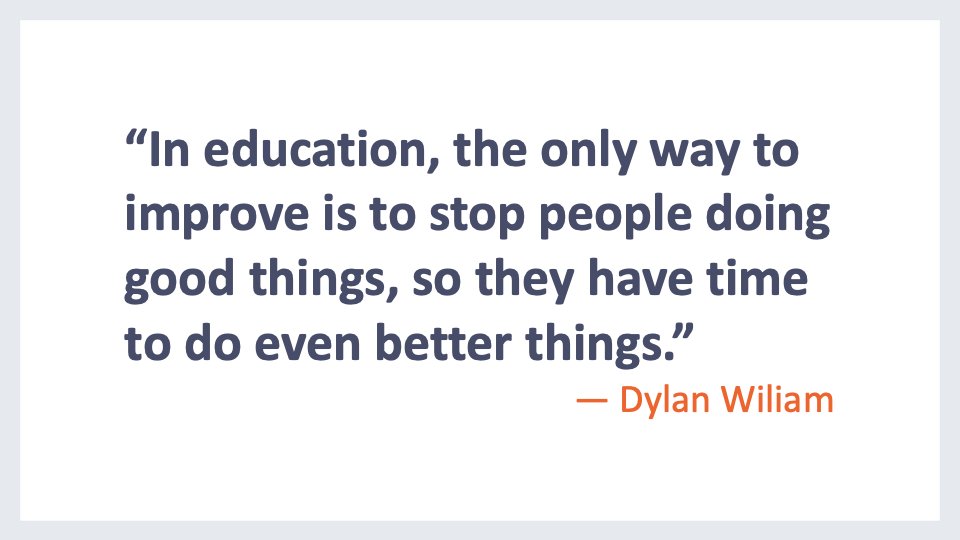
BUT… as a wise man (@dylanwiliam) once said, schools need to get cosy with the concept of opportunity cost.
BUT… as a wise man (@dylanwiliam) once said, schools need to get cosy with the concept of opportunity cost.
@Barker_J @Mr_Raichura @lucy_crehan @dylanwiliam And then, even within those 'fewest things', there may be scope to push for even more efficiency...
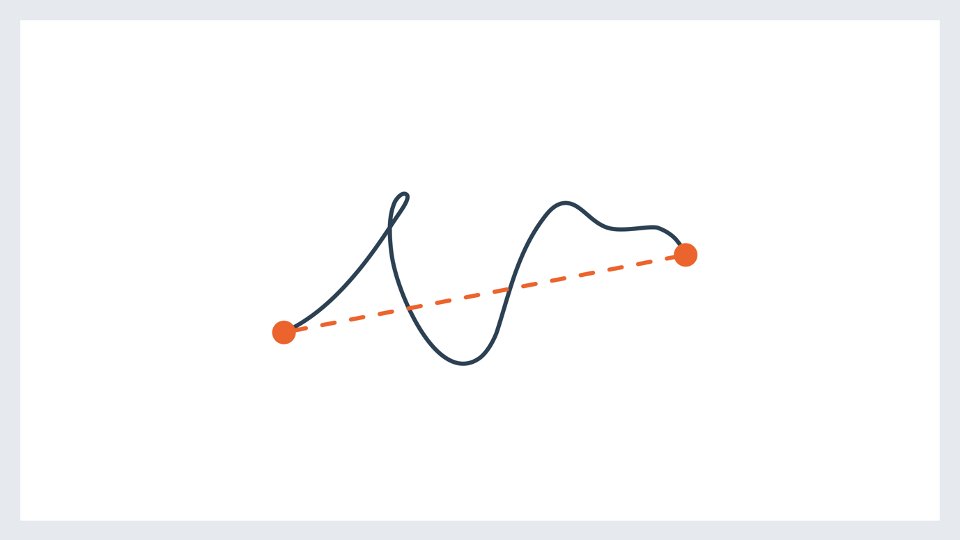
The simplest configuration could well end up often being the best one.
(Aka what @Doug_Lemov calls 'taking the shortest path')
The simplest configuration could well end up often being the best one.
(Aka what @Doug_Lemov calls 'taking the shortest path')
@Barker_J @Mr_Raichura @lucy_crehan @dylanwiliam @Doug_Lemov NOTE
This principle probably applies to the *process* of improvement too.
Change is best made one step at a time.
(because we individuals and organisations have limited change capacity)
This principle probably applies to the *process* of improvement too.
Change is best made one step at a time.
(because we individuals and organisations have limited change capacity)

@Barker_J @Mr_Raichura @lucy_crehan @dylanwiliam @Doug_Lemov 2/ ROLE RECALIBRATION
Alongside this, we may need to re-consider the very nature of what it means to be a teacher.
What the mission and scope of the job should be.
And then codify the sh*t out of this.
(which might well mean letting go of some aspects of our teacher identity)
Alongside this, we may need to re-consider the very nature of what it means to be a teacher.
What the mission and scope of the job should be.
And then codify the sh*t out of this.
(which might well mean letting go of some aspects of our teacher identity)

@Barker_J @Mr_Raichura @lucy_crehan @dylanwiliam @Doug_Lemov 3/ SCALE & SPECIALISATION
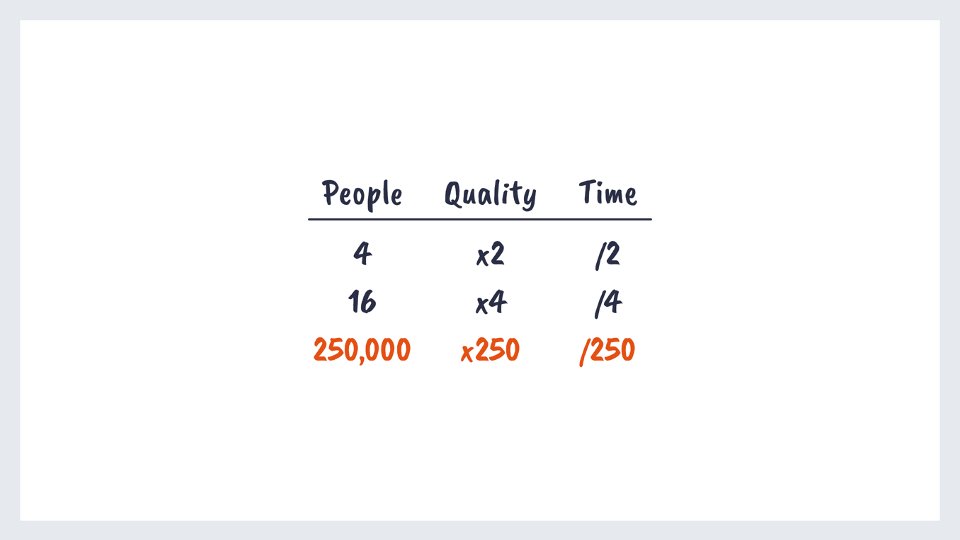
Part of which may mean taking a more collective (vs individualist) approach to increasing effectiveness while reducing workload.
Eg In curriculum design...
→ Having 4 teachers design one lesson each can make the lessons twice as good in half the time
Part of which may mean taking a more collective (vs individualist) approach to increasing effectiveness while reducing workload.
Eg In curriculum design...
→ Having 4 teachers design one lesson each can make the lessons twice as good in half the time

@Barker_J @Mr_Raichura @lucy_crehan @dylanwiliam @Doug_Lemov → Having 16 teachers design one lesson each has the potential to make the lessons x4 as good in ¼ the time
And so on.
And so on.

@Barker_J @Mr_Raichura @lucy_crehan @dylanwiliam @Doug_Lemov Collective planning is on the rise, but we probably still have many teachers mostly planning their own lessons…
Is this the best way (for both students and teachers)?
(we're not suggesting that collective planning is straightforward, only that it's worth exploring)
Is this the best way (for both students and teachers)?
(we're not suggesting that collective planning is straightforward, only that it's worth exploring)
@Barker_J @Mr_Raichura @lucy_crehan @dylanwiliam @Doug_Lemov 4/ EVIDENCE-INFORMED BETS
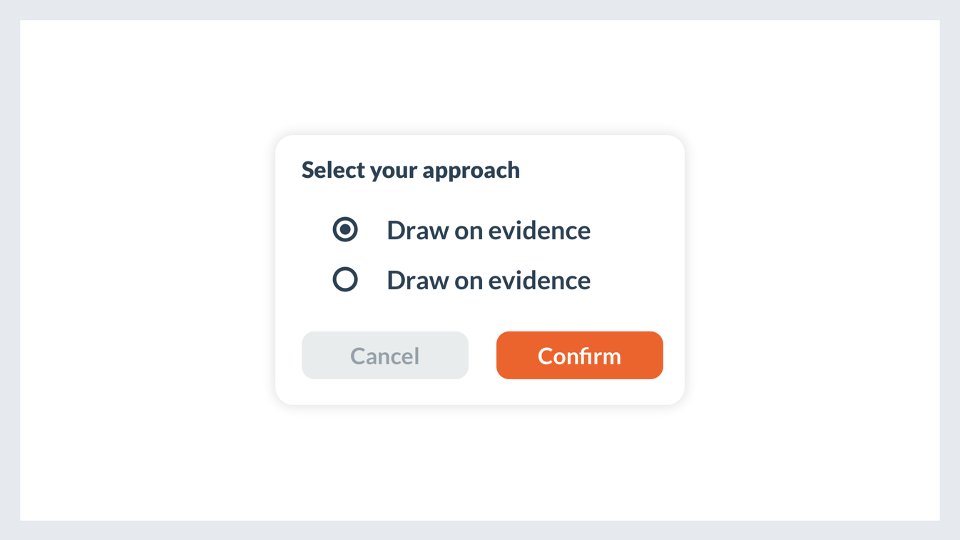
The best way around the fuzzy feedback loop mentioned earlier is to lean harder on research.
Evidence can supercharge our classroom experience.
(even when it doesn't fit with our own gut feelings about how teaching & learning *should* work)
The best way around the fuzzy feedback loop mentioned earlier is to lean harder on research.
Evidence can supercharge our classroom experience.
(even when it doesn't fit with our own gut feelings about how teaching & learning *should* work)
@Barker_J @Mr_Raichura @lucy_crehan @dylanwiliam @Doug_Lemov 5/ ROUTINES, NORMS & ALIGNMENT
Routines enable us to think less about those things we repeatedly do.
As such, they enable us to redeploy our precious student attention, less towards the how, and more towards the what of their learning.
(towards the content of our curricula)
Routines enable us to think less about those things we repeatedly do.
As such, they enable us to redeploy our precious student attention, less towards the how, and more towards the what of their learning.
(towards the content of our curricula)
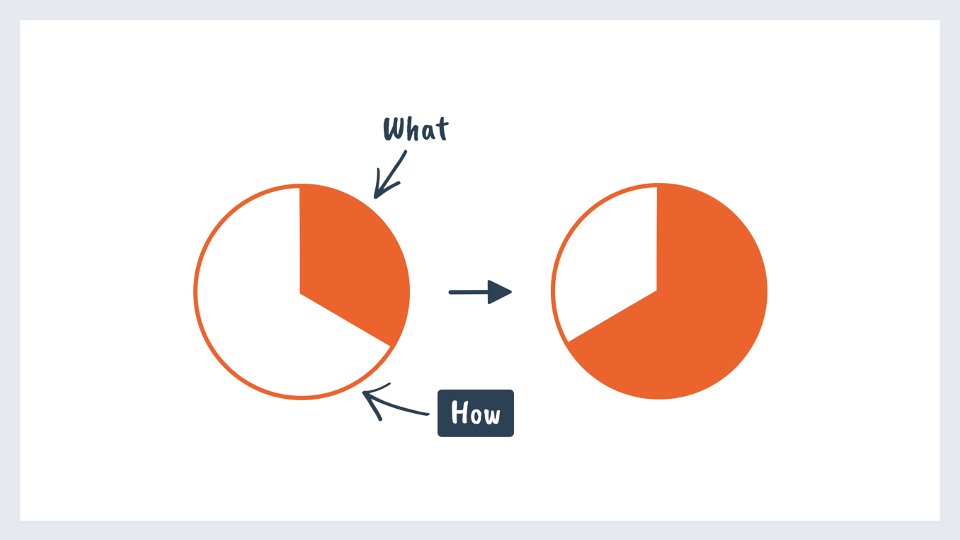
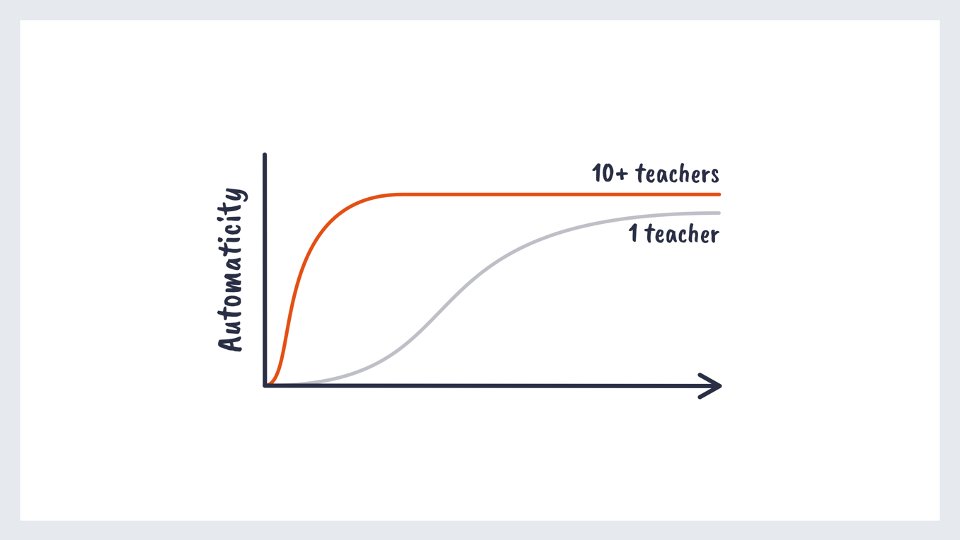
@Barker_J @Mr_Raichura @lucy_crehan @dylanwiliam @Doug_Lemov When multiple teachers use the same routines (cues + sequences of actions) across different classrooms, the effect is even stronger and achieved more quickly.
This is one of the reasons why alignment is such a superpower in school.
This is one of the reasons why alignment is such a superpower in school.
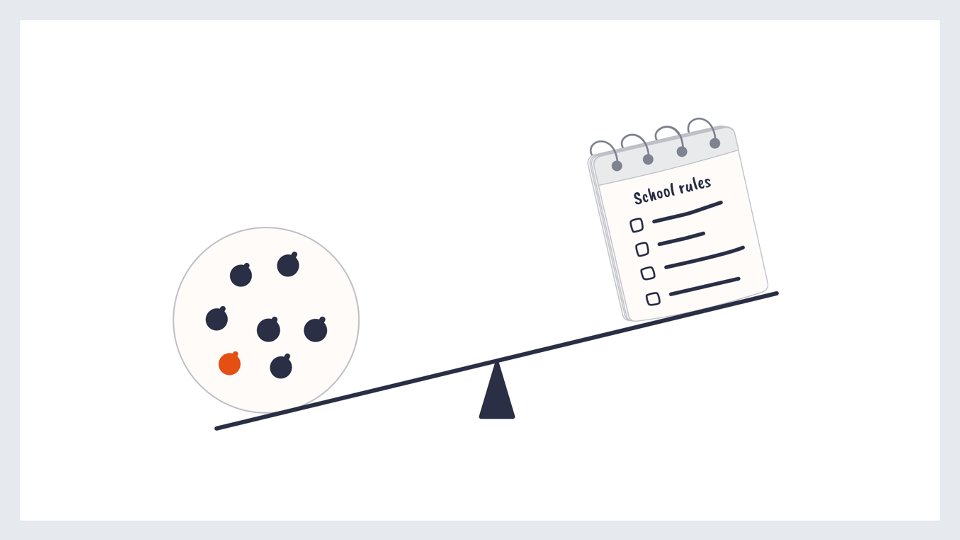
@Barker_J @Mr_Raichura @lucy_crehan @dylanwiliam @Doug_Lemov Norms are similarly powerful.
We (and our students) are influenced by the behaviour and attitudes of those around us, way more than we tend to think.
Norms are so powerful they often override more formal school policies or rules.
(especially when we have 100% adoption)
We (and our students) are influenced by the behaviour and attitudes of those around us, way more than we tend to think.
Norms are so powerful they often override more formal school policies or rules.
(especially when we have 100% adoption)
@Barker_J @Mr_Raichura @lucy_crehan @dylanwiliam @Doug_Lemov NOTE
The norms of adjacent groups bleed into and interfere with each other.
Which means that—just as with routines—when teachers are aligned around norms, we see a multiplier effect.
The norms of adjacent groups bleed into and interfere with each other.
Which means that—just as with routines—when teachers are aligned around norms, we see a multiplier effect.

@Barker_J @Mr_Raichura @lucy_crehan @dylanwiliam @Doug_Lemov 6/ PROFESSIONAL HUMILITY
And finally, some of this may well require new forms of humility, to accept that...
→ We can't do everything
→ Our gut feelings are sometimes wrong
→ We may need to sacrifice some of our autonomy for the greater good (of our students & colleagues)
And finally, some of this may well require new forms of humility, to accept that...
→ We can't do everything
→ Our gut feelings are sometimes wrong
→ We may need to sacrifice some of our autonomy for the greater good (of our students & colleagues)
@Barker_J @Mr_Raichura @lucy_crehan @dylanwiliam @Doug_Lemov However, we may also need help from the wider system to:
→ Generate sufficient funding & teacher supply
→ Provide those services that schools are currently offering that are beyond their remit
→ Reform accountability to consider inputs (teacher hours worked) alongside outputs
→ Generate sufficient funding & teacher supply
→ Provide those services that schools are currently offering that are beyond their remit
→ Reform accountability to consider inputs (teacher hours worked) alongside outputs

@Barker_J @Mr_Raichura @lucy_crehan @dylanwiliam @Doug_Lemov If we do all these things, might we help create an environment where teachers are doing less but better?
If so, the job of teaching and schooling might begin to become less untenable, and eventually, the BJW 🥳
(although this kind of shift doesn't happen overnight)
If so, the job of teaching and schooling might begin to become less untenable, and eventually, the BJW 🥳
(although this kind of shift doesn't happen overnight)
@Barker_J @Mr_Raichura @lucy_crehan @dylanwiliam @Doug_Lemov IN SUMMARY
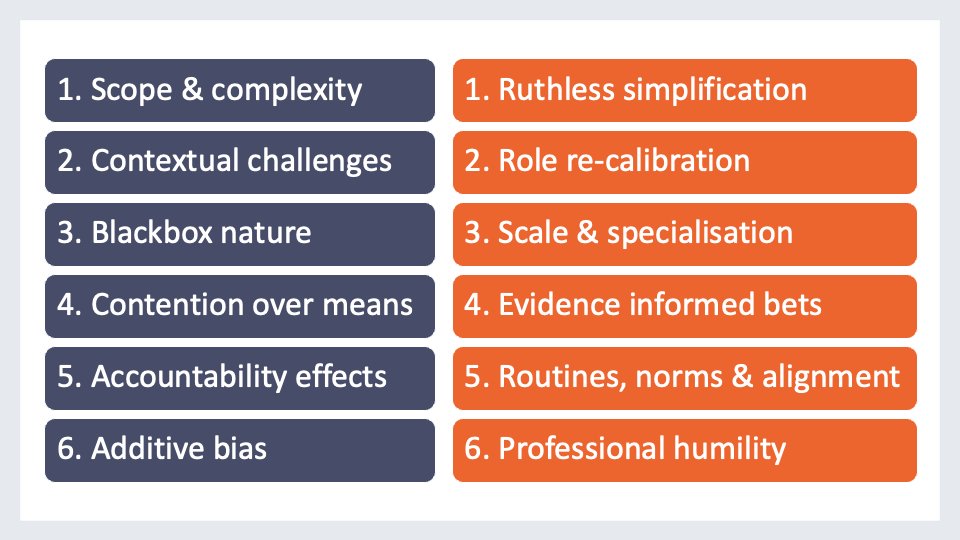
Despite the amazing work of schools, there are the 6 things which may be making teaching less tenable over time.
And there are 6 things schools can maybe do to reverse this trend.
(this is all very tentative—constructive feedback would be hugely appreciated)
Despite the amazing work of schools, there are the 6 things which may be making teaching less tenable over time.
And there are 6 things schools can maybe do to reverse this trend.
(this is all very tentative—constructive feedback would be hugely appreciated)
@Barker_J @Mr_Raichura @lucy_crehan @dylanwiliam @Doug_Lemov Education is one of most precious parts of modern society… and it's arguably more important than *ever* before.
Making teaching sustainable, and eventually the BJW, may well be one of the core challenges of our era.
Making teaching sustainable, and eventually the BJW, may well be one of the core challenges of our era.
@Barker_J @Mr_Raichura @lucy_crehan @dylanwiliam @Doug_Lemov Now, there's lots of top work going on around the sector chipping away at this problem.
@Steplab_co is a great example... an in-house PD system that enables schools to build powerful routines, norms & alignment (and much more).
Learn more → steplab.co
@Steplab_co is a great example... an in-house PD system that enables schools to build powerful routines, norms & alignment (and much more).
Learn more → steplab.co


@Barker_J @Mr_Raichura @lucy_crehan @dylanwiliam @Doug_Lemov @Steplab_co There are also increasing numbers of schools and trusts who are thinking hard about these things in sophisticated ways.
@OrmistonAcads is a great example... with super smart folks like @TomRees_77 & @Barker_J at the helm, we're sure to see some interesting stuff happening.
@OrmistonAcads is a great example... with super smart folks like @TomRees_77 & @Barker_J at the helm, we're sure to see some interesting stuff happening.
@Barker_J @Mr_Raichura @lucy_crehan @dylanwiliam @Doug_Lemov @Steplab_co @OrmistonAcads @TomRees_77 That's enough for now.
High 5s for all of you who read the whole thing! Huge thanks to @EducationFest for hosting us and all the other fab convos going on.
And to all of you out there who are into this stuff... we'd honestly *LOVE* to hear what you think.
(be ruthless)
👊
High 5s for all of you who read the whole thing! Huge thanks to @EducationFest for hosting us and all the other fab convos going on.
And to all of you out there who are into this stuff... we'd honestly *LOVE* to hear what you think.
(be ruthless)
👊
Loading suggestions...