

In Response to the "Pedophilia" Argument Aganist Islam
-----------------------------------------
Thread...🧵
-----------------------------------------
Thread...🧵
Arguably, one of the most popular objections against Islam in the current day is the idea that Islam promotes pedophilia, which is popularity understood as the act of engaging in sexual intimacy with a person younger than 18 years of age.
Critics use two main points to argue for this point:
1) The Prophet's marriage to our mother Aisha at 6 and consummation at 9 or 10.
2) Verse 65:4 of the Holy Quran
1) The Prophet's marriage to our mother Aisha at 6 and consummation at 9 or 10.
2) Verse 65:4 of the Holy Quran
In this thread, we will give a reasonable moral defense of Islam regarding this issue. However, we must remind ourselves before we delve into this issue that today, in the 21st century, such a topic has become very taboo to even discuss or talk about.
Therefore, we must be aware of our cultural biases and try our best to set them aside to understand and discuss this issue logically and coherently. Inshallah, let's begin.
1) The Prophet's Marriage to Aisha
-----------------------------------------
Arguably, this is the most important and famous issue that should be dealt with. According to the orthodox opinion of Islamic historians and muhadithen, Prophet Mohammed marriaged Aisha at 6 in contract.
-----------------------------------------
Arguably, this is the most important and famous issue that should be dealt with. According to the orthodox opinion of Islamic historians and muhadithen, Prophet Mohammed marriaged Aisha at 6 in contract.
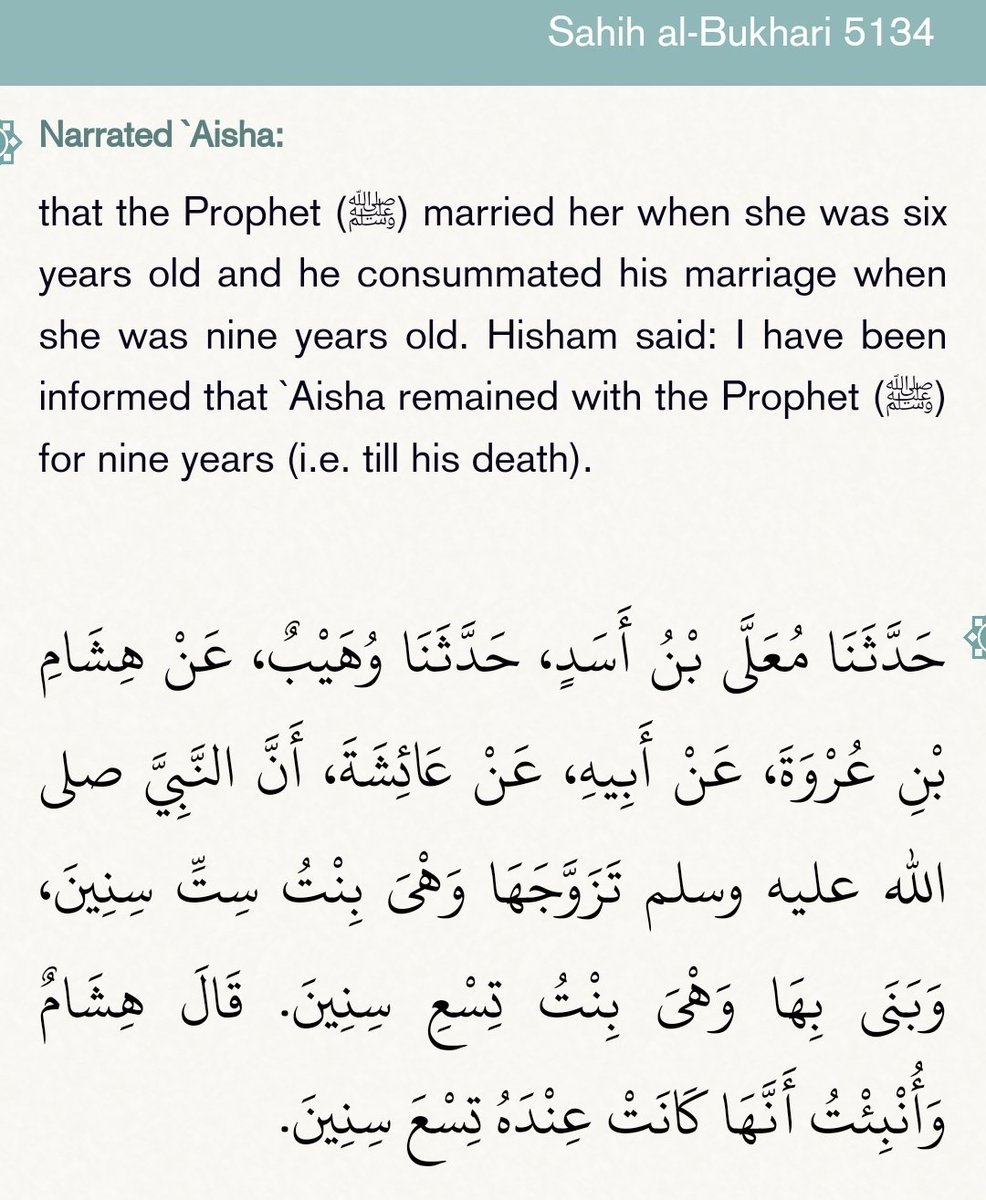
However, the actual consummation of the marriage happened at 9 or 10 years of age. With that being said, critics say that this is a completely immoral action from Prophet Mohammad and is evidence against Islam. To answer this, we must ask: What makes such an action immoral?
Though this seems like a question with a very obvious answer, we still must answer it. The answer boils down to two points:
1) Minors can not consent to such relationships, making them victims of statutory rape.
2) Such relationships result in serious physical or mental harm.
1) Minors can not consent to such relationships, making them victims of statutory rape.
2) Such relationships result in serious physical or mental harm.
Therefore, any relationship that negates these two points becomes, logically, unfit to be called pedophilia or immoral in this issue. We can logically argue that Aisha was not a victim of either of these two issues.
Firstly, the issue of physical and mental harm couldn't be true for Aisha since we have truly no evidence of either of them in our historical tradition. All scientific studies discussing such marriages talk about the averages or the norms, which can definitely have outliers.
Therefore, we can say that Aisha was a special case where such a marriage was not only devoid of serious harm that is unique to such a marriage compared to normal marriages but also was extremely happy and proud of such a relationship. We see countless evidence of this in hadith.
We also have to remember that the man she was married to was the Prophet of God that has access to the revelation of the Omniscient God. We have evidence that God revealed to the prophet that such a marriage is blessed.
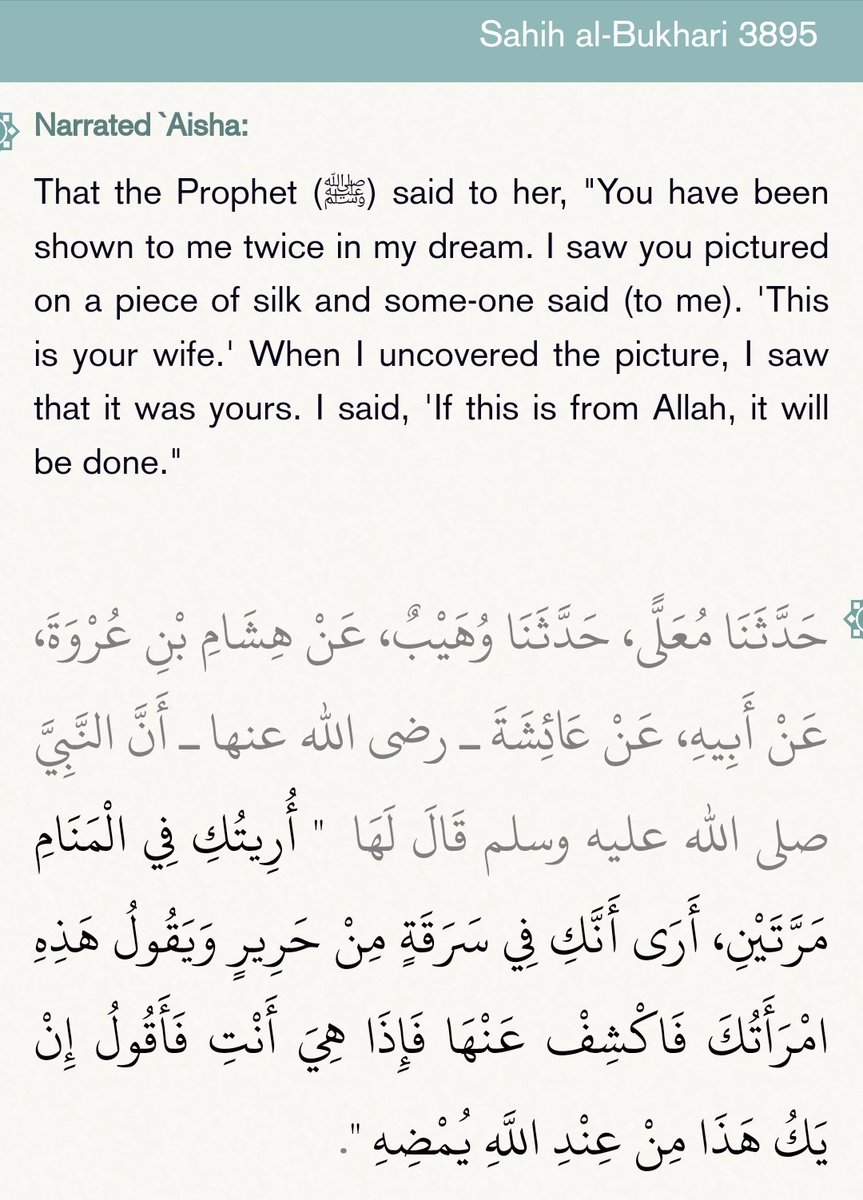
Therefore, God revealed to the Prophet that he could marry her due to his knowledge of the future that such a marriage would be a blessing and a good to both of them and would not be harmful, which is proven to us by the historical evidence of the hadith tradition.
Secondly, the issue of statutory rape wouldn't really apply because under the major ethical theory of the West (Utilitarianism), what makes it wrong is that the minor person would be most probably a victim of physical/mental harm, which we established it didn't apply to Aisha.
This is, of course, not a defense of statutory rape since I am not convinced it should even be labeled as rape. When we say rape, we have a mental image of a man pinning down a screaming woman and violating her. Using the same word in this context is a false equivalence.
When looking at the hadith tradition, we see that Aisha didn't resist at all going to the Prophet's house and living with him. Therefore, it's evident she provided,at least, assent.
Note: Multiple Muslim thinkers have argued that Aisha was able to provide complete consent.
Note: Multiple Muslim thinkers have argued that Aisha was able to provide complete consent.
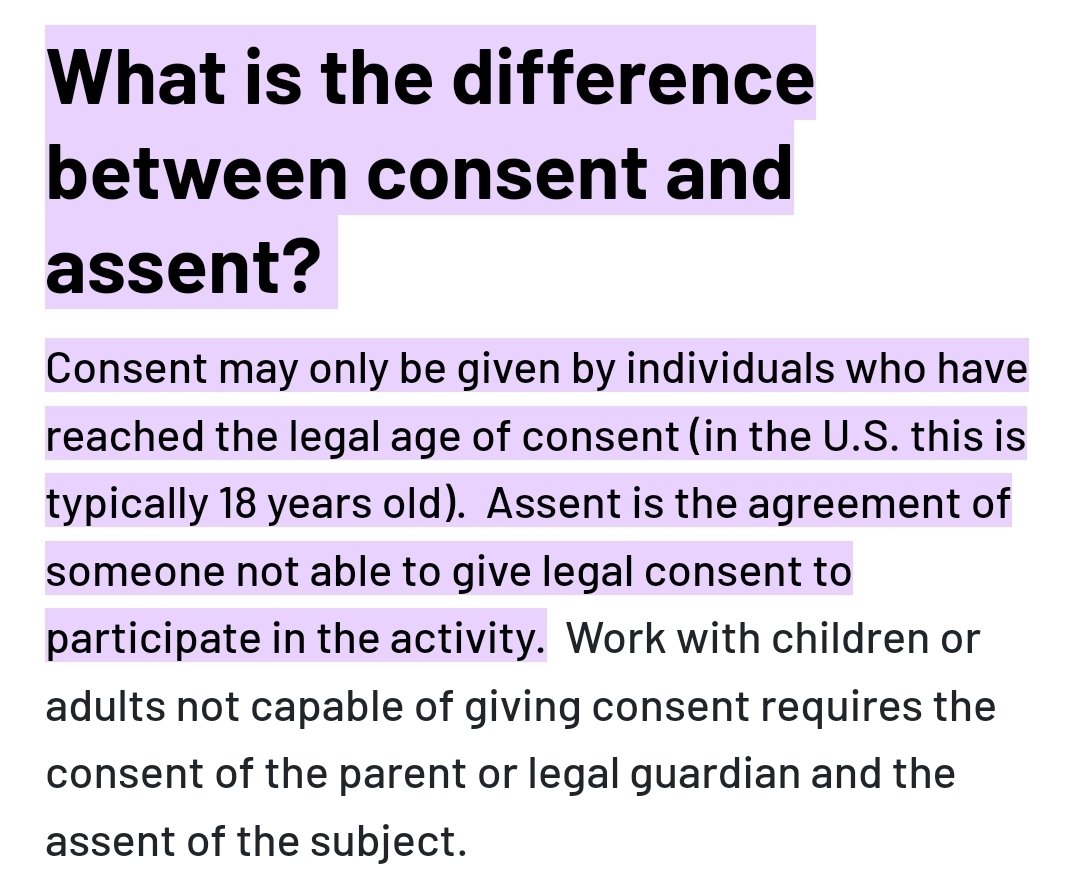

Now, one could argue that the marriage to Aisha should not have only been valid with assent and should have been valid with complete consent at 18 to 21. However, we can argue using the previous point of the Omniscient God’s revelation to Prophet Mohammed that he knew...
Aisha would have given consent if she was 18 to 21 years of age.
youtu.be
In this video at 0:44, Inspiringphilosophy correctly points out that Mary was not "raped" by God even if not explicitly given the choice to not be pregnant with the baby Jesus.
youtu.be
In this video at 0:44, Inspiringphilosophy correctly points out that Mary was not "raped" by God even if not explicitly given the choice to not be pregnant with the baby Jesus.
This is due to a newer, more refined, and logical understanding of Free Will. The same can be said with Aisha. The critic claims the immorality of the marriage due to the inability of Aisha to give full consent and could only give assent, which is not enough.
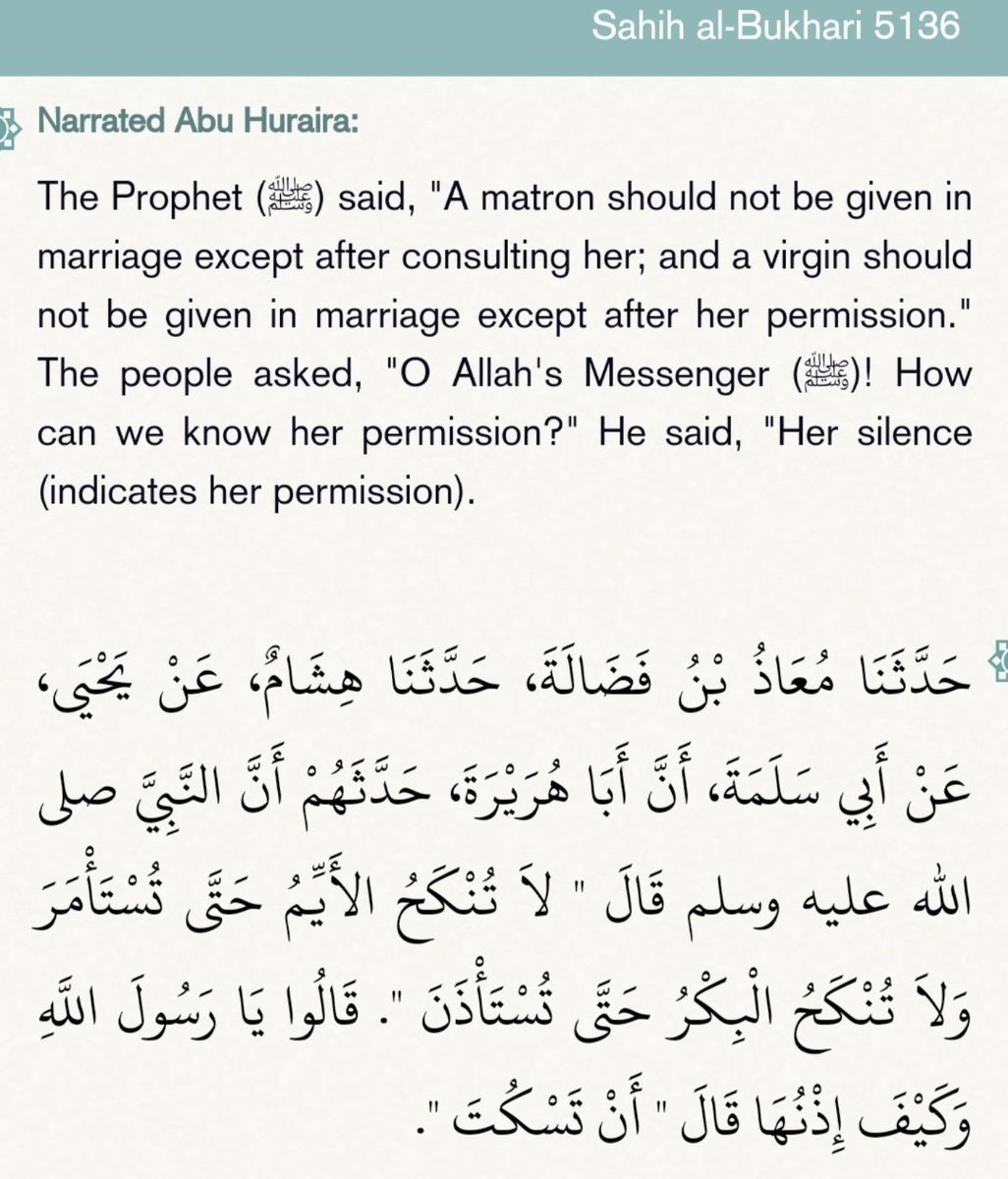
We argue that it could be the case that God knew that if she was 18, she would give consent and, therefore, assent would have been enough in this specific situation. If one questions whether the God of Islam takes agreement to marriage in Islam seriously, below is the evidence.
It is important to point out that in specific and highly specilized cases, God could command something that normally would not be allowed for legitimate reasons. For example, Khidr was commanded in the Quran to kill a boy because, in the future, he would be a criminal.
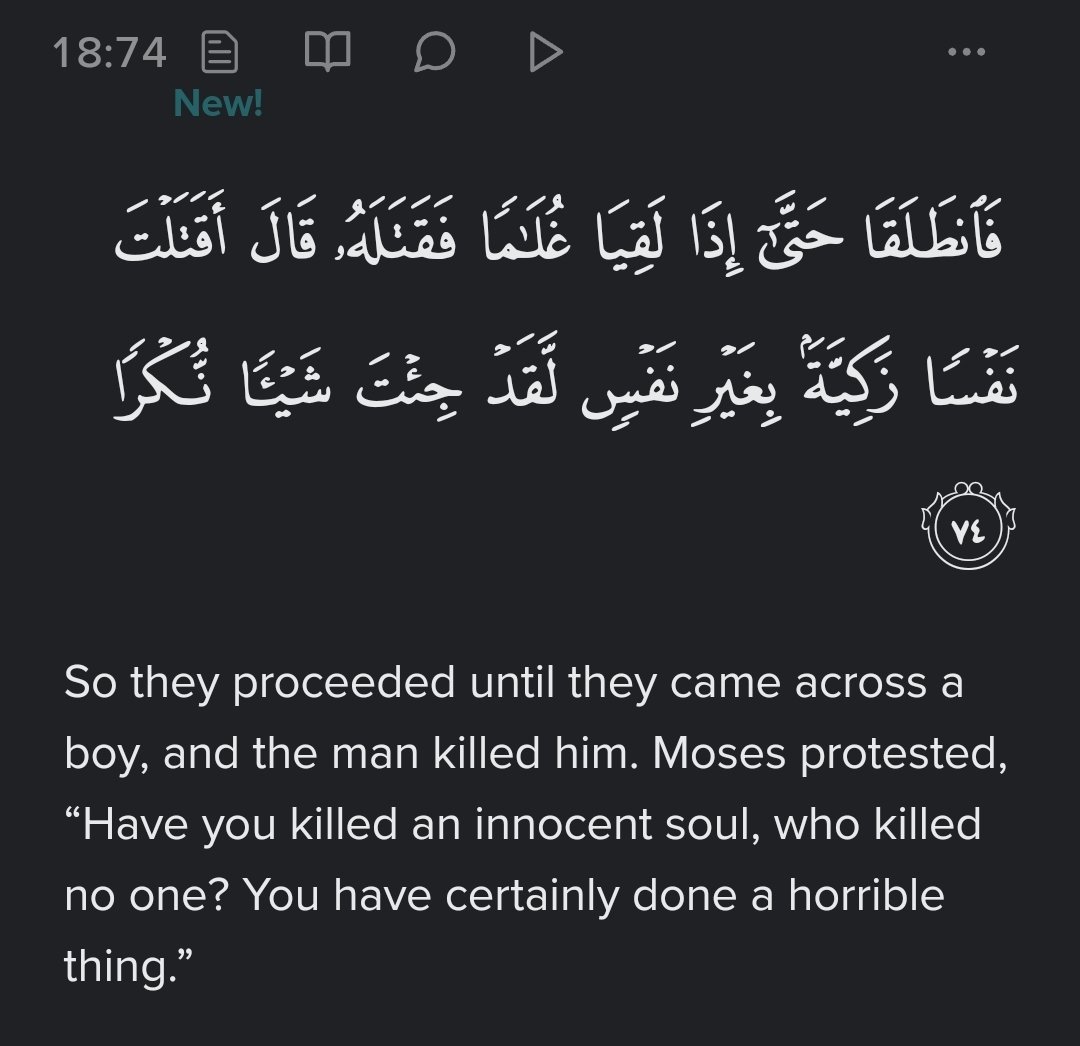
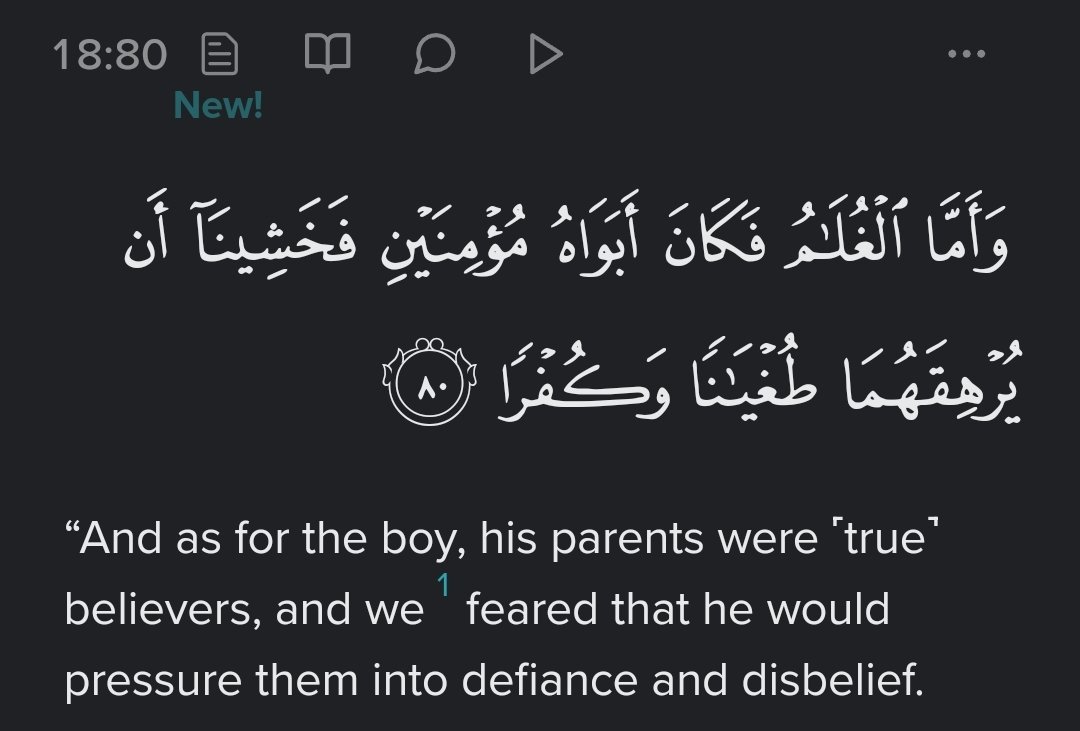
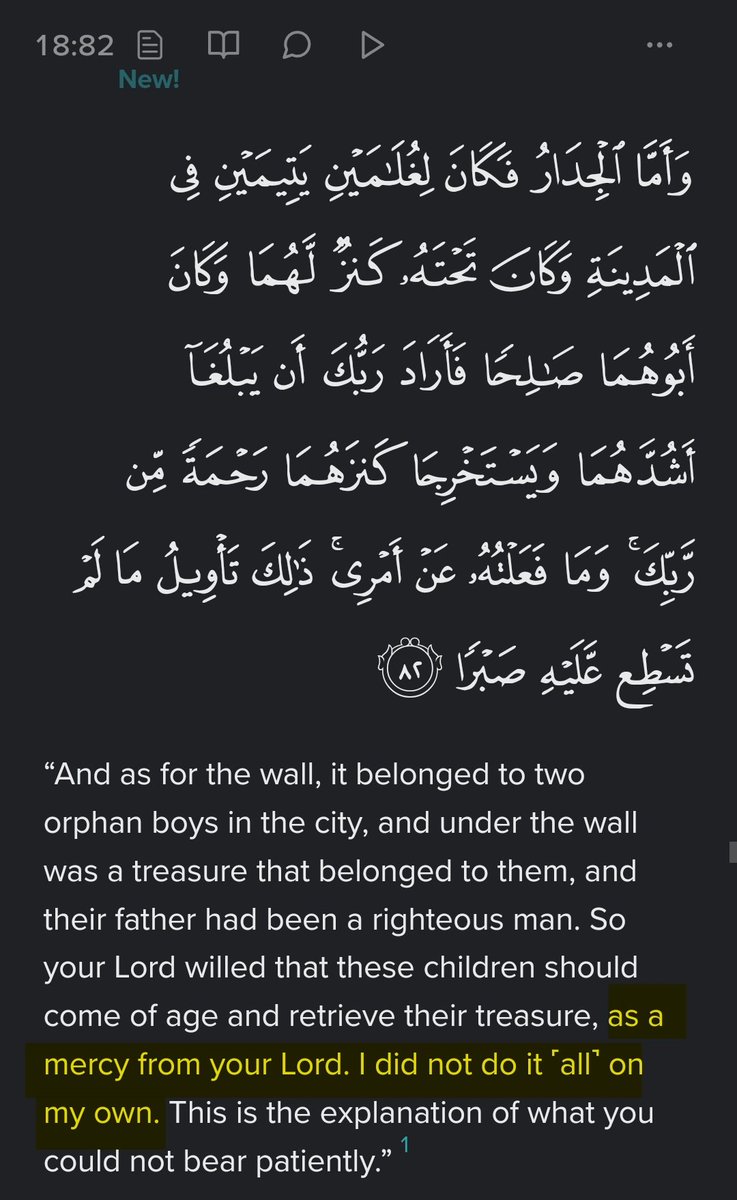
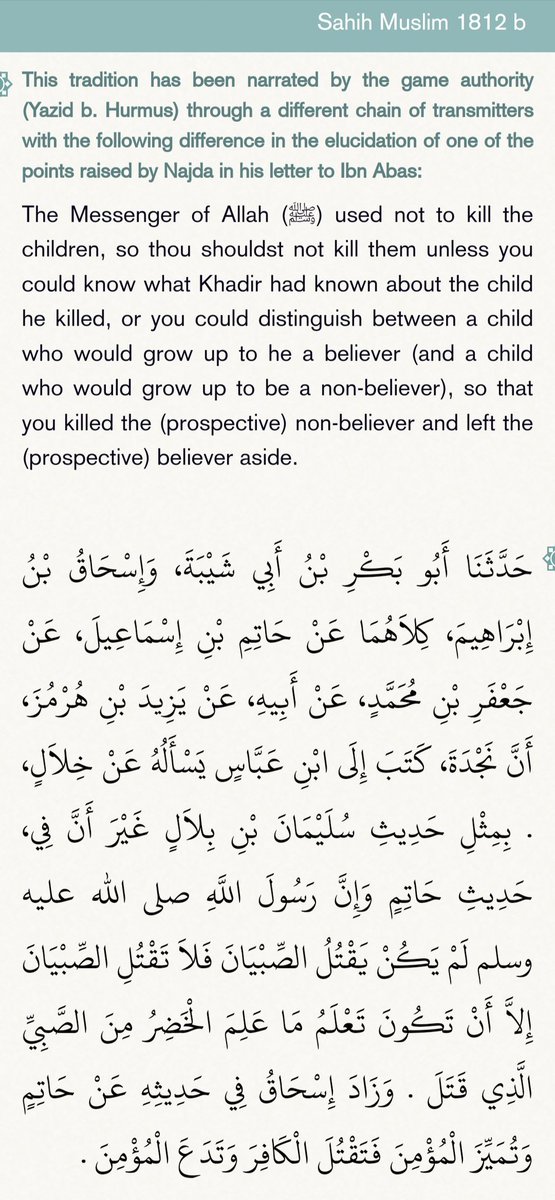
In fact, that's the whole point of the story of Khidr and Moses, which is that there are some things that only God could do that we can't because of his omniscience which he revealed to Khidr. Another example is that the Prophet was not allowed to remarry any woman, while we can.
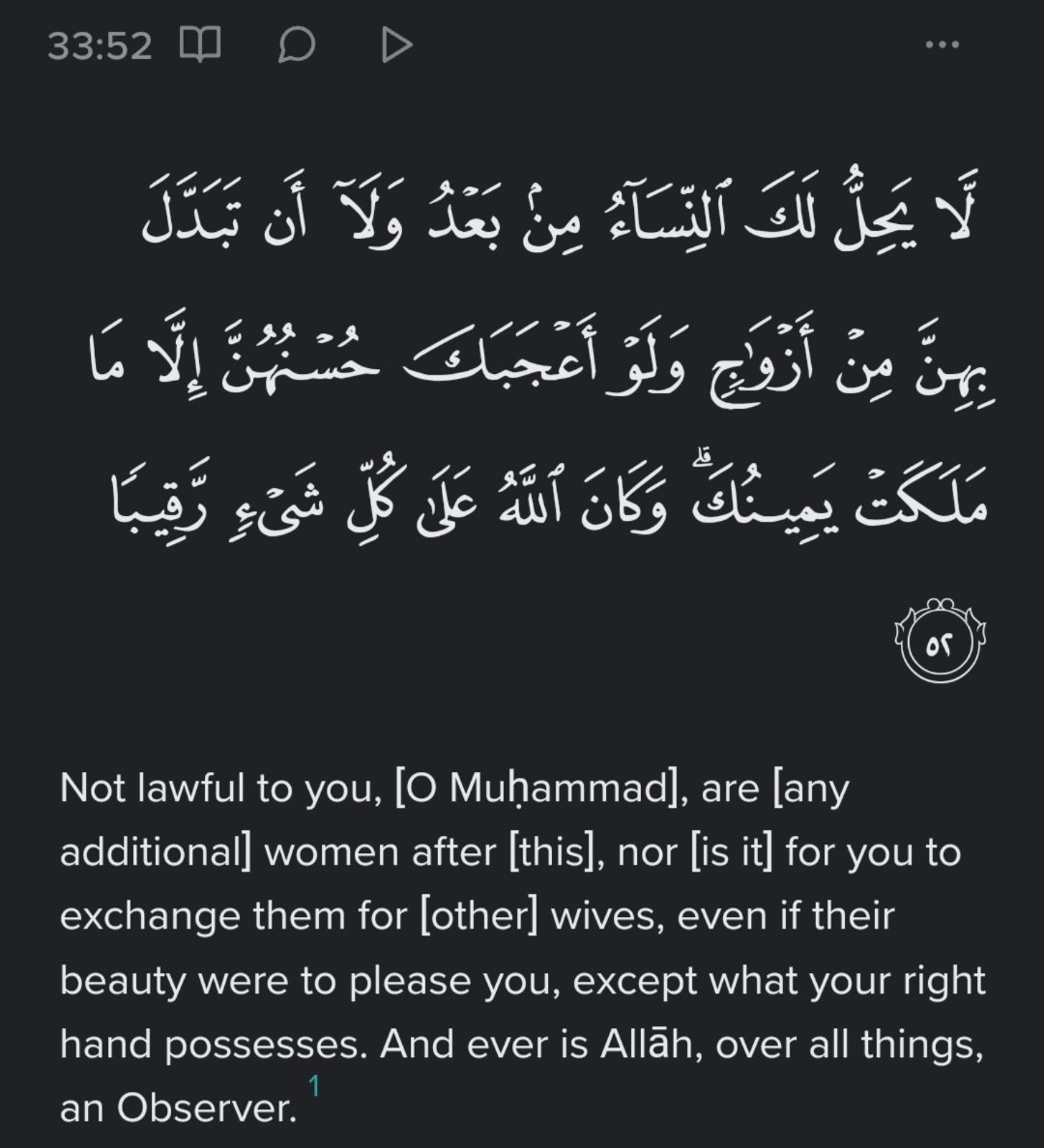
Therefore, we can argue that the Prophet's marriage to Aisha was a special case for them that does not need to be replicated nor used in Islamic Jurisprudence.
Now, one can argue that since Muslims believe that Prophet Mohammed is the archetype of what a good man ought to be, muslims should follow him even in his narriage to Aisha at a young age. This, however, is an incorrect understanding of jurisprudence and of the...
Prophet's archetypal nature. As we provide with Quran 33:52, not everything the Prophet was instructed to do is obligitory for us. Other than that, he is an archetype. Therefore, we can construct a reasonable jurisprudenctial opinion on the age of marriage that applies to us all.
There are two principles that any Islamic legal system has to ensure the achievement of in the construction of any law regarding the age of marriage universally or individually. These are:
1) The ability to give an agreement to enter the marriage.
2) The lack of serious harm.
1) The ability to give an agreement to enter the marriage.
2) The lack of serious harm.
The evidence of these two principles are the God-given rights that women have in Islam that these two hadiths teach:
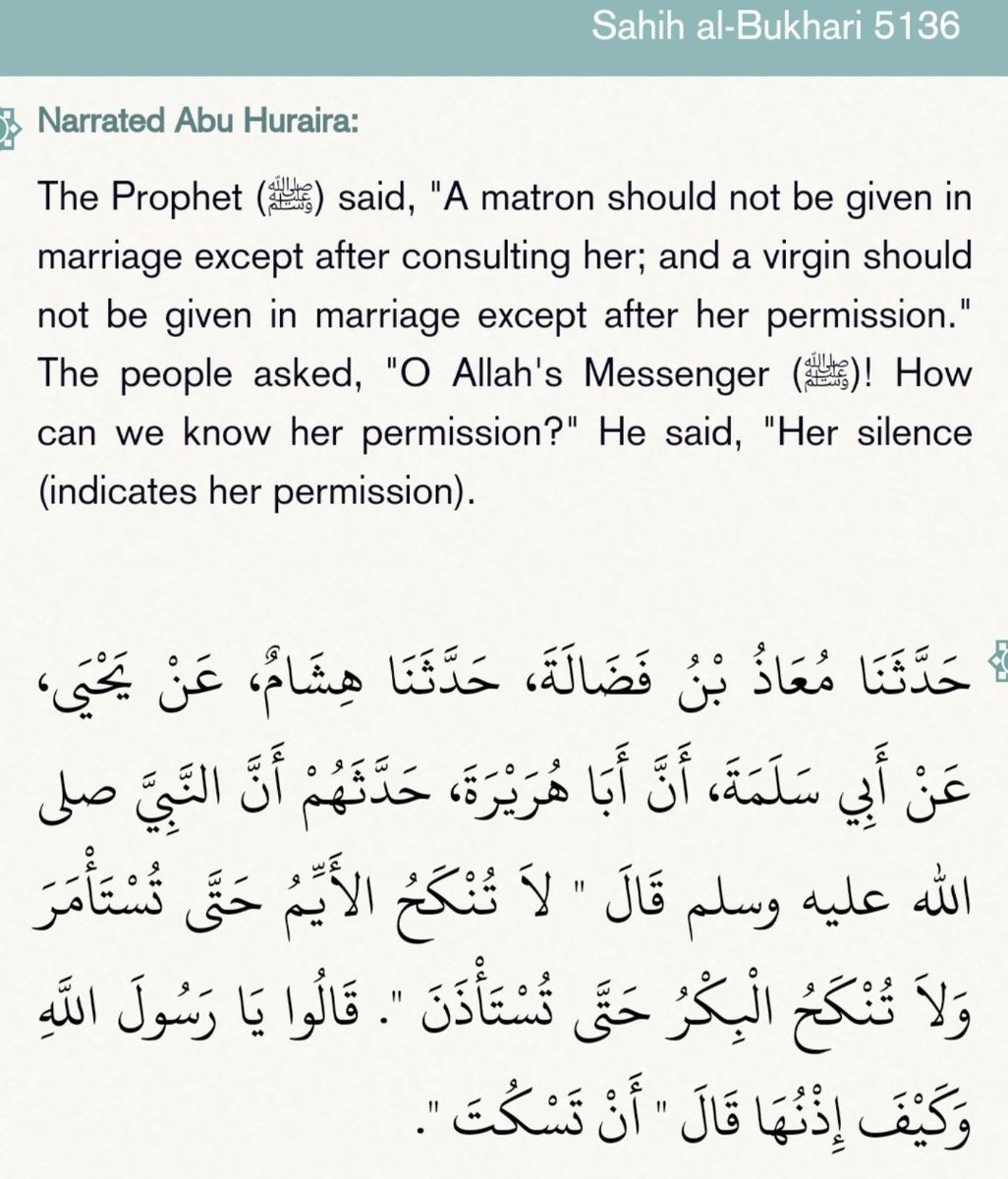
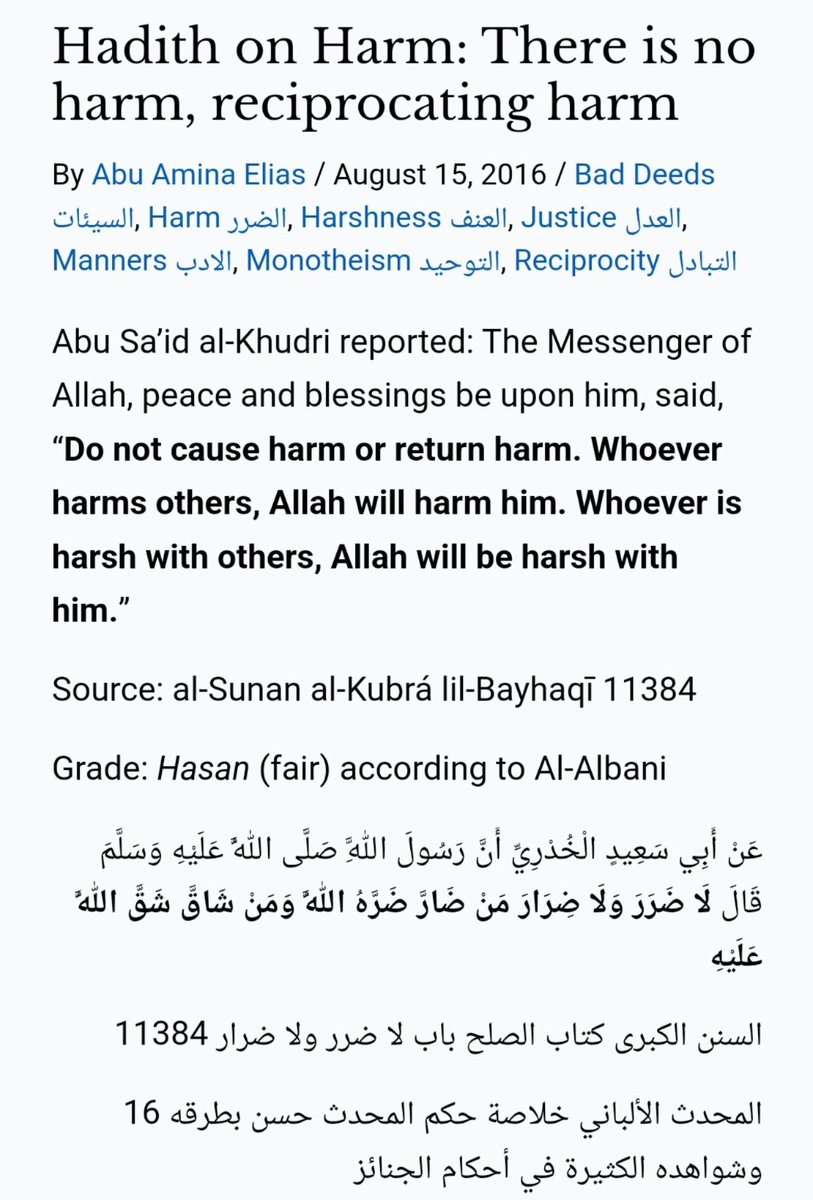
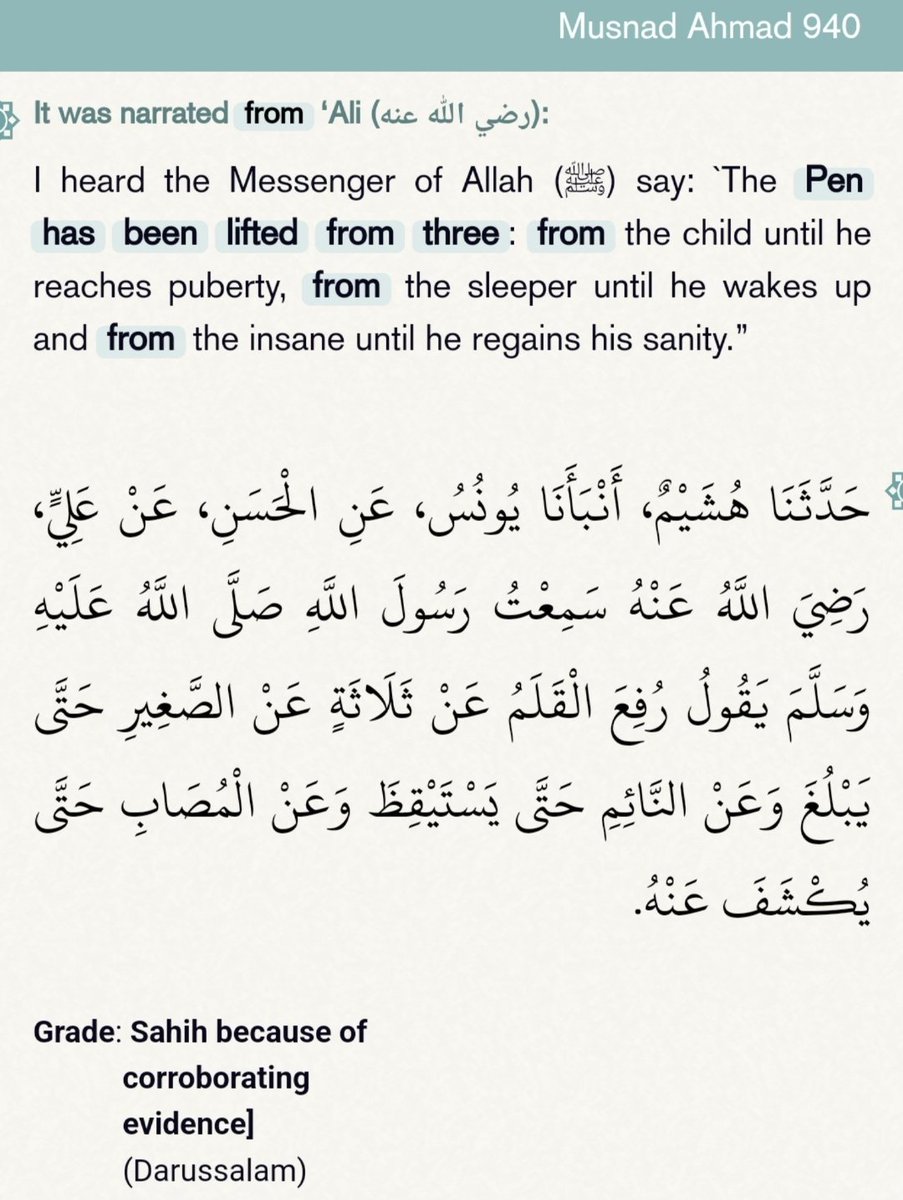
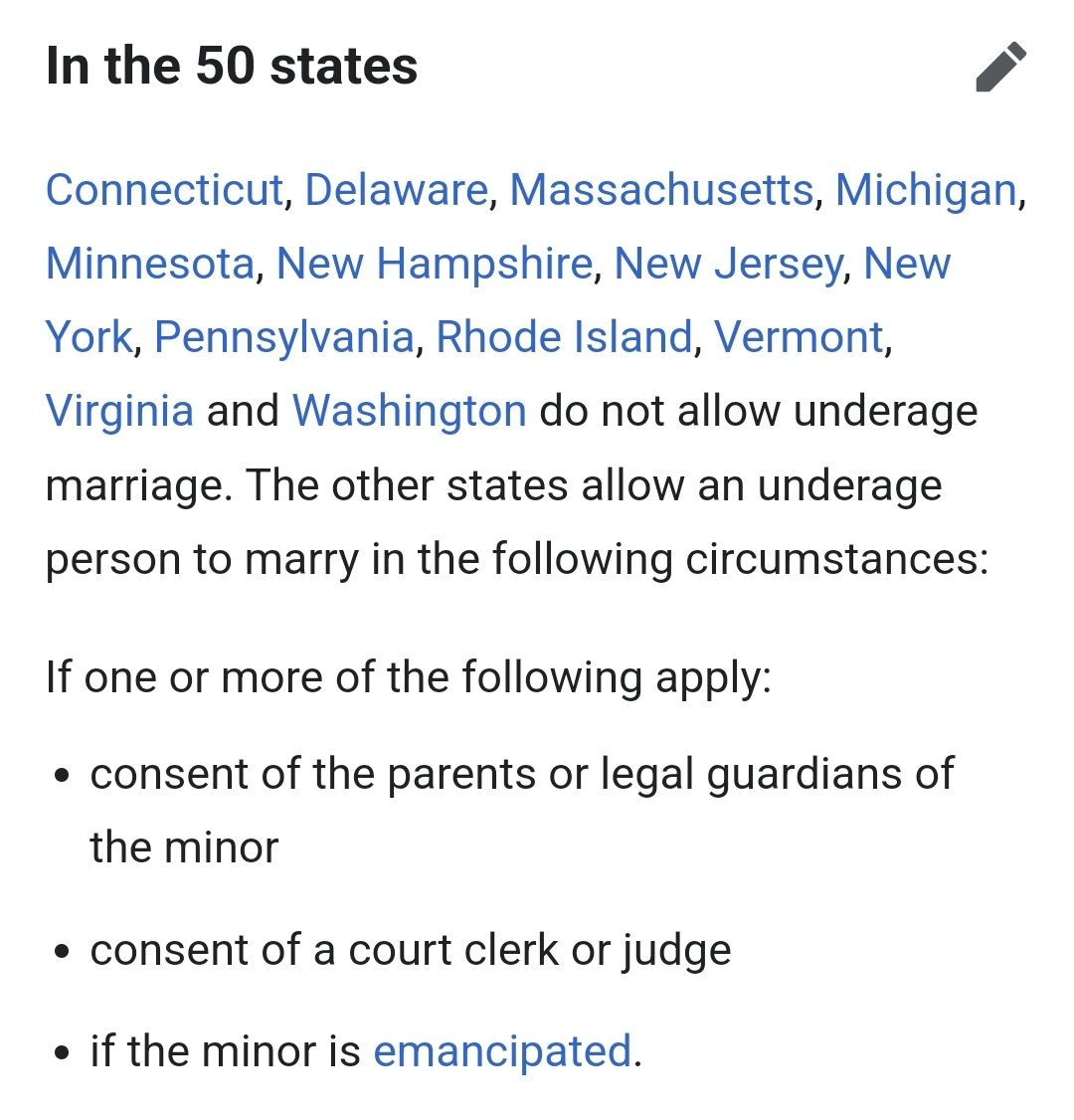
Therefore, the Western critical man can not object to these principles since they are the same principle he uses when establishing and discussing age of marriage laws.
2) Quran 65:4 allows Pedophilia
-----------------------------------------
This verse has unfortunately been misunderstood by critics. The alledgedly problematic part of this verse is that it allows the divorce of a girl that has not menstruated, proving the permission...
-----------------------------------------
This verse has unfortunately been misunderstood by critics. The alledgedly problematic part of this verse is that it allows the divorce of a girl that has not menstruated, proving the permission...
to marry pre-pubescent girls. This, of course, assumes that the only glfemales that do not menstruate are pre-pubescents. That is, however, false. It is known that there exists a disease called "Primary Amenorrhea," where a mature female has never had her first period.
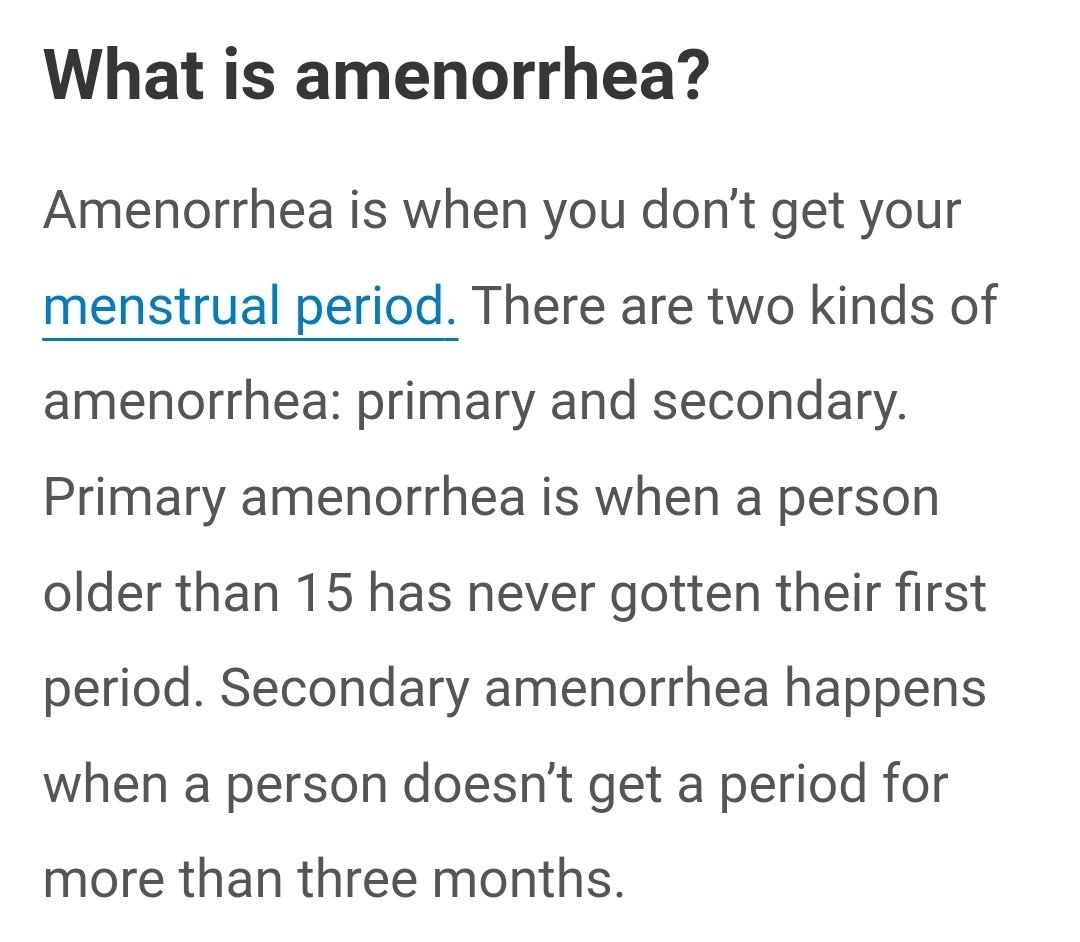
The critic may claim that we have no explicit evidence that this is what the verse talks about, which is technically true. However, we can argue that the option of pre-pubescents is off the table here due to the previous evidence from the hadiths that we provided...
as the principles that influence the creation of an Islamic Nation's age of marriage laws, making primary amenorrhea that logical and probable object of disscussion of the verse in question.
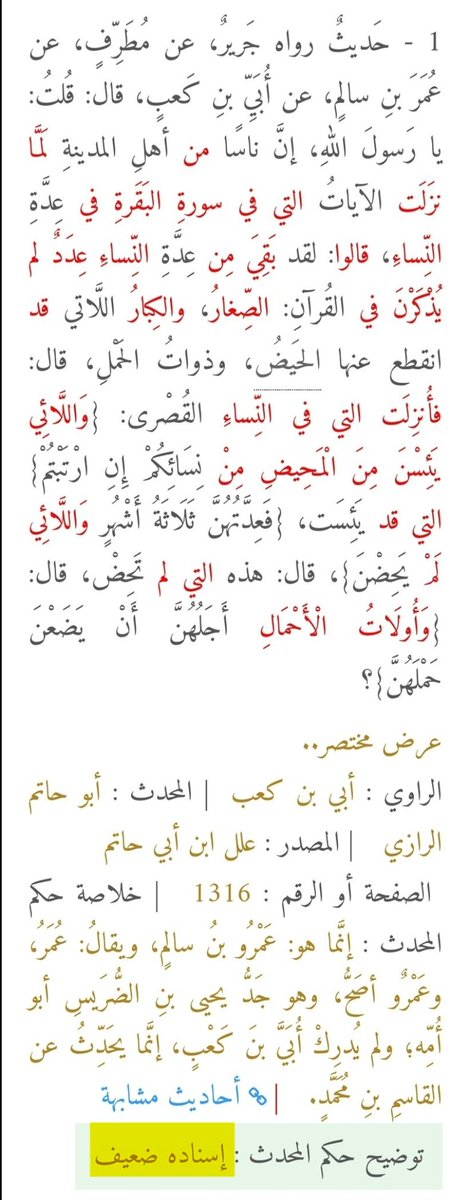
Now, the critic may claim that this hadith below explicitly mentions that the verse was revealed to talk about the marriage of children not yet attaining the age of puberty. However, this hadith is inauthentic as per the hadith method, which makes it unhistorical for Muslims.
See this video at 17:57
youtu.be
youtu.be
Loading suggestions...