

This man runs a $6B startup from a remote village in India.
It:
• raised $0 funding
• has 100M+ users
• generates $1B+ in ARR
Here’s the bootstrapped story you’ve never heard of:
It:
• raised $0 funding
• has 100M+ users
• generates $1B+ in ARR
Here’s the bootstrapped story you’ve never heard of:

The Advent team leveraged these advantages to pivot.
In 2002, they launched Manage Engine, an IT management software. The product was a huge hit.
But amidst the success, a problem brewed once again.
Sridhar's brothers left the company due to differences and he was left alone.
In 2002, they launched Manage Engine, an IT management software. The product was a huge hit.
But amidst the success, a problem brewed once again.
Sridhar's brothers left the company due to differences and he was left alone.
a) Product diversification
Zoho has 55+ products — from HR and marketing, to finance and sales.
It offers what you need to run your business.
So, why pay Typeform AND QuickBooks AND 53 other SaaS?
Zoho bundles all those 55 SaaS products into one product for a cheaper price.
Zoho has 55+ products — from HR and marketing, to finance and sales.
It offers what you need to run your business.
So, why pay Typeform AND QuickBooks AND 53 other SaaS?
Zoho bundles all those 55 SaaS products into one product for a cheaper price.
b) Low employee cost
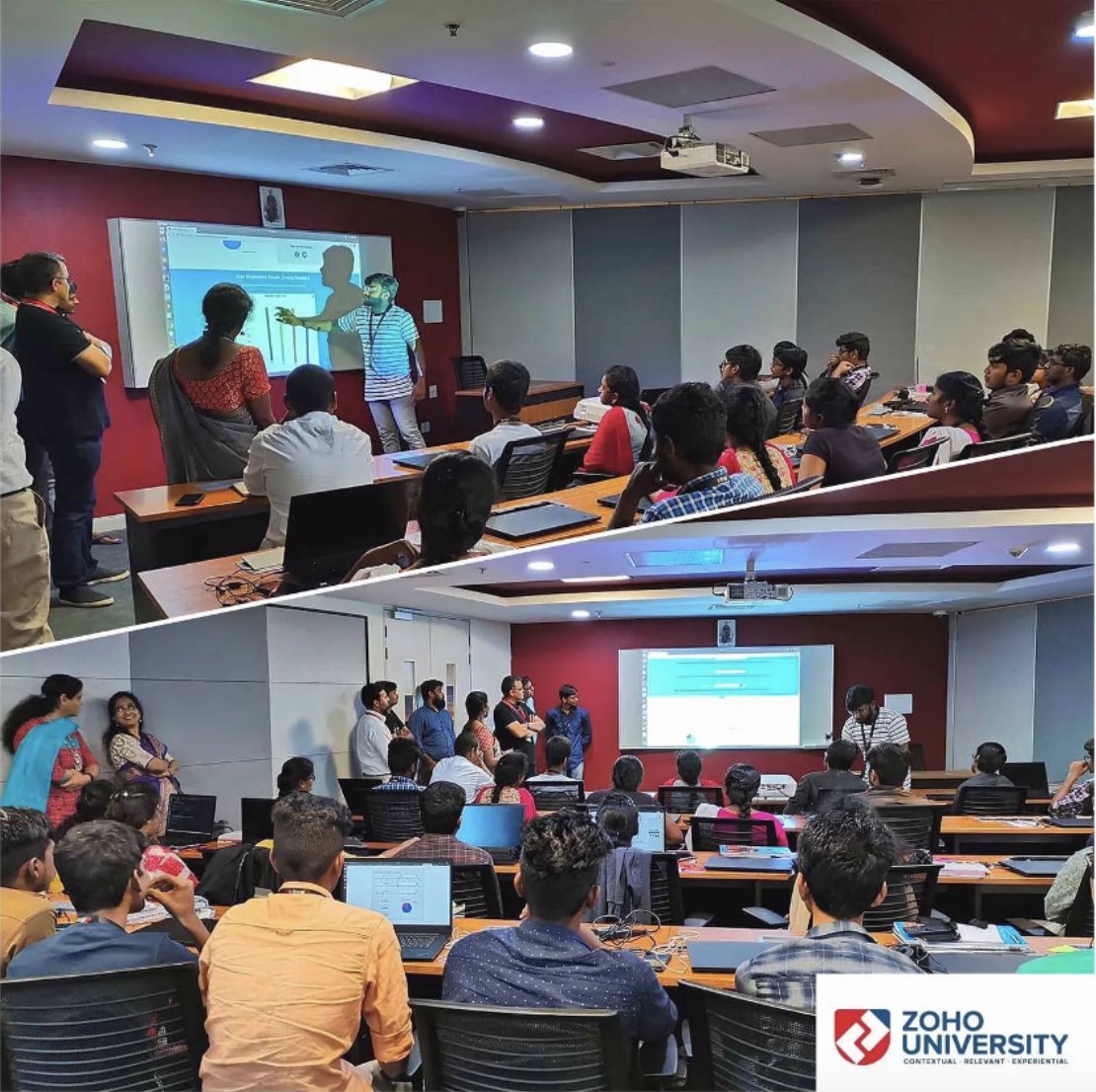
Zoho runs Zoho schools.
It teaches students coding and other skills for free, and then hires them.
The school has 1600+ graduates — 15% of Zoho's employees.
For every engineer hired from Zoho school, Zoho saves $50K-$80K compared to hiring from the U.S.
Zoho runs Zoho schools.
It teaches students coding and other skills for free, and then hires them.
The school has 1600+ graduates — 15% of Zoho's employees.
For every engineer hired from Zoho school, Zoho saves $50K-$80K compared to hiring from the U.S.
@Zoho @svembu That's it!
Zoho is proof that a laser-focused, bootstrapped company can beat VC-backed competitors.
If you liked this story, you'll love my newsletter. I show people how to build bootstrapped giants like this one.
Subscribe to my free weekly email:
bootstrappedgiants.com
Zoho is proof that a laser-focused, bootstrapped company can beat VC-backed competitors.
If you liked this story, you'll love my newsletter. I show people how to build bootstrapped giants like this one.
Subscribe to my free weekly email:
bootstrappedgiants.com

Loading suggestions...