
In 1963, a man noticed his chickens disappearing through a hole in his basement.
He knocked through the wall, revealing what is hard to believe: a 20,000-person city, deep below ground.
It was built by Christians over 1,000 years ago... (thread) 🧵
He knocked through the wall, revealing what is hard to believe: a 20,000-person city, deep below ground.
It was built by Christians over 1,000 years ago... (thread) 🧵
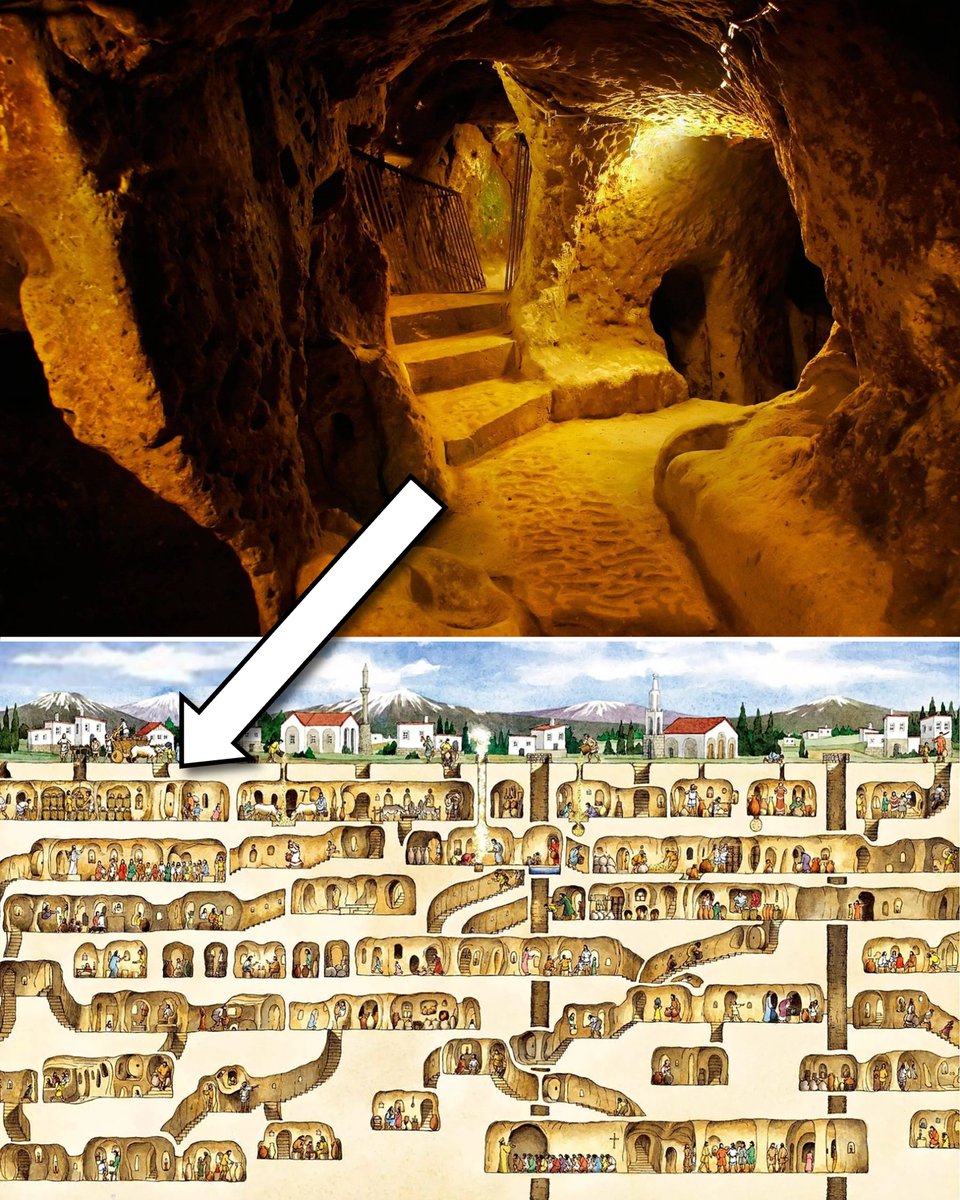
He had stumbled across what was then the largest underground city ever found, near the town of Derinkuyu, in Turkey's Cappadocia region.
But what on earth was it for?
But what on earth was it for?
Christianity in Cappadocia is as ancient as it gets. Paul the Apostle himself established one of the first Christian communities here in the 1st century.
By the 4th century, Cappadocia's bishops played a major role in the Byzantine Empire.
By the 4th century, Cappadocia's bishops played a major role in the Byzantine Empire.
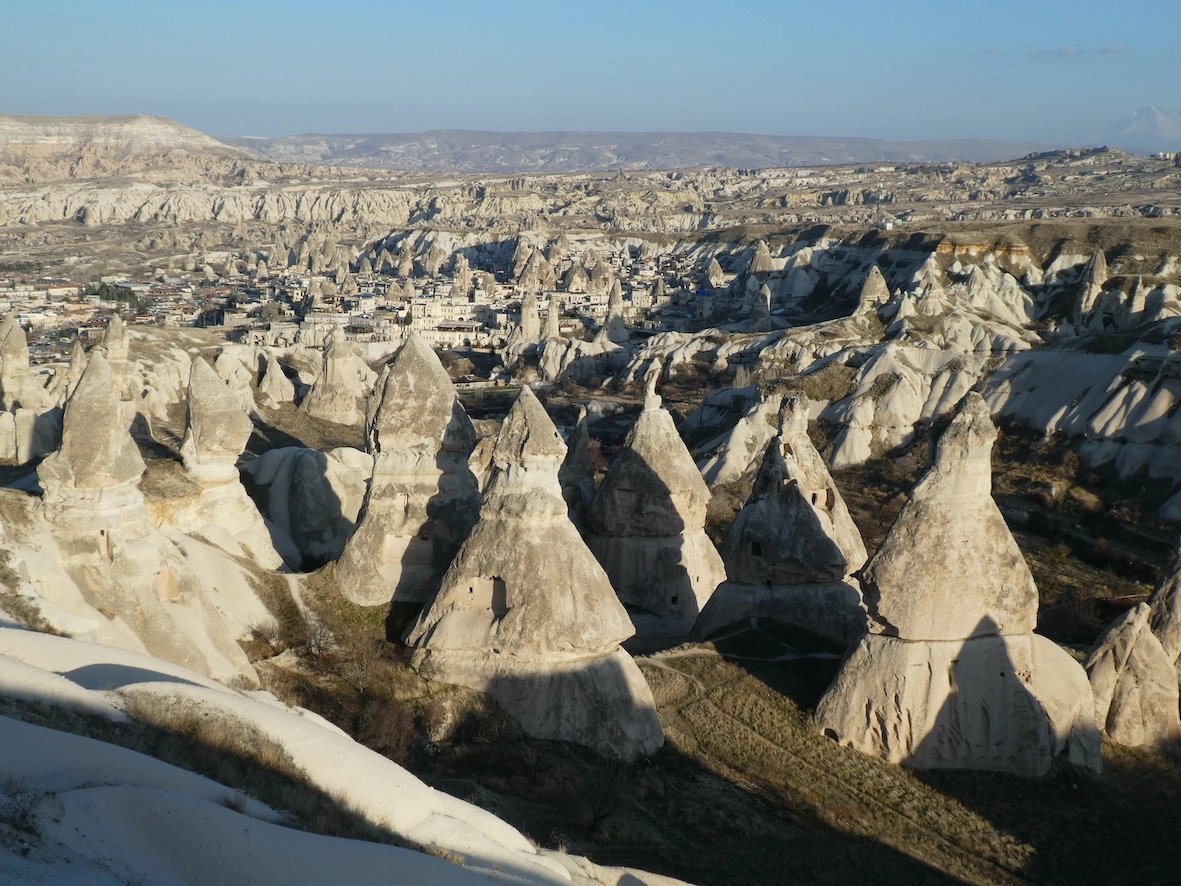
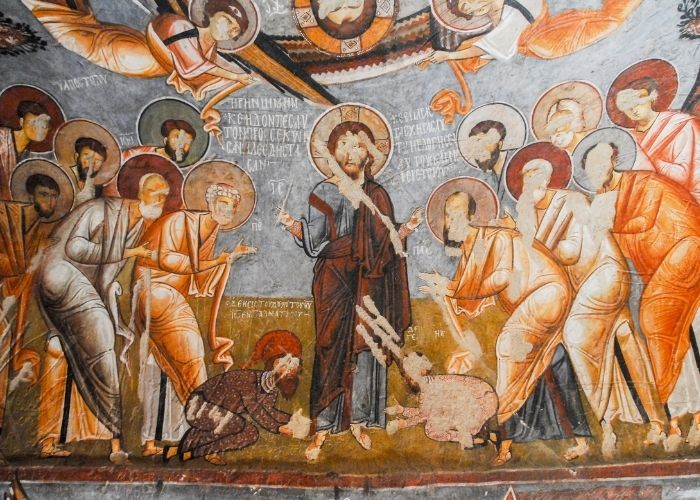
But persecuted by Romans, then Persians and invading Muslim forces, Christians convened in secret for centuries — taking to the remote landscape.
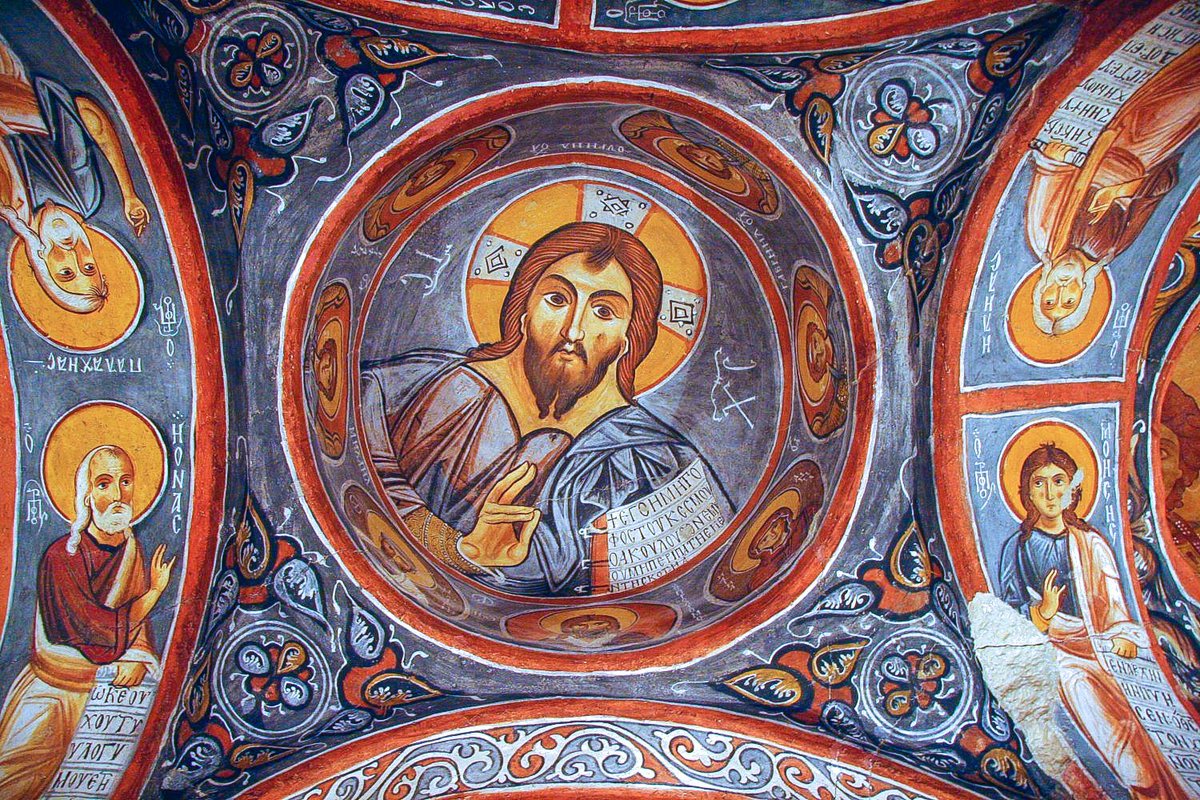
That's why you find cave churches there lavished with icons...
That's why you find cave churches there lavished with icons...
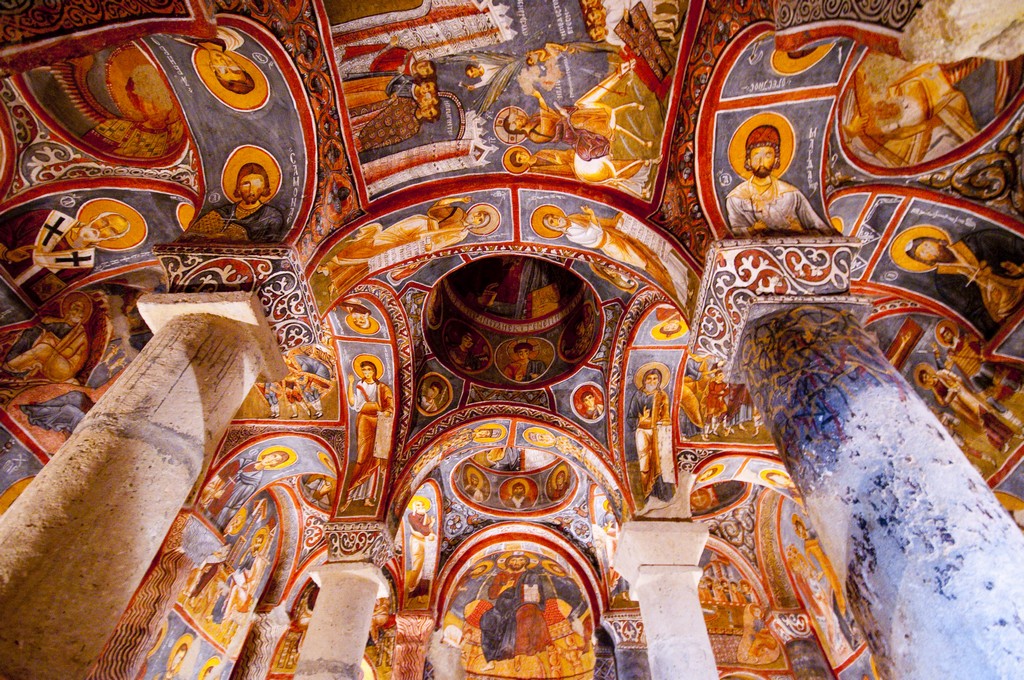
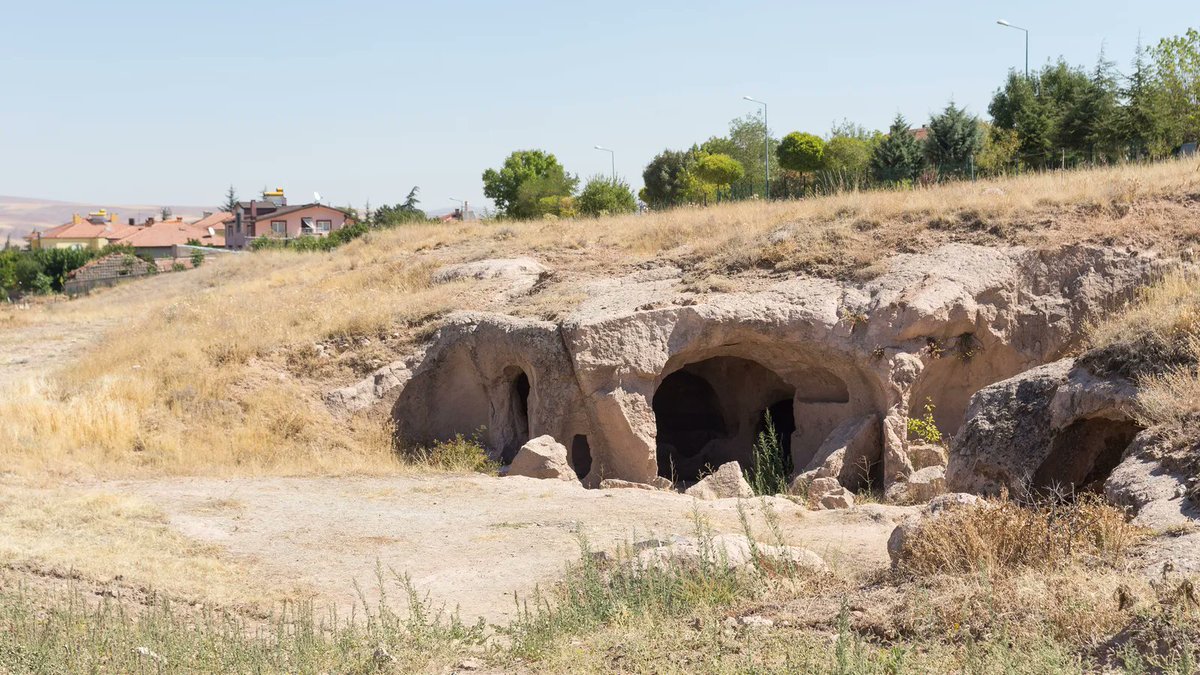
Close by, the astonishing discovery at Derinkuyu was made.
But unlike the caves, this is 18 stories and 280 feet deep...
But unlike the caves, this is 18 stories and 280 feet deep...
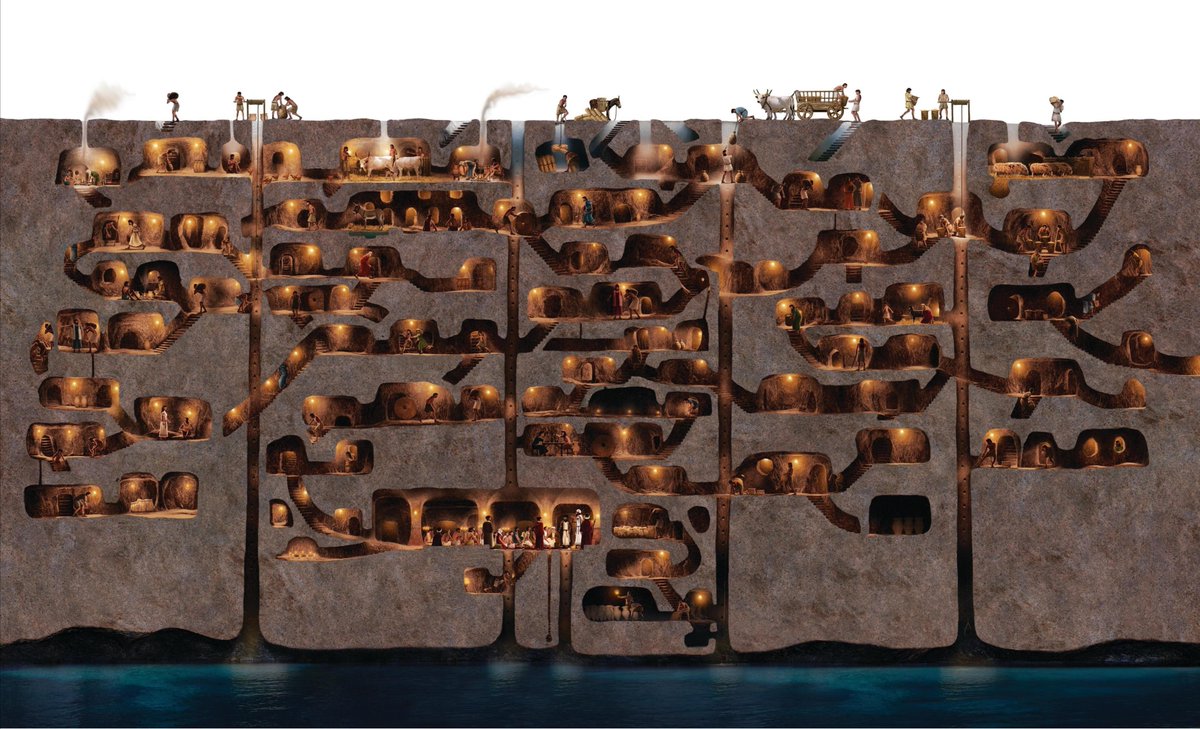
The underground city is thought to have been dug mostly in the 8th century, and used by Christians and Jews up until the 12th century in the Arab–Byzantine wars.
But it may be far older than that...
But it may be far older than that...
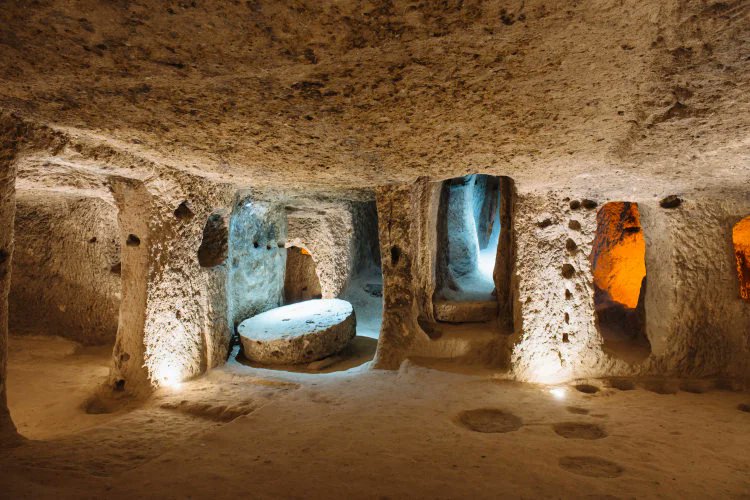
It may have started anywhere between 2000 BC and 100 AD, when early Christians might've first needed it.
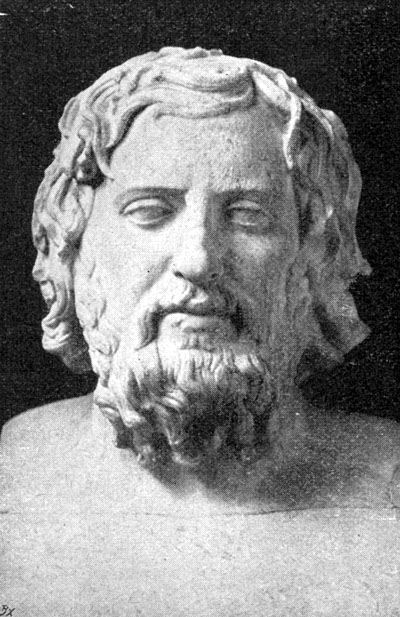
Writings by Xenophon of Athens say people of Anatolia were living below ground in the 4th century BC.
Writings by Xenophon of Athens say people of Anatolia were living below ground in the 4th century BC.
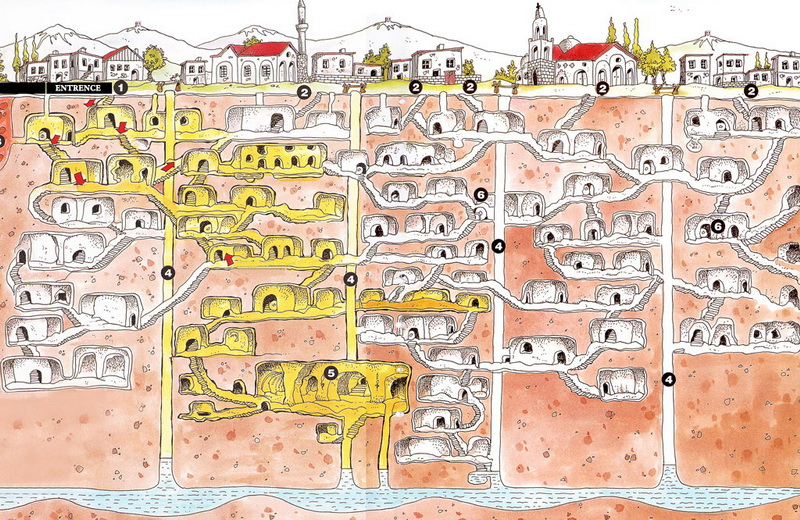
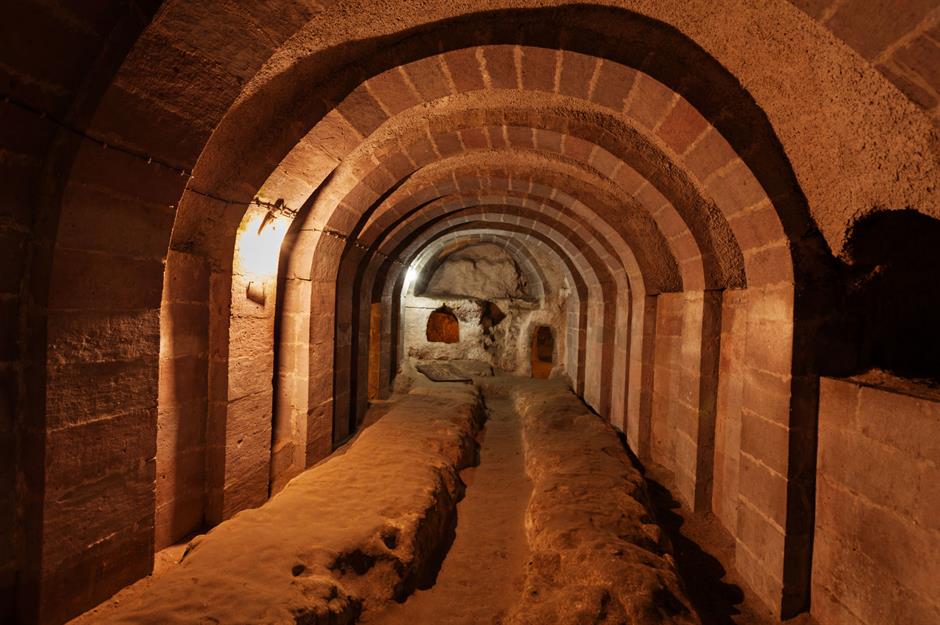
Christians later extended it, planning a living space in which they could spend months on end during a crisis — upper levels for living, lower for storage.
There are grain storage rooms, stables, taverns, schools...
There are grain storage rooms, stables, taverns, schools...
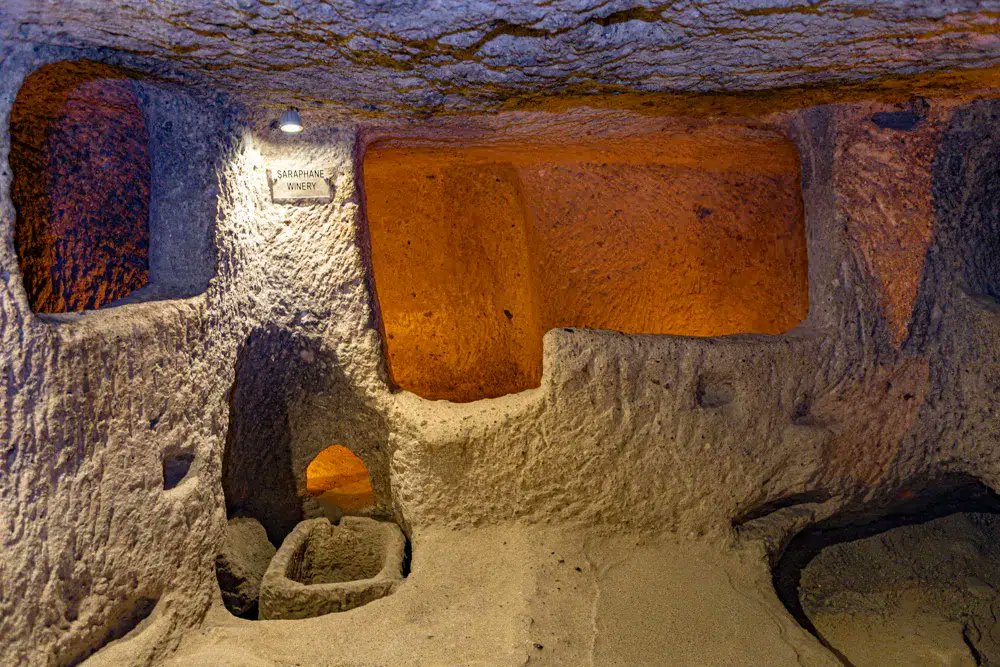
...even a winery, into which grapes drop through holes in the ceiling from a vineyard at the surface.
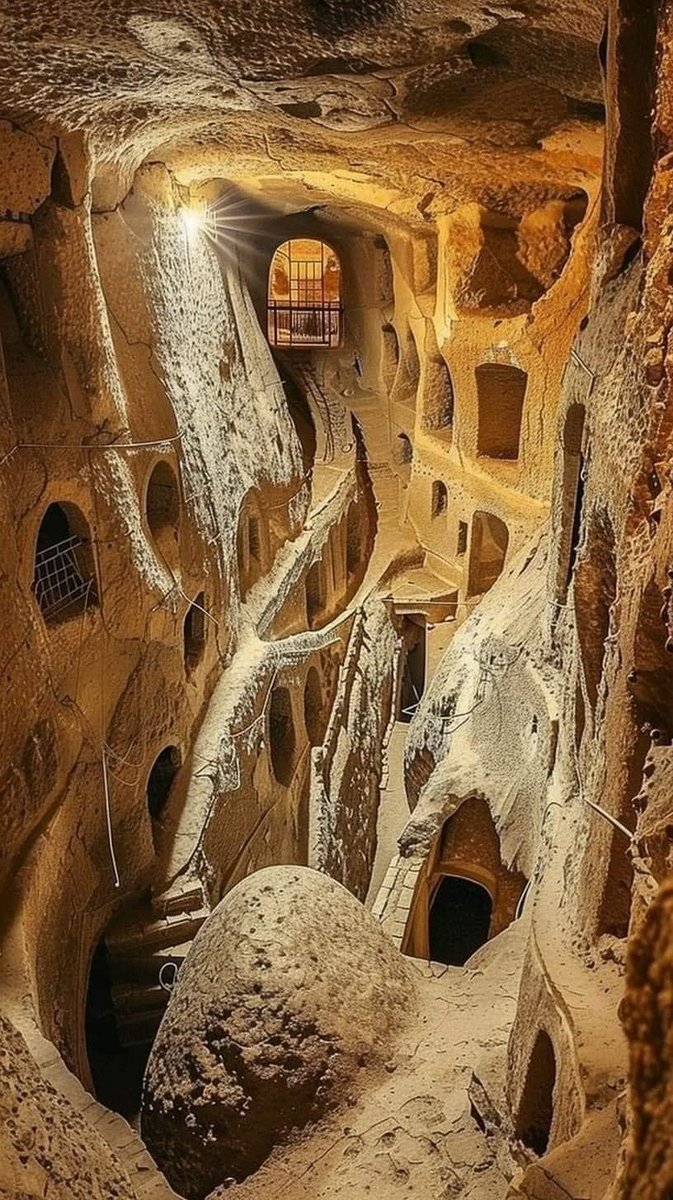
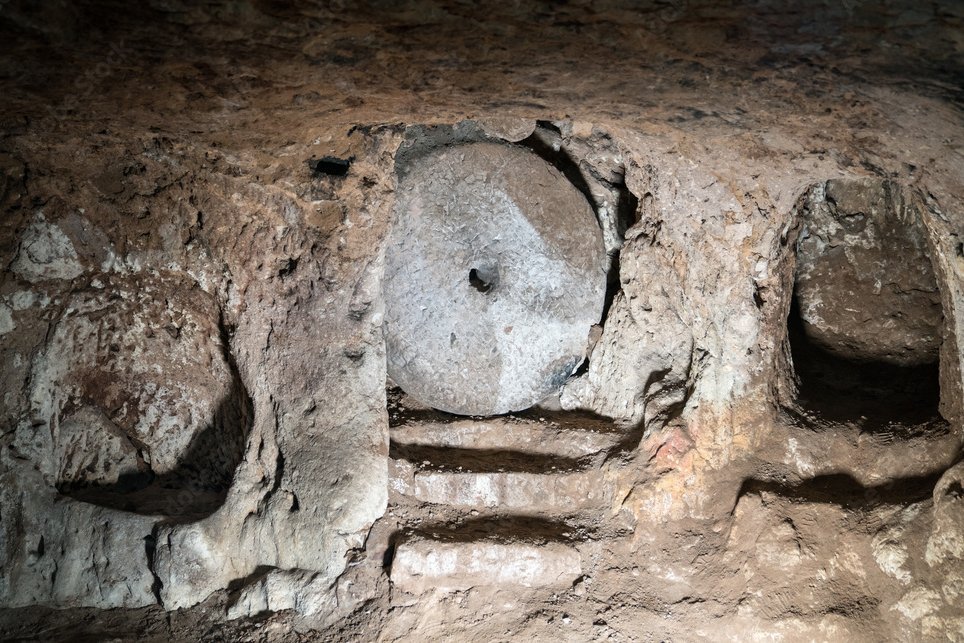
It's all planned masterfully for defense. At the surface, entrances are blocked by massive, circular stones rolled into place from the inside.
Then, each level is kept secure by similar doorways.
Then, each level is kept secure by similar doorways.
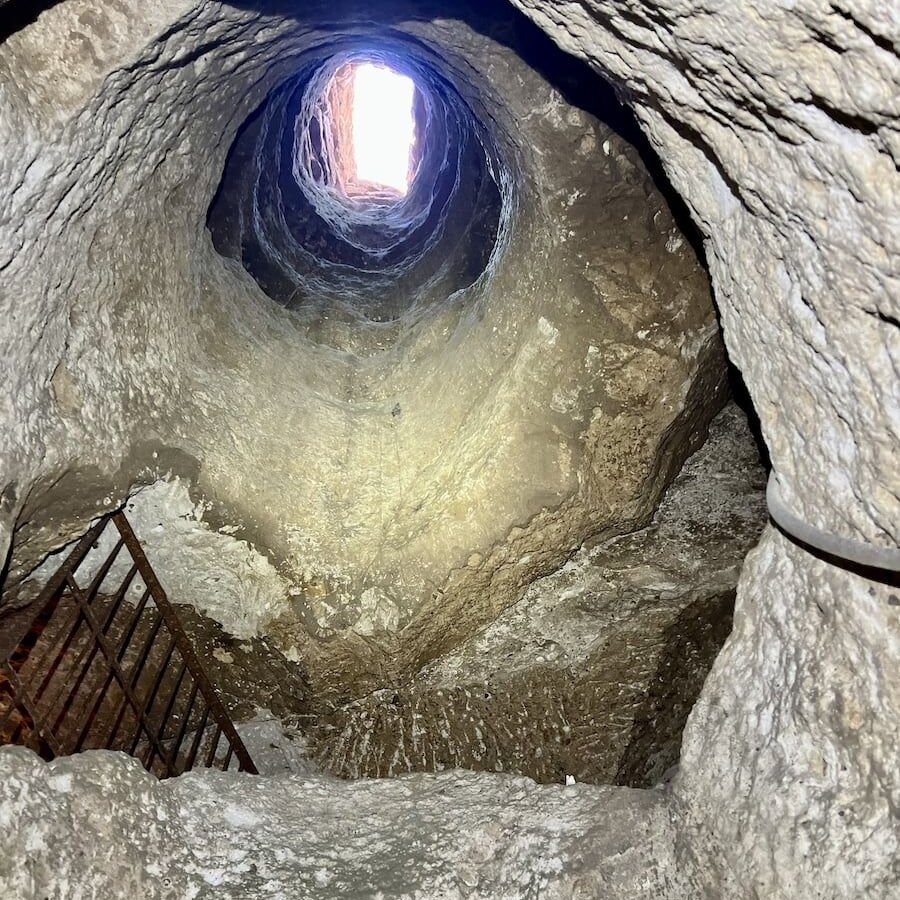
How did people breathe?
Via a system of some 15,000 air ducts. Lower down, these double as water wells fed by underground rivers. Water is controlled at the lowest levels, so supply can't be cut off by invaders at the surface.
Via a system of some 15,000 air ducts. Lower down, these double as water wells fed by underground rivers. Water is controlled at the lowest levels, so supply can't be cut off by invaders at the surface.
An entire population could simply disappear, taking livestock and grain to sustain them as long as necessary.
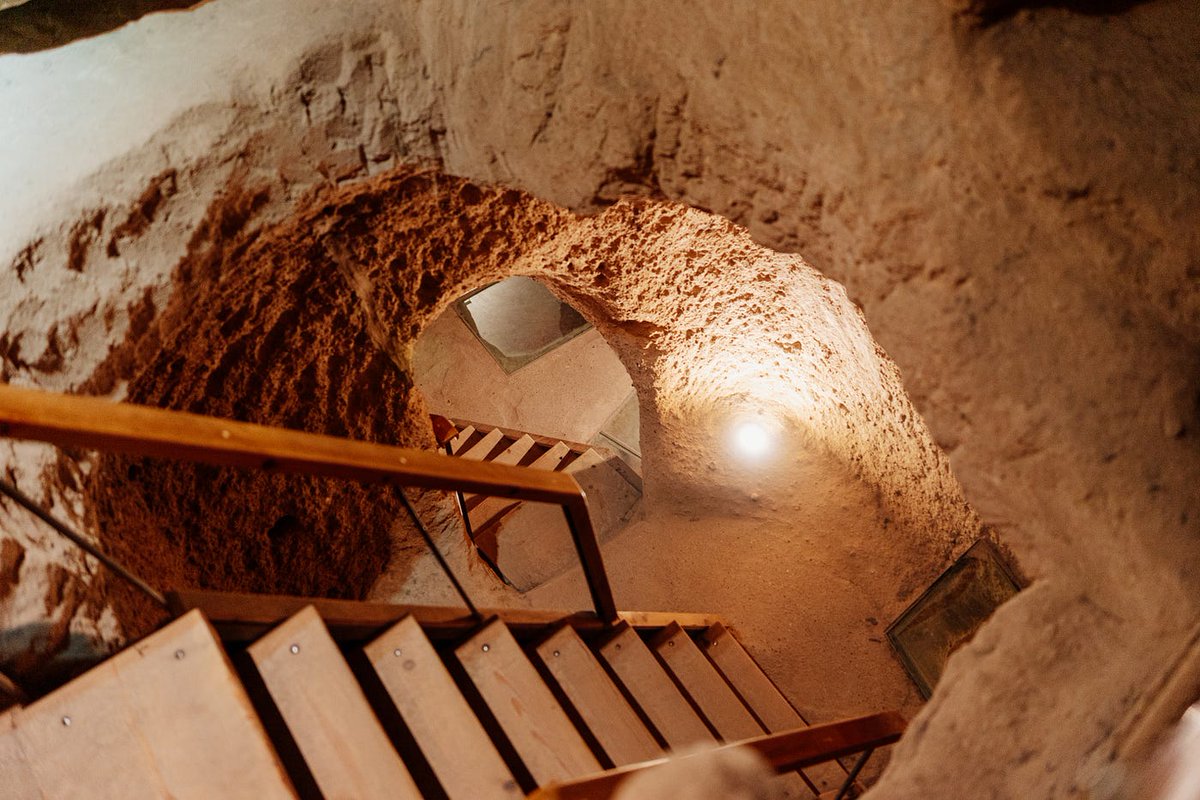
But they'd have to descend one at a time down its narrow walkways — designed to prevent invaders storming in en masse.
But they'd have to descend one at a time down its narrow walkways — designed to prevent invaders storming in en masse.
This might all seem hard to believe, but there are others. The city of Matiate, being excavated right now, may have safeguarded 70,000 Christians.
So far, they've dug down 330 feet, but it might go further...
So far, they've dug down 330 feet, but it might go further...
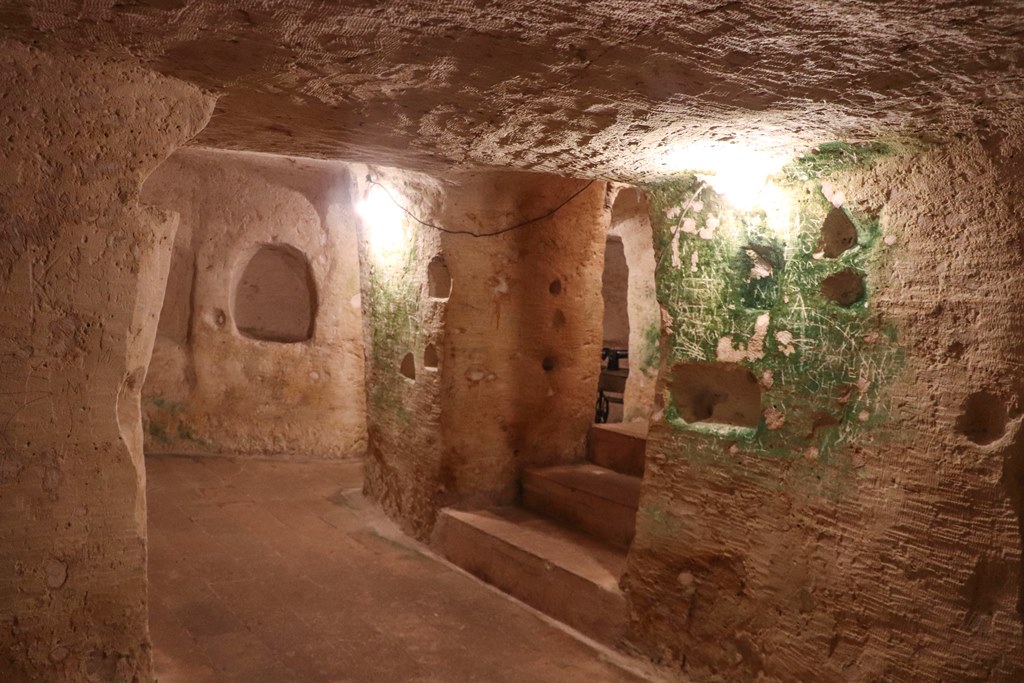
And Derinkuyu itself is connected to another city, Kaymakli, via a 5-mile tunnel. It might also be bigger than Derinkuyu.
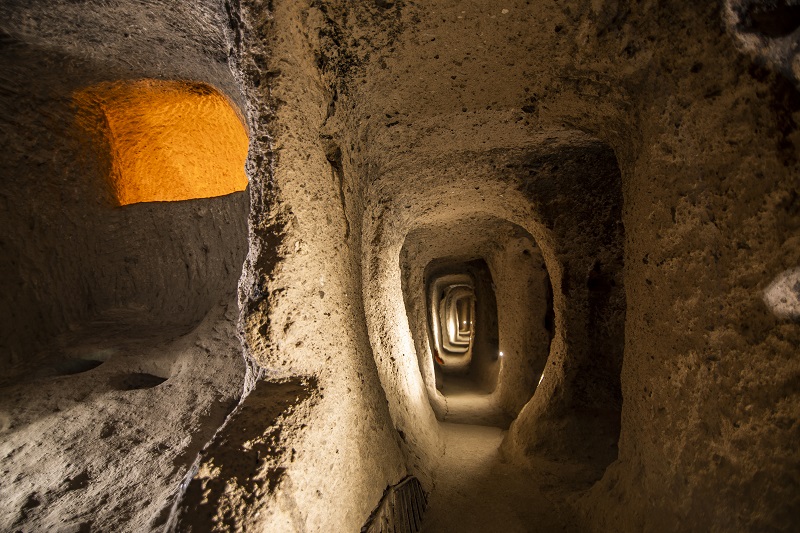
In fact, we're only just scratching the surface of how far this all goes.
Derinkuyu stretches on for miles below ground, and there are maybe 200 other cities connected deep beneath the Anatolian Plains.
Derinkuyu stretches on for miles below ground, and there are maybe 200 other cities connected deep beneath the Anatolian Plains.
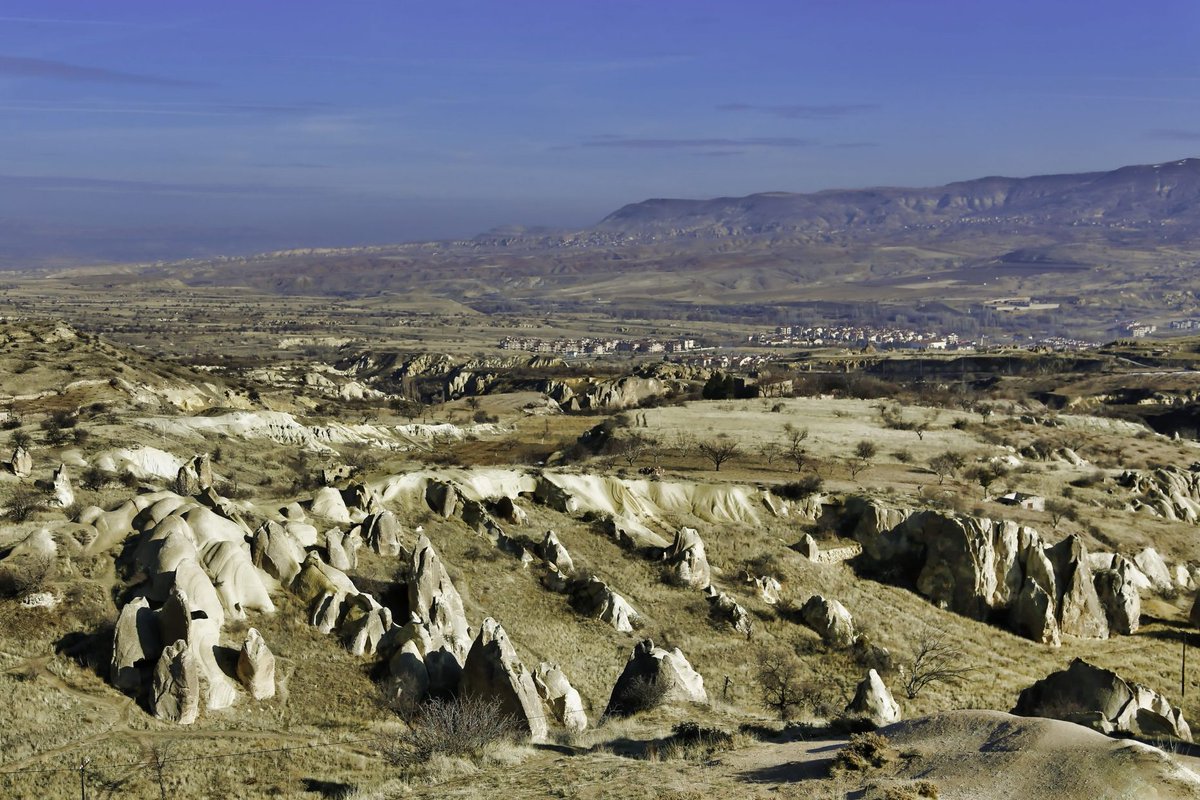
They were born out of brutal necessity, yet catered for much more than mere survival.
Deep down at the 7th level is a cruciform chapel the size of a basketball court — all the stone hand cut and carried to the surface by the faithful...
Deep down at the 7th level is a cruciform chapel the size of a basketball court — all the stone hand cut and carried to the surface by the faithful...
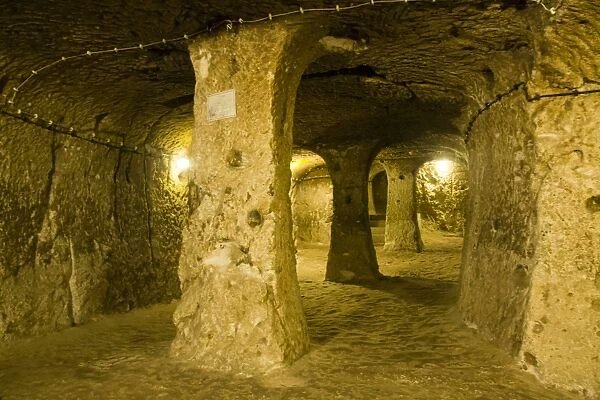
I go deeper on topics like this every week in my FREE newsletter — do NOT miss tomorrow's email!
Over 50,000 people read it: art, history and culture 👇
culturecritic.beehiiv.com
Over 50,000 people read it: art, history and culture 👇
culturecritic.beehiiv.com

So much beauty is being recovered in the region, like this Christ Pantocrator in a Göreme cave church.
After the Ottoman invasion, the church was used as a pigeon house — its frescoes have now been restored by scraping away centuries-old pigeon droppings...
After the Ottoman invasion, the church was used as a pigeon house — its frescoes have now been restored by scraping away centuries-old pigeon droppings...
Loading suggestions...