

You should never ice your injuries again.
Here’s why (and what to do instead):
Here’s why (and what to do instead):
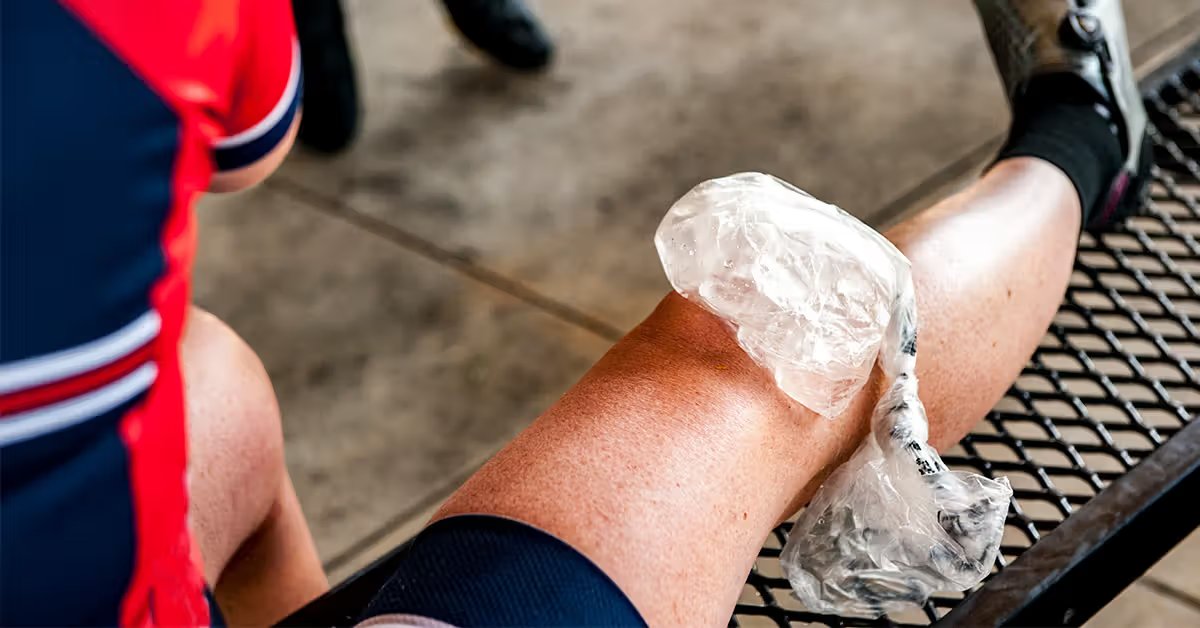
Ice can decrease pain in the short term.
But it’s ultimately slowing down your recovery.
Here’s why:
But it’s ultimately slowing down your recovery.
Here’s why:
Ice causes vasoconstriction.
This causes your blood vessels to contract and narrow.
When this happens, blood flow is restricted to the area.
But you NEED blood flow for proper healing.
This causes your blood vessels to contract and narrow.
When this happens, blood flow is restricted to the area.
But you NEED blood flow for proper healing.
The redness and swelling that occurs after an injury is actually a GOOD thing.
It means your body is delivering the necessary supplies to the injured area.
To heal, your body needs blood flow.
Ice restricts this.
It means your body is delivering the necessary supplies to the injured area.
To heal, your body needs blood flow.
Ice restricts this.
So what should you do instead?
Follow these 9 steps:
Follow these 9 steps:
1) Protect
This is obvious, but you want to avoid doing any further damage.
Avoid activities that put the injured area at risk for re-injury.
This is obvious, but you want to avoid doing any further damage.
Avoid activities that put the injured area at risk for re-injury.
2) Compress and elevate
This is how we combat swelling WITHOUT overly constricting blood flow.
Wrap the injury tightly but not to the point of cutting off your circulation.
This is how we combat swelling WITHOUT overly constricting blood flow.
Wrap the injury tightly but not to the point of cutting off your circulation.
3) Avoid anti-inflammatory meds
For the same reason ice is bad, anti inflammatory meds prevent the body from getting the necessary materials to the injured area.
If the pain is unbearable, use it in moderation.
But just be aware it’s slowing down the healing process.
For the same reason ice is bad, anti inflammatory meds prevent the body from getting the necessary materials to the injured area.
If the pain is unbearable, use it in moderation.
But just be aware it’s slowing down the healing process.
4) Restore range of motion
Motion is lotion.
Start immediately.
Increase motion until you hit a painful range.
Work to it.
Not though it.
Slowly progress as the pain subsides.
Motion is lotion.
Start immediately.
Increase motion until you hit a painful range.
Work to it.
Not though it.
Slowly progress as the pain subsides.
5) Load the injury
You need to strengthen, recondition, and retrain the injured area.
Start lightly and progress slowly.
Let pain be your guide.
Some pain during rehab is okay.
How you feel the day after is a better indicator of progress than what you feel during rehab.
You need to strengthen, recondition, and retrain the injured area.
Start lightly and progress slowly.
Let pain be your guide.
Some pain during rehab is okay.
How you feel the day after is a better indicator of progress than what you feel during rehab.
6) Soft tissue mobilization
Targeted massages to the area will:
• Improve blood flow
• Increase tissue elasticity
• Prevent scar tissue formation
Targeted massages to the area will:
• Improve blood flow
• Increase tissue elasticity
• Prevent scar tissue formation
7) Remain positive
Pain is just output from the brain.
It’s real, yes, but it’s also just in your head.
Realize a little pain during rehab is normal.
The belief that you’re healing is not to be overlooked during rehab.
Pain is just output from the brain.
It’s real, yes, but it’s also just in your head.
Realize a little pain during rehab is normal.
The belief that you’re healing is not to be overlooked during rehab.
8) Improve circulation
While ice limits circulation, light cardio improves it.
You may not be able to run on an injured ankle.
But maybe you can ride a stationary bike.
Improving blood flow will accelerate the healing process.
While ice limits circulation, light cardio improves it.
You may not be able to run on an injured ankle.
But maybe you can ride a stationary bike.
Improving blood flow will accelerate the healing process.
9) Return to activity
As pain decreases and the range of motion returns, continue to ramp up the intensity.
Restore strength to the area with progressive exercise.
Keep pain to a minimum.
Add in balance and stability work.
Eventually, return to full activity.
As pain decreases and the range of motion returns, continue to ramp up the intensity.
Restore strength to the area with progressive exercise.
Keep pain to a minimum.
Add in balance and stability work.
Eventually, return to full activity.
9 things to do instead of icing:
1) Protect
2) Compress and elevate
3) Avoid anti-inflammatory meds
4) Restore range of motion
5) Load the injury
6) Soft tissue mobilization
7) Remain positive
8) Improve circulation
9) Return to activity
1) Protect
2) Compress and elevate
3) Avoid anti-inflammatory meds
4) Restore range of motion
5) Load the injury
6) Soft tissue mobilization
7) Remain positive
8) Improve circulation
9) Return to activity
Thank you for reading.
If you found this thread helpful:
1. Follow me @brettboettcher1 for more content health prevention.
2. RT the tweet below to share this thread with your audience
If you found this thread helpful:
1. Follow me @brettboettcher1 for more content health prevention.
2. RT the tweet below to share this thread with your audience
Ready to take back control of your health? We’re here to help.
We’ve helped hundreds of people get in the best shape of their lives without disrupting their schedule or breaking their banks.
Get the Summer Health Handbook for free here: thoughtful-crafter-258.ck.page
We’ve helped hundreds of people get in the best shape of their lives without disrupting their schedule or breaking their banks.
Get the Summer Health Handbook for free here: thoughtful-crafter-258.ck.page

Loading suggestions...