

𝗥𝗮𝗻𝗱𝘀 𝗧𝘂𝗿𝗻𝗶𝗻𝗴 𝘁𝗼 𝗖𝗲𝗻𝘁𝘀
Let me explain why your money
in the future 𝘄𝗶𝗹𝗹 𝗯𝗲 𝘄𝗼𝗿𝘁𝗵 𝗹𝗲𝘀𝘀 𝘁𝗵𝗮𝗻 𝗶𝘁 𝗶𝘀 𝘁𝗼𝗱𝗮𝘆.
( Find out )🔻
Let me explain why your money
in the future 𝘄𝗶𝗹𝗹 𝗯𝗲 𝘄𝗼𝗿𝘁𝗵 𝗹𝗲𝘀𝘀 𝘁𝗵𝗮𝗻 𝗶𝘁 𝗶𝘀 𝘁𝗼𝗱𝗮𝘆.
( Find out )🔻

1/ Catch up
In the previous threads,
I covered the 𝗱𝗶𝗳𝗳𝗲𝗿𝗲𝗻𝘁 𝗮𝘀𝘀𝗲𝘁 𝗰𝗹𝗮𝘀𝘀𝗲𝘀 𝗮𝘃𝗮𝗶𝗹𝗮𝗯𝗹𝗲 𝗮𝗻𝗱 𝘂𝗻𝗱𝗲𝗿𝘀𝘁𝗮𝗻𝗱𝗶𝗻𝗴 𝗿𝗶𝘀𝗸.
If you missed the previous threads on these topics, check them out below 🔻
In the previous threads,
I covered the 𝗱𝗶𝗳𝗳𝗲𝗿𝗲𝗻𝘁 𝗮𝘀𝘀𝗲𝘁 𝗰𝗹𝗮𝘀𝘀𝗲𝘀 𝗮𝘃𝗮𝗶𝗹𝗮𝗯𝗹𝗲 𝗮𝗻𝗱 𝘂𝗻𝗱𝗲𝗿𝘀𝘁𝗮𝗻𝗱𝗶𝗻𝗴 𝗿𝗶𝘀𝗸.
If you missed the previous threads on these topics, check them out below 🔻
2/ Terminology
🟠𝗡𝗼𝗺𝗶𝗻𝗮𝗹 𝗩𝗮𝗹𝘂𝗲:
also known as the 𝗳𝗮𝗰𝗲 𝘃𝗮𝗹𝘂𝗲 𝗼𝗿 𝗻𝗼𝗺𝗶𝗻𝗮𝗹 𝗽𝗿𝗶𝗰𝗲, it refers to the unadjusted value of something in current Rands.
The 𝗳𝗮𝗰𝗲 𝘃𝗮𝗹𝘂𝗲 𝗼𝗳 (𝗥𝟭𝟬𝟬) 𝘄𝗶𝗹𝗹 𝗿𝗲𝗺𝗮𝗶𝗻 𝗥𝟭𝟬𝟬, but what changes is the number of things this R100
can buy you over time.
🟢𝗥𝗲𝗮𝗹 𝗩𝗮𝗹𝘂𝗲:
Real value, on the other hand, considers the impact of inflation or changes in the general price level over time.
It is the 𝘃𝗮𝗹𝘂𝗲 𝗼𝗳 𝘀𝗼𝗺𝗲𝘁𝗵𝗶𝗻𝗴 𝗮𝗱𝗷𝘂𝘀𝘁𝗲𝗱 𝗳𝗼𝗿 𝗰𝗵𝗮𝗻𝗴𝗲𝘀 in the purchasing power of the currency. (Rand)
“𝗧𝗵𝗶𝘀 𝗥𝟭𝟬𝟬 𝘁𝗼𝗱𝗮𝘆 𝗯𝘂𝘆𝘀 𝗺𝗲 𝟭𝟱 𝗮𝗽𝗽𝗹𝗲𝘀, 𝗯𝘂𝘁 𝘁𝗵𝗶𝘀 𝘀𝗮𝗺𝗲 𝗥𝟭𝟬𝟬 𝗳𝗶𝘃𝗲 𝘆𝗲𝗮𝗿𝘀 𝗳𝗿𝗼𝗺 𝗻𝗼𝘄 𝗼𝗻𝗹𝘆 𝗯𝘂𝘆𝘀 𝗺𝗲 𝟭𝟬 𝗮𝗽𝗽𝗹𝗲𝘀”.
🟠𝗡𝗼𝗺𝗶𝗻𝗮𝗹 𝗩𝗮𝗹𝘂𝗲:
also known as the 𝗳𝗮𝗰𝗲 𝘃𝗮𝗹𝘂𝗲 𝗼𝗿 𝗻𝗼𝗺𝗶𝗻𝗮𝗹 𝗽𝗿𝗶𝗰𝗲, it refers to the unadjusted value of something in current Rands.
The 𝗳𝗮𝗰𝗲 𝘃𝗮𝗹𝘂𝗲 𝗼𝗳 (𝗥𝟭𝟬𝟬) 𝘄𝗶𝗹𝗹 𝗿𝗲𝗺𝗮𝗶𝗻 𝗥𝟭𝟬𝟬, but what changes is the number of things this R100
can buy you over time.
🟢𝗥𝗲𝗮𝗹 𝗩𝗮𝗹𝘂𝗲:
Real value, on the other hand, considers the impact of inflation or changes in the general price level over time.
It is the 𝘃𝗮𝗹𝘂𝗲 𝗼𝗳 𝘀𝗼𝗺𝗲𝘁𝗵𝗶𝗻𝗴 𝗮𝗱𝗷𝘂𝘀𝘁𝗲𝗱 𝗳𝗼𝗿 𝗰𝗵𝗮𝗻𝗴𝗲𝘀 in the purchasing power of the currency. (Rand)
“𝗧𝗵𝗶𝘀 𝗥𝟭𝟬𝟬 𝘁𝗼𝗱𝗮𝘆 𝗯𝘂𝘆𝘀 𝗺𝗲 𝟭𝟱 𝗮𝗽𝗽𝗹𝗲𝘀, 𝗯𝘂𝘁 𝘁𝗵𝗶𝘀 𝘀𝗮𝗺𝗲 𝗥𝟭𝟬𝟬 𝗳𝗶𝘃𝗲 𝘆𝗲𝗮𝗿𝘀 𝗳𝗿𝗼𝗺 𝗻𝗼𝘄 𝗼𝗻𝗹𝘆 𝗯𝘂𝘆𝘀 𝗺𝗲 𝟭𝟬 𝗮𝗽𝗽𝗹𝗲𝘀”.

3/ 𝗧𝗶𝗺𝗲 𝗩𝗮𝗹𝘂𝗲 𝗼𝗳 𝗺𝗼𝗻𝗲𝘆 (𝗧𝗩𝗠)
The Time Value of Money (TVM) is a fundamental financial concept that illustrates the idea that money
has different values at different points in time.
Meaning,
money is worth more today in the present moment than the same sum will be at a future date in time.
Put simply,
“𝗠𝗼𝗻𝗲𝘆 𝗶𝘀 𝘄𝗼𝗿𝘁𝗵 𝗹𝗲𝘀𝘀 𝗶𝗻 𝘁𝗵𝗲 𝗳𝘂𝘁𝘂𝗿𝗲”
The Time Value of Money (TVM) is a fundamental financial concept that illustrates the idea that money
has different values at different points in time.
Meaning,
money is worth more today in the present moment than the same sum will be at a future date in time.
Put simply,
“𝗠𝗼𝗻𝗲𝘆 𝗶𝘀 𝘄𝗼𝗿𝘁𝗵 𝗹𝗲𝘀𝘀 𝗶𝗻 𝘁𝗵𝗲 𝗳𝘂𝘁𝘂𝗿𝗲”
4/ Understanding TVM
Your deposit of R10 000 can earn interest at a rate of return of 8% per year compounding annually.
That means your account will have R10 800 at the end of year 1, right?
—————
𝗙𝗿𝗼𝗺 𝘁𝗵𝗶𝘀 𝗲𝘅𝗮𝗺𝗽𝗹𝗲:
Receiving R10 000 today is essentially equivalent to receiving R10 800 one year from today.
When thinking of (TVM),
we must consider 3 things:
(1) The opportunity cost
(2) The present moment
(3) Investments
Your deposit of R10 000 can earn interest at a rate of return of 8% per year compounding annually.
That means your account will have R10 800 at the end of year 1, right?
—————
𝗙𝗿𝗼𝗺 𝘁𝗵𝗶𝘀 𝗲𝘅𝗮𝗺𝗽𝗹𝗲:
Receiving R10 000 today is essentially equivalent to receiving R10 800 one year from today.
When thinking of (TVM),
we must consider 3 things:
(1) The opportunity cost
(2) The present moment
(3) Investments
4.1/ Opportunity cost
There is an opportunity cost of receiving money at a date in the future, as opposed to receiving it today.
Banks know this, and this is why they charge interest on the money they lend out.
They must be compensated for this value destruction of future purchasing power.
𝗘𝘅𝗮𝗺𝗽𝗹𝗲:
If you received R10 000 today, you could immediately invest that money, but if that same amount of
money is received 5 years from now instead, then the 5 years of waiting for it represents the opportunity cost that has been lost.
𝗟𝗶𝗸𝗲𝘄𝗶𝘀𝗲,
when you lend your friend money, and they take a year to pay you back, and then they give you the exact amount they borrowed, you as the lender lost money.
This is because you could have
otherwise earned interest on that money instead of lending it out to them at 0%
———————-
As our example above,
The R10 000 today is equivalent to R10 800 a year from now,
and your friend paying you back your R10 000 a year later is only equivalent to R9200.
🔴( You lost out on the earnings) 🔴
There is an opportunity cost of receiving money at a date in the future, as opposed to receiving it today.
Banks know this, and this is why they charge interest on the money they lend out.
They must be compensated for this value destruction of future purchasing power.
𝗘𝘅𝗮𝗺𝗽𝗹𝗲:
If you received R10 000 today, you could immediately invest that money, but if that same amount of
money is received 5 years from now instead, then the 5 years of waiting for it represents the opportunity cost that has been lost.
𝗟𝗶𝗸𝗲𝘄𝗶𝘀𝗲,
when you lend your friend money, and they take a year to pay you back, and then they give you the exact amount they borrowed, you as the lender lost money.
This is because you could have
otherwise earned interest on that money instead of lending it out to them at 0%
———————-
As our example above,
The R10 000 today is equivalent to R10 800 a year from now,
and your friend paying you back your R10 000 a year later is only equivalent to R9200.
🔴( You lost out on the earnings) 🔴
4.2/ Present moment
Money available today could be invested immediately in something that can generate a return for you.
(Yield)
Therefore, waiting for money to be paid back to you, loses the opportunity of earning from/on it.
Money available today could be invested immediately in something that can generate a return for you.
(Yield)
Therefore, waiting for money to be paid back to you, loses the opportunity of earning from/on it.
4.3/ Investments
Certain investments provide investors with guaranteed interest on their capital, which compounds over time.
𝗙𝗼𝗿 𝗲𝘅𝗮𝗺𝗽𝗹𝗲
⚪️Fixed deposit accounts
⚪️Dividend stocks
Therefore, time has a direct and easily calculated impact on the value of money,
because some monetary growth (𝗴𝗮𝗶𝗻𝘀 𝗳𝗿𝗼𝗺 𝗶𝗻𝘃𝗲𝘀𝘁𝗺𝗲𝗻𝘁𝘀) can easily be realized with your R10 000 right now, and it’s ‘essentially free of risk’
Remember,
𝗠𝗼𝗻𝗲𝘆 𝗻𝗼𝘄 > 𝗺𝗼𝗻𝗲𝘆 𝗹𝗮𝘁𝗲𝗿
Certain investments provide investors with guaranteed interest on their capital, which compounds over time.
𝗙𝗼𝗿 𝗲𝘅𝗮𝗺𝗽𝗹𝗲
⚪️Fixed deposit accounts
⚪️Dividend stocks
Therefore, time has a direct and easily calculated impact on the value of money,
because some monetary growth (𝗴𝗮𝗶𝗻𝘀 𝗳𝗿𝗼𝗺 𝗶𝗻𝘃𝗲𝘀𝘁𝗺𝗲𝗻𝘁𝘀) can easily be realized with your R10 000 right now, and it’s ‘essentially free of risk’
Remember,
𝗠𝗼𝗻𝗲𝘆 𝗻𝗼𝘄 > 𝗺𝗼𝗻𝗲𝘆 𝗹𝗮𝘁𝗲𝗿

5/ Receiving Money
This is why in those hypothetical questions we always get asked on X,
“𝗥𝟭 𝗺𝗶𝗹𝗹𝗶𝗼𝗻 𝘁𝗼𝗱𝗮𝘆 𝗼𝗿 𝗥𝟭𝟬𝗸 𝗮 𝗺𝗼𝗻𝘁𝗵” ?
———————
The answer is always taking the upfront money now rather than being paid off in installments,
𝘀𝗶𝗺𝗽𝗹𝘆 𝗯𝗲𝗰𝗮𝘂𝘀𝗲 𝗺𝗼𝗻𝗲𝘆 𝗹𝗼𝘀𝗲𝘀 𝘃𝗮𝗹𝘂𝗲 𝗼𝘃𝗲𝗿 𝘁𝗶𝗺𝗲.
———————-
Now that you understand this,
You now know why banks charge interest on money they lend out, otherwise it would be a transfer of
wealth from lenders to borrowers.
This is why in those hypothetical questions we always get asked on X,
“𝗥𝟭 𝗺𝗶𝗹𝗹𝗶𝗼𝗻 𝘁𝗼𝗱𝗮𝘆 𝗼𝗿 𝗥𝟭𝟬𝗸 𝗮 𝗺𝗼𝗻𝘁𝗵” ?
———————
The answer is always taking the upfront money now rather than being paid off in installments,
𝘀𝗶𝗺𝗽𝗹𝘆 𝗯𝗲𝗰𝗮𝘂𝘀𝗲 𝗺𝗼𝗻𝗲𝘆 𝗹𝗼𝘀𝗲𝘀 𝘃𝗮𝗹𝘂𝗲 𝗼𝘃𝗲𝗿 𝘁𝗶𝗺𝗲.
———————-
Now that you understand this,
You now know why banks charge interest on money they lend out, otherwise it would be a transfer of
wealth from lenders to borrowers.
6/ Summary:
The main reason for this value 𝗱𝗲𝘀𝘁𝗿𝘂𝗰𝘁𝗶𝗼𝗻 𝗶𝗻 𝗽𝘂𝗿𝗰𝗵𝗮𝘀𝗶𝗻𝗴 𝗽𝗼𝘄𝗲𝗿 𝗶𝘀 𝗯𝗲𝗰𝗮𝘂𝘀𝗲 𝗼𝗳 𝗶𝗻𝗳𝗹𝗮𝘁𝗶𝗼𝗻, it erodes the
number of things you can buy with the face value of your money.
Inflation can be used to express how Time Value of Money exists. (TVM)
——————
𝗟𝗲𝘁’𝘀 𝗹𝗼𝗼𝗸 𝗮𝘁 𝗮 𝗿𝗲𝗮𝗹-𝗹𝗶𝗳𝗲 𝗲𝘅𝗮𝗺𝗽𝗹𝗲 𝘁𝗼 𝗱𝗿𝗶𝘃𝗲 𝗺𝘆 𝗽𝗼𝗶𝗻𝘁 𝗵𝗼𝗺𝗲:
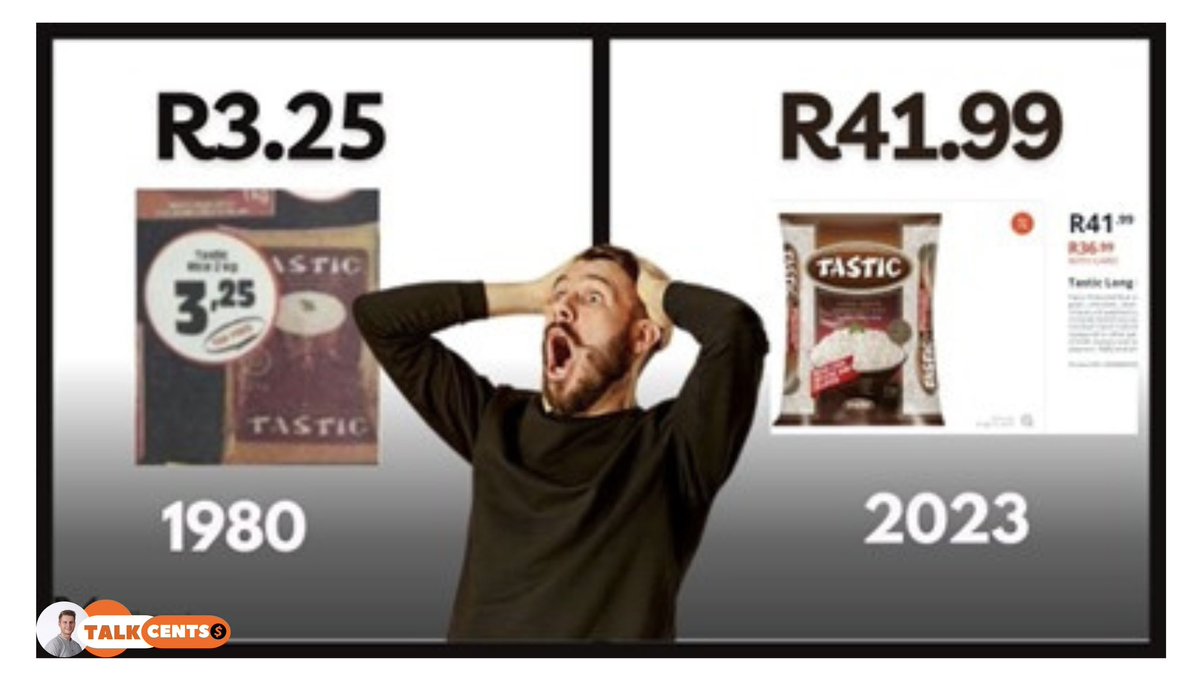
🟠In the early 1980’s, rice costed R3.25 (32c per 100 grams)
🟠Today, rice costs R41.99
(R4.19 per 100 grams)
🟠Now, 32c is worth much less than 100 grams of rice.
———————
Imagine you were still waiting for your friend from the 1980’s to pay you back your R3.25?
𝗬𝗼𝘂 𝘄𝗼𝘂𝗹𝗱𝗻’𝘁 𝗯𝗲 𝗮𝗯𝗹𝗲 𝘁𝗼 𝗯𝘂𝘆 𝗿𝗶𝗰𝗲 𝗮𝗻𝘆𝗺𝗼𝗿𝗲.
———————
Hence,
money held many decades ago was worth more than it is now, because you were able to buy more with
the money in the past
The main reason for this value 𝗱𝗲𝘀𝘁𝗿𝘂𝗰𝘁𝗶𝗼𝗻 𝗶𝗻 𝗽𝘂𝗿𝗰𝗵𝗮𝘀𝗶𝗻𝗴 𝗽𝗼𝘄𝗲𝗿 𝗶𝘀 𝗯𝗲𝗰𝗮𝘂𝘀𝗲 𝗼𝗳 𝗶𝗻𝗳𝗹𝗮𝘁𝗶𝗼𝗻, it erodes the
number of things you can buy with the face value of your money.
Inflation can be used to express how Time Value of Money exists. (TVM)
——————
𝗟𝗲𝘁’𝘀 𝗹𝗼𝗼𝗸 𝗮𝘁 𝗮 𝗿𝗲𝗮𝗹-𝗹𝗶𝗳𝗲 𝗲𝘅𝗮𝗺𝗽𝗹𝗲 𝘁𝗼 𝗱𝗿𝗶𝘃𝗲 𝗺𝘆 𝗽𝗼𝗶𝗻𝘁 𝗵𝗼𝗺𝗲:
🟠In the early 1980’s, rice costed R3.25 (32c per 100 grams)
🟠Today, rice costs R41.99
(R4.19 per 100 grams)
🟠Now, 32c is worth much less than 100 grams of rice.
———————
Imagine you were still waiting for your friend from the 1980’s to pay you back your R3.25?
𝗬𝗼𝘂 𝘄𝗼𝘂𝗹𝗱𝗻’𝘁 𝗯𝗲 𝗮𝗯𝗹𝗲 𝘁𝗼 𝗯𝘂𝘆 𝗿𝗶𝗰𝗲 𝗮𝗻𝘆𝗺𝗼𝗿𝗲.
———————
Hence,
money held many decades ago was worth more than it is now, because you were able to buy more with
the money in the past
That’s the tweet. Follow me @talkcentss for more financial content.
Loading suggestions...