
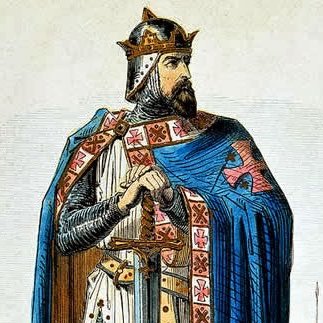
George Castriot Scanderbeg—
His story might as well have been written by a novelist rather than a historian—almost too wild to be believed. I've only just begun Barleti's book and it's already one of the most harrowing things I've ever read.🧵
His story might as well have been written by a novelist rather than a historian—almost too wild to be believed. I've only just begun Barleti's book and it's already one of the most harrowing things I've ever read.🧵

The legend of Scanderbeg is set in motion when he, youngest son of an Albanian nobleman, is taken by the Ottomans at age eight, indoctrinated into Ottoman ways, forced to convert to Islam, subjected to all sorts of Ottoman horrors.
He is trained as a soldier and rises to the top of the sultan’s army. Scanderbeg brings the sultan victory after victory, wins public duels against foreign champions for the sultan's honor, and by all appearances the Albanian boy has become the Turks' greatest warrior.
He gets his nickname because the Ottomans considered him the second coming of Alexander.
(Scanderbeg: Alexander the Lord, or the Great.)
(Scanderbeg: Alexander the Lord, or the Great.)
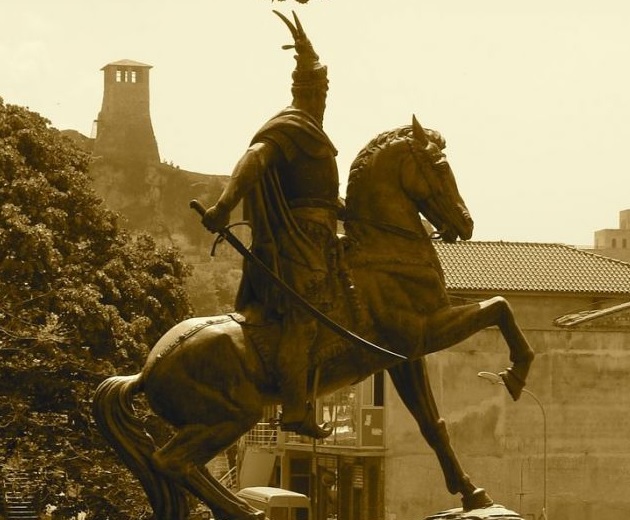
Then his father dies in Albania, the sultan kills his brothers, and Scanderbeg is tasked with leading Ottoman forces against the Hungarian champion Hunyadi at Morava. He sees his chance.
Early in the battle Scanderbeg orders a retreat which sends the Turkish army into full panic.
(There's some speculation that Scanderbeg sent Hunyadi word of his plans.)
(There's some speculation that Scanderbeg sent Hunyadi word of his plans.)
In the confusion, he gets a hold of the official secretary and forces him to write letters ordering the Ottoman governor of Croia, his father’s former lands, to transfer the governorship to Scanderbeg.
He then puts the secretary and the secretary’s staff to the sword!
He then puts the secretary and the secretary’s staff to the sword!
With 300 loyal men, he marches to his father’s lands, presents the papers, receives the keys to the city—and massacre the Turkish garrison in Croia, with the help of the citizens so overjoyed at the sight of their lord’s son returned.
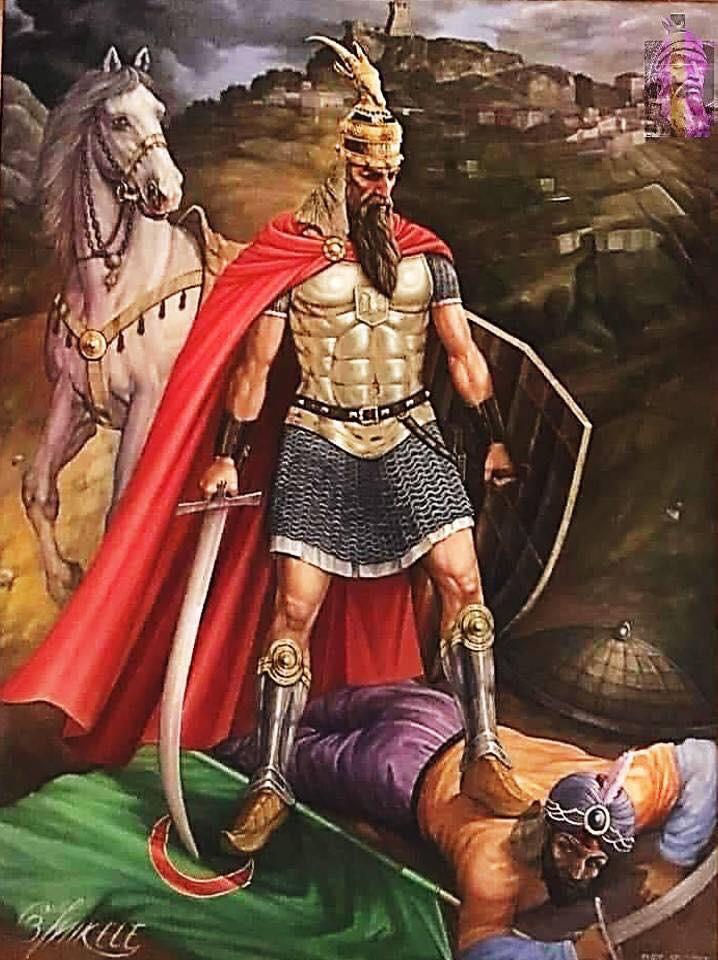
He had never been a true Ottoman, a Muslim—but an Albanian and a Christian all along, waiting for his opportunity. He declares before his countrymen his intent to fight the Ottomans, a promise he will make good on till his death.
This launches a legendary military career, in which Scanderbeg consistently leads the Albanian forces to great victories over the Ottomans, despite being outnumbered, despite suffering constant betrayal.
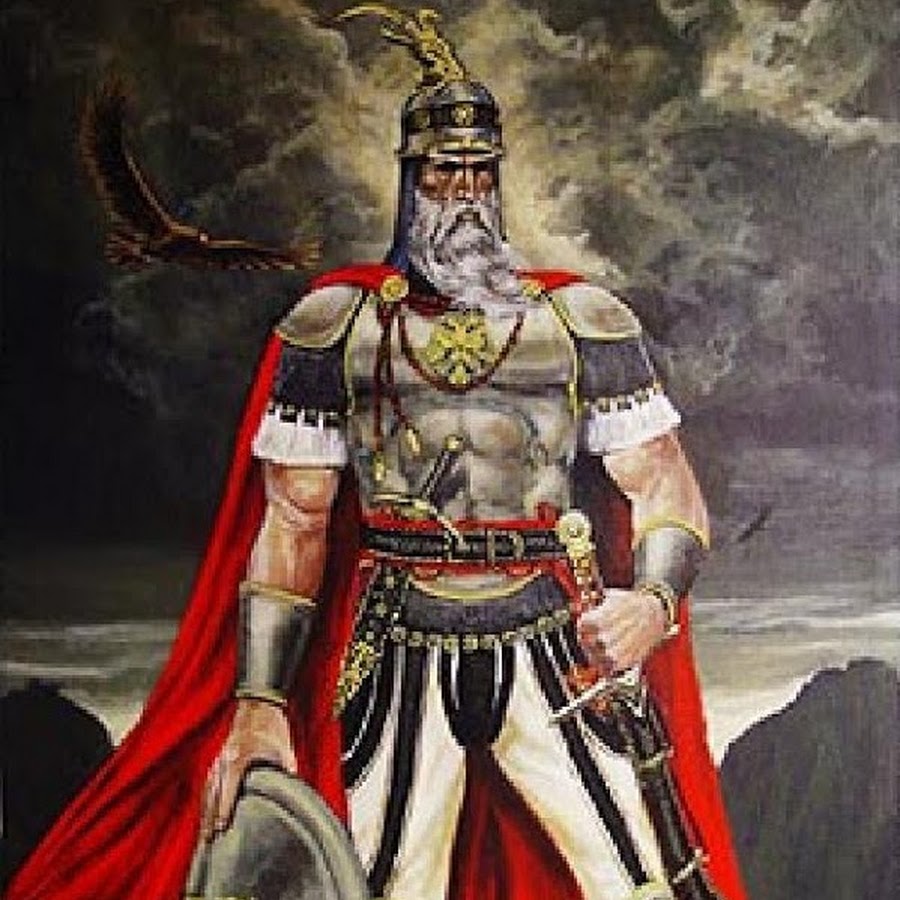
Consider the timing: Scanderbeg returned to Albania in 1443 and fought the Ottomans until his death in 1468. After the fall of Constantinople in 1453, it seemed like the Ottomans might run through Europe. But they didn't, thanks to Scanderbeg, Hunyadi, and others.
Albania was a key launchpad into Italy, and it was largely because of Scanderbeg's campaigns that the Ottomans didn't take Rome the way they took Constantinople.
x.com
x.com
For his services to Christendom, Scanderbeg was named Athleta Christi ("Champion of Christ") by four different Popes.
x.com
x.com
Loading suggestions...