

A post about baptism.
Baptism is the first and foundational sacrament of Christian initiation. It is understood as the means by which a person is cleansed from original sin, incorporated into the Church, and begins a new life in Christ. Baptism is both a sacrament and a sign of the new covenant established by Jesus Christ.
Baptism is necessary for salvation as we know from Scripture and Tradition. According to the Catechism of the Catholic Church (CCC), this necessity is grounded in Jesus' command and the doctrine of original sin:
1. Jesus’ Command: In John 3:5, Jesus states, “Very truly I tell you, no one can enter the kingdom of God unless they are born of water and the Spirit.” This passage means baptism is essential for entering the Kingdom of God and ultimately making it to heaven.
2. The Great Commission: In Matthew 28:19, Jesus commands His disciples to “Go therefore and make disciples of all nations, baptizing them in the name of the Father and of the Son and of the Holy Spirit.” This indicates the central role of Baptism in the Christian mission, using the traditional Trinitarian formula.
3. The Apostolic Teaching: Acts 2:38, where Peter says, “Repent and be baptized, every one of you, in the name of Jesus Christ for the forgiveness of your sins,” indicates that Baptism is necessary for forgiveness and inclusion in the Christian community.
4. Original Sin: Baptism is necessary to cleanse original sin (CCC 1250). The Catechism states that even though Christ's sacrificial death reconciles humanity with God, Baptism is the means by which this grace is applied to individuals.
Baptism is a sacrament in the Catholic Church, which means it is a sacred ritual (religious practice) that conveys grace. According to the Catechism (CCC 1210), a sacrament is an outward sign instituted by Christ to give grace. Baptism, as a sacrament, has several key aspects:
1. Outward Sign: The ritual involves the use of water, which symbolizes purification, and the invocation of the Holy Trinity ("in the name of the Father, and of the Son, and of the Holy Spirit").
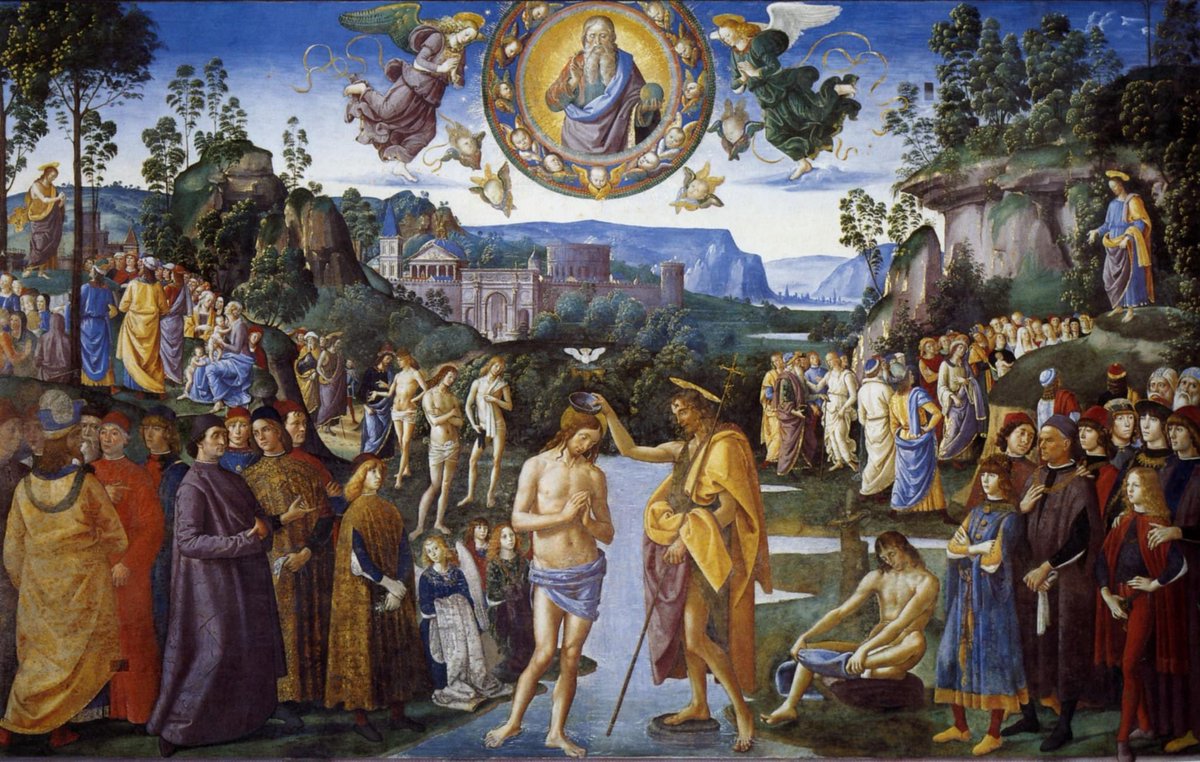
2. Instituted by Christ: The sacrament was instituted by Jesus Christ, as outlined in the Great Commission (Matthew 28:19) and exemplified by His own baptism (Matthew 3:13-17) which was done for righteousness and for Jesus to act as an example for us to follow.
3. Conveys Grace: Through Baptism, individuals receive sanctifying grace, are united with Christ, and are incorporated into the Church.
Baptism not only purifies from all sins, but also makes the neophyte (new member of the Church) "a new creature," an adopted son of God, who has become a "partaker of the divine nature," member of Christ and co-heir with him, and a temple of the Holy Spirit.
Infant baptism is supported by the Catholic Church based on several biblical and traditional arguments:
1. Household Baptisms: The New Testament includes accounts of entire households being baptized (e.g., Acts 16:15 with Lydia’s household, and Acts 16:33 with the jailer’s family). While these passages do not specify the age of those baptized, households include infants.
2. Jesus' Teaching on Children: In Matthew 19:14, Jesus says, “Let the little children come to me and do not hinder them; for to such belongs the kingdom of heaven.” This is seen as affirming the inclusion of children in the life of grace. Further, entrance to the kingdom of heaven is conditional on being baptised of water and the Spirit, as mentioned previously.
3. Tradition and Early Church Practice: Early Christian writings and the writings of Church Fathers, such as St. Augustine and St. Cyprian, support the practice of baptizing infants. The belief is that Baptism removes the guilt of original sin, which is a benefit to infants as well.
Baptism is the first and foundational sacrament of Christian initiation. It is understood as the means by which a person is cleansed from original sin, incorporated into the Church, and begins a new life in Christ. Baptism is both a sacrament and a sign of the new covenant established by Jesus Christ.
Baptism is necessary for salvation as we know from Scripture and Tradition. According to the Catechism of the Catholic Church (CCC), this necessity is grounded in Jesus' command and the doctrine of original sin:
1. Jesus’ Command: In John 3:5, Jesus states, “Very truly I tell you, no one can enter the kingdom of God unless they are born of water and the Spirit.” This passage means baptism is essential for entering the Kingdom of God and ultimately making it to heaven.
2. The Great Commission: In Matthew 28:19, Jesus commands His disciples to “Go therefore and make disciples of all nations, baptizing them in the name of the Father and of the Son and of the Holy Spirit.” This indicates the central role of Baptism in the Christian mission, using the traditional Trinitarian formula.
3. The Apostolic Teaching: Acts 2:38, where Peter says, “Repent and be baptized, every one of you, in the name of Jesus Christ for the forgiveness of your sins,” indicates that Baptism is necessary for forgiveness and inclusion in the Christian community.
4. Original Sin: Baptism is necessary to cleanse original sin (CCC 1250). The Catechism states that even though Christ's sacrificial death reconciles humanity with God, Baptism is the means by which this grace is applied to individuals.
Baptism is a sacrament in the Catholic Church, which means it is a sacred ritual (religious practice) that conveys grace. According to the Catechism (CCC 1210), a sacrament is an outward sign instituted by Christ to give grace. Baptism, as a sacrament, has several key aspects:
1. Outward Sign: The ritual involves the use of water, which symbolizes purification, and the invocation of the Holy Trinity ("in the name of the Father, and of the Son, and of the Holy Spirit").
2. Instituted by Christ: The sacrament was instituted by Jesus Christ, as outlined in the Great Commission (Matthew 28:19) and exemplified by His own baptism (Matthew 3:13-17) which was done for righteousness and for Jesus to act as an example for us to follow.
3. Conveys Grace: Through Baptism, individuals receive sanctifying grace, are united with Christ, and are incorporated into the Church.
Baptism not only purifies from all sins, but also makes the neophyte (new member of the Church) "a new creature," an adopted son of God, who has become a "partaker of the divine nature," member of Christ and co-heir with him, and a temple of the Holy Spirit.
Infant baptism is supported by the Catholic Church based on several biblical and traditional arguments:
1. Household Baptisms: The New Testament includes accounts of entire households being baptized (e.g., Acts 16:15 with Lydia’s household, and Acts 16:33 with the jailer’s family). While these passages do not specify the age of those baptized, households include infants.
2. Jesus' Teaching on Children: In Matthew 19:14, Jesus says, “Let the little children come to me and do not hinder them; for to such belongs the kingdom of heaven.” This is seen as affirming the inclusion of children in the life of grace. Further, entrance to the kingdom of heaven is conditional on being baptised of water and the Spirit, as mentioned previously.
3. Tradition and Early Church Practice: Early Christian writings and the writings of Church Fathers, such as St. Augustine and St. Cyprian, support the practice of baptizing infants. The belief is that Baptism removes the guilt of original sin, which is a benefit to infants as well.
4. Prefiguration: in the Old Testament, the Jewish boys entered into their covenantal relationship with God through circumcision on the 8th day of their lives (Genesis 17:12, Luke 2:21, and Philippians 3:5). Circumcision was a ceremonial law prescribed by the Mosaic Law, which was fulfilled in Christ and is hence not effective or required in the New law. Entering into a covenant with God is instead marked by baptism rather than circumcision (Colossians 2:11-12) in the new law.
Baptism can be performed by different methods: immersion, pouring (affusion), or sprinkling (aspersion). The Catholic Church recognizes all these methods as valid:
o Immersion: This is the most traditional form and is based on the practice of Jesus' own baptism (Matthew 3:16) and the symbolism of being buried and rising with Christ.
o Pouring: Acts 2:17-18 describes the Holy Spirit being poured out on all people. Also, the practice of pouring is supported by references to water being poured out in various contexts in the Bible (e.g., Ezekiel 36:25).
o Sprinkling: This is less common but can be seen as symbolic of purification, as in the Old Testament practice of sprinkling with sacrificial blood (Exodus 24:8) and water (Numbers 8:7).
While immersion is a common practice, pouring or sprinkling is also used when immersion is impractical, such as with infants or in cases of illness. Further, there is no absolute requirement stipulated in Scripture that baptism must take place by immersion only.
In technical terms, the form of baptism is the Trinitarian baptismal formula, whereas the matter is the water used. These are integral and necessary parts of baptism for the sacrament to be valid. The manner in which it’s effected – by immersion, affusion, or aspersion, do not affect the validity of the sacrament but are different ways of conferring the same sacrament.
The Catholic Church teaches that there is only one valid baptism for an individual, as stated in the Nicene Creed: "We acknowledge one Baptism for the forgiveness of sins." This is further supported by Scripture as follows:
1. Ephesians 4:5: “There is one Lord, one faith, one baptism.” This verse emphasizes the unity and singularity of baptism in the Christian faith.
2. 1 Corinthians 12:13: “For we were all baptized by one Spirit so as to form one body.” This highlights that through baptism, believers are incorporated into one body of Christ, affirming the concept of a single, unifying sacrament.
The Catholic Church teaches that baptism cannot be repeated because it leaves an indelible mark on the soul, signifying that the person is permanently and uniquely a member of the Church.
Limbo is a theological concept that historically described a state of natural happiness for unbaptized infants who die. It is not a defined doctrine of the Church but was a way to explain the fate of those who, through no fault of their own, could not be baptized. There is a basis of this as follows:
1. Original Sin and Baptism: The Catholic Church teaches that baptism is necessary to cleanse from original sin (John 3:5, Acts 2:38). Infants are baptized to remove original sin, to further their salvation.
2. Hope for Unbaptized Infants: The Church acknowledges that while baptism is necessary, God's mercy is boundless. The Catechism (1261) states that the Church entrusts unbaptized infants to the mercy of God, suggesting that God's grace could reach them in ways known only to Him.
As a recent development, the 2007 document from the International Theological Commission, “The Hope of Salvation for Infants Who Die Without Being Baptized,” emphasizes trust in God's mercy rather than focusing on limbo as a definitive state. This is not a change in doctrine but a shift in emphasis.
Baptism can be performed by different methods: immersion, pouring (affusion), or sprinkling (aspersion). The Catholic Church recognizes all these methods as valid:
o Immersion: This is the most traditional form and is based on the practice of Jesus' own baptism (Matthew 3:16) and the symbolism of being buried and rising with Christ.
o Pouring: Acts 2:17-18 describes the Holy Spirit being poured out on all people. Also, the practice of pouring is supported by references to water being poured out in various contexts in the Bible (e.g., Ezekiel 36:25).
o Sprinkling: This is less common but can be seen as symbolic of purification, as in the Old Testament practice of sprinkling with sacrificial blood (Exodus 24:8) and water (Numbers 8:7).
While immersion is a common practice, pouring or sprinkling is also used when immersion is impractical, such as with infants or in cases of illness. Further, there is no absolute requirement stipulated in Scripture that baptism must take place by immersion only.
In technical terms, the form of baptism is the Trinitarian baptismal formula, whereas the matter is the water used. These are integral and necessary parts of baptism for the sacrament to be valid. The manner in which it’s effected – by immersion, affusion, or aspersion, do not affect the validity of the sacrament but are different ways of conferring the same sacrament.
The Catholic Church teaches that there is only one valid baptism for an individual, as stated in the Nicene Creed: "We acknowledge one Baptism for the forgiveness of sins." This is further supported by Scripture as follows:
1. Ephesians 4:5: “There is one Lord, one faith, one baptism.” This verse emphasizes the unity and singularity of baptism in the Christian faith.
2. 1 Corinthians 12:13: “For we were all baptized by one Spirit so as to form one body.” This highlights that through baptism, believers are incorporated into one body of Christ, affirming the concept of a single, unifying sacrament.
The Catholic Church teaches that baptism cannot be repeated because it leaves an indelible mark on the soul, signifying that the person is permanently and uniquely a member of the Church.
Limbo is a theological concept that historically described a state of natural happiness for unbaptized infants who die. It is not a defined doctrine of the Church but was a way to explain the fate of those who, through no fault of their own, could not be baptized. There is a basis of this as follows:
1. Original Sin and Baptism: The Catholic Church teaches that baptism is necessary to cleanse from original sin (John 3:5, Acts 2:38). Infants are baptized to remove original sin, to further their salvation.
2. Hope for Unbaptized Infants: The Church acknowledges that while baptism is necessary, God's mercy is boundless. The Catechism (1261) states that the Church entrusts unbaptized infants to the mercy of God, suggesting that God's grace could reach them in ways known only to Him.
As a recent development, the 2007 document from the International Theological Commission, “The Hope of Salvation for Infants Who Die Without Being Baptized,” emphasizes trust in God's mercy rather than focusing on limbo as a definitive state. This is not a change in doctrine but a shift in emphasis.
Baptism by Fire refers to the martyrdom or suffering endured for the sake of the faith, which can be seen as a form of baptism in the sense of purification and entry into the Church. This has support from Matthew 3:11 whereby John the Baptist speaks of Jesus baptizing with the Holy Spirit and with fire. This means the purification and trial involved in following Christ.
Baptism by Desire refers to the theological premise that those who desire baptism but die before they can receive it can be saved through their desire and commitment to God. In Luke 23:42-43, the good thief on the cross expresses faith and desire for salvation, and Jesus promises him paradise, suggesting that a sincere desire for baptism and repentance can lead to salvation. This notion is used by the Church to explain how the good thief was not baptised but was assured of his salvation whilst it's also said in Scripture that one cannot enter the kingdom of heaven without being baptised. CCC 1258-1261 says that catechumens who die before baptism are assured of God’s mercy. This is an extension of the principle that God’s grace is not limited by the ordinary means of salvation.
Baptism should be administered as soon as possible because it is necessary for salvation. The urgency is particularly emphasized for infants and those in danger of death. As we hear in Scripture:
1. Acts 22:16: Paul recounts Ananias saying, “And now what are you waiting for? Get up, be baptized and wash your sins away, calling on his name.” This encourages immediate action regarding baptism.
2. Mark 16:16: Jesus states, “Whoever believes and is baptized will be saved, but whoever does not believe will be condemned.” This highlights the critical nature of baptism.
In emergencies, such as the illness of an infant or someone in imminent danger of death, the Catholic Church encourages immediate baptism, reflecting its understanding of baptism as necessary for the forgiveness of sins and entrance into the Church🇻🇦🕊️
Baptism by Desire refers to the theological premise that those who desire baptism but die before they can receive it can be saved through their desire and commitment to God. In Luke 23:42-43, the good thief on the cross expresses faith and desire for salvation, and Jesus promises him paradise, suggesting that a sincere desire for baptism and repentance can lead to salvation. This notion is used by the Church to explain how the good thief was not baptised but was assured of his salvation whilst it's also said in Scripture that one cannot enter the kingdom of heaven without being baptised. CCC 1258-1261 says that catechumens who die before baptism are assured of God’s mercy. This is an extension of the principle that God’s grace is not limited by the ordinary means of salvation.
Baptism should be administered as soon as possible because it is necessary for salvation. The urgency is particularly emphasized for infants and those in danger of death. As we hear in Scripture:
1. Acts 22:16: Paul recounts Ananias saying, “And now what are you waiting for? Get up, be baptized and wash your sins away, calling on his name.” This encourages immediate action regarding baptism.
2. Mark 16:16: Jesus states, “Whoever believes and is baptized will be saved, but whoever does not believe will be condemned.” This highlights the critical nature of baptism.
In emergencies, such as the illness of an infant or someone in imminent danger of death, the Catholic Church encourages immediate baptism, reflecting its understanding of baptism as necessary for the forgiveness of sins and entrance into the Church🇻🇦🕊️
Loading suggestions...