

The perfect company has:
• Steady growth
• Organic growth
• Diversified growth
• Expanding growth
• Recurring revenue
Let's break it down
• Steady growth
• Organic growth
• Diversified growth
• Expanding growth
• Recurring revenue
Let's break it down

• Revenue is an investors best friend
Morgan Stanley’s research concluded that sales growth amounted to 74% of the shareholder return after 10 years.
Profits only amounted to 15%, multiple expansion for 5% (increasing price to earnings ratio), and 6% for free cash flow.
Morgan Stanley’s research concluded that sales growth amounted to 74% of the shareholder return after 10 years.
Profits only amounted to 15%, multiple expansion for 5% (increasing price to earnings ratio), and 6% for free cash flow.

• Organic growth is preferred
Organic growth refers to the business selling more of its product indicating a high demand for the product.
Inorganic sources is primarily acquisitions. 70 - 90% of acquisitions end up destroying shareholder value.
Organic > Inorganic
Organic growth refers to the business selling more of its product indicating a high demand for the product.
Inorganic sources is primarily acquisitions. 70 - 90% of acquisitions end up destroying shareholder value.
Organic > Inorganic
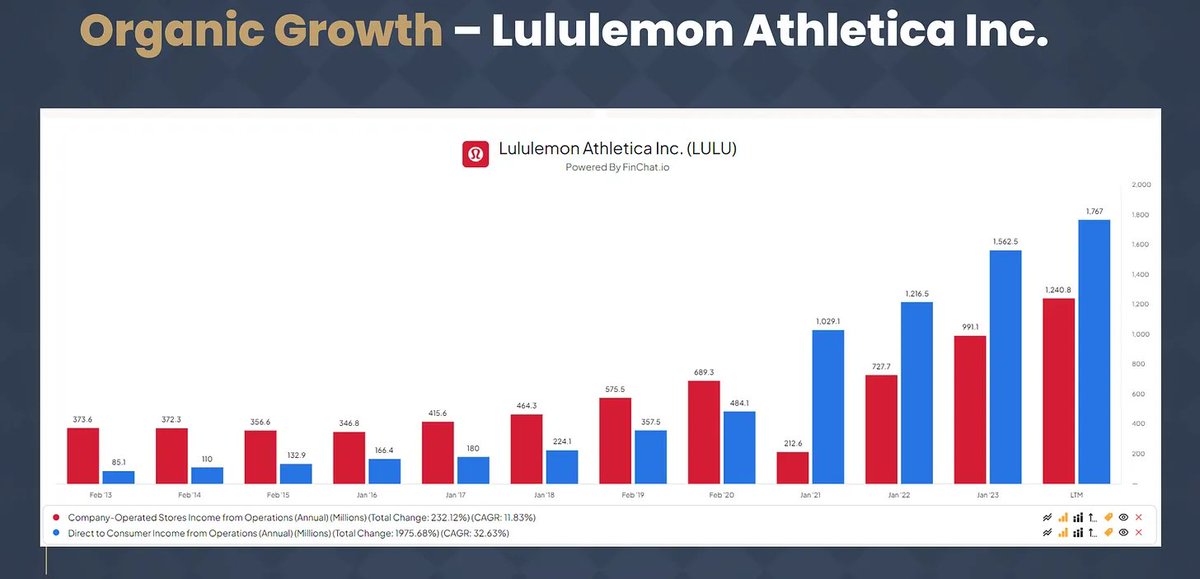
One example of organic growth machine:
• Diversified growth (Customers)
Companies with diversified revenue are preferred, as the risk is lower.
In addition, these companies usually have more power in negotiating with their clients as they are not dependent on one large client.
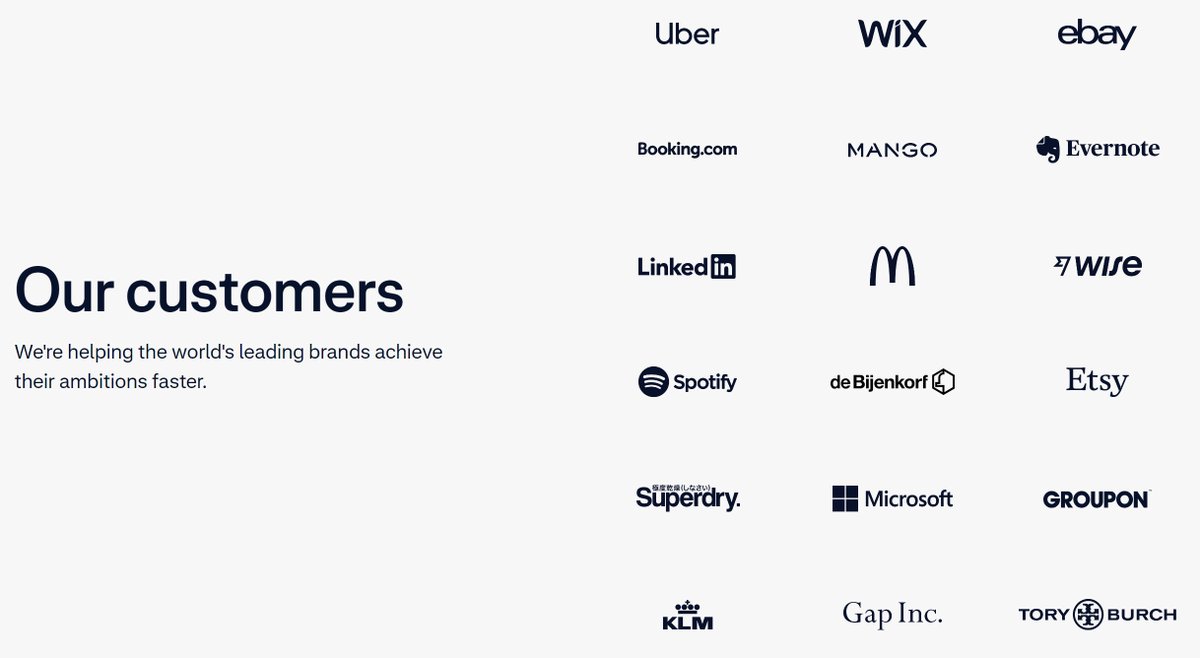
Adyen's customers:
Companies with diversified revenue are preferred, as the risk is lower.
In addition, these companies usually have more power in negotiating with their clients as they are not dependent on one large client.
Adyen's customers:
• Multiple growing business segments
Companies that just sell one product or service can be risky.
The best businesses have multiple business segments with products/services in each of the segments.
When one segment is under pressure, the others can pick up the slack.
Companies that just sell one product or service can be risky.
The best businesses have multiple business segments with products/services in each of the segments.
When one segment is under pressure, the others can pick up the slack.
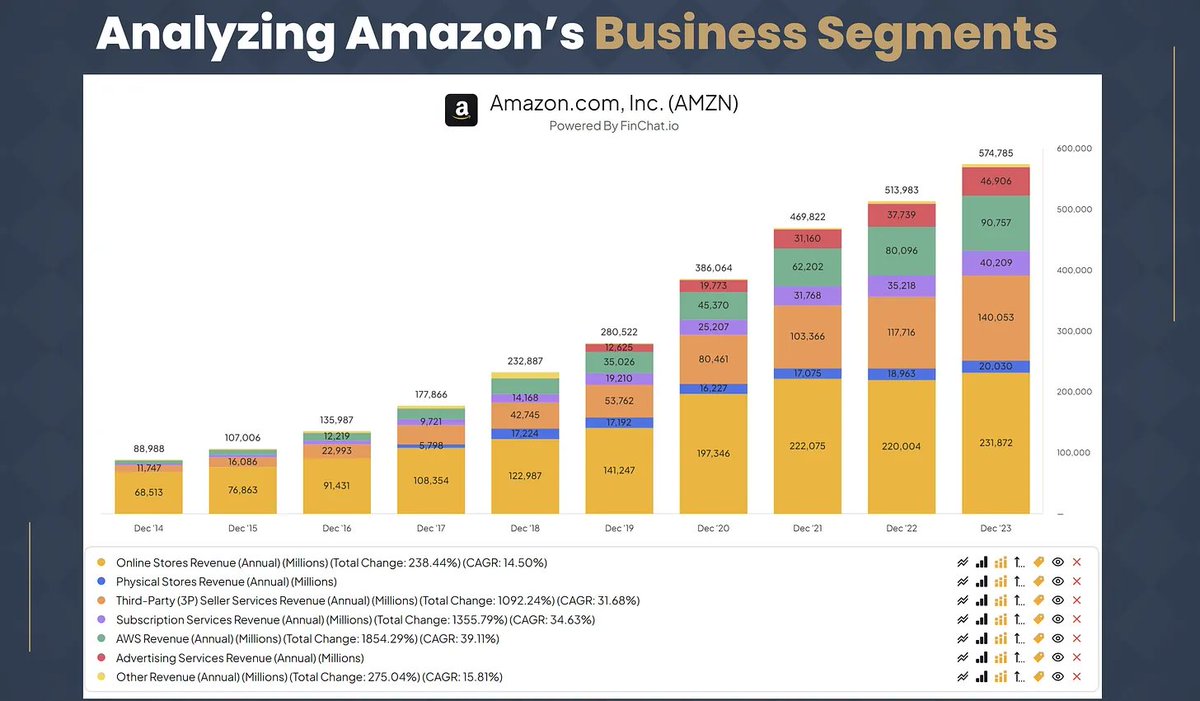
Amazon is a great example with multiple growing business segments outside its "Online Store Revenue" segment:
• Geographic Revenue Split
Companies that are growing in multiple markets are superior.
If you can invest in a business pre-internationalization, even better (but also harder).
Same concept here, if one market is slowing down, others can pick up the slack.
Companies that are growing in multiple markets are superior.
If you can invest in a business pre-internationalization, even better (but also harder).
Same concept here, if one market is slowing down, others can pick up the slack.
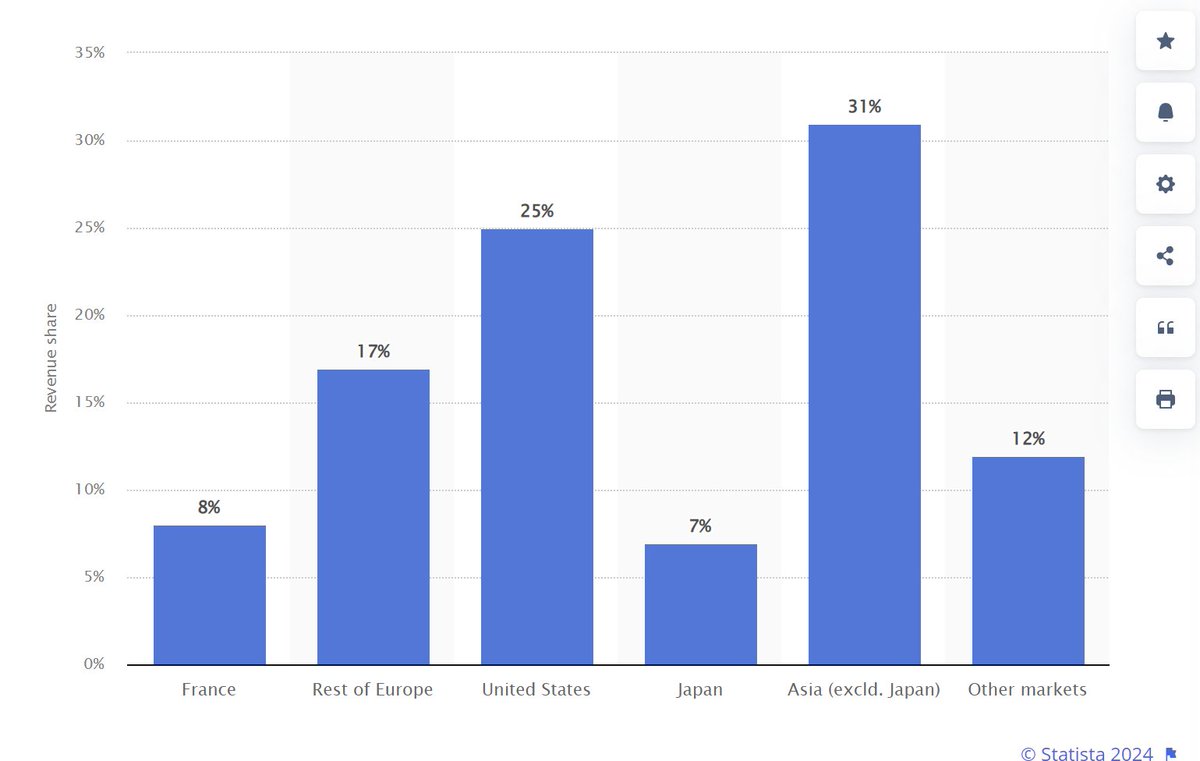
LVMH is present in multiple markets:
• Recurring revenue
Repeat purchases are preferred over one-off sales.
This does not have to be software as a service (SaaS). It can be consumer products, service agreements or subscription services.
The predictability of this revenue model is attractive for investors.
Repeat purchases are preferred over one-off sales.
This does not have to be software as a service (SaaS). It can be consumer products, service agreements or subscription services.
The predictability of this revenue model is attractive for investors.
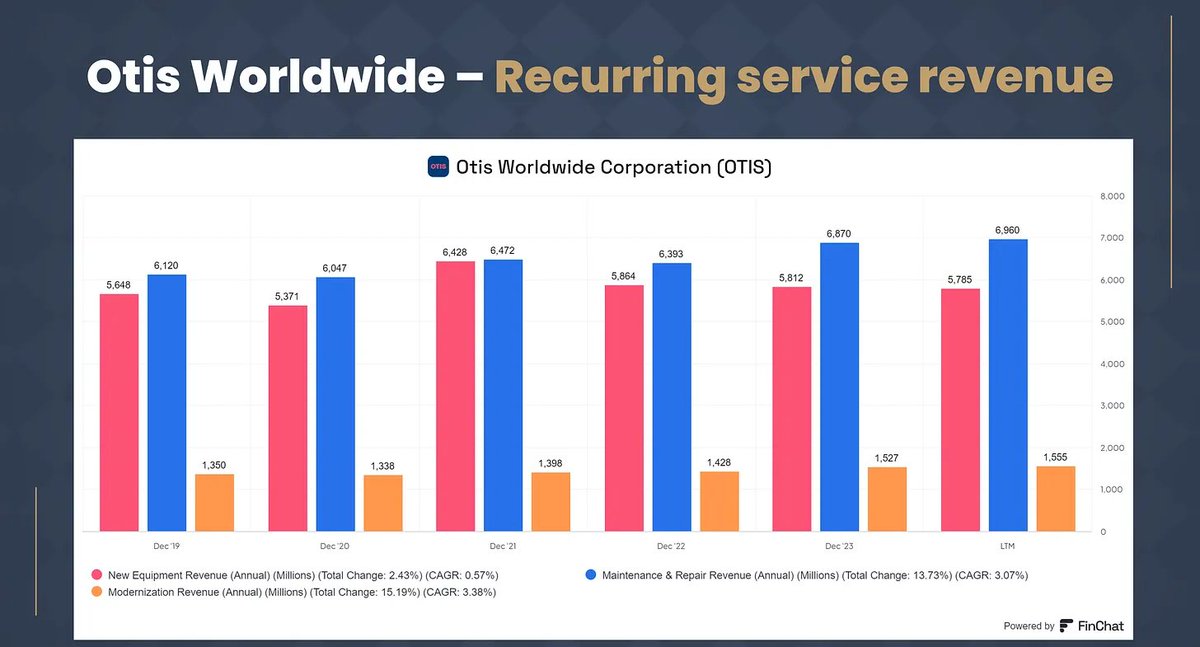
Otis Worldwide has a recurring service revenue model.
It sells elevators (Not predictable), and then it services these elevators over time (Predictable and recurring).
It sells elevators (Not predictable), and then it services these elevators over time (Predictable and recurring).
If you enjoy my content, be kind and:
1. Follow me @InvestInAssets for more of these
2. RT the tweet below to share this thread with your audience
1. Follow me @InvestInAssets for more of these
2. RT the tweet below to share this thread with your audience
Loading suggestions...