

A thread discussing Soviet logistical practices from the late 70s to the early 80s:

The evolution of Soviet logistics spans the entire Cold War, shifting considerably with each decade. To cover such a complicated subject these threads will be separated by the period in which they are relevant.
It is important to note that the framework for Soviet doctrine and tactics lies within core principles, those being speed, mobility, concentration of forces, surprise, aggressiveness, preservation of combat efficacy, and cohesion between goals and situational fluidity.
Soviet logistical units operate on a similar set of principles, those being mobility, echeloned emplacement of reserves, centralized planning, standardization of munitions and equipment, and a wide array of transportation systems.
These principles are actualized through organization and equipment.
The first cornerstone of Soviet logistical theory is mobility, this is achieved first through keeping their logistical units small, and highly mobile, this practice is consistent from the battalion to divisional level.
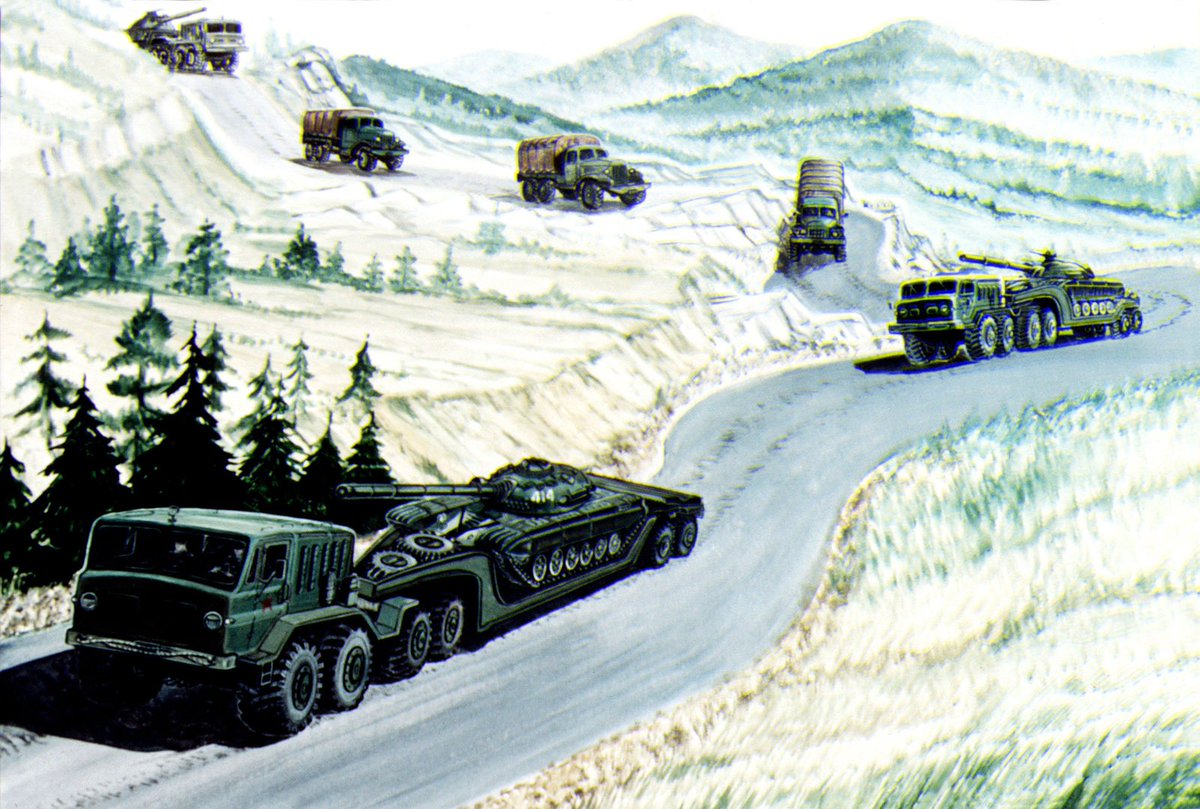
Due to the Soviets demanding a highly mobile force it is only reasonable speed is applied similarly in this regard to rear service units, furthermore, it is imperative these units follow closely behind as to ensure rapid resupply of the forward element.
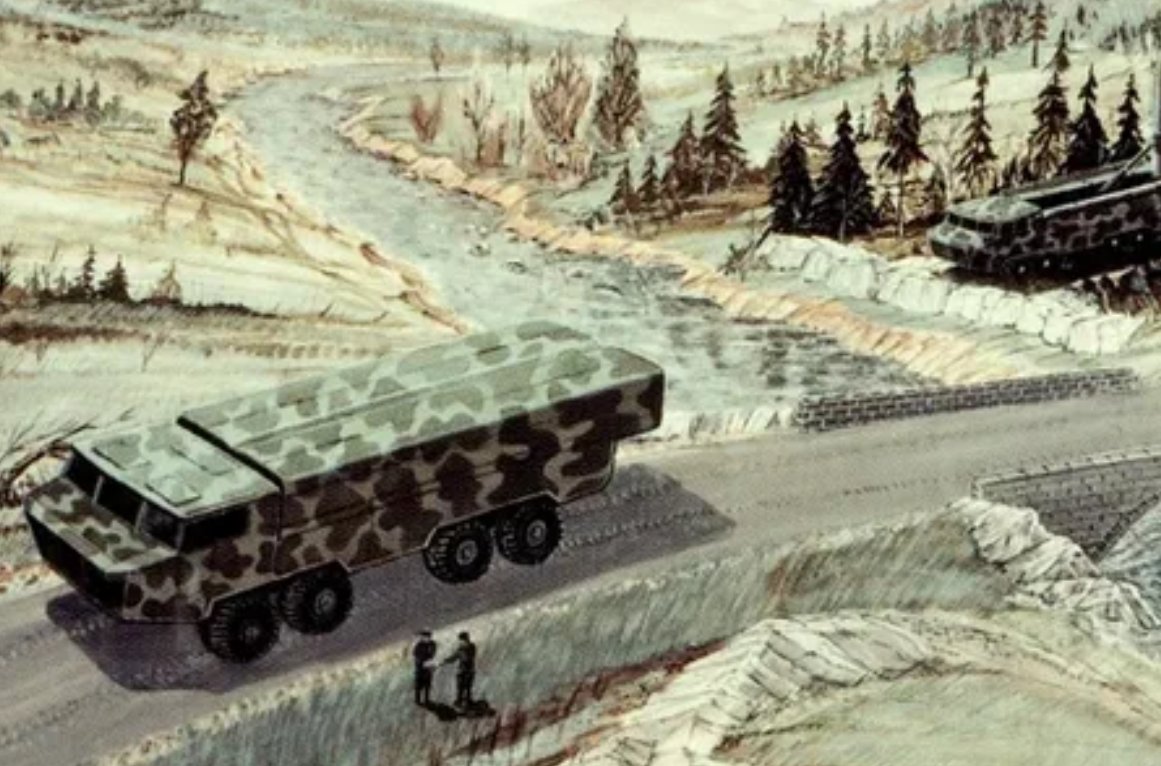
To ensure these tactical rear service units do not maintain cumbersome lines of resupply, logistical headquarters are employed to relay information on what is actually needed at the front, and what can remain in the rear.
Mobility only improves this system, as it directly influences the speed in which priorities can be redirected. Furthermore, these headquarters work to estimate what the unit will need in the future, and to assist in preparing reserves of logistics to be rapidly mobilized.
Coinciding with the importance of concentrated forces, the second principle, echeloned emplacement of reserves, is actualized through this matrix, it is imperative well stocked reserves are placed forward, and function in tandem with tactical service units.
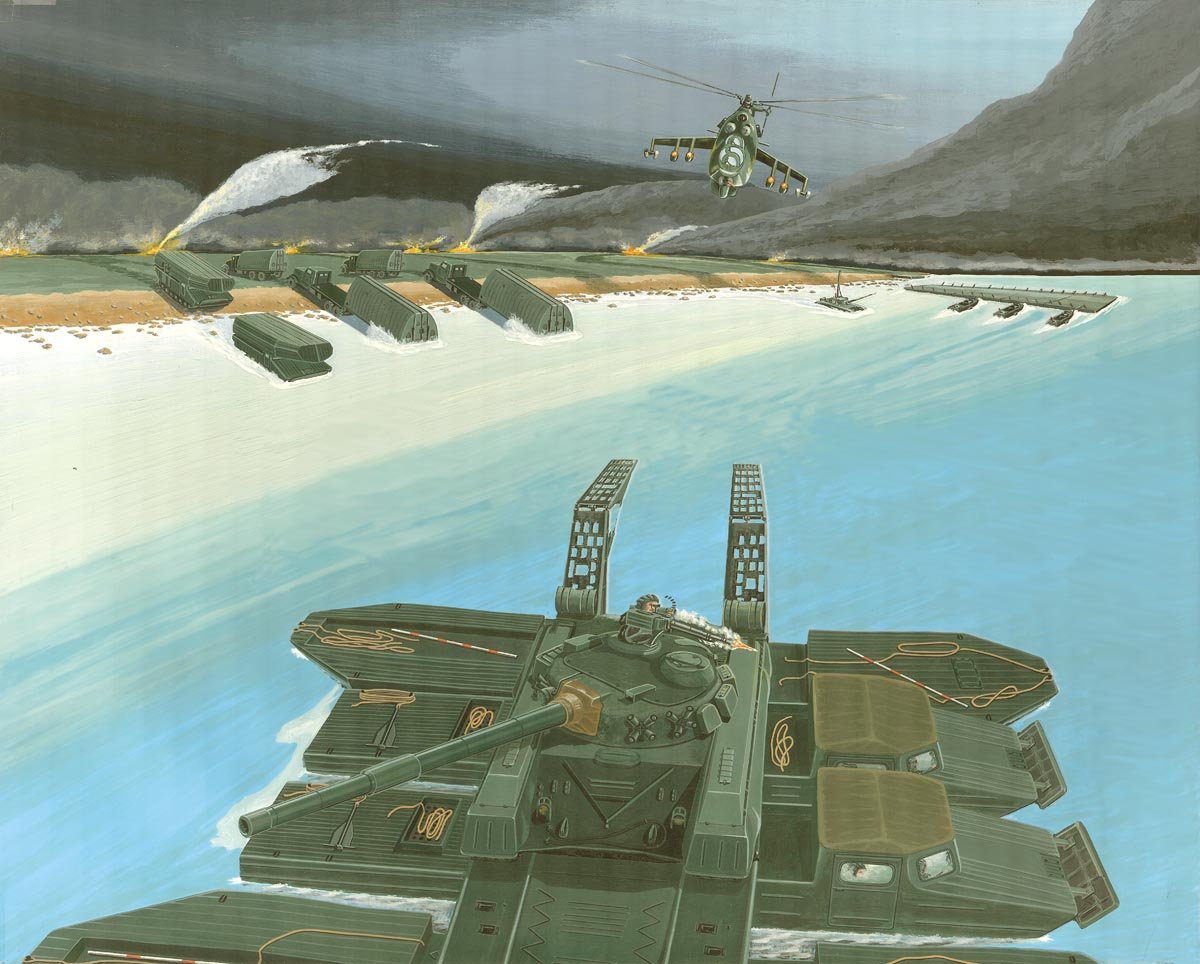
This also plays into the importance of surprise in Soviet thinking, as gradually advanced logistical elements are not nearly as alarming as rapidly dedicated reserves, especially in peacetime.
Such positioning also ensures the army and front levels go properly supplied as the Soviet industry converts itself to full wartime production, which is to be 90 or so days, Soviet reserves are designed to sustain until this point and well over.
To keep up with the importance placed on aggressiveness, Soviet logistics are broken into echelons, logistics at the divisional level downwards are designed to be organic support elements, which operate independently from the higher HQ.

These organic elements are accompanied by even further logistical backups which ensure the organic logistics are properly supplied. This allows tactical commanders to freely pursue offensives without having to worry about the burden of obtaining resupplies for their resupply.

Tactical units are resupplied by assets concentrated at the army and front level, this offers greater flexibility, as well as preserving combat effectiveness, as rear services can respond quickly to the needs of units individually-
Which allows for replenishment and reorganization of other elements.
To properly centralize logistical units, there is a priority system which dictates items that are to be resupplied ahead of others, due to the Soviets emphasizing the preservation of fighting capabilities ammunition and fuel is at the top of this list.
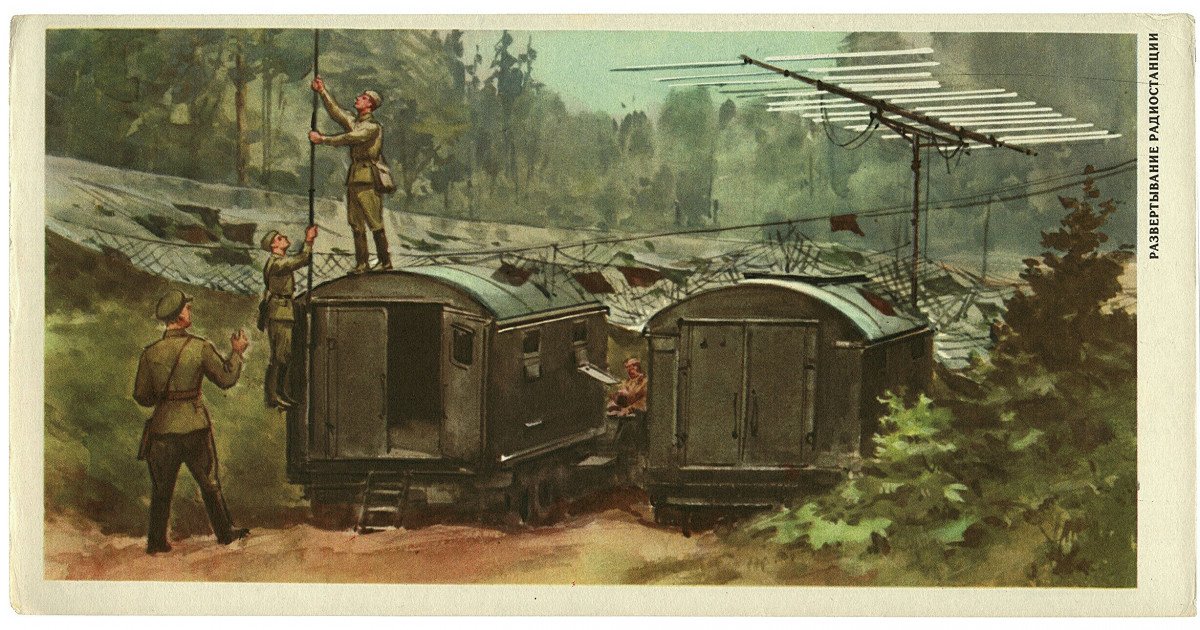
This has its disadvantages, but the prime concern is to ensure the success of combat missions as they progress and develop.
To ease the burden of supplying an army the size of the CCCPs, standardization is exceedingly important, due to rampant standardization between military equipment and the civilian sector, parts can be easily cannibalized and shared between systems.
A massive advantage to this system is that units from throughout the Warsaw Pact are easily attached to Soviet formations and vice versa.
In regards to the civilian industry, almost all forms of commercial and private transportation is designed along the lines of Soviet army vehicles, this not only reduces the training requirements for the mobilized populace-
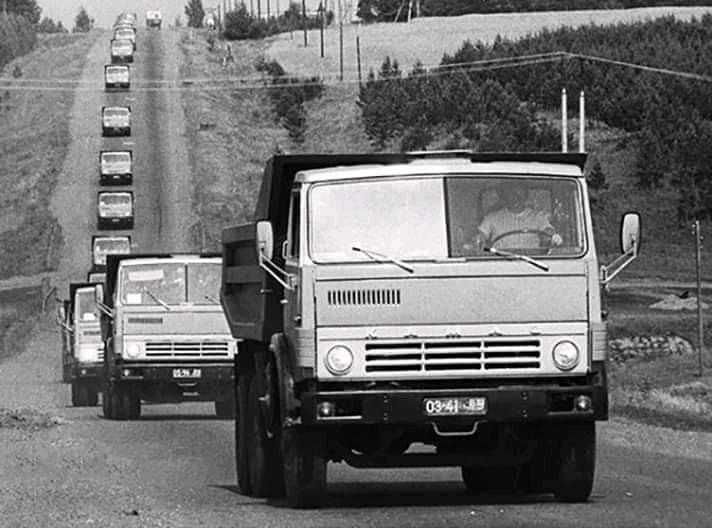
-but it eliminates the need for abundant reserve stocks of proprietary parts.
It is important to note the Soviets placed considerable importance on the capture of enemy reserves, given the offensive engagement the USSR would ideally (in their eyes) engage, there is care and consideration taken to the effective employment of captured material.
And no, before anyone makes this comment, Soviet logistics were not dependent on captured material, this is a variable that is impossible to control. It is purely a bonus.
In regards to more overarching concepts, higher HQs are designed to be capable of employing their organic logistical backup to supply the next two lower echelons.

The Soviets operate what are known as emergency and mobilization reserves, these are usually concentrated at the front and army level, these reserves exist to supplement equipment lost in the event of nuclear attacks.
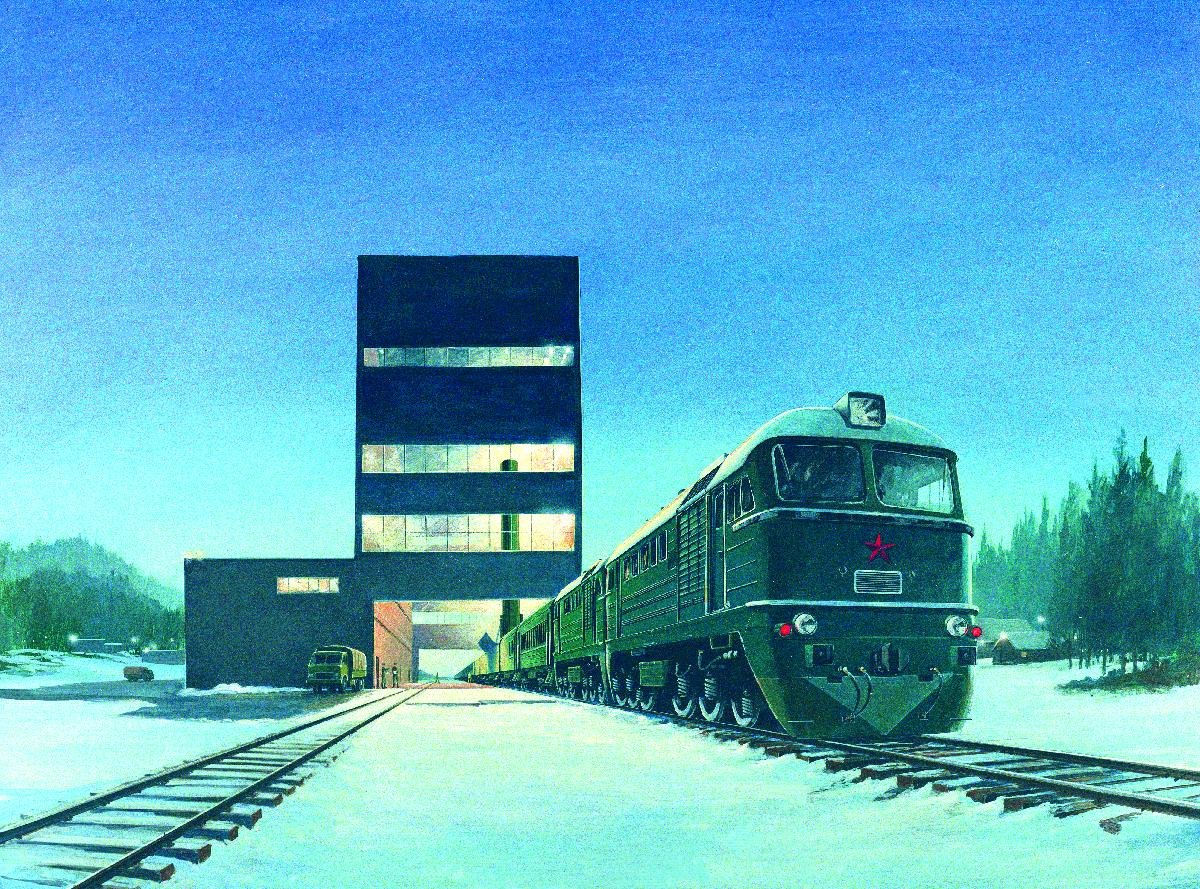
These are supported by mobilization reserves, which work to rapidly replenish emergency reserves if they are depleted, following this are stockpiles and state reserves, equipment from these elements are shipped in bulk via rail across the country.
Attached directly to manuever units are mobile supply dumps, which are usually established 30 kilometers from the front, these are kept loaded in dispersed transport vectors, and are seldom unloaded until needed.
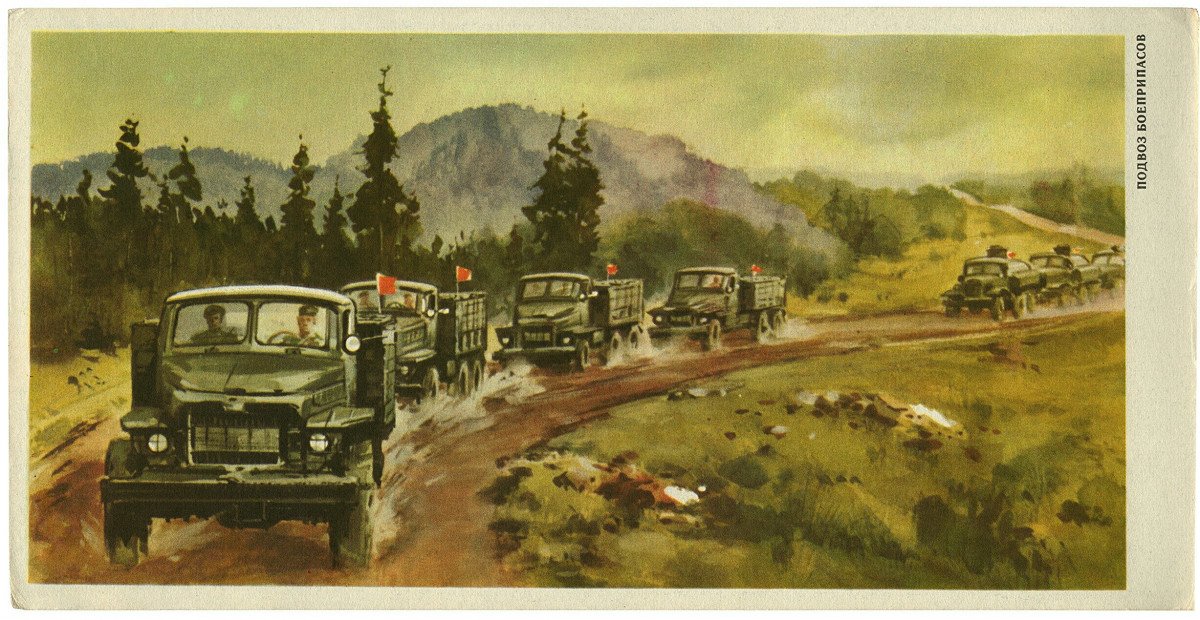
The primary logistical vehicles the Soviets employ are motorized elements, rail, and helicopters.
The Soviets also place great importance on tactical fuel pipelines, and operate a considerable number of pipelaying troops, each pipelaying regiment is comprised of 400 men and is capable of laying 80 kilometers of pipe each day.
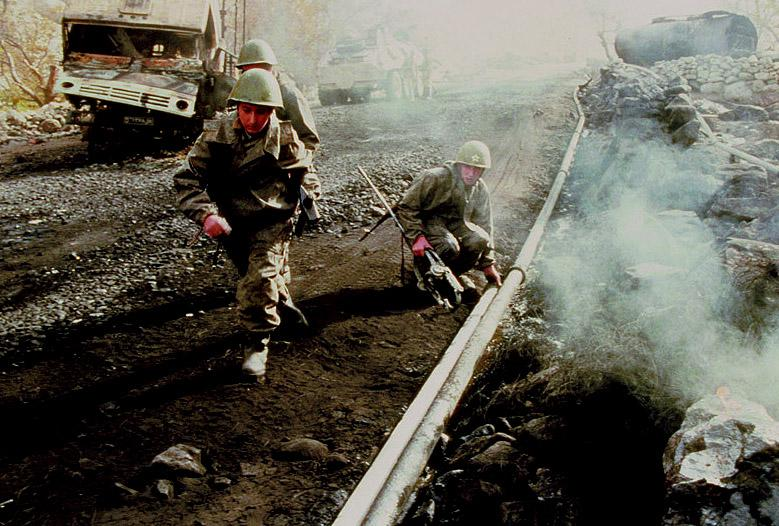
These tactical pipelines can transport 80,000 liters of fuel every hour, which is equivalent to 10,000 trucks.
In conclusion, the Soviet logistical network is exceedingly unique, and many advantages can be observed, it is not without its disadvantages, this thread is not compare Western and Eastern practices, but aims to elucidate the Soviet art of logistics.
Part 2 to this thread will be coming soon, discussing vehicles and tactical practices, as well as further organizational information, this is a generalist overview.
Loading suggestions...