

🌱Vertical Farming is about to change dramatically our relationship to food, agriculture, land, and rural areas, as it replaces traditional farming:
It's superior in dozens of very important ways and just has one obstacle: economics, but they're improving every day
Thread 🧵
It's superior in dozens of very important ways and just has one obstacle: economics, but they're improving every day
Thread 🧵

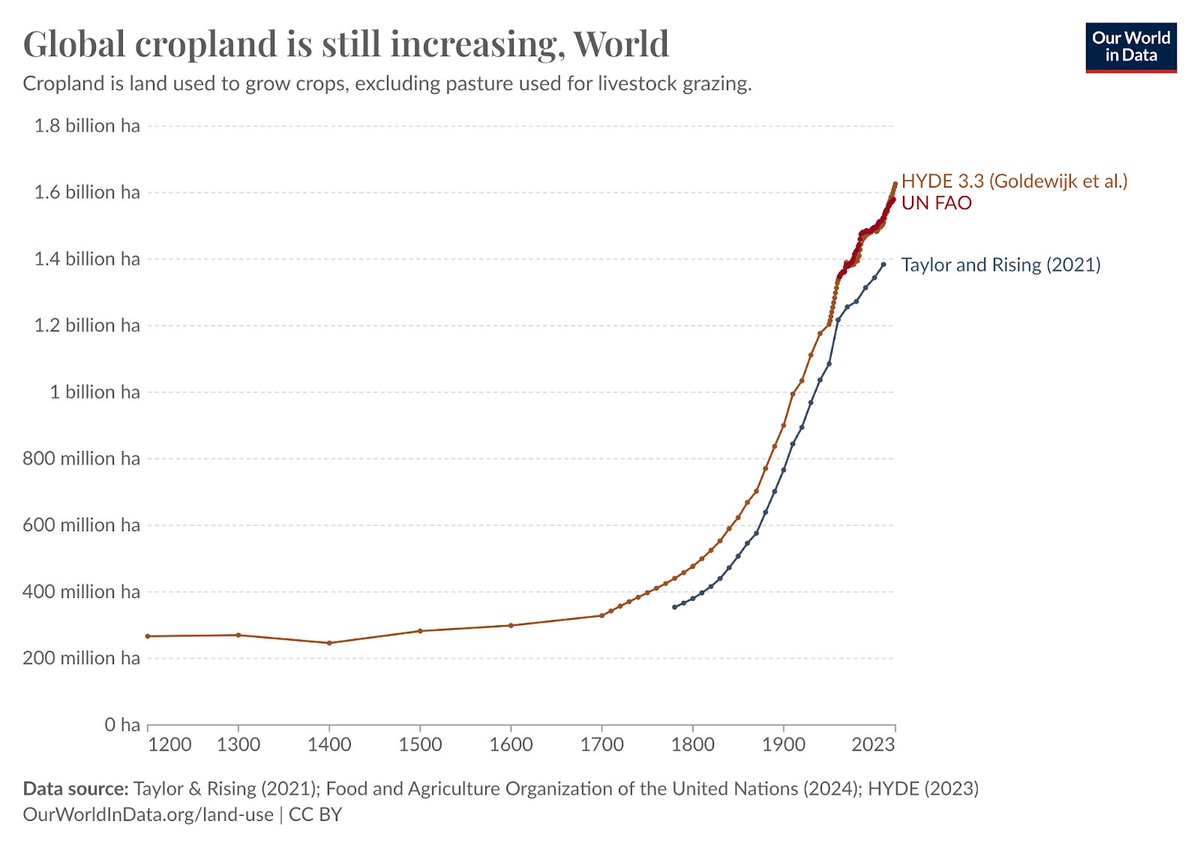
The amount of land dedicated to crops has grown incessantly over the last few centuries
It's now 15% of all habitable land—about the size of Russia
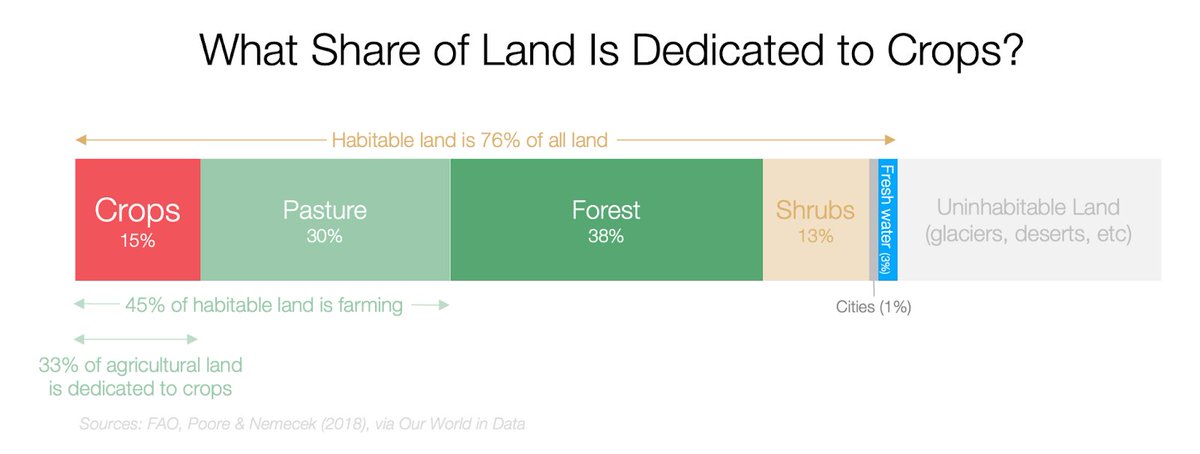
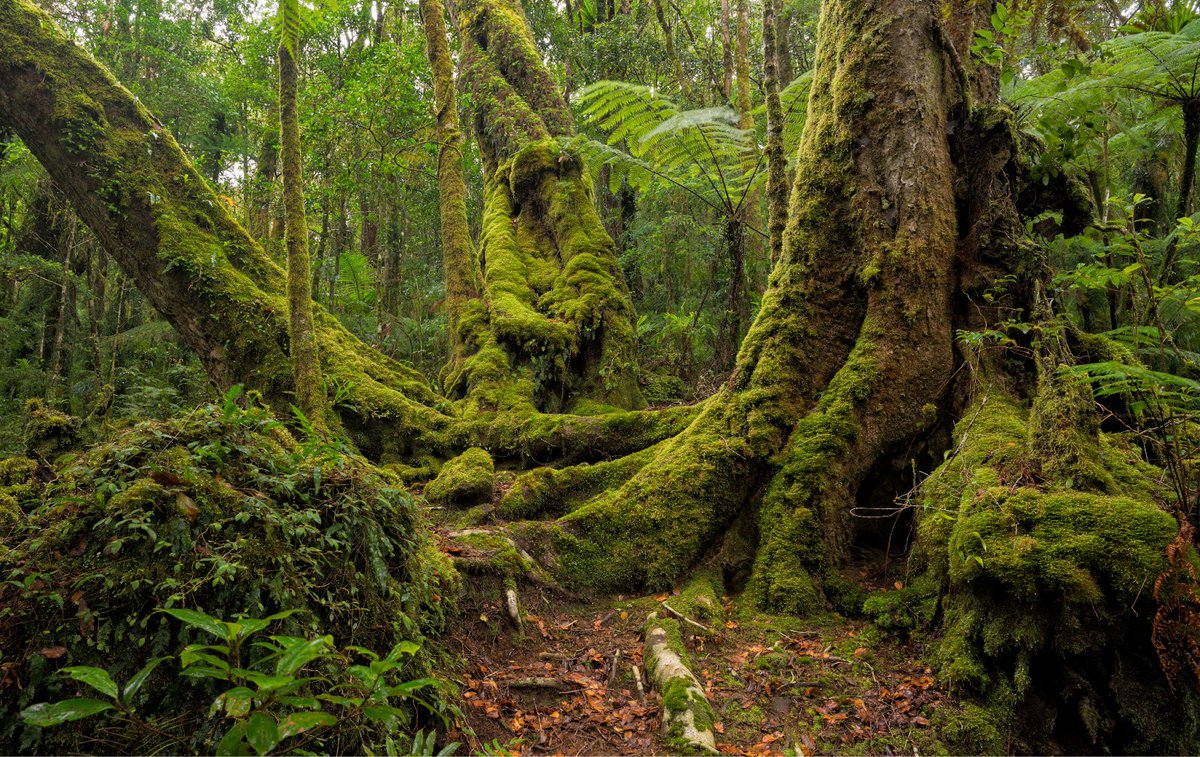
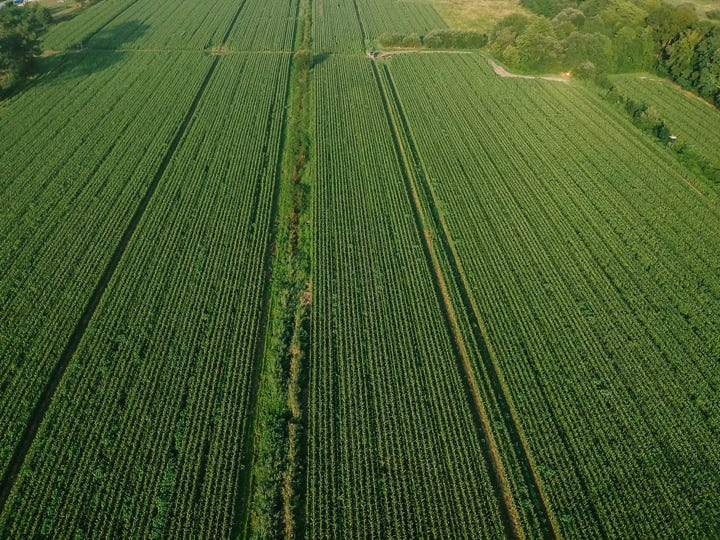
About half of that land used to be old-growth forest that our ancestors (or us today, in places like Brazil) cut down
From this: To this:
From this: To this:
Agriculture uses 70% of fresh water today, but 2.3B ppl live in water-stressed countries
Agriculture is useful and beautiful, but it has many downsides: It uses pesticides, herbicides, wastes water, is unreliable, slow, risky...
Agriculture is useful and beautiful, but it has many downsides: It uses pesticides, herbicides, wastes water, is unreliable, slow, risky...
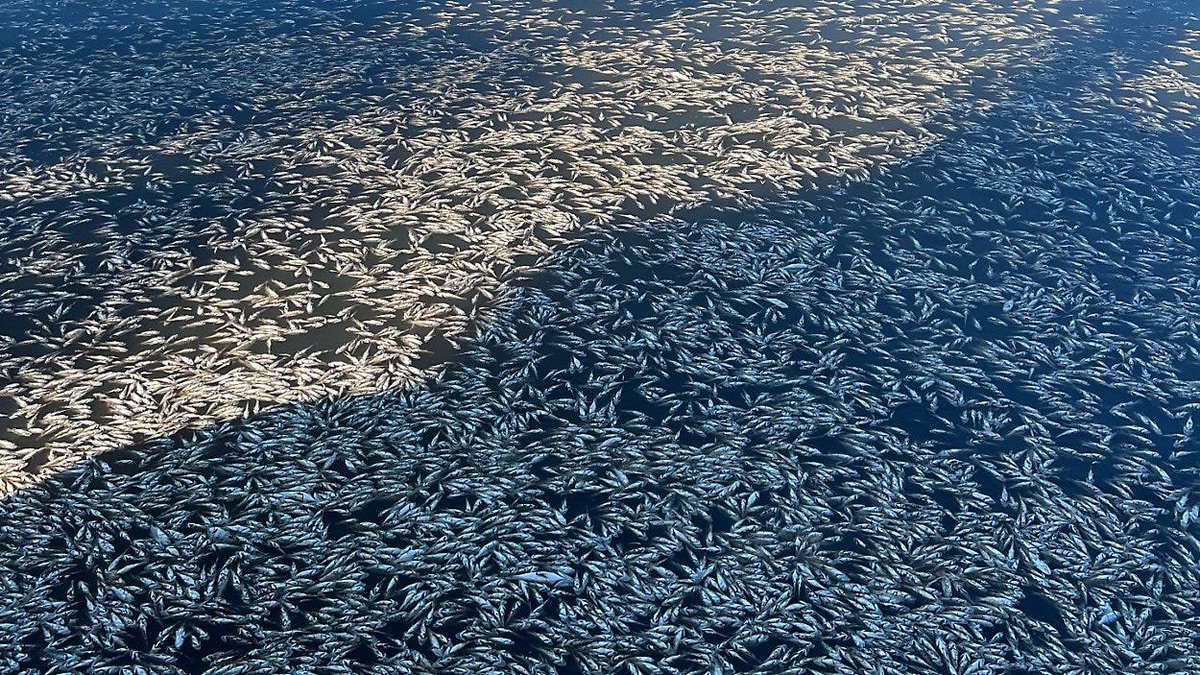
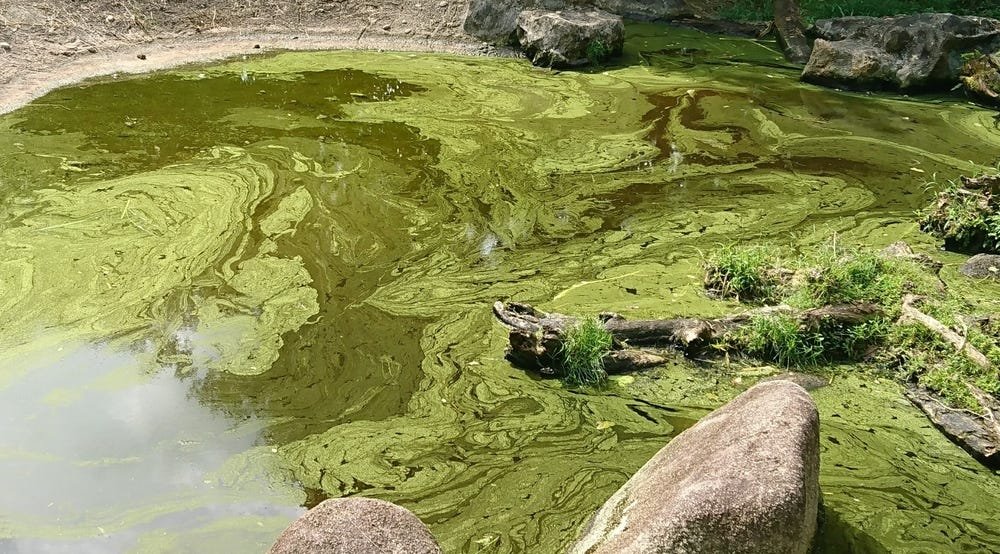
Fertilizer runoffs cause fish kills
Other runoffs might be causing the obesity epidemic
Optimization for industrial agriculture pushes for sturdy variants rather than nutritious ones
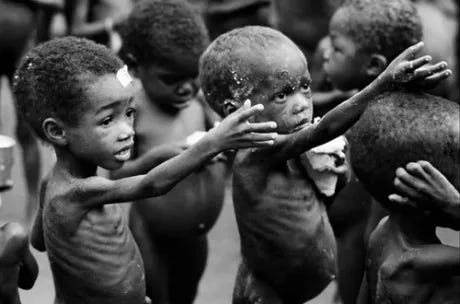
Control of harvests give countries inordinate amounts of power
Bad harvests cause revolutions
Other runoffs might be causing the obesity epidemic
Optimization for industrial agriculture pushes for sturdy variants rather than nutritious ones
Control of harvests give countries inordinate amounts of power
Bad harvests cause revolutions

Vertical Farming solves all these problems:
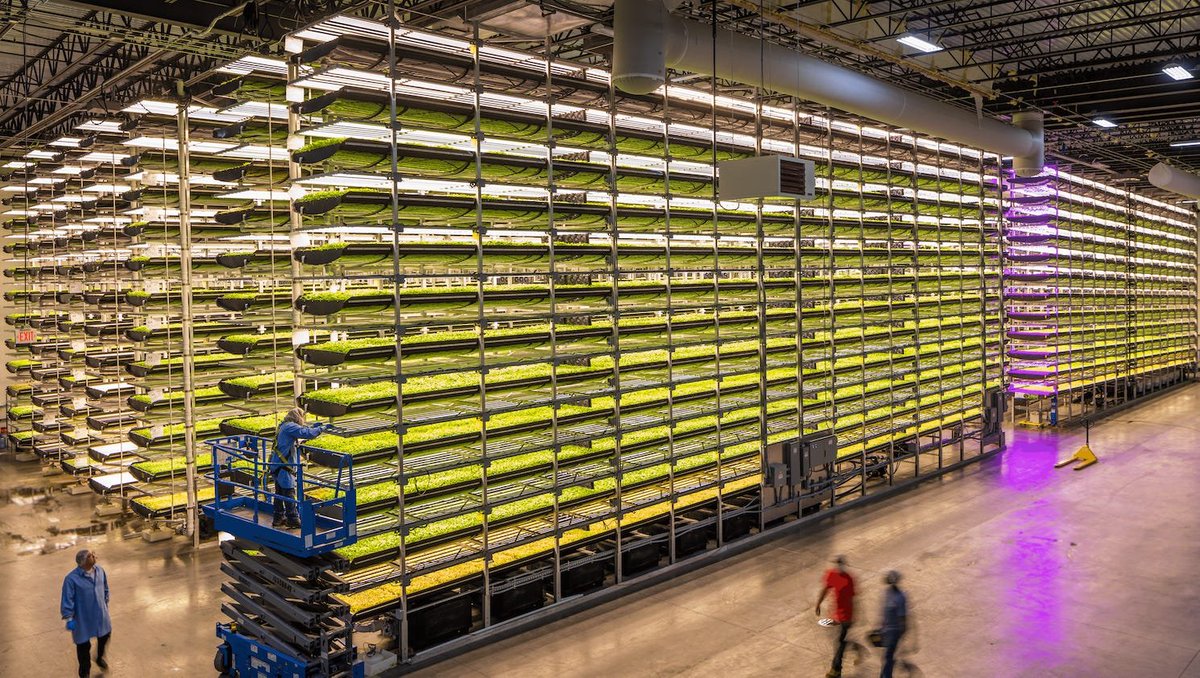
1. It stacks plants vertically, collapsing the need for land
2. Nutrients and water are used in a close loop. No waste.
3. Pests are controlled. No need for pesticide or herbicide. Less plant waste and healthier food
1. It stacks plants vertically, collapsing the need for land
2. Nutrients and water are used in a close loop. No waste.
3. Pests are controlled. No need for pesticide or herbicide. Less plant waste and healthier food
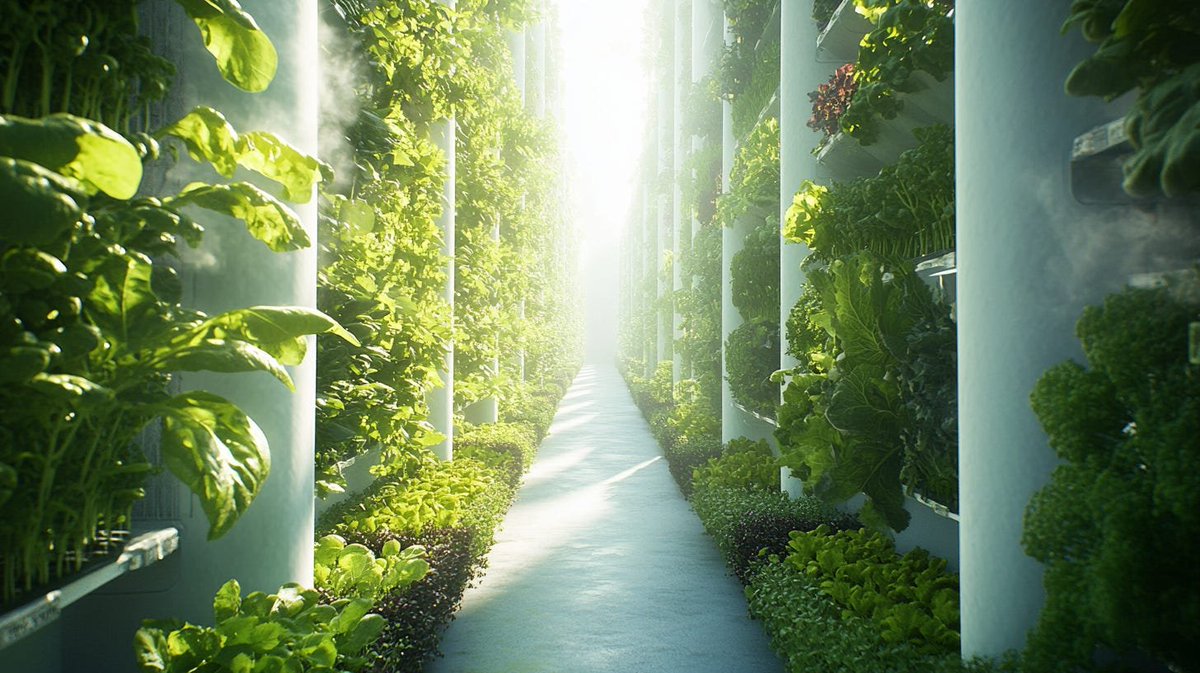
4. Plant variants can be chosen because they're nutricious, not because they can withstand pesticides or harvesters
5. It optimizes humidity, lighting, temp, nutrients...➡️plants grow faster & healthier
6. It's not exposed to the vagaries of weather➡️reliable, plentiful crops
5. It optimizes humidity, lighting, temp, nutrients...➡️plants grow faster & healthier
6. It's not exposed to the vagaries of weather➡️reliable, plentiful crops
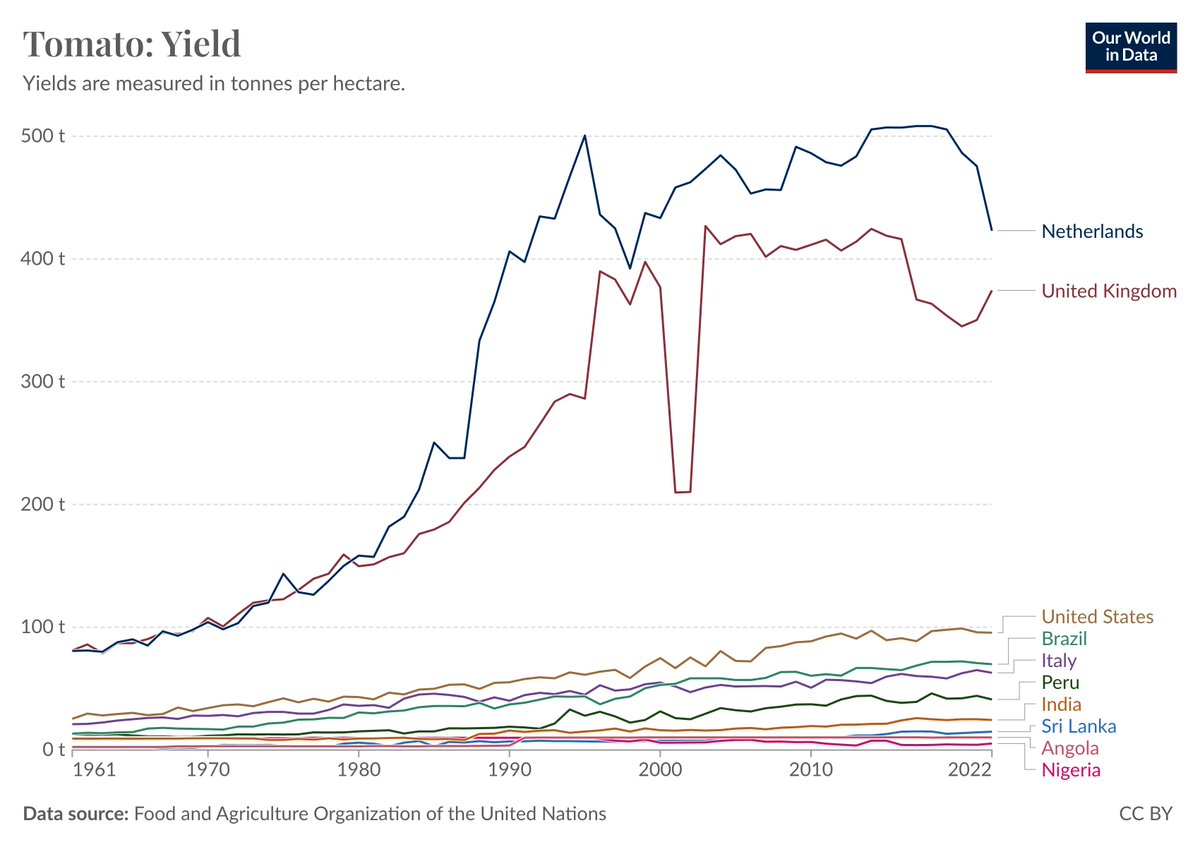
To give you a taste of what's possible, look what we've already done with other productivity improvements with tomatoes: countries like 🇬🇧or🇳🇱can get 100x more tomatoes per acre than 🇳🇬!
7. Cheap and stable food prices means more disposable income. Ppl are richer.
8. It also means less social unrest, and stabler and more independent governments who can grow the food they need
8. It also means less social unrest, and stabler and more independent governments who can grow the food they need
9. Food is closer to cities and packaging plants. Less transportation means less amount of fuel consumed.
10. It also means fresher food that lasts longer. Which means there's less waste too. Today, 30% of food is wasted
So why is vertical farming not everywhere yet?
Economics
10. It also means fresher food that lasts longer. Which means there's less waste too. Today, 30% of food is wasted
So why is vertical farming not everywhere yet?
Economics
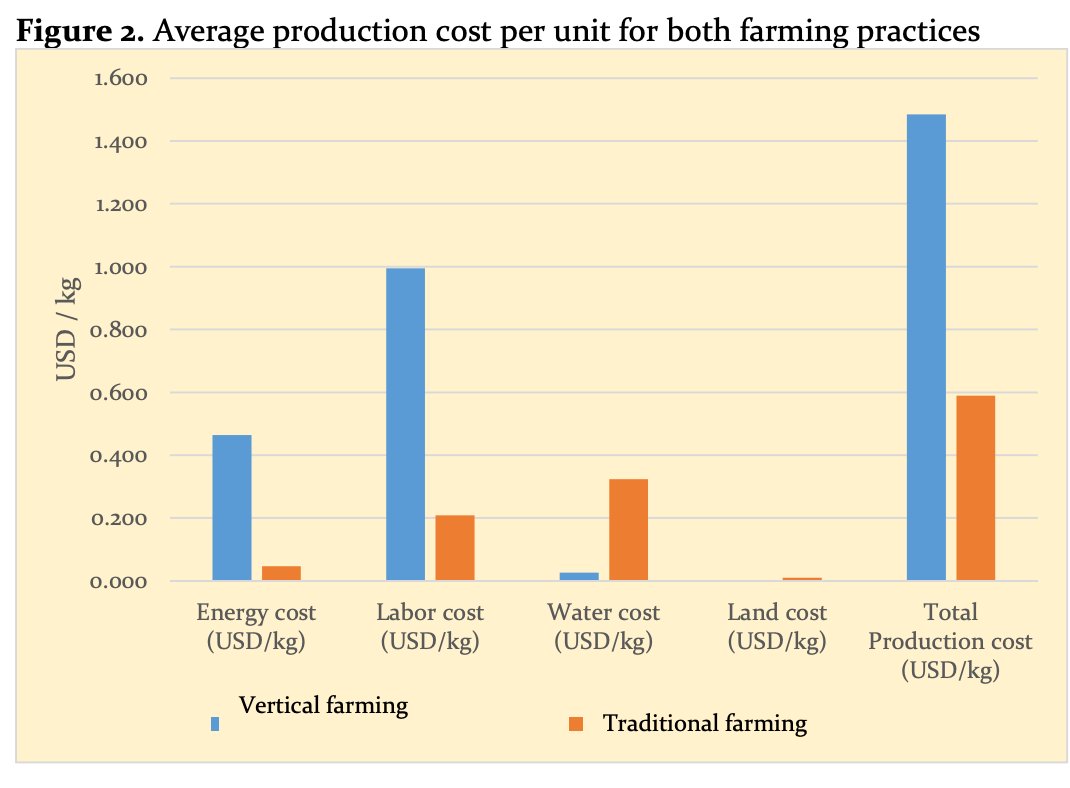
This is the price of vertical farming vs outdoor farming today, for lettuce in the US
It turns out land is not that expensive
The biggest cost of outdoor farming is water
The other costs are labor and energy, both of which are higher in vertical farming
For now
It turns out land is not that expensive
The biggest cost of outdoor farming is water
The other costs are labor and energy, both of which are higher in vertical farming
For now
Today, energy for vertical farming is very expensive. A big share of that energy is from lighting
But it turns out that artificial lighting might be more efficient than the Sun! How?
Plants only capture 1-2% of sunlight!
But it turns out that artificial lighting might be more efficient than the Sun! How?
Plants only capture 1-2% of sunlight!
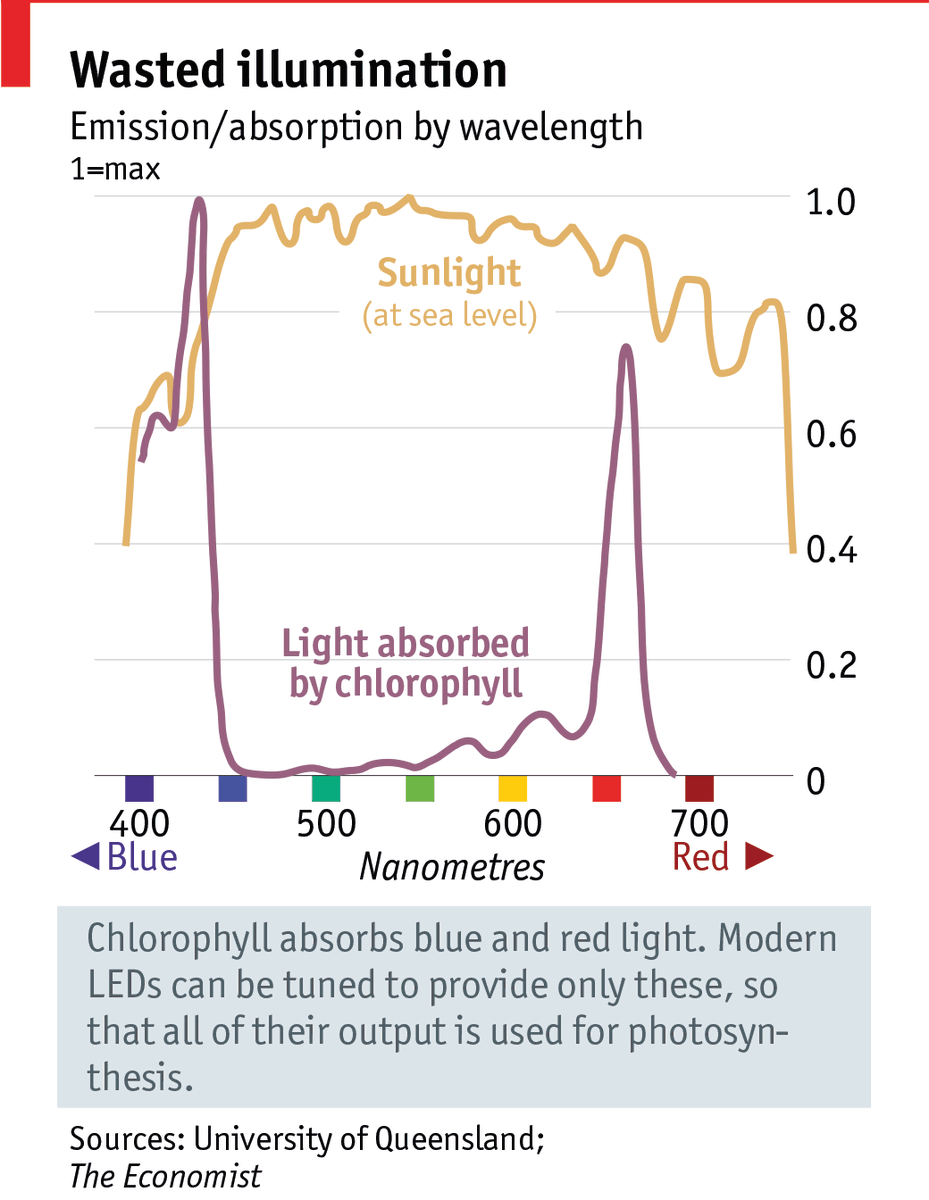
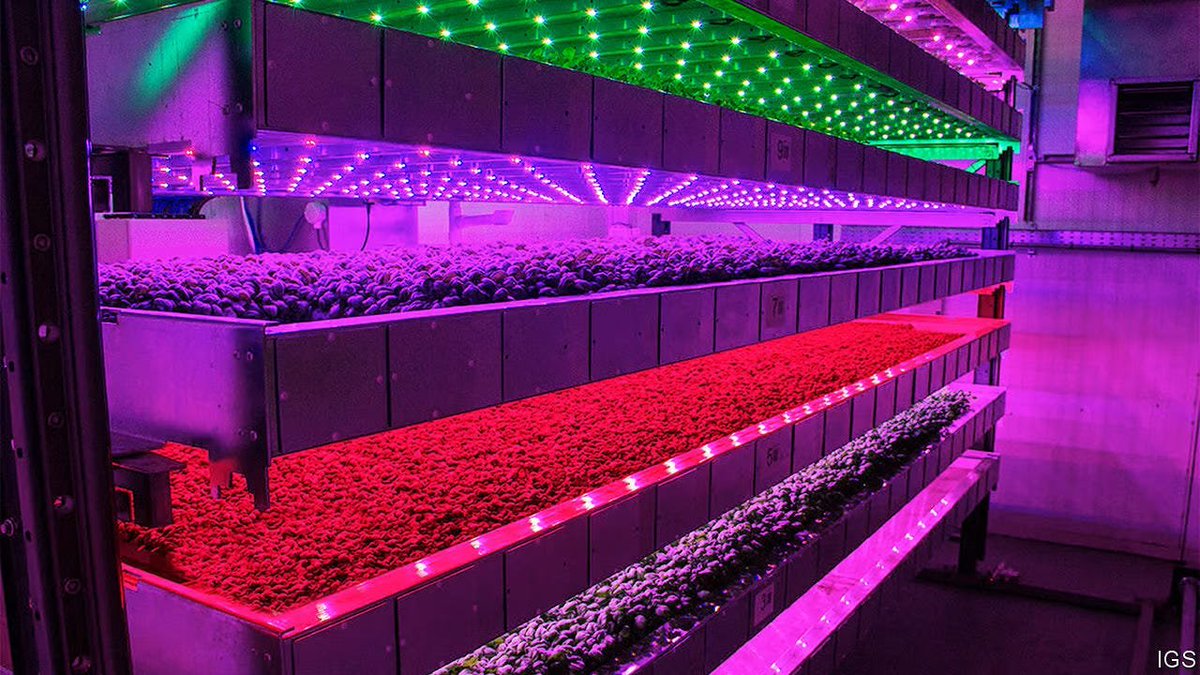
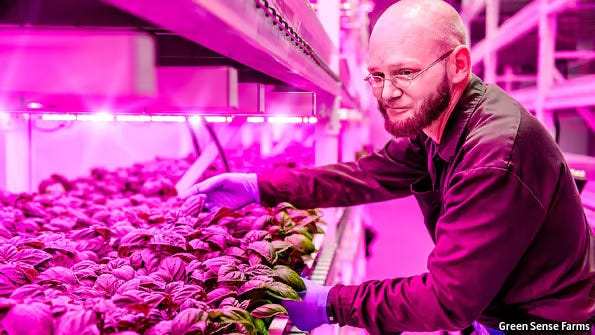
Think about it: If plants captured all light, they would be black. They're green because they reflect all green light. They just capture some blue and red light. Blue + red = purple. That's why so many vertical farms are bathed in purple light
Solar panels are +efficient than plants: 20-40% of sunlight becomes electricity. Imagine that! In a few decades we've done better than nature in billions of years
Batteries can deliver >95% of the electricity they capture
LEDs can transform 95% of electricity into useful light
Batteries can deliver >95% of the electricity they capture
LEDs can transform 95% of electricity into useful light
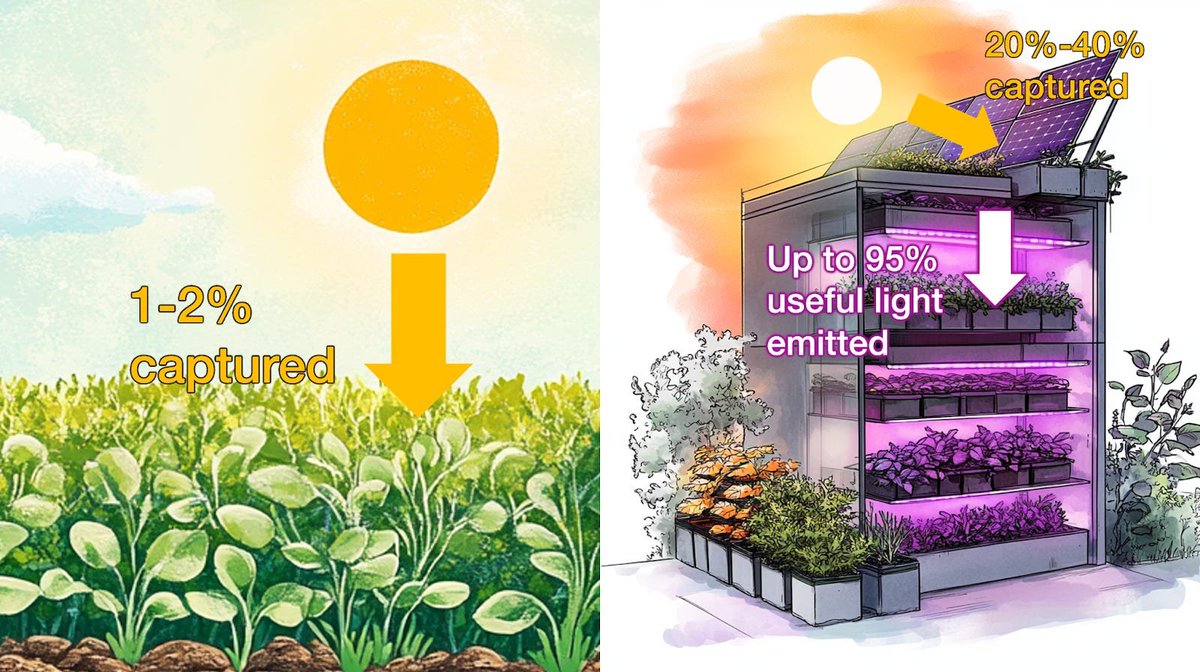
As LED lights, solar panels, batteries, and vertical farm processes all improve, it will be more energy efficient to capture sunlight through solar panels and transform it into useful light through LEDs
What about work?
What about work?
Outdoor farming is very efficient because we've been optimizing its processes for 2 centuries!
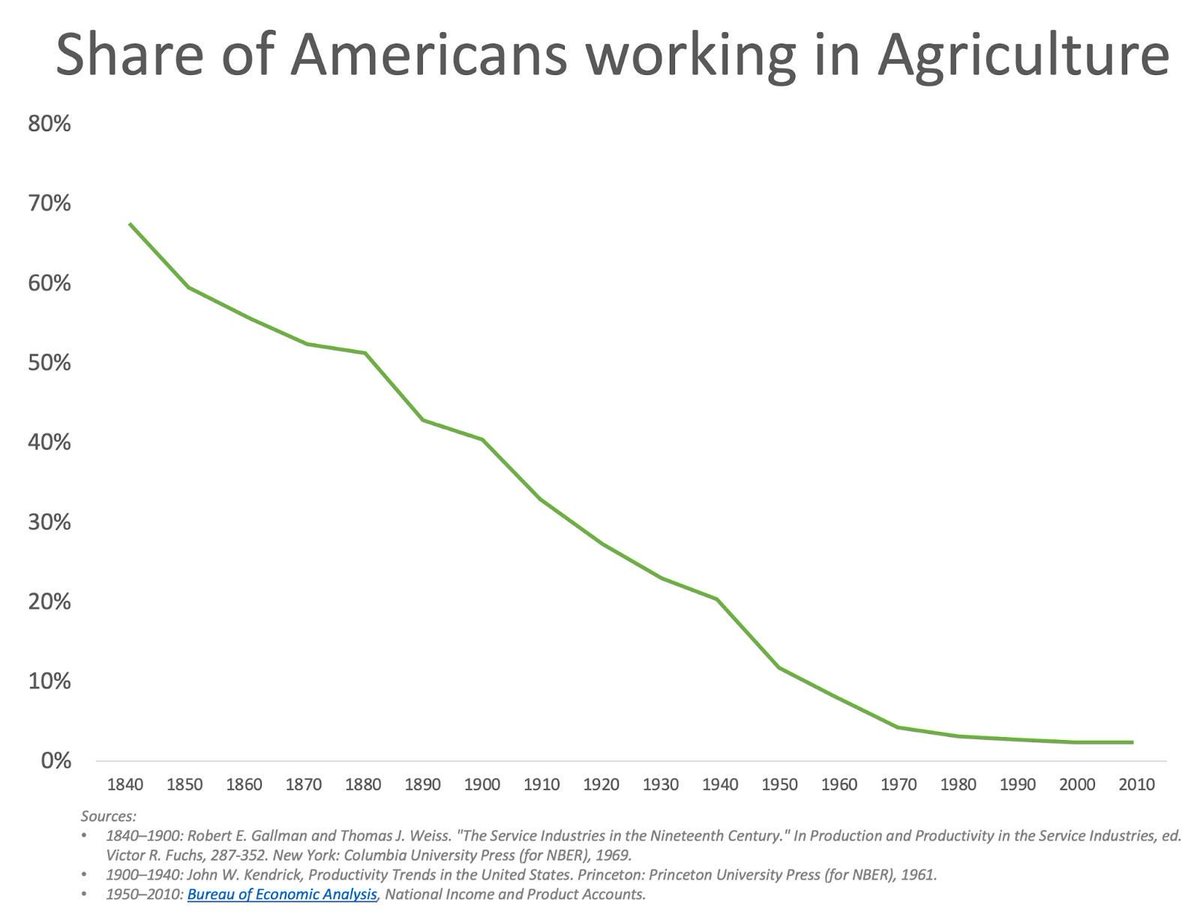
We've barely started with vertical farming. It requires lots of human work. It will take time to beat outdoor farming
But we'll get there. Vertical farm automation is already fast, and it will be easier to progress since their environment is more predictable
But we'll get there. Vertical farm automation is already fast, and it will be easier to progress since their environment is more predictable
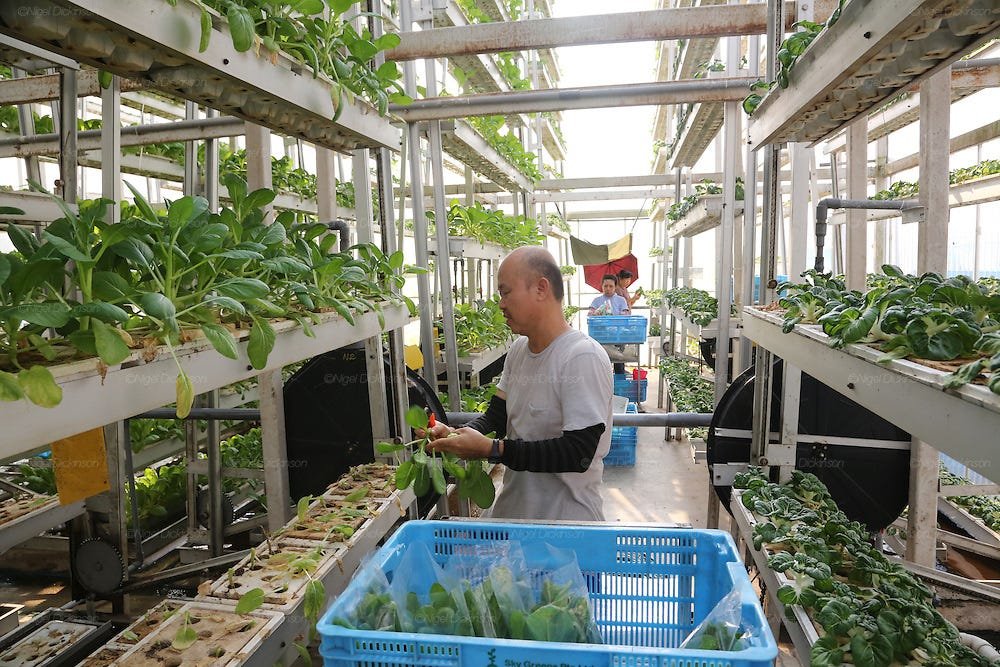
Today, vertical farms have started operating with vegetables that play to its advantages: high consumption of water, quick turnarounds, premium prices. But as time passes and processes improve, more and more plants will become viable.
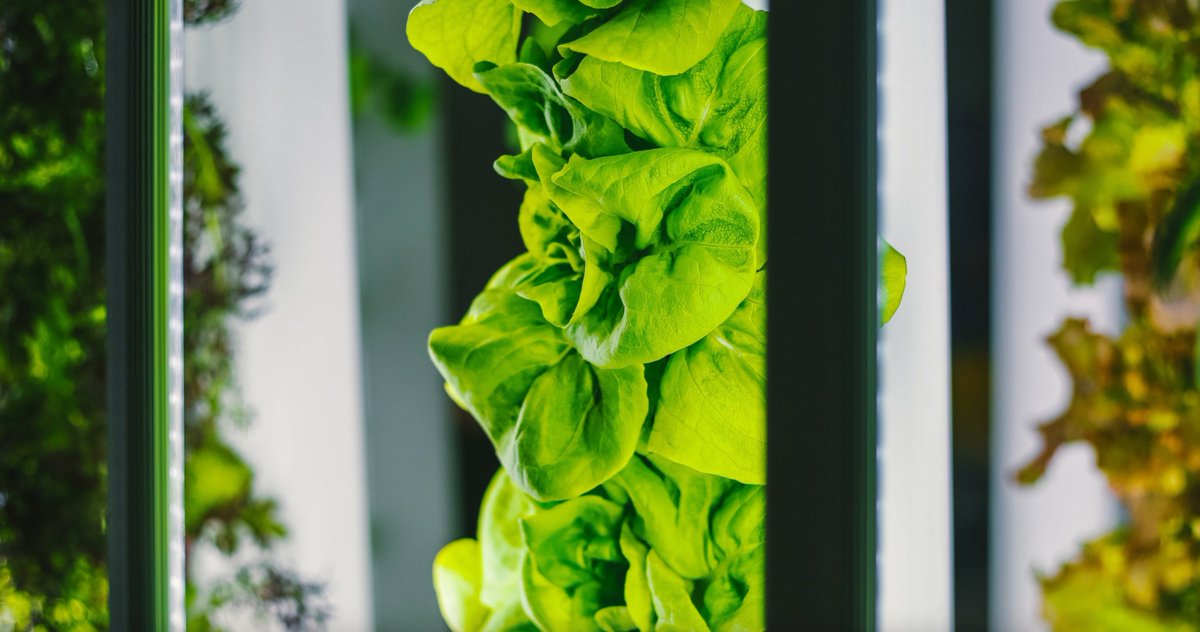
So it's a matter of time for vertical farms to prevail, when energy and work costs shrink to be comparable to outdoor farming. At that point, we'll get cheap, healthy, nutritious, delicious produce with predictable prices, low waste, no pesticides, and no pollution
Today's article goes into much more detail. Go here to read it:
unchartedterritories.tomaspueyo.com
unchartedterritories.tomaspueyo.com

I'll write more on this topic: which plants we'll start with, where, what will happen to rural land... Subscribe for free to read these articles, or follow me!
unchartedterritories.tomaspueyo.com
unchartedterritories.tomaspueyo.com

Loading suggestions...