

Thread - Ethnic Minorities in Northwest Africa during the Roman Era based on Epigraphy: Settlement Patterns and Dominant Groups
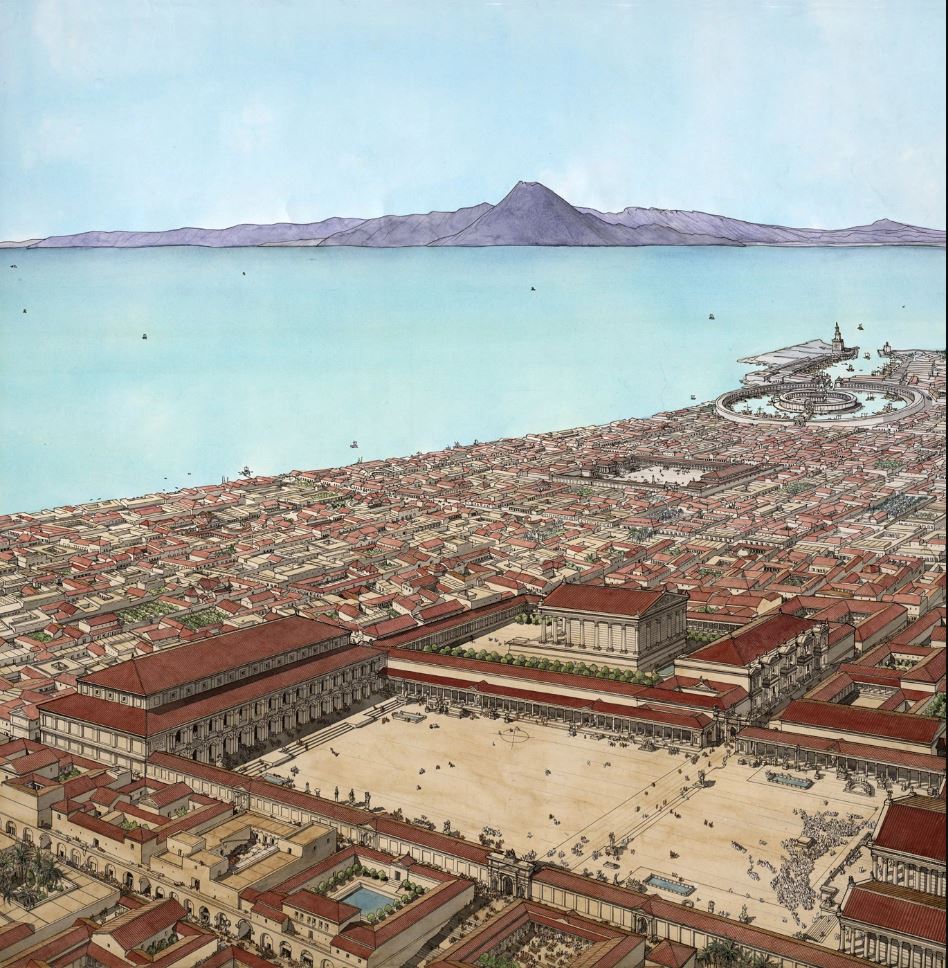
Let's start with italians : The proportion of Italians in the population is difficult to quantify because the local population in some areas became heavily Romanized. Italians appears to have been primarily attracted to and concentrated in port cities and administrative centers.
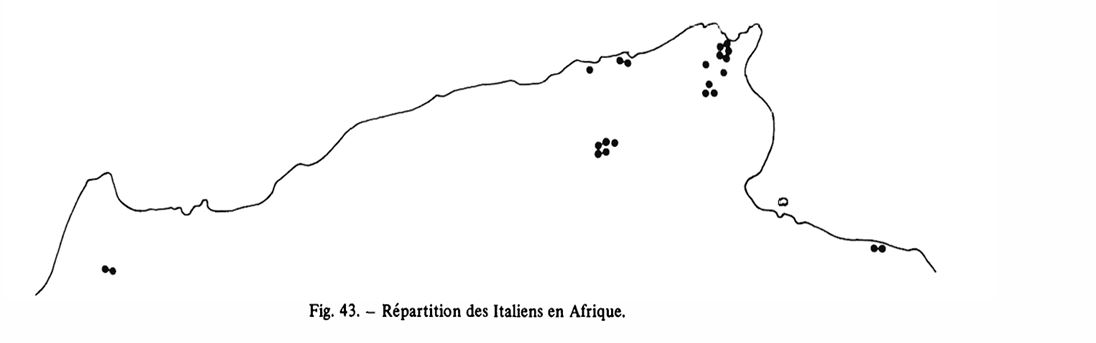

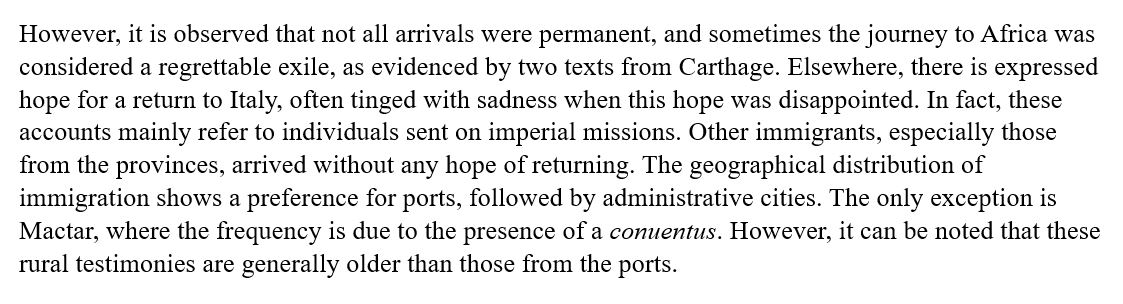
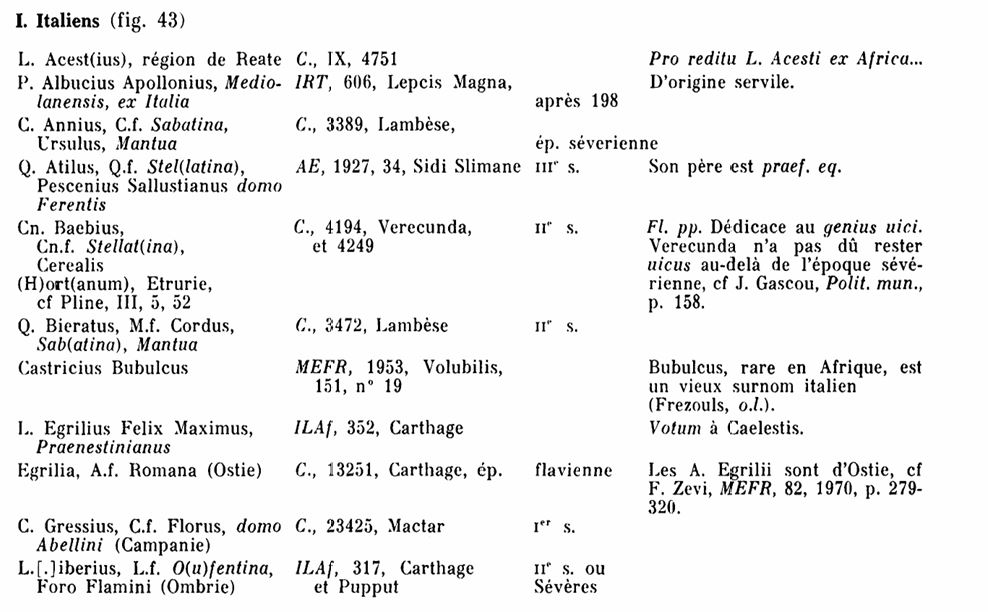
They primarily originated from northern Italy, Etruria, and Latium. An important Campanian community established itself In eastern Algeria, particularly around the area of the ancient Numidian capital Cirta.
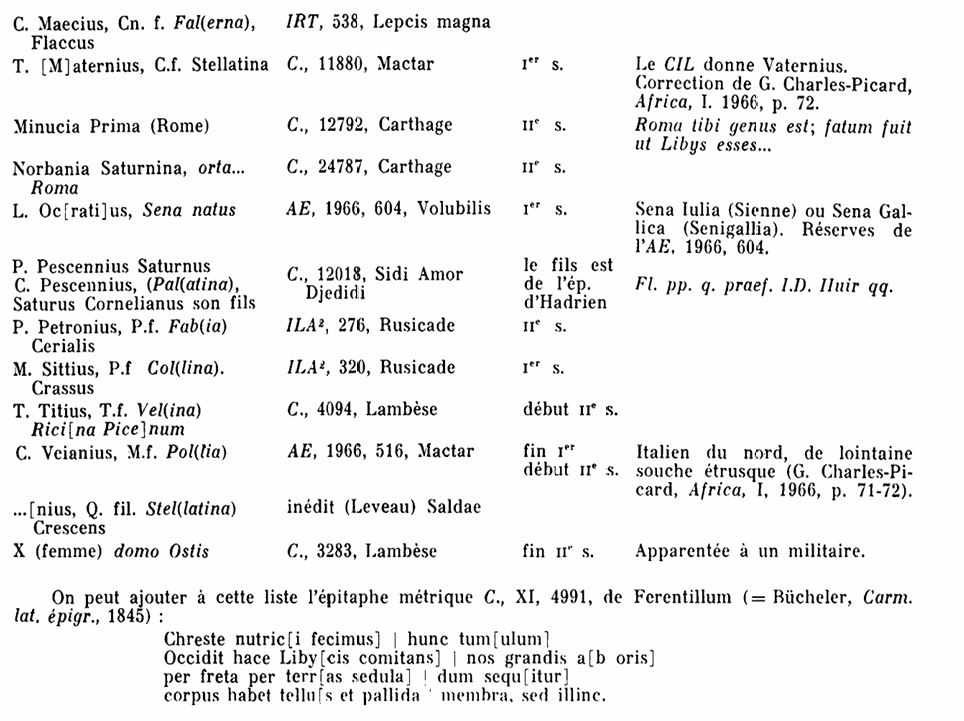
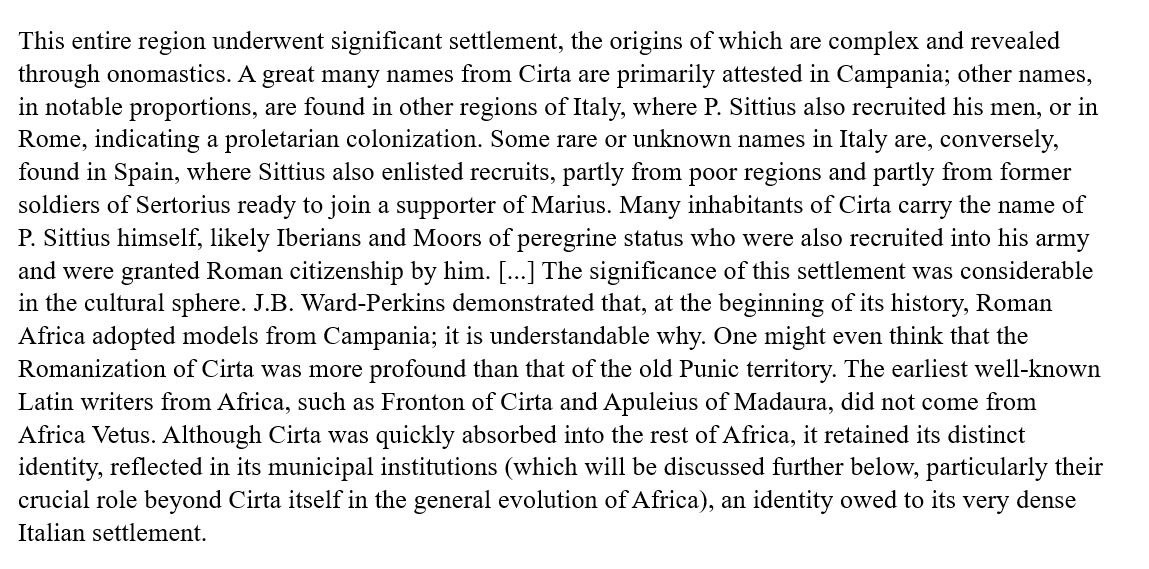
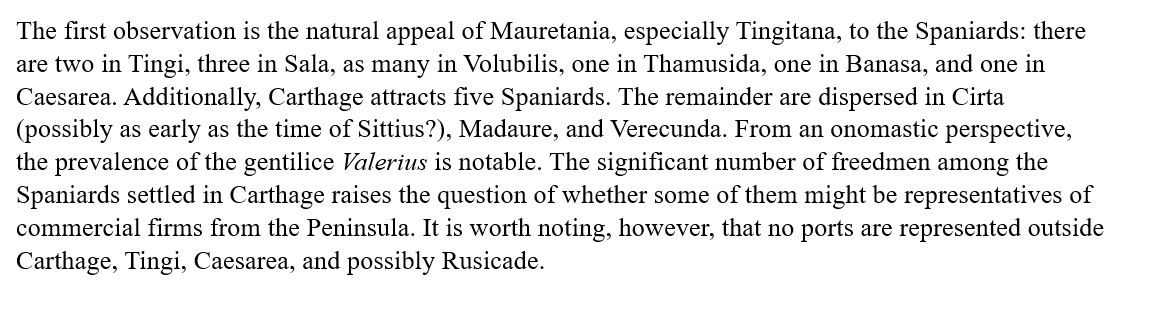
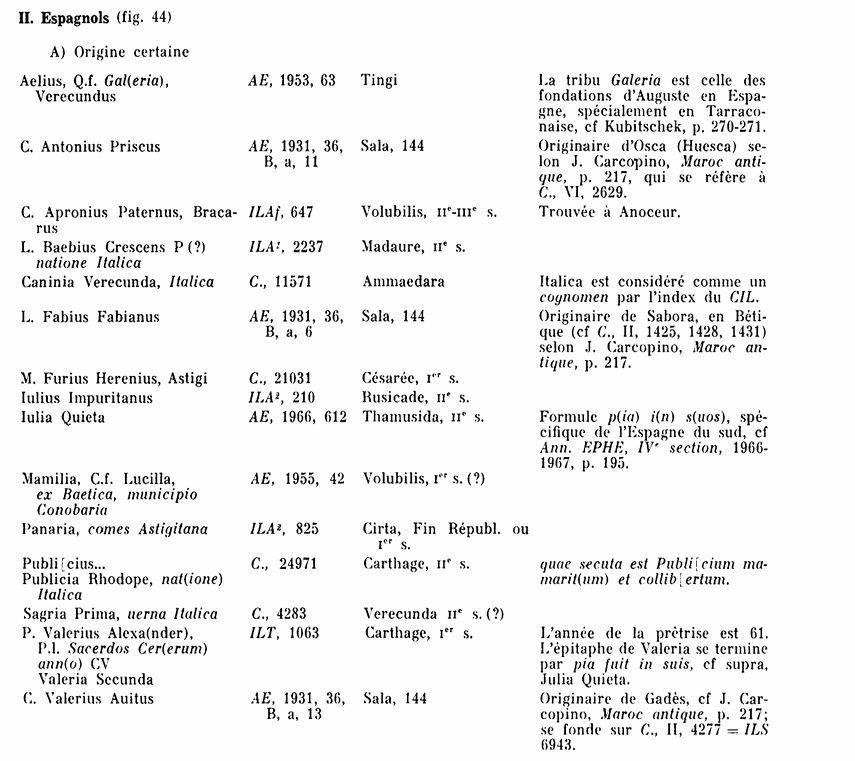
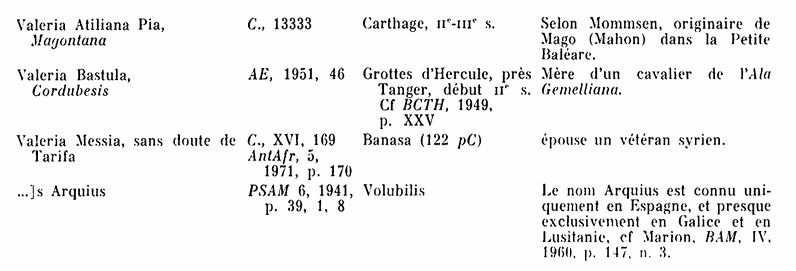
The Spanish migration seems to have been much more substantial than that from Italy. Spaniards predominantly settled in Mauretania Tingitana (northern Morocco), followed by Carthage and the region of Cirta in Algeria.
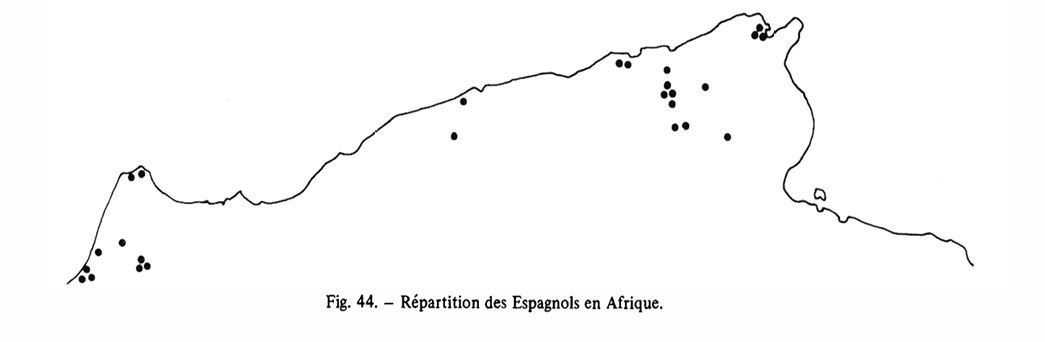
Most were from the southern and western part of the Peninsula (Galicia, Lusitania, Baetica, etc).
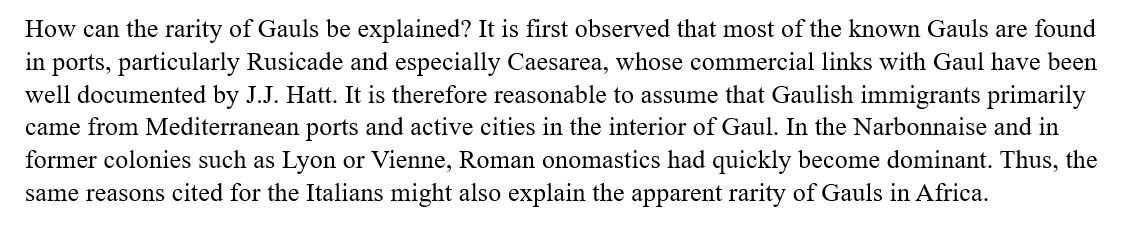
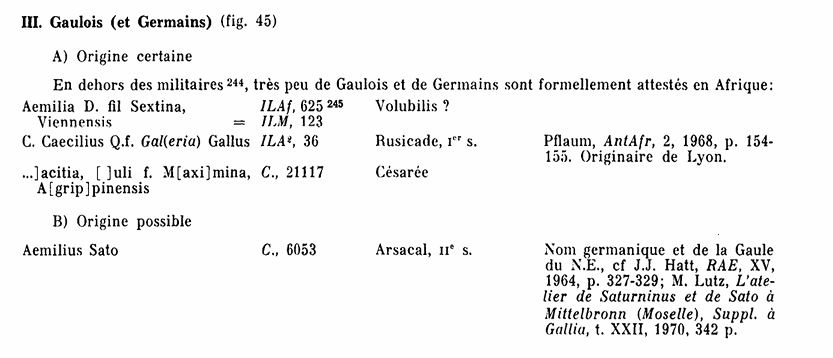
Gauls and Germans : Aside from a few military personnel, very few Gauls and Germans are attested in Africa. They are primarily located in port cities involved in trade with Gaul. (Map also includes Dacians, Illyrians and Bretons)
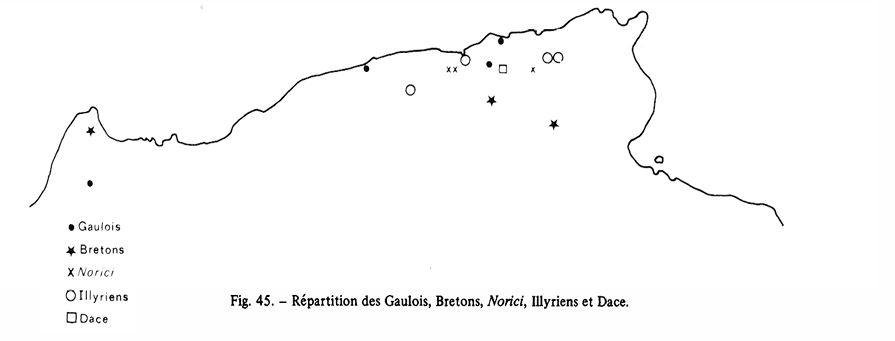
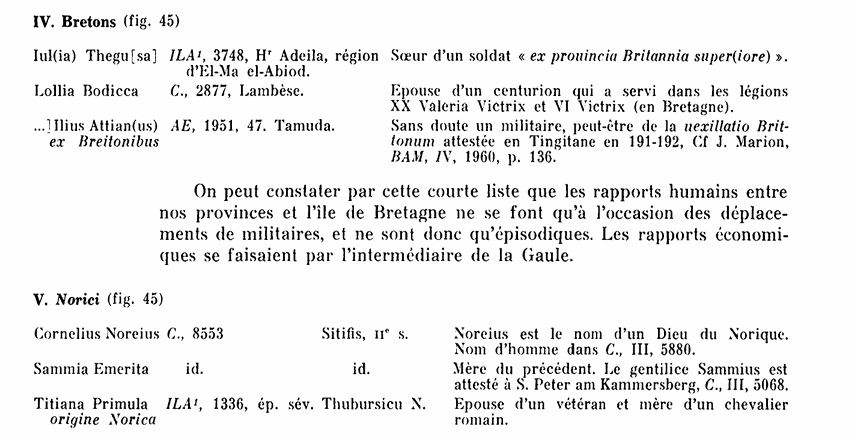
Similar to the Italians, some Gauls may be difficult to detect due to the extensive Romanization of certain colonies and regions in Gaul. They're from Vienne, Lyon, and northeastern Gaul. Bretons and Norici, on the other hand, are exclusively associated with the military sphere.
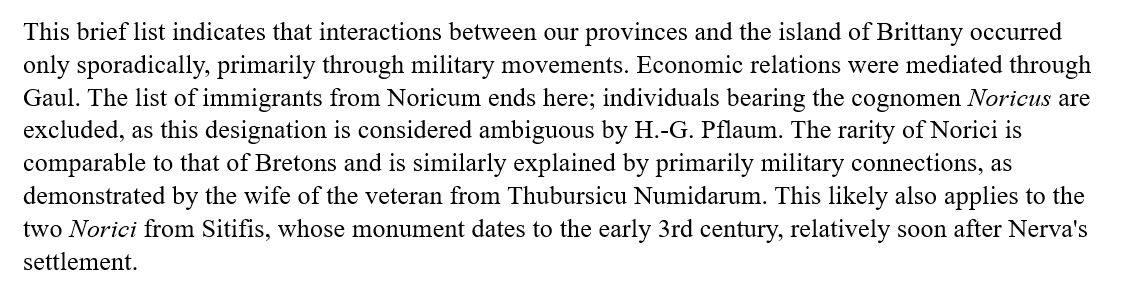
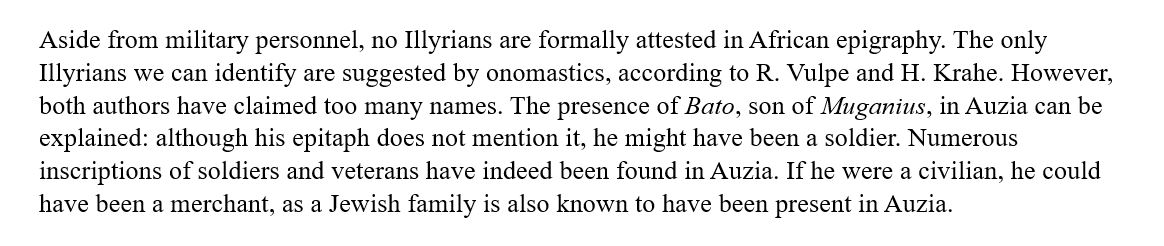
Illyrians are also primarily associated with the military sphere. One of them appears to have belonged to an Africanized family and served as a priest of Saturn.

The Thracians were the most numerous among the settlers from the Balkan Peninsula and were also largely associated with military movements. They are primarily found in Lambaesis (the main base of the Roman legions in Africa) and in the surrounding regions.
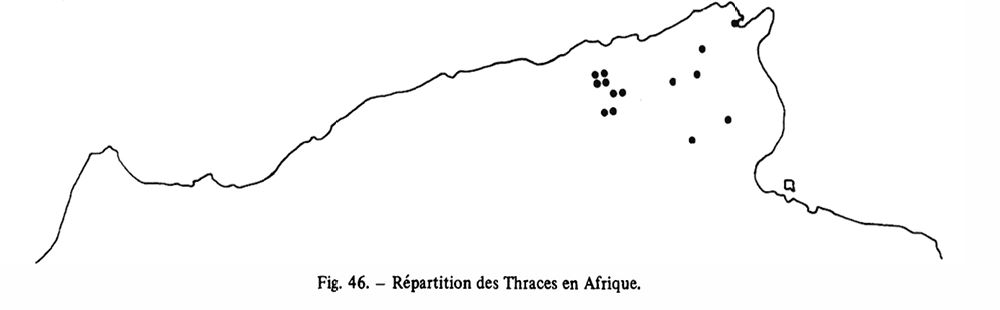
There is also evidence of the presence of a physician, wealthy merchants, freedmen, and others.

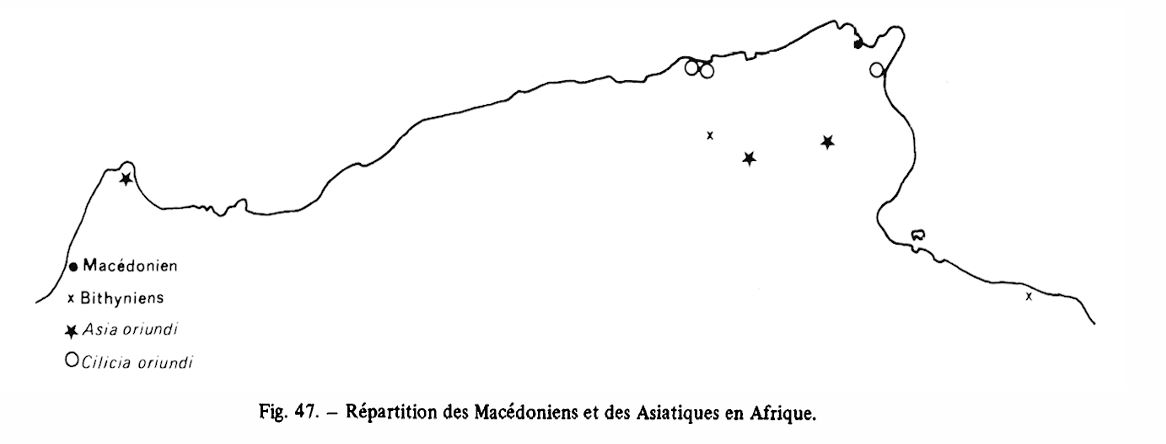
Macedonians and Anatolians : Only 10 are attested throughout the entire period. Localized in Tingi (Tangier), Carthage, Lambaesis, Rusicade, etc
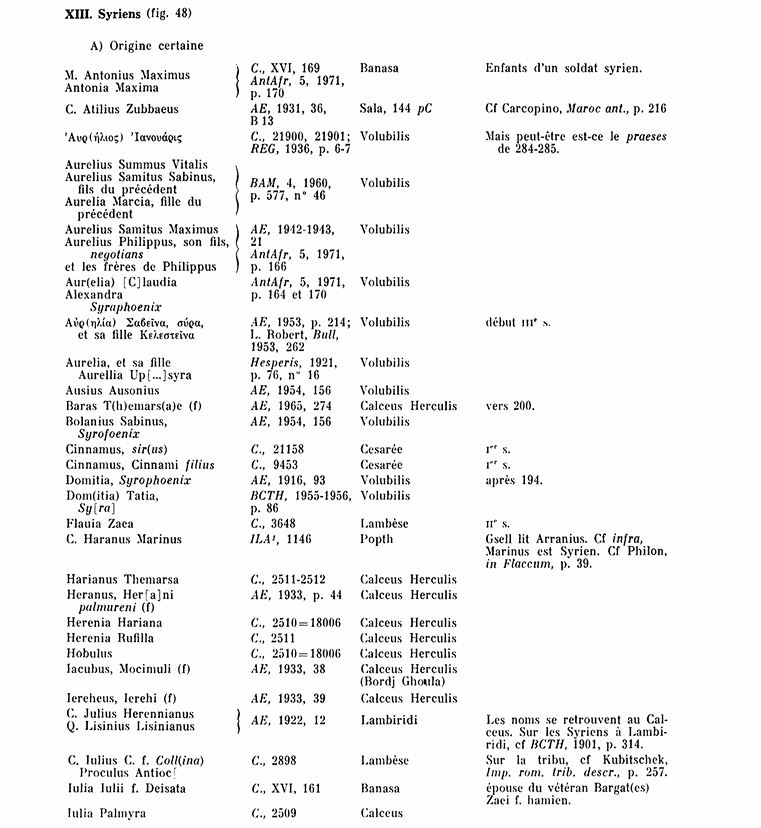
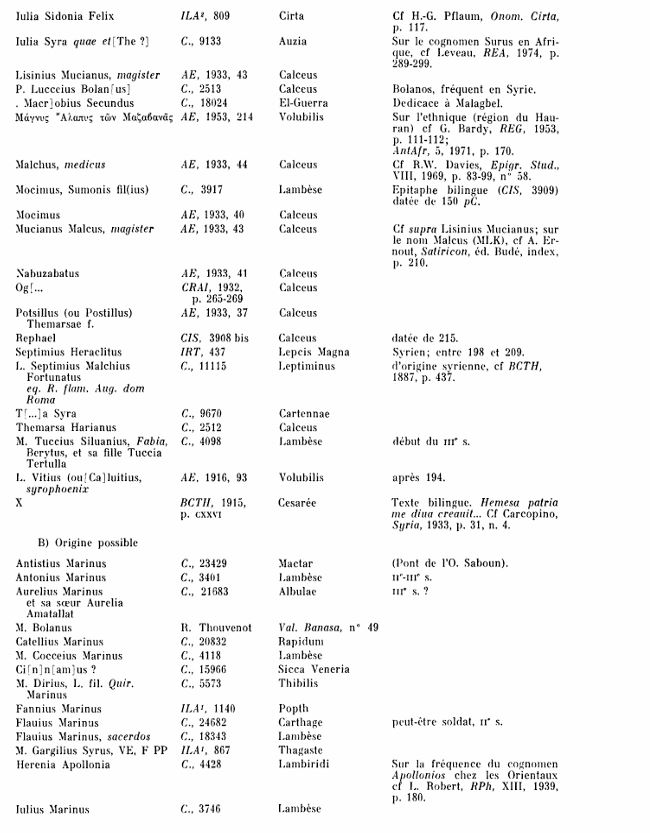
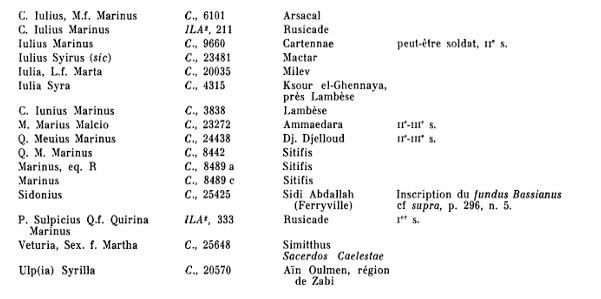
Syrians were by far the most significant foreign group in ancient Roman Africa. Outnumbering spaniards and Italians. They are mainly represented by merchants in port cities and important markets, and by soldiers in Lambaesis or along the Saharan limes in southern Numidia.
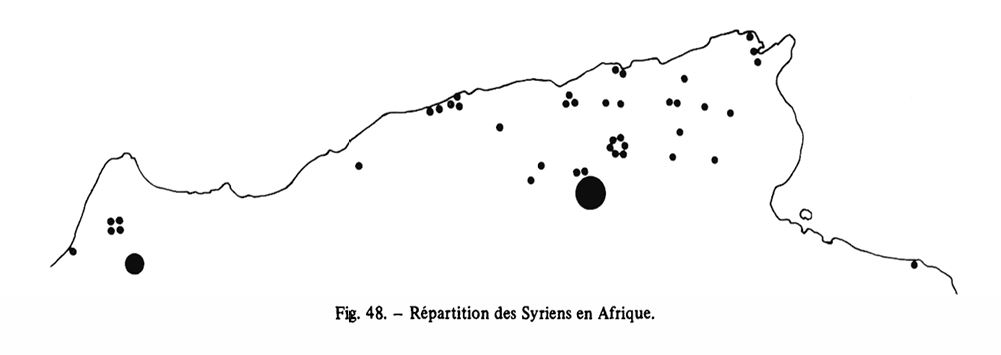
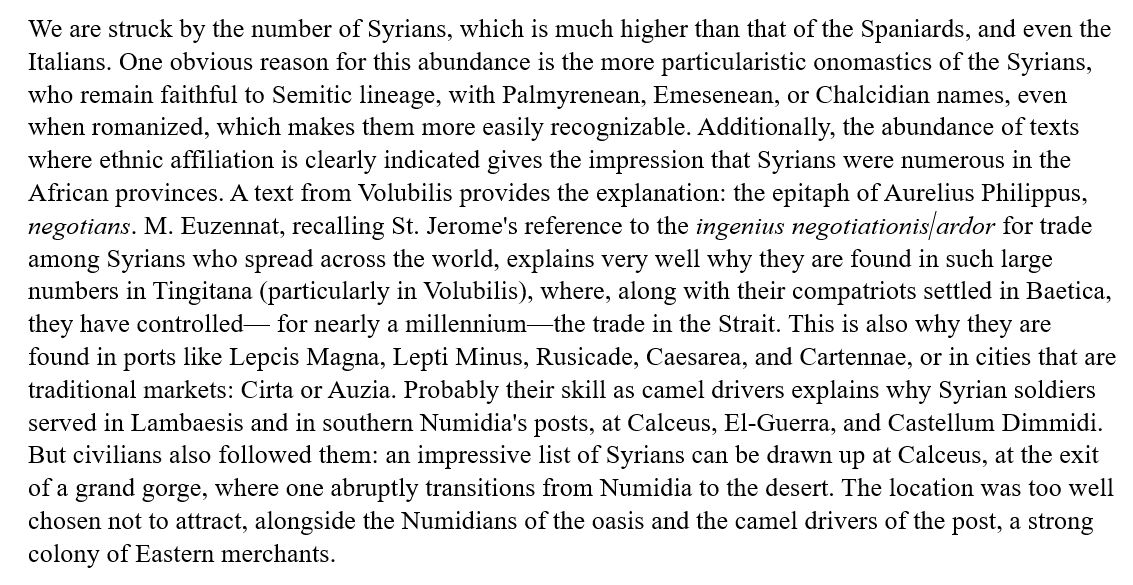
They were mostly from Emesa (Homs) or Palmyra. There were also Arabs among them from southern Syria (Hauran).

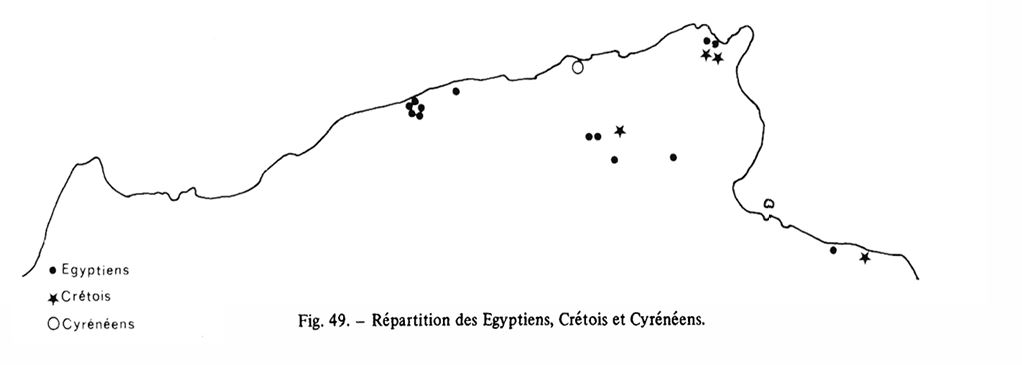
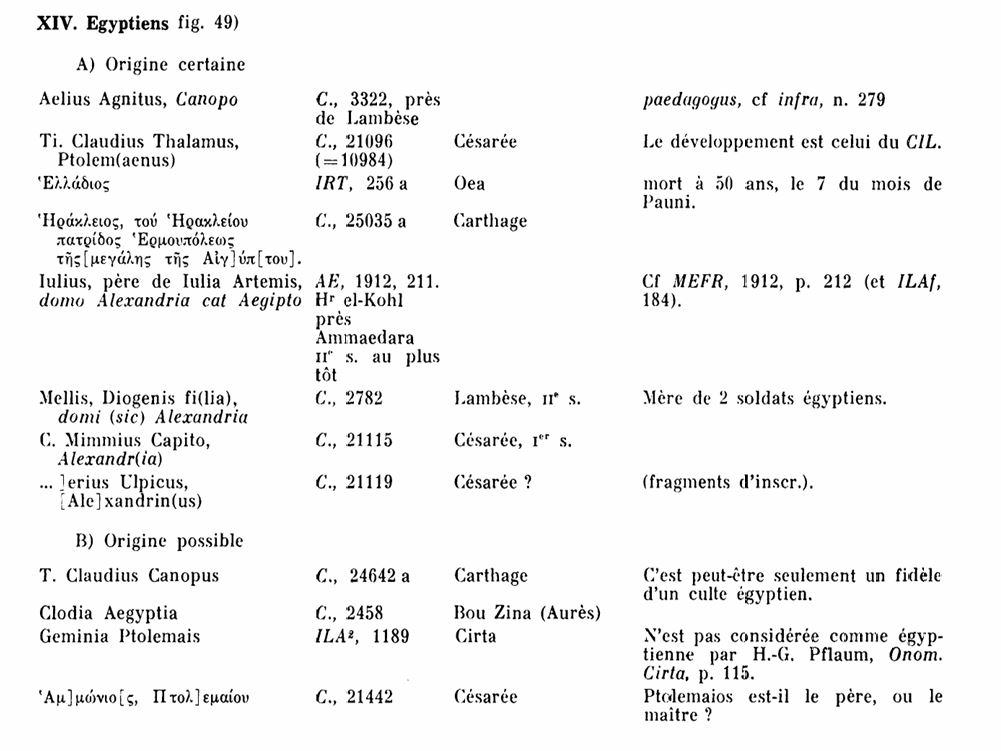
The Egyptians are well represented, particularly in the former capital of Juba II: Caesarea, but also in Carthage and Oea, which traded with Alexandria, and finally in Lambaesis due to the presence of Egyptian soldiers. They are mostly from Alexandria or Canopus.

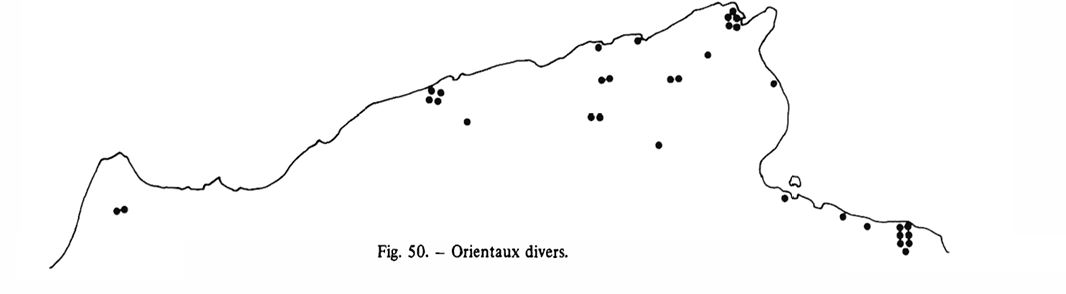
Here is a distribution map of Easterners whose exact origin could not be determined, highlighting their primary concentrations in Carthage, Lepcis Magna (Western Libya), and Caesarea. The latter, once the capital of King Juba II, notably attracted many Easterners during his reign
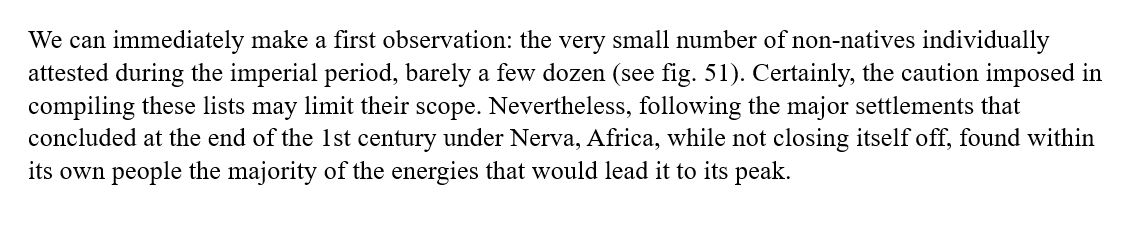
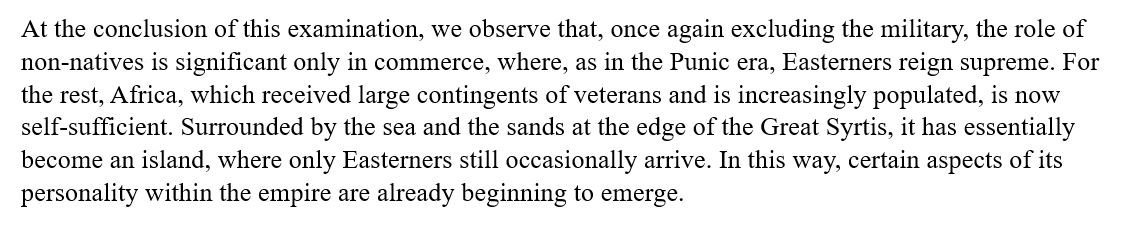
This analysis shows that Africa hosted few non-natives during the Roman period. Indeed, epigraphy reveals only a few dozen of them, and it appears that, from the 2nd century AD onwards, Africa largely found within itself the workforce necessary for its organization.
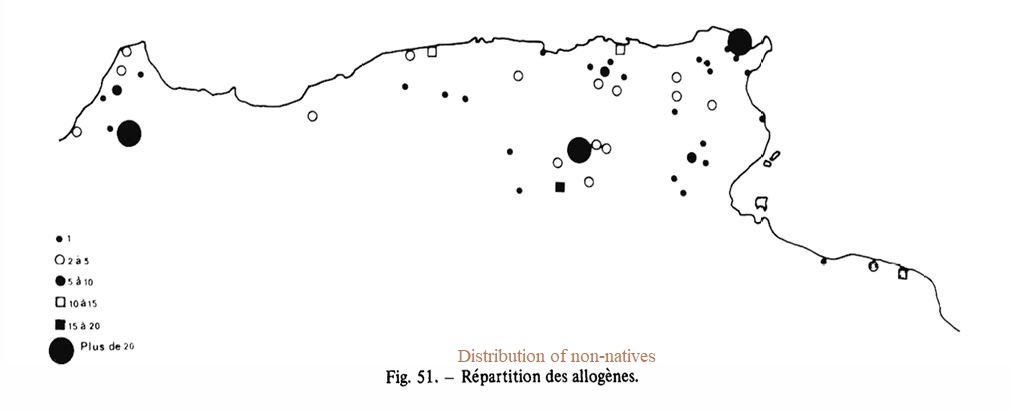
A second point to highlight is that, except for the Spaniards, Italians, and Thracians, Africa attracted few Europeans but, on the contrary, exerted a strong pull on Easterners, particularly Syrians. They settled there for commercial or military reasons.
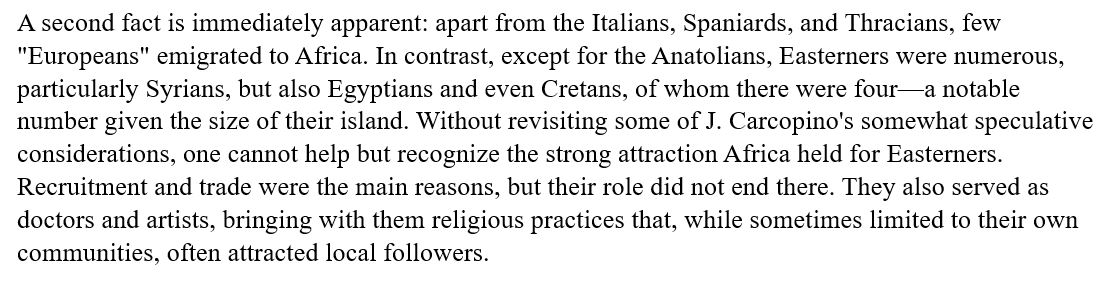
It is also surprising to note that Africa attracted few Eastern intellectuals, and it is clear that the region was not highly Hellenized. African Hellenism was a privilege of the aristocratic circles even though their culture remained predominantly roman.
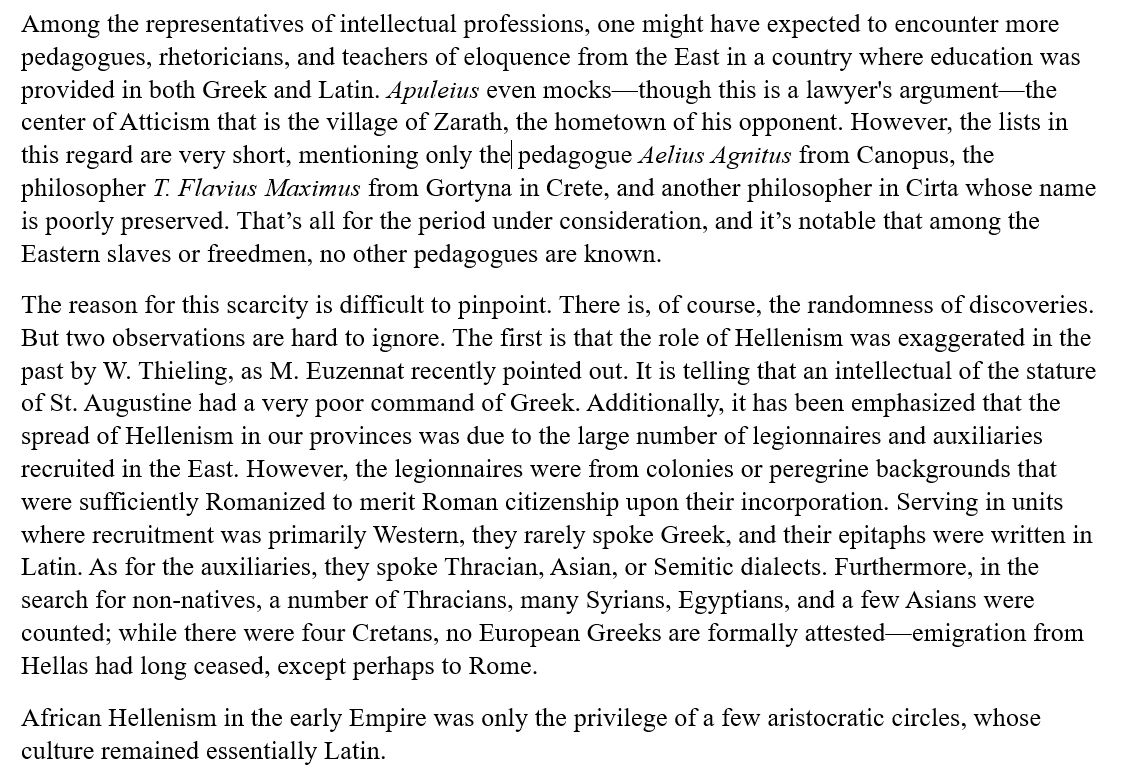
The influence of these non-natives on medicine, art, or religion in Africa has been minimal. The only field where they seem to play a significant role is trade, where, as in the past, Easterners continue to hold a predominant position.
Source :
Jean-Marie Lassère, 'Ubique Populus Peuplement et mouvements de population dans l’Afrique romaine de la chute de Carthage à la fin de la dynastie des Sévères (146 av. J.-C. – 235 ap. J.-C.)', Paris, Éditions du Centre National de la Recherche Scientifique, 1977
Jean-Marie Lassère, 'Ubique Populus Peuplement et mouvements de population dans l’Afrique romaine de la chute de Carthage à la fin de la dynastie des Sévères (146 av. J.-C. – 235 ap. J.-C.)', Paris, Éditions du Centre National de la Recherche Scientifique, 1977
Loading suggestions...