

If I were going to be a hormone, I would be DHEA.
Neuroprotective, neurogenesis, neuroplasticity, precursor to sex hormones, anti-inflammatory, pro-dopamine, pro-androgen, anti-cortisol, lean mass, and more.
How to enhance & optimize your DHEA status.
Thread // 🧵
Neuroprotective, neurogenesis, neuroplasticity, precursor to sex hormones, anti-inflammatory, pro-dopamine, pro-androgen, anti-cortisol, lean mass, and more.
How to enhance & optimize your DHEA status.
Thread // 🧵
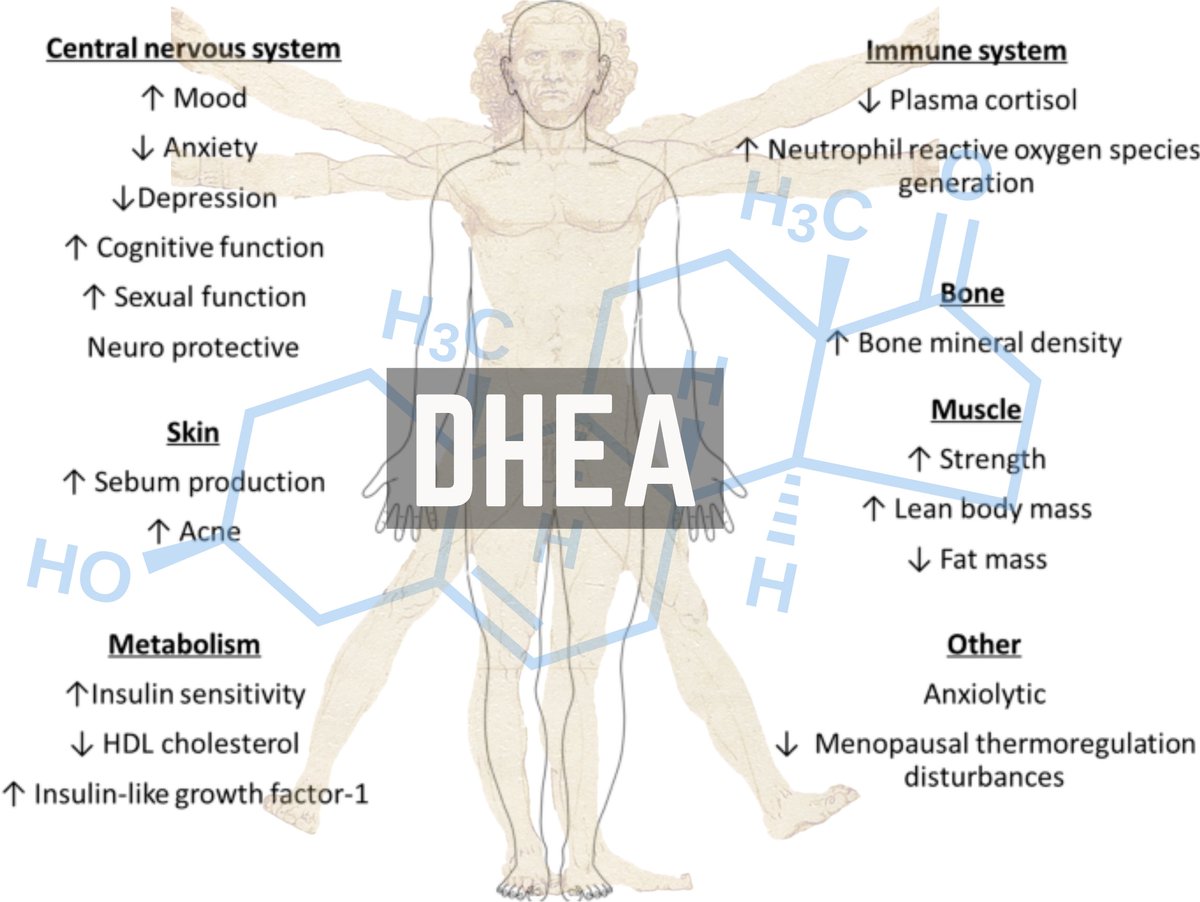
Dehydroepiandrosterone (DHEA) is known as a ‘pro-hormone’, a substance that can increase the level of steroid hormones such as testosterone.
But beyond this, it also has incredible effects of its own in the brain and peripheral organs
We will discuss its synthesis, utilization, and how to optimize DHEA levels.
But beyond this, it also has incredible effects of its own in the brain and peripheral organs
We will discuss its synthesis, utilization, and how to optimize DHEA levels.
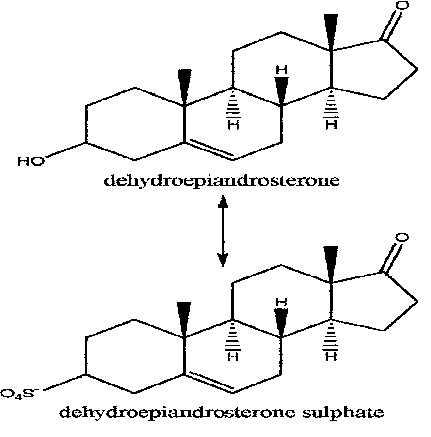
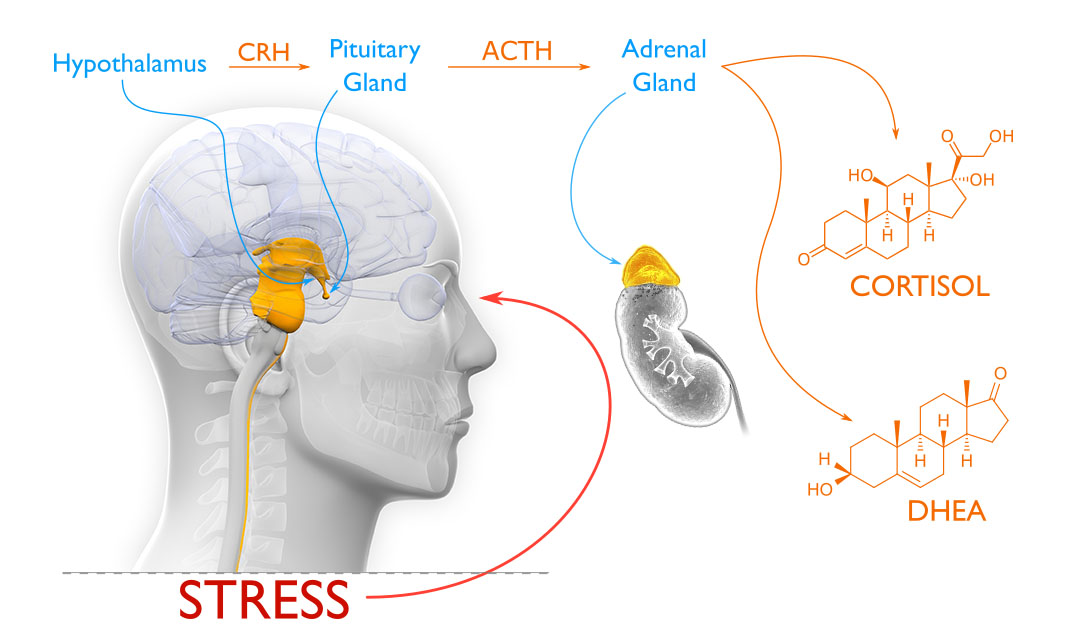
DHEA is made in the adrenals (and to some degree brain, gonads, etc.), via corticotropin-releasing hormones (CRH), adrenocorticotropin hormone (ACTH) and lutenizing hormone (LH) signalling.
Various cytokines (IL-6, TNFa, IL-1B) can indirectly increase DHEA via stimulation of the HPA axis.
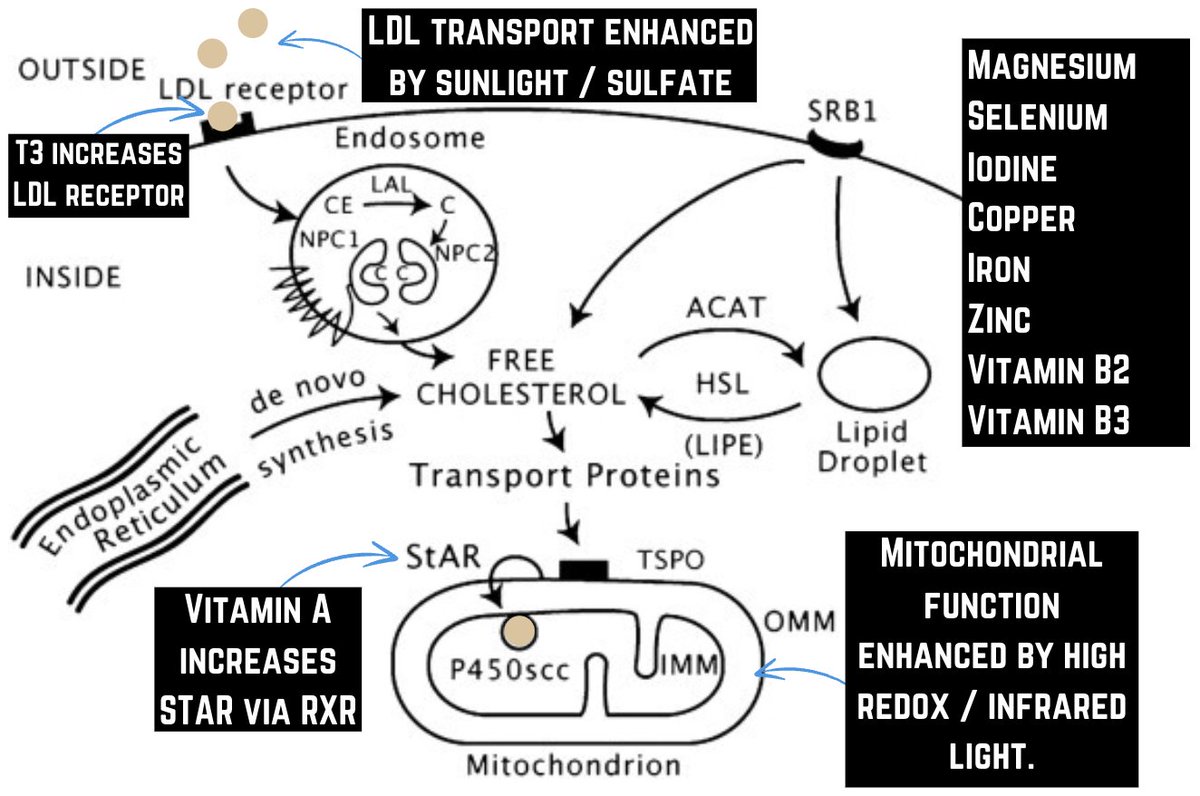
Its derived from cholesterol which is shuttled into the mitochondria for steroidogenesis.
More info here regarding steroidogenesis, mitochondrial function, light, deuterium, and cofactors involved: x.com
Various cytokines (IL-6, TNFa, IL-1B) can indirectly increase DHEA via stimulation of the HPA axis.
Its derived from cholesterol which is shuttled into the mitochondria for steroidogenesis.
More info here regarding steroidogenesis, mitochondrial function, light, deuterium, and cofactors involved: x.com
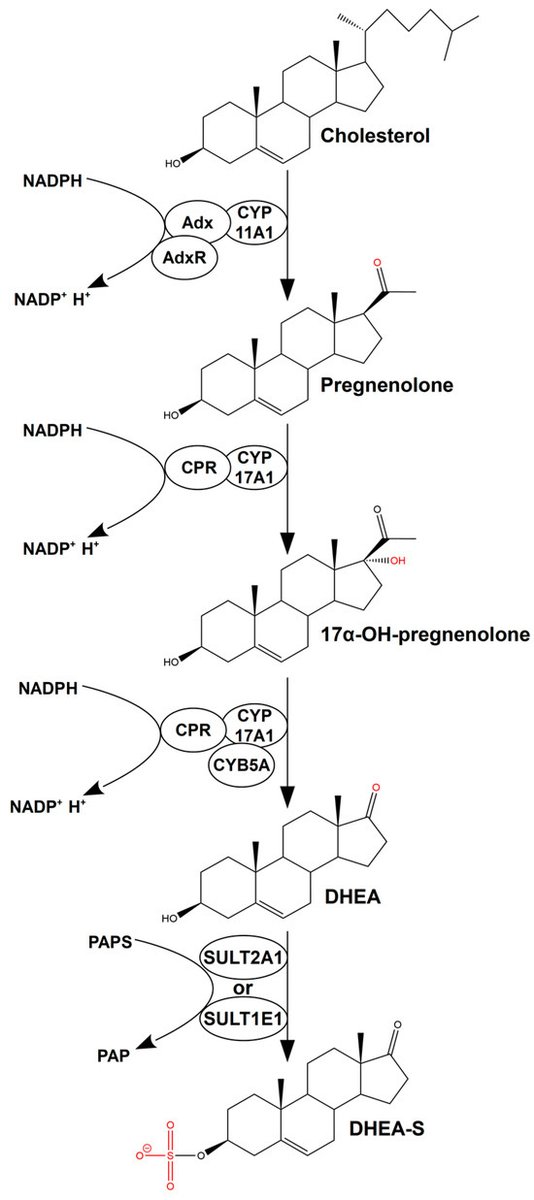
Pregnenolone then gets transported to the endoplasmic reticulum (ER), to further get metabolized into various hormonal products — progesterone, DHEA, cortisol, tesosterone, estrogen, etc.
The conversion of pregnenolone into cholesterol requires optimal status of the redox molecule, NADPH (x.com). NADPH utilizes proton/electron tunnelling mechanisms so it’s important that coherent water networks are optimized (x.com).
As well as sulfation pathways in the skin, gut, and liver running optimally to allow for the sulfation of DHEA, for it to become water-soluble and easily transported throughout the body, acting as a reservoir for sex hormones.
The conversion of pregnenolone into cholesterol requires optimal status of the redox molecule, NADPH (x.com). NADPH utilizes proton/electron tunnelling mechanisms so it’s important that coherent water networks are optimized (x.com).
As well as sulfation pathways in the skin, gut, and liver running optimally to allow for the sulfation of DHEA, for it to become water-soluble and easily transported throughout the body, acting as a reservoir for sex hormones.
Cholesterol, and various other molecules (POMC, aromatic amino acids, opsins, B vitamins, etc.) act through environmental input (light) to determine determine what we should be doing internally (via hormones).
These hormones/molecules act like ferry boats of light, energy, and information to deliver throughout the system via its receptors in various tissues to influence our biology.
More on that here: (x.com).
Basically — optimal hormone status/signalling is symbolic of optimal health.
Now, let’s put the focus back on DHEA.
These hormones/molecules act like ferry boats of light, energy, and information to deliver throughout the system via its receptors in various tissues to influence our biology.
More on that here: (x.com).
Basically — optimal hormone status/signalling is symbolic of optimal health.
Now, let’s put the focus back on DHEA.
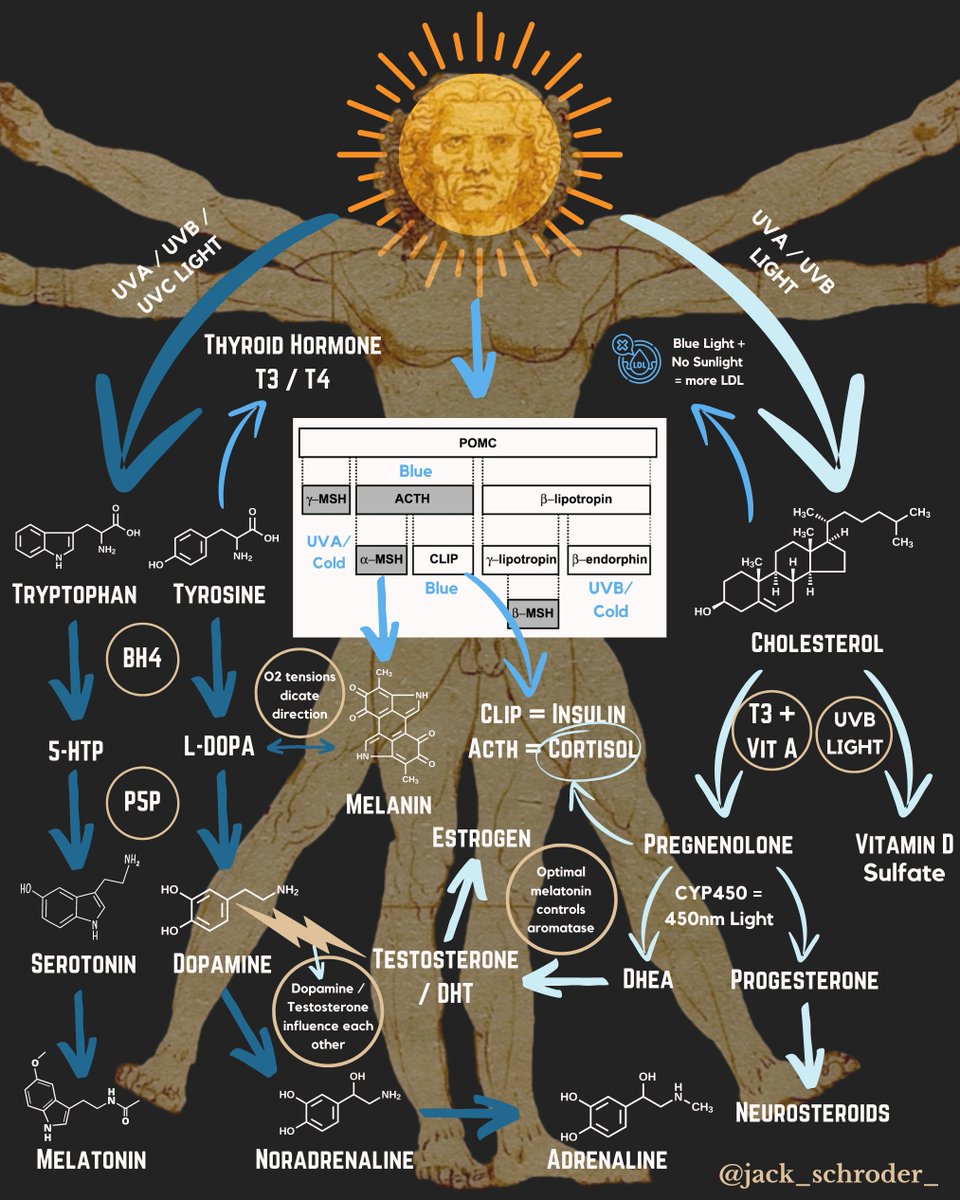
Beyond light signals, DHEA will rise under any form of stress to counteract the potential negative effects of cortisol, and pro-inflammatory cytokines — IL-6/TNFa/IL-1B.
This is all good and well acutely, however the modern world is filled with potential stressors, so its good to be on top of it.
Stress/trauma/emotions, poor breathing/biomechanics, low redox, inflammation, mitochondrial dysfunction, environmental toxins, dehydration, hypoxia, and gut dysbiosis can chronically raise cortisol, which eventually tanks DHEA. Leading to chronic burnout.
This is all good and well acutely, however the modern world is filled with potential stressors, so its good to be on top of it.
Stress/trauma/emotions, poor breathing/biomechanics, low redox, inflammation, mitochondrial dysfunction, environmental toxins, dehydration, hypoxia, and gut dysbiosis can chronically raise cortisol, which eventually tanks DHEA. Leading to chronic burnout.
DHEA acts in various systems throughout the body — endocrine, immune, metabolic and nervous system.
Let’s explore its effects.
Let’s explore its effects.
DHEA-s acts as a reservoir, which is desulfated in peripheral tissues to produce active DHEA.
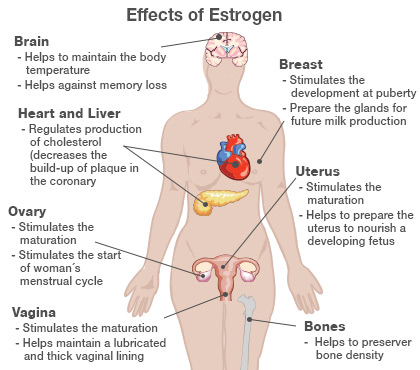
This transformation can occur in tissues such as the mammary gland, ovary, prostate, testicles, placenta, and uterus, where DHEA serves as a precursor for sex hormone synthesis and its downstream products (DHT, 3b-diol, etc.) — it mostly uses NAD+/NADPH as cofactors for its downstream conversion.
These then bind to their receptors and influence our biology.
When they are in balance, they are crucial for maintaining both physiological/psychological well-being, and overall health.
This transformation can occur in tissues such as the mammary gland, ovary, prostate, testicles, placenta, and uterus, where DHEA serves as a precursor for sex hormone synthesis and its downstream products (DHT, 3b-diol, etc.) — it mostly uses NAD+/NADPH as cofactors for its downstream conversion.
These then bind to their receptors and influence our biology.
When they are in balance, they are crucial for maintaining both physiological/psychological well-being, and overall health.
Efficient hormone-to-receptor binding requires quantum communication effects through molecular resonance/vibrations, quantum coherence, entanglement, and tunnelling. (x.com)
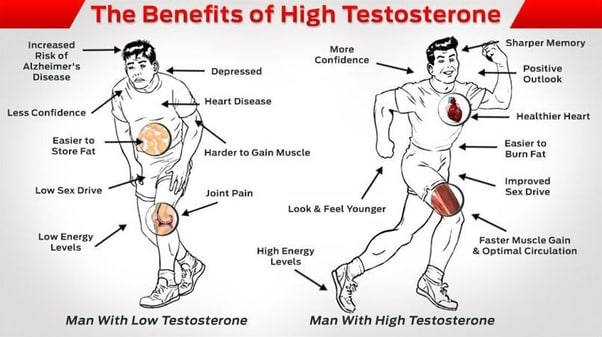
Some of the effects of sex hormones, as most know, are tied to the positive effects on body composition.
Optimal sex hormones leads to the enhancement of protein synthesis and anabolism, resulting in muscle growth and increased muscle strength (pubmed.ncbi.nlm.nih.gov).
Optimal sex hormones leads to the enhancement of protein synthesis and anabolism, resulting in muscle growth and increased muscle strength (pubmed.ncbi.nlm.nih.gov).
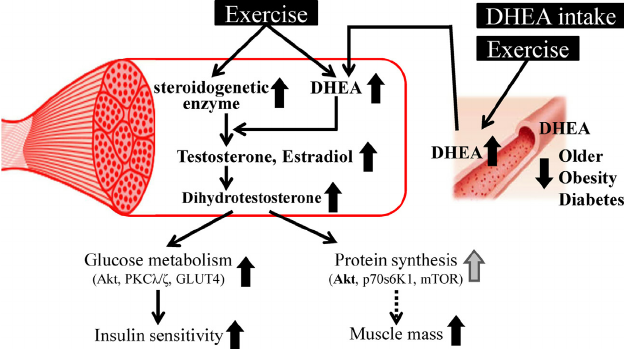

DHEA possesses androgenic activity independent of its conversion to other androgens and upregulates neural androgen receptor levels.
This aids in neuroplasticity, neuroprotection, neurogenesis, and overall neurotransmitter function.
(pubmed.ncbi.nlm.nih.gov)
This aids in neuroplasticity, neuroprotection, neurogenesis, and overall neurotransmitter function.
(pubmed.ncbi.nlm.nih.gov)

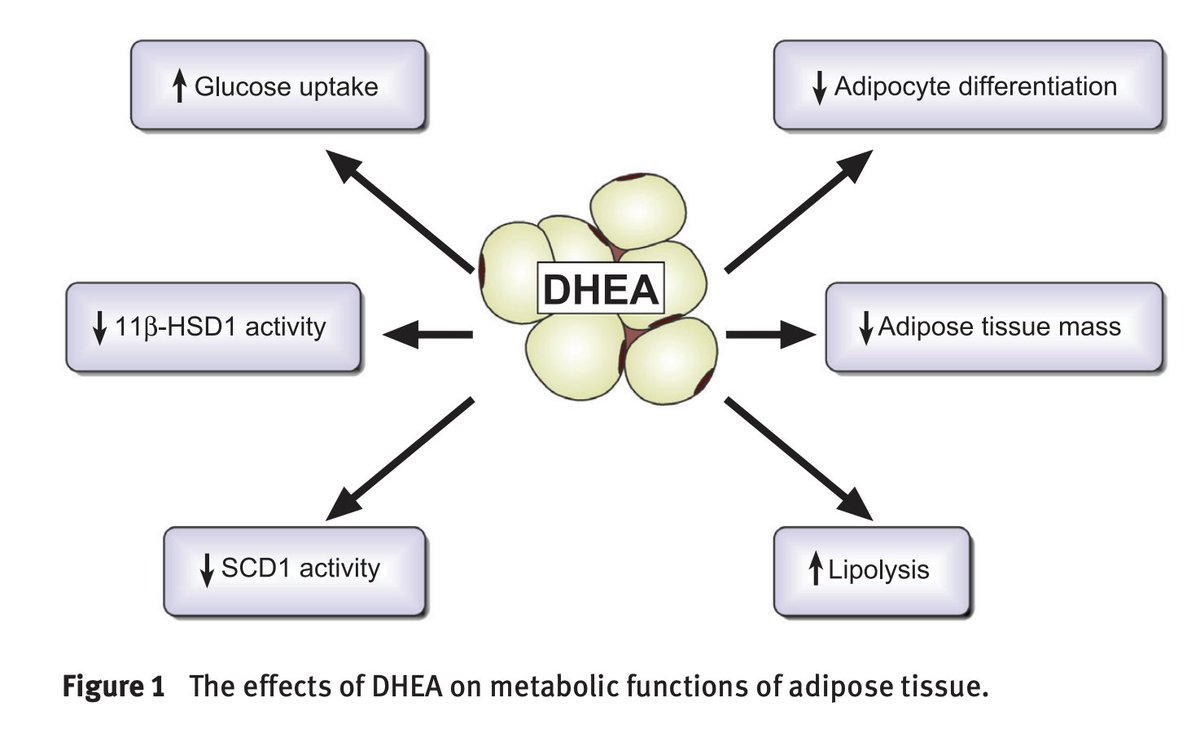
DHEA has been shown to modulate insulin signaling pathways, enhance glucose uptake in adipocytes, and increase insulin sensitivity.
DHEA also acts as a modulator of PPAR alpha — which aids in fatty acid oxidation and lipid metabolism in the liver.
(pubmed.ncbi.nlm.nih.gov)
DHEA also acts as a modulator of PPAR alpha — which aids in fatty acid oxidation and lipid metabolism in the liver.
(pubmed.ncbi.nlm.nih.gov)

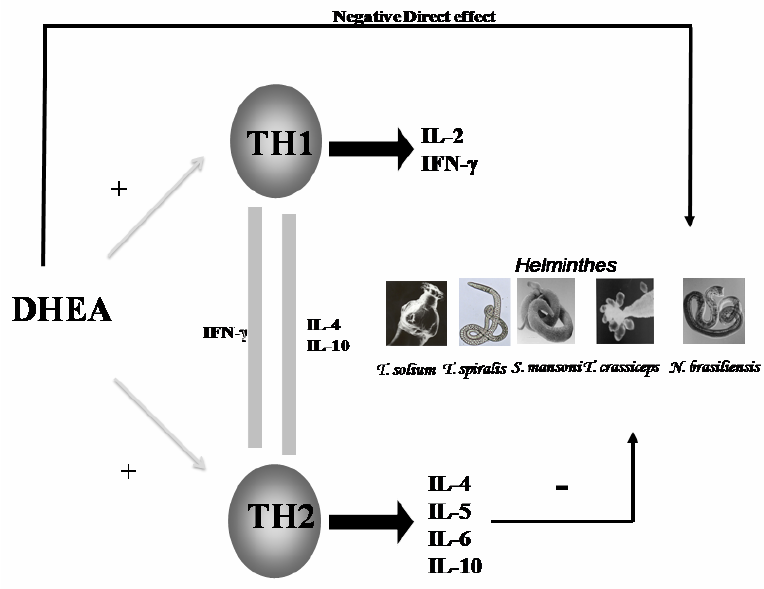
DHEA is immunomodulatory, it can control TH1:TH2 balance by inducing the development of one subtype and inhibiting the other. DHEA effects could depend on concentration, having a dual effect.
It also has antiparasitic properties.
Various other factors yielded from sunlight (vitamin A/D, a-MSH/melanin, dopamine, serotonin, etc.) also influence the immune system.
It also has antiparasitic properties.
Various other factors yielded from sunlight (vitamin A/D, a-MSH/melanin, dopamine, serotonin, etc.) also influence the immune system.

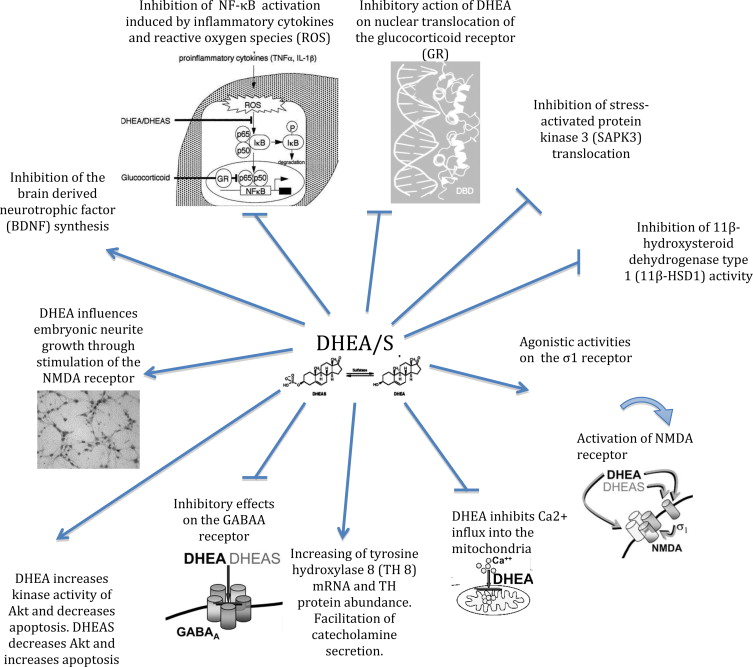
DHEA also acts as a neurohormone — the neuropharmacology of it is extremely interesting. It has several effects:
—NMDA receptor agonist
—TrkA, TrkB, and TrkC receptor agonist
—Mixed GABAa-agonistic/antagonistic effect
—Glycine receptor antagonist
—Sigma-1 receptor agonist
—Increases D1 receptor density
—Decreases D2-short receptor density (autoreceptor), whilst increasing D2-long receptor density
—Increases tyrosine hydroxylase
—Increases acetylcholine, dopamine, and norepinephrine release
—Increases androgen receptors
—Selective agonist of ERb, over ERa
—Reduces dopamine turnover, but increases serotonin turnover
—Reduces CRH, ACTH, and cortisol
—MAO-A/B inhibitor
I won’t get into the effects of each of these actions, but just know this is quite significant and has many cognitive, protective, and memory/mood-enhancing benefits.
—NMDA receptor agonist
—TrkA, TrkB, and TrkC receptor agonist
—Mixed GABAa-agonistic/antagonistic effect
—Glycine receptor antagonist
—Sigma-1 receptor agonist
—Increases D1 receptor density
—Decreases D2-short receptor density (autoreceptor), whilst increasing D2-long receptor density
—Increases tyrosine hydroxylase
—Increases acetylcholine, dopamine, and norepinephrine release
—Increases androgen receptors
—Selective agonist of ERb, over ERa
—Reduces dopamine turnover, but increases serotonin turnover
—Reduces CRH, ACTH, and cortisol
—MAO-A/B inhibitor
I won’t get into the effects of each of these actions, but just know this is quite significant and has many cognitive, protective, and memory/mood-enhancing benefits.
DHEA has a circadian variation, where it peaks in the early morning just like cortisol would.
So having optimal levels of DHEA throughout the day will be extremely beneficial and reflective of its neuropharmacology.
Circadian disruption alters the timing and release of cortisol, thus DHEA also.
So having optimal levels of DHEA throughout the day will be extremely beneficial and reflective of its neuropharmacology.
Circadian disruption alters the timing and release of cortisol, thus DHEA also.

DHEA has tissue/concentration-specific effects on mitochondrial function (biogenesis, fusion, fission, autophagy/apoptosis, etc.).
But all of these studies are done under artificial light/nnEMFs, which heavily influences mitochondrial function and overall biology, so it’s very hard to determine the true effects.
For the most part, avoiding DHEA supplementation is ideal. As it is doesn’t provided the quantized amounts governed by your biology.
But all of these studies are done under artificial light/nnEMFs, which heavily influences mitochondrial function and overall biology, so it’s very hard to determine the true effects.
For the most part, avoiding DHEA supplementation is ideal. As it is doesn’t provided the quantized amounts governed by your biology.
My optimal ranges for DHEA on a blood test:
Men: 8.5-11.5umol/L
Women: 6.5-8.7umol/L
DHEA-s is a very underrated marker. It can tell you a lot about hormone status/stores, your light environment, sulfation status, inflammation (IL-6/TNFa), immune function & dopaminergic activity.
As always, it must be traced back to symptoms. Sometimes DHEA-s can rise with inflammation & cortisol. So it's not necessarily a good thing here.
Men: 8.5-11.5umol/L
Women: 6.5-8.7umol/L
DHEA-s is a very underrated marker. It can tell you a lot about hormone status/stores, your light environment, sulfation status, inflammation (IL-6/TNFa), immune function & dopaminergic activity.
As always, it must be traced back to symptoms. Sometimes DHEA-s can rise with inflammation & cortisol. So it's not necessarily a good thing here.
How to optimize DHEA status:
—Optimize circadian biology/light-dark cycles to allow for proper synthesis, release and utilization of not only hormones, but all things in our biology. Block blue light/nnEMFs, lots of darkness before bed, and lots of sunlight/outdoor time throughout the day. And of course, optimal sleep.
—Maintain emotional and mental well-being by actively managing stress and addressing any underlying trauma. This helps prevent excessive cortisol production and sympathetic nervous system overdrive, thereby supporting optimal DHEA levels and overall hormonal balance.
—Seasonal nutrition that’s available at your latitude, as not only it provides the proper micronutrients and macronutrients, but also signals the body via the information embedded in its electrons/bonds, and hydrogen:deuterium to ensure correct hormone signals/biological processes.
—Compounds found in functional foods/herbals, apigenin, capsaicin, chrysin, diosmetin, kämpferol, luteolin, naringenin, quercetin and resveratrol reduce IL-6 and TNFa secretion. This puts the brakes on DHEA acting in an antioxidant manner, and geared towards other functions.
—Adaptogen herbs also aid in lowering cortisol status, which indirectly supports DHEA, to ensure that DHEA is not excessively diverted towards stress responses but is available to exert its broader beneficial effects
—Further enhance your overall health/redox through infrared light, grounding, nasal breathing, mindfulness, nature, connecting to loved ones, etc.
—Liver/gallbladder and gut health is key in bile flow, fatty acid/fat-soluble vitamins absorption, and cholesterol biosynthesis/utilization. These all aid in proper hormone synthesis/signalling and lowered stress levels.
—Various forms of exercise can increase DHEA, but this may coupled with the cortisol response.
—Optimize circadian biology/light-dark cycles to allow for proper synthesis, release and utilization of not only hormones, but all things in our biology. Block blue light/nnEMFs, lots of darkness before bed, and lots of sunlight/outdoor time throughout the day. And of course, optimal sleep.
—Maintain emotional and mental well-being by actively managing stress and addressing any underlying trauma. This helps prevent excessive cortisol production and sympathetic nervous system overdrive, thereby supporting optimal DHEA levels and overall hormonal balance.
—Seasonal nutrition that’s available at your latitude, as not only it provides the proper micronutrients and macronutrients, but also signals the body via the information embedded in its electrons/bonds, and hydrogen:deuterium to ensure correct hormone signals/biological processes.
—Compounds found in functional foods/herbals, apigenin, capsaicin, chrysin, diosmetin, kämpferol, luteolin, naringenin, quercetin and resveratrol reduce IL-6 and TNFa secretion. This puts the brakes on DHEA acting in an antioxidant manner, and geared towards other functions.
—Adaptogen herbs also aid in lowering cortisol status, which indirectly supports DHEA, to ensure that DHEA is not excessively diverted towards stress responses but is available to exert its broader beneficial effects
—Further enhance your overall health/redox through infrared light, grounding, nasal breathing, mindfulness, nature, connecting to loved ones, etc.
—Liver/gallbladder and gut health is key in bile flow, fatty acid/fat-soluble vitamins absorption, and cholesterol biosynthesis/utilization. These all aid in proper hormone synthesis/signalling and lowered stress levels.
—Various forms of exercise can increase DHEA, but this may coupled with the cortisol response.

Original post to bookmark:
—x.com—
Work with me to optimize your health:
—jackschroder.com—
I will be starting a skool community soon on Men’s Decentralized Health Optimization, please stay tuned so you can learn more soon.
—x.com—
Work with me to optimize your health:
—jackschroder.com—
I will be starting a skool community soon on Men’s Decentralized Health Optimization, please stay tuned so you can learn more soon.
Loading suggestions...