

A thread of Nazi Germany's most brutal experiments done on humans
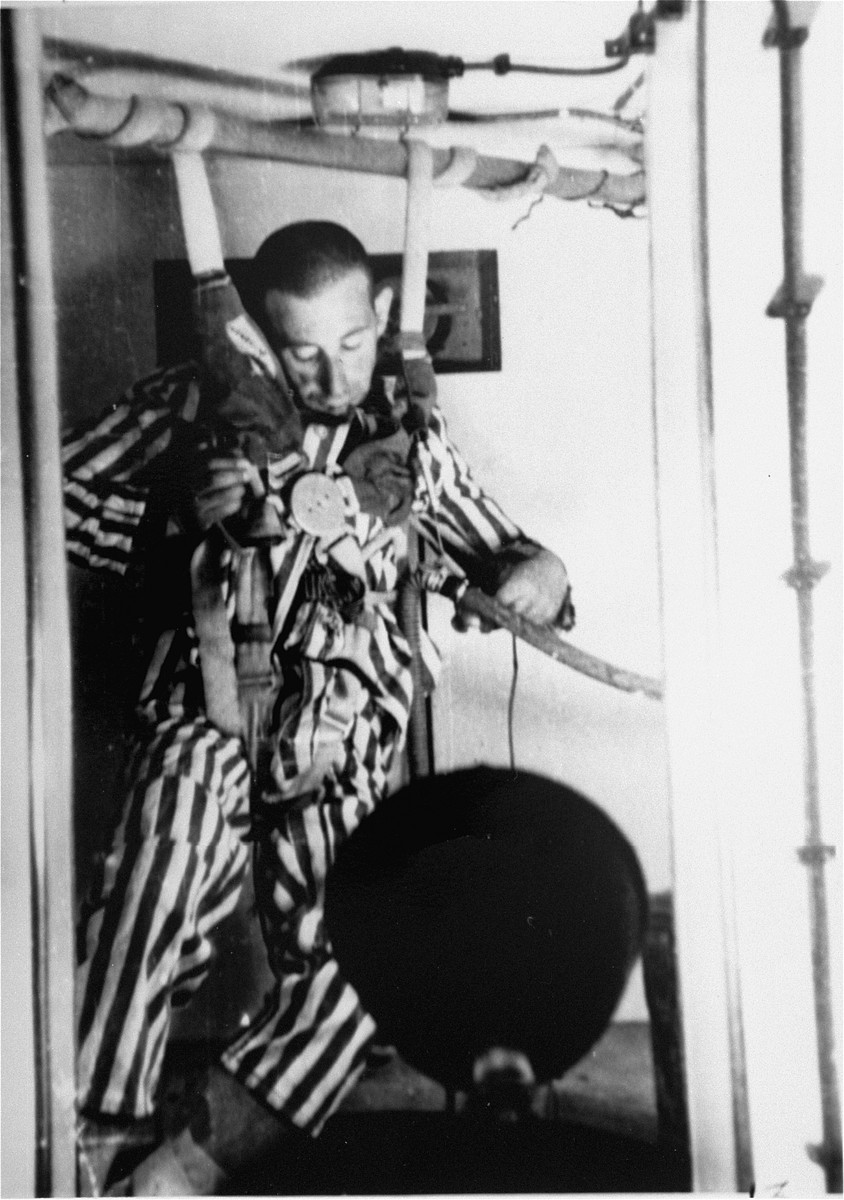
1. High Altitude Experimentation - In early 1942, prisoners at Dachau concentration camp were used by Sigmund Rascher in experiments to aid German pilots who had to eject at high altitudes. A low-pressure chamber containing these prisoners was used to simulate conditions at altitudes of up to 68,000 feet (21,000 m).
It was rumored that Rascher performed vivisections on the brains of victims who survived the initial experiment. Of the 200 subjects, 80 died outright, and the others were murdered.
Here, a victim loses consciousness during a depressurization experiment at Dachau by Luftwaffe doctor Sigmund Rascher, 1942.
1. High Altitude Experimentation - In early 1942, prisoners at Dachau concentration camp were used by Sigmund Rascher in experiments to aid German pilots who had to eject at high altitudes. A low-pressure chamber containing these prisoners was used to simulate conditions at altitudes of up to 68,000 feet (21,000 m).
It was rumored that Rascher performed vivisections on the brains of victims who survived the initial experiment. Of the 200 subjects, 80 died outright, and the others were murdered.
Here, a victim loses consciousness during a depressurization experiment at Dachau by Luftwaffe doctor Sigmund Rascher, 1942.
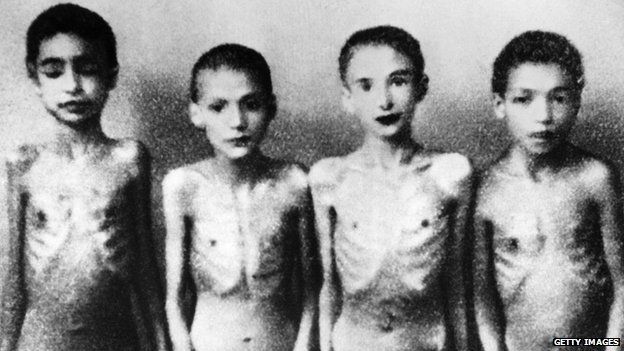
2. Experiments on Twins - From 1943 to 1944, Josef Mengele led experiments on twins, with one twin serving as the subject and the other as the control. The goal was to explore ways Germans could potentially produce more twins.
The experiments involved amputating healthy limbs, intentionally infecting twins with diseases like typhus, conducting blood transfusions between them, and even sewing twins together in an attempt to create conjoined twins.
Survivor Eva Mozes Kor also recounted that Mengele cross-transfused blood between opposite-sex twins to attempt to change their sexes, experimented on their genitals, and tried to connect a 7-year-old girl's urinary tract to her colon. Most twins died during these experiments, and those who survived were later killed for comparative postmortem examinations.
The experiments involved amputating healthy limbs, intentionally infecting twins with diseases like typhus, conducting blood transfusions between them, and even sewing twins together in an attempt to create conjoined twins.
Survivor Eva Mozes Kor also recounted that Mengele cross-transfused blood between opposite-sex twins to attempt to change their sexes, experimented on their genitals, and tried to connect a 7-year-old girl's urinary tract to her colon. Most twins died during these experiments, and those who survived were later killed for comparative postmortem examinations.
3. Blood Coagulation Experiments - Nazi SS “doctor” Sigmund Rascher conducted experiments on the effects of Polygal, a compound derived from beet and apple pectin that promoted blood clotting.
He believed that taking Polygal tablets as a preventive measure could reduce bleeding from gunshot wounds in combat or during surgery. In these experiments, subjects were given a Polygal tablet and then shot in the neck or chest, or had limbs amputated without anesthesia.
Rascher later published an article on the use of Polygal, though he did not disclose the brutal nature of the human trials. He also established a company, staffed by prisoners, to produce the substance.
Here is Rascher with one of the babies that his wife kidnapped.
He believed that taking Polygal tablets as a preventive measure could reduce bleeding from gunshot wounds in combat or during surgery. In these experiments, subjects were given a Polygal tablet and then shot in the neck or chest, or had limbs amputated without anesthesia.
Rascher later published an article on the use of Polygal, though he did not disclose the brutal nature of the human trials. He also established a company, staffed by prisoners, to produce the substance.
Here is Rascher with one of the babies that his wife kidnapped.

4. Artificial Insemination Experiments - Heinrich Himmler ordered Dr. Carl Clauberg to conduct artificial insemination experiments on concentration camp prisoners using a range of experimental techniques.
Clauberg subjected around 300 women at Auschwitz to these procedures, where they were forcibly restrained and endured verbal abuse throughout. Clauberg reportedly told his victims that he had used animal semen, rather than human, in an effort to create monsters.
However, his real objective was to gather information on treating infertility. The women chosen for these experiments were aged between 20 and 40, and were still menstruating. These tests were carried out alongside other sterilization experiments.
Clauberg subjected around 300 women at Auschwitz to these procedures, where they were forcibly restrained and endured verbal abuse throughout. Clauberg reportedly told his victims that he had used animal semen, rather than human, in an effort to create monsters.
However, his real objective was to gather information on treating infertility. The women chosen for these experiments were aged between 20 and 40, and were still menstruating. These tests were carried out alongside other sterilization experiments.

5. Intentional Head Damage Experiments - In the autobiography Remember Us, Holocaust survivor Martin Small recounted an experiment conducted in 1942. Small witnessed an SS security officer named Dr. Wichtmann perform an experiment on a boy who was approximately 11 or 12 years old.
The incident took place inside a building behind the officer's residence in occupied Poland. According to Small: A boy was kept prisoner inside a room, tied to a chair. This boy was repeatedly struck on the head with a mechanical hammer every few seconds which reportedly caused the boy to become insane.
The incident took place inside a building behind the officer's residence in occupied Poland. According to Small: A boy was kept prisoner inside a room, tied to a chair. This boy was repeatedly struck on the head with a mechanical hammer every few seconds which reportedly caused the boy to become insane.

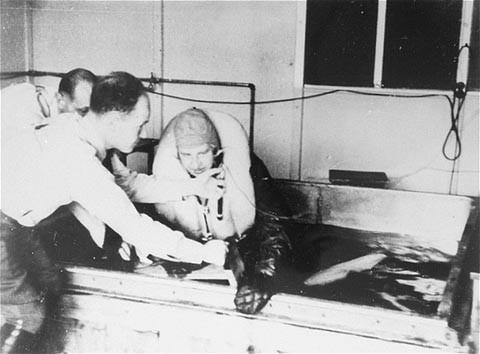
6. Freezing Experiments - Called the Dachau hypothermia experiments, the tests were conducted on men in order to simulate the conditions the armies suffered on the Eastern Front.
The experiments were divided into two parts: first, to establish how long it would take to lower the body temperature before death, and second, how to best resuscitate a frozen victim. The test subjects were either placed in an ice bath, or their clothes were removed and they were forced to lay on a stretcher before being left outside in the Auschwitz winter. Approximately 200 prisoners were used throughout the experimentation process.
Another study placed prisoners naked in the open air for several hours with temperatures as low as −6 °C (21 °F). Besides studying the physical effects of cold exposure, the experimenters also assessed different methods of rewarming survivors. One assistant later testified that some victims were thrown into boiling water for rewarming.
The experiments were divided into two parts: first, to establish how long it would take to lower the body temperature before death, and second, how to best resuscitate a frozen victim. The test subjects were either placed in an ice bath, or their clothes were removed and they were forced to lay on a stretcher before being left outside in the Auschwitz winter. Approximately 200 prisoners were used throughout the experimentation process.
Another study placed prisoners naked in the open air for several hours with temperatures as low as −6 °C (21 °F). Besides studying the physical effects of cold exposure, the experimenters also assessed different methods of rewarming survivors. One assistant later testified that some victims were thrown into boiling water for rewarming.
7. Seawater Experimentation - Victims were subject to deprivation of all food and only given the filtered seawater. At one point, a group of roughly 90 Roma were deprived of food and given nothing but seawater to drink by Hans Eppinger, leaving them gravely injured. They were so dehydrated that others observed them licking freshly mopped floors in an attempt to get drinkable water.
A Holocaust survivor named Joseph Tschofenig wrote a statement on these seawater experiments at Dachau. Tschofenig explained how while working at the medical experimentation stations he gained insight into some of the experiments that were performed on prisoners, namely those in which they were forced to drink salt water.
Tschofenig also described how victims of the experiments had trouble eating and would desperately seek out any source of water, including old floor rags.
A Holocaust survivor named Joseph Tschofenig wrote a statement on these seawater experiments at Dachau. Tschofenig explained how while working at the medical experimentation stations he gained insight into some of the experiments that were performed on prisoners, namely those in which they were forced to drink salt water.
Tschofenig also described how victims of the experiments had trouble eating and would desperately seek out any source of water, including old floor rags.
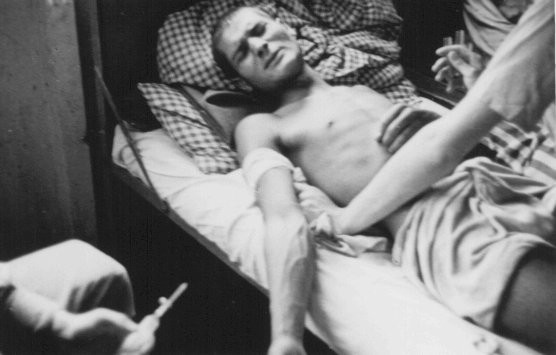
8. Sulfonamide Experiments - Experiments were carried out at Ravensbrück to assess the effectiveness of sulfonamide, a synthetic antimicrobial drug. Subjects were deliberately wounded and infected with bacteria like Streptococcus, Clostridium perfringens (responsible for gas gangrene), and Clostridium tetani, which causes tetanus.
Blood circulation to the wounds was cut off by tying blood vessels at both ends to mimic the conditions of battlefield injuries. To worsen the infections, researchers inserted wood shavings and ground glass into the wounds. The infections were then treated with sulfonamide and other drugs to evaluate their effectiveness.
Blood circulation to the wounds was cut off by tying blood vessels at both ends to mimic the conditions of battlefield injuries. To worsen the infections, researchers inserted wood shavings and ground glass into the wounds. The infections were then treated with sulfonamide and other drugs to evaluate their effectiveness.

Loading suggestions...