
Blood clots are not supposed to form inside blood vessels.
Yet, this type of clotting occurs during and after an active SARS-CoV-2 infection in the 🧠, contributing to Long COVID symptoms like brain fog and neuroinflammation.
This paper (likely) discovered why...🧵
Yet, this type of clotting occurs during and after an active SARS-CoV-2 infection in the 🧠, contributing to Long COVID symptoms like brain fog and neuroinflammation.
This paper (likely) discovered why...🧵

\ The Discovery:
Scientists from UCSF discovered that the SARS-CoV-2 spike protein binds fibrinogen (and fibrin) enhancing clot formation.
This clotting is linked to the onset of:
- pulmonary embolisms (large 🫁 clots during COVID-19)
- brain fog (smaller 🧠 clots post-COVID-19)
The details are published here. 👇 #Sec47" target="_blank" rel="noopener" onclick="event.stopPropagation()">nature.com
Scientists from UCSF discovered that the SARS-CoV-2 spike protein binds fibrinogen (and fibrin) enhancing clot formation.
This clotting is linked to the onset of:
- pulmonary embolisms (large 🫁 clots during COVID-19)
- brain fog (smaller 🧠 clots post-COVID-19)
The details are published here. 👇 #Sec47" target="_blank" rel="noopener" onclick="event.stopPropagation()">nature.com
\ Understanding Clot Formation:
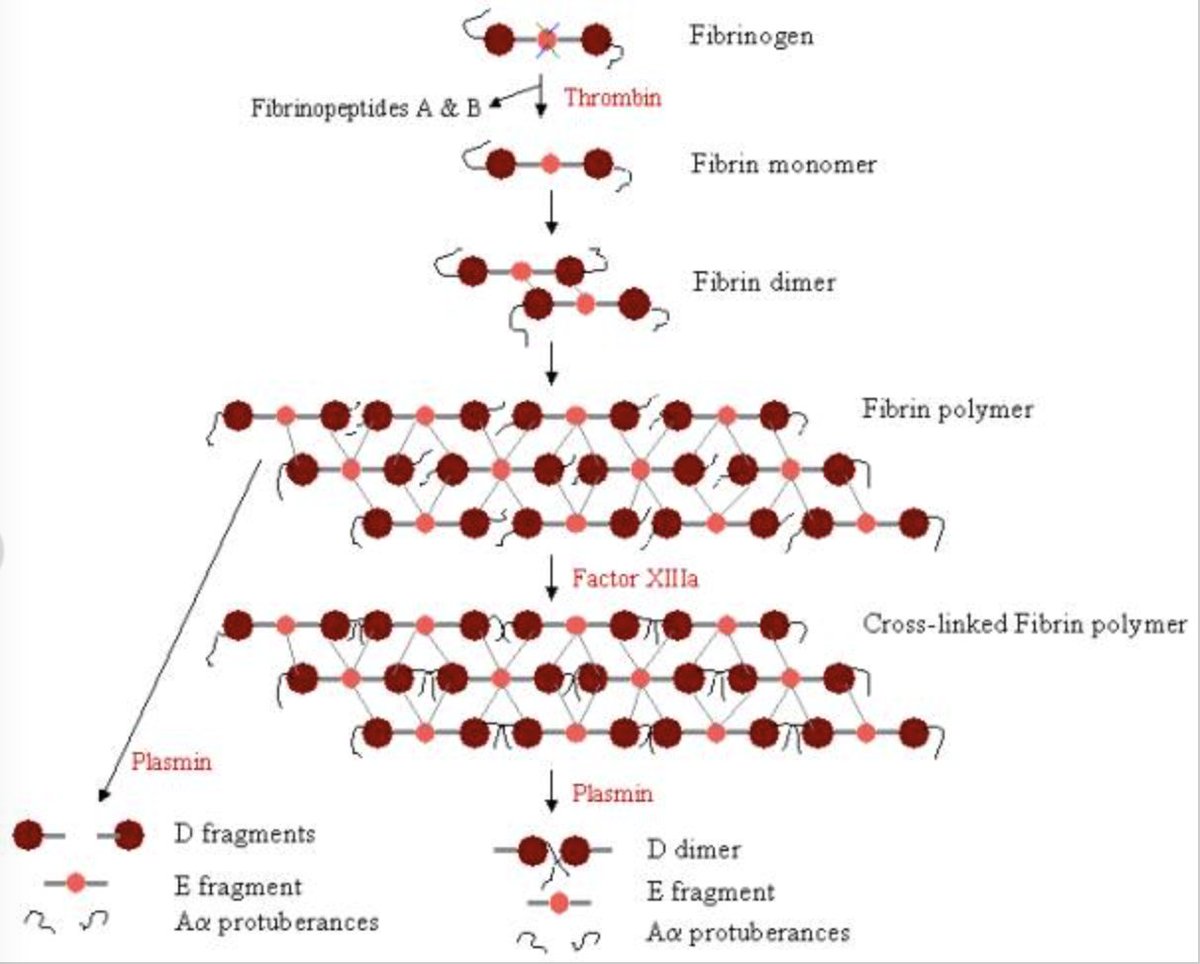
Fibrinogen is a soluble protein that circulates in the blood (at all times).
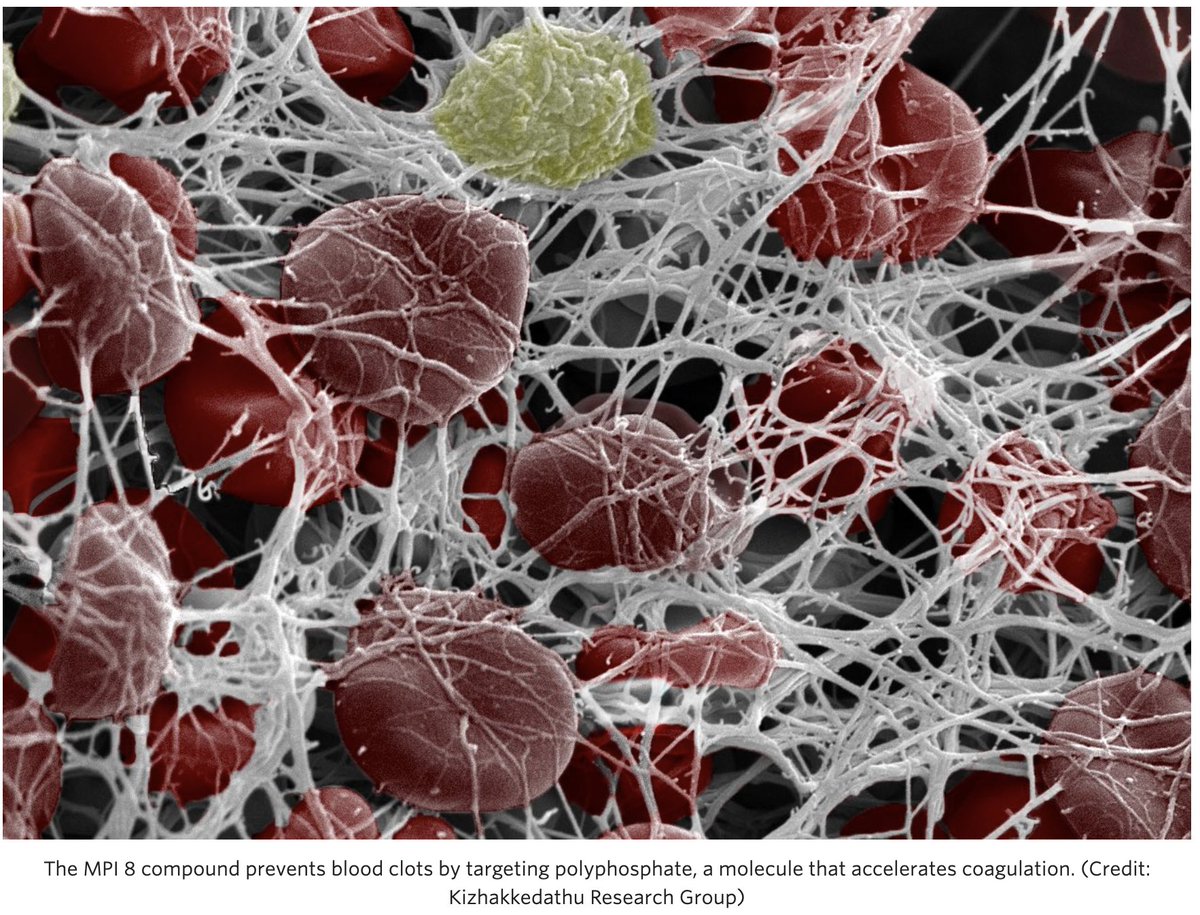
When an injury occurs the fibrinogen is modified into an insoluble fibrin polymer, aka a clot.
It's a temporary meshwork preventing a life-threatening loss of blood.
\ Clot Destruction:
Clots are destroyed when plasmin 'chops up' the fibrin into small fragments.
Plasmin also plays an important role in preventing clots from forming inside vessels, blocking:
- micro-clotting in the cerebral vasculature
- deep vein thrombosis
- pulmonary embolism
- stroke
Fibrinogen is a soluble protein that circulates in the blood (at all times).
When an injury occurs the fibrinogen is modified into an insoluble fibrin polymer, aka a clot.
It's a temporary meshwork preventing a life-threatening loss of blood.
\ Clot Destruction:
Clots are destroyed when plasmin 'chops up' the fibrin into small fragments.
Plasmin also plays an important role in preventing clots from forming inside vessels, blocking:
- micro-clotting in the cerebral vasculature
- deep vein thrombosis
- pulmonary embolism
- stroke
\ Spike Prevents Clot Destruction (Fibrinolysis):
The spike protein was found to:
- promote clot formation and
- inhibit clot destruction
Clot destruction was inhibited b/c the spike binds the fibrin region that is cleaved by plasmin.
In other words - spike prevented plasmin from accessing fibrin to cut it and destroy the clot.
The latter might explain why clot-busting drugs do not work well in COVID-19 coagulopathies.
The spike protein was found to:
- promote clot formation and
- inhibit clot destruction
Clot destruction was inhibited b/c the spike binds the fibrin region that is cleaved by plasmin.
In other words - spike prevented plasmin from accessing fibrin to cut it and destroy the clot.
The latter might explain why clot-busting drugs do not work well in COVID-19 coagulopathies.
\ Neuroinflammation in Long COVID:
During COVID-19 the blood vessels in the brain become leaky losing their barrier (BBB) properties.
This causes fibrin to deposit in the brain vasculature to reduce the vessel's leakiness (aka a thrombus).
A monoclonal antibody was created to bind fibrin(ogen) at the same region spike binds.
The goal was to reverse spike binding to fibrin(ogen).
This monoclonal antibody reduced:
- excessive formation of fibrin deposits in the brain
- microglia activation in the mouse brain (aka neuroinflammation)
During COVID-19 the blood vessels in the brain become leaky losing their barrier (BBB) properties.
This causes fibrin to deposit in the brain vasculature to reduce the vessel's leakiness (aka a thrombus).
A monoclonal antibody was created to bind fibrin(ogen) at the same region spike binds.
The goal was to reverse spike binding to fibrin(ogen).
This monoclonal antibody reduced:
- excessive formation of fibrin deposits in the brain
- microglia activation in the mouse brain (aka neuroinflammation)
\ Monoclonal Fibrinogen-Binding Ab:
A humanized form of this monoclonal antibody was developed and is being tested in a phase 1 clinical trial.
Will this monoclonal antibody prevent/reverse the micro-clotting and microglia activation in the cerebral vasculature in humans?
If it does this might be a viable treatment for the long COVID effects on the brain like brain fog.
A humanized form of this monoclonal antibody was developed and is being tested in a phase 1 clinical trial.
Will this monoclonal antibody prevent/reverse the micro-clotting and microglia activation in the cerebral vasculature in humans?
If it does this might be a viable treatment for the long COVID effects on the brain like brain fog.
\ Inflammatory Consequences:
Last but not least, spike binding to fibrin(ogen) was also discovered to:
- suppresses natural killer (NK) cell function
NK cells are part of the innate immune system (don't require previous exposure or a vaccine to kill a SARS-CoV-2 infected cell during early stages of infection- usually in the lungs).
Blocking NK cell function might have contributed to the development of post-COVID pneumonia in many.
Last but not least, spike binding to fibrin(ogen) was also discovered to:
- suppresses natural killer (NK) cell function
NK cells are part of the innate immune system (don't require previous exposure or a vaccine to kill a SARS-CoV-2 infected cell during early stages of infection- usually in the lungs).
Blocking NK cell function might have contributed to the development of post-COVID pneumonia in many.
We envision a world where the neurophysiology of Long COVID is completely understood so it can be effectively treated.
Help us make our vision a reality by liking and sharing this content!
For more of the latest science pertaining to neuroimmune axis conditions check out our free newsletter (pinned post).
Help us make our vision a reality by liking and sharing this content!
For more of the latest science pertaining to neuroimmune axis conditions check out our free newsletter (pinned post).
Loading suggestions...