

Nuclear power: Is it the future or outmoded technology? Let's take a look at five Generation IV designs and maybe take some inspiration.
Which is your favourite?
A nuclear rabbit hole for your weekend…
Which is your favourite?
A nuclear rabbit hole for your weekend…

What we're building right now are Generation III pressurised water or boiling water reactors. They're sturdy and mature, if a tad expensive.
The GenIV reactor designs share some features: Passive safety, simplified architecture, less waste and (hopefully) lower costs.
The GenIV reactor designs share some features: Passive safety, simplified architecture, less waste and (hopefully) lower costs.

Lead cooled fast reactor!
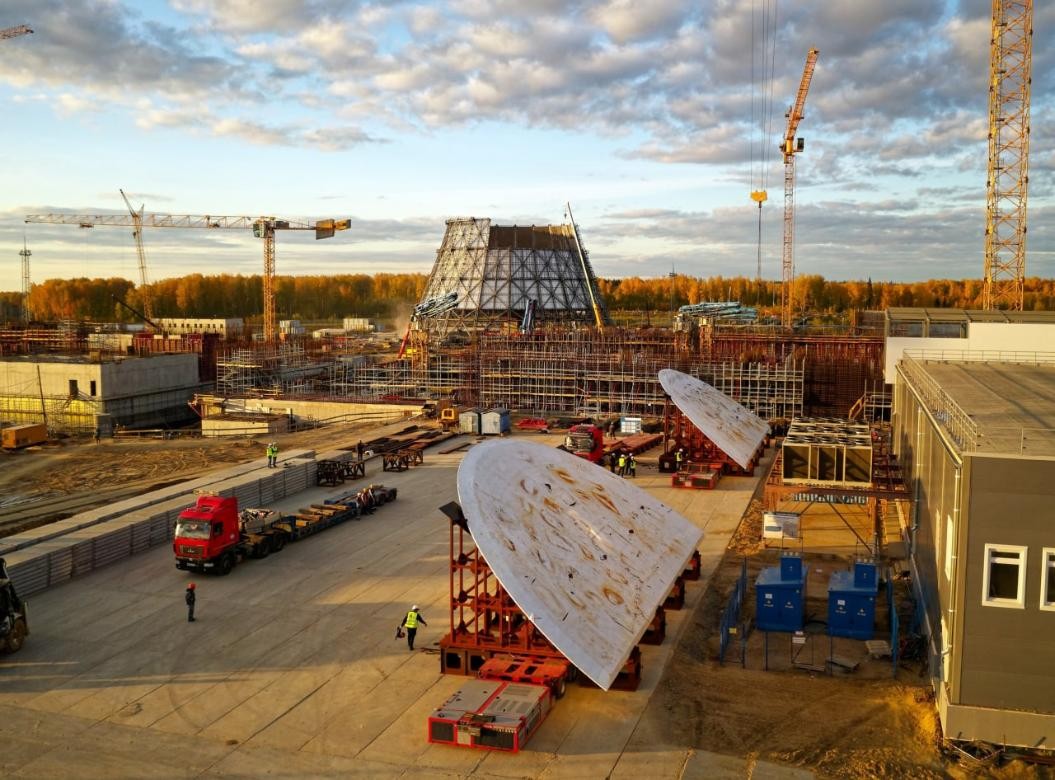
A core cooled with molten lead, this dense, compact, high temperature reactor manages. fuel well, is passively safe during power loss, works well with small modular builds and is under construction now in Russia as the Brest 300.
A core cooled with molten lead, this dense, compact, high temperature reactor manages. fuel well, is passively safe during power loss, works well with small modular builds and is under construction now in Russia as the Brest 300.

The lead cooled fast reactor is one of the more mature GenIV concepts, has a flexible design and holds a lot of promise for the future.
x.com
x.com
Helium Cooled (Very High Temperature) Reactor!
The intriguing and spectacular helium cooled core is another fairly mature GenIV concept, as two commercial scale reactors are running in China, using helium as the primary cycle heat transfer fluid.
The intriguing and spectacular helium cooled core is another fairly mature GenIV concept, as two commercial scale reactors are running in China, using helium as the primary cycle heat transfer fluid.
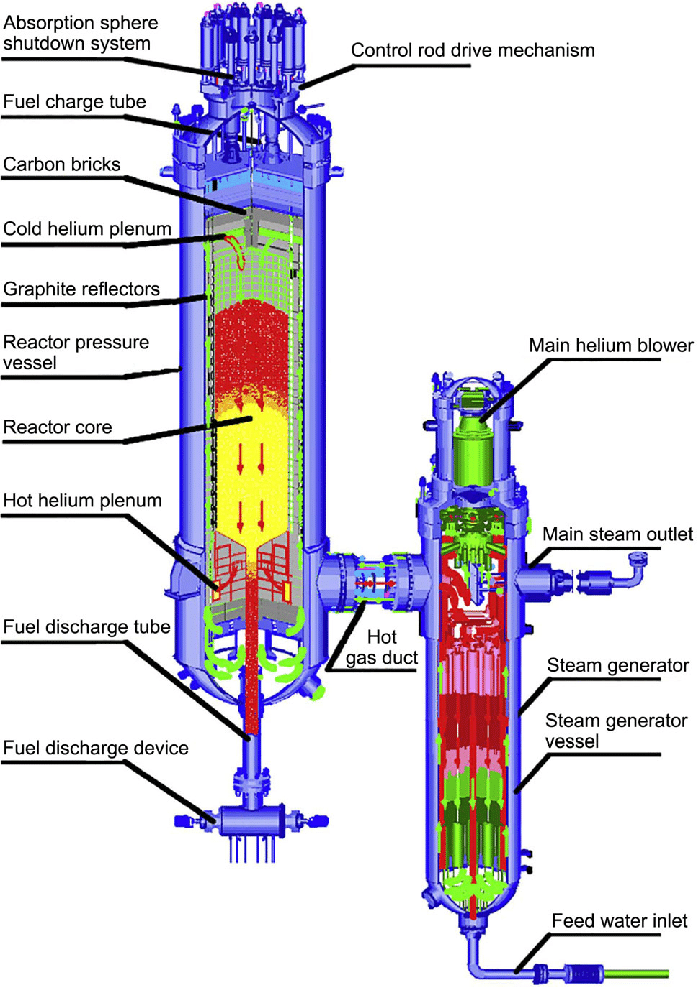
The VHTR occupies a specialist niche of high temperature zero carbon heat export: Exactly how big this niche is remains to be seen. It cannot melt-down.
Currently running at a 750C core exit temperature, time & maturity will bring this to 1000C.
x.com
Currently running at a 750C core exit temperature, time & maturity will bring this to 1000C.
x.com
Sodium cooled fast reactor.
Liquid sodium cycles have been used before in fast breeder reactors and the design has the advantage of a compact core, efficient fuel burn and minimised waste. There are some safety concerns unique to Sodium, however
Russia operates the BN-800 SFR.
Liquid sodium cycles have been used before in fast breeder reactors and the design has the advantage of a compact core, efficient fuel burn and minimised waste. There are some safety concerns unique to Sodium, however
Russia operates the BN-800 SFR.
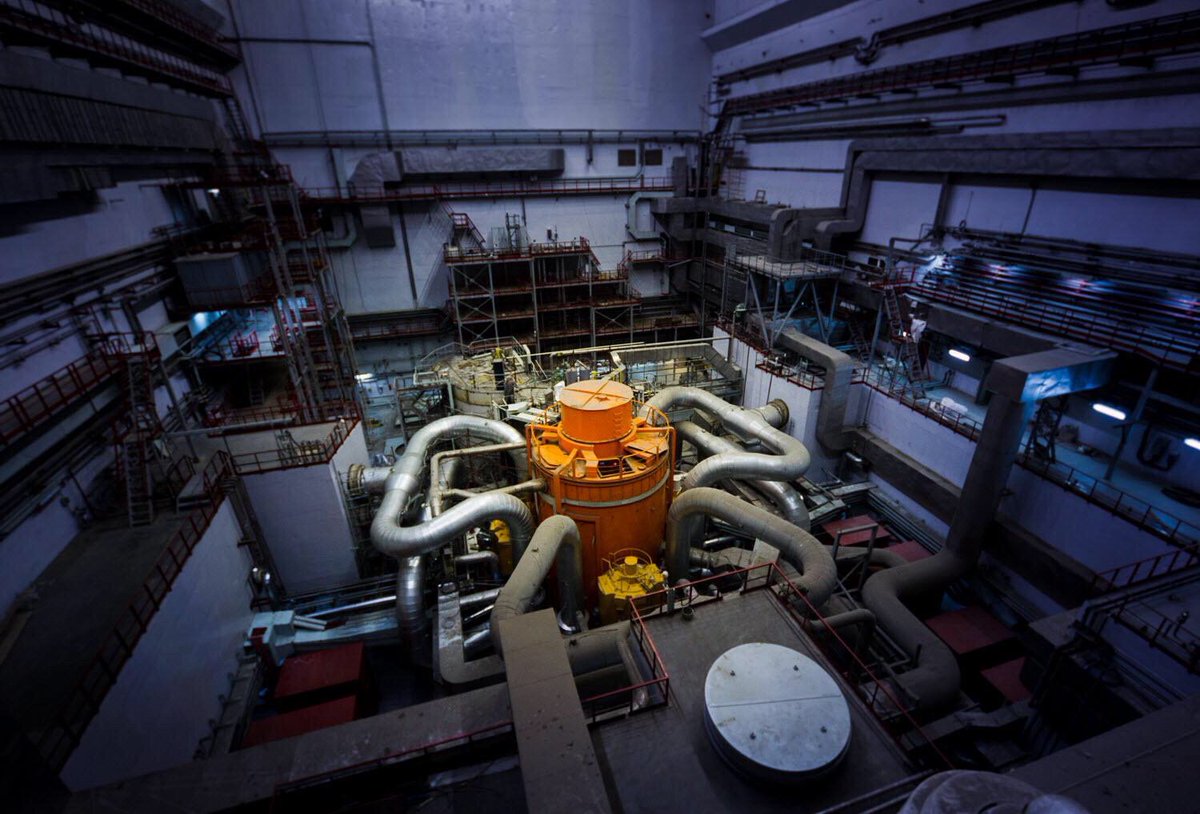
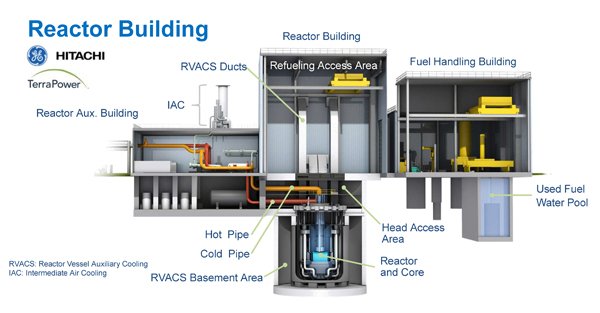
An interesting sodium cooled design is the Natrium reactor concept, which leverages the high temperature of the sodium cooled cycle into a molten salt thermal battery, designed to allow effective surge & storage capabilities when running on a grid dominated by renewables.
The Molten Salt Fast Reactor!
The only GenIV concept that doesn't hew to the theme of ‘simplicity’, the MSFR is formidably complex. It is self-stabilizing and passively safe, however, and very good at burning up nuclear waste.
The only GenIV concept that doesn't hew to the theme of ‘simplicity’, the MSFR is formidably complex. It is self-stabilizing and passively safe, however, and very good at burning up nuclear waste.
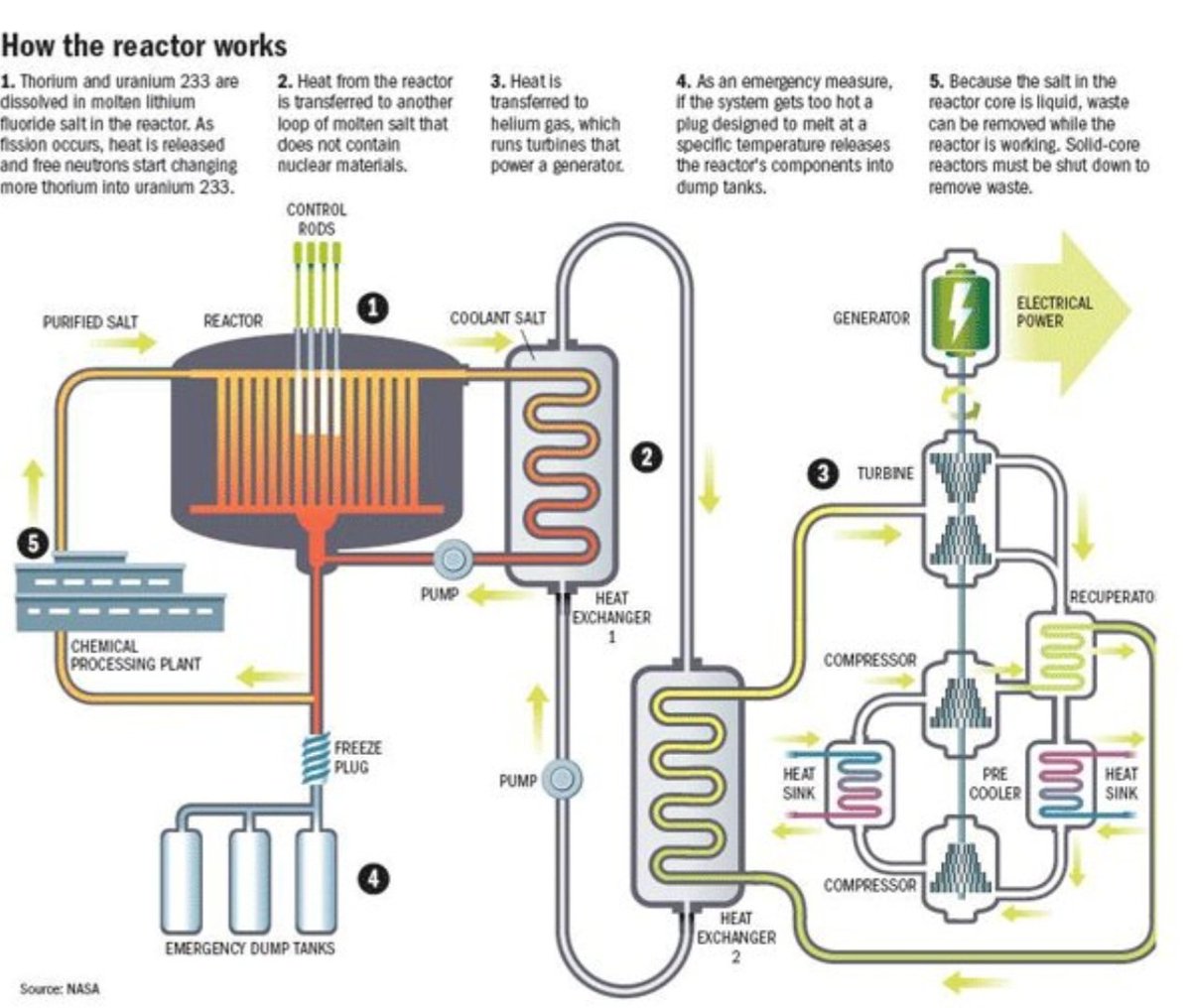
It possesses another neat trick: The MSFR is uniquely suited to breeding & burning the surprisingly common substance that is Thorium 232, which makes it a sort of near-infinite energy machine.
x.com
x.com
Supercritical Water Reactor!
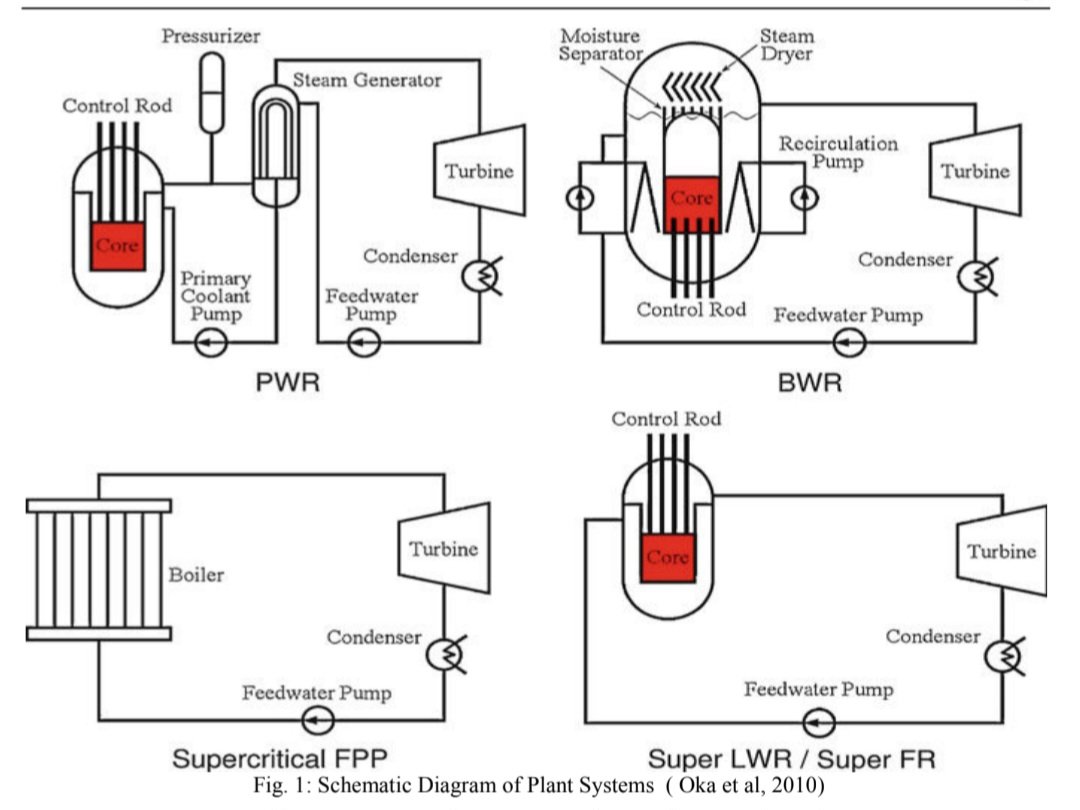
Operating above 22MPa (220 atmospheres) of pressure, this uses water in its supercritical phase, neither fully gas or liquid, in a high efficiency, high temperature, simple direct cycle design.
Supercritical steam is used now in fossil plants.
Operating above 22MPa (220 atmospheres) of pressure, this uses water in its supercritical phase, neither fully gas or liquid, in a high efficiency, high temperature, simple direct cycle design.
Supercritical steam is used now in fossil plants.
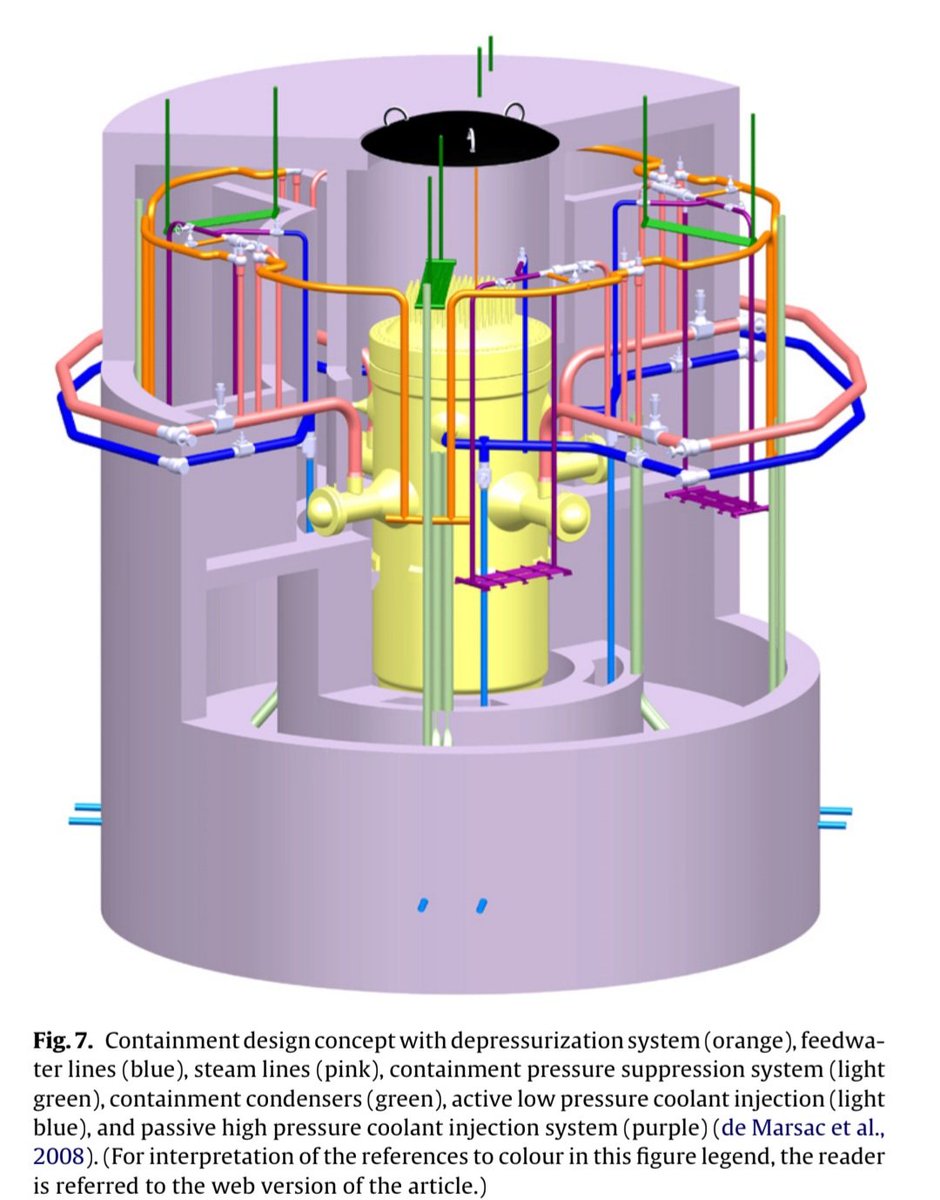
Though posing challenges in corrosion management as well as neutron flux in a medium with big density swings, the SCWR gives a direct cycle of incredible simplicity, potentially lowering build costs, while achieving much higher process efficiencies with its high temp cycle.
We're still well in the middle of GenIII rollout right now, but with the first GenIV designs coming on-stream, it's time to consider which will ultimately come out ahead, if nuclear power is to survive at all as an energy source.
Place your bets!
Place your bets!
Loading suggestions...