

Foundations: Why Britain Has Stagnated.
A new essay by @bswud, @SCP_Hughes & me.
Why the UK's ban on investment in housing, infrastructure and energy is not just a problem. It is *the* problem.
And how fixing it is the defining task of our generation.
ukfoundations.co
A new essay by @bswud, @SCP_Hughes & me.
Why the UK's ban on investment in housing, infrastructure and energy is not just a problem. It is *the* problem.
And how fixing it is the defining task of our generation.
ukfoundations.co

The UK has stagnated.
GDP per hour worked has grown by 7% since 2017 – 0.4% a year.
If we'd continued growing at the rate we had been between 1979 and 2008, we would be 25% richer.
As well as higher wages, that would mean £274 billion more in tax revenues every year.
GDP per hour worked has grown by 7% since 2017 – 0.4% a year.
If we'd continued growing at the rate we had been between 1979 and 2008, we would be 25% richer.
As well as higher wages, that would mean £274 billion more in tax revenues every year.

Britain's stagnation is depressing but we can change that. We have done it before.
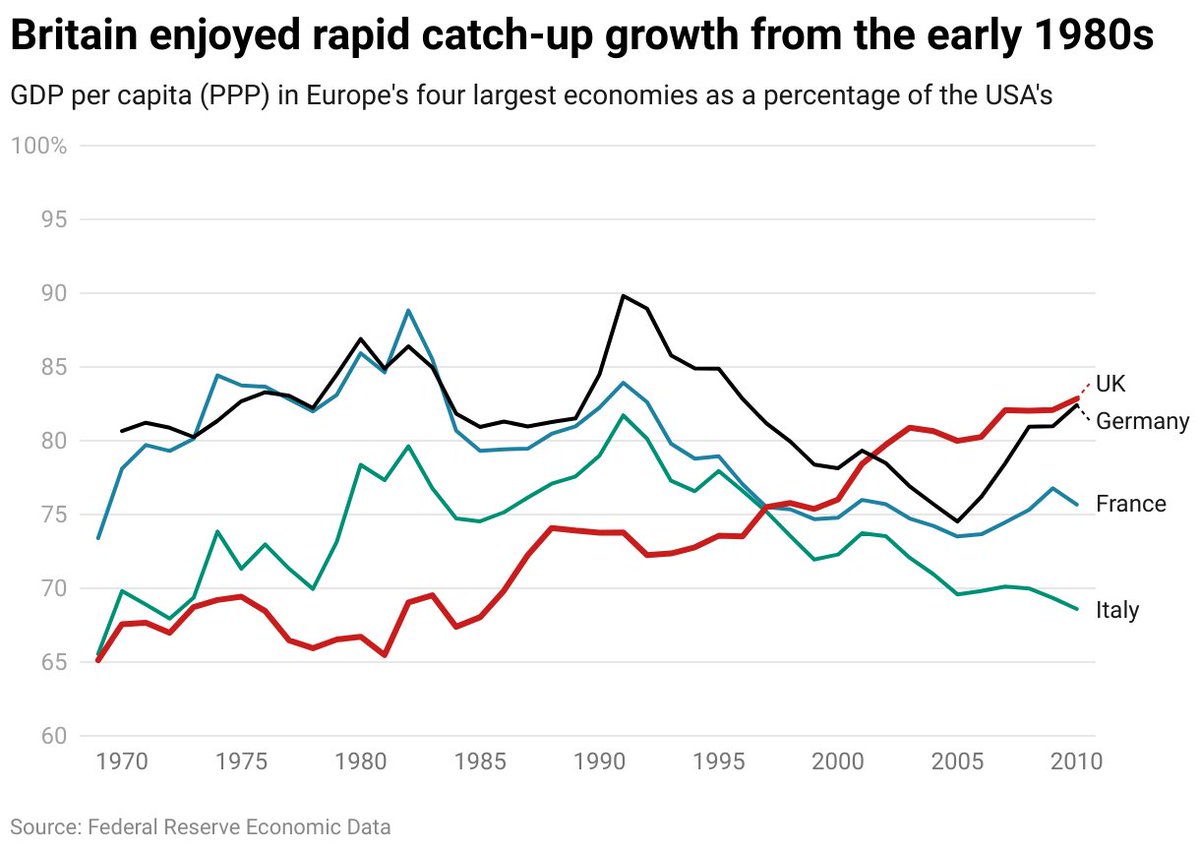
The UK's economy stagnated relative to the US, France, Germany & Italy in the postwar era.
But from the early 1980s, we began to rapidly converge with the US, and overtook our friends in Europe.
The UK's economy stagnated relative to the US, France, Germany & Italy in the postwar era.
But from the early 1980s, we began to rapidly converge with the US, and overtook our friends in Europe.
Back then, the challenge was to privatise large swathes of the economy that had been neglected under state ownership.
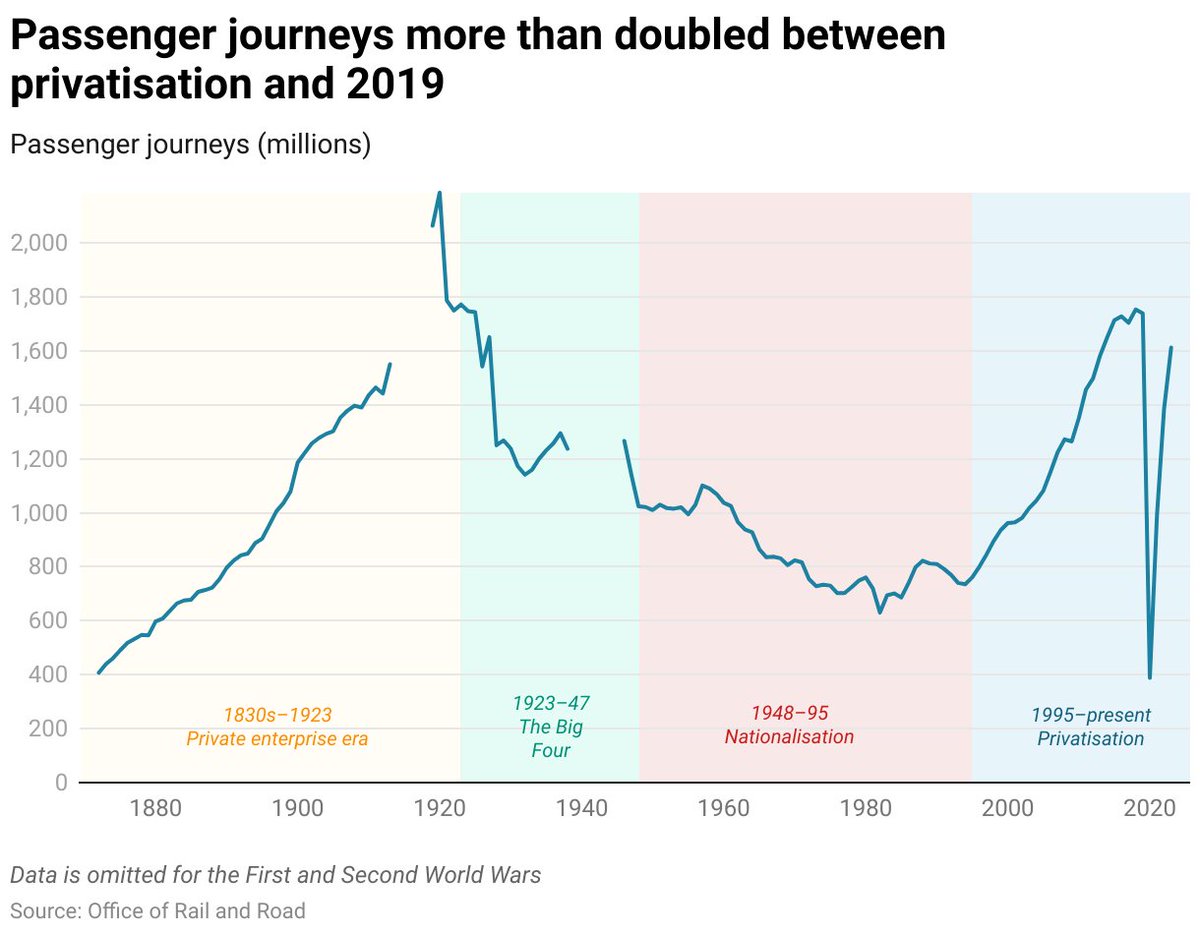
One example is the railways, which declined under state control and recovered after they were privatised. Many other privatised industries saw similar renewals.
One example is the railways, which declined under state control and recovered after they were privatised. Many other privatised industries saw similar renewals.
Today, the challenge is to eliminate barriers to building, especially the "basics" of housing, business premises, transport infrastructure, and reliable clean energy like nuclear power.
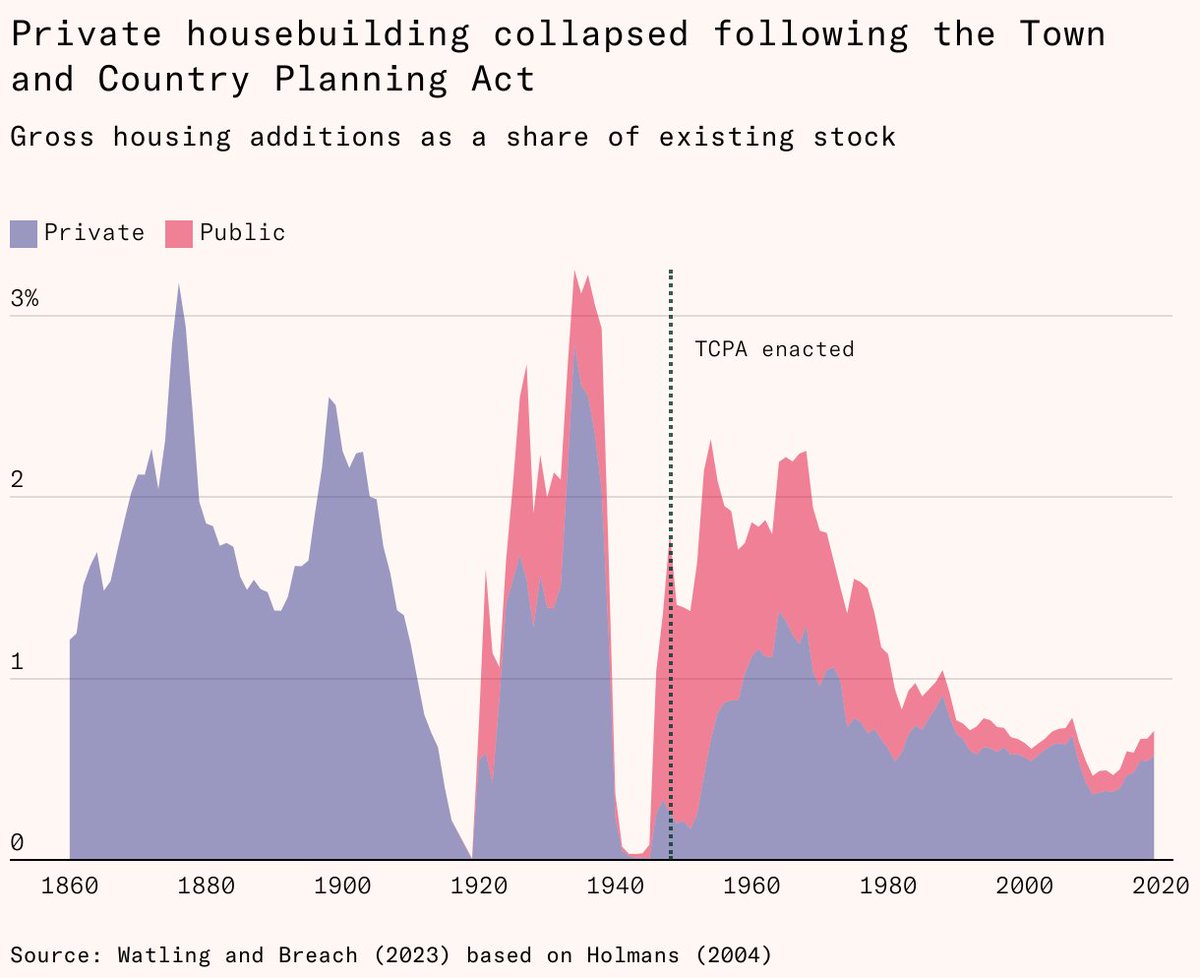
The chart below shows how badly housebuilding has fared under centralised state control.
The chart below shows how badly housebuilding has fared under centralised state control.
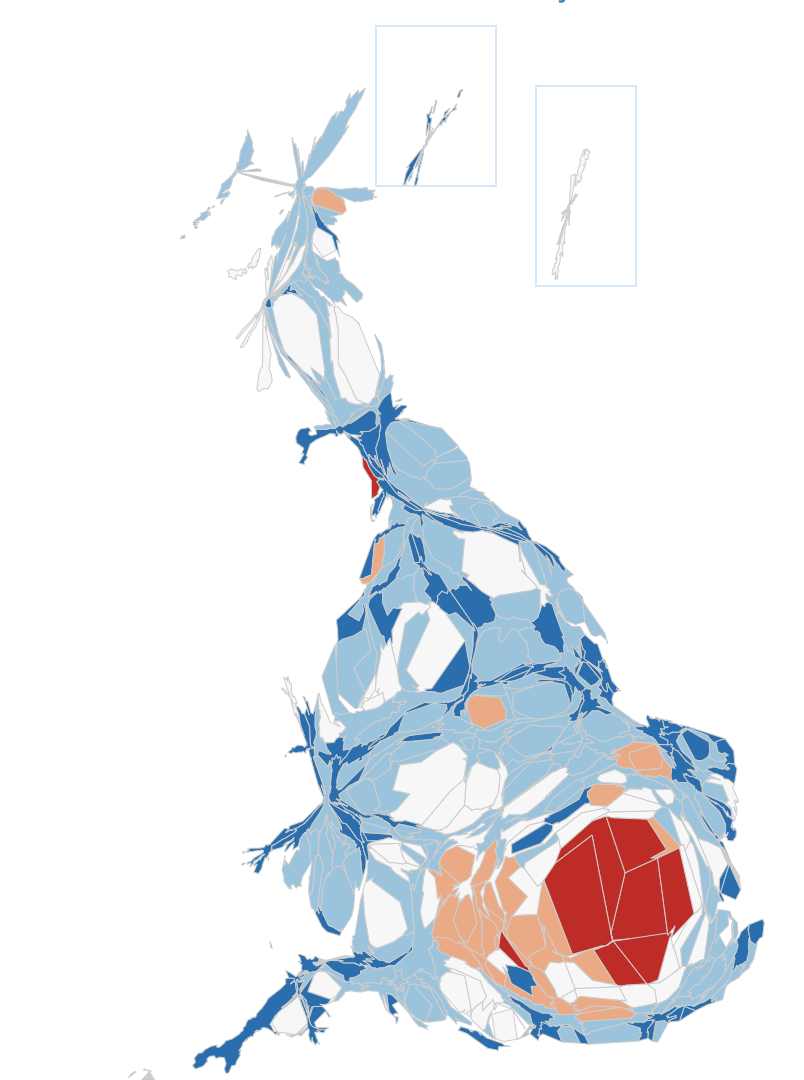
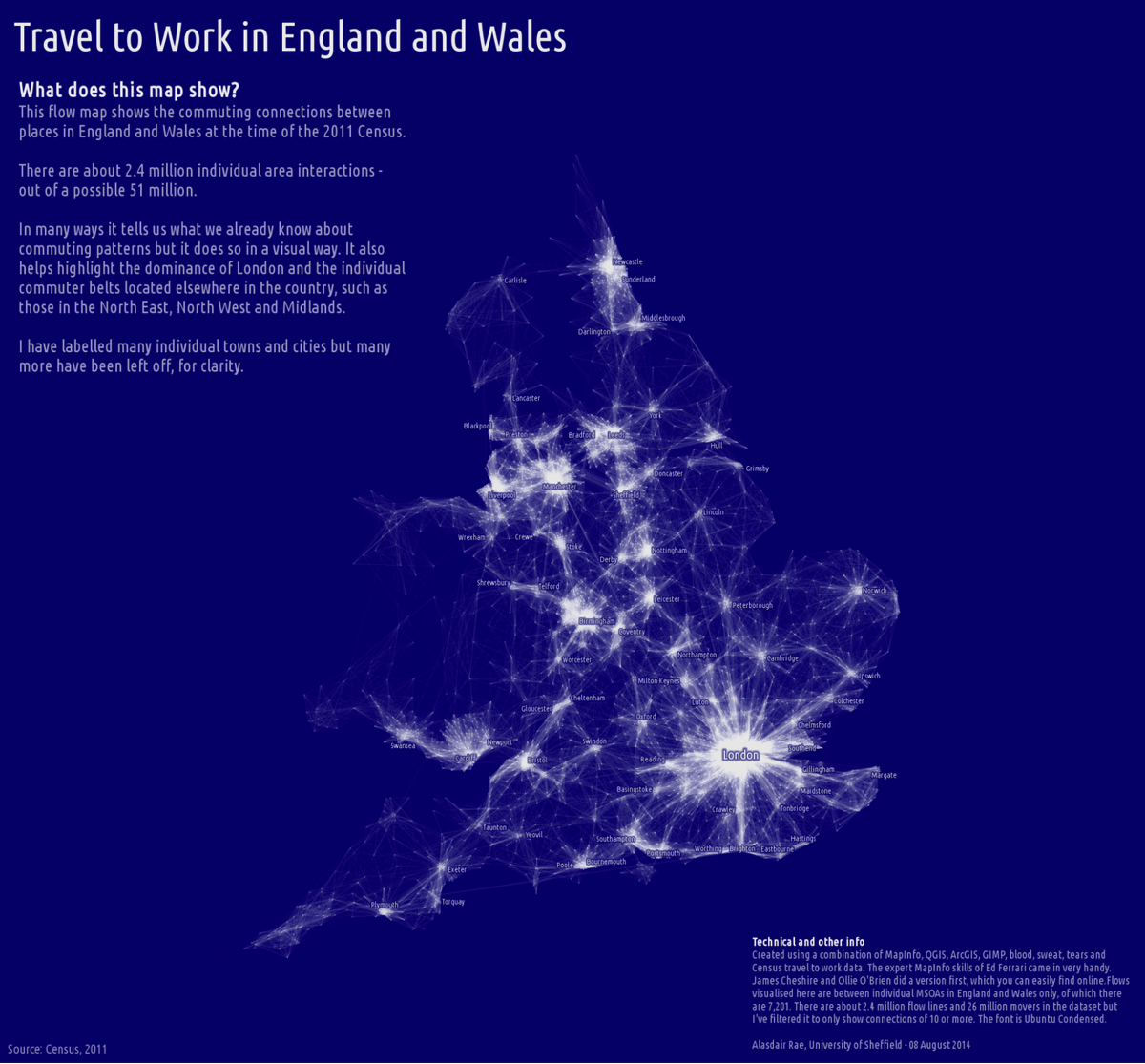
This shows the number of jobs around the country.
Dark red are highest paid, then light red, then grey, then light blue, then dark blue. The average job in dark red areas pays double as much as the average job in dark blue areas.
We need to let people move to the red areas.
Dark red are highest paid, then light red, then grey, then light blue, then dark blue. The average job in dark red areas pays double as much as the average job in dark blue areas.
We need to let people move to the red areas.
As this excellent @resfoundation chart shows, the demand to move to these places is very clear.
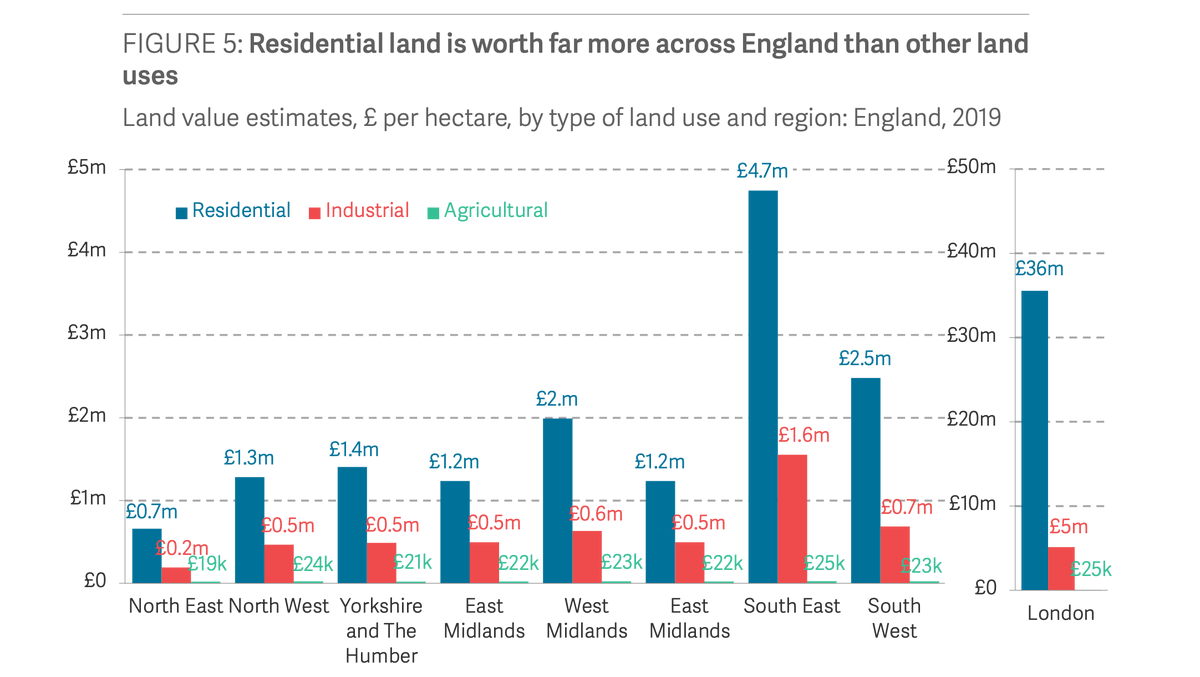
A hectare of land in the South East used for farmland can increase in value by over 180 times if its owner gets permission to build homes on it.
Prices are screaming at us to build.
A hectare of land in the South East used for farmland can increase in value by over 180 times if its owner gets permission to build homes on it.
Prices are screaming at us to build.
Many have identified that the UK under-invests.
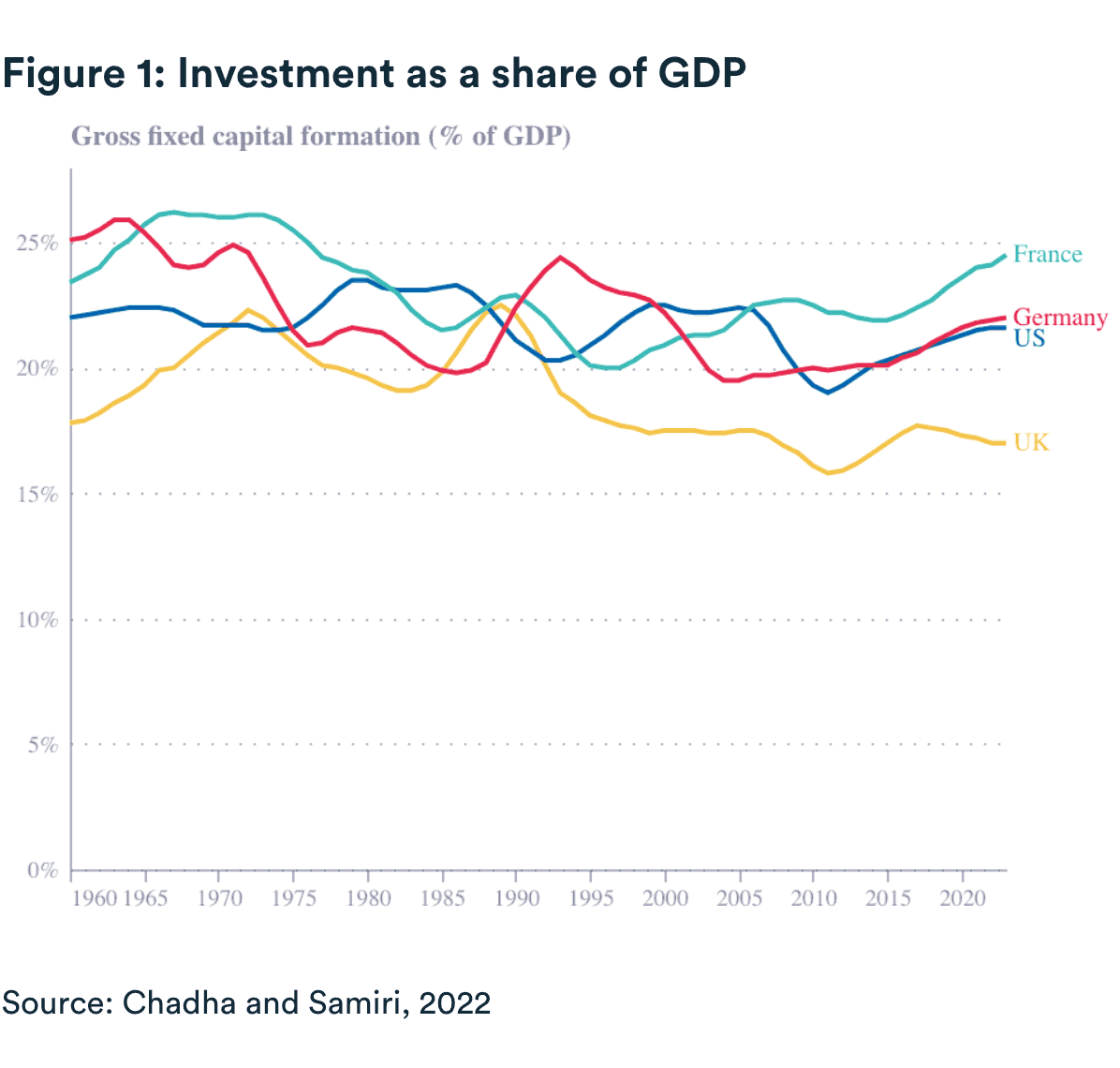
But often they miss the main cause of this under-investment: we ban investment in like housing, railways, roads, energy supply, and other things we need.
Those things don't just cause investment. They ARE investment.
But often they miss the main cause of this under-investment: we ban investment in like housing, railways, roads, energy supply, and other things we need.
Those things don't just cause investment. They ARE investment.
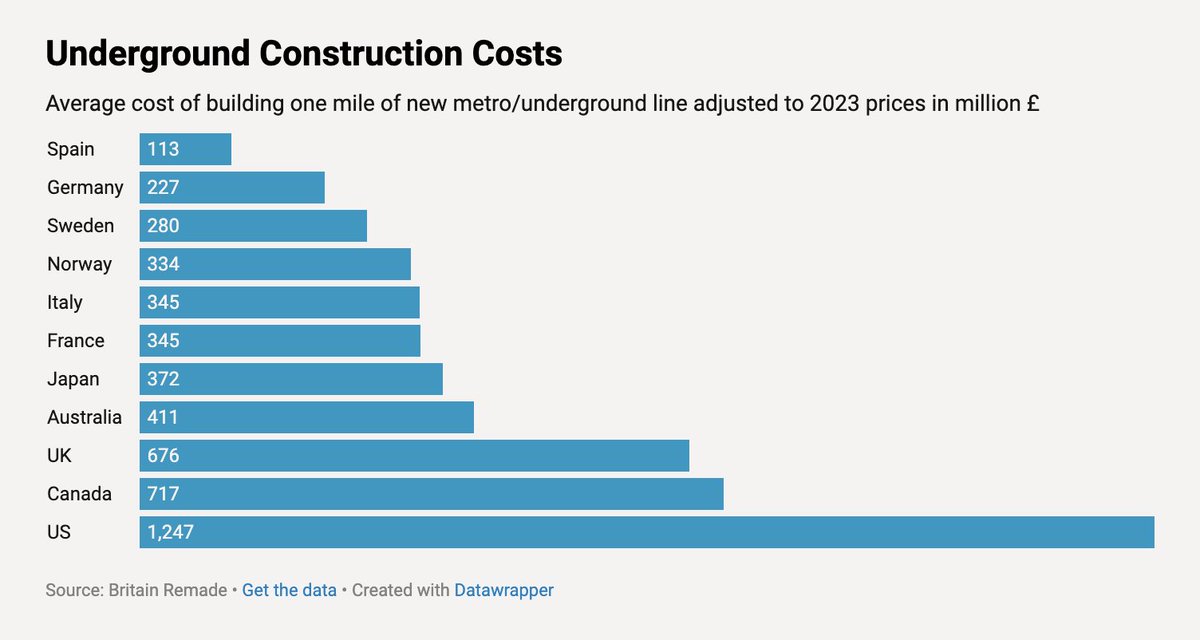
Transport links, especially in & into cities, are economically like building houses, since they too allow people to access more productive jobs.
So high transit construction costs have similar effects to housing shortages. They, too, trap people in less-productive places & jobs.
So high transit construction costs have similar effects to housing shortages. They, too, trap people in less-productive places & jobs.
But many parts of the country are unnecessarily low productivity – in part because their input costs are too high.
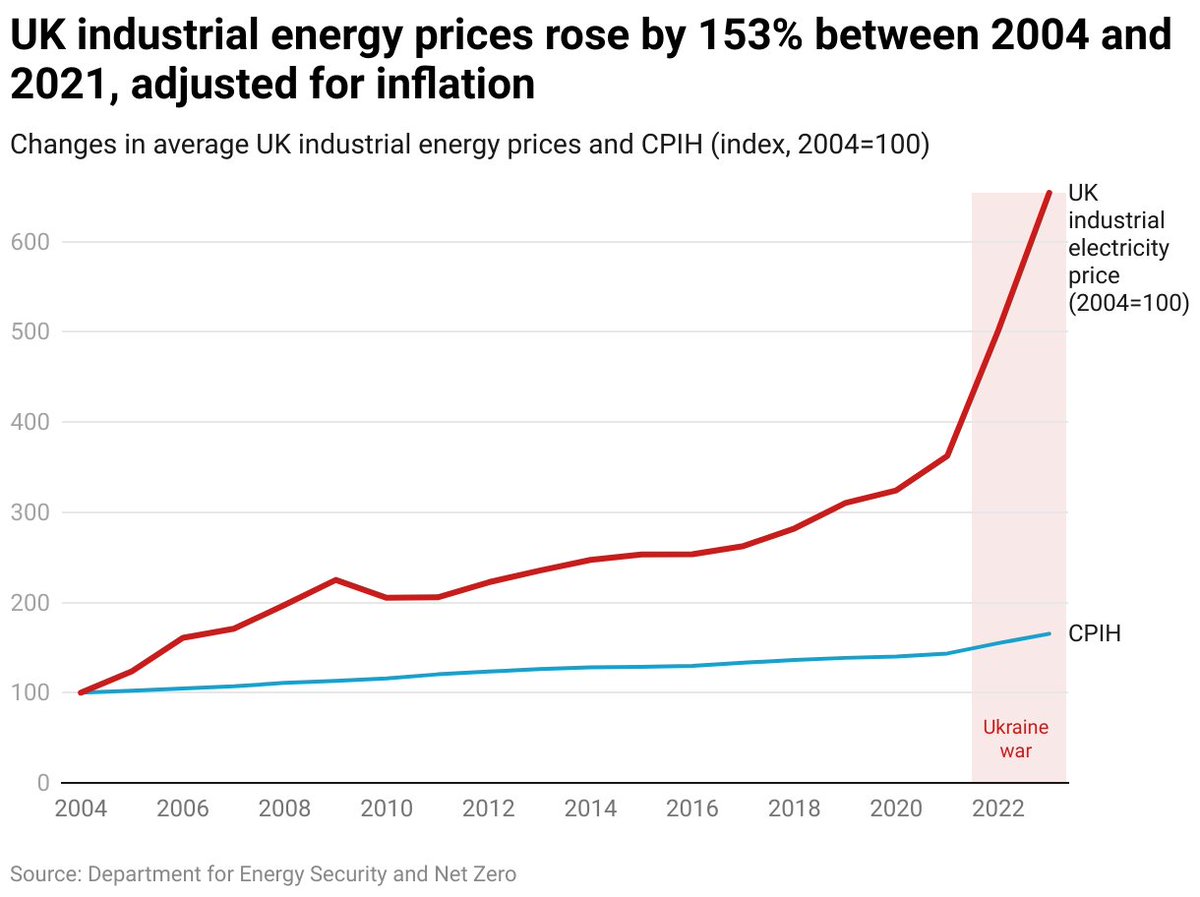
Energy prices for industrial customers have risen by 153% since the early 2000s. Fixing this first is table stakes for any serious industrial strategy.
Energy prices for industrial customers have risen by 153% since the early 2000s. Fixing this first is table stakes for any serious industrial strategy.
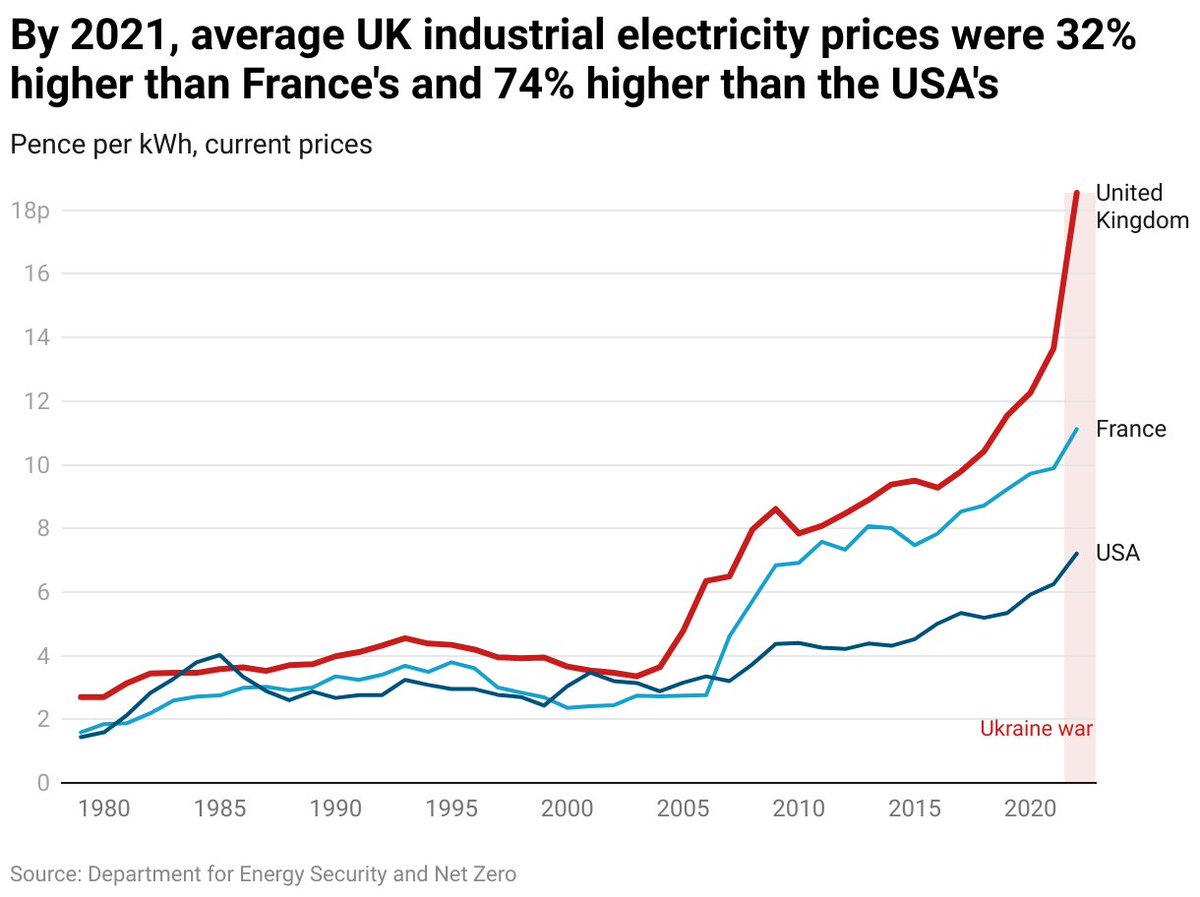
The energy gap with some other countries is stark.
British industrial energy prices were 74% higher than they are in the US and 32% higher than in France in 2021. And that is pre-Ukraine war. The gaps are even larger today.
British industrial energy prices were 74% higher than they are in the US and 32% higher than in France in 2021. And that is pre-Ukraine war. The gaps are even larger today.
If we are to decarbonise, we need to move much of our energy use to electricity. Moving to electric vehicles will increase *total* electricity use by 40%.
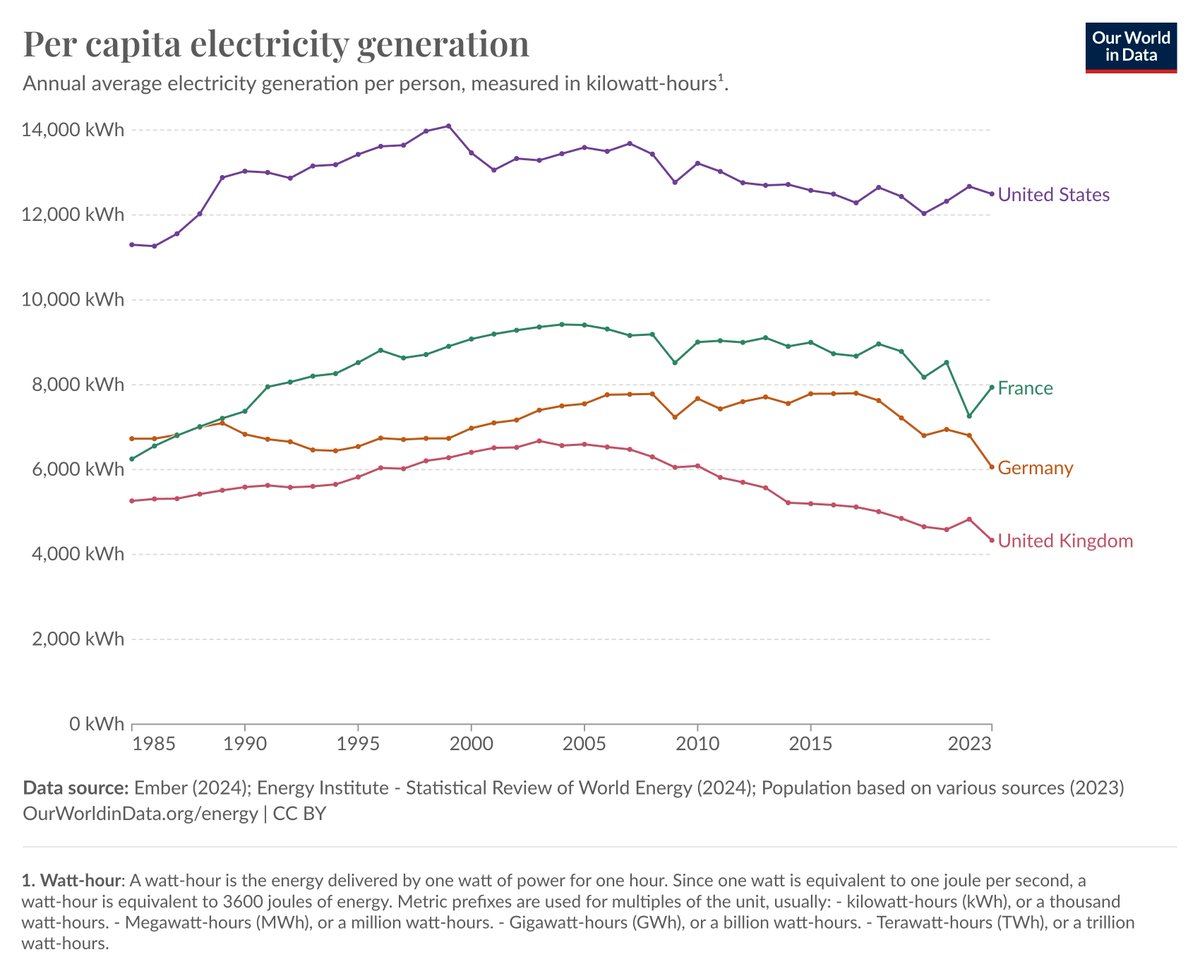
So it is a huge problem that we have been producing less and less electricity per capita since 2003.
So it is a huge problem that we have been producing less and less electricity per capita since 2003.
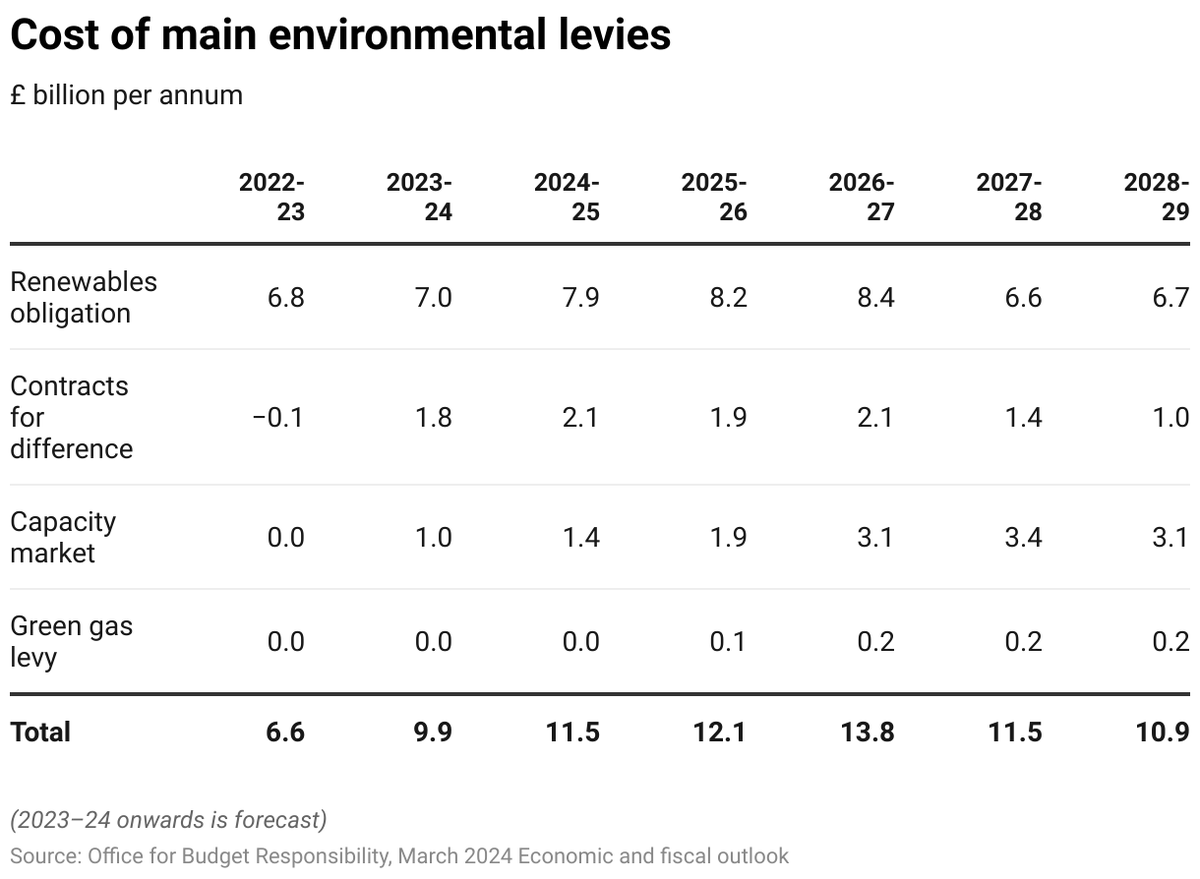
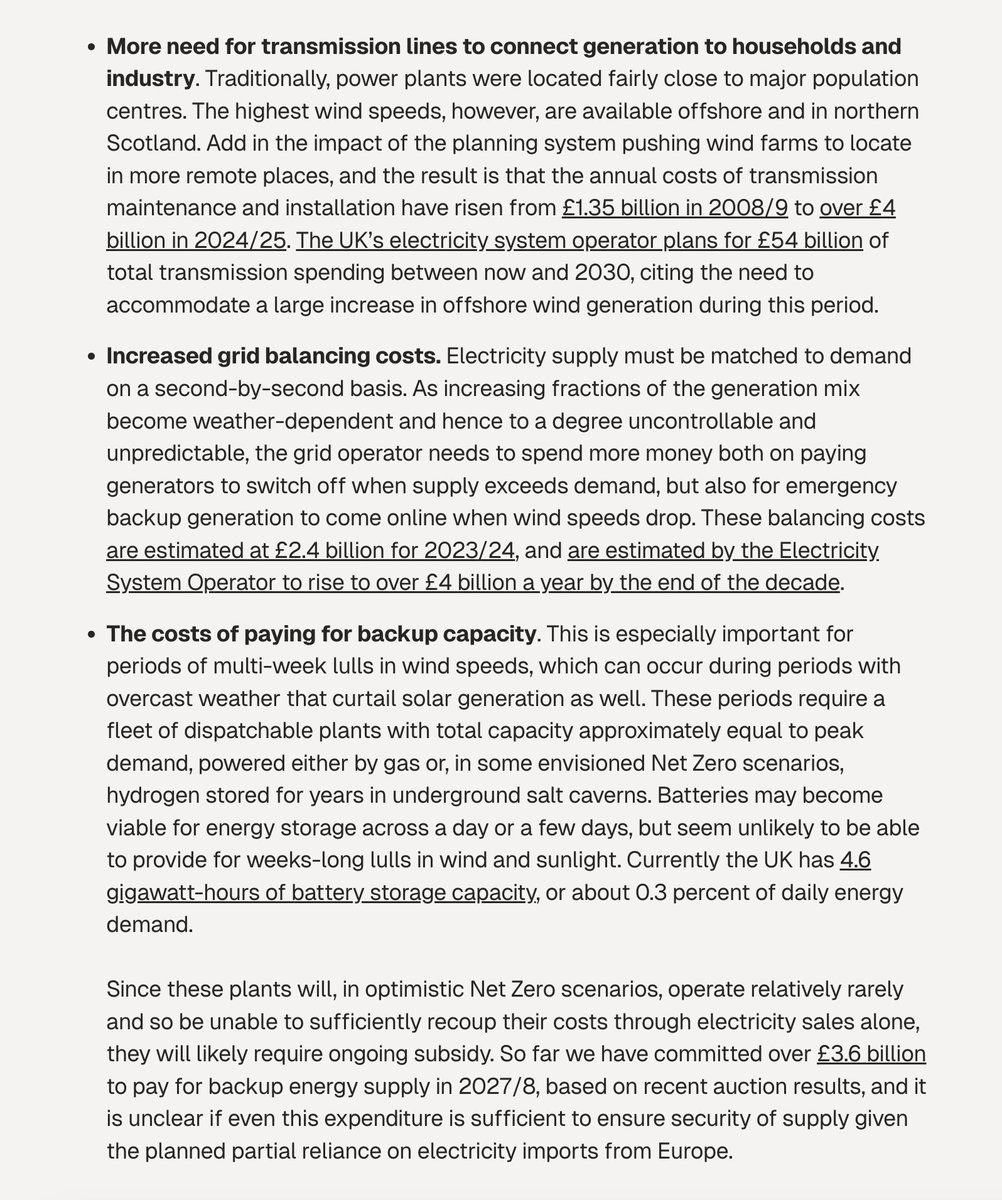
The rise in electricity prices, and the fall in electricity output, coincides with a shift towards intermittent electricity sources that require huge subsidies – paid for by billpayers.
Solar and wind may be cost-effective elsewhere, but they have been very expensive in Britain.
Solar and wind may be cost-effective elsewhere, but they have been very expensive in Britain.
An alternative source of clean energy that does not suffer from most of the problems that wind and solar do in the UK is nuclear power.
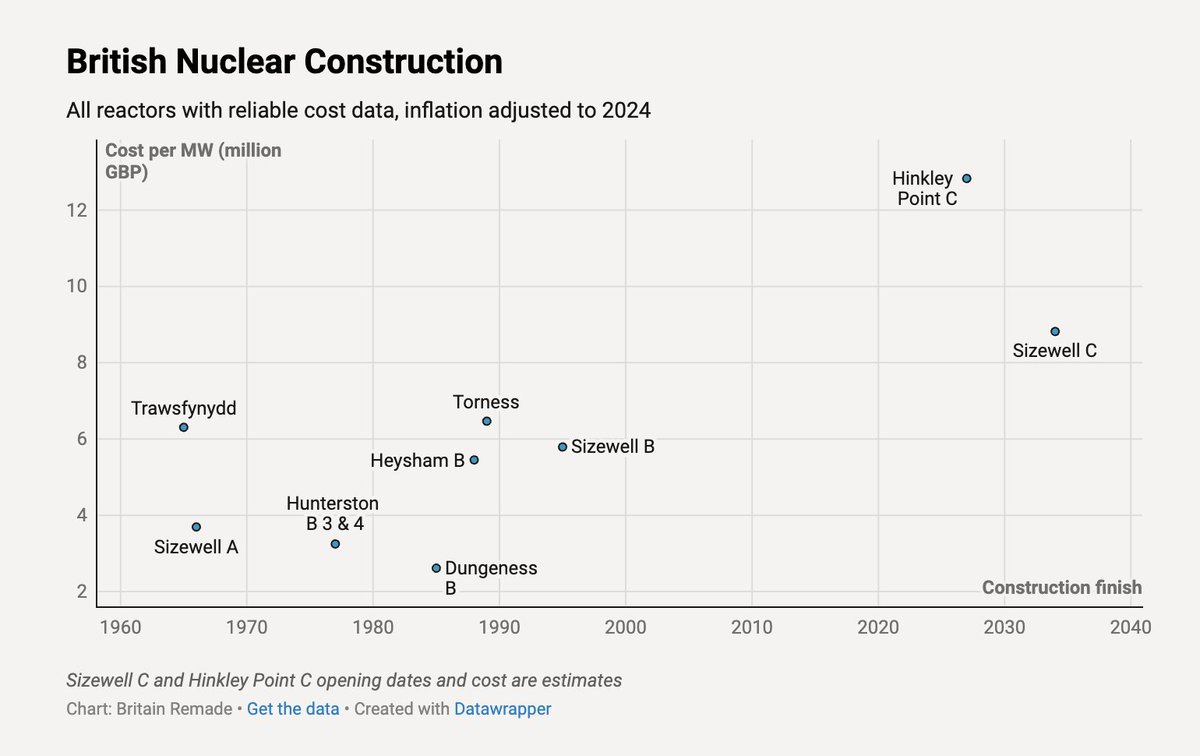
However, though this used to be relatively affordable, today we are building the most expensive nuclear reactors in the world.
However, though this used to be relatively affordable, today we are building the most expensive nuclear reactors in the world.
Now, why is it that nuclear is so expensive?
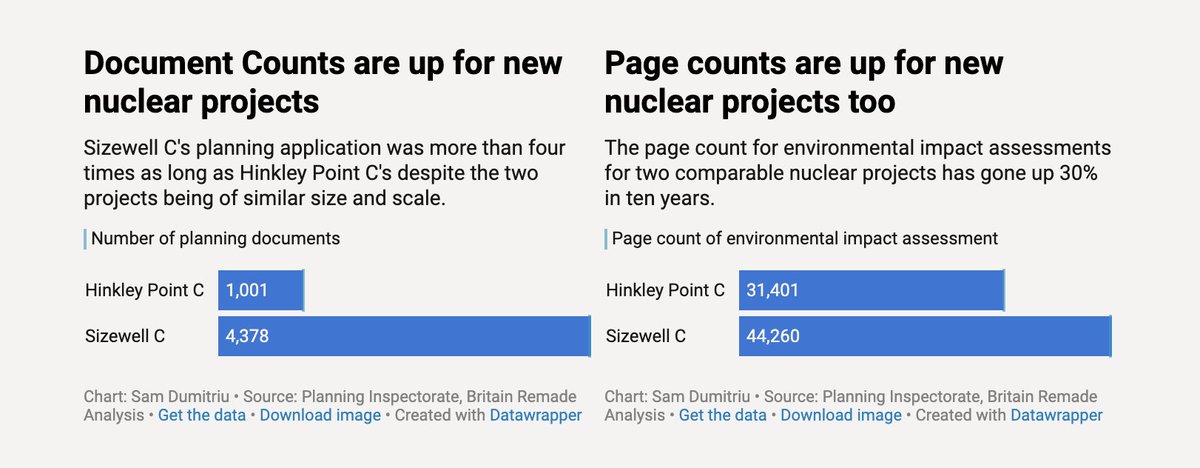
One reason is that the cost of getting permission to build, and the ongoing regulatory compliance required, has exploded. Even in the past decade it has risen, in some cased by by 30% between the Hinkley and Sizewell projects.
One reason is that the cost of getting permission to build, and the ongoing regulatory compliance required, has exploded. Even in the past decade it has risen, in some cased by by 30% between the Hinkley and Sizewell projects.
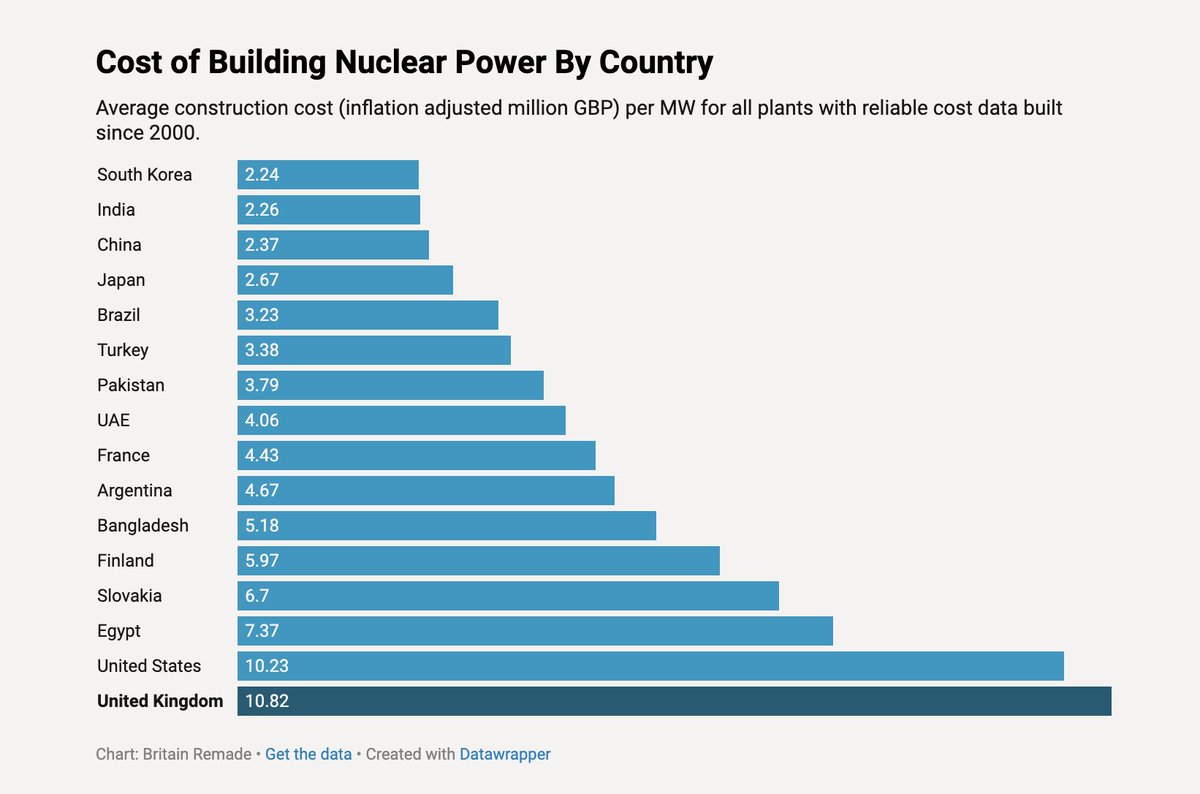
One country that stills build nuclear cheaply is South Korea.
They do nuclear construction in unglamorous ways, and manage to build for 1/4 of the price that we are building at.
They've recently agreed to build Czechia some new reactors for similar prices. Why not for us, too?
They do nuclear construction in unglamorous ways, and manage to build for 1/4 of the price that we are building at.
They've recently agreed to build Czechia some new reactors for similar prices. Why not for us, too?
This should all be cause for optimism.
It is hard to legislate for the advantages Britain already has – our love of debate, thirst for knowledge, respect for the rule of law.
In contrast, making it legal to build again would be simple.
So let's do it.
ukfoundations.co
It is hard to legislate for the advantages Britain already has – our love of debate, thirst for knowledge, respect for the rule of law.
In contrast, making it legal to build again would be simple.
So let's do it.
ukfoundations.co
This should be “since 2007”, of course!
Loading suggestions...