

WHY MALARIA COMES BACK AFTER TREATMENT
Malaria is not always gone for good after treatment.
Have you ever wondered why it comes back?
Learn the difference between reoccurrence and recrudescence and how to protect yourself from both! 🦟
A thread x.com
Malaria is not always gone for good after treatment.
Have you ever wondered why it comes back?
Learn the difference between reoccurrence and recrudescence and how to protect yourself from both! 🦟
A thread x.com
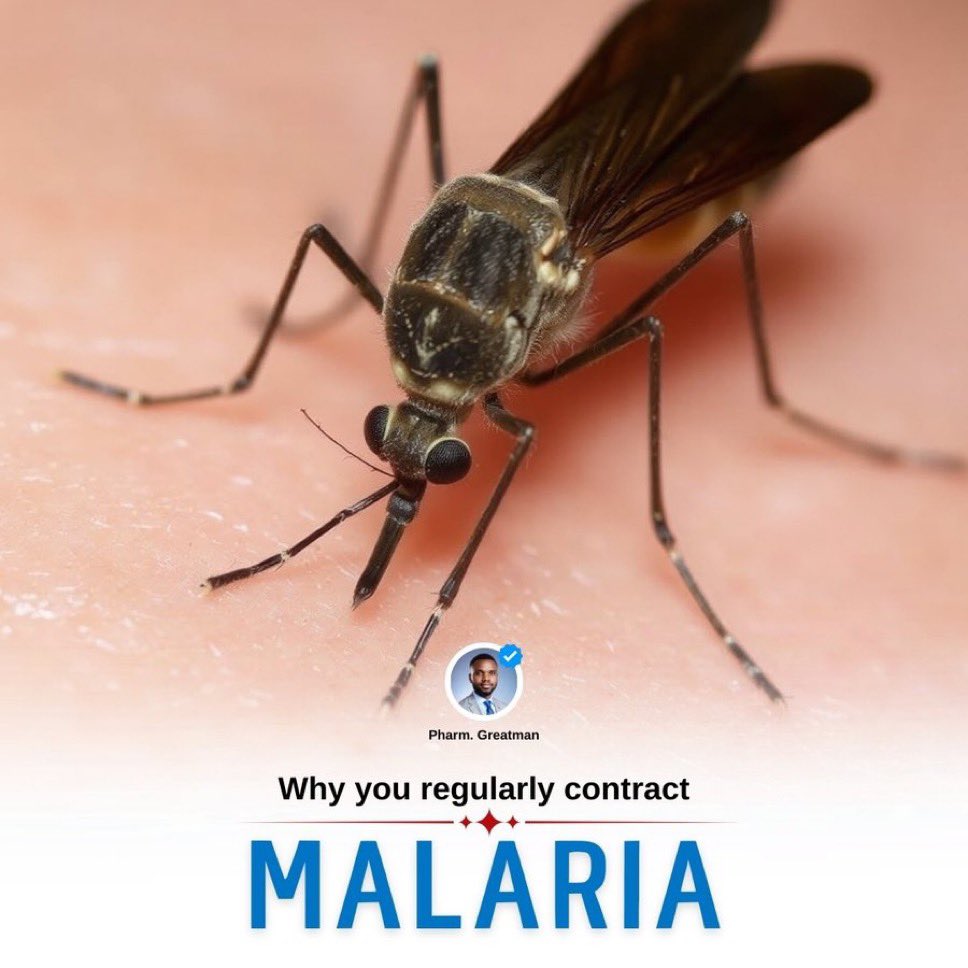
Malaria can be a stubborn disease, sometimes returning even after successful treatment 😖
It is important to understand the difference between reoccurrence and recrudescence to manage expectations when it comes to malaria treatment 😬
It is important to understand the difference between reoccurrence and recrudescence to manage expectations when it comes to malaria treatment 😬
🔑 REOCCURRENCE
This refers to the return of malaria after complete clearance from the bloodstream 😱
This can happen if you get bitten by another infected mosquito, introducing a new malaria infection.
It’s essentially a new infection
Therefore if you are exposed to further mosquito bites, you have a high chance of coming down with malaria 👍🏼 - reoccurrence
This refers to the return of malaria after complete clearance from the bloodstream 😱
This can happen if you get bitten by another infected mosquito, introducing a new malaria infection.
It’s essentially a new infection
Therefore if you are exposed to further mosquito bites, you have a high chance of coming down with malaria 👍🏼 - reoccurrence
🔑 RECRUDESCENCE
This happens when malaria symptoms come back without a new mosquito bite. It is due to the survival of a small number of parasites that were not entirely cleared during treatment. Yes, some may refuse to leave x.com
This happens when malaria symptoms come back without a new mosquito bite. It is due to the survival of a small number of parasites that were not entirely cleared during treatment. Yes, some may refuse to leave x.com
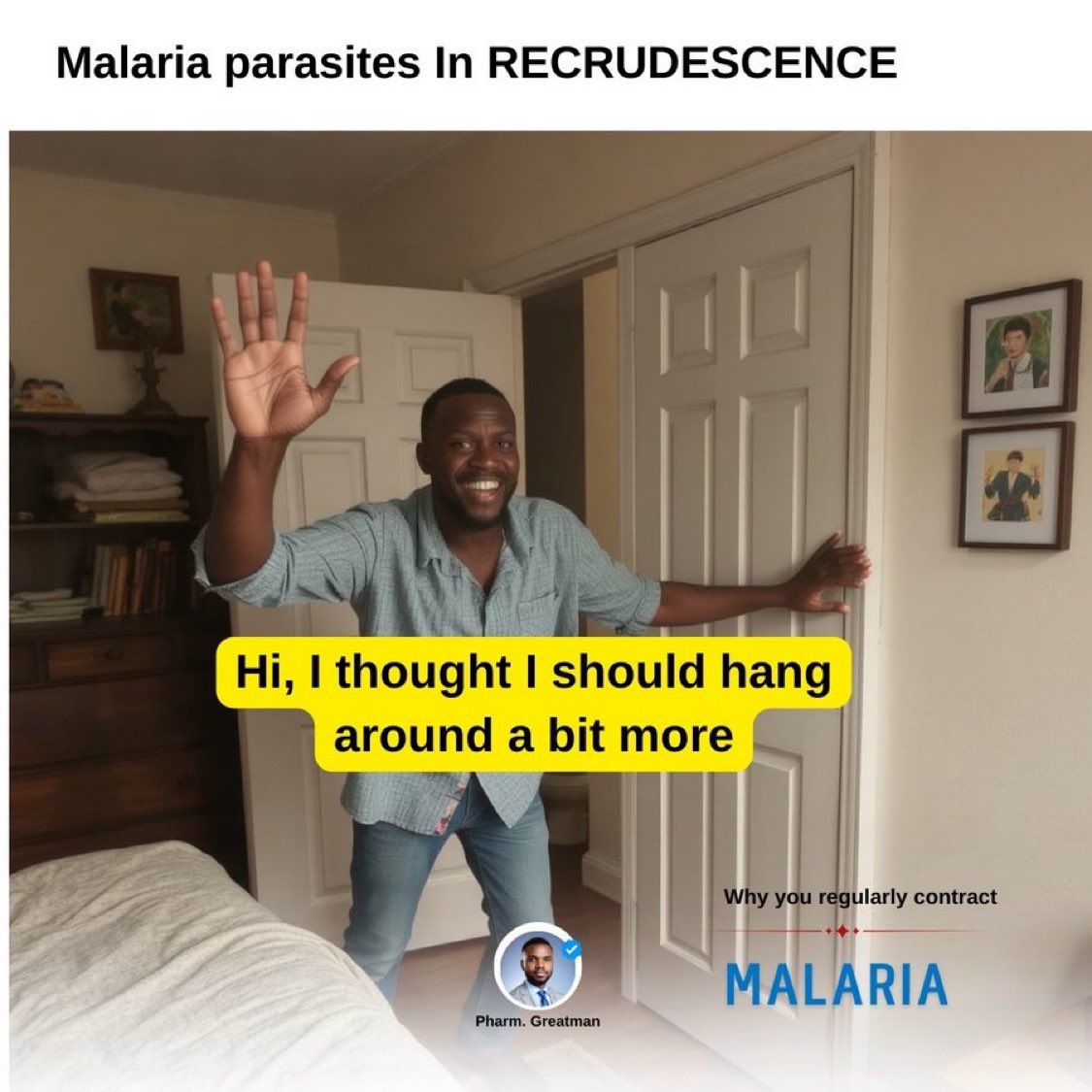
Recrudescence usually occurs when treatment is not good enough, drug resistance, or a poor immune response to the parasites, which allows them to remain hidden and later cause a re-infection🤦🏾
Possible malaria parasite infections include:
1. Plasmodium falciparum
2. Plasmodium vivax
3. Plasmodium ovale
4. Plasmodium malariae
Infections with Plasmodium falciparum, the most dangerous type of malaria are prone to recrudescence.
If not fully treated, these parasites can persist in the body for months and lead to a relapse of symptoms
1. Plasmodium falciparum
2. Plasmodium vivax
3. Plasmodium ovale
4. Plasmodium malariae
Infections with Plasmodium falciparum, the most dangerous type of malaria are prone to recrudescence.
If not fully treated, these parasites can persist in the body for months and lead to a relapse of symptoms
However, Plasmodium vivax and Plasmodium ovale can cause what’s called relapse. another type of reoccurrence
This is because they have a domant liver-stage that can reactivate months or even years after the initial infection.
This is because they have a domant liver-stage that can reactivate months or even years after the initial infection.
🔑 WHERE YOU LIVE MATTERS
People who live in areas with high malaria transmission are more at risk of reoccurrence due to repeated exposure to infected mosquitoes
Malaria is prevalent in Sub-Saharan Africa, South Asia, Southeast Asia, Central and South America and the Western Pacific Islands
While recrudescence is a sign that treatment was not effective enough to fully eradicate the parasite.
People who live in areas with high malaria transmission are more at risk of reoccurrence due to repeated exposure to infected mosquitoes
Malaria is prevalent in Sub-Saharan Africa, South Asia, Southeast Asia, Central and South America and the Western Pacific Islands
While recrudescence is a sign that treatment was not effective enough to fully eradicate the parasite.
🔑 BUT YOU CAN AVOID THIS
- It is important to complete your full treatment for malaria, even if you feel better before finishing the prescribed medication.
Incomplete treatment increases the chances of recrudescence and the risk of drug resistance
- It is important to complete your full treatment for malaria, even if you feel better before finishing the prescribed medication.
Incomplete treatment increases the chances of recrudescence and the risk of drug resistance
- Use insecticide-treated nets
- wear protective clothing
- use antimalarial drugs if traveling to high-risk areas
- treat infections early, and ensure it is effective to preventing both reoccurrence and recrudescence.
- wear protective clothing
- use antimalarial drugs if traveling to high-risk areas
- treat infections early, and ensure it is effective to preventing both reoccurrence and recrudescence.
Don’t hesitate to revisit your doctor if malaria symptoms come back after treatment
Stay informed by following me @OGreat6
Stay informed by following me @OGreat6


Loading suggestions...