

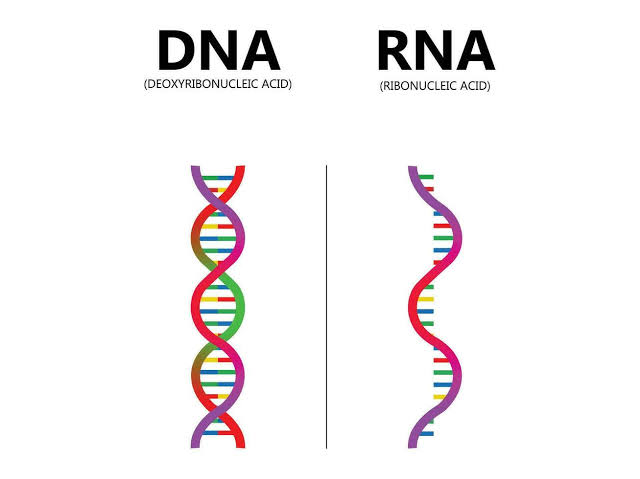
DNA (Deoxyribonucleic Acid)
Structure: Double-stranded helix composed of nucleotides.
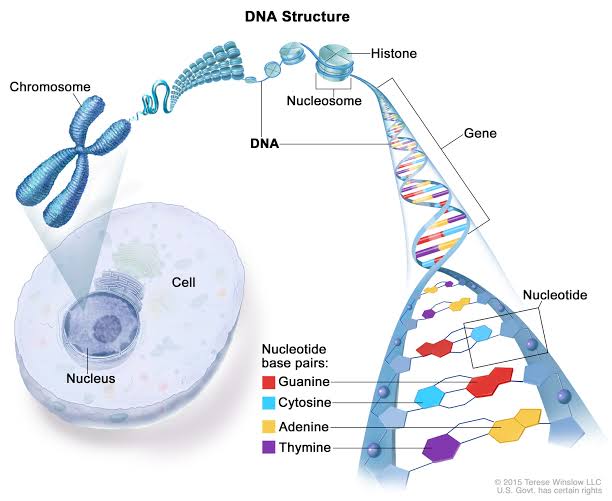
Each nucleotide contains a deoxyribose sugar, a phosphate group, and one of four nitrogenous bases:
• Adenine (A)
• Guanine (G)
• Cytosine (C)
• Thymine (T)
Base Pairing: A pairs with T (two hydrogen bonds), and G pairs with C (three hydrogen bonds).
Function: Stores genetic information, directs protein synthesis, and determines heritable traits.
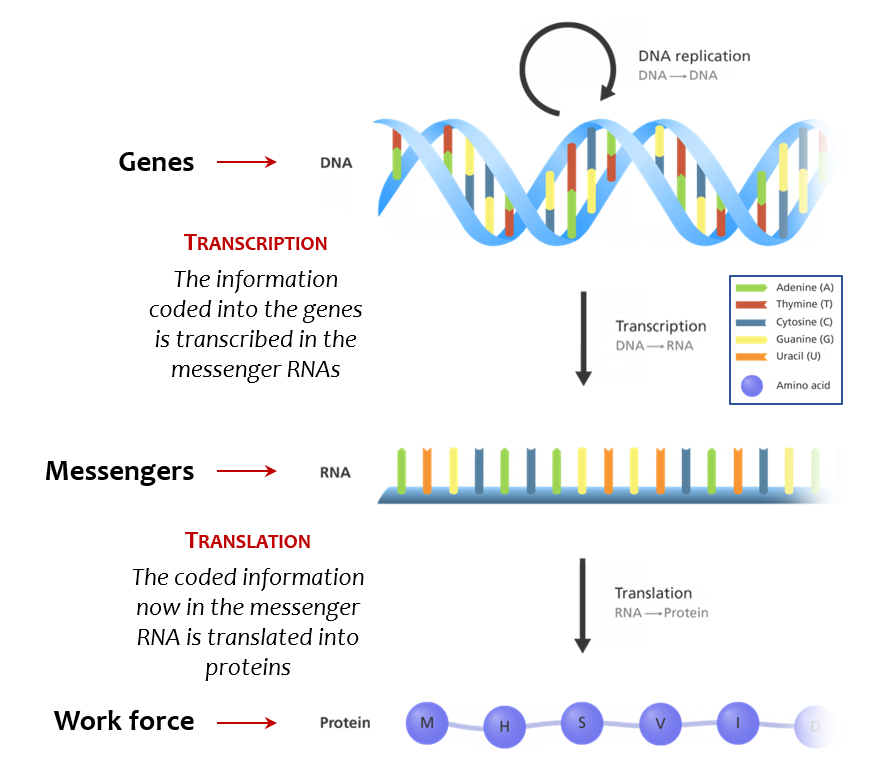
Replication:
• DNA replicates semi-conservatively, meaning each new DNA molecule consists of one original strand and one newly synthesized strand.
• Key enzymes involved include DNA polymerase, helicase, primase, and ligase.
Structure: Double-stranded helix composed of nucleotides.
Each nucleotide contains a deoxyribose sugar, a phosphate group, and one of four nitrogenous bases:
• Adenine (A)
• Guanine (G)
• Cytosine (C)
• Thymine (T)
Base Pairing: A pairs with T (two hydrogen bonds), and G pairs with C (three hydrogen bonds).
Function: Stores genetic information, directs protein synthesis, and determines heritable traits.
Replication:
• DNA replicates semi-conservatively, meaning each new DNA molecule consists of one original strand and one newly synthesized strand.
• Key enzymes involved include DNA polymerase, helicase, primase, and ligase.
RNA (Ribonucleic Acid)
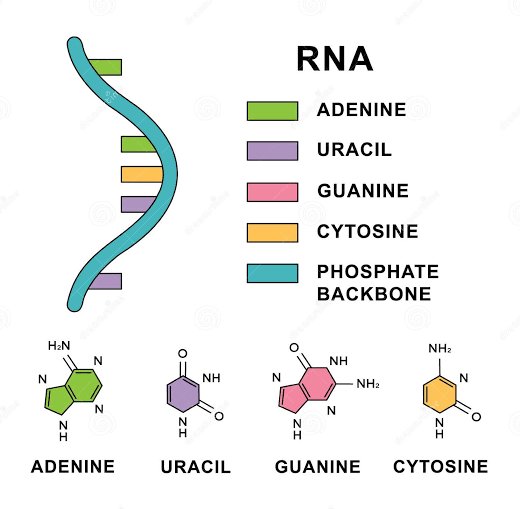
Structure: Typically single-stranded, composed of nucleotides containing a ribose sugar, a phosphate group, and one of four nitrogenous bases:
• Adenine (A)
• Guanine (G)
• Cytosine (C)
• Uracil (U)
(Uracil replaces Thymine found in DNA)
Types:
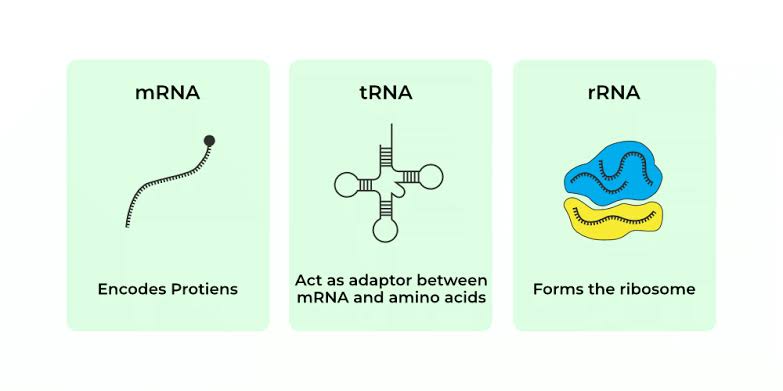
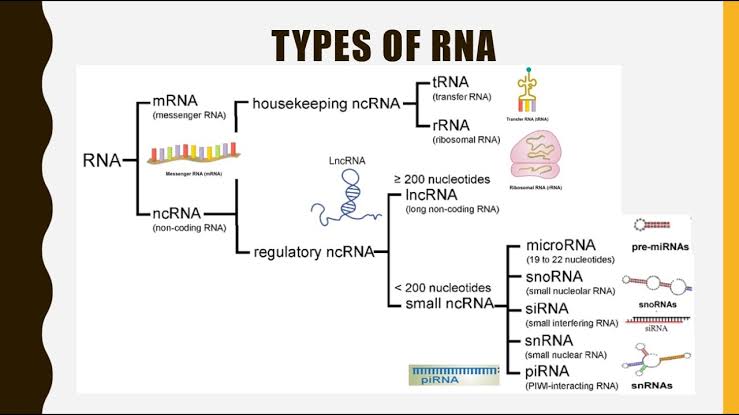
1️⃣ mRNA (messenger RNA): Carries genetic information from DNA to ribosomes for protein synthesis. Formed through transcription.
2️⃣ tRNA (transfer RNA): Carries specific amino acids to ribosomes during translation. Has an anticodon that recognizes mRNA codons.
3️⃣ rRNA (ribosomal RNA): A structural component of ribosomes, the site of protein synthesis.
Structure: Typically single-stranded, composed of nucleotides containing a ribose sugar, a phosphate group, and one of four nitrogenous bases:
• Adenine (A)
• Guanine (G)
• Cytosine (C)
• Uracil (U)
(Uracil replaces Thymine found in DNA)
Types:
1️⃣ mRNA (messenger RNA): Carries genetic information from DNA to ribosomes for protein synthesis. Formed through transcription.
2️⃣ tRNA (transfer RNA): Carries specific amino acids to ribosomes during translation. Has an anticodon that recognizes mRNA codons.
3️⃣ rRNA (ribosomal RNA): A structural component of ribosomes, the site of protein synthesis.
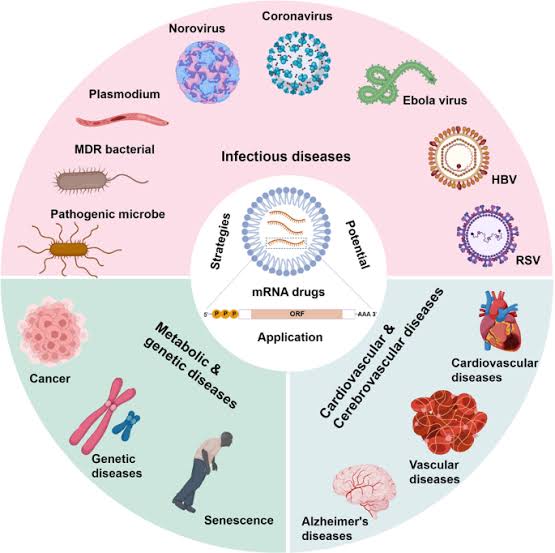
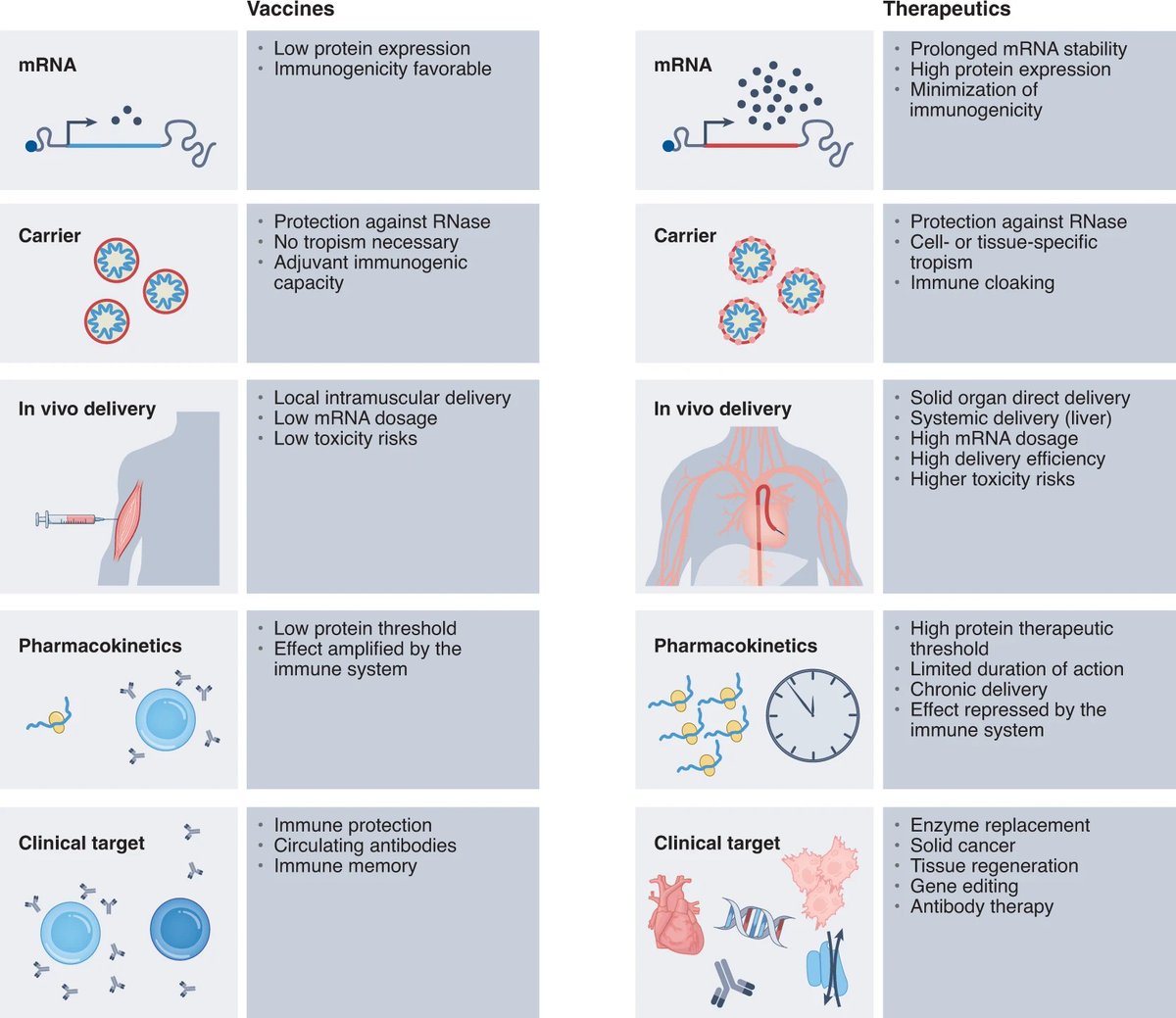
NOTE - The prominence of mRNA in the news is primarily due to its pivotal role in the rapid development and deployment of COVID-19 vaccines.
This novel technology offered several advantages:
• Speed of Development: mRNA vaccines could be produced much faster than traditional vaccines.
• High Efficacy: mRNA vaccines demonstrated remarkably high efficacy rates against COVID-19.
• Safety: mRNA vaccines proved to be generally safe for use.
• Potential for Broad Applications: mRNA technology holds immense promise for treating various diseases beyond COVID-19.
• Technological Advancement: The successful application of mRNA technology represents a significant leap forward in vaccinology.
This novel technology offered several advantages:
• Speed of Development: mRNA vaccines could be produced much faster than traditional vaccines.
• High Efficacy: mRNA vaccines demonstrated remarkably high efficacy rates against COVID-19.
• Safety: mRNA vaccines proved to be generally safe for use.
• Potential for Broad Applications: mRNA technology holds immense promise for treating various diseases beyond COVID-19.
• Technological Advancement: The successful application of mRNA technology represents a significant leap forward in vaccinology.
Genetic Code
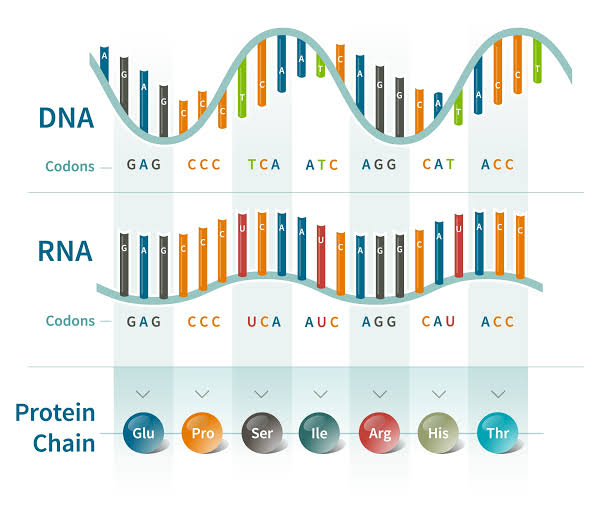
• Codons: Three-nucleotide sequences on mRNA that specify a particular amino acid or a stop signal.
• Universality: The genetic code is largely universal, meaning the same codons code for the same amino acids in most organisms.
• Degeneracy: Multiple codons can code for the same amino acid (e.g., both UUU and UUC code for phenylalanine).
• Start Codon: AUG (methionine) initiates translation.
• Stop Codons: UAA, UAG, and UGA terminate translation.
• Codons: Three-nucleotide sequences on mRNA that specify a particular amino acid or a stop signal.
• Universality: The genetic code is largely universal, meaning the same codons code for the same amino acids in most organisms.
• Degeneracy: Multiple codons can code for the same amino acid (e.g., both UUU and UUC code for phenylalanine).
• Start Codon: AUG (methionine) initiates translation.
• Stop Codons: UAA, UAG, and UGA terminate translation.
TRANSCRIPTION & TRANSLATION
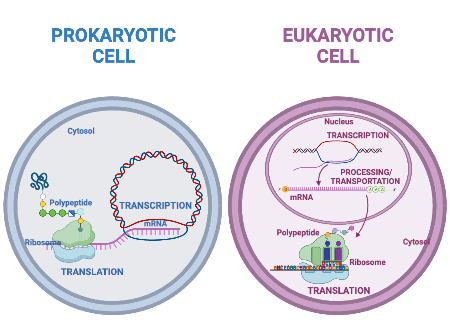
1️⃣ TRANSCRIPTION: The process of synthesizing RNA from a DNA template.
• RNA Polymerase: The enzyme responsible for transcription.
• Promoter: A specific DNA sequence where RNA polymerase binds to initiate transcription.
• Steps: Initiation, elongation, and termination.
2️⃣ TRANSLATION: The process of synthesizing a protein from an mRNA template.
•™Ribosomes: The site of protein synthesis.
• tRNA: Brings amino acids to the ribosome based on the mRNA codon.
• Steps: Initiation, elongation, and termination.
1️⃣ TRANSCRIPTION: The process of synthesizing RNA from a DNA template.
• RNA Polymerase: The enzyme responsible for transcription.
• Promoter: A specific DNA sequence where RNA polymerase binds to initiate transcription.
• Steps: Initiation, elongation, and termination.
2️⃣ TRANSLATION: The process of synthesizing a protein from an mRNA template.
•™Ribosomes: The site of protein synthesis.
• tRNA: Brings amino acids to the ribosome based on the mRNA codon.
• Steps: Initiation, elongation, and termination.
GENE REGULATION
• The control of gene expression, determining when and how much of a gene product is produced.
• Operons (in prokaryotes): Clusters of genes under the control of a single promoter.
Example: lac operon in E. coli. x.com
• The control of gene expression, determining when and how much of a gene product is produced.
• Operons (in prokaryotes): Clusters of genes under the control of a single promoter.
Example: lac operon in E. coli. x.com
Loading suggestions...