

Olive Ridley Turtles. 🧵
Important for UPSC Prelims- Bookmark it
Important for UPSC Prelims- Bookmark it
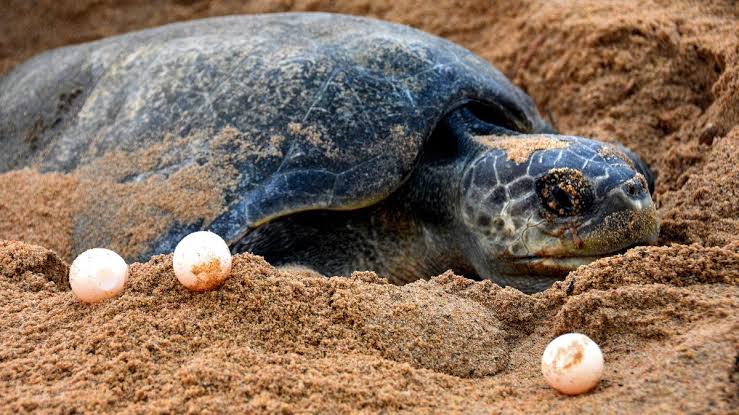
Conservation Status:
IUCN Red List: Vulnerable
Wildlife Protection Act, 1972: Listed under Schedule 1, granting the highest protection in India.
CITES: Included in Appendix I, prohibiting international trade.
IUCN Red List: Vulnerable
Wildlife Protection Act, 1972: Listed under Schedule 1, granting the highest protection in India.
CITES: Included in Appendix I, prohibiting international trade.
Global Distribution:
Found in warm waters of the Pacific, Atlantic, and Indian Oceans.
Key Habitat:
Odisha's Gahirmatha Marine Sanctuary is recognized as the world’s largest rookery for Olive Ridleys.
Migration: Olive Ridleys migrate thousands of kilometers annually between their feeding and mating grounds.
Found in warm waters of the Pacific, Atlantic, and Indian Oceans.
Key Habitat:
Odisha's Gahirmatha Marine Sanctuary is recognized as the world’s largest rookery for Olive Ridleys.
Migration: Olive Ridleys migrate thousands of kilometers annually between their feeding and mating grounds.
Diet and Habitat:
These turtles are omnivorous and largely solitary, spending most of their lives in open oceans.
Unique Nesting Behavior:
They are known for arribada, a mass nesting phenomenon where thousands of females lay eggs simultaneously on the same beach.
These turtles are omnivorous and largely solitary, spending most of their lives in open oceans.
Unique Nesting Behavior:
They are known for arribada, a mass nesting phenomenon where thousands of females lay eggs simultaneously on the same beach.
Smallest and Most Abundant:
Olive Ridley turtles are the smallest and most abundant sea turtles in the world.
Physical Features:
Adults measure around 62-70 cm, weigh 35-45 kg, and possess paddle-like flippers with one or two claws.
Olive Ridley turtles are the smallest and most abundant sea turtles in the world.
Physical Features:
Adults measure around 62-70 cm, weigh 35-45 kg, and possess paddle-like flippers with one or two claws.
Loading suggestions...