

Japan is legendary when it comes to business longevity. 52,000 Japanese businesses are 100+ years old
(The average lifespan of an S&P 500 company is just 15 years)
Japan also has 19 companies that survived for 1000+ years using their ancestor's business wisdom:
THREAD x.com
(The average lifespan of an S&P 500 company is just 15 years)
Japan also has 19 companies that survived for 1000+ years using their ancestor's business wisdom:
THREAD x.com

Most of these companies have survived multiple economic collapses, world wars, technological revolutions, and economic collapses.
These ancient businesses are known as "Shinise" in Japanese.
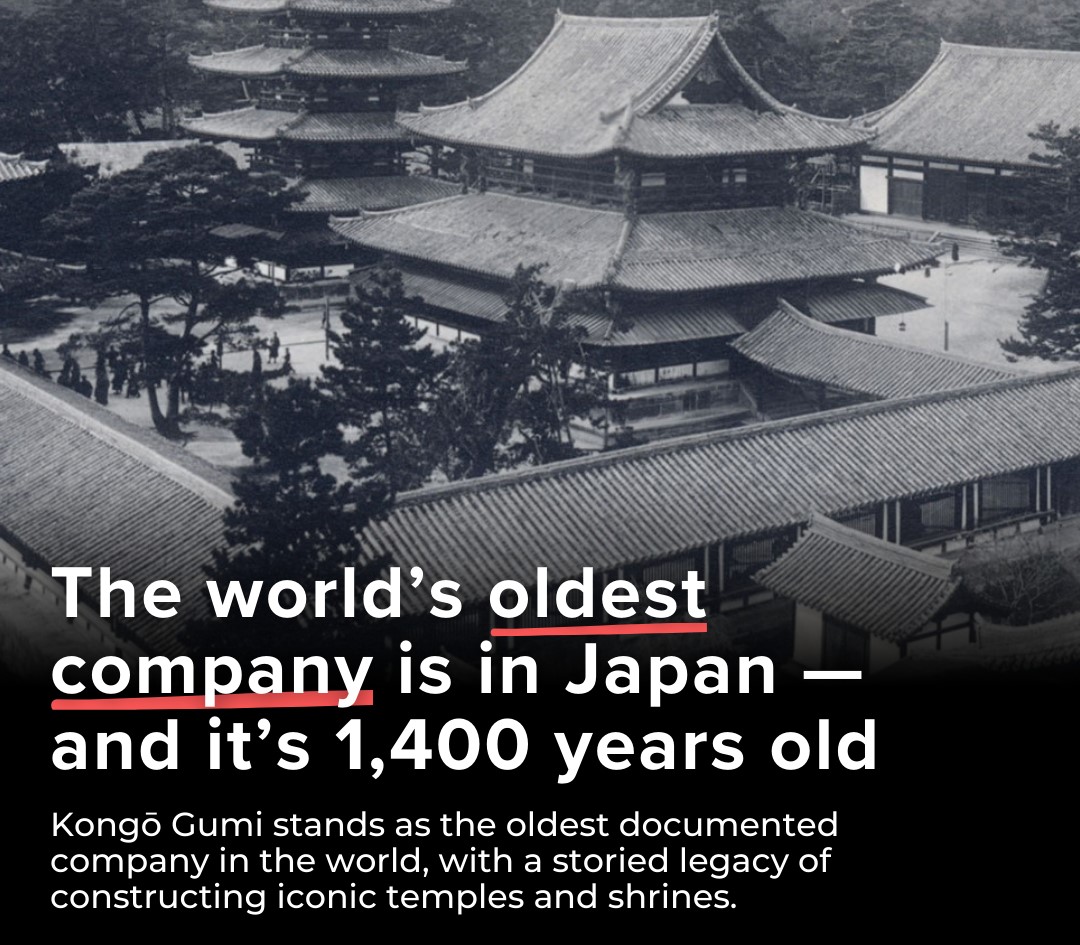
Oldest Shinise, Kongō Gumi is the oldest company in the world. 1446 years and counting. x.com
These ancient businesses are known as "Shinise" in Japanese.
Oldest Shinise, Kongō Gumi is the oldest company in the world. 1446 years and counting. x.com
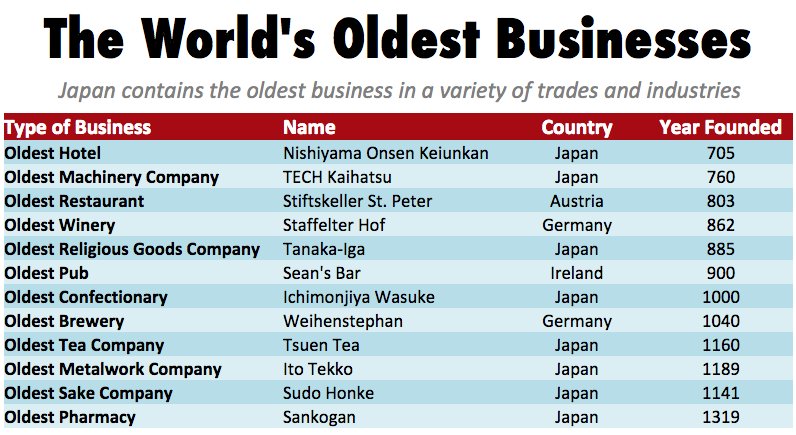
Insanely enough, Japanese companies hold the world record of being the world's oldest companies in many industries.
• Oldest hotel
• Oldest pharmacy
• Oldest Tea Company
• Oldest Confectionary
• Oldest Sake Company x.com
• Oldest hotel
• Oldest pharmacy
• Oldest Tea Company
• Oldest Confectionary
• Oldest Sake Company x.com

Products are seen as living entities. Not metaphorically, but literally.
We see this in how Japanese companies treat their product lines - not as items to be revolutionized, but as beings to be nurtured.
Sony's Walkman evolved this way, through subtle mutations over the years. x.com
We see this in how Japanese companies treat their product lines - not as items to be revolutionized, but as beings to be nurtured.
Sony's Walkman evolved this way, through subtle mutations over the years. x.com

The Western startup ecosystem, obsessed with rapid scaling and exit strategies, could learn a thing or two from the Japanese.
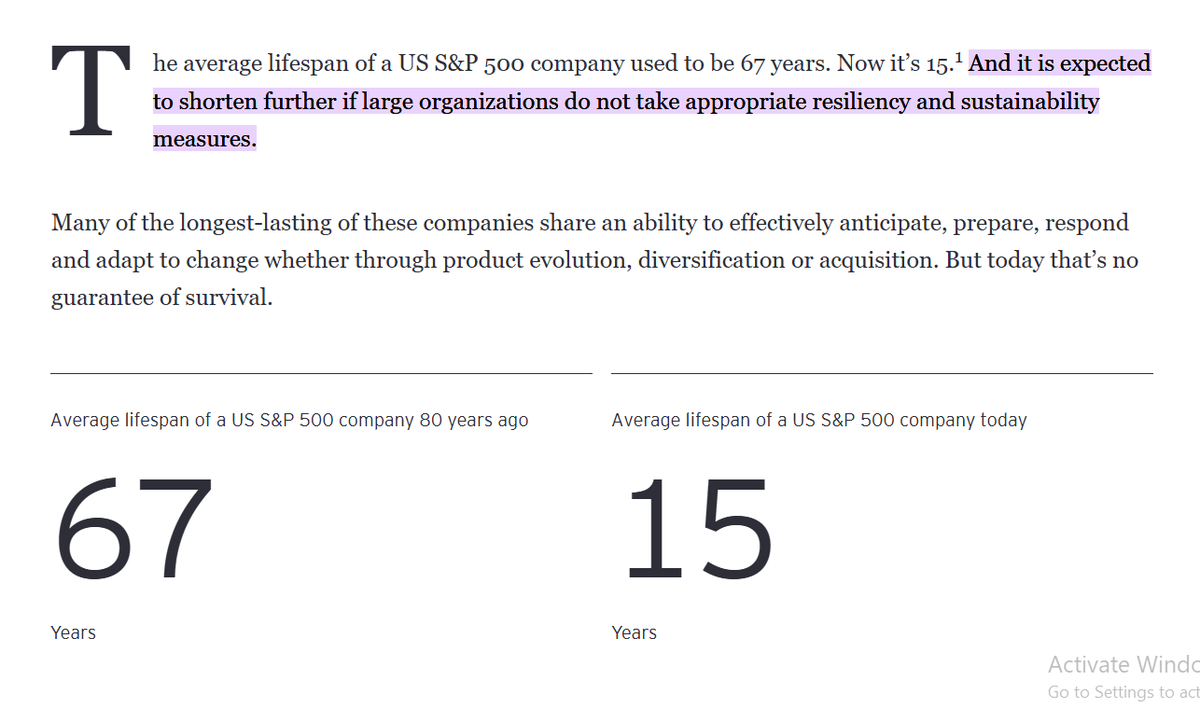
The average lifespan of an S&P 500 company is down to 15 years and is expected to shorten further.
Because orgs aren't taking sustainability measures. x.com
The average lifespan of an S&P 500 company is down to 15 years and is expected to shorten further.
Because orgs aren't taking sustainability measures. x.com
Talking about sustainability,
In Japan what matters is how to move the company on to descendants, children, and grandchildren.
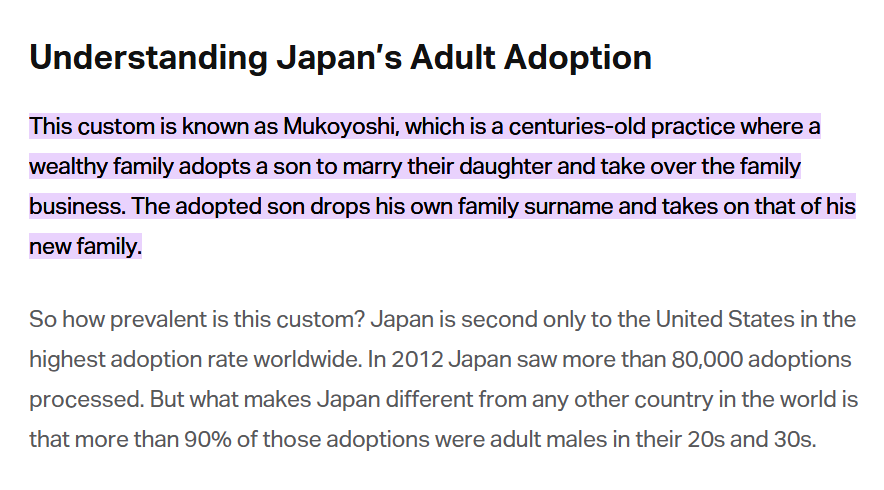
There's even a culture of adopting a child specifically to inherit a family business called "Mukoyoshi" x.com
In Japan what matters is how to move the company on to descendants, children, and grandchildren.
There's even a culture of adopting a child specifically to inherit a family business called "Mukoyoshi" x.com
One of the most successful examples of Mukoyoshi in action is Osamu Suzuki, former CEO of Suzuki Motor Company.
He was adopted at the age of 28 to take over the company. x.com
He was adopted at the age of 28 to take over the company. x.com

What's fascinating is that the "family business" isn't actually about family at all.
It's about the business's right to exist transcending even blood ties. The company's survival is seen as more sacred than hereditary succession.
Survival over EVERYTHING else.
It's about the business's right to exist transcending even blood ties. The company's survival is seen as more sacred than hereditary succession.
Survival over EVERYTHING else.
Now, what else is important for survival?
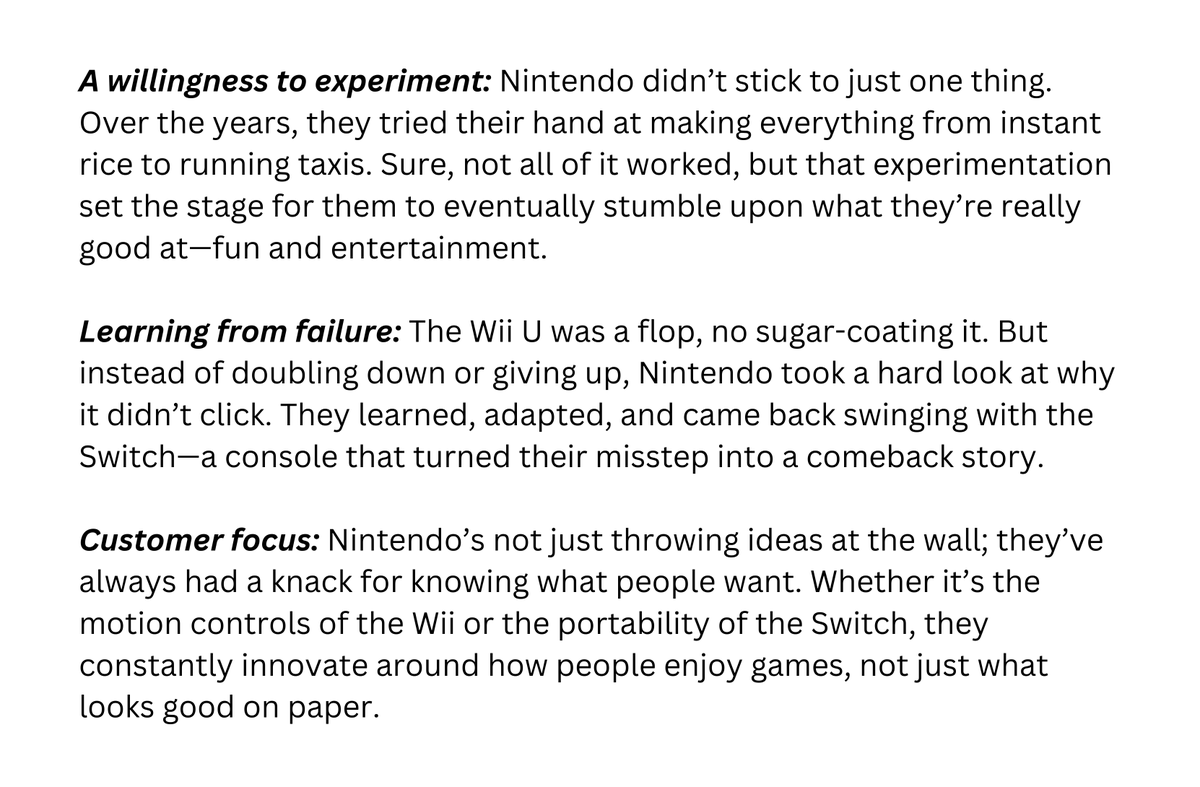
Nintendo was founded in 1889. Before selling video games and consoles they did all kinds of businesses.
• Hotels
• Playing cards
• Instant rice production
• Taxi services
• Vacuum cleaners x.com
Nintendo was founded in 1889. Before selling video games and consoles they did all kinds of businesses.
• Hotels
• Playing cards
• Instant rice production
• Taxi services
• Vacuum cleaners x.com

Nintendo was flexible and they did all kinds of experiments to stay afloat.
Japan believes businesses must remain open to new opportunities by abandoning or transforming what is not working.
Flexibility requires: x.com
Japan believes businesses must remain open to new opportunities by abandoning or transforming what is not working.
Flexibility requires: x.com
I hope you've found this thread helpful.
Follow me @nikolak47 for more deep dives on SaaS growth, scaling companies, and building in public.
Like/Repost the quote below if you can:
Follow me @nikolak47 for more deep dives on SaaS growth, scaling companies, and building in public.
Like/Repost the quote below if you can:
Loading suggestions...