

The Box Midfield in Soccer: A Tactical Breakdown
The “box midfield” is an increasingly popular concept in modern soccer, often used by top managers to create numerical advantages and control the game.
Here’s a breakdown of what it is, how it works, and why it’s effective. 🧵👇 x.com
The “box midfield” is an increasingly popular concept in modern soccer, often used by top managers to create numerical advantages and control the game.
Here’s a breakdown of what it is, how it works, and why it’s effective. 🧵👇 x.com
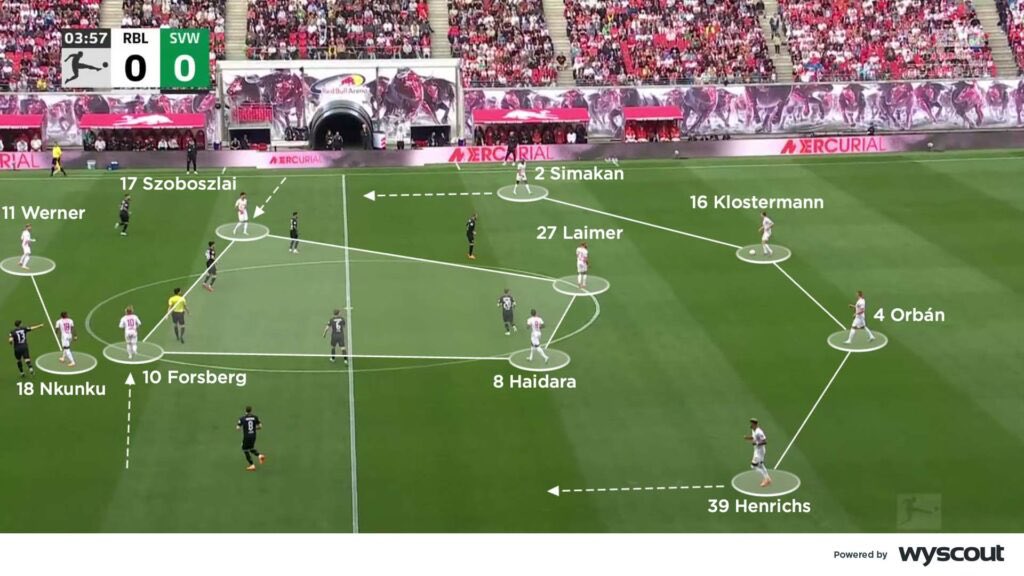
1. What is a Box Midfield?
A box midfield involves deploying four midfielders in a shape resembling a rectangle or “box.” This typically includes:
•Two defensive midfielders (DMs): Provide cover and distribute from deeper areas.
•Two attacking midfielders (AMs): Operate between the lines, linking play and creating chances.
A box midfield involves deploying four midfielders in a shape resembling a rectangle or “box.” This typically includes:
•Two defensive midfielders (DMs): Provide cover and distribute from deeper areas.
•Two attacking midfielders (AMs): Operate between the lines, linking play and creating chances.
2. Formations That Enable the Box Midfield
The box midfield is not a formation itself but a feature within various systems. Common setups include:
•4-2-2-2: Widely used by Red Bull teams like Leipzig, with a narrow midfield setup.
•3-2-2-3 (or 3-box-3): Seen in Pep Guardiola’s Manchester City, where full-backs invert to form the “box.”
•3-4-3: The box emerges naturally with a defensive 2 and 2 x 10’s behind the striker.
The box midfield is not a formation itself but a feature within various systems. Common setups include:
•4-2-2-2: Widely used by Red Bull teams like Leipzig, with a narrow midfield setup.
•3-2-2-3 (or 3-box-3): Seen in Pep Guardiola’s Manchester City, where full-backs invert to form the “box.”
•3-4-3: The box emerges naturally with a defensive 2 and 2 x 10’s behind the striker.
3. Strengths of the Box Midfield
a. Central Overloads
By having four midfielders in central areas, teams create numerical superiority against opponents with fewer central players. This facilitates quick passing combinations and control.
b. Defensive Solidity
The two defensive midfielders provide a solid shield in front of the backline, while the AMs are well-positioned to press high.
c. Vertical Passing Lanes
The staggered positioning of the midfielders creates clear vertical lanes for progression, aiding in breaking down defensive blocks.
a. Central Overloads
By having four midfielders in central areas, teams create numerical superiority against opponents with fewer central players. This facilitates quick passing combinations and control.
b. Defensive Solidity
The two defensive midfielders provide a solid shield in front of the backline, while the AMs are well-positioned to press high.
c. Vertical Passing Lanes
The staggered positioning of the midfielders creates clear vertical lanes for progression, aiding in breaking down defensive blocks.
4. Weaknesses of the Box Midfield
a. Vulnerability on the Flanks
Since the midfielders are centrally compact, width can be sacrificed. Opponents may exploit the wide areas if the full-backs or wing-backs don’t cover effectively.
b. High Physical and Tactical Demands
The system requires players with exceptional spatial awareness, pressing ability, and stamina to maintain balance.
a. Vulnerability on the Flanks
Since the midfielders are centrally compact, width can be sacrificed. Opponents may exploit the wide areas if the full-backs or wing-backs don’t cover effectively.
b. High Physical and Tactical Demands
The system requires players with exceptional spatial awareness, pressing ability, and stamina to maintain balance.
5. Key Teams and Managers Using the Box Midfield
a. Pep Guardiola (Manchester City)
Guardiola often uses inverted full-backs to form a midfield box with Rodri and a hybrid player like Stones or Gündoğan, creating numerical superiority.
b. Ralf Rangnick and Red Bull Teams
Leipzig and Salzburg have utilized the 4-2-2-2 to create high central overloads and press aggressively.
c. Mikel Arteta (Arsenal)
Arteta’s Arsenal often use a version of the box with Zinchenko inverting alongside Partey while Ødegaard and Xhaka operate as advanced midfielders.
a. Pep Guardiola (Manchester City)
Guardiola often uses inverted full-backs to form a midfield box with Rodri and a hybrid player like Stones or Gündoğan, creating numerical superiority.
b. Ralf Rangnick and Red Bull Teams
Leipzig and Salzburg have utilized the 4-2-2-2 to create high central overloads and press aggressively.
c. Mikel Arteta (Arsenal)
Arteta’s Arsenal often use a version of the box with Zinchenko inverting alongside Partey while Ødegaard and Xhaka operate as advanced midfielders.
6. How to Counter the Box Midfield
•Exploit Wide Areas: Stretch the compact midfield with quick switches of play and wingers hugging the touchline.
•Outnumber in Midfield: A 3-5-2 or 4-3-3 with strong central players can challenge the box midfield.
•Target Transitions: Quick counters can expose the advanced midfielders who may leave gaps.
•Exploit Wide Areas: Stretch the compact midfield with quick switches of play and wingers hugging the touchline.
•Outnumber in Midfield: A 3-5-2 or 4-3-3 with strong central players can challenge the box midfield.
•Target Transitions: Quick counters can expose the advanced midfielders who may leave gaps.
7. The Evolution of the Box Midfield
The box midfield isn’t new—it has roots in historical formations like the WM and the 4-4-2 diamond. However, its resurgence in modern football shows how tactical ideas evolve and adapt to new challenges.
The box midfield isn’t new—it has roots in historical formations like the WM and the 4-4-2 diamond. However, its resurgence in modern football shows how tactical ideas evolve and adapt to new challenges.
8. Conclusion
The box midfield is a powerful tool for dominating central areas, but it requires the right players and tactical balance to succeed. Its effectiveness lies in its flexibility and ability to adapt to different phases of play.
Which team do you think uses the box midfield most effectively? Let me know your thoughts! 👇
The box midfield is a powerful tool for dominating central areas, but it requires the right players and tactical balance to succeed. Its effectiveness lies in its flexibility and ability to adapt to different phases of play.
Which team do you think uses the box midfield most effectively? Let me know your thoughts! 👇

Please share!! 🙏🏻
@Coach_Osku
@MoSouisse
@JustcoachMD
@PeterPrickett
@CoachingFamily
@CoachingManual
@TheS_Resource
@CoachUdofia
@ViCoCoaching
@Leecosgrove10
@power_ray
@BreakthruSoccer
@ExchangeCoaches
@ManCoachNet
@Smedley033
@205_Academy
@JGFootball2023
@GRFootball
@RJPcoach
@Coach_Temisan
@CoachDavidBaird
@SSPlanner
@Coach_B_Godwin
@ViCoCoaching
@SessionShareNet
@SSPlanner
@touchtightcoach
@Coach_Osku
@MoSouisse
@JustcoachMD
@PeterPrickett
@CoachingFamily
@CoachingManual
@TheS_Resource
@CoachUdofia
@ViCoCoaching
@Leecosgrove10
@power_ray
@BreakthruSoccer
@ExchangeCoaches
@ManCoachNet
@Smedley033
@205_Academy
@JGFootball2023
@GRFootball
@RJPcoach
@Coach_Temisan
@CoachDavidBaird
@SSPlanner
@Coach_B_Godwin
@ViCoCoaching
@SessionShareNet
@SSPlanner
@touchtightcoach
Loading suggestions...