


what is resting liquidity?
resting liquidity comes in 2 forms:
- buy stops
- sell stops
these resting liquidity zones when hit can cause:
- positions to exit (stops)
- breakout traders (new positions)
- liquidation runs x.com
resting liquidity comes in 2 forms:
- buy stops
- sell stops
these resting liquidity zones when hit can cause:
- positions to exit (stops)
- breakout traders (new positions)
- liquidation runs x.com

internal vs external:
external - major highs/lows (key pivot areas)
internal - highs/lows or a series of them within two major external pivots.
I find internals are more likely to see a clean swing failure pattern from, external are more prone to failed auctions. x.com
external - major highs/lows (key pivot areas)
internal - highs/lows or a series of them within two major external pivots.
I find internals are more likely to see a clean swing failure pattern from, external are more prone to failed auctions. x.com
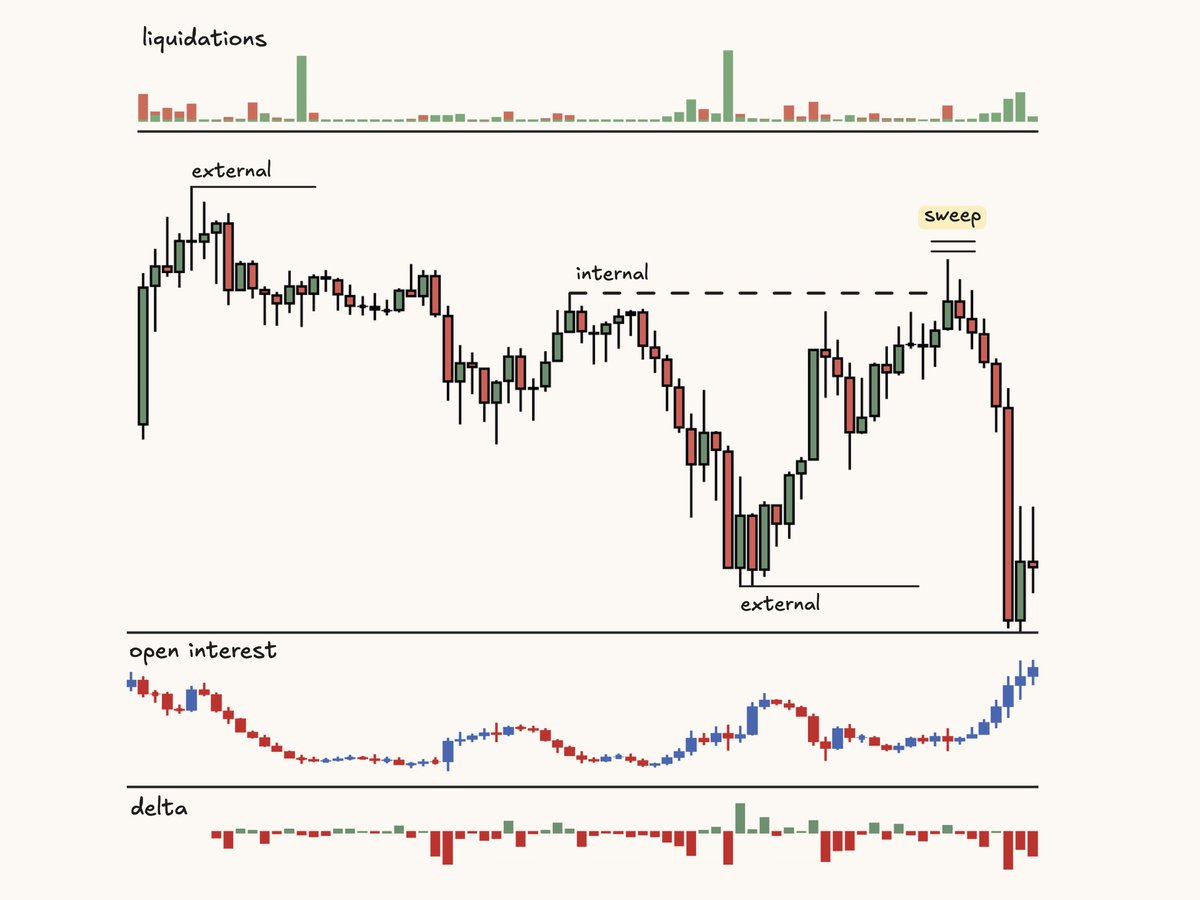
marking liquidity:
questions to ask yourself:
- where are people likely to buy/sell a breakout?
- where are people likely to have stops placed?
- round numbers
- consecutive hl's or lh's
- above major pivots x.com
questions to ask yourself:
- where are people likely to buy/sell a breakout?
- where are people likely to have stops placed?
- round numbers
- consecutive hl's or lh's
- above major pivots x.com
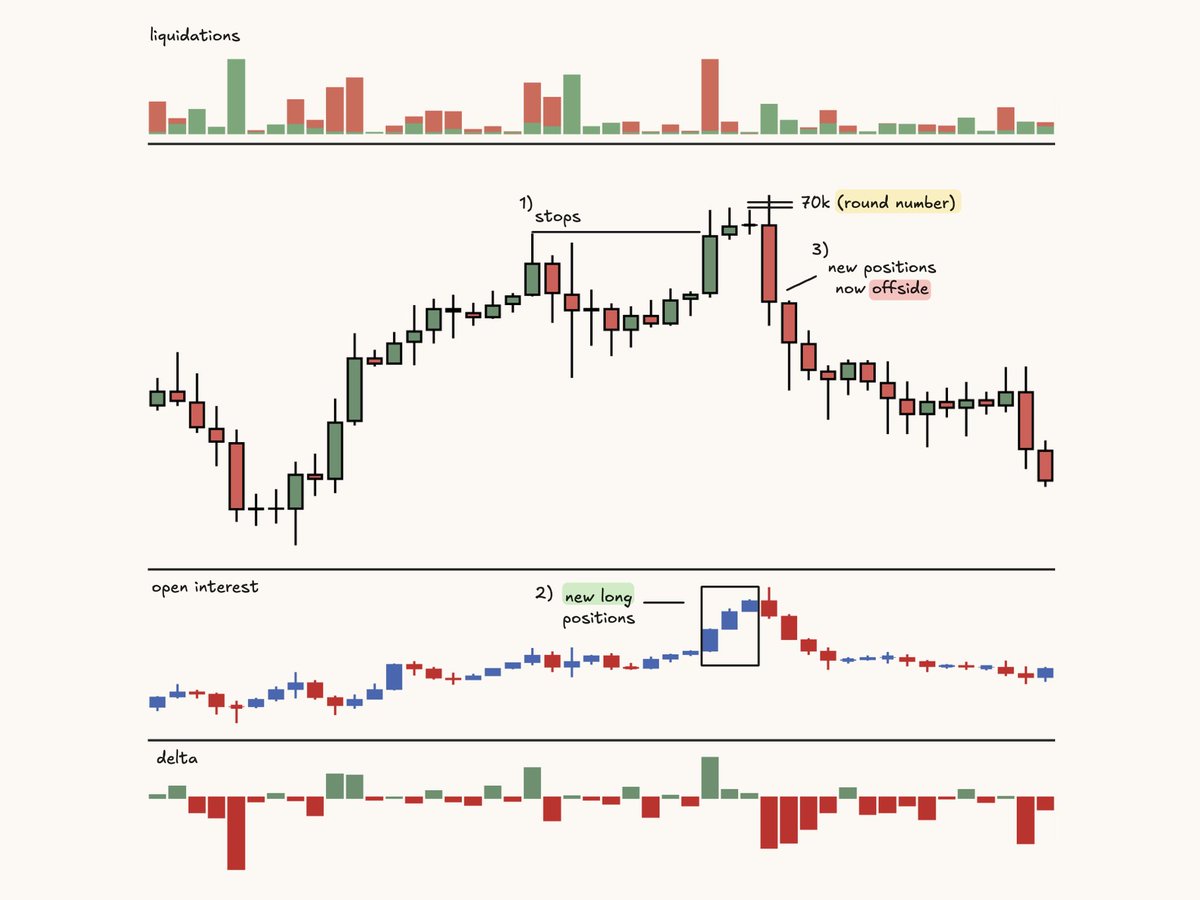
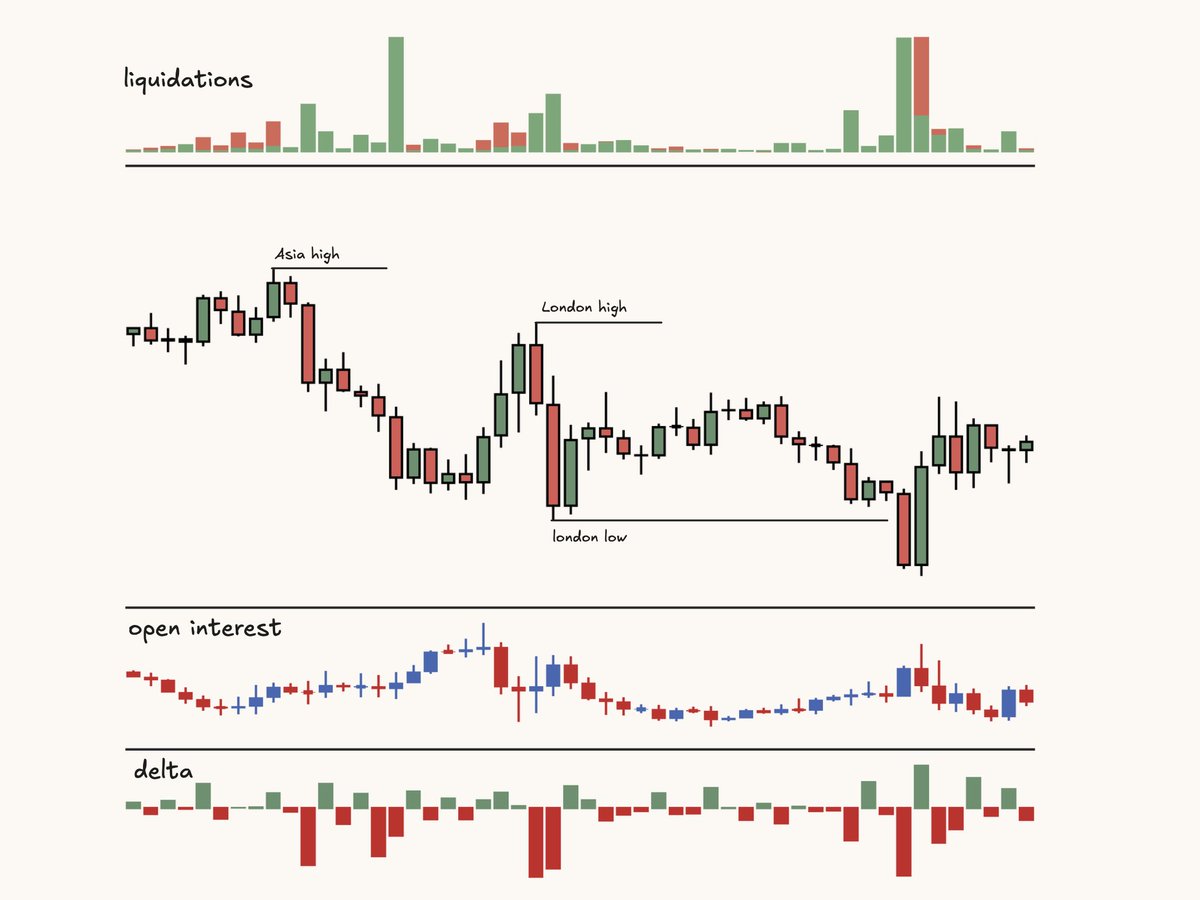
session liquidity:
identify stops in a more systematic manner through the use of sessions.
marking session highs & lows can be a good starting point for identifying forcing points as to where traders are likely to exit or new traders are likely to trade a breakout.
my session times (UTC):
00-06 - Asia
06-12 - London
12-20 - New York
20-00 - Close
example ↓
identify stops in a more systematic manner through the use of sessions.
marking session highs & lows can be a good starting point for identifying forcing points as to where traders are likely to exit or new traders are likely to trade a breakout.
my session times (UTC):
00-06 - Asia
06-12 - London
12-20 - New York
20-00 - Close
example ↓
reactions:
swing failure pattern - a strict one candle formation of price wicking above or below the liquidity level, before closing back either above it (bullish) or below it (bearish).
failed auction - price moves above or below the stops, spending some time before coming back below the stops (bearish) or above (bullish).
exceptions - these scenarios involve price not doing a sfp, yet not spending enough time above to be deemed a failed auction. nonetheless, I will still look to trade these quick moves above or below.
in most cases, I only act if price moves back below or above the stop level.
my favoured scenarios actually involve in price seeing new breakout traders becoming trapped in combination with stops and liquidations being hit, rather than solely stops and liquidations being hit.
I still want to see:
- spikes in relative volume
- spikes in liquidations
before looking for a reversal.
example combining all these concepts ↓
swing failure pattern - a strict one candle formation of price wicking above or below the liquidity level, before closing back either above it (bullish) or below it (bearish).
failed auction - price moves above or below the stops, spending some time before coming back below the stops (bearish) or above (bullish).
exceptions - these scenarios involve price not doing a sfp, yet not spending enough time above to be deemed a failed auction. nonetheless, I will still look to trade these quick moves above or below.
in most cases, I only act if price moves back below or above the stop level.
my favoured scenarios actually involve in price seeing new breakout traders becoming trapped in combination with stops and liquidations being hit, rather than solely stops and liquidations being hit.
I still want to see:
- spikes in relative volume
- spikes in liquidations
before looking for a reversal.
example combining all these concepts ↓
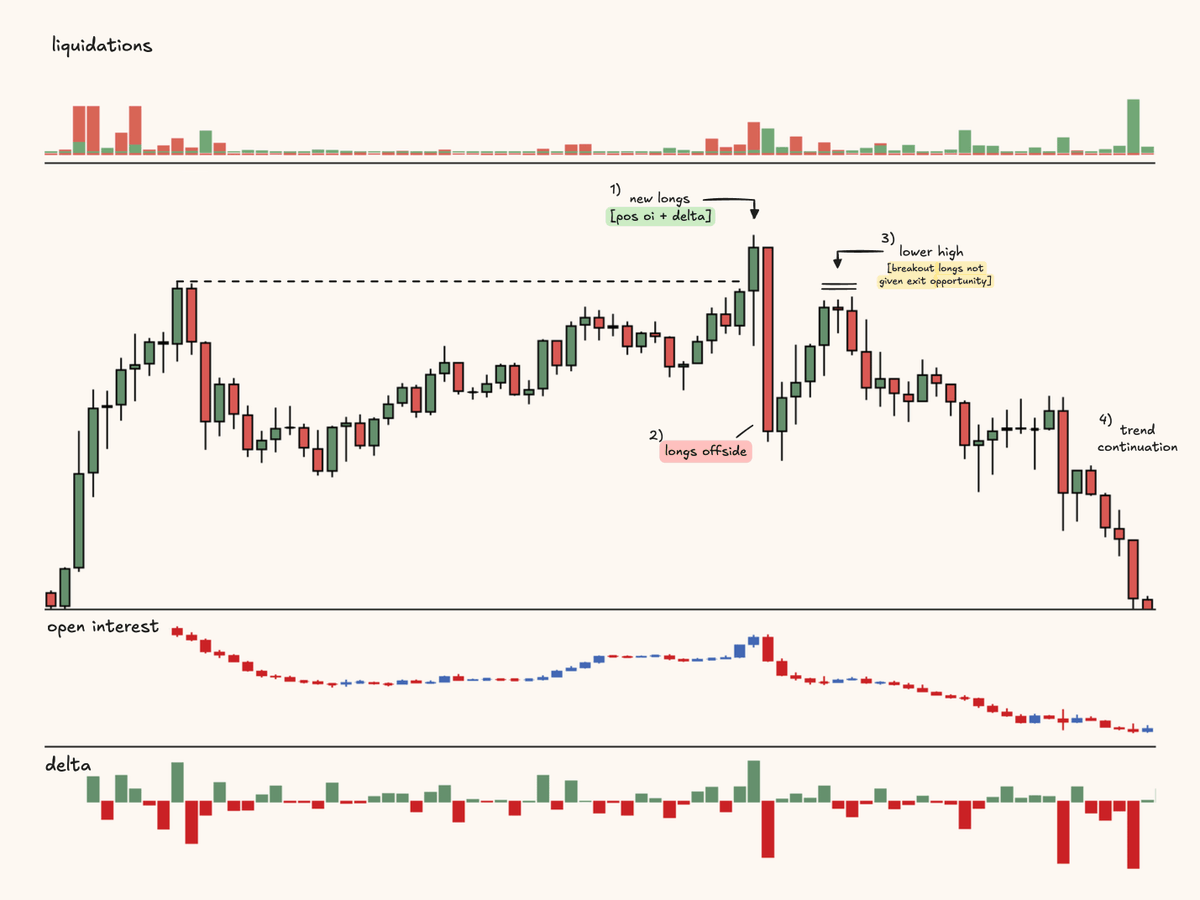
bonus (my favourite setup):
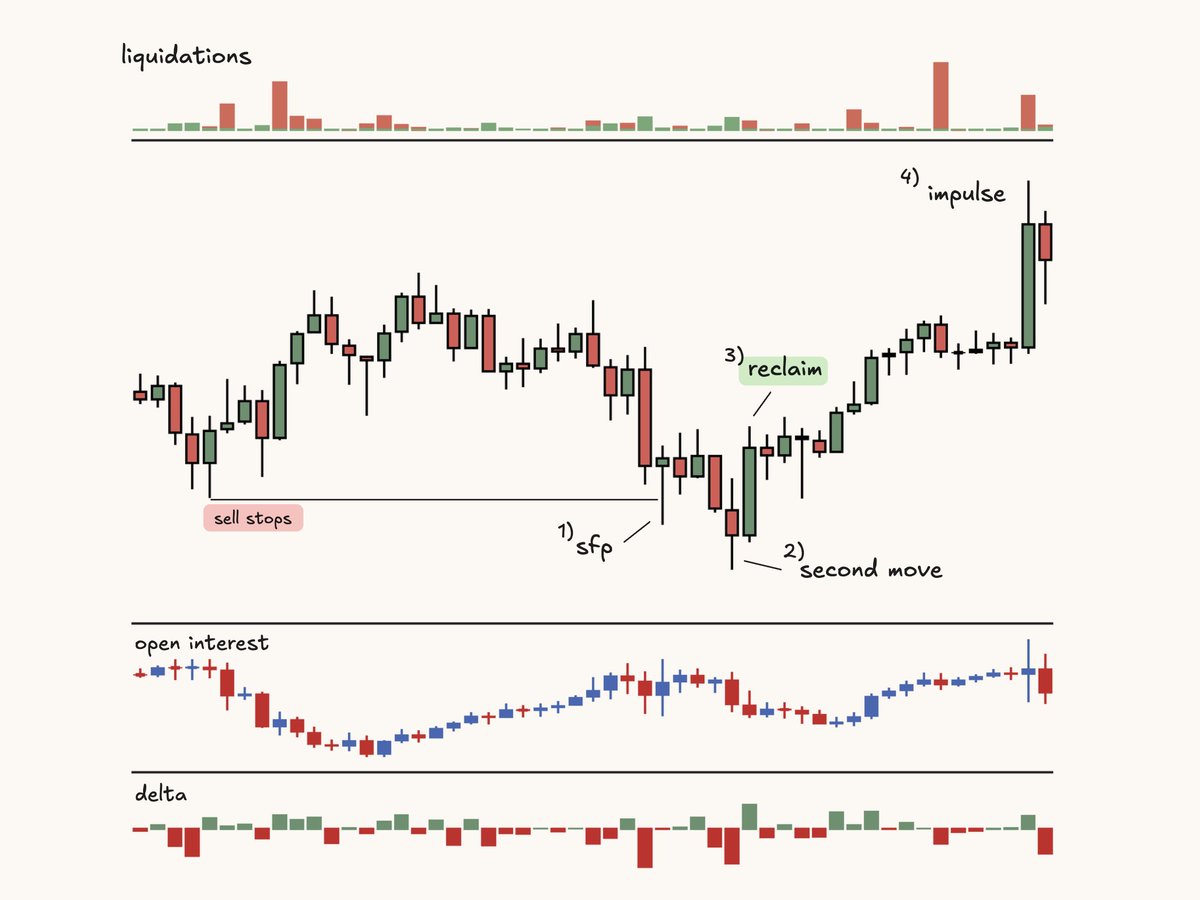
swing failure patterns, particularly in $BTC, can lure in early positions, causing price to make a "second move" beyond the SFP.
this move stops out early positions before the reversal happens. x.com
swing failure patterns, particularly in $BTC, can lure in early positions, causing price to make a "second move" beyond the SFP.
this move stops out early positions before the reversal happens. x.com
hope you found this useful.
be sure to follow for more info like this and let me know down below what you would like to see next.
be sure to follow for more info like this and let me know down below what you would like to see next.
Loading suggestions...