

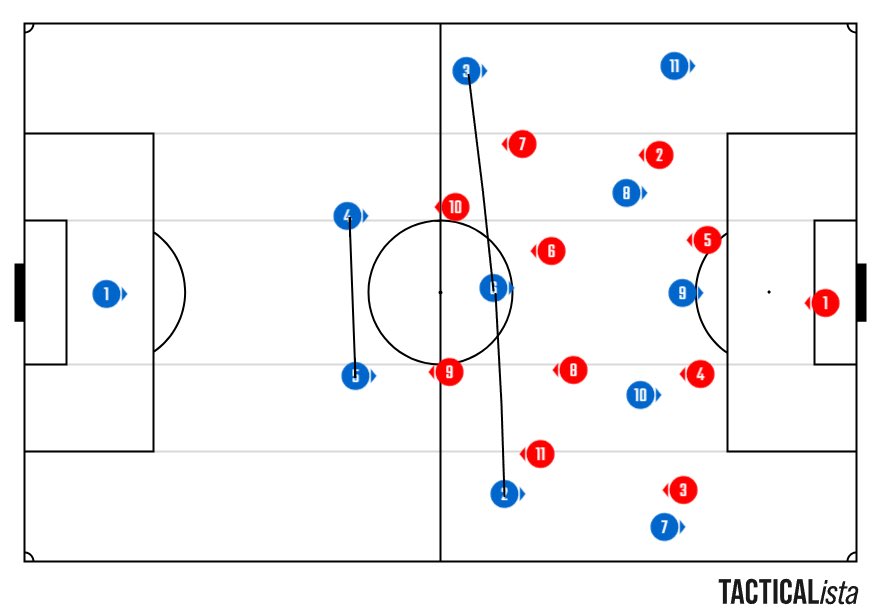
𝗧𝗵𝗲 𝟯-𝟮-𝟱
Recently, the 3-2 base has gained lots of popularity in the tactical world. This is because of its practical rest defense (with 5 players in the defensive zones), alongside the numerical superiority it provides in the centre of the pitch.
This superiority occurs due to the use of 3 CBs with a double pivot, who commonly form a box with the 2 advanced midfielders — a ‘3-box-3’ shape.
Recently, the 3-2 base has gained lots of popularity in the tactical world. This is because of its practical rest defense (with 5 players in the defensive zones), alongside the numerical superiority it provides in the centre of the pitch.
This superiority occurs due to the use of 3 CBs with a double pivot, who commonly form a box with the 2 advanced midfielders — a ‘3-box-3’ shape.
𝗧𝗵𝗲 𝗻𝗮𝗿𝗿𝗼𝘄 𝗯𝗹𝗼𝗰𝗸
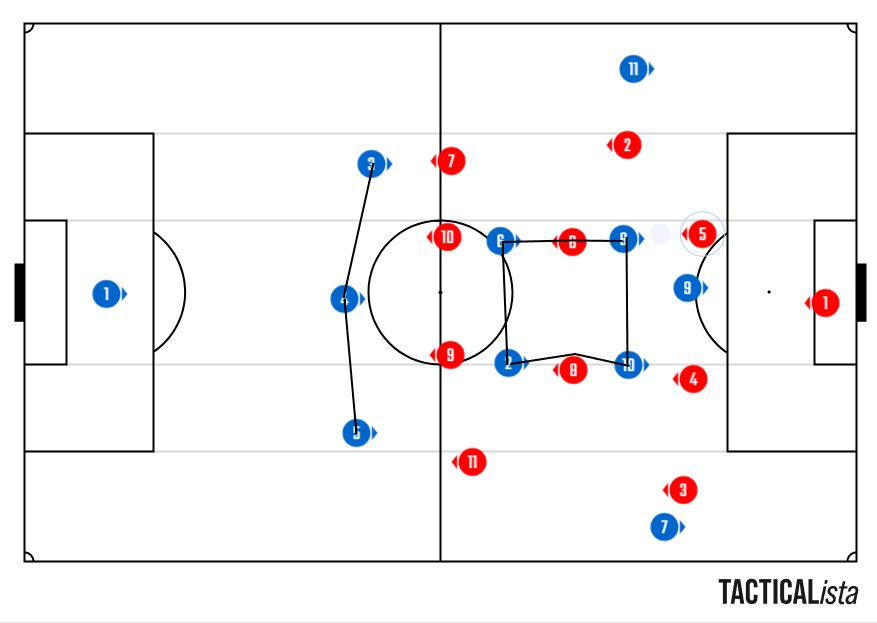
With the frequent 3-2 base, managers have adapted to having a narrow pressing structure in an attempt to deny the central progression. They do this by overloading the central areas, commonly seen with a 5-4-1 or 4-4-2 (4-2-4).
For this example, we will use the majorly used 4-2-4.
The front 2 block the passing lanes from the CBs into the double pivot. The wingers are relatively tucked in, furthermore packing the central areas. The double-pivot are tasked with covering the space behind the front 4 while cutting off the opposition's advanced midfielders.
This leads to 2 teams trying to overload the central areas, slowing down the progression of play and lowering the efficiency of this build-up structure.
With the frequent 3-2 base, managers have adapted to having a narrow pressing structure in an attempt to deny the central progression. They do this by overloading the central areas, commonly seen with a 5-4-1 or 4-4-2 (4-2-4).
For this example, we will use the majorly used 4-2-4.
The front 2 block the passing lanes from the CBs into the double pivot. The wingers are relatively tucked in, furthermore packing the central areas. The double-pivot are tasked with covering the space behind the front 4 while cutting off the opposition's advanced midfielders.
This leads to 2 teams trying to overload the central areas, slowing down the progression of play and lowering the efficiency of this build-up structure.
𝗛𝗼𝘄 𝗮𝗿𝗲 𝗺𝗮𝗻𝗮𝗴𝗲𝗿𝘀 𝗮𝗱𝗮𝗽𝘁𝗶𝗻𝗴?
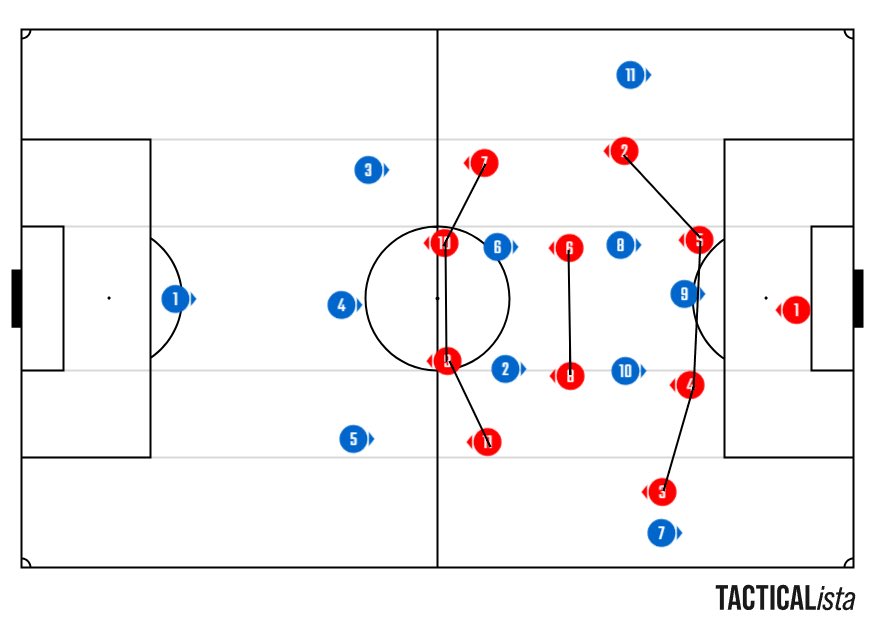
With the opposition loading the centre of the pitch, consequently, there are vacancies in the wide areas.
The 2-3 build base targets this limitation, by reverting to having the full backs out wide. This allows the team to target the vacated space with a deeper full-back and a high winger – they can go around the block to bypass.
The setup increases the emphasis on wingers in the team, allowing them to stand out as they have in the past. They must be able to beat their man and create. This pattern was seen this weekend with Chelsea’s Sancho and Man City’s Savinho creating goals this way.
Additionally, switches of play become more important due to the ‘overload to isolate’ principle. This principle focuses on overloading a side of the pitch, freeing up space on the opposing side. If the ball can be moved to this side of the pitch, a player holding the width is in ample space. With players in the traditional full-back area, switches of play become increasingly common. This constantly shifts the opposition's block which creates opportunities to penetrate.
Furthermore, this shape drags the opposition's narrow wingers out wide. This manipulation of the wingers leaves space in the centre of the park - in sense overloading the width to create space internally - allowing the advanced midfielders to drop into the space and receive the ball.
This goal demonstrates these principles:
With the opposition loading the centre of the pitch, consequently, there are vacancies in the wide areas.
The 2-3 build base targets this limitation, by reverting to having the full backs out wide. This allows the team to target the vacated space with a deeper full-back and a high winger – they can go around the block to bypass.
The setup increases the emphasis on wingers in the team, allowing them to stand out as they have in the past. They must be able to beat their man and create. This pattern was seen this weekend with Chelsea’s Sancho and Man City’s Savinho creating goals this way.
Additionally, switches of play become more important due to the ‘overload to isolate’ principle. This principle focuses on overloading a side of the pitch, freeing up space on the opposing side. If the ball can be moved to this side of the pitch, a player holding the width is in ample space. With players in the traditional full-back area, switches of play become increasingly common. This constantly shifts the opposition's block which creates opportunities to penetrate.
Furthermore, this shape drags the opposition's narrow wingers out wide. This manipulation of the wingers leaves space in the centre of the park - in sense overloading the width to create space internally - allowing the advanced midfielders to drop into the space and receive the ball.
This goal demonstrates these principles:
Another example of this was in Chelsea vs Palace. Here we can see:
-Chelsea stretching the play with wide fullbacks and a single pivot
-Palace’s narrow wingers forced to come out wide
-Opens up space for Palmer to occupy
-Chelsea stretching the play with wide fullbacks and a single pivot
-Palace’s narrow wingers forced to come out wide
-Opens up space for Palmer to occupy
𝗢𝘃𝗲𝗿𝘃𝗶𝗲𝘄
The 2-3 base targets the opposition's narrow block by pulling them out wide.
It gives them more opportunities to progress vertically using the wide men, but also provides more horizontal passing opportunities (across the back 4).
This constantly shifts the opposition's block, while forcing the narrow wingers out wide leaving space to penetrate.
𝗲𝗻𝗱
The 2-3 base targets the opposition's narrow block by pulling them out wide.
It gives them more opportunities to progress vertically using the wide men, but also provides more horizontal passing opportunities (across the back 4).
This constantly shifts the opposition's block, while forcing the narrow wingers out wide leaving space to penetrate.
𝗲𝗻𝗱
Loading suggestions...