

Why LA's Wildfires Are So Dangerous? 🔥
Santa Ana Winds & Climate Crisis Explained
Bookmark from UPSC Prelims-2025 Perspective 🔖
A Thread 🧵 x.com
Santa Ana Winds & Climate Crisis Explained
Bookmark from UPSC Prelims-2025 Perspective 🔖
A Thread 🧵 x.com
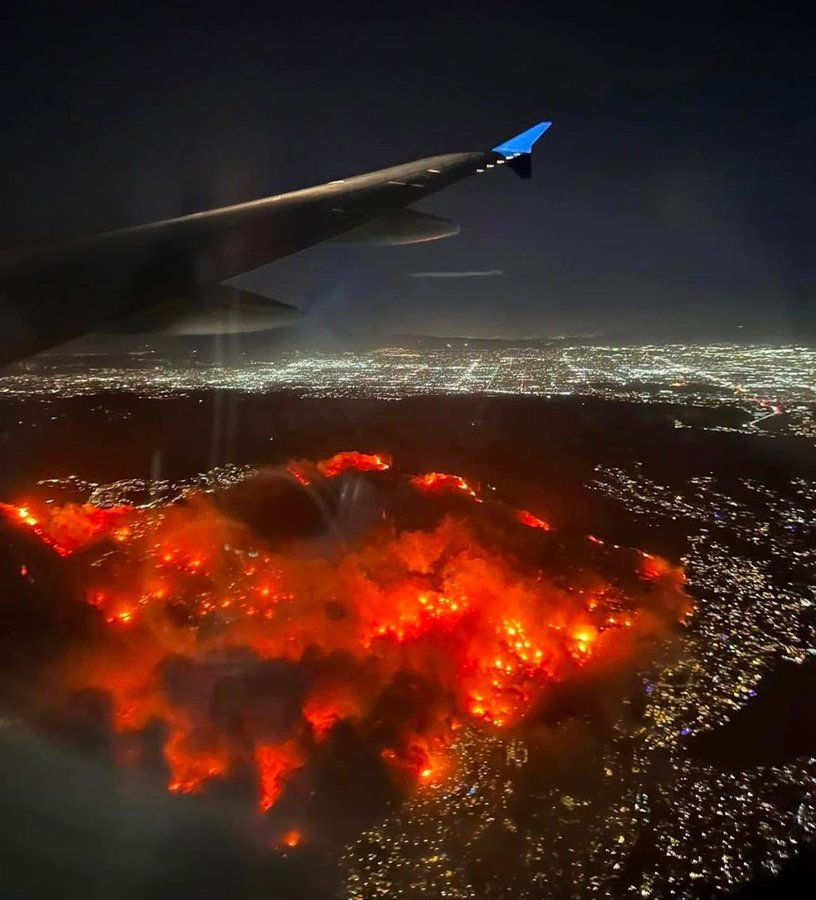
About Santa Ana Winds
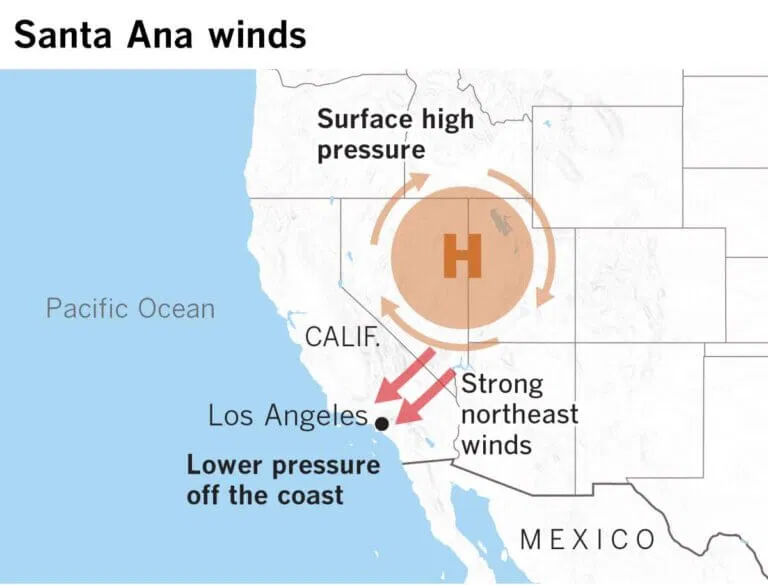
» Santa Ana winds are strong, dry winds that blow from inland deserts toward the coast, affecting Southern California’s weather.
» It occurs when high pressure builds over the Great Basin, creating a difference in pressure with the low pressure over California’s coast.
» As these winds descend the mountains, they compress, heat up, & their humidity drops. These winds have been known to exacerbate wildfires by drying out & heating vegetation, making it highly flammable.
» Santa Ana winds typically blow from October to January, coinciding with winter weather patterns that cre-ate high pressure over the Great Basin.
» Santa Ana winds are strong, dry winds that blow from inland deserts toward the coast, affecting Southern California’s weather.
» It occurs when high pressure builds over the Great Basin, creating a difference in pressure with the low pressure over California’s coast.
» As these winds descend the mountains, they compress, heat up, & their humidity drops. These winds have been known to exacerbate wildfires by drying out & heating vegetation, making it highly flammable.
» Santa Ana winds typically blow from October to January, coinciding with winter weather patterns that cre-ate high pressure over the Great Basin.
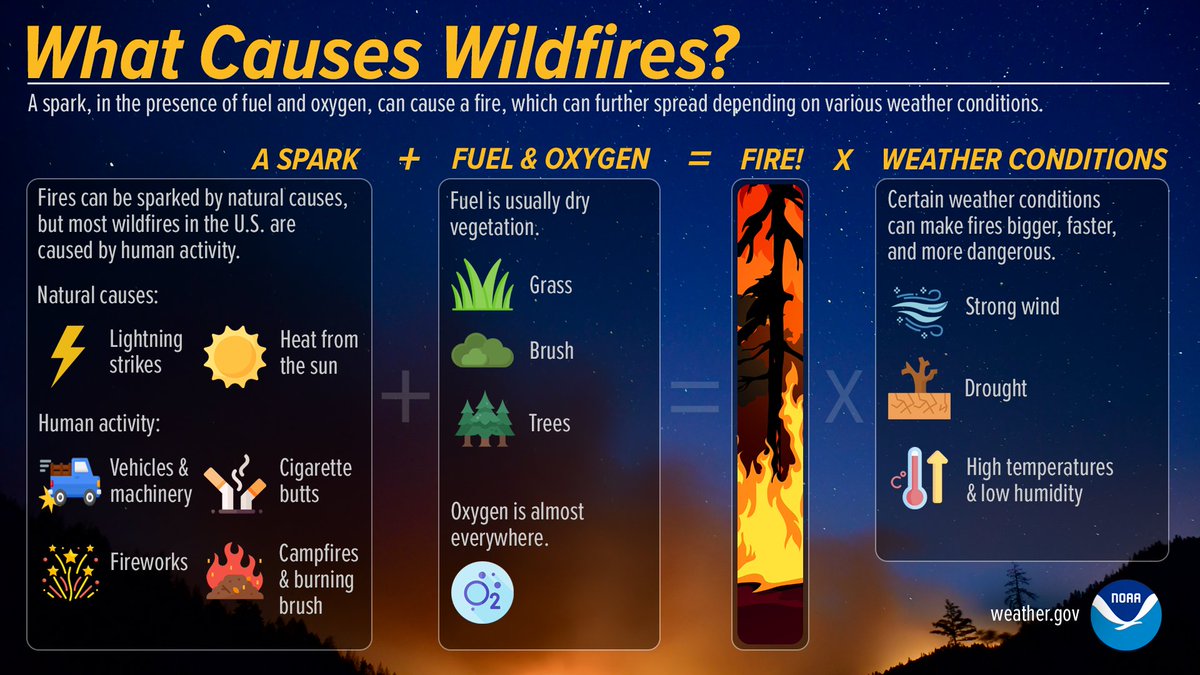
Key Factors Behind Los Angeles Wildfires
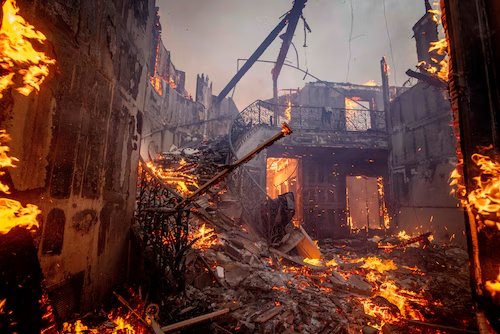
› Dry Vegetation: After unusually wet winters in 2022 and 2023, the vegetation grew abundantly. However, the exceptionally dry winter of 2024 dried it out and made it highly flammable.
› Santa Ana Winds: These strong, dry winds are common in Southern California and have been particularly intense this year. They accelerate westward, fanning the flames and spreading the fires rapidly.
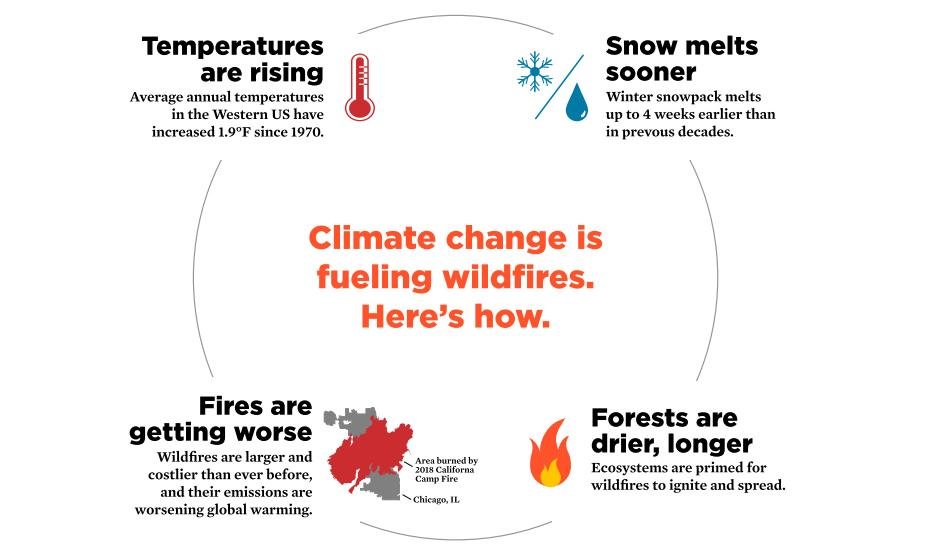
› Climate Change: Warmer temperatures and early snow melts have extended the wildfire season, making vegetation more susceptible to fires. Climate change has also intensified extreme weather events, contrib-uting to the severity of wildfires.
› Power Lines: Downed power lines caused by strong winds are likely to ignite some of the fires.
› Dry Vegetation: After unusually wet winters in 2022 and 2023, the vegetation grew abundantly. However, the exceptionally dry winter of 2024 dried it out and made it highly flammable.
› Santa Ana Winds: These strong, dry winds are common in Southern California and have been particularly intense this year. They accelerate westward, fanning the flames and spreading the fires rapidly.
› Climate Change: Warmer temperatures and early snow melts have extended the wildfire season, making vegetation more susceptible to fires. Climate change has also intensified extreme weather events, contrib-uting to the severity of wildfires.
› Power Lines: Downed power lines caused by strong winds are likely to ignite some of the fires.
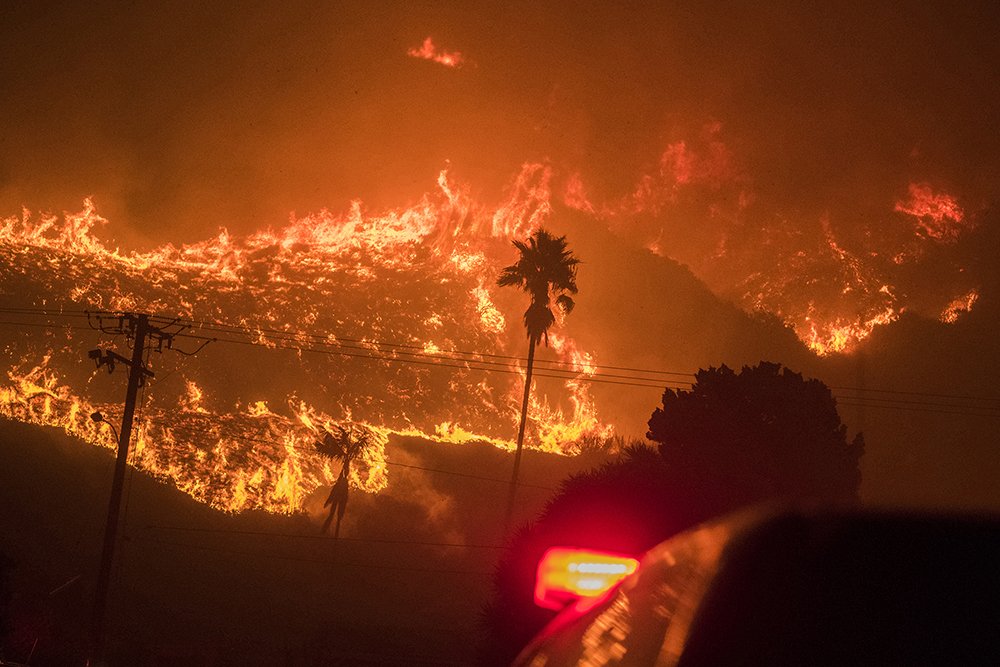
Impacts of Santa Ana Winds
› Increased Fire Risk: The dry, hot, and fast-moving winds intensify wildfires, making them difficult to con-trol.
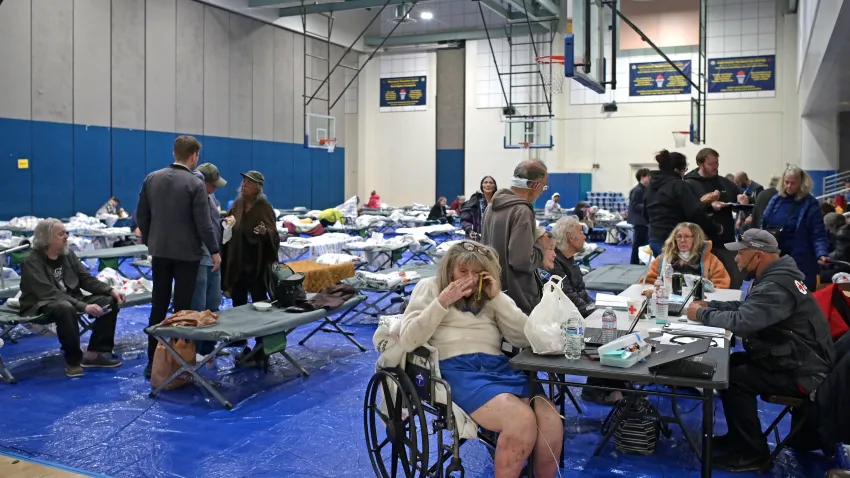
› Air Quality Deterioration: Wildfires driven by these winds release smoke and particulate matter, reduc-ing air quality.
› Property Damage: High wind speeds exacerbate fire damage to homes, infrastructure, and power lines.
› Health Risks: Respiratory issues and heat-related illnesses rise due to dry and smoky conditions.
› El Niño: This climate pattern brings warmer and wetter conditions to Southern California, which can re-duce the risk of wildfires by increasing vegetation moisture and reducing drought severity.
› La Niña: Conversely, La Niña leads to cooler and drier conditions, exacerbating drought and increasing the likelihood of wildfires. Studies have shown that large fires in the Southwest U.S. tend to occur more frequently during La Niña events.
› Increased Fire Risk: The dry, hot, and fast-moving winds intensify wildfires, making them difficult to con-trol.
› Air Quality Deterioration: Wildfires driven by these winds release smoke and particulate matter, reduc-ing air quality.
› Property Damage: High wind speeds exacerbate fire damage to homes, infrastructure, and power lines.
› Health Risks: Respiratory issues and heat-related illnesses rise due to dry and smoky conditions.
› El Niño: This climate pattern brings warmer and wetter conditions to Southern California, which can re-duce the risk of wildfires by increasing vegetation moisture and reducing drought severity.
› La Niña: Conversely, La Niña leads to cooler and drier conditions, exacerbating drought and increasing the likelihood of wildfires. Studies have shown that large fires in the Southwest U.S. tend to occur more frequently during La Niña events.

What is the Role of Climate Change?
› Extended Dry Seasons: Climate change has led to longer and more intense dry seasons, which turn veg-etation into tinder, making it easier for fires to ignite and spread.
› Higher Temperatures: Rising temperatures have resulted in hotter summers and milder winters, further drying out the vegetation and increasing the likelihood of wildfires.
› Delayed Wet Season: The onset of the wet season has been delayed, leading to prolonged drought conditions that leave the landscape extremely dry and prone to fires.
› Intensified Santa Ana Winds: While Santa Ana winds are a natural phenomenon, climate change has in-tensified these winds, making them more powerful and dangerous.
› Increased Frequency and Severity: These factors have led to more frequent and severe wildfires, with larger areas being burned each year.
› Human Activities: Accidents such as unextinguished campfires, vehicle-related sparks, and even gender-reveal stunts have been known to start wildfires.
› Extended Dry Seasons: Climate change has led to longer and more intense dry seasons, which turn veg-etation into tinder, making it easier for fires to ignite and spread.
› Higher Temperatures: Rising temperatures have resulted in hotter summers and milder winters, further drying out the vegetation and increasing the likelihood of wildfires.
› Delayed Wet Season: The onset of the wet season has been delayed, leading to prolonged drought conditions that leave the landscape extremely dry and prone to fires.
› Intensified Santa Ana Winds: While Santa Ana winds are a natural phenomenon, climate change has in-tensified these winds, making them more powerful and dangerous.
› Increased Frequency and Severity: These factors have led to more frequent and severe wildfires, with larger areas being burned each year.
› Human Activities: Accidents such as unextinguished campfires, vehicle-related sparks, and even gender-reveal stunts have been known to start wildfires.
Wildfires in India
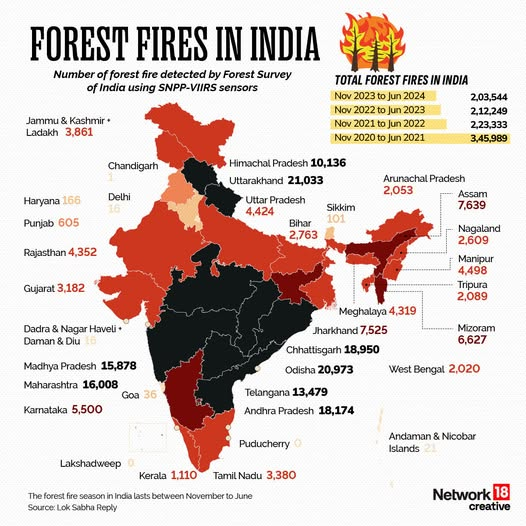
› According to ISFR 2019, Nearly 21.4% of India's forest cover is prone to frequent fires, with 5.2% being highly prone.
› According to ISFR 2023, Uttarakhand, Odisha, and Chhattisgarh are the top three states with the highest forest fire incidents in the 2023-24 season.
› Both reports indicate an increasing trend in wildfire incidents due to climatic and anthropogenic factors.
Indian Govt Initiatives and Strategies to Combat Wildfires
› Forest Fire Prevention and Management Scheme (FPM): A central scheme focusing on fire prevention, detection, and mitigation.
› National Action Plan on Forest Fires (NAPFF): A comprehensive plan for reducing fire incidents through modern technologies.
› Satellite Monitoring: ISRO’s Forest Fire Alert System provides real-time alerts to state forest depart-ments.
› Community Involvement: Van Panchayats and joint forest management committees are involved in local firefighting efforts.
› Capacity Building: Training programs for forest officials and local communities on fire management techniques.
› According to ISFR 2019, Nearly 21.4% of India's forest cover is prone to frequent fires, with 5.2% being highly prone.
› According to ISFR 2023, Uttarakhand, Odisha, and Chhattisgarh are the top three states with the highest forest fire incidents in the 2023-24 season.
› Both reports indicate an increasing trend in wildfire incidents due to climatic and anthropogenic factors.
Indian Govt Initiatives and Strategies to Combat Wildfires
› Forest Fire Prevention and Management Scheme (FPM): A central scheme focusing on fire prevention, detection, and mitigation.
› National Action Plan on Forest Fires (NAPFF): A comprehensive plan for reducing fire incidents through modern technologies.
› Satellite Monitoring: ISRO’s Forest Fire Alert System provides real-time alerts to state forest depart-ments.
› Community Involvement: Van Panchayats and joint forest management committees are involved in local firefighting efforts.
› Capacity Building: Training programs for forest officials and local communities on fire management techniques.
Topper's Secret is Now Affordable! 🤩
👉Upto 70% OFF on PMFIAS Study Materials! – #UPSC Books, Notes, Test Series & More!
Hurry, Sale Ends Soon! ⏳
🔗Link: store.pmfias.com
👉Upto 70% OFF on PMFIAS Study Materials! – #UPSC Books, Notes, Test Series & More!
Hurry, Sale Ends Soon! ⏳
🔗Link: store.pmfias.com

Loading suggestions...