

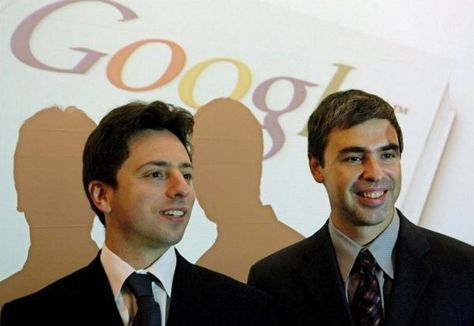
In 1998, Yahoo made the most expensive blunder in business history.
2 kids begged Yahoo to sell their website for $1 million. But Yahoo instantly rejected it.
Today, that tiny site is worth $2.4 TRILLION dollars and bankrupted Yahoo.
Here's why Yahoo missed owning Google - TWICE:🧵
2 kids begged Yahoo to sell their website for $1 million. But Yahoo instantly rejected it.
Today, that tiny site is worth $2.4 TRILLION dollars and bankrupted Yahoo.
Here's why Yahoo missed owning Google - TWICE:🧵
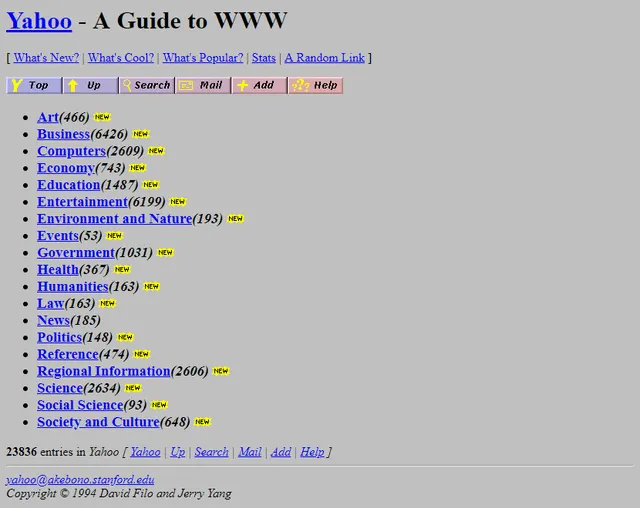
Let's go back to 1994.
The internet was an untamed wilderness. Finding anything was nearly impossible.
Two Stanford students, Jerry Yang and David Filo, had an idea: manually catalog every website worth visiting. x.com
The internet was an untamed wilderness. Finding anything was nearly impossible.
Two Stanford students, Jerry Yang and David Filo, had an idea: manually catalog every website worth visiting. x.com


They called it "Jerry and David's Guide to the World Wide Web."
(Later renamed to Yahoo - "Yet Another Hierarchical Officious Oracle")
It was revolutionary. Finally, people could find what they needed online. x.com
(Later renamed to Yahoo - "Yet Another Hierarchical Officious Oracle")
It was revolutionary. Finally, people could find what they needed online. x.com
Yahoo's success was astronomical:
• 1995: 1 million hits per day
• 1996: IPO valued at $848 million
• 1997: Most popular website globally
• 1998: Worth over $5 billion
They seemed unstoppable. x.com
• 1995: 1 million hits per day
• 1996: IPO valued at $848 million
• 1997: Most popular website globally
• 1998: Worth over $5 billion
They seemed unstoppable. x.com

But while Yahoo was soaring, two other Stanford students saw a problem:
The internet was growing too fast for human curators to keep up.
Larry Page and Sergey Brin believed computers could do it better. x.com
The internet was growing too fast for human curators to keep up.
Larry Page and Sergey Brin believed computers could do it better. x.com

In 1996, they created something revolutionary:
PageRank - an algorithm that ranked websites based on how many other sites linked to them.
Think of it as democracy for the internet. Each link was a vote of confidence. x.com
PageRank - an algorithm that ranked websites based on how many other sites linked to them.
Think of it as democracy for the internet. Each link was a vote of confidence. x.com

They built this into a search engine initially called "BackRub."
Yes, really. BackRub.
(Thank goodness they later changed it to Google - named after "googol," the number 1 followed by 100 zeros) x.com
Yes, really. BackRub.
(Thank goodness they later changed it to Google - named after "googol," the number 1 followed by 100 zeros) x.com

In 1997, they walked into Yahoo's headquarters with their creation.
The price? Just $1 million.
Yahoo executives reviewed the technology and reached a shocking conclusion... x.com
The price? Just $1 million.
Yahoo executives reviewed the technology and reached a shocking conclusion... x.com

"This works too well. Users would find what they want too quickly and leave Yahoo."
You see, Yahoo was making millions from banner ads. The longer users stayed, the more money they made.
They had fallen into a classic trap: optimizing for short-term profit over long-term value. x.com
You see, Yahoo was making millions from banner ads. The longer users stayed, the more money they made.
They had fallen into a classic trap: optimizing for short-term profit over long-term value. x.com

But here's where it gets interesting...
By 1998, Yahoo was drowning in websites to catalog.
Their human curators couldn't keep up.
The solution? Pay Google $7M annually to power their searches. x.com
By 1998, Yahoo was drowning in websites to catalog.
Their human curators couldn't keep up.
The solution? Pay Google $7M annually to power their searches. x.com
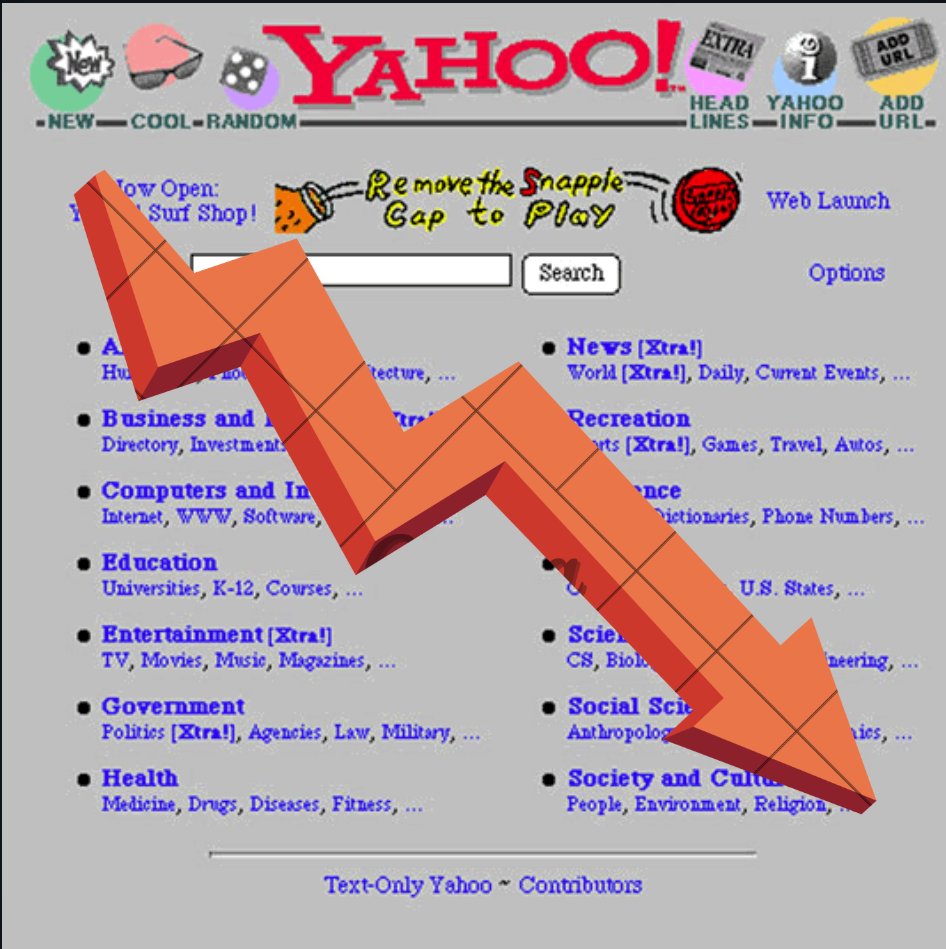
Yes, you read that right.
They went from rejecting Google at $1M to PAYING them $7M every year.
But the story doesn't end there...
They went from rejecting Google at $1M to PAYING them $7M every year.
But the story doesn't end there...
2001: The dot-com bubble burst. Yahoo's stock crashed.
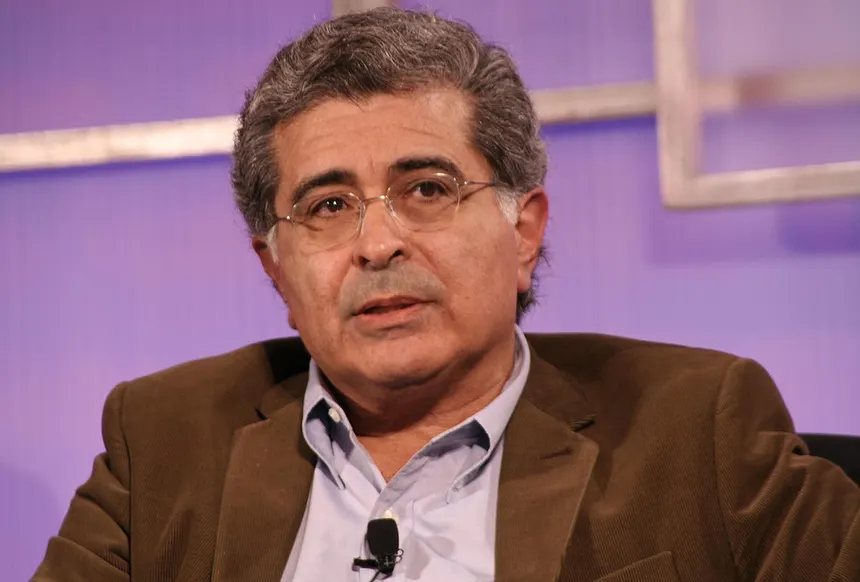
They hired a new CEO: Terry Semel, a Hollywood executive from Warner Bros.
His mission? Reinvent Yahoo for the new era. x.com
They hired a new CEO: Terry Semel, a Hollywood executive from Warner Bros.
His mission? Reinvent Yahoo for the new era. x.com
Semel quickly realized something the previous management missed:
The future wasn't in banner ads. It was in search advertising.
And one company was dominating this space: Google. x.com
The future wasn't in banner ads. It was in search advertising.
And one company was dominating this space: Google. x.com
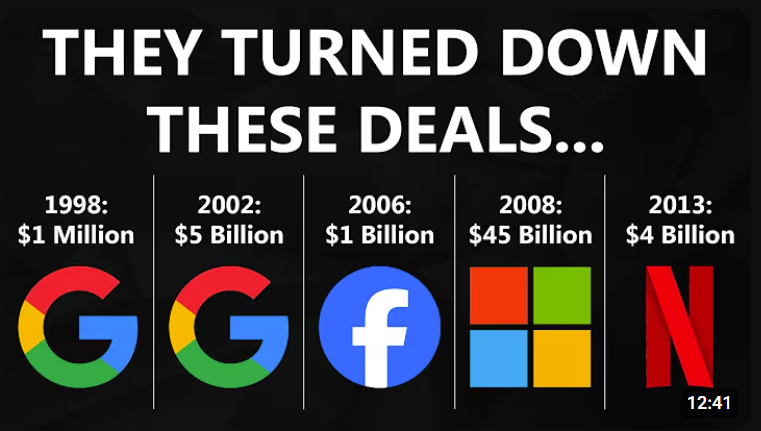
2002: Semel made his move.
He offered $3 billion to buy Google.
Larry and Sergey's response? "We'll sell for $5 billion."
He offered $3 billion to buy Google.
Larry and Sergey's response? "We'll sell for $5 billion."
Yahoo executives were outraged. $5B was Yahoo's entire market value.
"These kids want us to merge as equals? Absurd!"
Pride and ego led to their second massive mistake. x.com
"These kids want us to merge as equals? Absurd!"
Pride and ego led to their second massive mistake. x.com
Instead of buying Google, Yahoo tried to compete:
• Bought Inktomi search ($250M)
• Acquired Overture for ads ($1.6B)
• Spent millions merging them together
But they were already too late. x.com
• Bought Inktomi search ($250M)
• Acquired Overture for ads ($1.6B)
• Spent millions merging them together
But they were already too late. x.com

The results were devastating:
• 2003: Yahoo and Google tied in ad revenue
• 2004: Google's IPO at $23B valuation
• 2006: Google's revenue 2x Yahoo's
• 2008: Microsoft offers $44.6B to buy Yahoo
• Yahoo rejects it as "too low" x.com
• 2003: Yahoo and Google tied in ad revenue
• 2004: Google's IPO at $23B valuation
• 2006: Google's revenue 2x Yahoo's
• 2008: Microsoft offers $44.6B to buy Yahoo
• Yahoo rejects it as "too low" x.com

The final chapter:
• 2017: Yahoo sells to Verizon for $4.48B
• 2023: Google worth over $2 trillion
• Google makes Yahoo's best annual revenue every 3 days
The most expensive mistake in business history. x.com
• 2017: Yahoo sells to Verizon for $4.48B
• 2023: Google worth over $2 trillion
• Google makes Yahoo's best annual revenue every 3 days
The most expensive mistake in business history. x.com

Today, Google processes:
• 3.5 billion searches daily
• 1.2 trillion searches yearly
• 40,000 searches per second
• Controls 92% of global search
All because Yahoo couldn't see past their banner ads.
• 3.5 billion searches daily
• 1.2 trillion searches yearly
• 40,000 searches per second
• Controls 92% of global search
All because Yahoo couldn't see past their banner ads.
The fascinating part about Larry and Sergey's failure wasn't their technology.
It was their pitch.
They focused on selling PageRank's technical features to Yahoo, instead of the transformation: "We'll change how humans access knowledge forever." x.com
It was their pitch.
They focused on selling PageRank's technical features to Yahoo, instead of the transformation: "We'll change how humans access knowledge forever." x.com
The same principle applies in modern business:
Great cold outreach isn't about selling your product.
It's about selling transformation backed by proof and a compelling vision.
Great cold outreach isn't about selling your product.
It's about selling transformation backed by proof and a compelling vision.
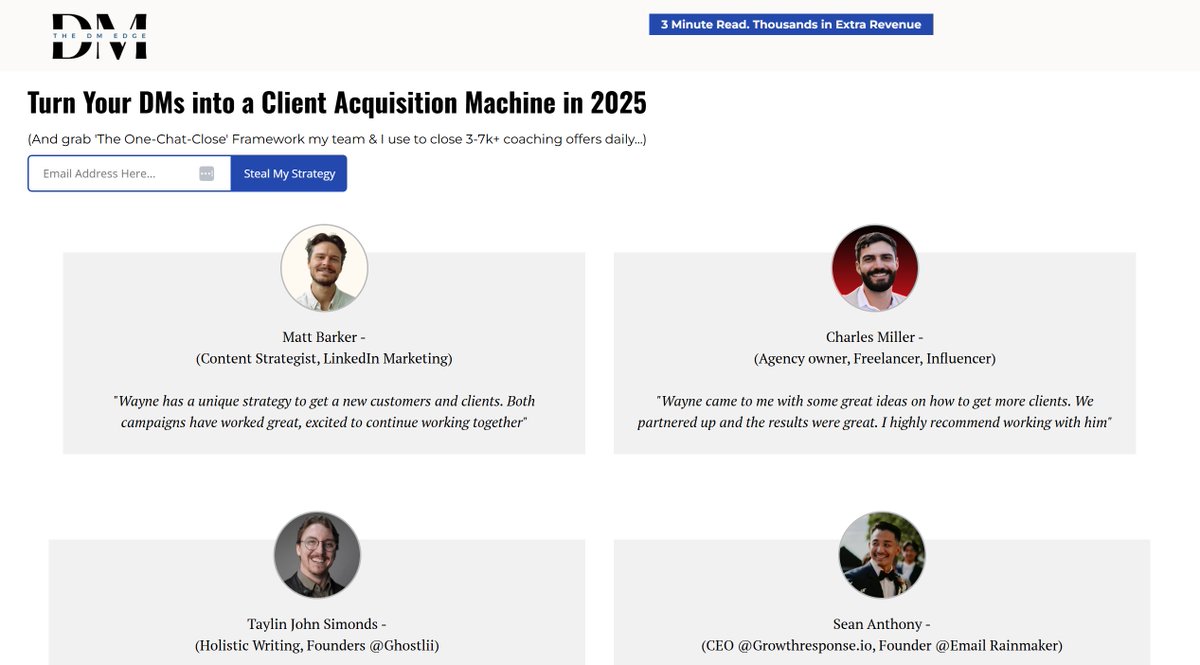
If you're tired of recycled DM templates that don't work, it's time to try something different.
Get 'The One Chat Close' and land your next client this week—straightforward, proven, and actionable:
thedmedge.com x.com
Get 'The One Chat Close' and land your next client this week—straightforward, proven, and actionable:
thedmedge.com x.com
That's a wrap!
Bookmark and share this thread with your business partner.
Follow me @marlton_wayne for more content on sales, lead gen, and outreach content!
Comment below your ONE biggest takeaway from this thread.
Bookmark and share this thread with your business partner.
Follow me @marlton_wayne for more content on sales, lead gen, and outreach content!
Comment below your ONE biggest takeaway from this thread.
Loading suggestions...