

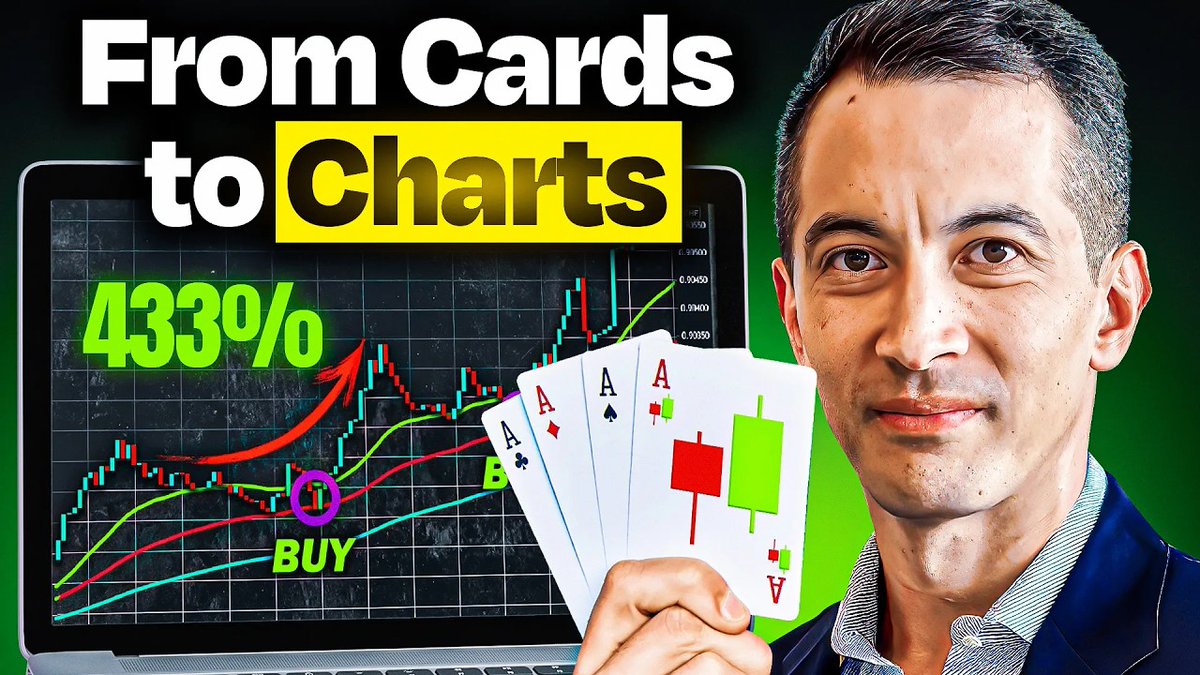
Here is how a Poker Player turned to Full Time Trader - Christian Flanders (@CFlanders7), made over 400% in 2024
Trades attached🧷
// Thread //
Source: @RichardMoglen & @TraderLion_ x.com
Trades attached🧷
// Thread //
Source: @RichardMoglen & @TraderLion_ x.com
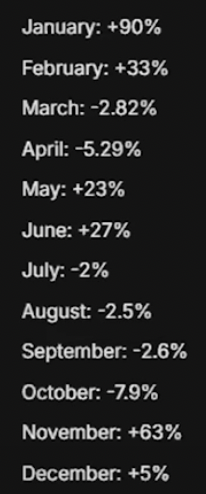
3 Trades which contributed over 2/3rd of his profits
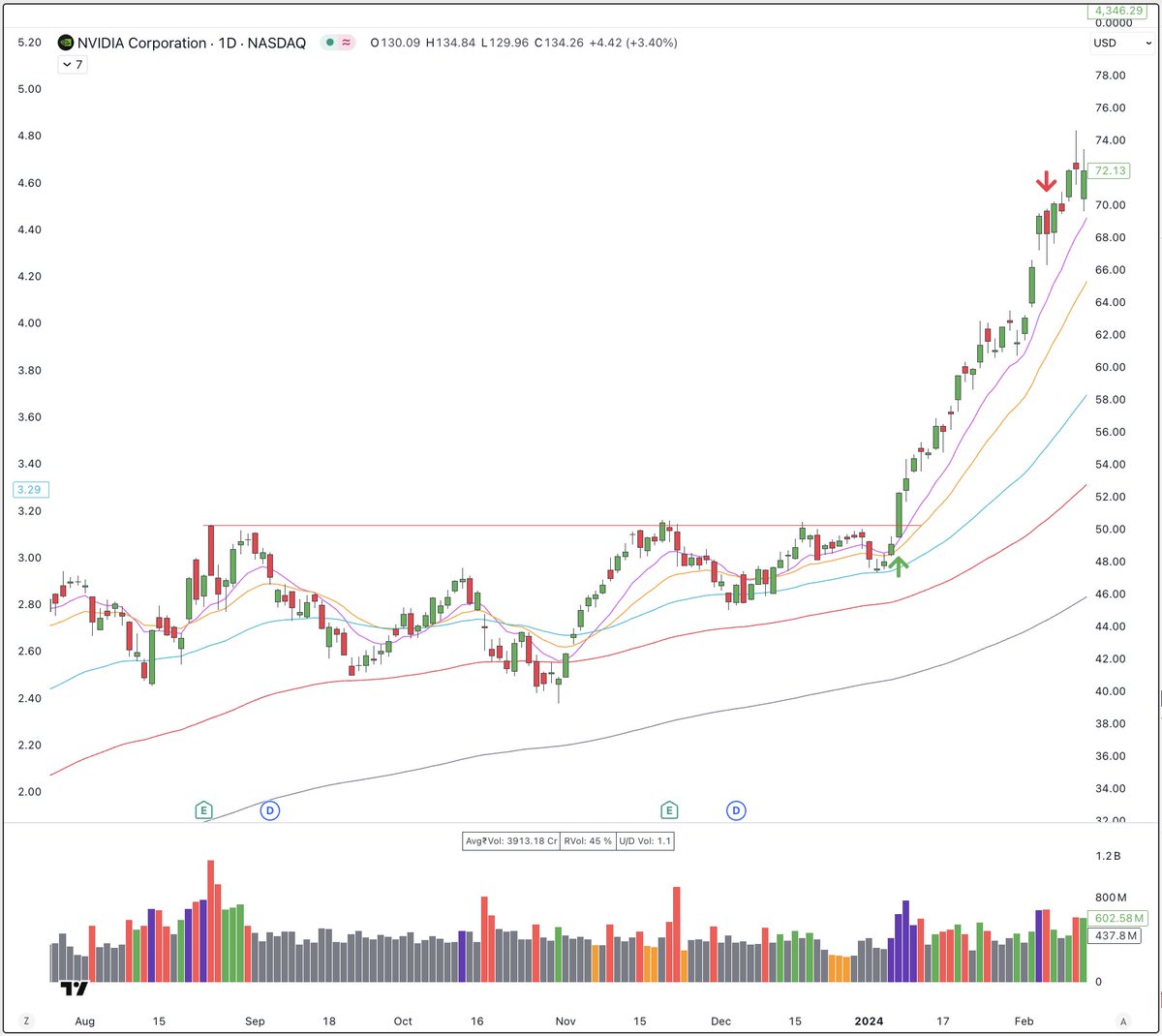
#NVIDIA on 1st Base Break - Jan 2024
His biggest trade was Nvidia this year, where he went all-in with over 100% of his account on the initial breakout.
Stock surged around 50% in just five days.
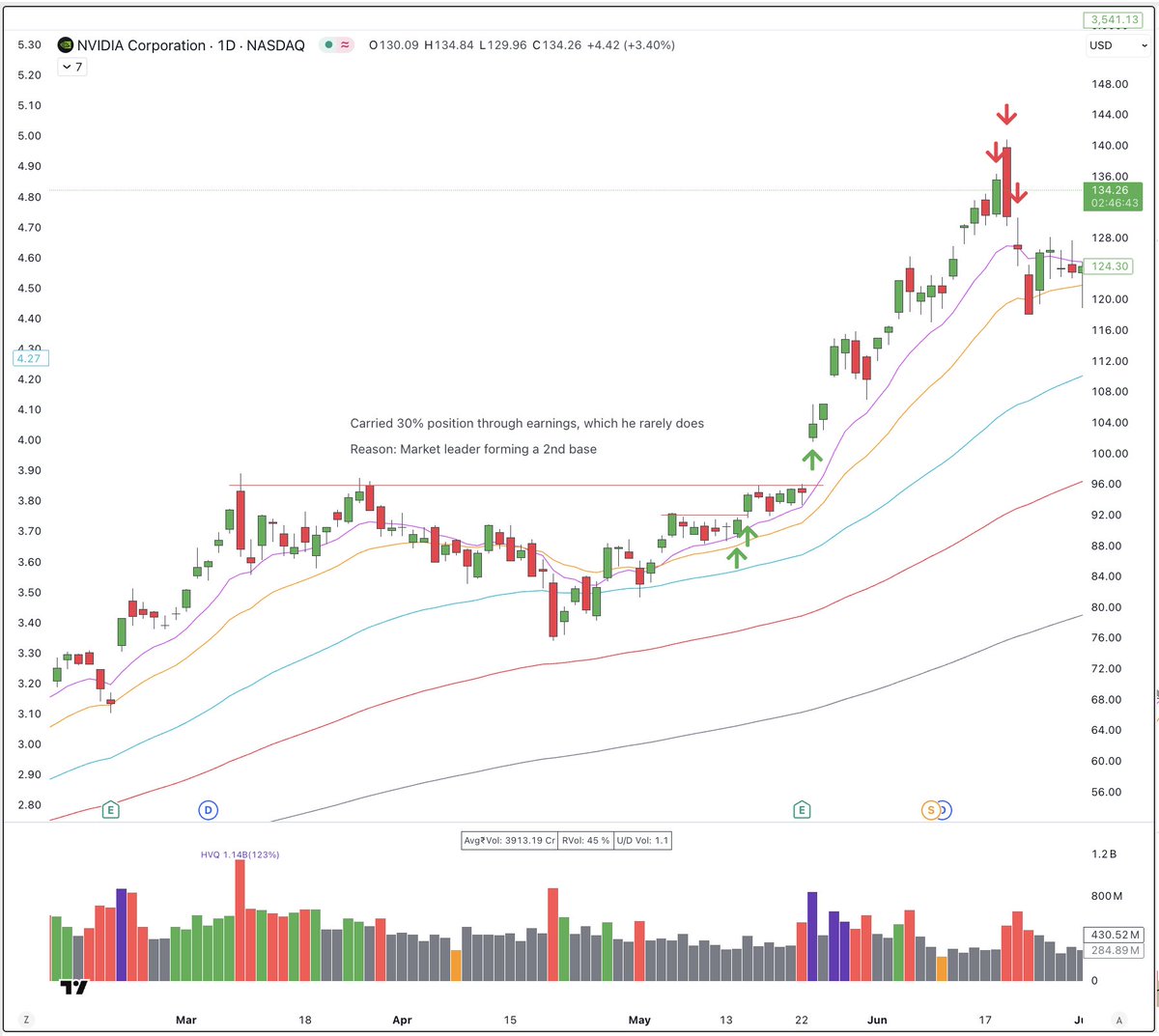
#NVIDIA on 2nd Base Break - May 2024
Took 30% size, carried it through earnings. Added massive on the earnings reaction gap up open. Scaled out well.
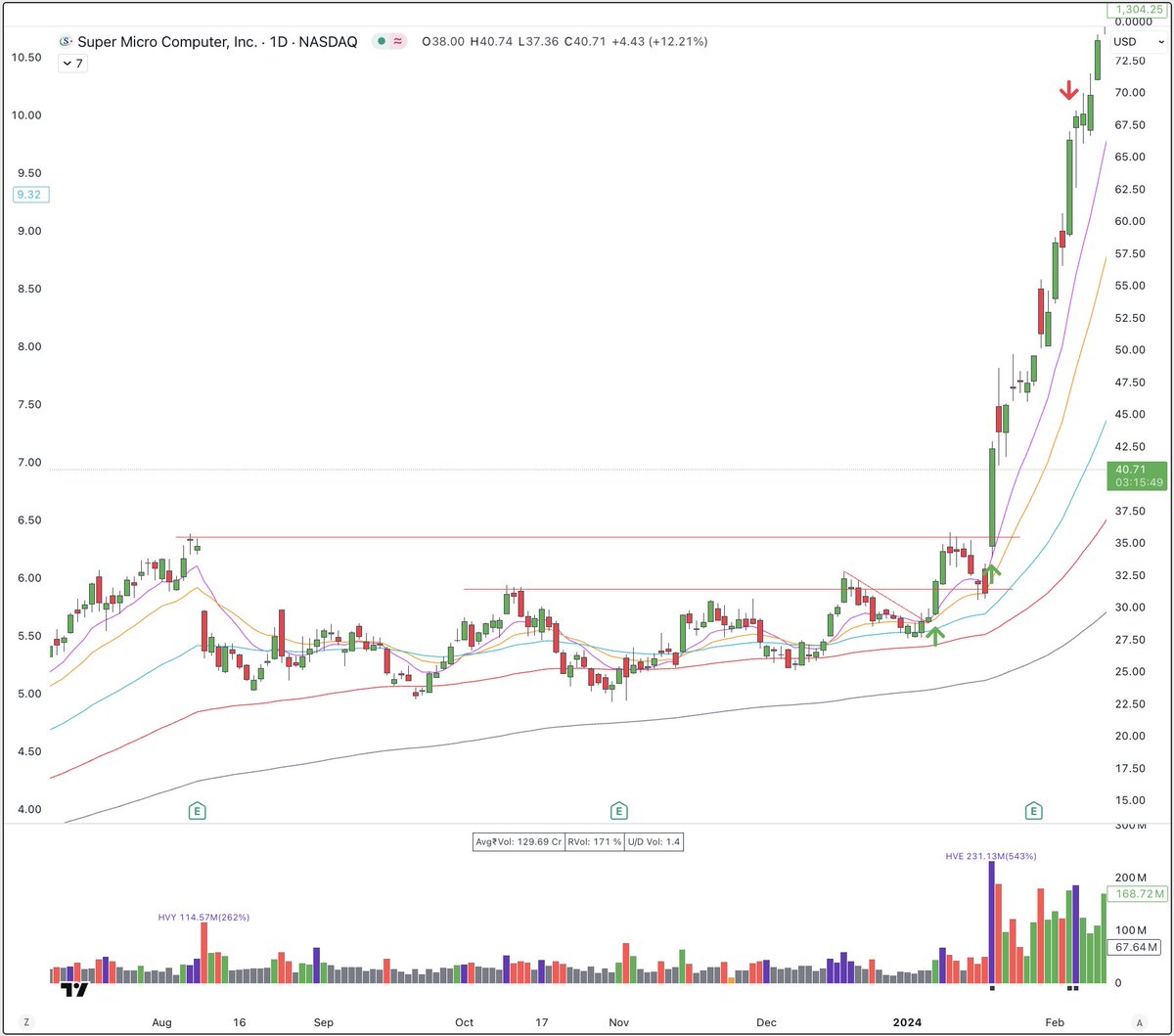
#SMCI Long Base Break - Jan 2024
Bot initial size at low cheat breakout, added more at base breakout. Struggled with trailing winner with size.
#NVIDIA on 1st Base Break - Jan 2024
His biggest trade was Nvidia this year, where he went all-in with over 100% of his account on the initial breakout.
Stock surged around 50% in just five days.
#NVIDIA on 2nd Base Break - May 2024
Took 30% size, carried it through earnings. Added massive on the earnings reaction gap up open. Scaled out well.
#SMCI Long Base Break - Jan 2024
Bot initial size at low cheat breakout, added more at base breakout. Struggled with trailing winner with size.
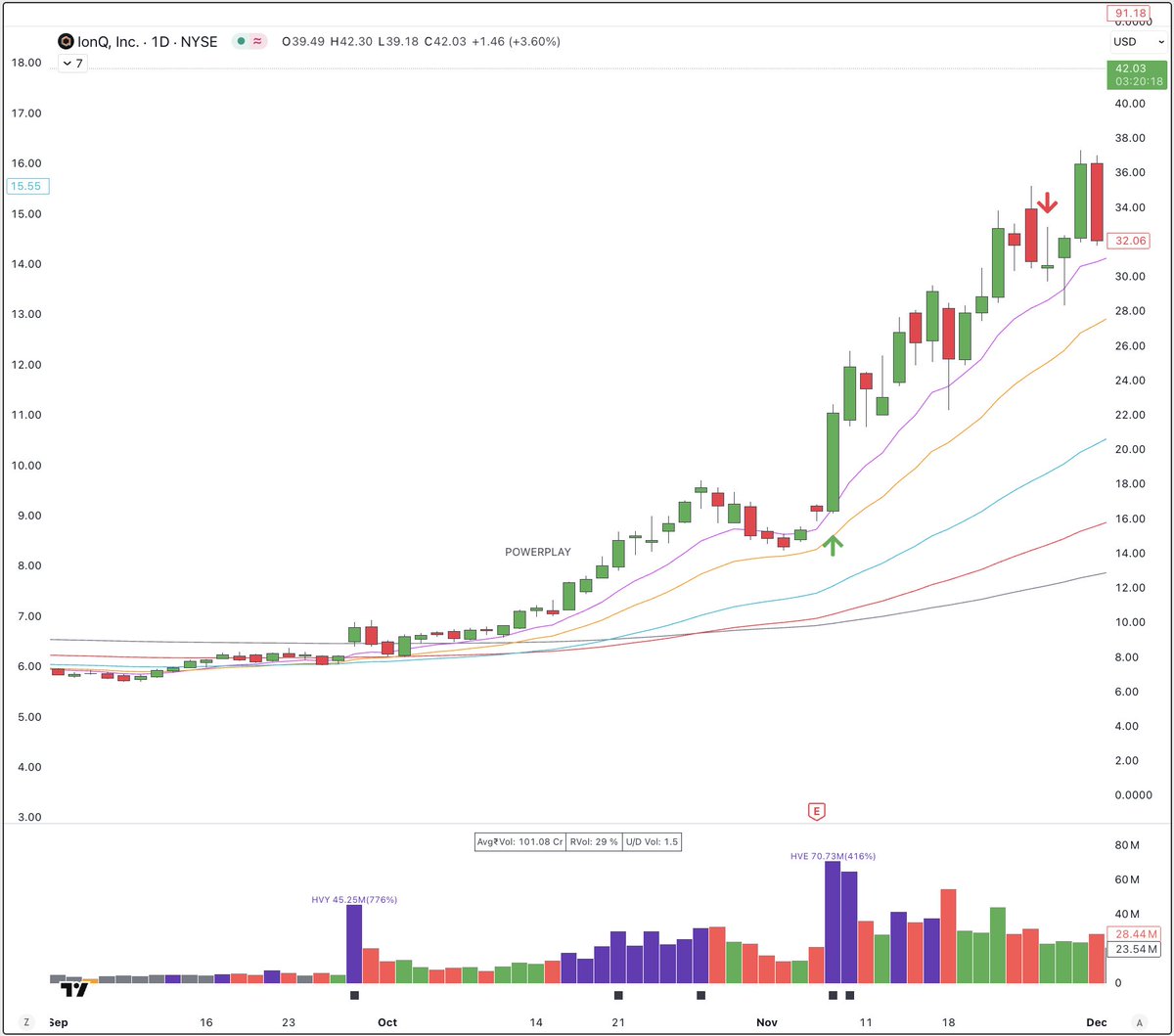
#IONQ - Nov 2024
Powerplay setup, high ADR stock, went up smooth.
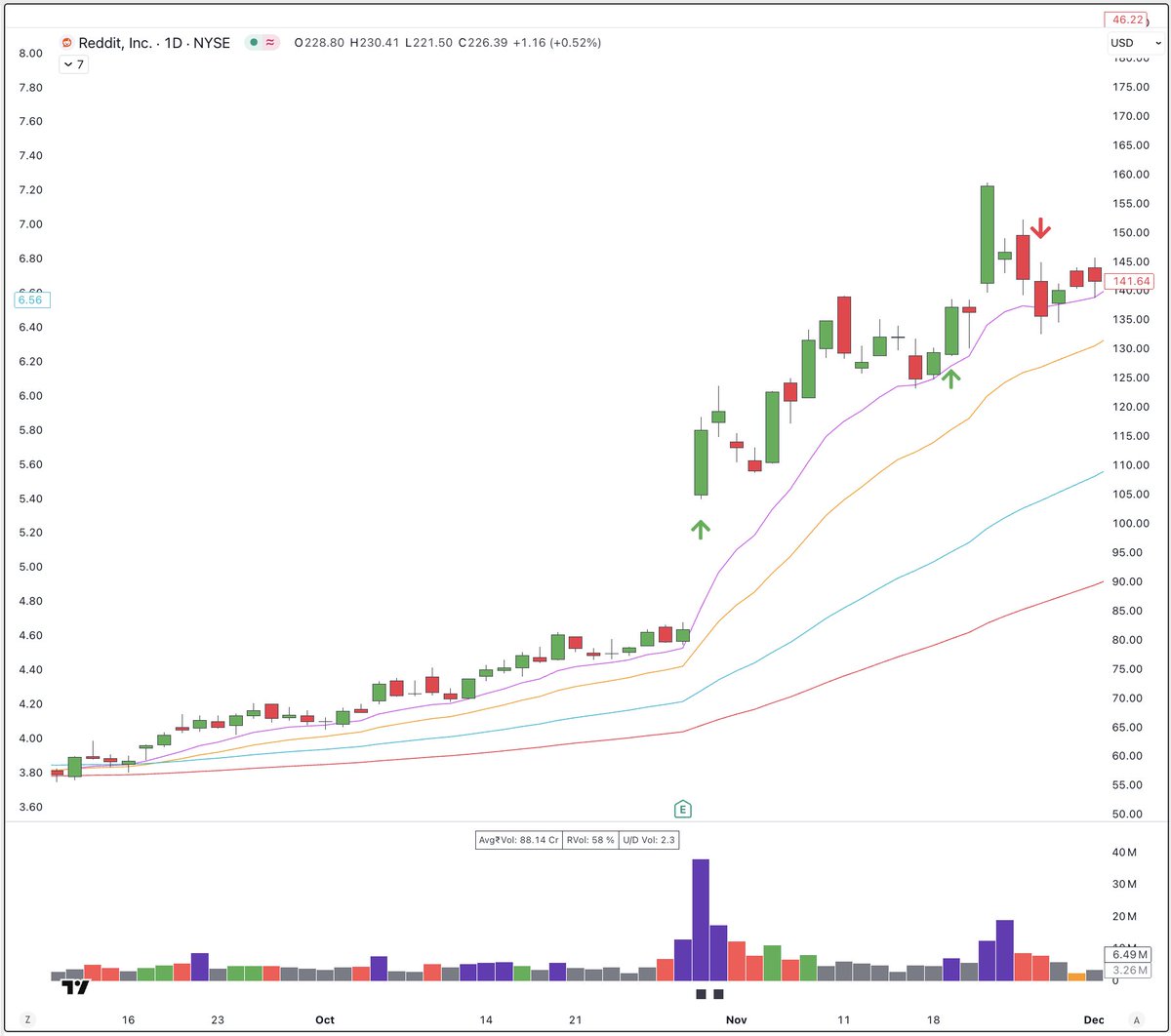
#RDDT - Dec 2024
EP trade, entered twice. Squared off as it closed below 10 day moving average.
Best Trades Near All-Time Highs
His best trades have always come when a stock is at, above, or just below an all-time high. Examples include Nvidia on its first and second base and SMCI on a major base. Nvidia alone accounted for about 80% of his profits this year.
Powerplay setup, high ADR stock, went up smooth.
#RDDT - Dec 2024
EP trade, entered twice. Squared off as it closed below 10 day moving average.
Best Trades Near All-Time Highs
His best trades have always come when a stock is at, above, or just below an all-time high. Examples include Nvidia on its first and second base and SMCI on a major base. Nvidia alone accounted for about 80% of his profits this year.
Episodic Pivots or VCPs?
He prefers trading episodic pivots because they offer a clear-cut plan—buy at the opening range high, set a stop at the low of the day, and let the trade play out. It’s simple, though not always easy.
VCPs, when they break out cleanly like Nvidia, can be a joy as they tend to move up smoothly. However, in a choppy market, failed breakouts can be frustrating—getting stopped out repeatedly before the stock finally moves. That’s where progressive exposure becomes crucial.
He prefers trading episodic pivots because they offer a clear-cut plan—buy at the opening range high, set a stop at the low of the day, and let the trade play out. It’s simple, though not always easy.
VCPs, when they break out cleanly like Nvidia, can be a joy as they tend to move up smoothly. However, in a choppy market, failed breakouts can be frustrating—getting stopped out repeatedly before the stock finally moves. That’s where progressive exposure becomes crucial.
Sizing Up with Conviction in A+ Setups
When he has strong conviction in a trade, he sizes up aggressively, taking on more risk to maximize gains. His biggest wins come from these high-confidence setups, where he goes all-in on the right opportunities.
He looks for VCPs, power plays, and episodic pivots, analyzing how they trade and identifying historical similarities—like Nvidia in January 2024. Poker taught him that when a strong opportunity appears, he has to size up and fully commit, just as in trading.
When he has strong conviction in a trade, he sizes up aggressively, taking on more risk to maximize gains. His biggest wins come from these high-confidence setups, where he goes all-in on the right opportunities.
He looks for VCPs, power plays, and episodic pivots, analyzing how they trade and identifying historical similarities—like Nvidia in January 2024. Poker taught him that when a strong opportunity appears, he has to size up and fully commit, just as in trading.
Using the 10-Day Moving Average as a Stop
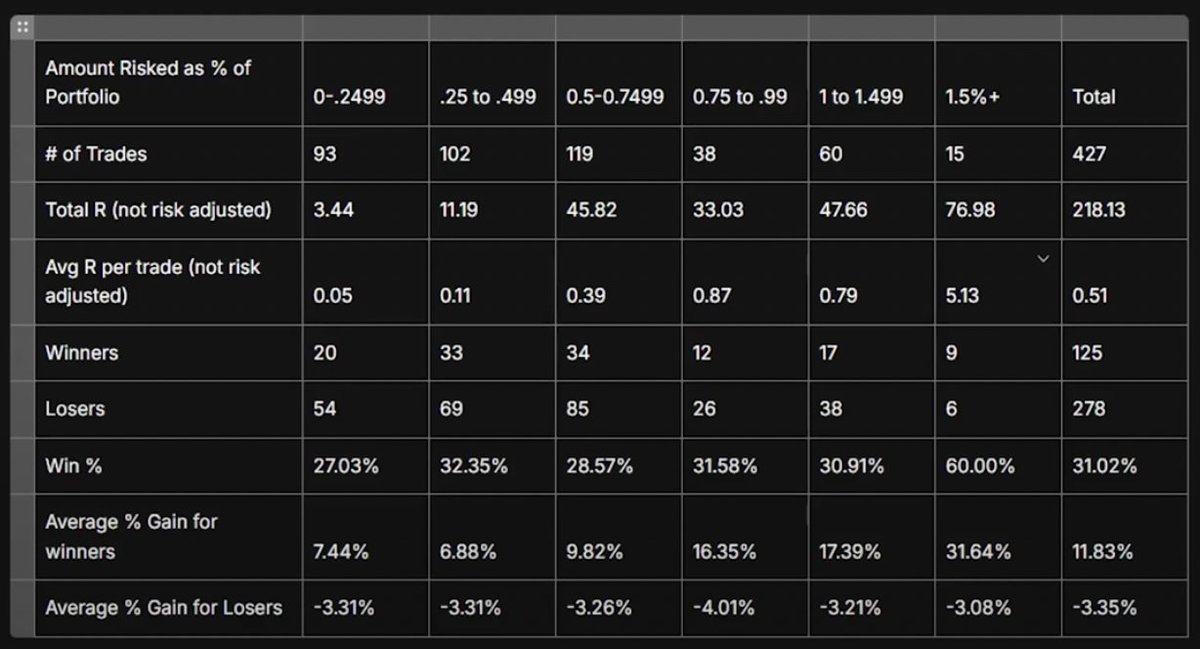
He keeps it simple by using the 10-day moving average as his stop. Rather than constantly watching the trade, he checks at the end of the day—if the stock closes above the 10-day, he holds; if it closes below, he exits. In one case, using this trailing stop would have added 77R to his gains.
Overall, his results could have been up 200% more had he used a longer-term moving average.
He keeps it simple by using the 10-day moving average as his stop. Rather than constantly watching the trade, he checks at the end of the day—if the stock closes above the 10-day, he holds; if it closes below, he exits. In one case, using this trailing stop would have added 77R to his gains.
Overall, his results could have been up 200% more had he used a longer-term moving average.
Position Sizing by Risk Percentage
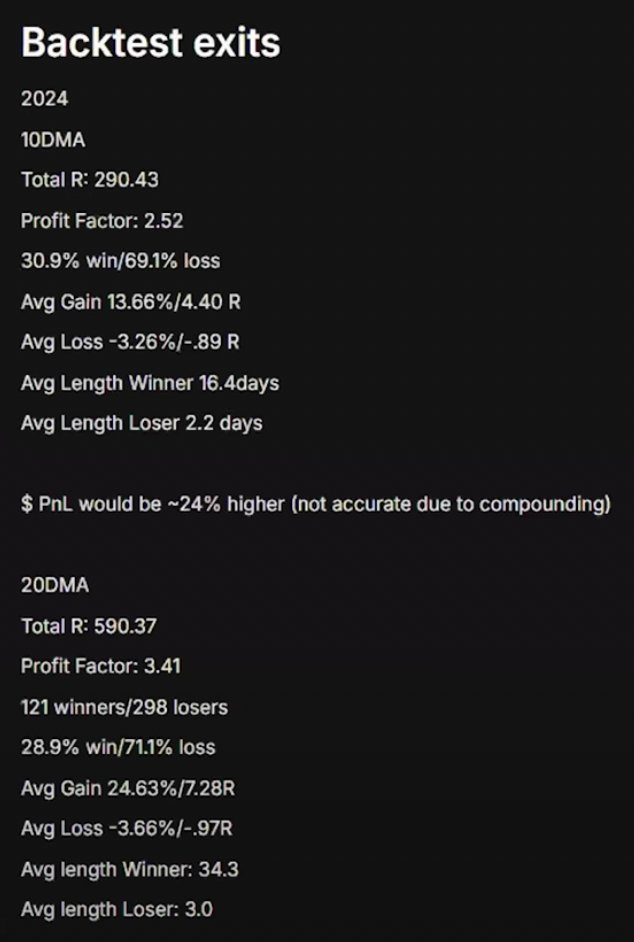
He doesn’t think of position sizing in terms of a fixed percentage of his account. Instead, he focuses on risk per trade—whether it’s 1%, 2%, or 0.5% of his capital. On a 1% risk trade, he might allocate 100% of his account, depending on the setup.
Handling a Losing Streak
March was a tough month, with 27 losing trades in a row. However, he quickly recognized the pattern and aggressively cut his position size. Earlier in his career, a streak like this could have easily led to a 35% drawdown.
He doesn’t think of position sizing in terms of a fixed percentage of his account. Instead, he focuses on risk per trade—whether it’s 1%, 2%, or 0.5% of his capital. On a 1% risk trade, he might allocate 100% of his account, depending on the setup.
Handling a Losing Streak
March was a tough month, with 27 losing trades in a row. However, he quickly recognized the pattern and aggressively cut his position size. Earlier in his career, a streak like this could have easily led to a 35% drawdown.
Reflecting on Trading Mistakes
One of his biggest trading mistakes was buying SVXY without a stop—something he had never done before. When it started gapping down, he froze, watching it tick lower, completely stunned. Unable to act.
Eventually, he managed to exit, but the experience left him in complete shock, unable to believe what had just happened.
In market, any mistake that you make consistently will eventually cost you it's just a matter of time.
One of his biggest trading mistakes was buying SVXY without a stop—something he had never done before. When it started gapping down, he froze, watching it tick lower, completely stunned. Unable to act.
Eventually, he managed to exit, but the experience left him in complete shock, unable to believe what had just happened.
In market, any mistake that you make consistently will eventually cost you it's just a matter of time.
Boom & Bust vs. Risk-Averse Traders
Minervini often says there are two types of traders: boom-and-bust or risk-averse.
Both can be profitable or unprofitable, but boom-and-bust traders experience extreme swings. He was a profitable boom-and-buster, but the constant cycle of huge gains followed by major losses was emotionally exhausting.
The key breakthrough for him was learning to control drawdowns through position sizing and progressive exposure, where bet sizes increase with wins and decrease with losses.
Minervini often says there are two types of traders: boom-and-bust or risk-averse.
Both can be profitable or unprofitable, but boom-and-bust traders experience extreme swings. He was a profitable boom-and-buster, but the constant cycle of huge gains followed by major losses was emotionally exhausting.
The key breakthrough for him was learning to control drawdowns through position sizing and progressive exposure, where bet sizes increase with wins and decrease with losses.
Trading Full-Time vs. Trading for a Living
Trading full-time means having financial support or a salary, while trading for a living means relying solely on trading profits to pay the bills. The latter comes with significant financial pressure, making it a much riskier path—one he wouldn’t recommend.
Trading full-time means having financial support or a salary, while trading for a living means relying solely on trading profits to pay the bills. The latter comes with significant financial pressure, making it a much riskier path—one he wouldn’t recommend.
Background
Leap of Faith
He decided to pursue poker full-time because he was still playing and earning more from it than at his job. It was a significant decision, as there was no guaranteed salary, no 401K, and no annual raises to match inflation. It meant being entirely on his own. And he pursued it for 10 years, playing poker full time.
Leap of Faith
He decided to pursue poker full-time because he was still playing and earning more from it than at his job. It was a significant decision, as there was no guaranteed salary, no 401K, and no annual raises to match inflation. It meant being entirely on his own. And he pursued it for 10 years, playing poker full time.
Parallels between Trading & Poker
He enjoyed thoroughly analyzing his poker statistics, diving deep into the numbers to gain insights and improve his gameplay.
Also getting indulged into overtrading/playing until winning
He would play for 15 hours straight across 16 tables, desperately trying to recover losses. Highlighting by the eighth hour, their performance declines significantly—they're no longer playing their A-game.
He enjoyed thoroughly analyzing his poker statistics, diving deep into the numbers to gain insights and improve his gameplay.
Also getting indulged into overtrading/playing until winning
He would play for 15 hours straight across 16 tables, desperately trying to recover losses. Highlighting by the eighth hour, their performance declines significantly—they're no longer playing their A-game.
This relentless cycle often leads to deeper losses, making it even harder to recover. One of the biggest improvements in his gameplay came from recognizing and overcoming this destructive pattern.
Loading suggestions...