

SLEEPING POSITIONS: HOW THEY AFFECT YOUR HEALTH
Ever woken up from sleep and you’re feeling like you just wrestled a ghost in your sleep or maybe you just left a boxing ring?
To think that you went to bed fine, but on waking, you realize your neck is stiff, your back is sore, and you’re questioning so many factors.
Well, sorry about that. But what if I told you that your sleeping position might be to blame?
The way you sleep goes beyond making you feel refreshed, it can affect everything from your digestion to breathing, to your spine health, and even blood circulation.
Let’s learn this together 👇
Ever woken up from sleep and you’re feeling like you just wrestled a ghost in your sleep or maybe you just left a boxing ring?
To think that you went to bed fine, but on waking, you realize your neck is stiff, your back is sore, and you’re questioning so many factors.
Well, sorry about that. But what if I told you that your sleeping position might be to blame?
The way you sleep goes beyond making you feel refreshed, it can affect everything from your digestion to breathing, to your spine health, and even blood circulation.
Let’s learn this together 👇
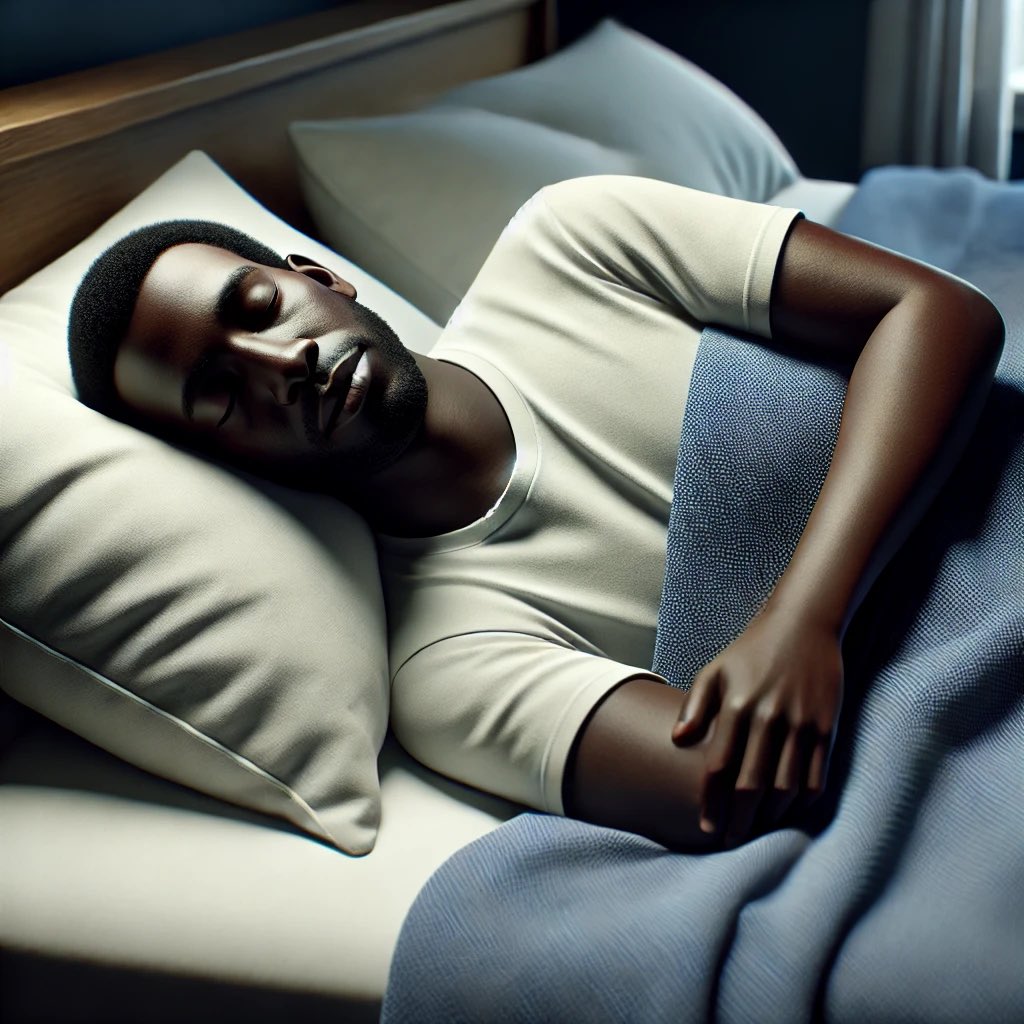
BACK SLEEPING (Supine Position)
Often times, lying on your back is seen as the gold standard especially for spinal alignment.
By sleeping this way, your head, neck, and spine maintain a neutral position, which reduces unnecessary pressure on your joints.
It also prevents facial wrinkles, as your pillow is not rubbing against your skin all night.
For people with acid reflux, it’s a good position for you and you could simply elevate your head slightly, and gravity does the rest.
Often times, lying on your back is seen as the gold standard especially for spinal alignment.
By sleeping this way, your head, neck, and spine maintain a neutral position, which reduces unnecessary pressure on your joints.
It also prevents facial wrinkles, as your pillow is not rubbing against your skin all night.
For people with acid reflux, it’s a good position for you and you could simply elevate your head slightly, and gravity does the rest.
However, this position is not a suitable choice for everyone.
Back sleeping can worsen snoring and for people with sleep apnea, it’s a no-go area because passage of air through the throat might be difficult.
So, If your partner always complains about your snoring, you might want to consider changing this position.
Back sleeping can worsen snoring and for people with sleep apnea, it’s a no-go area because passage of air through the throat might be difficult.
So, If your partner always complains about your snoring, you might want to consider changing this position.
SIDE SLEEPING (Lateral Decubitus Position)
For most people, sleeping on their sides is like a natural position.
Unlike the supine position, sleeping on your side is a game-changer for reducing snoring and promoting proper spinal alignment.
This is especially if you tuck a pillow between your knees.
It can also aid digestion and help with acid reflux.
For most people, sleeping on their sides is like a natural position.
Unlike the supine position, sleeping on your side is a game-changer for reducing snoring and promoting proper spinal alignment.
This is especially if you tuck a pillow between your knees.
It can also aid digestion and help with acid reflux.

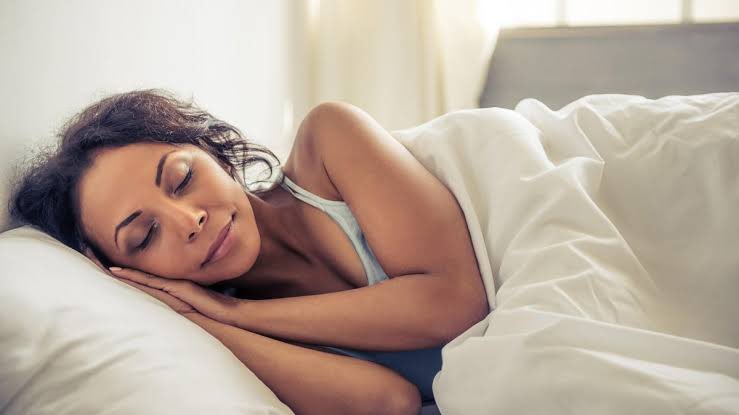
It’s also good for circulation and is often recommended during pregnancy to improve blood flow to the baby.
Despite all these benefits, side sleeping isn’t perfect.
If you’re always sleeping on one side, you might notice some stiffness in your shoulders or hips, and curling up too tightly can put a strain on your lower back and your neck.
Despite all these benefits, side sleeping isn’t perfect.
If you’re always sleeping on one side, you might notice some stiffness in your shoulders or hips, and curling up too tightly can put a strain on your lower back and your neck.
STOMACH SLEEPING (Prone Position)
Some people stick to sleeping on their stomachs, especially those who struggle with snoring.
The reason is simple ; it helps to keep the airway more open and allow air to pass through.
Just like other positions, it had its disadvantages. x.com
Some people stick to sleeping on their stomachs, especially those who struggle with snoring.
The reason is simple ; it helps to keep the airway more open and allow air to pass through.
Just like other positions, it had its disadvantages. x.com
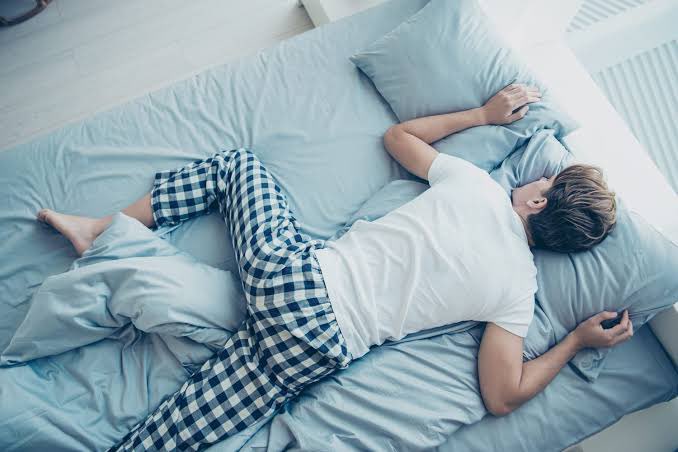
Sleeping on your stomach puts your neck in an awkward, twisted position for hours, which can lead to long-term stiffness and discomfort.
Your spine also struggles to stay neutral in this position, increasing the risk of back pain over time.
If this is how you sleep, you may consider using a very flat pillow or not using any at all. This is to reduce some of the strain.
Your spine also struggles to stay neutral in this position, increasing the risk of back pain over time.
If this is how you sleep, you may consider using a very flat pillow or not using any at all. This is to reduce some of the strain.
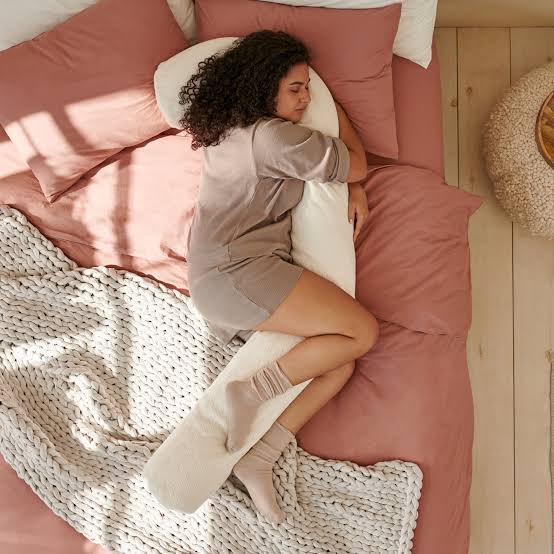
THE FETAL POSITION; Modified Lateral Decubitus Position
Sleeping curled up like a baby can feel incredibly comfortable, and for some, it aid in relieving lower back pain.
It’s also a cool position for pregnant women, as it enhances circulation and reduces pressure on major organs.
However, your body still needs room to breathe and stretch, even while you sleep.
if you curl up too much, your breathing coukd be affected and you may also experience joint stiffness.
Sleeping curled up like a baby can feel incredibly comfortable, and for some, it aid in relieving lower back pain.
It’s also a cool position for pregnant women, as it enhances circulation and reduces pressure on major organs.
However, your body still needs room to breathe and stretch, even while you sleep.
if you curl up too much, your breathing coukd be affected and you may also experience joint stiffness.
STARFISH POSITION (Variational Supine Position)
This is a different type of back sleeping, where you spread your arms and legs out like a starfish.
It’s good position for aligning your spine and also reduces pressure on your joints.
However, it can also worsen snoring and sleep apnea.
And if you have a partner , your partner might not appreciate this.
You're giving "all-space-is-my-space" vibes 😂
This is a different type of back sleeping, where you spread your arms and legs out like a starfish.
It’s good position for aligning your spine and also reduces pressure on your joints.
However, it can also worsen snoring and sleep apnea.
And if you have a partner , your partner might not appreciate this.
You're giving "all-space-is-my-space" vibes 😂
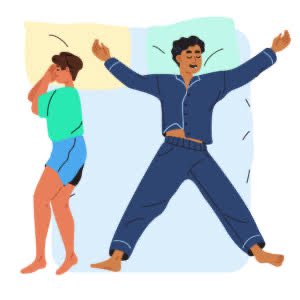
LOG POSITION (Extended Lateral Decubitus Position)
This position describes when you sleep on your side with both arms and legs stretched out straight, making you appear like a log.
This position keeps the spine aligned and reduces acid reflux.
However, if your mattress doesn’t provide good support, you could wake up with numb arms or stiff joints.
You can stuck a pillow between the knees to keep your hips aligned.
This position describes when you sleep on your side with both arms and legs stretched out straight, making you appear like a log.
This position keeps the spine aligned and reduces acid reflux.
However, if your mattress doesn’t provide good support, you could wake up with numb arms or stiff joints.
You can stuck a pillow between the knees to keep your hips aligned.
FREEFALL POSITION (Extended Prone Position)
This is when you sleep on your stomach with your arms stretched out, hugging your pillow.
This might feel good at initially, but it puts pressure on your neck and back, making it one of the worst sleep positions for your spinal health.
If you’re a freefall sleeper, consider using a very soft pillow or turning your head from side to side throughout the night to avoid stiffness.
The issue is that your sleep would be continuously interrupted with those frequent turning
This is when you sleep on your stomach with your arms stretched out, hugging your pillow.
This might feel good at initially, but it puts pressure on your neck and back, making it one of the worst sleep positions for your spinal health.
If you’re a freefall sleeper, consider using a very soft pillow or turning your head from side to side throughout the night to avoid stiffness.
The issue is that your sleep would be continuously interrupted with those frequent turning
SO, WHICH POSITION IS BEST?
No single position is considered the best as it depends on your health condition and general well-being.
-If you struggle with snoring or acid reflux, try sleeping on your left side.
-Dtrigging with back pain? Back sleeping or fetal position might be helpful.
-Are you pregnant? Left-side sleeping is your best bet.
-Having a neck pain? Avoid stomach sleeping.
No single position is considered the best as it depends on your health condition and general well-being.
-If you struggle with snoring or acid reflux, try sleeping on your left side.
-Dtrigging with back pain? Back sleeping or fetal position might be helpful.
-Are you pregnant? Left-side sleeping is your best bet.
-Having a neck pain? Avoid stomach sleeping.
Your sleep environment also matters.
A good mattress and pillows can be helpful
So, how do you sleep, and has it affected your body? Drop me a comment!
Did you learn from this post?
Join my WhatsApp channel for more
whatsapp.com
Learning Never Ends🫶
A good mattress and pillows can be helpful
So, how do you sleep, and has it affected your body? Drop me a comment!
Did you learn from this post?
Join my WhatsApp channel for more
whatsapp.com
Learning Never Ends🫶

Loading suggestions...