
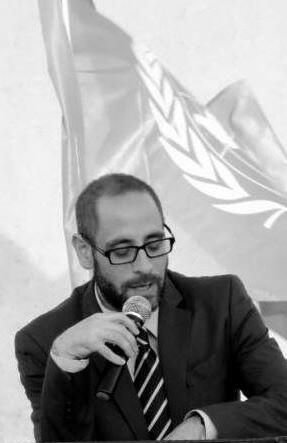
EXCLUSIVE: Within the extensive dossier of files presented to the International Court of Justice @CIJ_ICJ in the pending advisory proceeding oh the presence and activities of UN agencies and humanitarian organizations in occupied Palestinian territory, is one document that tells the story of Israel's prolonged, acquisitive and unlawful occupation. A thread:


The year is 1980, Israel's ambassador to the UN, Dr. Yehuda Blum, accords to @UNDP, set out to commence operations in occupied Palestinian territory, the privileges and immunities of the 1946 Convention on the Privileges and Immunities of the United Nations. However, 12 years before that, Blum set the course for Israel's attempt to colonize and permanently acquire Palestinian territory, to the absolute detriment of the people UNDP was to serve.

The year is 1968, Dr. Yehuda Blum, a young Lecturer at the Hebrew University of Jerusalem, penned the article, “The Missing Reversioner: Reflections on the Status of Judea and Samaria." The article, and its author - little known outside specialized legal circles - became the centerpiece of Israel’s official position on the occupied Palestinian territory, and the engine of its prolonged presence in the West Bank and Gaza.
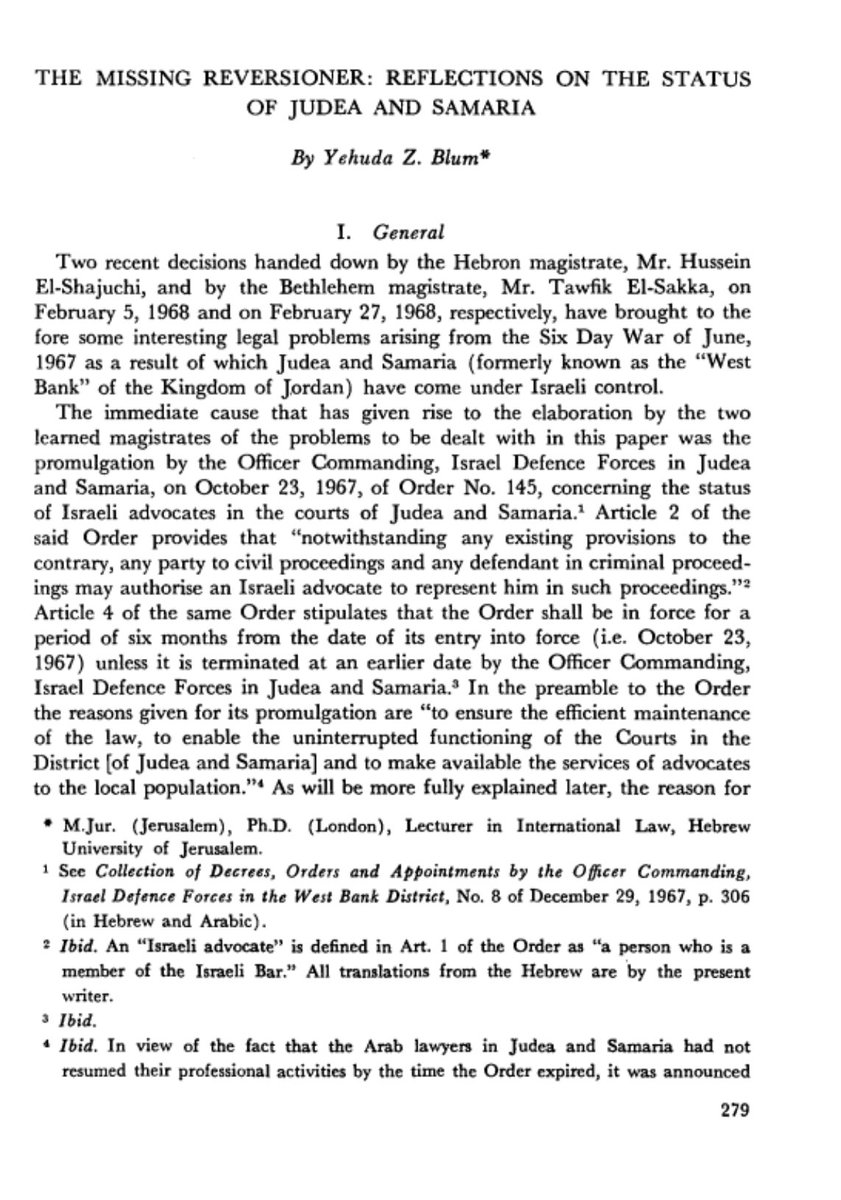
Dr. Blum argued that the applicability of the laws of occupation depends on the existence of “reversionary rights” of the ousted legitimate government to the territory in question, and the occupier’s lack of territorial claims over the area under its control. Blum proceeded to argue, conveniently ignoring the existence of the Palestinian people, that Jordan and Egypt had no valid claim to the West Bank and Gaza, and therefore “those rules of belligerent occupation directed to safeguarding that sovereign’s reversionary rights had no application to Israel’s control of the West Bank and, for similar reasons, also to Gaza."
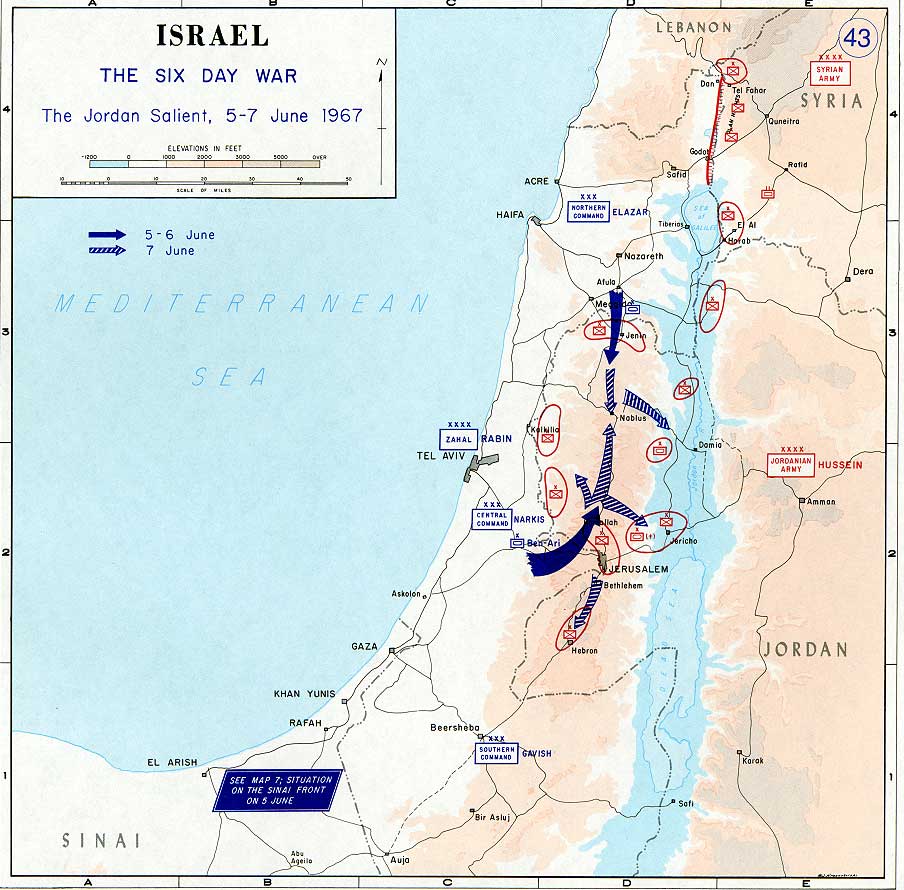
Within a month of its publication, Meir Shamgar, then the Attorney General of Israel (and later, Chief Justice of its Supreme Court), invoked Blum's argument, asserting that the "territorial position of the West Bank and Gaza is thus sui generis.” In the words of young Blum, now propelled into a diplomatic career, "no State can make out a legal claim that is equal to that of Israel, this relative superiority of Israel may be sufficient, under international law, to make Israel possession of Judea and Samaria virtually indistinguishable from an absolute title, to be valid erga omnes.”
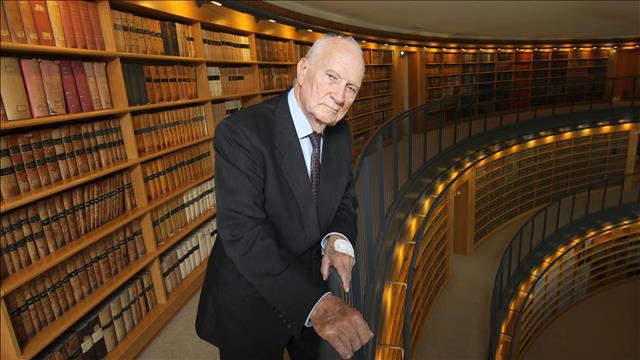
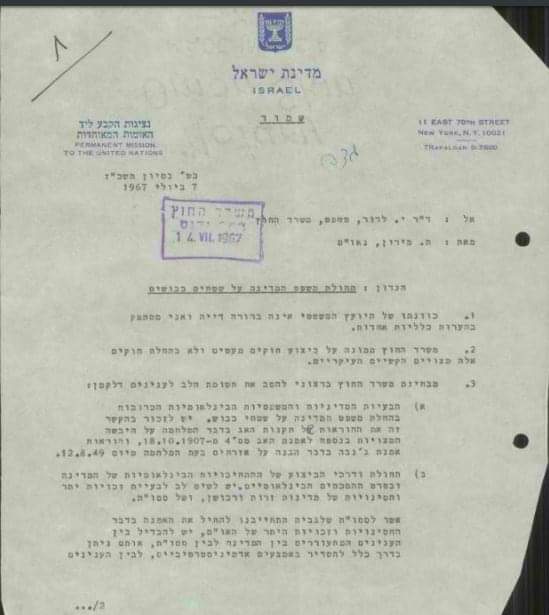
Going back one year to June 1967, Shamgar had on his desk a classified memo from the Legal Advisor to the Israeli Foreign Ministery, Theodor Meron (who much later will become President of the International Criminal Tribunal for the Former Yugoslavia, and more recently advisor to the @IntlCrimCourt prosecutor in the case of Hamas and Israeli officials wanted for war crimes and crimes against humanity). The memo, that I recovered during research in 2019, applies the Hague Regulations of 1907 and the Fourth Geneva Convention to the territory just occupied by Israel, and recalls the prohibition on annexation. Some two months later, Meron writes to Israel's Prime Minister, reiterating the applicability of the Fourth Geneva Convention, and advises that settlements would be in patent breach of international humanitarian law.


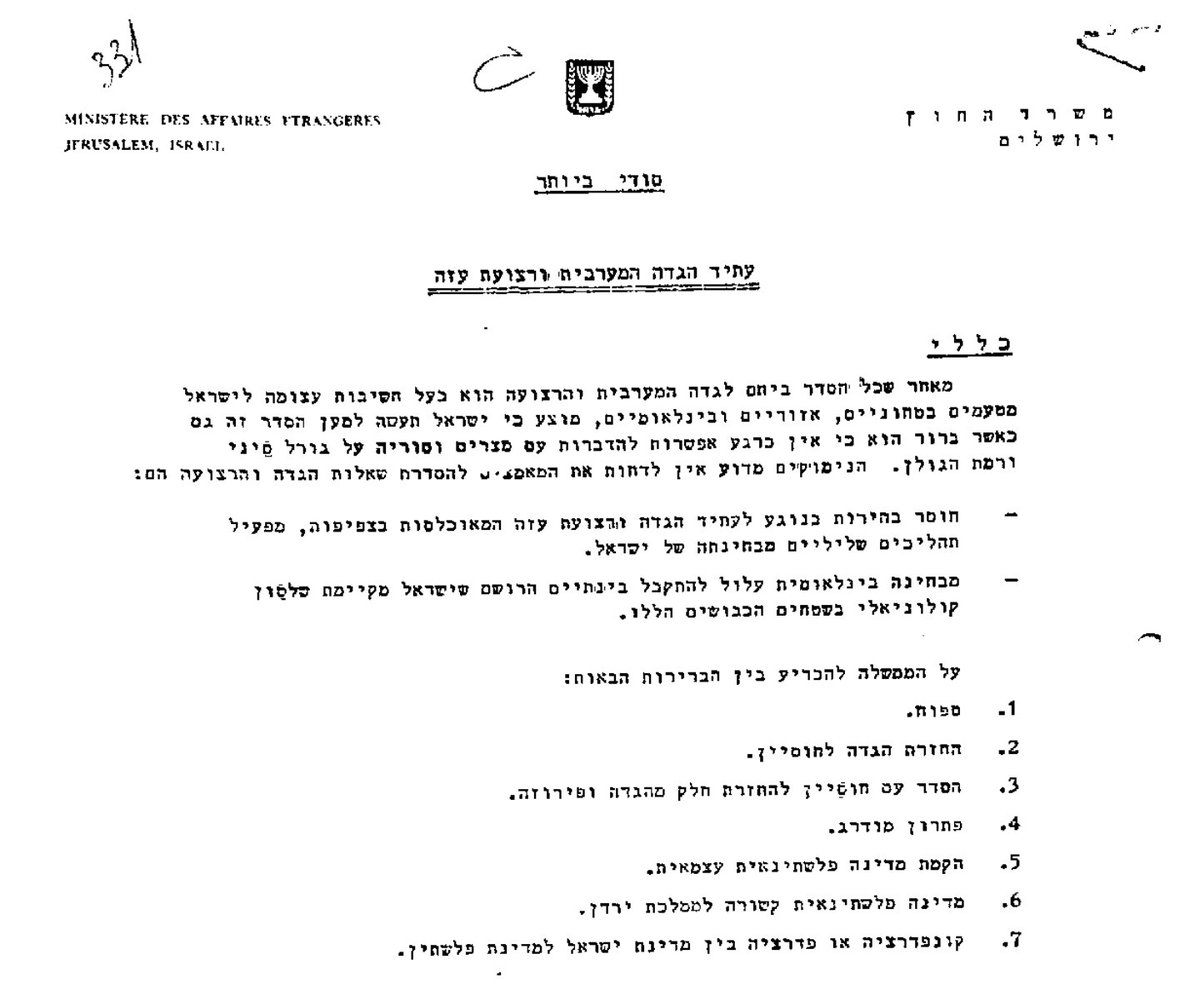
At the same time, Shamgar, who later endorsed Blum's usurping of the sovereign right of the Palestinian people, attended a meeting of the Directors General of Israeli ministries gathered at the Foreign Ministery, and prepared this top-secret document, tilted 'The Future of the West Bank [before Israel began referring to it as 'Judea and Samaria'] and the Gaza Strip.'
The classified paper, where authors recognize the policy options suggested may be in serious breach of international law, outlines the following options:
1. Annexation.
2. Returning the West Bank to Hussein (of Jordan).
3. An arrangement with Hussein for the partial return of the West Bank and its demilitarization.
4. An 'Interim Solution,' by which Palestinians in the West Bank will enjoy a level of autonomous rule, and in a peaceful future may decide their political status (including a confederacy with Israel).
5. A politically independent Palestinian State.
6. A Palestine-Jordan Confederacy.
7. A Palestine-Israel Federation (of two autonomous cantons) or Confederation of two States.
The classified paper, where authors recognize the policy options suggested may be in serious breach of international law, outlines the following options:
1. Annexation.
2. Returning the West Bank to Hussein (of Jordan).
3. An arrangement with Hussein for the partial return of the West Bank and its demilitarization.
4. An 'Interim Solution,' by which Palestinians in the West Bank will enjoy a level of autonomous rule, and in a peaceful future may decide their political status (including a confederacy with Israel).
5. A politically independent Palestinian State.
6. A Palestine-Jordan Confederacy.
7. A Palestine-Israel Federation (of two autonomous cantons) or Confederation of two States.
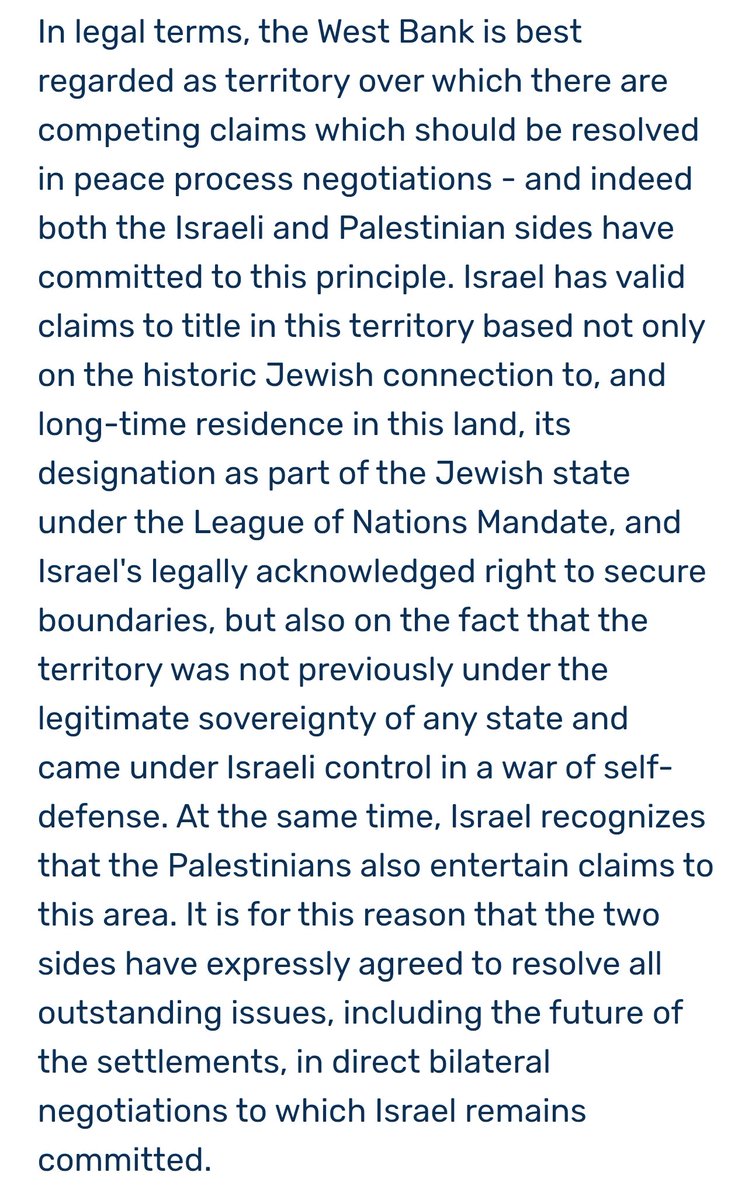
Head back to 2025, on the website of Israel's Foreign Ministery, Blum's 'missing reversioner' doctrine is used to present Palestinian inalienable rights to permanent sovereignty, territorial integrity and political independence as "competing claims." x.com
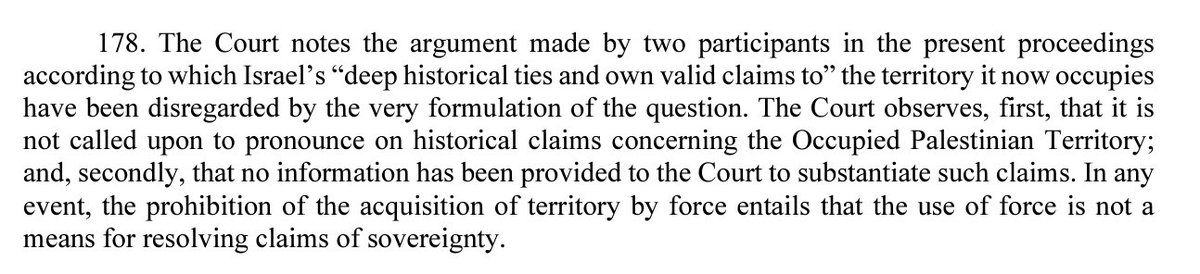
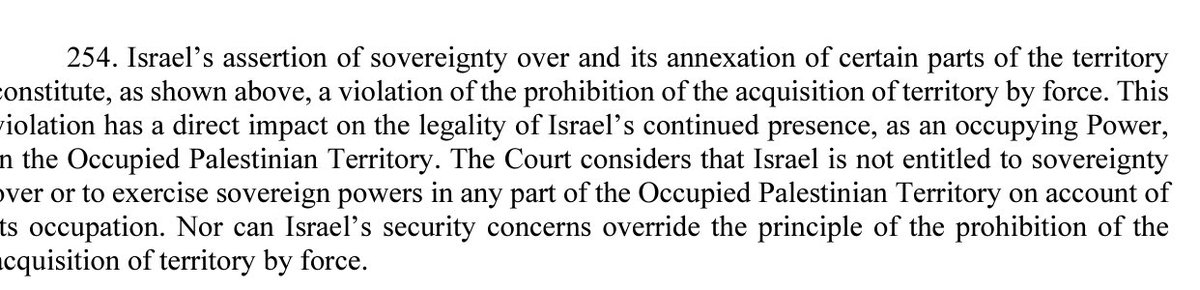
In July 2024 the @CIJ_ICJ found Israel's presence in occupied Palestinian territory to be unlawful, ordaining its unconditional and rapid withdrawal. The Court authoritatively dismissed Blum's 'missing reversioner' doctrine as incompatible with the prohibition on the acquisition of territory by force, and upheld Palestinian sovereign rights in the West Bank, including East Jerusalem, and the Gaza Strip.

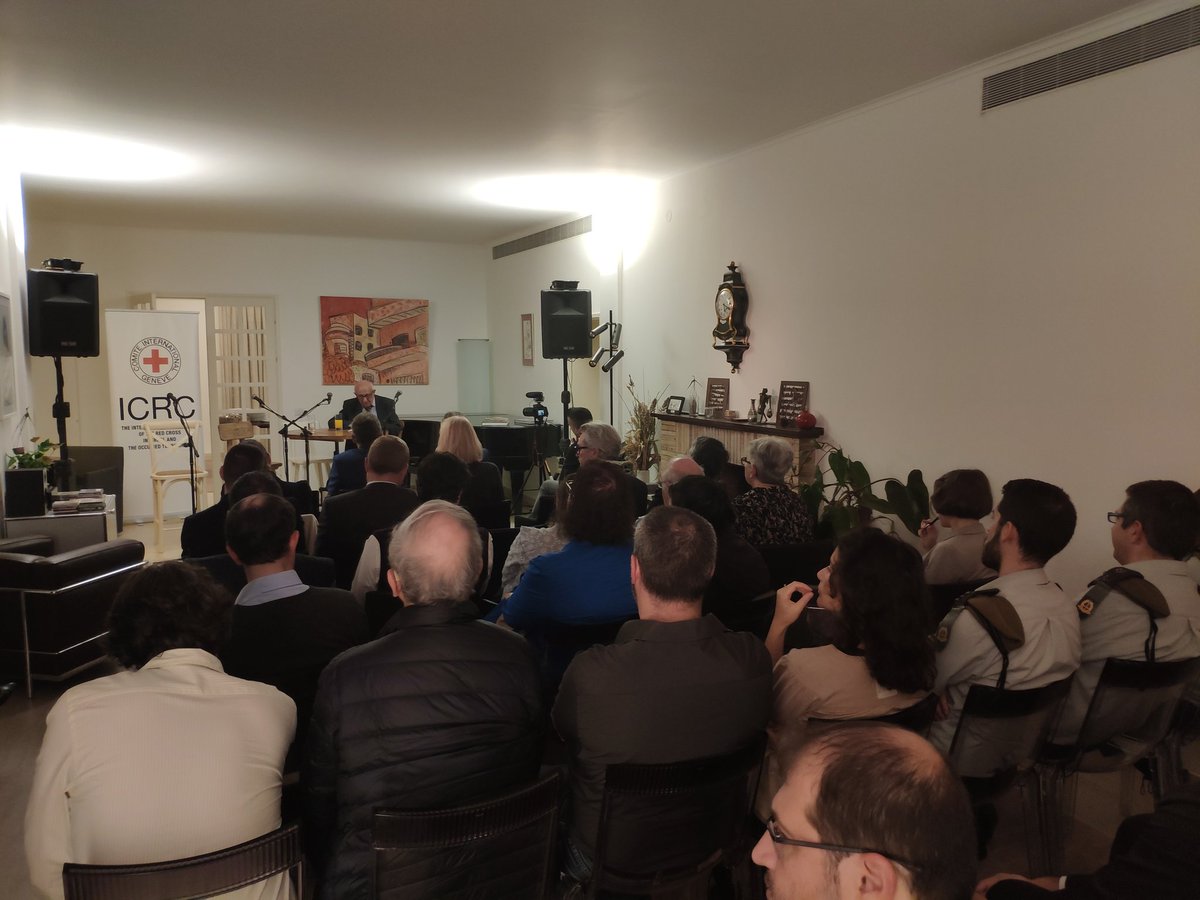
Some years ago I was listening to Judge Meron refer to the memos he authored in 1967 in the service of the Israeli Ministry of Foreign Affairs as unambiguous. "Settlements in occupied territory, destruction of property, and forced displacement are unlawful, and that remains my legal view." He also, I recall, dismissed Blum's missing reversioner doctrine. Seating in front of me was a Military Advocate General lawyer who would end up defending Israel in the ICJ Genocide Convention case brought by South Africa last year.
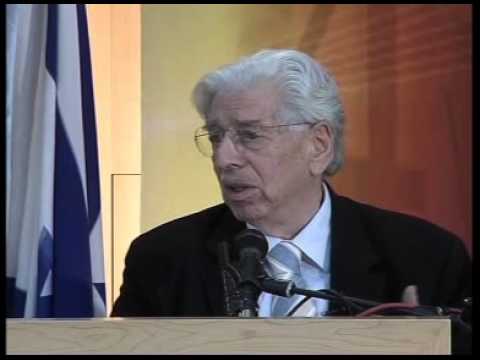
In a lecture he gave 11 years ago, now Prof. Emeritus Blum, regretted the decolonization process that introduced African and Asian nations to the UN General Assembly, and in his words "increased its numbers and lowered its quality." It is appropriate that the UNGA referred to the @CIJ_ICJ in December 2022 a question on the legality of Israel's presence in Palestine, which had the Court - in the 2024 Advisory Opinion - reject Blum's work, as it is appropriate that the UNGA addressed a question to the Court in September 2024 on the presence and activities of impartial humanitarian organizations and UN agencies, including @UNDP, that Blum had invited into occupied Palestinian territory. His signature now forms part of the evidentiary basis for the ICJ to decide on Israel's obligation to agree and facilitate humanitarian relief and development assistance in occupied Palestinian territory. END.
Loading suggestions...