

So, here goes my first #medtwitter #tweetorial …
Why does E.COLI sepsis occur in neonatal galactosemia ?
#pediatrics #tweetiatrician
1/
Why does E.COLI sepsis occur in neonatal galactosemia ?
#pediatrics #tweetiatrician
1/

*Briefly, deficient activity of one of three enzymes results in elevated blood galactose concentration (galactosemia)
*Classic galactosemia, caused by complete deficiency of galactose-1-phosphate uridyl transferase (GALT), is the most common and severe type. #FOAMed
2/
*Classic galactosemia, caused by complete deficiency of galactose-1-phosphate uridyl transferase (GALT), is the most common and severe type. #FOAMed
2/
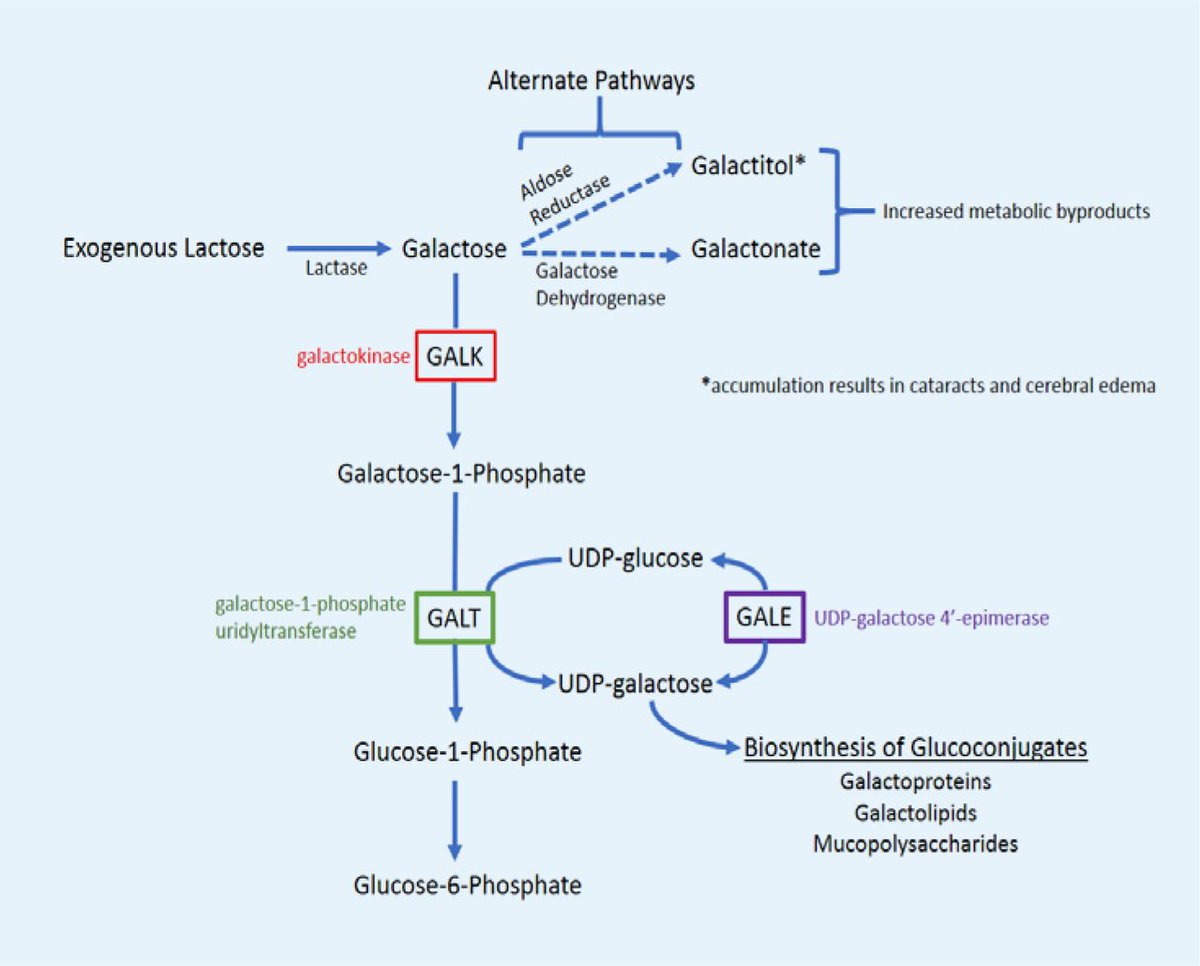
*It is an autosomal-recessive disorder
*Galactose is a sugar found primarily in human and bovine milk and milk products. #FOAMPED
3/
*Galactose is a sugar found primarily in human and bovine milk and milk products. #FOAMPED
3/

Now, how galactosemia related to septicemia?
A review of the pertinent literature, shows an association of galactosemia with life-threatening infection, particularly E.coli sepsis #MedEd
4/
A review of the pertinent literature, shows an association of galactosemia with life-threatening infection, particularly E.coli sepsis #MedEd
4/

Here is how..
1. The substrate for the bacteria would be accumulation of galactose in the tissue especially only lactose-fermenting organisms ex E.COLI
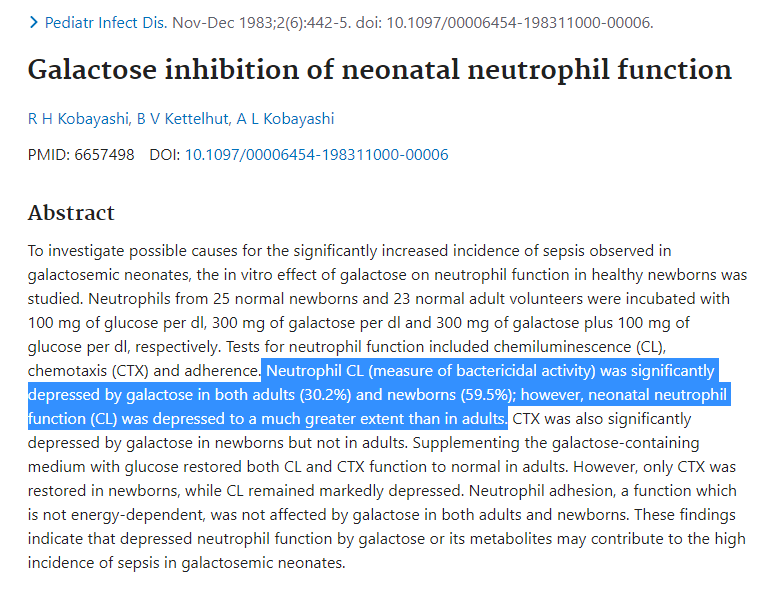
2.inhibition of leucocyte bactericidal activity secondary to impairment of cellular release of superoxide ion by galactose
5/
1. The substrate for the bacteria would be accumulation of galactose in the tissue especially only lactose-fermenting organisms ex E.COLI
2.inhibition of leucocyte bactericidal activity secondary to impairment of cellular release of superoxide ion by galactose
5/
study of the in vitro effect of galactose on neutrophil function in healthy newborns -
6/
6/
I welcome and encourage feedback, corrections, and additions!
7/
END
inspired by @tony_breu @HannahRAbrams @MedTweetorials @AvrahamCooperMD @apsmunro
sources -
academic.oup.com
apims.net
pubmed.ncbi.nlm.nih.gov
7/
END
inspired by @tony_breu @HannahRAbrams @MedTweetorials @AvrahamCooperMD @apsmunro
sources -
academic.oup.com
apims.net
pubmed.ncbi.nlm.nih.gov

Loading suggestions...