

1/🧵
Why does chronic alcohol use cause macrocytosis?
Alcohol's ability to enlarge red blood cells (RBCs) has puzzled me ever since I learned about this association, but assumed it somehow poisons the bone marrow.
The answer is not so simple.
#medtwitter #tweetorial
Why does chronic alcohol use cause macrocytosis?
Alcohol's ability to enlarge red blood cells (RBCs) has puzzled me ever since I learned about this association, but assumed it somehow poisons the bone marrow.
The answer is not so simple.
#medtwitter #tweetorial

2/
Clinicians in the 1930s first observed that patients with alcohol-related liver disease had RBC macrocytosis (defined currently as a mean corpuscular volume > 96 fL).
jamanetwork.com
Clinicians in the 1930s first observed that patients with alcohol-related liver disease had RBC macrocytosis (defined currently as a mean corpuscular volume > 96 fL).
jamanetwork.com

3/
Macrocytosis associates with excessive chronic alcohol use in general, regardless of whether liver disease is also present.
💥A dose response has even been observed, with more daily consumption associated with higher RBC mean corpuscular volume.
pubmed.ncbi.nlm.nih.gov
Macrocytosis associates with excessive chronic alcohol use in general, regardless of whether liver disease is also present.
💥A dose response has even been observed, with more daily consumption associated with higher RBC mean corpuscular volume.
pubmed.ncbi.nlm.nih.gov

4/
So why does chronic alcohol use cause RBC macrocytosis?
Interestingly, a 1993 study found that incubating myeloid or lymphoid cells in culture w/ ethanol had no effect on cell size.
⚡️This suggested alcohol doesn't directly cause RBC macrocytosis.
pubmed.ncbi.nlm.nih.gov
So why does chronic alcohol use cause RBC macrocytosis?
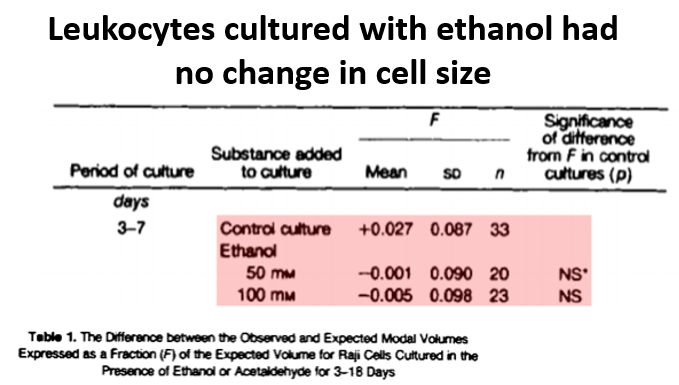
Interestingly, a 1993 study found that incubating myeloid or lymphoid cells in culture w/ ethanol had no effect on cell size.
⚡️This suggested alcohol doesn't directly cause RBC macrocytosis.
pubmed.ncbi.nlm.nih.gov
5/
However, in the same study, when leukocytes were incubated with acetaldehyde (a product of alcohol metabolism by the liver and gut) they notably grew in size.
🔑This implicated acetaldehyde as the likely cause of alcohol-induced macrocytosis.
But by what mechanism?
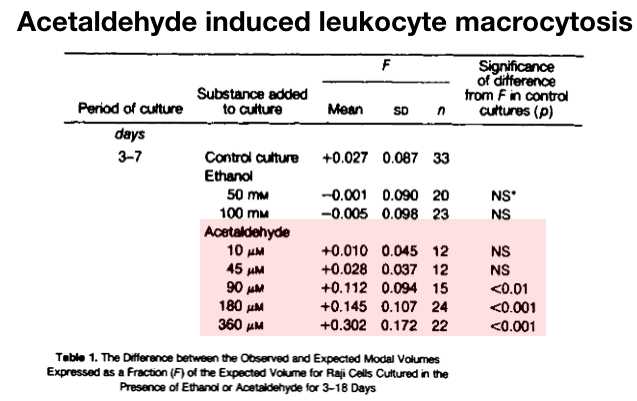
However, in the same study, when leukocytes were incubated with acetaldehyde (a product of alcohol metabolism by the liver and gut) they notably grew in size.
🔑This implicated acetaldehyde as the likely cause of alcohol-induced macrocytosis.
But by what mechanism?
6/
There are 2 main reasons for why acetaldehyde (and, by proxy, alcohol) would cause RBCs to swell in size:
🩸 Altered RBC membrane/cytoskeletal composition
🩸 Fluid shifts
pubmed.ncbi.nlm.nih.gov
There are 2 main reasons for why acetaldehyde (and, by proxy, alcohol) would cause RBCs to swell in size:
🩸 Altered RBC membrane/cytoskeletal composition
🩸 Fluid shifts
pubmed.ncbi.nlm.nih.gov
7/
Let's first examine altered RBC membrane composition.
Acetaldehyde cross-links RBC cytoskeletal proteins such as actin and spectrin.
This leads to large, dysfunctional acetaldehyde-cytoskeletal protein adducts (eg proteins clumping together).
pubmed.ncbi.nlm.nih.gov
Let's first examine altered RBC membrane composition.
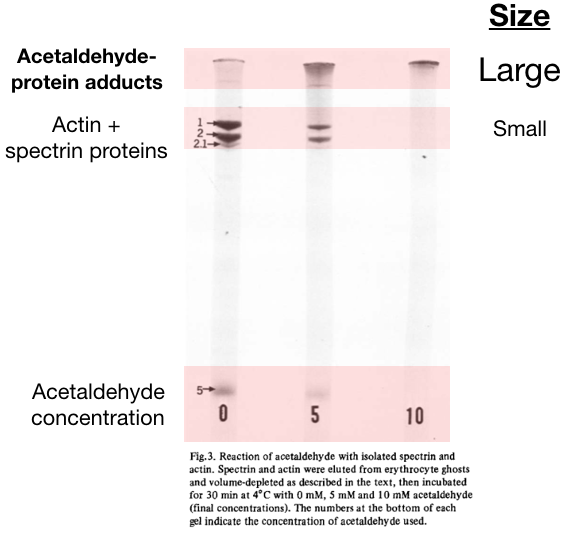
Acetaldehyde cross-links RBC cytoskeletal proteins such as actin and spectrin.
This leads to large, dysfunctional acetaldehyde-cytoskeletal protein adducts (eg proteins clumping together).
pubmed.ncbi.nlm.nih.gov
8/
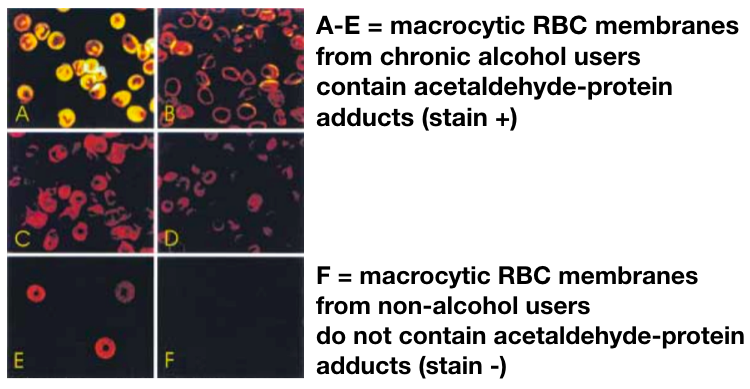
The cell membranes of macrocytic RBCs obtained from chronic alcohol users contain these acetaldehyde-protein adducts.
Macrocytic RBCs from non-alcohol users contain no such acetaldehyde adducts, implying a mechanism specific to chronic alcohol use.
pubmed.ncbi.nlm.nih.gov
The cell membranes of macrocytic RBCs obtained from chronic alcohol users contain these acetaldehyde-protein adducts.
Macrocytic RBCs from non-alcohol users contain no such acetaldehyde adducts, implying a mechanism specific to chronic alcohol use.
pubmed.ncbi.nlm.nih.gov
9/
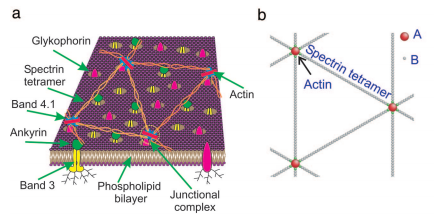
Why would acetaldehyde-cytoskeletal protein adducts affect RBC size?
The cytoskeleton determines RBC size/shape via attachment to the cellular membrane.
💡Dysfunctional acetaldehyde-protein adducts thus likely contribute to macrocytosis.
pubmed.ncbi.nlm.nih.gov
Why would acetaldehyde-cytoskeletal protein adducts affect RBC size?
The cytoskeleton determines RBC size/shape via attachment to the cellular membrane.
💡Dysfunctional acetaldehyde-protein adducts thus likely contribute to macrocytosis.
pubmed.ncbi.nlm.nih.gov
10/
We've established that alcohol-induced acetaldehyde-cytoskeletal protein adducts probably contribute to macrocytosis, via altered RBC membrane/cytoskeletal composition.
Now let's explore another possible cause of macrocytosis: osmotic shifts, which change cellular volume.
We've established that alcohol-induced acetaldehyde-cytoskeletal protein adducts probably contribute to macrocytosis, via altered RBC membrane/cytoskeletal composition.
Now let's explore another possible cause of macrocytosis: osmotic shifts, which change cellular volume.
11/
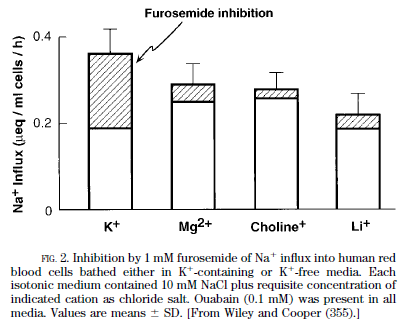
To understand this osmotic mechanism, we need to review how RBC fluid balance is maintained.
💥It turns out that RBCs have furosemide-sensitive Na⁺-K⁺-Cl⁻ membrane co-transporters, just like in the kidney's loop of Henle.
pubmed.ncbi.nlm.nih.gov
To understand this osmotic mechanism, we need to review how RBC fluid balance is maintained.
💥It turns out that RBCs have furosemide-sensitive Na⁺-K⁺-Cl⁻ membrane co-transporters, just like in the kidney's loop of Henle.
pubmed.ncbi.nlm.nih.gov
12/
Stimulating RBC Na⁺-K⁺-Cl⁻ co-transporters would lead to Na⁺ influx and cell swelling/macrocytosis.
And there's circumstantial evidence (from studies in hepatocytes) that acetaldehyde does indeed stimulate Na⁺-K⁺-Cl⁻ co-transporters.
Stimulating RBC Na⁺-K⁺-Cl⁻ co-transporters would lead to Na⁺ influx and cell swelling/macrocytosis.
And there's circumstantial evidence (from studies in hepatocytes) that acetaldehyde does indeed stimulate Na⁺-K⁺-Cl⁻ co-transporters.
13/
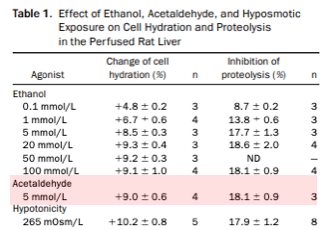
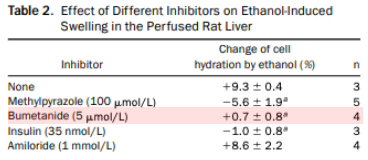
When rat livers were perfused w/ ethanol or acetaldehyde they had a 9% ⬆️ in hepatocyte water/volume.
Bumetanide blocked this effect, supporting the notion that acetaldehyde impacts cell size via ⬆️ Na⁺-K⁺-Cl⁻ co-transporter activity.
pubmed.ncbi.nlm.nih.gov
When rat livers were perfused w/ ethanol or acetaldehyde they had a 9% ⬆️ in hepatocyte water/volume.
Bumetanide blocked this effect, supporting the notion that acetaldehyde impacts cell size via ⬆️ Na⁺-K⁺-Cl⁻ co-transporter activity.
pubmed.ncbi.nlm.nih.gov
14/
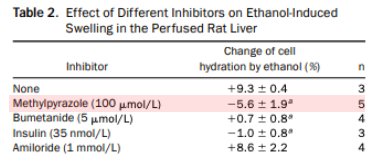
Importantly, when an inhibitor of alcohol dehydrogenase (methylpyrazole) was added to ethanol, no cell swelling occurred.
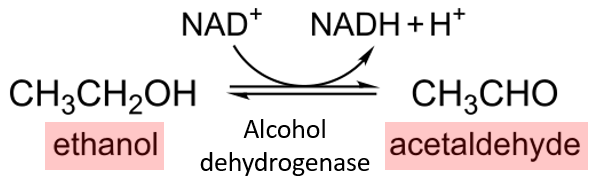
B/c alcohol dehydrogenase generates acetaldehyde from ethanol, this again implicated acetaldehyde as the source of alcohol-associated cell enlargement.
Importantly, when an inhibitor of alcohol dehydrogenase (methylpyrazole) was added to ethanol, no cell swelling occurred.
B/c alcohol dehydrogenase generates acetaldehyde from ethanol, this again implicated acetaldehyde as the source of alcohol-associated cell enlargement.
15/
As @tony_breu noted in 2019 when he tackled this topic, acetaldehyde-induced intracellular protein accumulation may also contribute to RBC macrocytosis (possibly by inhibiting proteolysis).
As @tony_breu noted in 2019 when he tackled this topic, acetaldehyde-induced intracellular protein accumulation may also contribute to RBC macrocytosis (possibly by inhibiting proteolysis).
16/ SUMMARY
🩸Alcohol-induced macrocytosis is mediated by acetaldehyde
🩸Acetaldehyde alters RBC membrane composition by cross-linking cytoskeletal proteins
🩸It also likely stimulates RBC Na⁺-K⁺-Cl⁻ co-transporters, leading to Na⁺ influx and cell swelling
🩸Alcohol-induced macrocytosis is mediated by acetaldehyde
🩸Acetaldehyde alters RBC membrane composition by cross-linking cytoskeletal proteins
🩸It also likely stimulates RBC Na⁺-K⁺-Cl⁻ co-transporters, leading to Na⁺ influx and cell swelling
Loading suggestions...