

The Nasal Microbiome.
What it is and why you should care.
//A Thread//
What it is and why you should care.
//A Thread//
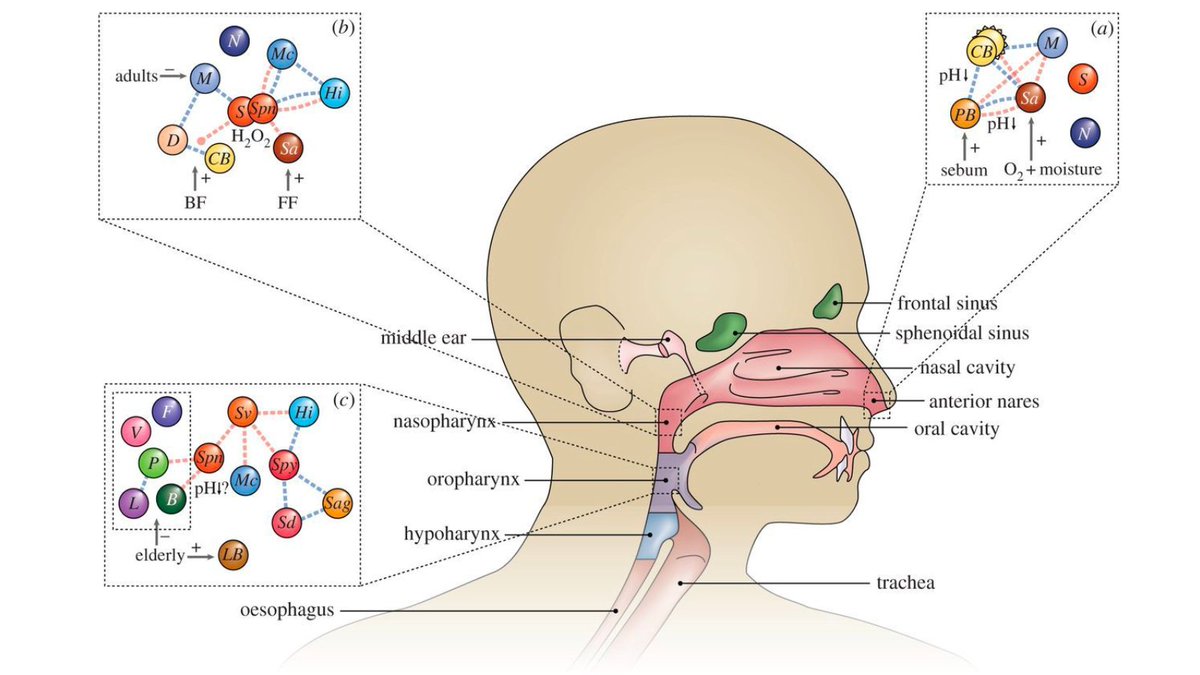
The human body harbors 10-100 trillion microorganisms. The microbes & their genomes located within a particular area are defined as the microbiome.
These microbiomes play a critical role in health and immunity.
These microbiomes play a critical role in health and immunity.
Dysfunctional of microbial composition (dysbiosis) can affect inflammatory conditions, including inflammatory bowel disease, obesity, and allergic disease.
Just as gut microbiota protect the intestinal mucosa through immune regulation, nasal mucosa play a role in immunity.
Just as gut microbiota protect the intestinal mucosa through immune regulation, nasal mucosa play a role in immunity.
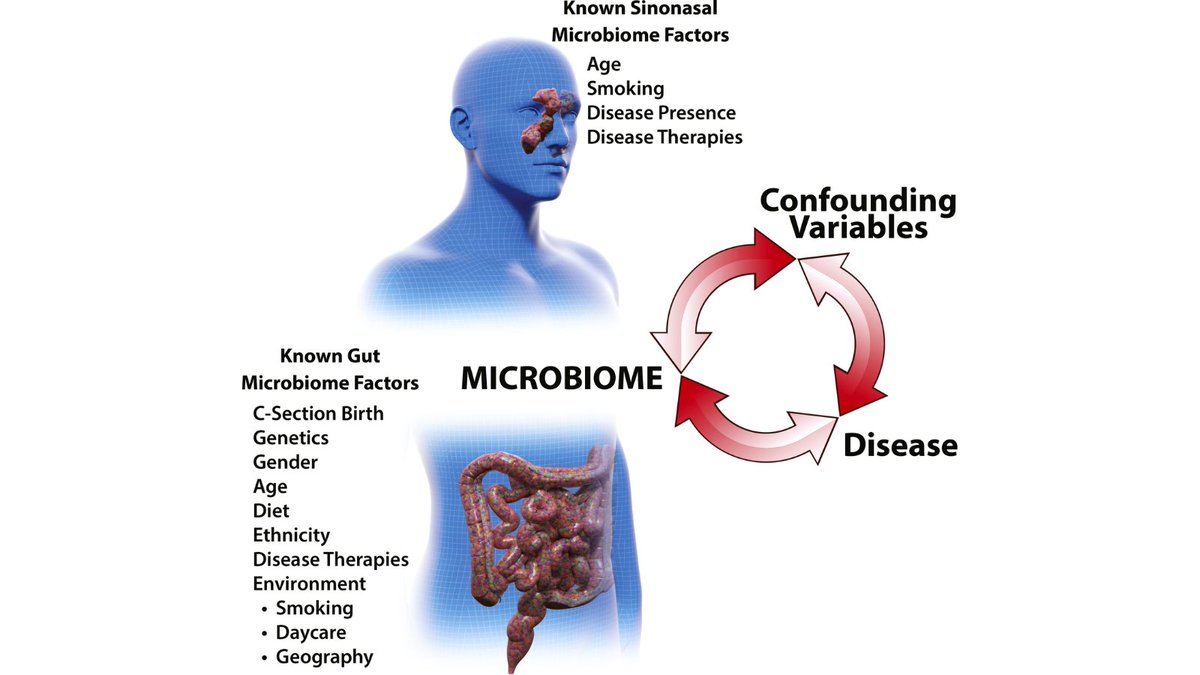
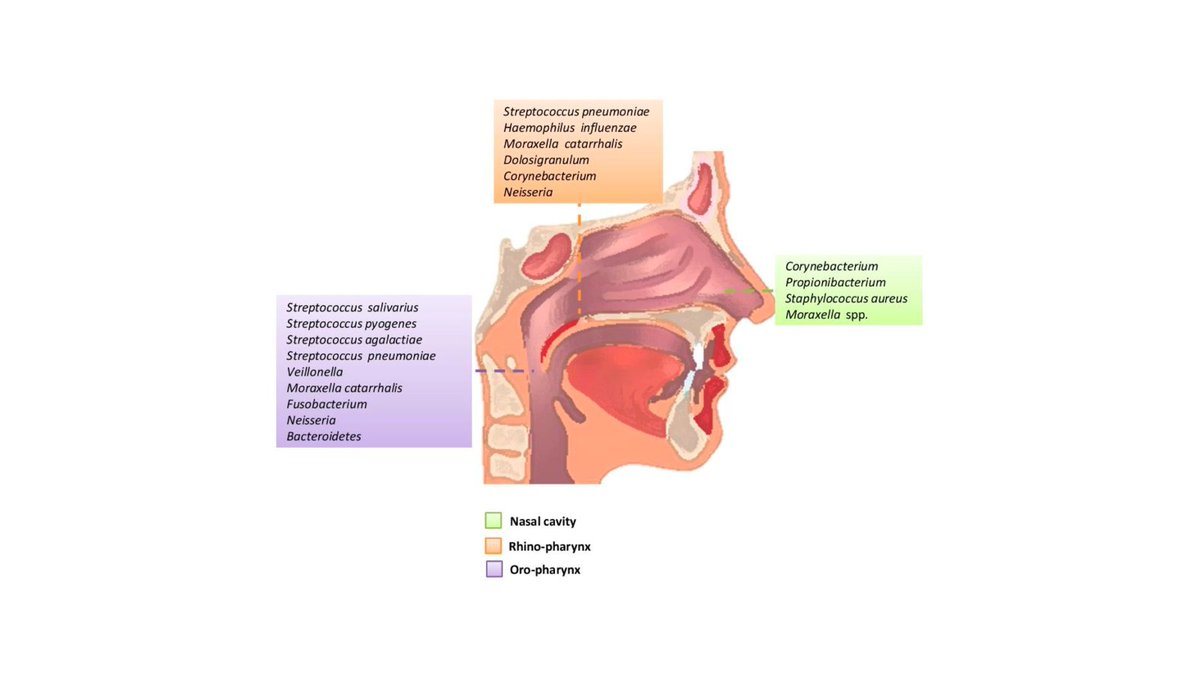
The nasal passages are home to a distinct community of bacterial species, known as the nasal microbiota.
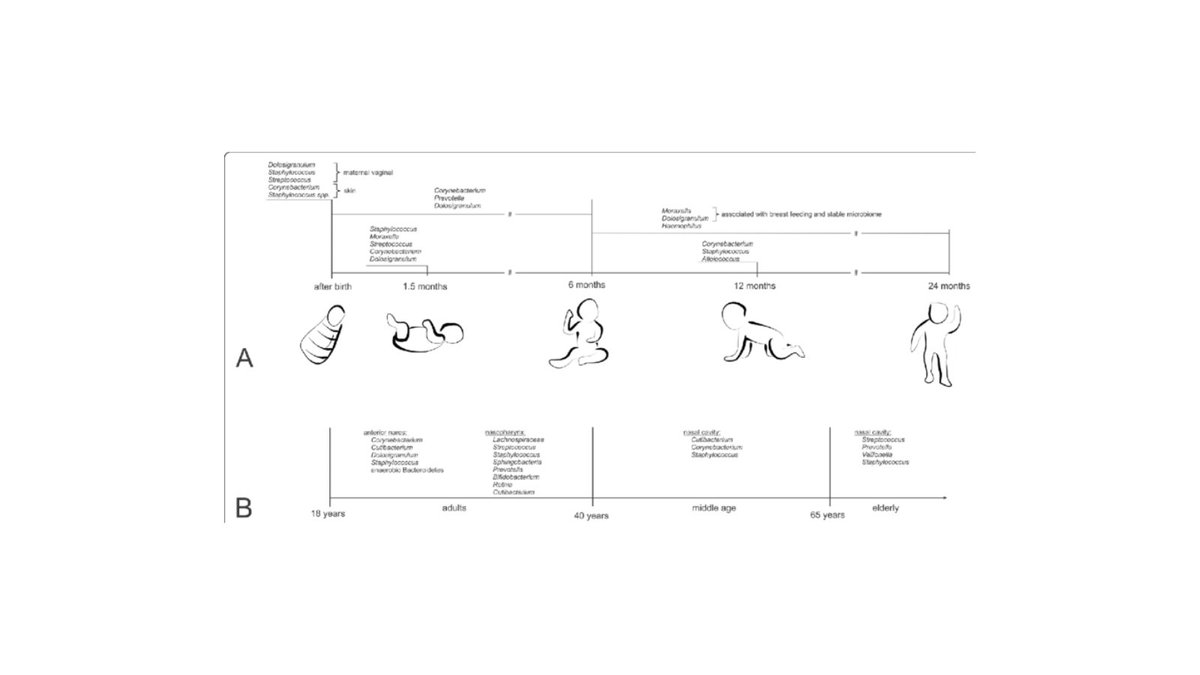
Factors that may alter the nasal microbiome include mode of birth delivery, feeding method, siblings, antibiotic treatments, environmental factors, and exposure to smoke.
Factors that may alter the nasal microbiome include mode of birth delivery, feeding method, siblings, antibiotic treatments, environmental factors, and exposure to smoke.
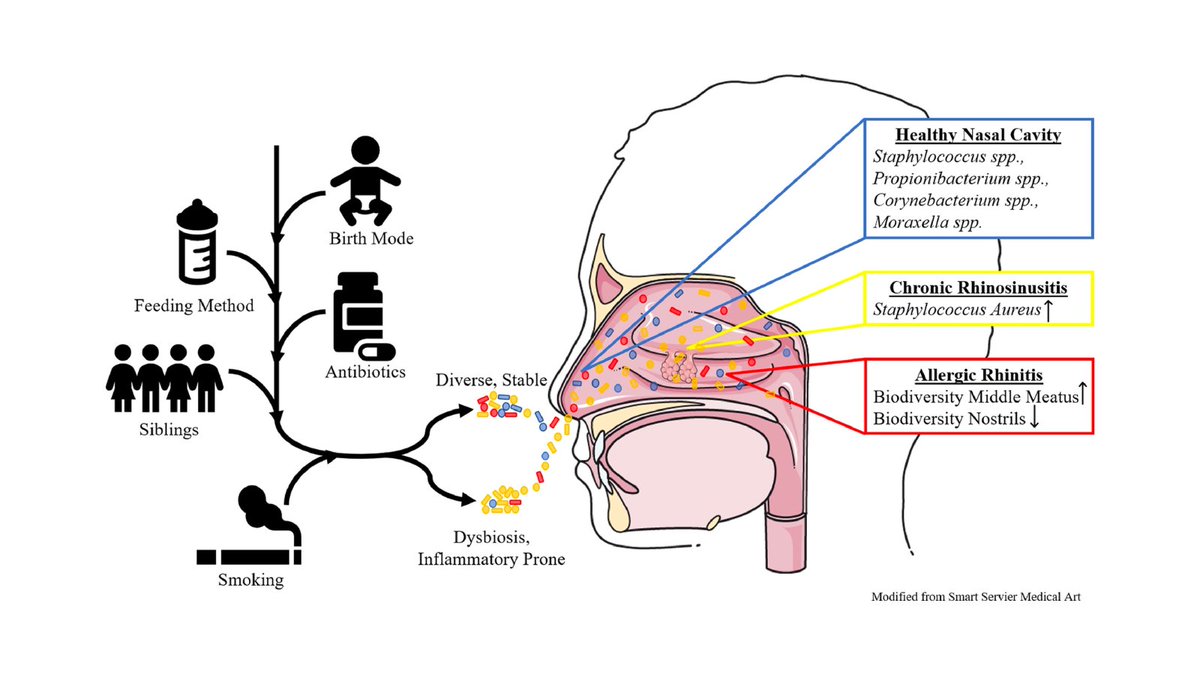
These influences can shape the nasal microbiome community to be more prone to the development of inflammation or dysbiosis.
Let's dive into some research.
Let's dive into some research.
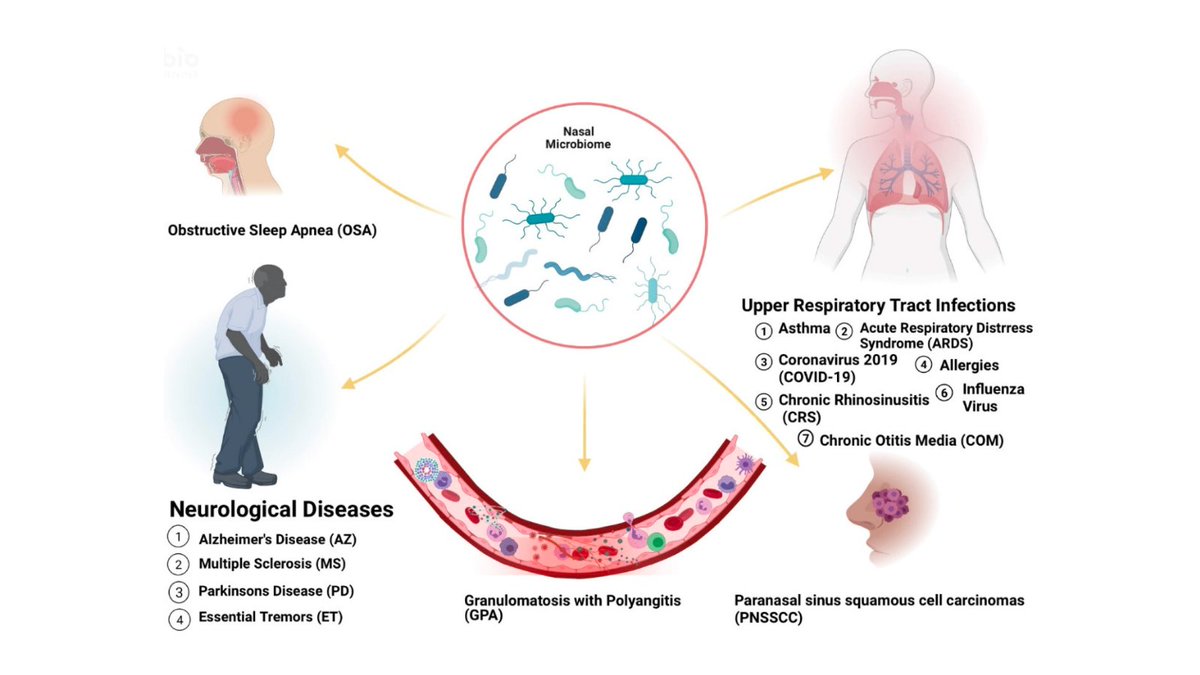
Recent studies have demonstrated that the nasal microbiota plays a significant role in the onset, development, and severity of asthma.
pubmed.ncbi.nlm.nih.gov
ncbi.nlm.nih.gov
ncbi.nlm.nih.gov
ncbi.nlm.nih.gov
pubmed.ncbi.nlm.nih.gov
ncbi.nlm.nih.gov
ncbi.nlm.nih.gov
ncbi.nlm.nih.gov
A study analyzed the bacterial diversity from 68 nose and 327 throat swabs from children ages 6 to 12.
This study observed an association between asthma in children with decreased nasal bacterial diversity.
#bib0020" target="_blank" rel="noopener" onclick="event.stopPropagation()">annallergy.org
This study observed an association between asthma in children with decreased nasal bacterial diversity.
#bib0020" target="_blank" rel="noopener" onclick="event.stopPropagation()">annallergy.org
The same association can be found in adults.
Culture-independent sequencing methods have also shown that the composition of the nasal microbiome is different in adult patients with exacerbated asthma, nonexacerbated asthma, and healthy controls.
Culture-independent sequencing methods have also shown that the composition of the nasal microbiome is different in adult patients with exacerbated asthma, nonexacerbated asthma, and healthy controls.
Some studies indicate a potential involvement of the (nasal) microbiome in Parkinson’s disease, Alzheimer’s disease, and multiple sclerosis.
onlinelibrary.wiley.com
onlinelibrary.wiley.com
In particular, in Parkinson's and Alzheimer's, the first symptoms are olfactory dysfunction.
A link with the nasal microbiome of the olfactory area has been hypothesized as microorganisms contributing to the normal development of the olfactory epithelium...
A link with the nasal microbiome of the olfactory area has been hypothesized as microorganisms contributing to the normal development of the olfactory epithelium...
Theories on disrupted Nasal Microbiomes:
The hygiene hypothesis relationship: An inverse association between allergic disease & children with larger families.
Studies suggested that unhygienic contact through older siblings may allow for protection against AR.
The hygiene hypothesis relationship: An inverse association between allergic disease & children with larger families.
Studies suggested that unhygienic contact through older siblings may allow for protection against AR.
Less hygienic living conditions in early childhood may allow for the transmission of infections that are thought to prevent the development of allergic disease.
This concept is reinforced by examining the relationship of rural living conditions and atopic diseases.
Early life exposure to farming-based environments was linked with decreased atopic frequency in children.
Early life exposure to farming-based environments was linked with decreased atopic frequency in children.
The microflora hypothesis proposes a possible disruption to immunity because of interaction with dysbiotic microbiota.
Evidence that supports this concept examines the use of antibiotics in young children and the development of allergic diseases.
Evidence that supports this concept examines the use of antibiotics in young children and the development of allergic diseases.
WHAT TO AVOID:
Several studies have shown that cigarette smoking depletes normal commensal airway microbiota and enriches potential pathogens.
ncbi.nlm.nih.gov
Several studies have shown that cigarette smoking depletes normal commensal airway microbiota and enriches potential pathogens.
ncbi.nlm.nih.gov
And air pollution impacts the nasal microbiota, especially during the first years of life.
sciencedirect.com
sciencedirect.com
Furthermore, the application of antibiotics has been shown to influence microbial community composition significantly by reducing the microbial diversity not only in the gut but also in the upper respiratory tract of infants and adults.
ncbi.nlm.nih.gov
ncbi.nlm.nih.gov
The reality is, that it's all ultimately connected. Your sinuses are really an extension of your digestive tract.
Here are some great threads from @coookwithchris on your gut health:
Here are some great threads from @coookwithchris on your gut health:
Sources:
ncbi.nlm.nih.gov
#seccesectitle0011" target="_blank" rel="noopener" onclick="event.stopPropagation()">annallergy.org
pubmed.ncbi.nlm.nih.gov
#relatedArticles" target="_blank" rel="noopener" onclick="event.stopPropagation()">cell.com
bmcbiol.biomedcentral.com
ncbi.nlm.nih.gov
#seccesectitle0011" target="_blank" rel="noopener" onclick="event.stopPropagation()">annallergy.org
pubmed.ncbi.nlm.nih.gov
#relatedArticles" target="_blank" rel="noopener" onclick="event.stopPropagation()">cell.com
bmcbiol.biomedcentral.com
Loading suggestions...