

Lessons from Russia sanctions
1. Sanctioning a c/a surplus country is harder
2. You have to hit a c/a surplus country's exports
3. We purposefully avoided that with our carveouts
4. So the sanctions worked / didn't work debate is silly
5. We avoided hitting Russia where it hurts
1. Sanctioning a c/a surplus country is harder
2. You have to hit a c/a surplus country's exports
3. We purposefully avoided that with our carveouts
4. So the sanctions worked / didn't work debate is silly
5. We avoided hitting Russia where it hurts

1. Sanctioning a c/a surplus country: financial sanctions work best on c/a deficit countries that import capital. US sanctions on Turkey in 2018 caused a massive crisis and recession. You can't expect the same for Russia, as it is a c/a surplus country & thus a capital exporter.

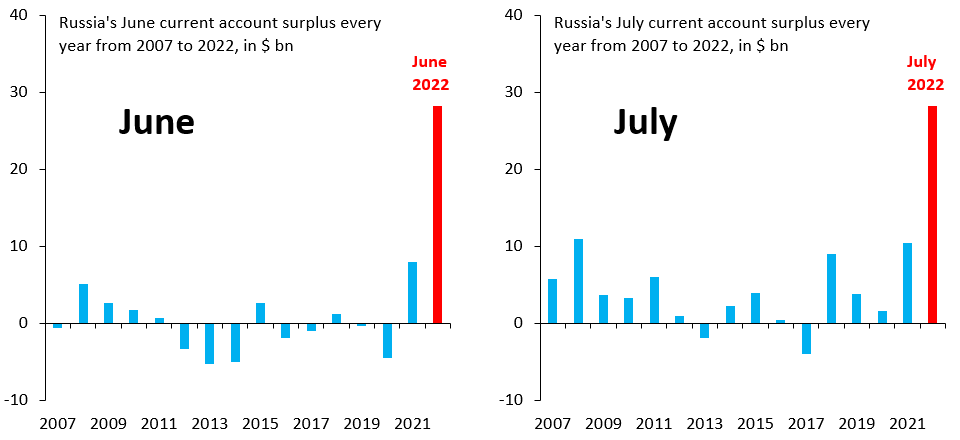
2. Hitting a c/a surplus country: Achilles heel of any c/a surplus country is its exports, which - in Russia's case - account for the bulk of the massively higher trade surplus. Instead of financial sanctions, you must embargo Russian exports to cause maximum damage. We didn't.

3. Energy carveouts: once we decided to keep buying Russian energy, everything else followed. We couldn't sanction all Russian banks, since we needed to pay someone. Unsanctioned Gazprombank de facto became the new central bank, accumulating payment (blue) in place of CBR (red).
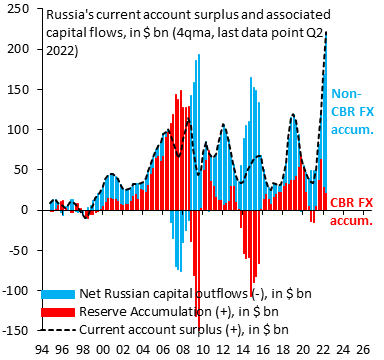
4. So Russia's massive c/a surpluses - and all the benefits thereof like low interest rates plus hard currency to pay for imports and buy new allies - exist at our discretion. Putin isn't invincible. There is no fortress. We just haven't been willing to hit Russia where it hurts.
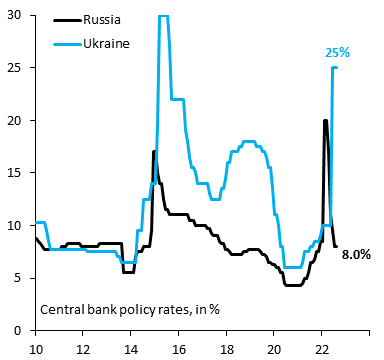
5. The good news: we can still impose an embargo. An embargo of Russian energy would wreak havoc. It would cause devaluation and force the central bank to hike rates. An embargo would push Russia into currency crisis like Ukraine has struggled with, a major distraction for Putin.
Loading suggestions...