

On Fiscal vs Monetary Dominance
What if I told you there are two opposing governing bodies at work right now fighting each other?
What if I told you there are two opposing governing bodies at work right now fighting each other?
On one side, you have central banks trying to tighten financial conditions to bring down aggr. demand to match aggr. supply as central banks cannot affect supply.
On the other, you have politicians who see this energy crisis unfold and are handing out subsidies, effectively.
On the other, you have politicians who see this energy crisis unfold and are handing out subsidies, effectively.
Now, many people point at things like the inflation reduction act or California handing out cheques to people to spend on gas and think "how can they be so stupid?!"
They're not stupid. It's game theory. They know it makes things worse. But they're forced to do it.
They're not stupid. It's game theory. They know it makes things worse. But they're forced to do it.
You see, politicians are beholden to their voter base - they are not rational actors. One example of this is the US midterms:
Biden is currently releasing the Strategic Petroleum Reserves to dampen oil prices and forgiving student debt which by all accounts will make inflation worse.
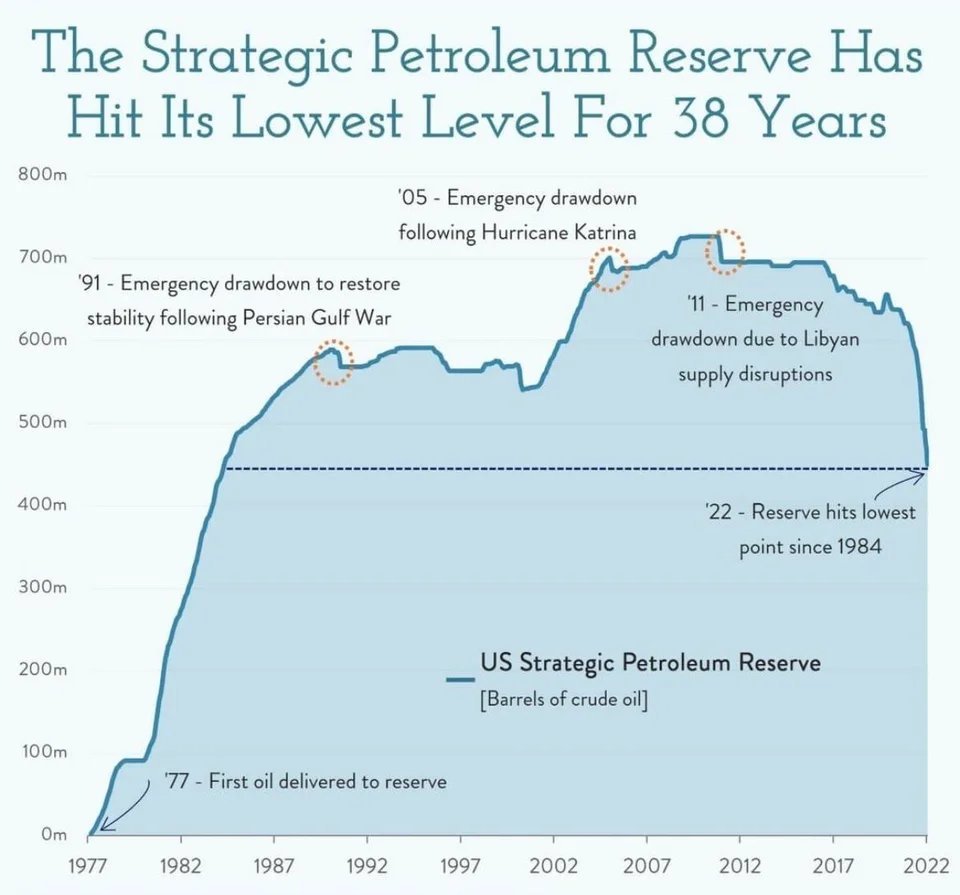
Both of these decisions are not rational and I'm certain his economic advisors know how stupid releasing the SPR is. But it's midterm season. Dems need votes to win and their voter base doesn't care about macroeconomics. They care about gas prices.
What this diatribe leads to is effectively an indiscriminate stimulator in markets. Similar to Mike Green's work on passive investing and the indiscriminate buyers there and how they warp markets, these indiscriminate stimulators are providing stimulus at the worst timing ever.
But they're forced to. It's good old game theory.
Now, shifting to the monetary side. Powell has already discussed how Biden's midterm policies are working against what the Fed is trying to do
Now, shifting to the monetary side. Powell has already discussed how Biden's midterm policies are working against what the Fed is trying to do
We now stand at where our work as investors for the next 12 months will be for understanding market impact.
On one side of equation you have rate hikes, QT, and hawkish forward guidance
On the other, you have indiscriminate fiscal dominance.
On one side of equation you have rate hikes, QT, and hawkish forward guidance
On the other, you have indiscriminate fiscal dominance.
Quantifying which side is winning will provide you the holy grail of understanding liquidity dynamics in markets
What makes this calculus so difficult is the midterms coming. If we get split congress, that means no fiscal dominance and the Fed wins.
What makes this calculus so difficult is the midterms coming. If we get split congress, that means no fiscal dominance and the Fed wins.
If we get dems winning both sides, we may get face ripping fiscal dominance. @PauloMacro described this outcome well here:
If republicans flip both sides, we will get slightly more conservative stimulus but I'm not convinced we won't get none at all. Remember, Nixon was a Republican but he became an indiscriminate stimulator in the face of inflation too.
Finally, the hardest part of this calculus is what markets want to see. If the market is concerned about runaway inflation, Dems holding both houses could cause a selloff. On the flipside, a gridlocked congress could provide a rally as it allows fed to do what it needs to do.
I don't have answers to these questions yet - only more questions. This is what I'm thinking about and believe is the next piece of the puzzle to sort out.
Markets are fucking hard. Good luck.
Markets are fucking hard. Good luck.
Loading suggestions...