

Macronutrients, their importance and how to properly source them.
A thread.
A thread.
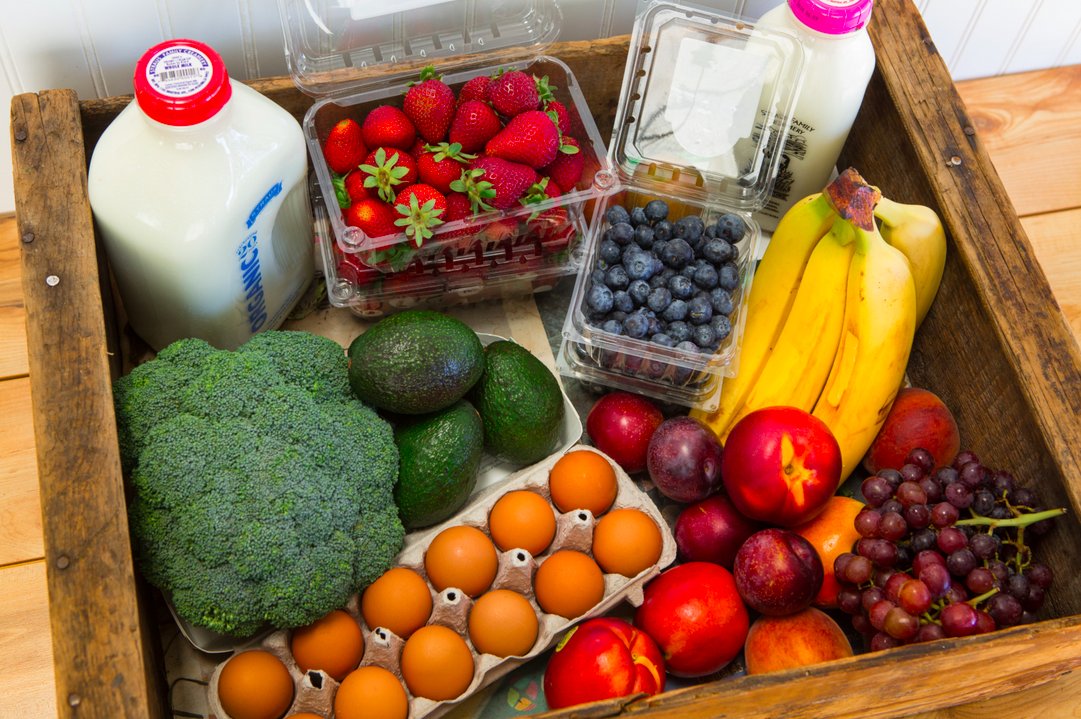
Macro means large, so macronutrients are the nutrients that your body needs in large amounts (many grams).
There are three macronutrients:
1)Carbohydrates
2)Protein
3)Fat
Each macronutrient is measured in grams, but the calories per gram of each macronutrient isn't the same.
There are three macronutrients:
1)Carbohydrates
2)Protein
3)Fat
Each macronutrient is measured in grams, but the calories per gram of each macronutrient isn't the same.
Protein and carbohydrates have a little over 4 calories for every gram and fat has 9 calories for every gram.
Every single macronutrient is important.
When someone is deficient in saturated fats for example, his cells break down and function poorly.
Every single macronutrient is important.
When someone is deficient in saturated fats for example, his cells break down and function poorly.
Cells need saturated fats, not only for fuel but also for structural components and to participate in metabolic pathways.
We need quality food sources of fat because fat is a carrier of the crucial fat soluble vitamins A,D,E and K.
We need quality food sources of fat because fat is a carrier of the crucial fat soluble vitamins A,D,E and K.
Each of the fat soluble vitamins has an estrogen lowering and thus testosterone enhancing effect.
We need saturated fats in order to begin producing testosterone in the first place.
Now when we are talking about fats, we are not talking about high inflammatory fats
We need saturated fats in order to begin producing testosterone in the first place.
Now when we are talking about fats, we are not talking about high inflammatory fats
and unstable when exposed to heat such as vegetable oils but saturated fats which are anti-inflammatory, stable when exposed to heat, lower endotoxins and support steroid hormone production.
Avoid unsaturated fats and consume saturated fats in order for your cells to be able to rebuild properly.
So quality fat sources are :
1)The yolks of free range eggs
3)Quality raw dairy
3)Coconut oil
4)EVOO (not for cooking)
5)Grass fed butter and ghee
6)Grass fed tallow
So quality fat sources are :
1)The yolks of free range eggs
3)Quality raw dairy
3)Coconut oil
4)EVOO (not for cooking)
5)Grass fed butter and ghee
6)Grass fed tallow
7)Avocados
8)Blackseed oil (cold pressed)
9)Organic palm kernel oil
10)Bone marrow
Note: The oils with the lowest linoleic acid percentage which makes them the best oils to cook your meals in are:
1) Grass fed butter/ghee
2) Grass fed tallow
3) Coconut oil
8)Blackseed oil (cold pressed)
9)Organic palm kernel oil
10)Bone marrow
Note: The oils with the lowest linoleic acid percentage which makes them the best oils to cook your meals in are:
1) Grass fed butter/ghee
2) Grass fed tallow
3) Coconut oil
Moving on to carbohydrates.
Carbohydrates are organic compounds that consist of carbon, oxygen and hydrogen as you can see in the following graph.
There are three main types of carbohydrates:
1)Starches
2)Fiber
3)Sugars
We mostly like fructose, some specific types of fiber
Carbohydrates are organic compounds that consist of carbon, oxygen and hydrogen as you can see in the following graph.
There are three main types of carbohydrates:
1)Starches
2)Fiber
3)Sugars
We mostly like fructose, some specific types of fiber
and very very few types of starch since they are the most pro metabolic.
Carbohydrates are our body's main source of energy: They help fuel our brain, kidneys, heart muscles, and central nervous system.
Carbs are broken down by the body into glucose which is used as fuel by
Carbohydrates are our body's main source of energy: They help fuel our brain, kidneys, heart muscles, and central nervous system.
Carbs are broken down by the body into glucose which is used as fuel by
your body’s cells, tissues, and organs.
Glucose is also extremely important for the brain, which can’t easily use other fuel sources like fat or protein for energy.
A carbohydrate-deficient diet may cause headaches, fatigue, weakness, difficulty concentrating, nausea,
Glucose is also extremely important for the brain, which can’t easily use other fuel sources like fat or protein for energy.
A carbohydrate-deficient diet may cause headaches, fatigue, weakness, difficulty concentrating, nausea,
thyroid issues, metabolic issues, hormonal issues, vitamin and mineral deficiencies which is one of the reasons people who take part in keto and carnivore diets for years have tremendously aged skin and decreased skin elasticity.
Carbs are probably the best macronutrient that
Carbs are probably the best macronutrient that
can be pseudo characterized as an “antioxidant” since fats and protein produce less CO2 which acts as a powerful antioxidant than carbs.
Some cells in the body can only run on carbs.
So carbs are the preferred fuel of the body and fructose, has been proven to lower SHBG levels
Some cells in the body can only run on carbs.
So carbs are the preferred fuel of the body and fructose, has been proven to lower SHBG levels
and allow for more free testosterone in the bloodstream.
Quality carb sources are :
1)Raw honey
2)Raw dairy
3)Any seasonal and organic fruit
4)Berries
5)Kiwis
6)Orange and grapefruit juice with no pulp
7)Sprouted rice cooked in bone broth
8)Extremely ripe bananas and mangos
Quality carb sources are :
1)Raw honey
2)Raw dairy
3)Any seasonal and organic fruit
4)Berries
5)Kiwis
6)Orange and grapefruit juice with no pulp
7)Sprouted rice cooked in bone broth
8)Extremely ripe bananas and mangos
9)Some sweet potatoes
10)Pumpkin
11)Squash
12)Some sprouted spelt bread once in a while
13)Some maple syrup
Last but not least we have protein.
Protein is composed of amino acids, which are organic compounds made of carbon, nitrogen, hydrogen and oxygen (or sulfur).
10)Pumpkin
11)Squash
12)Some sprouted spelt bread once in a while
13)Some maple syrup
Last but not least we have protein.
Protein is composed of amino acids, which are organic compounds made of carbon, nitrogen, hydrogen and oxygen (or sulfur).
Amino acids are the building blocks of proteins and proteins are the building blocks of muscle.
Proteins also regulate the body’s processes that help it maintain fluid balance.
Albumin and globulin for example are proteins in our blood that help maintain our body’s fluid
Proteins also regulate the body’s processes that help it maintain fluid balance.
Albumin and globulin for example are proteins in our blood that help maintain our body’s fluid
balance by attracting and retaining water.
You need to provide your body with quality animal protein since it is constantly breaking it down during the day and in order to produce pro metabolic hormones.
You need to provide your body with quality animal protein since it is constantly breaking it down during the day and in order to produce pro metabolic hormones.
Quality protein sources are:
1)Free range grass-finished meats if possible
2)Free range organic eggs
3)Raw dairy
4)Bone marrow
5)Seafood that is low in heavy metals
6)Organ meats
7)Lamb
8)Some grounded muscle meats once in a while with bone broth rice on the side
9)Some shrimp
1)Free range grass-finished meats if possible
2)Free range organic eggs
3)Raw dairy
4)Bone marrow
5)Seafood that is low in heavy metals
6)Organ meats
7)Lamb
8)Some grounded muscle meats once in a while with bone broth rice on the side
9)Some shrimp
10)Oysters
11)Some pork in case it is pasture raised (if it is not, don’t bother eating pork).
Now, each one of these nutrients has a different digestion and absorption time.
For example, fats can take up to 3 times more time to be digested than carbs.
11)Some pork in case it is pasture raised (if it is not, don’t bother eating pork).
Now, each one of these nutrients has a different digestion and absorption time.
For example, fats can take up to 3 times more time to be digested than carbs.
So typically, a pre workout meal if you are interested in performance, should primarily include carbs and protein.
A ratio of 40% carbs, 40% protein and 20% fat, seems to be ideal for a pre workout meal.
But never forget that the source of these macronutrients matters.
A ratio of 40% carbs, 40% protein and 20% fat, seems to be ideal for a pre workout meal.
But never forget that the source of these macronutrients matters.
A calorie is not a calorie.
Nutrition matters.
What has more calories?
2,000 calories worth of bread or 2,000 calories worth of steak?
This is not some sort of a trick question.
Again, a calorie is not a calorie and if you solely rely on the IIFYM mental model sooner or
Nutrition matters.
What has more calories?
2,000 calories worth of bread or 2,000 calories worth of steak?
This is not some sort of a trick question.
Again, a calorie is not a calorie and if you solely rely on the IIFYM mental model sooner or
later you will end up sick.
The bread has more calories than the steak has because the bread is less thermogenic than the steak.
Carbohydrates have a 5-15% thermic effect and protein has a 20-35% thermic effect (fats have a 3-15% thermic effect).
The bread has more calories than the steak has because the bread is less thermogenic than the steak.
Carbohydrates have a 5-15% thermic effect and protein has a 20-35% thermic effect (fats have a 3-15% thermic effect).
So if X amount of calories come from carbohydrates, this means that 5-15% of them is going to be released as heat during digestion, a 20-35% when it comes to protein and a 3-15%when it comes to fat.
There is no equality when it comes to food.
There is no equality when it comes to food.
Carbs are not equal to protein or fats and vice versa.
Not only that but carbohydrates are not equal with each other, proteins are not equal with each other and fats are not equal with each other.
The calories that come from one food are very different from the calories that
Not only that but carbohydrates are not equal with each other, proteins are not equal with each other and fats are not equal with each other.
The calories that come from one food are very different from the calories that
come from any other food.
Nothing is equal.
Bread is not equal to fruit, whey protein is not equal to steak and sunflower oil is not equal to extra virgin olive oil.
Using a calorie meter to determine the response that your body will have to a food is wrong because it ignores
Nothing is equal.
Bread is not equal to fruit, whey protein is not equal to steak and sunflower oil is not equal to extra virgin olive oil.
Using a calorie meter to determine the response that your body will have to a food is wrong because it ignores
the enzymatic breakdown of the food.
If for example you are consuming right now let’s say 2.000 worth of calories coming from sources such as whey protein, sunflower oil, iron fortified bread and so on and you are able to maintain your bodyweight with no significant changes,
If for example you are consuming right now let’s say 2.000 worth of calories coming from sources such as whey protein, sunflower oil, iron fortified bread and so on and you are able to maintain your bodyweight with no significant changes,
then if you switch to meat, fruit and coconut oil for the same amount of calories, you will get leaner by default.
Once more, calories do not show you the full picture. Your daily energy expenditure consists of your basal metabolic rate, the energy cost of physical activity and
Once more, calories do not show you the full picture. Your daily energy expenditure consists of your basal metabolic rate, the energy cost of physical activity and
diet-induced thermogenesis.
The calories that come from one food are very different from the calories that come from any other food.
Nothing is equal and the breakdown of every food is vastly different.
Even a medium rare steak is not the same as a well done steak.
The calories that come from one food are very different from the calories that come from any other food.
Nothing is equal and the breakdown of every food is vastly different.
Even a medium rare steak is not the same as a well done steak.
The medium rare steak has more B vitamins, enzymes and minerals than the well done steak.
That's about it folks.
If you liked this thread make sure to like and RT the first tweet.
That's about it folks.
If you liked this thread make sure to like and RT the first tweet.
P.S: 2 coaching spots opened for the period of November-February.
Drop a DM with your age and goals if you're interested in any of the spots and can follow a program for 60-90 days.
Drop a DM with your age and goals if you're interested in any of the spots and can follow a program for 60-90 days.
Loading suggestions...